
















Fire trucks play a vital role in responding to emergencies; however, they must also adhere to critical safety regulations at railroad crossings. Understanding the legal obligations, operational protocols, and safety implications surrounding this topic is essential for business owners, particularly those involved in transportation, logistics, and emergency services. This article explores the various dimensions of the requirements for fire trucks at railroad crossings, offering insights into specific regulations, standard operating procedures, and the significance of safety measures. By the end of this piece, you will have a comprehensive understanding of when and how fire trucks must stop at railroad crossings, while also considering exceptions and emergency situations.
When Emergency Runs Meet the Rails: Legal Expectations for Fire Trucks at Crossings
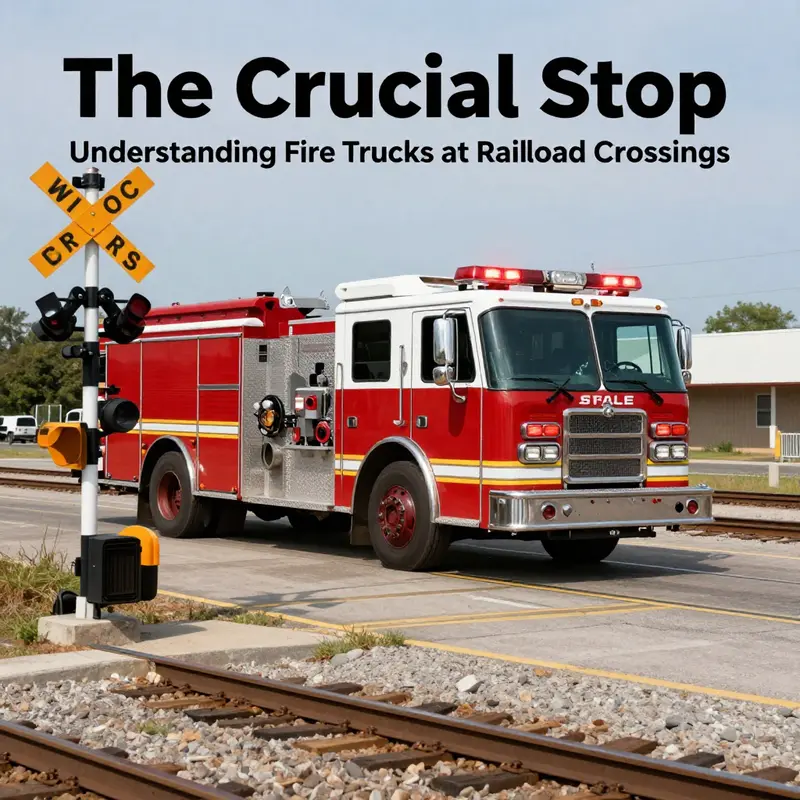
When emergency runs meet the rails: legal expectations for fire trucks at crossings
Fire apparatus operate under a complex blend of engineering limits, road laws, departmental policy, and operational judgment. That blend becomes most visible and most dangerous at railroad crossings. Trains cannot swerve, and they cannot stop quickly. A fire truck that misjudges a crossing can place its crew, the public, and a nearby train in catastrophic danger. The law treats railroad crossings with special gravity. Across federal guidance and most state codes, railroad crossings are not just another intersection. For drivers of emergency vehicles, that reality produces a clear expectation: approach railroad crossings with heightened caution, obey activated warning systems, and follow any applicable stopping requirements.
At the federal level, there is no single statute that exempts emergency vehicles from basic railroad crossing safety duties. Regulations created to protect highway-rail grade crossings focus on preventing collisions and minimizing interference. These rules emphasize the role of vehicle operators in recognizing active warnings, obeying gates and signals, and avoiding actions that could block tracks. Where emergency vehicles are concerned, federal guidance does not broadly authorize running through active grade crossing warnings. In practice, that means fire trucks must stop at crossings when signals are activated. They must not rely on sirens alone as permission to proceed across a track while gates are descending or lights flashing.
State laws and municipal ordinances provide the practical framework for day-to-day operations. They vary widely. Some states explicitly require all vehicles, including emergency responders, to stop at crossings when signals are active. Others rely on general provisions that require drivers to yield to trains and to comply with crossing devices. Departments translate those statutes into local policy. A fire chief may issue directives that are stricter than state minimums. Those policies often mandate that apparatus stop short of crossings whenever warning devices operate. They may also require backup steps, such as dismounting to visually confirm the tracks are clear before driving across.
Operational protocols arise from both safety and liability concerns. A department that permits apparatus to cross with active warnings exposes itself to severe risk. Investigations after collisions show that failure to adhere to crossing warnings is a common causal factor. Because trains cannot stop for road vehicles quickly, the margin for error is small. Emergency vehicle operators therefore default to a conservative approach: treat active crossings as absolute stop conditions unless a certified procedure allows otherwise. That approach reduces risk to crews and the public. It also aligns with the legal principle that emergency privileges do not absolve responders from exercising due care.
Training is the human backbone of crossing safety. Driving instruction for fire apparatus emphasizes train speed, track number, sightlines, and stopping distances. Crews practice approaches under varying weather and light conditions. They rehearse the sequence of actions when approaching a crossing: reduce speed early, scan both directions, obey gates and signals, and be prepared to stop. Some departments include drills with local railroad personnel. These joint exercises clarify expectations and foster communication. They also help crews recognize advanced warning indicators and understand when a crossing is controlled remotely or by track circuits.
Technology supplements training. Many jurisdictions invest in systems that alert emergency dispatchers to oncoming trains. Some crossings have preemption systems that can detect approaching trains and adjust traffic signals or provide alerts to public safety channels. Where available, these tools let dispatchers inform responding units about train movements before they arrive. Dispatchers may also coordinate with railroad operators to delay noncritical responses until the track clears. The use of such tools does not remove the need to obey crossing warnings, but it does give responders additional situational awareness.
Policy decisions often balance speed and safety. In a life-or-death emergency, the temptation to prioritize arrival time can be intense. Departments therefore create clear rules about when deviations from standard stopping behavior are permitted. Those exceptions are narrowly crafted. They typically require that an on-scene supervisor or a designated certified operator approve any crossing maneuver that conflicts with an active warning. The decision must consider the nature of the emergency, the number of tracks, the visibility across the grade, and the presence of any alternative routes. Documentation after the incident is essential. If an agency authorizes a crossing against an active signal, a detailed record justifies that choice and supports post-incident review.
Liability and accountability follow the actions of the driver and supervising officers. Courts assess whether the operator exercised reasonable care given the circumstances. That assessment includes adherence to departmental policy, relevant state law, and common-sense precautions. Deviations are scrutinized heavily. If a department lacks clear written policy, its case in litigation is significantly weaker. For that reason, many departments adopt formal crossing procedures, train all drivers to those standards, and require periodic retraining. Those practices both reduce risk and provide legal protection when decisions are later reviewed.
Communication with railroad companies is another critical component. Railroads control train movements and signaling infrastructure. Good relationships allow timely exchanges of information. Rail operators can notify public safety agencies about maintenance that affects signal reliability. They can also provide forecasts of heavy train traffic during certain times. In some regions, local agreements permit dispatch centers to receive alerts directly from the railroad’s dispatching systems. These arrangements are not universal, but they are a best practice where feasible. They reduce uncertainty and support safer responses.
When questions arise about whether a fire truck must stop at a particular crossing, the practical answer is simple: follow the signal. If lights flash or gates are down, stop. If a crossing is unmarked, proceed with extreme caution. Look both ways. Listen for an approaching train. Assume it may be closer and faster than it appears. Engineers operating locomotives have restricted views of the crossing and limited ability to judge a vehicle’s intentions. An emergency vehicle that stalls or becomes trapped on the track creates a catastrophic hazard.
Departments should also consider engineering measures to reduce risk. These measures include better signage, improved sightlines, and grade separations when traffic patterns justify the investment. For high-risk crossings near fire stations or known response routes, negotiable options include installing lights visible from apparatus bays or adding preemption that coordinates rail and road signals. Where engineering changes are not possible, administrative steps can help. For example, altering response routes to avoid frequent crossings during peak train times minimizes exposure.
Documentation and incident review complete the operational cycle. After any crossing event, especially one involving an activated warning or a near miss, agencies should conduct a formal review. The review should compile witness statements, dashcam and recorder data, radio transmissions, and dispatch logs. It should verify whether signals functioned correctly and whether the unit followed policy. Lessons learned should translate into changes to training, policy, or equipment. A transparent review process both improves safety and strengthens public trust.
Finally, public education plays a role. Members of the public sometimes do not understand how emergency privileges work. They may expect responders to disregard all traffic controls. Fire departments can publicize the limits of those privileges. Simple messaging that explains the absolute danger of railroad crossings and why apparatus must stop when signals are active helps align public expectations with safe practice. Outreach can use social media, station open houses, and collaborative events with railroad safety programs.
One useful internal resource for departments exploring specialized response vehicles is a catalog of emergency rescue vehicle options. That resource offers context about equipment commonly used in tight operations near rail corridors and in industrial settings. It can inform procurement decisions that affect crossing safety and operational flexibility. For information on such vehicle categories, see emergency rescue vehicle resources.
For agencies and citizens seeking authoritative federal guidance on highway-rail grade crossing safety, consult the Federal Highway Administration. Their materials provide technical guidance on crossing design, signage, and emergency vehicle considerations. For more detail, visit the FHWA website at https://www.fhwa.dot.gov
Stop, Look, Listen: The Relentless Rule Fire Trucks Follow at Railroad Crossings
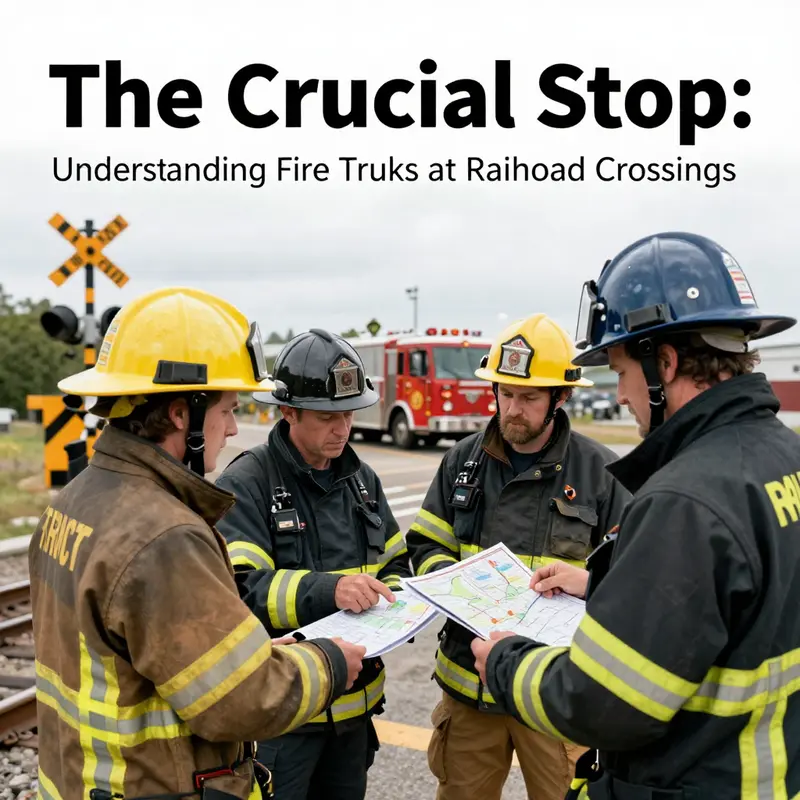
Across a region where freight traffic threads through neighborhoods and industrial parks, the daily rhythm of emergency response is tested by a single, stubborn constraint: railroad crossings. The siren wails, the lights flare, and the engine surges toward metal and wood barriers that can decide life and death in a heartbeat. In those moments, the crews move with both urgency and precision, because the rule is not a suggestion but a shield against catastrophe. Fire departments train for speed, for decisive action, for the capacity to cut through danger. Yet at crossings, speed must bow to sight, sound, and distance, the three pillars that form the backbone of safe passage for a vehicle that is already carrying the weight of someone’s emergency. The rule is shared by all drivers on the road, but emergency responders encounter a unique tension: the need to reach a scene quickly versus the obligation to stop and verify that the tracks are clear. It is a tension that is not solved by a single gesture or a single department, but by a culture of safety that permeates dispatch, training, vehicle design, and interagency coordination. In the end, the crossing becomes less a barrier than a test of judgment, discipline, and teamwork under pressure.
The Federal Railroad Administration has made the complete stop at marked railroad crossings a universal baseline. The regulation is explicit: all vehicles, including emergency vehicles, must come to a complete stop when warning signals are activated. This is true even if the crew believes the train is far away or not yet visible. The logic is straightforward and uncompromising. Trains travel at high speed, or accelerate quickly, and they require long distances to stop. A miscalculation at a crossing can be catastrophic, altering an arc of destination into a scene of tragedy. When a fire engine, ladder truck, or rescue vehicle approaches a crossing, the driver is not granted a license to press through a red line of signals. The duty to stop exists to protect the responders themselves, the public, and the train crews who operate in an environment with limited maneuverability and reduced visibility around the rails.
In practice, this rule translates into a deliberate sequence that blends perception with procedure. As the unit nears the crossing, the driver activates the awareness reflex—looking both ways along the tracks, noting the distance to the next rail, listening for any distant rumble that might hint at a train. The decision to proceed is never a reflexive gesture but a carefully weighed judgment that considers the signals, the road geometry, and the presence of other responders at the intersection. If the warning devices are active, the vehicle cannot enter the crossing. If a train is detected, even if it appears to be far away, the vehicle remains stopped until the path is clear and safe. Some jurisdictions extend this caution to require waiting for a full train to clear the crossing, prioritizing an additional margin of safety in high-risk corridors where railroad traffic is continuous or when sightlines are compromised by weather, terrain, or structure.
Within the fire service, the complete-stop rule sits alongside a toolkit of situational awareness: a respectful acknowledgment that a crossing is more than a line on a map. It is a dynamic, evolving hazard where the signals, gates, bells, and the physical landscape interact with vehicle velocity, braking performance, and driver workload. The use of lights and sirens is not a universal passport that overrides a crossing’s safety features. Sirens can alert nearby operators and pedestrians, but they may not be audible to train crews at a distance, especially when trains generate their own thunder along the rails. The emphasis, therefore, shifts to visibility and anticipation. The driver positions the apparatus to maximize the view of both directions, ensuring that angles of approach do not create blind spots for the crossing. This is a subtle but critical skill—the art of balancing the instantaneous needs of an emergency with the slower, calculating tempo of rail traffic.
A professional practice that flows from this understanding is the role of crossing signals themselves. When the flashing lights, bells, or gates are activated, the obligation is absolute: do not enter the crossing. The risk of violating a signal is not abstract; it translates into real hazards, including the probability that a train will strike a vehicle that has failed to stop. The human factor—fatigue, distraction, pressure to shave seconds off response time—must be countered by rigid discipline, pre-mission briefings, and preplanned crossing stops. The driver’s internal checklist becomes a visible discipline in the cab: confirm signals, observe gates, assess the angle of approach, and communicate with the team about any doubt. If the signals disappear or are malfunctioning, the response becomes more complex and often involves coordination with traffic control or law enforcement to determine the safest way to proceed. In those moments, the crossing is not a place to improvise; it becomes a space where protocol guides action and safety remains the priority.
Training programs play a central role in translating regulation into reliable, repeatable performance. Many departments incorporate scenario-based exercises that replicate true-to-life encounters with rail crossings. These drills may involve multiple agencies—fire, law enforcement, rail-safety personnel, and sometimes dispatch centers—to build a shared mental model of how to move through an intersection under the protection of signals and barriers. The goal is not simply to memorize a rule but to cultivate an instinctive, coordinated response when urgency peaks. In practice, this means rehearsing the moment when a crossing activates, identifying the safest stopping point that still allows a rapid exit if needed, and synchronizing actions with any nearby responders who might be using the intersection for a separate incident. The training also emphasizes nonverbal communication among crew members—a quiet, practiced sequence of glances, nods, and micro-commands that reassure teammates and keep the operation cohesive. That cohesion matters because, in a real-world scenario, the margin for error narrows quickly as the crossing becomes a moving theater of competing priorities: the need to reach the scene, the necessity to protect the public, and the frailty of human judgment under stress.
Coordination with local rail authorities is another essential thread in the fabric of safe crossing operations. Communities often establish joint response plans that outline who takes the lead when a crossing is involved in an emergency. These agreements facilitate rapid information exchange about train schedules, track conditions, and any temporary restrictions that may affect safer routing. They also support the use of standardized signals and signals-led guidance in complex intersections where rail and road networks intersect with multiple lanes and pedestrian paths. The overarching aim is to turn a potentially chaotic moment into a controlled sequence in which each responder understands the others’ roles and the timing of critical actions. Regular drills, after-action reviews, and data-driven updates to protocols help keep these joint plans relevant and effective. In a well-coordinated system, the crossing becomes a point of collaboration rather than a point of friction, and the public sees a unified, professional presence rather than isolated chants of urgency.
The equipment and the vehicle build itself into this culture of safety. Fire teams rely on apparatus designed to endure the rigors of rapid, controlled movements through urban streets and, when required, to operate around rail infrastructure without compromising stability or visibility. The design philosophy emphasizes clear sightlines, predictable braking behavior, and robust lighting that remains effective under a variety of weather conditions. While the day-to-day mission may involve pursuing a fire, a rescue, or a hazardous materials response, every crossing encounter becomes a test of how well a vehicle can be brought to a deliberate, safe halt and then guided through once the signal system indicates it is safe to proceed. In discussions about equipment readiness and vehicle specifications, departments often reflect on the broader category of Emergency Rescue Vehicle as part of the spectrum of response tools available to modern fire services. These vehicles are engineered not only for endurance and payload but also for the nuanced needs of high-stakes intersections where speed and safety must coexist. As responders consider what makes a successful crossing operation, they weigh the value of a vehicle that performs consistently in the moment of need against one that risks compromising safety in pursuit of time.
Beyond the technical and procedural dimensions, there is the human dimension—how dispatch protocols shape the initial approach to a crossing. Call-takers and incident commanders can influence the timing of a response as it relates to crossing exposure. They might advise delaying a direct approach if signals indicate that a freight train is approaching or if traffic patterns predict gridlock at an intersection. This top-down guidance complements the bottom-up discipline of the on-scene crew, creating a loop of information that helps prevent rushed decisions. The human factors, when harmonized with the mechanical and regulatory framework, reduce the likelihood of errors that could escalate into tragedy. In short, stopping at a crossing is not a passive act but an active, considered choice born from training, communication, and a shared ethos of safety that underpins every mission.
In reflecting on the broader implications, the question of whether fire trucks must stop at railroad crossings emerges as a symbol of professional responsibility rather than a mere regulatory requirement. The rules establish a floor, not a ceiling, for safety. They set a minimum standard that safeguards life and property while allowing room for informed decision-making under extraordinary conditions. The interplay between law, training, coordination, and human judgment creates a resilient operating envelope. When a crossing is encountered under duress, responders lean on established protocols, rely on the discipline cultivated in training, and trust the systems designed to protect everyone involved. The result is not a rigid adherence that stifles initiative but a disciplined framework that enables swift action without compromising safety. It is a balance that demands vigilance, patience, and an ongoing commitment to learning from every encounter, so that each response becomes more precise, more predictable, and more protective of the communities served.
To connect this discussion to the broader ecosystem of emergency response, consider how a department’s approach to rail crossings reflects its overall readiness. The question of stopping is a lens through which many organizational commitments can be observed: how training translates into practice, how interagency relationships mature, how equipment design accommodates safety at critical junctions, and how dispatch and command decisions shape field performance. When a team steps out onto a crossing, it does so with a shared understanding that speed is never more important than safety. This shared understanding is the product of countless hours of training, the guidance of national standards, and the ongoing dialogue between local practice and national policy. The cross-pollination of knowledge—from high-level FRA regulations to on-the-ground drills and interagency coordination—creates a culture where emergency response remains effective without becoming reckless. In this culture, every stop is a safeguard, every signal a reminder, and every crossing a moment for teams to demonstrate that courage is most powerful when paired with discipline.
For readers who want to explore equipment readiness and the broader category of emergency rescue capabilities in this context, consider the discussions surrounding the use and deployment of specialized vehicles. This is not merely about horsepower or speed but about how a vehicle’s design supports safety at complex, high-stakes intersections. A well-rounded fleet includes apparatus that can perform under duress, maintain clear lines of sight, and partner with other responders to create a cohesive, rapid, and safe arrival at the incident scene. The concept of an Emergency Rescue Vehicle, as a category within the fleet, embodies this holistic approach to readiness—an approach that can be observed in departments that emphasize cross-disciplinary training and shared operational philosophies. As you explore this topic further, you might find useful resources that detail how such vehicles are integrated into a department’s overall response strategy and how they complement other vehicles and equipment in the fleet. More broadly, the field of emergency response continually evolves to meet new challenges, and crossing safety remains a focal point for ongoing improvement and collaboration.
In sum, the obligation to stop at railroad crossings is not merely a regulatory formality but a cornerstone of safe, professional practice in emergency response. It embodies a commitment to safeguarding responders and the public alike, even as urgency pushes teams toward the goal of saving lives. The pattern of behavior—stop, assess, wait for trains to clear if detected, proceed only when it is safe—is reinforced through training, coordination, and thoughtful vehicle design. This pattern underpins the confidence with which emergency responders operate and reinforces the trust communities place in their responders when every second counts. The crossing, with its flashing lights and distant rumble, becomes a place where precaution and haste converge in a purposeful, disciplined manner. It is a reminder that courage on the road and rails is inseparable from the discipline that keeps people safe, every time.
External resource: For a detailed regulatory framework and ongoing updates on crossing safety, refer to the Federal Railroad Administration guidelines at https://www.fra.dot.gov/Rulemaking/Rules/49CFR1520.aspx.
Internal link: When considering how equipment specifications relate to crossing operations, readers might explore the broader category of Emergency Rescue Vehicle in the fire service fleet, which captures a range of capabilities designed to support safe, rapid responses at critical intersections. Emergency Rescue Vehicle
At the Crossing, Every Second Counts: The Lifesaving Rule Fire Trucks Must Stop at Railroad Crossings
On a quiet stretch of road that suddenly tilts toward danger, the rhythm of an emergency response is a test of discipline as much as speed. The wail of a siren slices through the hum of city traffic, and the driver of a fire apparatus must read a landscape that changes in an instant. It is a landscape defined not only by the urgency of the call but by the constraints of the railway infrastructure that slices through neighborhoods, fields, and industrial corridors. The question at the heart of this chapter—do fire trucks have to stop at railroad crossings?—is, in one sense, a yes that arrives with a firm but nuanced context. The safety rules, established in federal guidance and echoed in local department protocols, require every vehicle, including the most urgent emergency responders, to come to a complete stop at marked railroad crossings whenever warning signals are activated. That constraint applies regardless of whether a train is visible, audible, or even anticipated in the driver’s field of vision. The reason is simple and sobering: trains travel at high speed and require vastly more distance to stop than any road vehicle. A crossing is a narrow stage where the risks of misjudgment multiply, and the consequences of any error can be catastrophic, not only for the crew but for the public at large. The rule is a boundary line drawn not to hinder response but to protect lives, including those of pedestrians and motorists who may be near the crossing when a locomotive appears—or reappears—on its approach.
This principle sits within a larger framework of safety culture that governs emergency response on rails. The Federal Railroad Administration, along with the broader Department of Transportation guidance, emphasizes complete stops at crossings when warning signals are active. It does not hinge on whether the operator has had a moment to see a train or hear a bell. Signals—flashing lights, bells, gates—are designed to create a margin of safety that works even when human attention is strained by the urgency of the incident. The speed and momentum of a train, combined with the finite stopping distance of steel wheels on steel rails, produce a risk profile that is simply not worth compromising for the sake of a faster arrival. In practice, this means that if a crossing’s warning system is activated, the fire truck, like any other vehicle, must halt. In some instances, the rules allow for deviation only after carefully weighing the immediate danger of the emergency against the potential for a crossing-related tragedy. Yet those moments are not common, and they require authorization that is as much about risk management as about speed. The broader message is clear: the crossing rule exists not to impede heroic response but to prevent a single tragedy that could outsize all others in a moment of crisis.
There is a discipline to this rule that goes beyond the injunction to stop. Fire departments invest heavily in training that reinforces the habit of stopping at crossings, even when a train sounds distant or the signals seem inert. Distractions are part of the job; the alerting lights, the crackle of radios, the cadence of the crew’s commands, all compete for attention. The crossing, however, remains a fixed variable that demands focus. Training programs frame the approach to a crossing in a repeatable sequence: slow as needed, scan the intersection in both directions, observe the status of all warning devices, and wait until the signals are fully retracted and the barriers are up before proceeding. This isnures that drivers do not rely on a rough heuristic about train presence or on a rapid judgment when time may be compressed by other duties. The message is relentlessly practical: safety is a shared responsibility that cannot be outsourced to speed or improvisation. In this sense, the rule becomes a form of procedural humility—a constant reminder that the demands of an emergency do not erase the physics of movement along the rails.
The infrastructure at the crossing plays its own essential role in shaping how responders operate. Modern grade crossings are a lattice of mechanical barriers, sensor networks, and signal logic designed to detect a train far in advance and to coordinate gates, lights, and bells for maximum effectiveness. The signals do more than alert; they regulate the choreography at the intersection. If a gate is down, or if the flashing lights are active, the fire truck must wait for those signals to indicate it is safe to move. In some cases, the system is preempted to prioritize the passenger or freight trains, momentarily altering the normal flow of road traffic and sometimes creating a temporary quagmire for the responding unit. In others, sensors may indicate approaching trains with a precision that allows responders to anticipate a crossing closure before the first car arrives. These features underscore a broader principle: the safety of a crossing is not a passive state but an active, dynamic interplay between railway signaling, road traffic, and the decision-making of those behind the wheel of emergency apparatus.
Within the fire service, this interplay is further mediated by protocols that balance urgency with prudence. When an incident involves potential hazards that could be aggravated by a delay—such as a building engulfed in flames or a vehicle collision with injuries—the temptation to push through a red light or a locked barrier can be strong. Yet the crossing rule remains a powerful brake on impulse. The rationale is not to deny aid to those in need but to ensure that the path to the incident does not become the site of a preventable accident. Even in moments that test the strongest nerves—the moment the siren wails, the truck surges forward, and the captain issues a direction—the crossing remains a vitally non-negotiable point unless an authorized exception applies. Those exceptions are rare and tightly regulated. They require clear, overt justification and the coordination of the incident command with rail authorities or signal preemption protocols. In many cases, the safest course is to wait, to reassess, and to accept the delay as a necessary price for ensuring that the first responder’s arrival does not precipitate another disaster on the rails.
It is important to acknowledge the human factors that can influence decisions at a crossing. Sirens, lights, and the urgency of the call can complicate a driver’s perception, making it harder to detect a train or to interpret a signal correctly. The cognitive load on the operator—who must continually assess the scene, navigate traffic, and maintain vehicle control—adds risk to any crossing encounter. The training that emphasizes stopping at crossings is, in part, a defense against this cognitive load. By establishing an automatic, practiced response, the department ensures that even under stress, the responder does not inadvertently bypass the crossing safety rules. The habit of stopping becomes a form of muscle memory, a cognitive anchor that prevents the most dangerous error: assuming safety where there is not. Cross-checks become automatic: look left, look right, look again, verify the status of the signals, verify that the gates have retracted, and only then proceed. This ritual is not a bureaucratic ritual but a practical tool for preserving life during moments that demand the opposite of hesitation yet require careful, deliberate action.
Beyond the immediate crossing, the safety ecology of emergency response at rail grade crossings extends to the design of the equipment itself and to the training that commands it. Fire departments can implement procedures that minimize the need to cross at risk points by pre-planning routes, coordinating with rail operators when possible, and using spotters or alternative routes when signals are not functioning properly. Equipment design also matters; vehicles may be stocked with communications intercepts or dashboards that help the crew monitor crossing status in real time, though these tools do not replace the fundamental rule to stop when signals are active. The dynamic is always a balancing act: speed versus safety, urgency versus certainty, and our collective responsibility to keep both responders and the public safe on a shared infrastructure that no one can alter in the moment of a crisis. Even as responders gain access to better training and more sophisticated crossing technologies, the core truth remains constant: stopping at railroad crossings when warning signals are active is an indispensable safety measure, not a mere protocol. The stakes are existential. The cost of a single failure—of misreading a signal, of misjudging a locomotive’s approach, of misinterpreting a gap in the gates—can be measured not in minutes lost but in lives altered forever.
For readers seeking a broader context on how the emergency vehicle community integrates crossing safety into its doctrine and practice, further reading on emergency-response equipment and cross-rail safety can provide additional perspectives. One avenue to explore is the emergency-rescue-vehicle category, which highlights the kinds of specialized tools and vehicles that responders rely on. This linked resource can offer more depth on how equipment design intersects with operational safety in high-stakes environments. emergency-rescue-vehicle
The overarching conclusion—rooted in federal guidance and reinforced by practical training—is that fire trucks, despite their mission-critical status, must respect railroad crossing safety rules. The rules exist to prevent a tragedy that could eclipse the urgency of any call. They apply whether a train can be seen, heard, or anticipated. They apply whether the responding unit is moving with lights flashing and sirens blaring or whether conditions are unusual enough to tempt a deviation. The intersection of road and rail is a place where speed yields to scrutiny, where haste is tempered by caution, and where the most dangerous option is often the one that seems to save time in the moment. In the end, the responsibility rests with the individual operator and the command structure that supports him or her. The crossing rule is not simply a regulation; it is a practice of life-saving discipline that keeps the response alive and the public protected, long after the sirens fade and the rails return to their quiet, unassuming rhythm.
External resource: https://www.fhwa.dot.gov/publications/fhwa-hrt-17-056/
When Every Second Matters: Fire Truck Protocols and Exceptions at Railroad Crossings
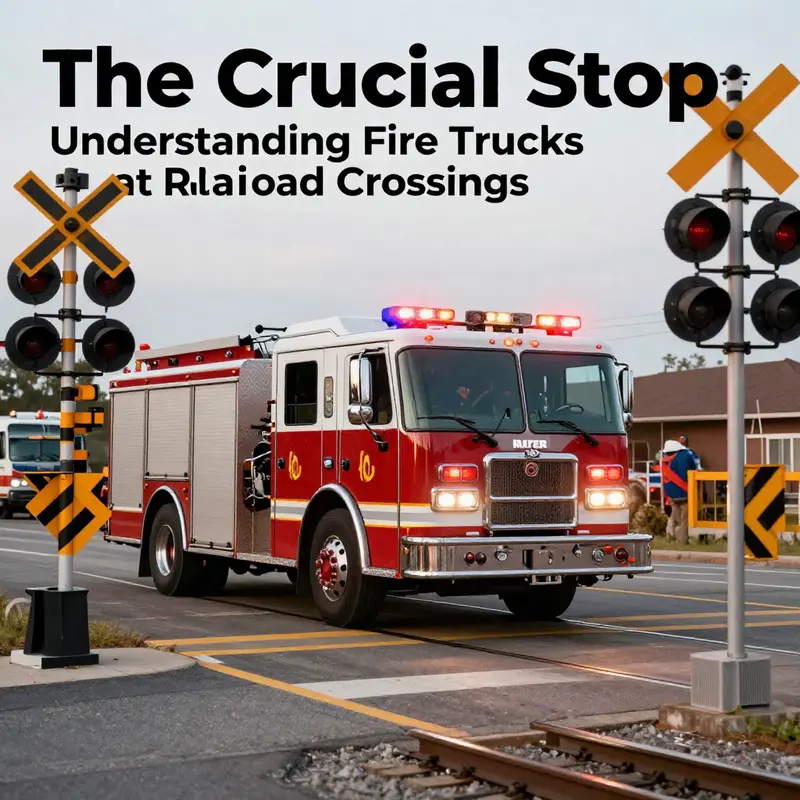
When Every Second Matters: Fire Truck Protocols and Exceptions at Railroad Crossings
Emergency response is about balancing speed with safety. At railroad crossings that balance becomes particularly delicate. Trains cannot swerve or stop quickly. Fire trucks are large, heavy, and often loaded with personnel and equipment. When these two realities intersect, policy and practice require disciplined judgment. While fire apparatus enjoy certain legal privileges during responses, the presence of active railroad tracks usually removes any blanket exception. Drivers and incident commanders must follow a predictable framework that protects crews, civilians, and rail operations while still allowing life-saving work to continue.
A central principle governs behavior at crossings: never assume a crossing is safe simply because nothing is visible. For at-grade crossings, flashing lights, bells, lowered gates, or an approach grade signal that a train is near. Those signals demand a stop for all vehicles, including emergency units. Even when signals are absent, the driver must look, listen, and verify before committing the apparatus. This is not an arbitrary caution. The kinetic energy of trains and the momentum of a heavy fire truck make collisions catastrophic. The default expectation is to stop and confirm the crossing is clear.
There are, however, narrow and controlled exceptions. When lives are clearly at immediate risk on the far side of tracks, incident commanders may authorize crossing despite an unusual or uncertain situation. Such decisions are not spontaneous. They are made after a rapid but structured risk assessment. The assessment weighs the immediacy of harm, the speed and visibility of rail traffic, available alternative routes, and the ability of the unit to clear the crossing before a train arrives. If crossing is authorized, additional safety measures must be taken, such as assigning a spotter on foot to monitor for approaching trains, using every available audible and visual warning on the truck, and limiting the number of apparatus committing to the crossing.
Coordination with rail operators is essential whenever operations near tracks are prolonged or complex. If responders expect to work in or under an active rail corridor, the rail company must be notified and, when feasible, train movements halted. This prevents catastrophic misunderstandings. For short, time-critical responses where immediate contact is impossible, responders rely on rapid scene evaluation and established local memoranda of understanding. Many jurisdictions have prearranged protocols outlining when and how rail companies intervene to protect emergency activities. Those agreements typically require that responders first attempt to secure the crossing visually and through radio contact, then escalate to direct rail notification if work will be near tracks.
Operational techniques reduce risk when a crossing must be negotiated. Crews frequently use a spotter positioned outside the truck to watch both directions of the track while the driver slowly advances. The spotter maintains direct communication with the driver. Speed is limited to a crawl. The truck should not stop on the tracks or straddle them. If vehicle or apparatus mechanics cause an unexpected stall, leaving the tracks becomes the priority; crews are trained to recognize and address this hazard before engaging in scene work. Engines and pumps are positioned so they can be quickly driven clear if needed, and tools and personnel are staged to avoid becoming obstacles.
Underpasses and grade-separated crossings present different challenges. An underpass might seem safer because it separates road and rail by elevation. Yet underpasses can introduce confined-space hazards: poor ventilation, smoke entrapment, and limited escape routes. If a fire or rescue occurs within an underpass, crews must consider smoke behavior, potential for toxic gases, and limited access for additional apparatus. Rail tunnels add layers of risk: electrified rails, restricted clearance, and rapid, high-speed train traffic. In these locations, coordination with rail operators is non-negotiable. When a train corridor is elevated or in a tunnel, responders must assume train movements are continuous and communicate with rail control centers to stop or reroute traffic.
Because the built environment influences risk, engineering solutions play a strong role in reducing the dilemma. Where traffic demands and rail activity are both high, grade separation—such as overpasses and underpasses—removes the at-grade conflict entirely. In places where conversion to grade separation is not possible, fencing and controlled access reduce pedestrian and vehicle intrusions. Investment in infrastructure reduces the number of emergency scenarios that require complex decision-making at crossings.
Training and local policy turn abstract rules into action. Fire departments that operate in rail-rich areas train regularly on crossing procedures. Simulated crossings, drills with spotters, and tabletop exercises with rail partners allow crews to practice rapid risk evaluation. Policies spell out when a driver must stop, how to conduct a visual sweep, and who authorizes a crossing under exigent circumstances. These rules also address ancillary concerns: how many apparatus may cross together, whether to leave a dedicated unit in reserve to block a crossing, and guidelines for apparatus positioning to allow fast egress.
Technology is adding layers of safety and information. In some regions, positive-train-control systems and real-time signaling provide data about approaching trains. Preemption systems can extend signal times for emergency vehicles and, conversely, can notify responders of imminent train movements. GPS-enabled dispatching can route units around high-risk crossings when seconds allow. Cameras and remote monitoring offer situational awareness to incident commanders. While these tools do not replace on-scene judgment, they provide supplementary information that can prevent miscalculation.
Liability and legal responsibilities emphasize the need for restraint and procedure. If a fire truck crosses an active track without taking prescribed precautions, and an accident occurs, civil and criminal consequences can follow. Legal standards generally recognize that emergency vehicles may deviate from traffic laws when responding to calls, but they must still exercise due care. Courts evaluate whether the crew acted as a reasonably prudent emergency responder would, given the circumstances and departmental policies. Documentation becomes crucial. After any crossing that involved deviation from standard procedure, incident reports should record the decision-making process, the risk assessment, and any communications with rail authorities.
When the crossing is at or near an airport or industrial site, specialized hazards appear. Aircraft rescue and firefighting operations may involve very large vehicles and fixed emergency access routes that intersect with rail lines. Industrial facilities often have private spurs and rail sidings. These contexts require specialized training and pre-planned coordination. Departments that operate heavy or specialized apparatus must consider those vehicles’ braking distances and clearance envelopes when crossing tracks. In some cases, alternative equipment, such as smaller, more agile units, may be dispatched to cross ahead and secure the scene while larger units stage nearby.
Practical on-scene steps become second nature with practice. When approaching a crossing, the driver reduces speed early. Windows and doors are opened to increase the chance of hearing a horn or bell. Headlights and strobes are used to increase visibility. The vehicle stops short of the gate or track, allowing a clear view in both directions. The driver and any spotter look along the track for the full sight distance, considering topography and vegetation that may obscure a train. If any doubt exists about a train’s approach, the safer choice is to wait.
There are also strong epidemiological reasons for caution: collisions at rail crossings often have multiple casualties, and recovery is complex. The mass and momentum of a train produce outcomes far worse than road collisions. Rescue operations on or near tracks also expose crews to secondary hazards, such as debris, unstable wreckage, and environmental contaminants. When the incident requires movement of victims across tracks, planning must account for whether tracks can be made safe, whether trains will be held, and how to communicate those constraints to all responding units.
A final practical consideration is community expectations and transparency. Residents and victims naturally assume emergency crews will do everything to reach them quickly. Departments must balance public expectation with operational prudence. Communicating why a truck stopped at a crossing can be as important as the decision itself. Many departments publish their crossing policies and engage in community outreach to explain the rationale for stopping, the risks trains present, and how safety protects both responders and the public.
The overarching theme is clear: exceptions to stopping at railroad crossings are rare, controlled, and documented. Fire apparatus may legally cross in extraordinary circumstances, but only after a conscious risk assessment and, whenever possible, coordination with rail authorities. Training, infrastructure design, technology, and interagency agreements all reduce the need to take risks. When the need to cross cannot be avoided, crews apply disciplined tactics—spotters, slow movement, communication, and contingency planning—to minimize exposure. These practices keep the focus where it belongs: saving lives while preventing preventable tragedies.
For departments seeking to refine their approach, studying infrastructure solutions such as grade separation provides useful context on long-term risk reduction. The Rice Road South Extension Project and similar grade-separation efforts show how eliminating at-grade intersections can remove the dilemma altogether. For more detail on such projects, see the underpass grade separation overview: https://www.railway-technology.com/projects/underpass-grade-separation/.
For a sense of the types of apparatus that may be staged or used in these scenarios, departments often consider specialized units and configurations. Information about emergency rescue vehicle options can provide ideas for equipment mix and deployment strategies: emergency rescue vehicle options.
Final thoughts
Understanding the requirements for fire trucks at railroad crossings is not just a matter of legal compliance, but also a critical aspect of safety for emergency responders and the public. By adhering to established regulations and operational protocols, business owners can ensure their teams are well-prepared to navigate these scenarios effectively. It is essential for all stakeholders involved in transportation and emergency services to prioritize safety and follow the correct procedures while recognizing exceptions in dire situations.

