
















Every business owner must navigate the complexities of emergency services, particularly regarding costs associated with fire trucks. Understanding whether you need to pay for a fire truck can significantly impact not only how you approach emergencies but also your financial planning. In this article, we will explore three key chapters: the costs associated with fire trucks during emergency responses, the charges applicable in non-emergency situations, and the broader economic implications of funding fire services. By breaking down these components, we aim to provide clarity on the financial responsibilities and considerations involving fire services, ultimately supporting informed decision-making among business owners.
Do You Have to Pay for a Fire Truck? The Hidden Economics and Everyday Realities of Emergency Response
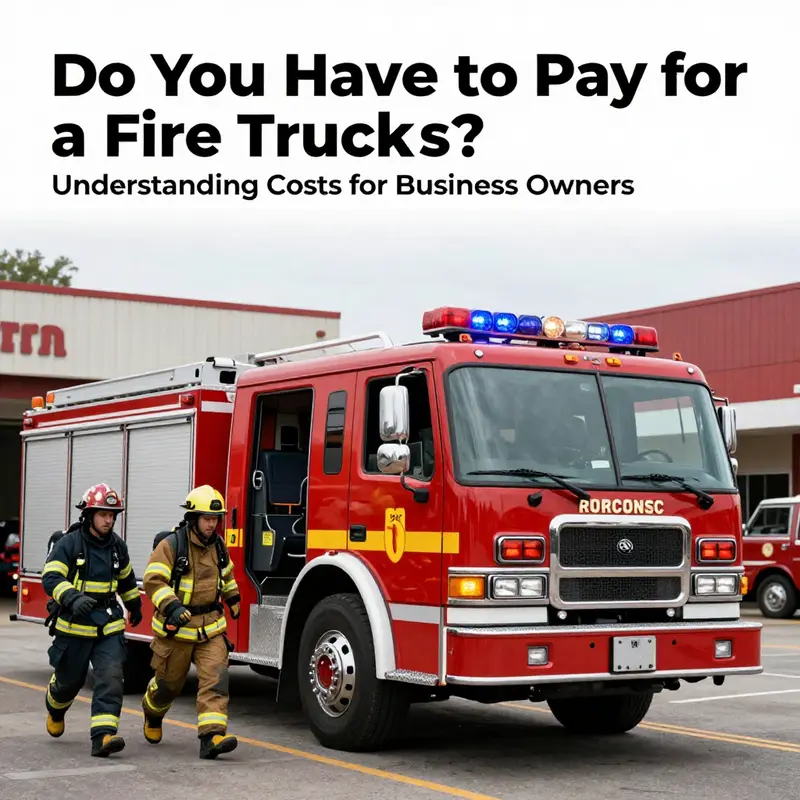
When a fire engine arrives at an emergency, the scene often inspires a sigh of relief more than a question about cost. The immediate answer in most places is straightforward: you do not have to pay to have a fire truck respond to an emergency. Fire trucks and the broader emergency-response network are funded through public revenue—primarily local taxes and government budgets—so the actual act of responding to a life-threatening incident comes at no direct charge to the people involved. Yet, the topic is not a simple yes-or-no equation. The public never sees the full ledger, and individuals may encounter costs in situations that sit just outside the emergency definition. Understanding where money does and does not flow helps illuminate not only the economics of a single call but also the broader system that keeps neighborhoods safe and resilient when alarms sound and hoses arc toward smoke and flames.
The most common misunderstanding centers on the boundary between emergency and non-emergency services. A fire department is designed to be available when danger is at its highest: when there is an active fire, when there is a medical call requiring extrication, or when rescue teams mobilize for a collapse or a hazardous-material incident. In those moments, the citizen who calls for help is not billed for the truck’s travel, its water or foam capacity, or the crew that fights the fire. The operational costs are absorbed by the city, province, or state and are treated as essential public services, much like police protection or road maintenance. In practical terms, this means that the price of the vehicle, its engines, and the crew’s immediate labor is not a line item added to a family’s bill after the sirens fade. The aim is protection of life and property, not revenue generation.
However, the boundary line is real and relevant. When the call is not an active emergency—say a fire department parade, a safety demonstration at a school, or a request to park a unit for a community event—the department may arrange for a fee or a reimbursement to cover the costs of mobilization, basic equipment wear, and personnel time. These non-emergency engagements reflect the underlying fact that the public’s safety system must be responsive and ready at all times, but there is no implicit presumption that every contact with the fire service is a no-cost event. The existence of fees in non-emergency contexts is not a new tax weapon; it is a mechanism to allocate scarce resources and to ensure that routine, non-urgent uses of a highly specialized fleet do not crowd out critical emergency readiness.
Another dimension of cost concerns the aftermath of an emergency. If a fire truck causes damage while delivering life-saving work—perhaps a minor contact with a fence, a gate, or a driveway—the incident may be handled through the department’s insurance, much like any other auto or property damage claim. In most cases, the fire department’s insurer covers damages that occur in the line of duty, but liability can be complicated by local laws and piecemeal legal standards. Rarely, disputes arise over fault and responsibility, and those disputes may wind their way through municipal or civil processes that determine whether the property owner or the department bears the cost. Even when liability questions surface, the underlying principle remains unchanged: the emergency response itself is funded publicly, and liability considerations tend to be the exception rather than the rule.
A related but less frequent potential cost comes from fire prevention and safety inspections. Some departments charge for routine inspections, although in many communities these inspections are offered free of charge or subsidized. The rationale here is straightforward: inspections are a proactive arm of public safety, designed to prevent fires before they start. When fees exist, they typically reflect the administrative burden of scheduling, notifying property owners, and performing scheduled checks for compliance. As a rule, for most residents and small businesses, the most salient takeaway is simple: an emergency response continues to be provided at no direct cost during a crisis, and any charges tied to inspections or non-emergency services are the exception and vary by jurisdiction.
The financial backbone of these arrangements rests on the broader system of municipal budgeting. Fire departments operate within a framework where capital costs—like building and maintaining fire stations and purchasing apparatus—are financed through long-range plans and tax-based revenue streams. The price tag attached to a single fire truck, while substantial, is only one line in a much larger ledger that covers equipment maintenance, training, insurance, and ongoing operations. Because the public’s safety hinges on rapid, reliable responses, communities often restructure or reprioritize budgets to preserve readiness. The result is a safety net that does not trap ordinary residents into paying directly at the moment of crisis, even as the city or region manages significant asset investments in the background.
To appreciate how the actual vehicles vary in cost and capability, it helps to consider the range of equipment that falls under the umbrella of “fire truck.” The research materials present a spectrum that starts with lighter, more agile units and scales up to heavy-duty platforms designed for complex rescues and high-capacity water delivery. A 10-ton class unit, for example, might carry a water and foam tank with a capacity of around 15,000 liters. The price range for such a vehicle typically falls between $25,000 and $55,000, depending on customization, equipment, and supplier options. This price point captures both the vehicle’s chassis and basic firefighting packages, but it is also sensitive to the specifics of the buyer’s needs, such as foam systems, pump configurations, and onboard tools.
Smaller models, perhaps intended for urban or rural settings where maneuverability is key, show a different economics profile. A 4,000 to 5,000 liter water and foam tank truck can cost roughly $36,000 to $45,000. These smaller units emphasize efficiency and compactness, trading some capacity for greater flexibility in tight streets or narrow alleyways. The decision to adopt a smaller platform often reflects a strategic choice by a department to balance immediate response with the realities of roads, geography, and maintenance budgets.
On the opposite end of the spectrum sits the larger, more advanced unit for specialized operations. A 12-ton emergency rescue fire truck with a 12,000-liter tank represents a higher price tier, typically in the $75,000 to $90,000 range. These larger platforms may integrate more sophisticated rescue tools, advanced communication gear, and enhanced water delivery capabilities designed to support multi-unit responses or complex incidents. And then there are the heavy-duty models, with capacities around 25,000 liters and multi-functional tanks that can mix water, foam, and dry powders for different types of fires. Such workhorses can exceed $90,000, particularly when customized for specific regional needs or integrated with cutting-edge safety and operations software. These numbers reflect the market reality that the price of emergency vehicles rises with capacity, sophistication, and the breadth of tasks they are expected to perform.
One constant across all sizes is the value-added services that accompany purchases. In many cases, the price includes a period of after-sales service that can be pivotal for an emergency fleet. A common arrangement is a 12-month warranty plus ongoing technical support, a package that can be the difference between a fleet remaining operational after a minor fault and a costly downtime that hinders response. For the agencies relying on these trucks to protect lives, such assurances matter as much as the vehicle’s raw power. The market recognizes this, embedding long-term reliability into the purchase as a core feature rather than an optional add-on.
The variability in cost is not just about size and capacity; it also hinges on the range of features a department wants. A unit can be configured with enhanced water delivery systems, foam capabilities for specific fire types, or dry-pighting options for the first responders’ safety gear. Optional equipment—such as upgraded pumps, extended reach ladders, or integrated navigation and telematics—drives up the price, but it also expands the vehicle’s utility across a broad spectrum of emergency scenarios. Customization is therefore a double-edged sword: it can align a truck to a department’s unique geography and incident profile, but it also adds to the upfront expenditure. In a public safety context, however, such investments are justified by the improved odds of protecting lives and reducing overall damages, especially in regions with challenging terrain or intense wildfire risk.
The public’s understanding of these numbers often comes up short amid the immediacy of a crisis. People assume that every vehicle that responds to a call is prepaid by the person who dials the emergency number, or by the property owner whose property is threatened. In practice, the financial architecture of emergency response relies on the legitimacy of the call itself and the public system that funds it. The truck’s price, its fuel, the crew’s training, and the maintenance cycle all belong to a centralized budget designed to ensure readiness around the clock. That means the typical resident will not confront a line item at the end of the day for the truck’s presence at an incident, even though the city or district has paid the bill in advance and will continue to pay for ongoing operations through taxes and fees collected for public services.
Yet the story of costs does not end with the scene of the fire truck’s arrival. In the ordinary course of citizen life, people may encounter charges that reflect non-emergency use or administrative processes. For instance, if a community wants to host a public safety day with a fire department demonstration, a fee structure may apply to cover personnel time, equipment wear, and coordination efforts. This is not revenue generation as much as resource management: it ensures that raising public awareness does not undermine the fleet’s ability to respond when danger is real. Those charges, however, should be transparent and proportionate, clearly tied to the non-emergency service delivered, and designed to encourage safety without deterring communities from seeking education and collaboration that reduce the overall risk of fires and injuries.
In the end, the governing principle remains consistent: emergency response is designed to be accessible, immediate, and free at the point of use. The public safety framework accommodates a spectrum of activities and costs, but the core mission—saving lives and protecting property during a crisis—depends on a well-supported, well-maintained fleet. For residents, the practical takeaway is that there is no hidden bill waiting at the curb when a fire truck rolls up to a blaze. The larger financial question is about how cities, towns, and regions plan for and fund prevention, training, response capabilities, and upgrades to their fleets over time. The numbers behind a single vehicle speak to a broader discipline of public finance: investing now to prevent greater losses later.
If readers want to explore more about how firefighting vehicles are organized and categorized, it helps to look at the broader catalog of firefighting equipment and trucks as a continuum. The fire-fighting truck category provides a window into the variations across vehicle classes, their intended environments, and the options departments consider when upgrading or expanding their fleets. This catalog can illuminate why a department might opt for a compact 4,000–5,000 liter model in a densely populated city and why another jurisdiction might lean toward a larger, more capable unit for rural landscapes where water supply is a challenge. For those curious about the specifics of vehicle types and configurations, you can browse the collection here: fire-fighting truck category.
This chapter has sketched the landscape of costs, but it also invites readers to consider how costs are distributed and perceived. The fact remains that the emergency response system is designed to function as a public good. Taxpayers fund readiness, training, and equipment so that when alarms sound, help is immediate and not contingent on the caller’s ability to pay at that precise moment. The trade-off is that communities must continuously invest in maintenance, upgrades, and staff development to keep pace with evolving risks. Those investments, although not visible to the moment of a siren, are what reduce the cumulative damages from fires and other disasters over time. The public understands that the carceral logic of charging at the point of contact would undermine trust and safety in moments that require trust and safety most.
As with many public services, what you pay for a fire truck is less about the price of the vehicle itself and more about the value of coverage and resilience the fleet provides across a community’s lifecycle. A city that prioritizes prevention—through safer building codes, more robust inspections, and faster, more precise emergency responses—will see the public costs of catastrophic losses fall relative to the baseline, even as the headline price of individual units remains high. The balance is delicate: invest enough to sustain readiness, and you protect more lives and more property; underinvest and the cost to the public later—through greater damages and longer outages—tends to be higher than the savings imagined in any single purchase.
In the end, the question “do you have to pay for a fire truck?” resolves to a simple truth layered within a complex system. The emergency response itself is free at the point of service, but the broader ecosystem that supports that service—fleet procurement, maintenance, training, prevention programs, and occasional non-emergency engagements—rests on a public funding model designed to keep communities safe without turning every call into a bill. The costs of the trucks, the quality and breadth of their equipment, and the reliability of the crews who operate them are the tangible manifestations of that funding. They reveal a system that treats protection as a public investment rather than a private transaction, a system that saves lives not by charging people per siren but by sustaining a durable capacity to respond, every hour of every day.
External reference: https://www.alibaba.com/product-detail/China-Fire-Fighting-Truck-10ton-15000L-Water_1602454877143.html
When Help Arrives for Free: Demystifying Fire Truck Deployments in Non-Emergency Moments
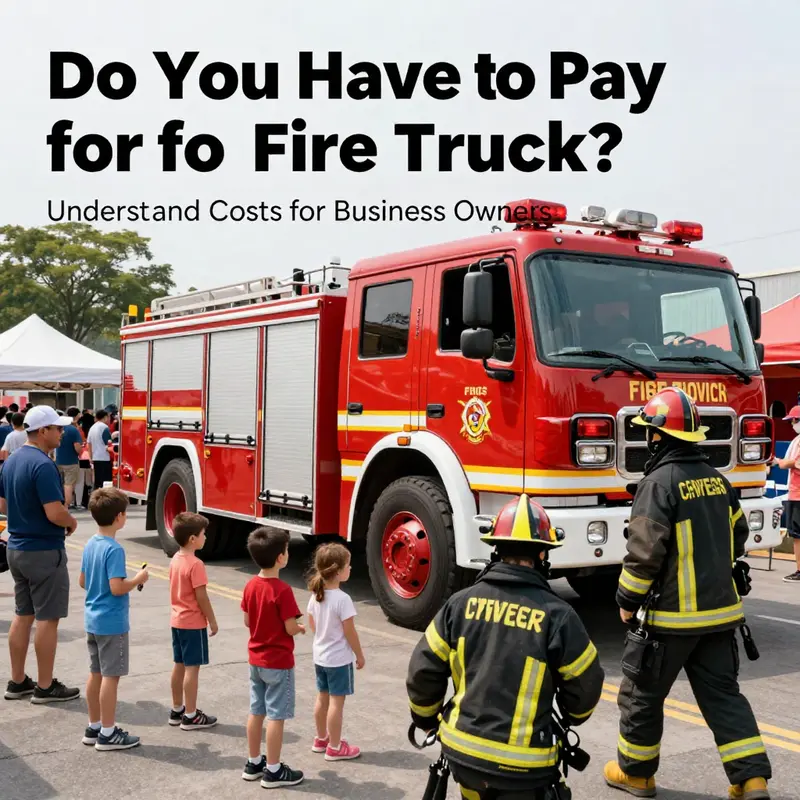
When people ask whether they have to pay for a fire truck, the instinct is to scan for a hidden bill tucked away in a legal clause or a fine print somewhere at the bottom of a service agreement. The simpler, more accurate answer is grounded in how fire protection is funded and how emergency response is organized in most communities. In everyday terms, the dispatch of a fire truck to an emergency is funded by the public treasury. Taxes, property assessments, and general funds support the readiness of firefighters, pumper trucks, aerial ladders, and support vehicles so that when danger arises, help arrives with speed and capability rather than with a price tag. This arrangement exists because safety is treated as a public good—a service designed to be accessible to everyone, irrespective of income, time of day, or the particular contours of any single incident. The overarching goal is to remove financial barriers to seeking help at moments of crisis, ensuring a neighbor’s impairment or a family’s fear does not become a barrier to life-saving assistance.
That said, the surface clarity of “no charge for emergency response” can feel murky if you zoom in on non-emergency situations or on the rare exceptions that do surface in policy documents and city budgets. Even though most fire department activity centers on protecting life and property during fires, medical calls, vehicle crashes, and a range of hazardous incidents, there are moments when a truck might be summoned for reasons that do not fit a traditional emergency label. The crucial distinction, then, lies not in the hammering out of a universal rule but in how local agencies describe, negotiate, and implement those rules in practice. In many jurisdictions, non-emergency requests for a response—such as demonstrations for schools, public safety events, or community outreach activities—are still framed within the public funding model. The rationale is straightforward: if a fire department is available to the community as a public service, then members of that community should be able to access it for educational, safety, and preventive purposes without bearing an out-of-pocket cost at the moment of contact.
Yet reality presents a subtler melody. Some departments distinguish between routine non-emergency activities and situations that require specialized, resource-intensive support beyond the standard mission. When an agency goes beyond its routine public-safety function—say, a planned, large-scale demonstration requiring extra personnel, equipment staging, or extended access to facilities—there may be a fee structure for the added complexity. These arrangements are usually negotiated in advance through a formal agreement with organizers or partner agencies and are intended to cover the incremental costs of providing a higher level of service. They are not a rule that applies to ordinary non-emergency rounds or to the usual demonstrations of gear and technique that many communities host to build safety awareness. The trend across many departments is to ensure that any such charges are transparent, predictable, and aligned with how much ancillary staffing and specialized equipment are needed to execute the event safely.
In practical terms, this means that if a fire truck is dispatched for a non-emergency reason, the default expectation remains consistent with the broader public-safety framework: the response is funded by public revenue, and charges are not the default for everyday non-emergency engagements. When a city or department does require a fee for a particular non-emergency service, it is typically because the event involves unique logistical challenges, substantial equipment rental, or the deployment of specialized units that would otherwise be held in reserve for actual emergencies. The policy logic is rooted in fairness and efficiency: the public should not bear the cost of extreme or non-standard utilization that diverts critical resources from real emergencies. Importantly, when such charges exist, they are generally spelled out in advance, and organizers—or the organization requesting the service—enter into a documented agreement with the fire department. The aim is to prevent ambiguity and to ensure that the department can sustain readiness for true emergencies while still supporting community engagement and education.
The discussion also touches on liability and accountability. If a fire truck or its crew cause property damage while responding to an emergency, the incident is typically processed through the department’s insurance and the municipality’s risk-management framework. In most cases, liability rests with the public entity rather than with a private homeowner or a caller who triggered the response. This arrangement aligns with the public-funding model: the budget for emergency response includes not only the crews and trucks but also coverage intended to handle the unforeseen consequences of operating under urgent conditions. Of course, the legal landscape can vary by jurisdiction, and there are rare cases where assessable liability might be contemplated depending on local laws and the specific circumstances of the incident. The practical takeaway is simple: if there is any question about damage claims, residents should document the event, report it through the proper channels, and rely on the established procedures for claims handling.
Alongside the liability dimension sits the question of prevention and inspection. Fire prevention inspections occupy a central place in reducing risk and sparing communities from the harm that fires can bring. In many places, routine inspections are part of public safety offerings and are funded through the same public budget, with the aim of identifying hazards before they ignite. Some departments, however, may implement fees for non-routine or enhanced inspections, particularly in high-demand environments or for facilities with complex risk profiles. Even so, these charges are not the norm for standard home visits or routine compliance checks. The policy design favors broad access to prevention services because prevention, when supported by public funds, yields a safer community and fewer emergencies in the long run. The public-interest calculus is straightforward: prevention is cheaper than suppression, and funding for prevention contributes to overall public safety in a way that benefits the entire community.
For residents planning events or evaluating the cost implications of non-emergency collaborations, the practical guidance is to engage in early, transparent conversations with the fire department. When planning a parade, a safety fair, a school presentation, or a community drill, organizers should prepare for nuanced discussions about resource requirements, staffing, and potential costs for specialized services. This approach helps maintain the alignment between public safety’s core mission—rapid, professional response to danger—and the community’s safety education and outreach goals. It also preserves trust between residents and responders by making expectations explicit long before any trucks roll into a venue. In this context, an important nuance emerges: while the default is that emergency responses are funded publicly and free at the point of service, the door remains open for paid, clearly defined arrangements when the event’s scope or risk exceeds ordinary levels of activity. Such arrangements are not ad hoc charging; they are part of a structured, documented agreement that ensures accountability for both sides and preserves the department’s ability to respond to true emergencies with the same level of readiness.
That balance—public readiness, transparent exceptions, and proactive engagement—constitutes the backbone of why the fire service remains accessible to every resident in need. It is not a perfect system, and it does require ongoing vigilance, budgetary discipline, and public conversations about how best to allocate scarce resources in a changing world. Yet it is precisely this blend of universal accessibility for true emergencies and clearly defined, pre-arranged costs for non-standard services that keeps the system credible and trustworthy. When a siren sounds and a crew arrives to rescue a family from danger, the community’s investment in readiness is validated in tangible, life-saving outcomes. The calm certainty that a skilled team is on the way—without you needing to scrutinize a bill in the heat of the moment—remains one of the most powerful aspects of public safety.
For those seeking a more procedural sense of how policies are articulated in practice, it is worth noting that the exact language, the fee schedules, and the triggers for non-emergency charges differ by city and state. This is not a defect in the system; it is a necessary feature of governance that must reflect local budgets, risk profiles, and public accountability standards. If you want to verify the framework for your own community, the most reliable route is to consult the fire department’s service guidelines, the city budget documents, and, where available, the public communications that explain how calls are prioritized and funded. The big-picture truth remains consistent across jurisdictions: emergency responses are a public good funded by the community, while charges for non-emergency or specialized services exist only in particular circumstances and are designed to be predictable and transparent.
To anchor this discussion in a practical example, consider a city that routinely hosts safety demonstrations at schools, summer fairs, and neighborhood night events. The department might provide the trucks and firefighters to participate in these activities at no direct charge as part of the public-safety mission. If, however, an organizer requests a high-touch, multi-day training exercise that requires additional aircraft-style rescue gear, heavy equipment staging, or extended staffing beyond the normal demonstration setup, the department could present a formal cost proposal. The proposal would be tied to a contract or memorandum of understanding that outlines the scope, the equipment usage, the number of personnel involved, and the timeframe. This approach preserves the integrity of the emergency-response budget while enabling the community to benefit from specialized education and resilience-building activities. It is a pragmatic compromise designed to support both safety education and the department’s capacity to respond quickly and effectively to emergencies when they occur.
For readers who want to see a concrete example of how one city communicates about non-emergency services, a useful reference can be found in official department materials. The guidance there emphasizes that non-emergency dispatches are typically funded by public funds, and any fees are pursued through clear, advance agreements rather than surprise charges. It is a reminder that most people will not encounter a bill for a standard emergency response, and that organizations seeking to engage with fire services for special events should plan ahead, ask questions, and document the terms of any cost-sharing arrangement before the event. In this sense, the non-emergency question becomes less about the price tag and more about the clarity of expectations and the shared responsibility of keeping communities safe and well-informed.
As you move through the specifics of your locale, consider the broader implication: the fire department’s capacity to protect lives depends on ongoing public investment, and that investment is reinforced when the community understands how costs, charges, and services fit into the larger safety framework. The public funding model invites trust that help will arrive when needed, and it invites accountability so that any deviations from that standard—whether for non-emergency demonstrations or for specialized services—are handled with transparency and fairness. In a world where safety is a communal enterprise, the moment you dial for help should not be overshadowed by the worry of a financial burden. The goal is to preserve the sense that, when danger arises, the protection offered by trained professionals with state-of-the-art equipment is available to everyone, without hesitation and without a bill that could keep a frightened family from calling for help.
For readers who want a quick, direct takeaway: in most places, you do not pay for a fire truck when it responds to an emergency. Non-emergency responses can involve fees in rare cases, but those fees are typically pre-announced and arise only when specialized services are requested or when significant additional resources are required beyond the standard mission. If you ever need to organize a public safety event or request a non-emergency response, start with a clear conversation, request a formal quote, and rely on the department’s established processes to determine what is included in the service and what would require an additional agreement. This approach keeps the focus where it should be—on safety, response readiness, and the community’s shared responsibility to protect one another. It also preserves the implicit trust that makes communities resilient: the certainty that help will come, and that the system behind that help is designed to serve the public good rather than to generate revenue in moments of vulnerability.
Internal resource for further context: Emergency Rescue Vehicle
External reference: https://www.lafd.org/NonEmergencyServices
The Price of Protection: Do You Pay for a Fire Truck During an Emergency
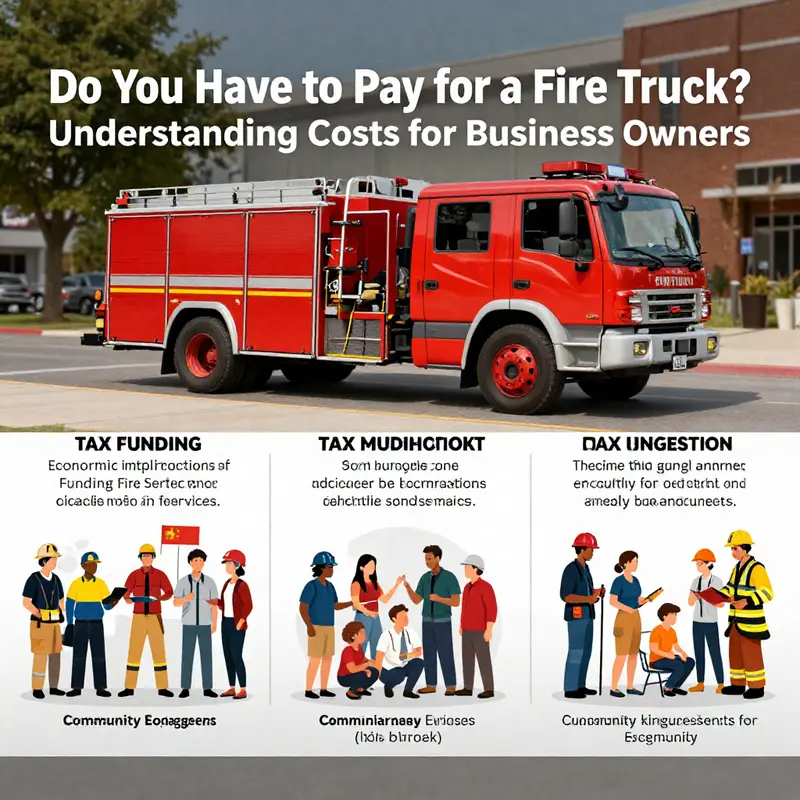
In emergencies, the fire truck arrives at no direct cost to the caller, because firefighting services are funded from public budgets and taxes. The economics of protection rests on the idea that safety is a public good: broad investments in prevention, equipment, and training reduce losses for everyone. Costs can appear in nonemergency contexts, such as fees for noncritical events, inspections, or managing property damage after an incident, but the core emergency response remains universally available. A well-funded department improves response times, expands prevention programs, and strengthens resilience, which in turn lowers long-run societal costs. Volunteers, mutual aid, and mixed staffing models further influence efficiency and coverage. The policy challenge is to design funding structures that sustain protection as a shared obligation while remaining accountable to taxpayers and communities. The central takeaway is that protection is a public good; you do not pay at the door for the rescue, but you do pay through taxes, premiums, and strategic investments that keep communities safer over the long term.
Final thoughts
In summary, understanding the financial aspects of fire truck services is essential for business owners. While emergency responses typically incur no direct costs, recognizing the implications of non-emergency use and the broader economic context underpinning fire service funding is crucial. Being informed empowers businesses to make strategic decisions regarding emergency preparedness and community engagement, ultimately fostering a safer environment for all.

