
















Fire trucks serve as vital instruments in firefighting, specially designed to hold and transport water necessary for combating flames efficiently. For business owners, understanding these vehicles’ water storage capacity and functionality can directly impact fire safety preparedness and insurance considerations. As we delve into the details of fire truck water capacities, types, operations, and compliance with industry standards, you’ll gain insights that can help safeguard your business and enhance your emergency response strategy.
Holding Water on the Front Line: How Fire Trucks Carry, Store, and Exploit Onboard Water for the First Knockdown
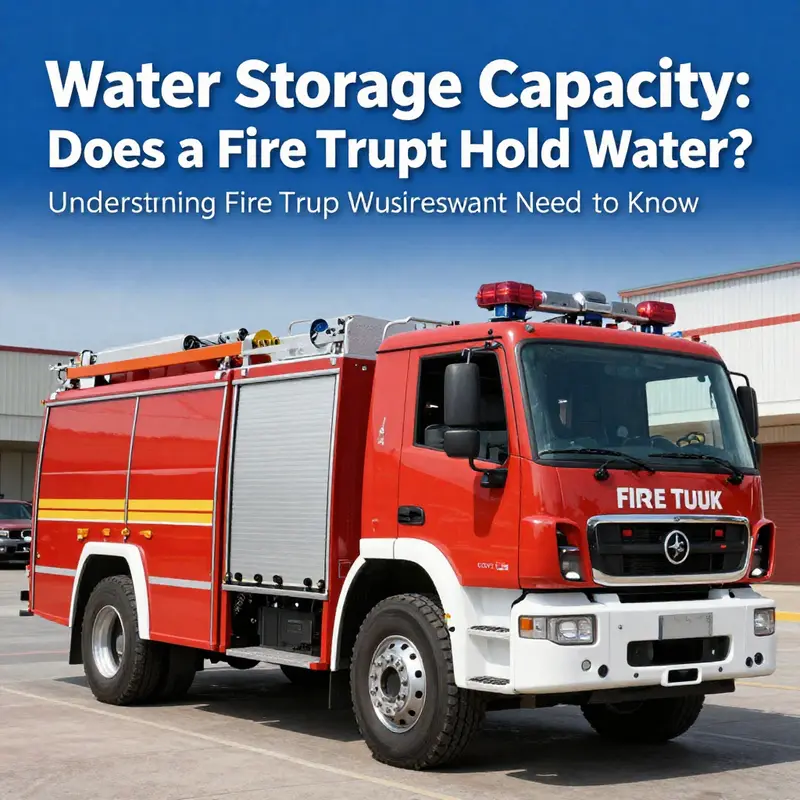
When a fire alarm rings and a truck rolls toward the blaze, a crucial question rides along in the cab with the crew: does this vehicle actually hold water, and if so, how much? The instinctive answer is yes, but the full story is more nuanced. Fire trucks are not mere transports to the scene; they are engineered systems that integrate propulsion, pumping, and water storage into a single, mobile firefighting tool. Water, in this setting, is the lifeblood of the first attack. It buys time, suppresses the growing flames, and creates a safer entry for crews to perform rescue operations. The on-board water supply is especially critical in the earliest minutes after arrival when access to hydrants may be blocked by smoke, traffic, or structural hazards. In those moments, every second and every liter counts. That is why the size and configuration of a fire truck’s water tank matter so much, and why departments choose different models to match their local risks and urban layouts. The result is a family of vehicles that share a common purpose—delivering water to the fire—but diverge in capacity, weight, and mission. The simple question, does a fire truck hold water, opens a broader conversation about how firefighting teams plan for the initial response and the wider effort that follows once a hydrant is secured or a water shuttle is established.
To understand what that means in practice, it helps to look at three broad categories of fire trucks and the water storage they carry. Small fire trucks, often seen in dense urban zones where streets narrow and parking is scarce, sit at the lower end of the scale. They typically carry between 500 gallons and 2,000 gallons of water, or roughly 1,900 to 7,600 liters. In liters, that range translates to a little under two thousand liters on the low end to a little under eight thousand liters on the high end. The practical effect of these capacities is immediate: responders can begin a direct knockdown of a small residential or commercial fire without waiting for a hydrant to be connected. The trade-off is that these vehicles are lighter and more maneuverable, which helps them slip through tight streets and reach the seat of the fire quickly. They are ideal for initial attack in neighborhoods where a rapid, direct application of water can prevent a fire from growing beyond a single structure.
Beyond the smallest units, urban and suburban fleets deploy larger carriers whose water tanks occupy a broader portion of the vehicle’s mass. Medium-duty or larger response trucks carry roughly 6,000 to 10,000 liters (about 1,600 to 2,600 gallons). In the United States and many other regions, this class is where the everyday firefighting work happens. The capacity is enough to sustain a sustained attack long enough for crews to locate a hydrant and connect a pumper operation, or for a pair of units to develop a reliable water supply system on site. These trucks strike a balance between capacity and mobility. They can traverse city streets with relative ease while still offering a substantial volume of water to start cooling, exposing, and controlling a fire. In suburban layouts, where hydrant density may be lower than in dense city cores, these medium-to-large trucks provide a reliable bridge between the immediate needs on the ground and the longer-term water supply strategy from a nearby hydrant network.
Large fire trucks step into a different class of capability. Their tanks often hold between 4,000 liters and 20,000 liters (roughly 1,055 to 5,280 gallons), and in some configurations the largest models push beyond 20,000 liters. These are the workhorses of major incidents, industrial sites, and wildfire suppression efforts where a longer on-scene water supply is essential. A big truck can sustain an attack for a longer period, with fewer interruptions while crews identify hydrants, deploy additional hose lays, or authorize a water shuttle operation if a hydrant network is sparse or compromised. When a fire involves a large building, a chemical plant, or a sprawling warehouse, these trucks can pour a continuous stream of water onto the flames, enabling ground teams to advance with less risk of running dry and allowing the incident command to set up strategic water distribution through multiple lines and pumpers.
Foam trucks, while also capable of carrying water, introduce a different dynamic by mixing water with foam concentrate to better tackle certain kinds of fires. These vehicles may carry between 3,000 and 15,000 liters of foam concentrate or a water-foam mixture. The basic idea is familiar: foam spreads more quickly across surfaces, blankets hydrocarbon fuels, and increases the effectiveness of a direct application. In practice, foam trucks are a specialized tool for fires involving flammable liquids or fuels, such as those found in chemical plants, refineries, or industrial settings where pure water is less effective. The interplay between foam concentrate and water on board a fire truck is an example of how modern apparatus is not just about raw volume but about the strategic use of resources to create a safer, faster, and more efficient response. Some of the most capable foam configurations exist in the range of 12,000 liters or more of total capacity dedicated to foam systems, with certain models designed for sustained operations that may approach 20,000 liters when foam storage, mixing systems, and water capacity are combined to meet the demands of high-risk environments. This blend of water and foam highlights a broader principle: the capacity of a fire truck is not just about the number of liters in a tank, but about how those liters are used to blunt the momentum of a fire and protect life and property.
There are also long-range water supply vehicles, built for the kind of firefighting that spans miles or requires a remote proximity to a water source. These platforms can carry more than 50 tons of water—well over fifty thousand liters in practical terms. They are deployed where the fire scene is remote, hydrants are scarce, or an extended incident requires a reliable, large-volume water source until a hydrant network can be reestablished or a water shuttle is put into effect. The existence of such vehicles speaks to the scale of modern firefighting and the engineering that underpins it. On paper, they may seem like overkill for a typical apartment fire, but history and training remind us that large incidents—industrial fires, wildfires spreading toward communities, or disaster recovery scenarios—often demand the ability to flood the scene with water for hours at a time.
The National Fire Protection Association, which keeps track of standards and best practices, reinforces that city main battle fire trucks often hover in a practical middle ground. On average, NFPA standards place the typical city attack apparatus in a water capacity band around 8 to 12 tons, recognizing that many urban engines carry tanks within this range and that larger, more capable models have historically been deployed where the hazard profiles justify them. It does not imply a single standard; rather, it reflects real-world diversity. The footprint of a tank, its weight, and how it affects handling and stability are all part of the design calculus. Fire departments must balance the desire for more water against the realities of road geometry, vehicle weight limits, and the need to deploy hoses, pumps, and personnel efficiently. The result is a nuanced ecosystem of on-board water storage that is tailored to the geography, risks, and response philosophies of each community.
A unifying thread runs through all of this: water storage on a fire truck is a first-line shield that buys time. When a unit pulls up to a blaze, water on board can begin cooling, knocking down flames, and protecting evacuating occupants before external water supplies are secured. Without onboard water, the immediate suppression effort would have to wait for hydrant connections or the arrival of additional pumpers. In many urban areas, hydrant availability and street layout can be limiting. In other settings, such as rural zones or large industrial facilities, the need to stage a water supply through a series of hoses and pumps becomes part of the incident plan. The onboard water tank is thus not a mere reservoir; it is a carefully integrated piece of a larger strategy that will evolve as the incident unfolds.
To connect the threads of capacity and purpose, consider how a fire department might plan a response. A small city with tight streets may rely on a fleet rich in small and medium trucks that can arrive quickly and begin a reliable knockdown while a larger incident evolves. A suburban district with variable hydrant density might prioritize medium-to-large units that can bridge the gap between the initial attack and the securing of a steady water supply. In industrial districts or wildfire-prone regions, the fleet may tilt toward large-capacity engines and foam-equipped vehicles to deal with high-risk fuels and complex scenes. Each choice reflects a calculation: how much water is reasonable to carry, how heavy the truck can be while maintaining drivability, how much space the crew needs for equipment and decontamination, and how long the unit must operate before a fresh water source is secured. The water in the tank is a finite resource, but it is also a symbol of preparedness and resilience.
For readers who want to visualize how these choices map onto real-world equipment, a closer look at the current configurations in circulation can be illuminating. The water-tanker fire truck category offers a practical window into the kinds of solutions departments deploy when the mission requires more than a city hydrant can supply. This category focuses on vehicles designed to carry substantial water loads and to deliver them efficiently, with configurations that emphasize reliability in the face of demanding urban and industrial environments. If you want to explore this further, you can browse the water-tanker fire truck category to see how capacities are allocated and how different chassis and pump combinations support varying operational needs. water-tanker fire truck category.
A final note on the practical implications of water storage on board: the weight of water is not negligible. One liter of water weighs one kilogram, so a 10,000-liter tank adds roughly ten metric tons of weight to the vehicle, excluding the weight of the truck itself and all of its equipment. As capacity climbs, so too does the challenge of maintaining safe handling, braking performance, and fuel efficiency. That is why the design process for a fire truck weighs capacity against mobility, speed, and stability. It also explains why some departments maintain a mixed fleet rather than a single oversized apparatus. By pairing small, quick-response units with larger, high-capacity trucks, fire services maximize the probability that a scene will be stabilized rapidly while still ready to scale up as the incident grows. In the end, the question of whether a fire truck holds water is not a binary yes or no; it is about how much and how effectively that water can be applied when it matters most.
External resources can give observers a sense of the breadth of capabilities available in the market and a sense of the scale at which some high-capacity systems operate. For a concrete look at foam-focused and high-volume storage configurations that extend beyond the basic water tank, see an external listing detailing foam-capable, high-capacity trucks. This resource provides a sense of how tank size, concentrate capacity, and on-board mixing systems combine to address specialized fire scenarios: https://www.alibaba.com/product-detail/12000L-Foam-Fire-Truck-with-Advanced_1600735591216.html?spm=a2700.100176.0.0.37c31e7bYqJjZs
null
null
Liquid Logic on the Line: How Fire Trucks Carry, Manage, and Source Water in the First Moments of Firefighting
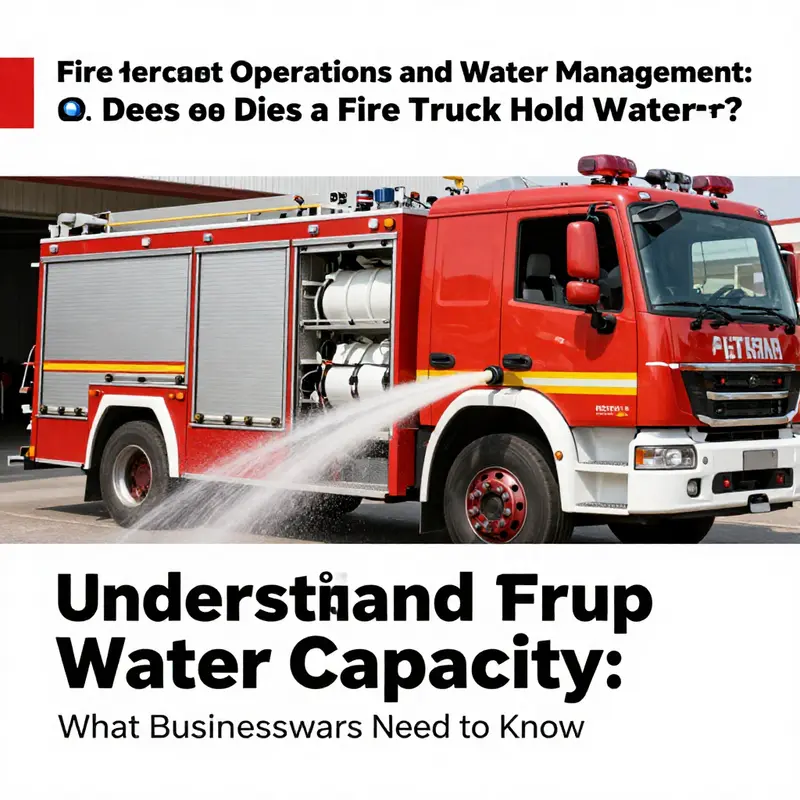
Does a fire truck hold water? The question invites a simple yes-or-no verdict, but the truth is more nuanced. Fire trucks are not just rolling reservoirs. They are mobile hubs of water supply, pump power, crew, and equipment, all coordinated to confront a blaze the moment the siren wails. Onboard water matters, but it is only part of a broader system that starts with the truck’s arrival and extends to the hydrant, a lake or river, or a temporary water source brought to the scene. The core purpose of the vehicle, after all, is not to stand still and pour water for hours, but to mobilize people and hardware quickly, connect to reliable sources, and sustain a stream of water as long as the fire demands. In that sense, the numbers tell the story, and the story reveals the logic behind modern fire service design. A typical city engine or pumper does carry water, but the volume carried onboard is a finite resource intended to bridge the gap until a steady supply is established. The amounts vary by vehicle class and mission profile. Light-duty vehicles, sometimes described as small water tankers, carry roughly 1,500 to 5,000 liters of water. In this range, the advantage is maneuverability. Narrow streets, tight urban blocks, and early-stage fires respond to a nimble chassis that can arrive quickly, reach the source, and begin the knockdown while hoses are strung to a hydrant or to a mobile water supply. Medium-duty water tankers step up the capacity to about 6,000 to 10,000 liters. They are the workhorses of many urban and suburban fire stations, capable of delivering meaningful volumes while still maintaining access to dense streets and parking. Heavy-duty water tankers go even farther, with 10,000 to 20,000 liters ready to discharge at the nozzle. These trucks are summoned to environments where fires are large, complex, or involve significant hazard, including industrial facilities or areas where water must be contributed from multiple sources to sustain a long attack. The most specialized among the water-lean fleets add another dimension: foam trucks mix water with foam concentrate to combat hydrocarbons and other challenging fuels. They hold between 3,000 and 15,000 liters of the foam-water mixture, a formulation designed to blanket a flammable liquid fire and blanket suppression challenges that water alone cannot meet. And then there are long-range water supply vehicles that can carry more than 50 tons of water, meant for large-scale firefighting or remote locations where hydrants are scarce. This spectrum of capacities underlines a central theme: onboard water is a temporary asset, a bridge, not a stand-alone solution. The National Fire Protection Association’s standards reflect a similar nuance. City main battle fire trucks—the engines and pumpers that form the core of many urban departments—often operate with an average water capacity in the 8 to 12 ton range. In practical terms, that equates to roughly 8,000 to 12,000 liters, with larger models pushing past that range when the mission demands it. The NFPA and other authoritative resources emphasize that these numbers are context-dependent. They reflect not only the size of the chassis and the engine’s pumping capability but also the local water supply strategy, the size of hydrants, and the geography of the service area. The question of whether a fire truck holds water thus becomes a matter of timing and strategy as much as volume. Water on board is a critical, but inherently interim, measure. In the earliest minutes of an incident, the crew needs a starting stream to begin suppression and to support initial leadership decisions. If a hydrant is nearby and accessible, the crew can connect, draft, or pair with a mobile water supply tender to deliver a continuous flow of water to the nozzle. If a hydrant is compromised or inaccessible, the onboard reserve buys precious moments to secure alternative sources and to organize a more durable water plan. The onboard water acts as a buffer. It is a flexible asset that allows firefighters to begin attacking the fire while the rest of the apparatus—hose lines, monitors, and additional units—work in concert to establish sustained water supply. The crew must be prepared to manage this balance: use the water carefully, protect the integrity of the pump and hoses, and conserve the precious gallons for as long as possible while external supply lines are secured. This balancing act is not ad hoc. It rests on a practiced water management strategy that unfolds through disciplined coordination among firefighters on the scene. The goal is to minimize waste and maximize steam-driven control of the fire. In practice, water management begins the moment the vehicle stops. The crew evaluates the nearest hydrant or water source, checks the road layout, and plans multiple pumping scenarios. If a hydrant is linked to the city’s primary water system, the plan might be straightforward: draft or connect, begin a solid, continuous discharge, and build a water supply loop that pulls water from the street through a series of hydrants or a dedicated line. If external sources are scarce, the plan calls for portable or mobile water tenders, sometimes in tandem with longer-range lines that allow water to be staged at a distance and pumped forward into the evolving fire attack. The integration of onboard water into the larger suppression operation hinges on several factors that are often overlooked by the casual observer. First, the pump capacity of the apparatus matters. The pump dictates how fast the on-board water can be moved through hoses to the nozzle. A larger onboard volume paired with a high-capacity pump can deliver an initial flow that buys crucial minutes. This initial flow is not limitless, but it can be steady enough to begin knocking down flames and creating a safer environment for firefighters to advance lines, search for occupants, and protect exposures. Second, the type of incident guides the water strategy. A residential structure fire differs from a warehouse blaze or a vehicle fire, and each demands a different blend of onboard water, hydrant access, foam, and external support. Foam concentrate adds another layer of decision-making. In particular, foam is a valuable tool in petroleum-based fires where water alone can fail to spread a thin layer of fuel and air across a surface. In those cases, the onboard capacity of foam-water mixtures becomes part of the firefighting plan, enabling a more efficient suppression method without sacrificing the flow of water to other lines or personnel. The onboard water capacity, therefore, should be viewed as a component of a broader system rather than a standalone solution. A complete water management approach acknowledges the role of external supply, acknowledging that the true stamina of a firefighting operation comes from the combination of steady hydrant connections, drafting from natural sources when necessary, and mobile water tenders that bridge gaps in the municipal network. To imagine the dynamics at work, picture a chain of actions that begins with the arrival of the engine at the scene and ends with the moment the last handline shuts off. The crew arrives and assesses. They identify the nearest source of water—hydrant, lake, river, or tender—that can deliver the mass flow they need. They connect or draft, and they begin to discharge water through the pump to the nozzle. Meanwhile, the onboard tank continues to supply a first rush of water, a cushion against delays in connection or drafting. If the hydrant is reliable, the team will pull a primary attack line from the pump to the nozzle, with a backup line ready in case the fire grows and demands additional pressure or volume. If the scene demands more, the water supply becomes a dynamic interchange: water from the hydrant or tender fills the onboard tank, or the onboard volume is blended with external supply to sustain the attack. The crew’s understanding of the system matters as much as the hardware. Training ensures they know how to prioritize water, how to regulate pressures to prevent hose bursts and equipment damage, and how to conserve resources without compromising the safety of people inside and around the structure. The reality of fire apparatus design is that onboard water is just one part of a disciplined ecosystem. The vehicle’s geometry, weight, and balance change as the tank empties, affecting handling and stability. The crew must account for this. They adjust their plans, switch lines, and coordinate with other units to ensure that the pump can move water efficiently and that the water supply remains continuous. This is another reason why the configuration and classification of fire trucks matter. A light-duty vehicle offers the advantage of speed and agility, while a heavy-duty tanker provides a larger onboard reservoir that can sustain a more prolonged attack. Foam rigs introduce specialized capabilities that matter when fuels are involved, and long-range water tenders add a different strategic dimension by bringing large quantities of water to a scene where hydrants are sparse. The interplay of these factors—onboard water volume, pump capacity, hose layout, and external supply—defines how a given incident unfolds. It is a choreography rather than a simple pump-and-spray task. The crew’s expertise in reading the fire and adjusting to changing conditions shapes the outcome as much as the hardware itself. In this sense, the question “does a fire truck hold water?” is answered most fully when one considers the entire water management apparatus. Onboard water is essential in the first minutes; it stabilizes the operation and maintains suppression effort while the team secures a reliable water source. The real measure of effectiveness is the repeatable ability to sustain a stream of water for as long as the fire demands, not merely to discharge a few gallons at ignition. When we broaden the perspective to include the full range of capacities and apparatus types, the picture becomes even clearer. For urban firefighting, many departments rely on main battle units with robust on-board reserves to begin the assault and then rely on hydrants and tenders to maintain the flow. In more remote or industrial settings, the picture shifts toward larger onboard capacities and the inclusion of foam or dry chemical systems where appropriate. The diversity of fleets reflects the variety of firefighting challenges people face daily and underscores a fundamental truth: water supply is as critical as water quantity. The two must work in concert. As a student of fire service practice, one learns to envision the scene as a network of nodes—each node a source of water, each connection a pathway for the stream. The engine arrives with a preliminary asset, the crew quickly evaluates a sequence of possible water sources, and a plan emerges that uses the onboard water as a bridge to a more long-term solution. This approach is not accidental; it is embedded in training, standards, and the philosophy of incident command. It also has practical implications for how departments organize their fleets, train their personnel, and invest in equipment meant to balance speed, reach, and sustained capability. If you want to glimpse the range of equipment and capacities in this field, you can explore the Water Tanker Fire Truck category, which showcases how various configurations address different water supply needs on the ground. Water tanker fire truck. For additional context on how fire trucks integrate into a broader water-management strategy and the latest practice standards, a respected external resource provides a detailed overview of operations and water management at incidents. External reading: https://www.nfpa.org/News-and-Research/Publications/Code-Updates/2023/Fire-Truck-Operations-and-Water-Management
Water on Wheels: How Industry Standards Shape What Fire Trucks Carry
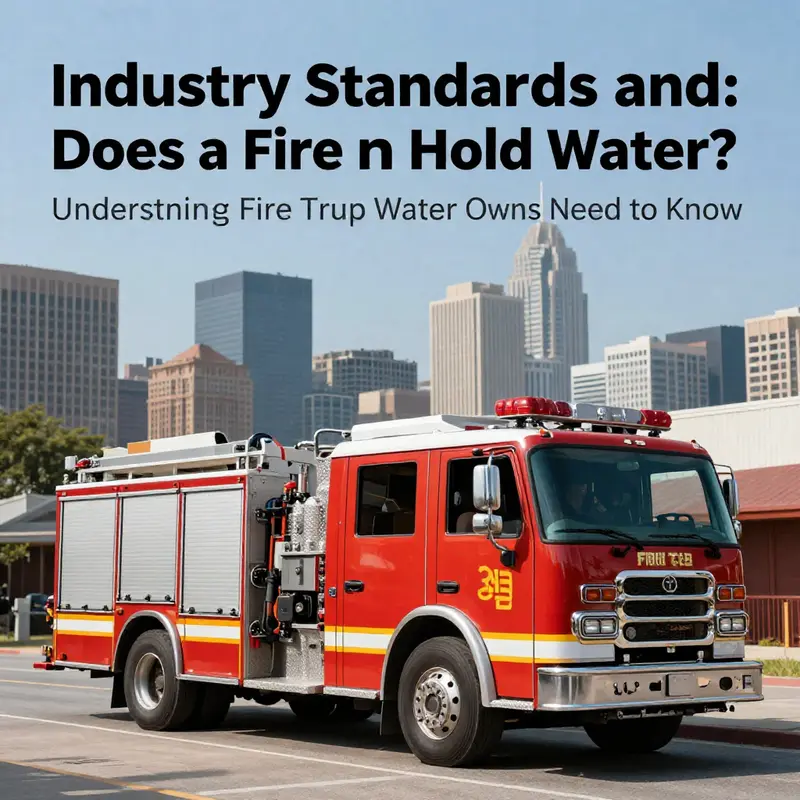
Fire trucks carry onboard water that enables an initial attack while external supplies are secured. Tank sizes vary by role and environment: light-duty units often hold about 1,500 to 5,000 liters, medium-duty around 6,000 to 10,000 liters, and heavy-duty 10,000 to 20,000 liters. Foam-capable and long-range supply units extend capabilities beyond simple water delivery. NFPA 1901 and related standards provide a common framework to ensure safe operation and interoperability. The combination of tank capacity, pump performance, and access to external water sources determines how quickly responders can begin suppression and sustain the effort. In the end, onboard water is the starting point, not the entire story, with tactics and logistics shaping the final outcome.
Final thoughts
The water capacity of fire trucks plays a crucial role in firefighting, making it imperative for business owners to comprehend their functionalities. Having a grasp of the various types of fire trucks, their operational capabilities, and the industry regulations will enhance not just compliance but also improve your business’s safety strategy against fire hazards. By prioritizing a robust understanding of fire truck water storage and management, you are taking a significant step towards safeguarding your property and ensuring readiness in the face of emergencies.

