
















Understanding how to say ‘fire truck’ in German is crucial for business owners associated with safety equipment, translation, or emergency services. The term das Feuerwehrauto refers specifically to fire-fighting vehicles used by fire departments, but the language also encompasses alternative terms such as Löschfahrzeug and Feuerwehrfahrzeug. Each term reflects different functions and classifications within German emergency services. This article unpacks these terms throughout its chapters, exploring distinct usages, cultural significance, and relevance for those engaged in firefighting or safety management.
The Linguistic Journey Behind ‘Feuerwehrauto’: Unpacking the German Term for Fire Truck
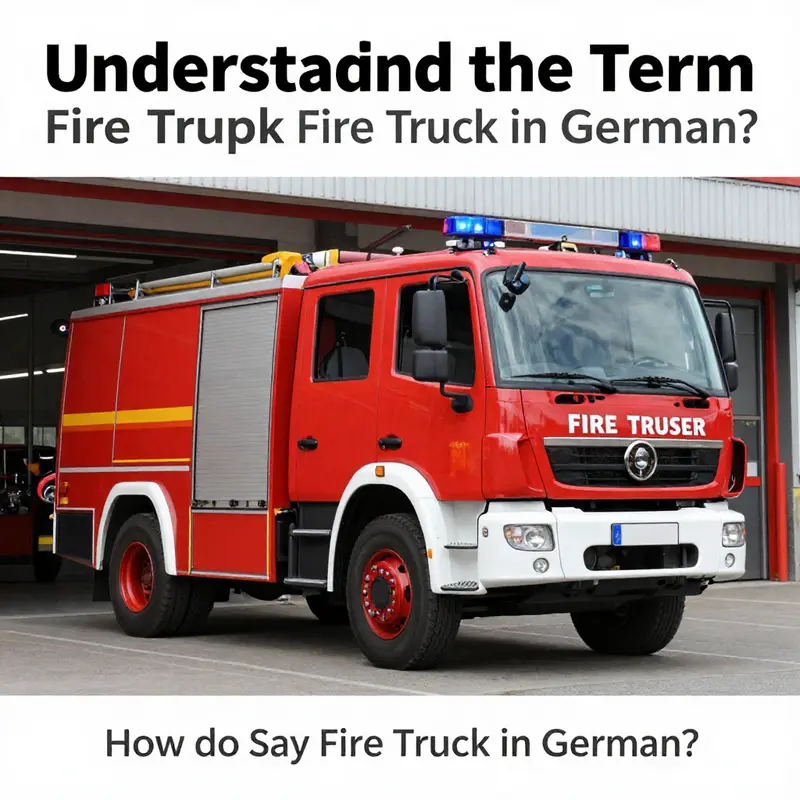
When exploring the essence of language and its capacity to evolve alongside societal needs, few examples illustrate this dynamic better than the German term for fire truck. Known primarily as das Feuerwehrauto, this word carries with it layers of meaning and a historical narrative that reflects both practical utility and linguistic creativity. In a language celebrated for its compound constructions and precise descriptions, each component of das Feuerwehrauto – from Feuer (fire) to Wehr (protection or defense) and Auto (vehicle) – reveals a story of efficiency and clarity. German speakers have long relied on such a literal yet evocative formulation, one that not only identifies a specialized emergency response vehicle but also underscores the underlying mission of firefighting: to defend communities and mitigate the destructive power of fire.
The process by which this term came into common usage is deeply embedded in both the evolution of modern firefighting techniques and the development of emergency services in Germany. Historically, as cities expanded and the complexities of urban life increased, so too did the need for systematic and well-equipped responses to emergencies. German engineers and linguists collaborated in a manner characteristic of German precision: incorporating descriptive clarity and systematic categorization into everyday language. The compound nature of das Feuerwehrauto is emblematic of a broader linguistic strategy. Much like other technical terms in the language, it provides an unambiguous image of both the object and its purpose. The term’s inherent clarity is not just a quirk of German grammar – it is a reflection of the practical imperatives of emergency response, where every detail can be a matter of life and death.
Beyond its primary designation, the term das Feuerwehrauto exists within a rich vocabulary of synonyms and related designations that help differentiate among the diverse types of vehicles used in firefighting. For example, one may encounter terms such as Löschfahrzeug and Feuerwehrfahrzeug in discussions pertaining to emergency services. Löschfahrzeug, often translated as “extinguishing vehicle,” specifically emphasizes the vehicle’s role in subduing flames, while Feuerwehrfahrzeug translates more directly to “fire department vehicle.” These synonyms highlight subtle but critical differences in function and specialization. Some vehicles may be equipped primarily for water rescue and offering general emergency support, while others might be tailored for rapid-response aerial rescue operations. The usage of these alternative terms is deeply seated in the operational protocols of fire departments across Germany, and they prove indispensable in conversations regarding apparatus hierarchy and functionality.
Diving deeper into the nuances of German compound words invites us to explore the remarkable precision with which the language can convey nuanced meaning. In German, compounds are created by merging individual words in a way that preserves their distinct semantic contributions, yet enchants them with an added sense of purpose. The element Feuer directly evokes the inherent danger and destructive capacity of fire, while Wehr, derived from the concept of defense, underlines the vehicle’s role as a protector in times of crisis. Auto completes the term by signifying that this entity is a motorized mode of transport, a necessary attribute in urban environments where speed and mobility are critical. This combination thus serves both as a label and as a vivid, concise description that immediately informs one of the vehicle’s purpose.
It is important to examine how these linguistic choices assist not only native speakers but also language learners and professionals involved in translation and cross-cultural communication. For translators, emergency service staff, and even enthusiasts of fire safety, grasping the diverse terminologies used within German emergency services is crucial. The exact pairing of a specific compound word with its practical, real-world use is at the heart of effective communication in high-stakes situations. Newcomers to the language or those engaged in translation work should note that while das Feuerwehrauto is prevalent and widely understood, context matters significantly. When referring to vehicles designed for specialized rescue operations or industrial applications, additional descriptors and even entirely different compound words may be in use. This attention to detail is what sets professional translation apart and reinforces the reliability expected from officially sanctioned sources such as the Cambridge English-German Dictionary, which confirms das Feuerwehrauto as the direct equivalent of fire truck.
In exploring the translation of fire truck into German, one cannot overlook the broader implications and the technical precision embedded in its usage. The term’s breakdown does more than provide a reliable translation—it offers insight into the organizational structure of emergency services in German-speaking countries. Fire departments are highly specialized, and their vehicles are equipped to handle a wide range of scenarios, from water-based extinguishing to aerial rescues. For instance, those interested in deeper details about different types of emergency service vehicles may visit this comprehensive resource on various specialized fire apparatus, such as those found with descriptions like the modern fire fighting truck. Such vehicles are designed to offer flexibility and specialized usage in various emergency scenarios, representing just one facet of the organized and methodical approach toward public safety that is characteristic of German public services. Explore detailed information on modern firefighting vehicles here.
The evolution of these terms is inextricably linked to the history of firefighting in Germany. During the 19th century, as urban centers grew, fire incidents became more commonplace, which led to the formation of more structured emergency services. With this evolution, language had to evolve concurrently, adapting to new technologies, operational methods, and societal needs. The precise naming conventions that emerged ensured that every aspect of firefighting was covered in linguistic form. Moreover, as firefighting methods have become more sophisticated with technological advancements, so too have the vehicular designs and the terminology required to differentiate among them. Today, the vocabulary surrounding fire trucks is robust and multi-faceted, accommodating a variety of specialized vehicles that range from small, agile units used in narrow urban environments to complex, heavy-duty apparatus built for high-risk industrial settings.
This linguistic progression reflects a fascinating intersection of language, technology, and public safety policy. The careful choice of words and the construction of compound terms have played a significant role in streamlining the communication process within and between emergency services. German speakers benefit from the effortless connection between a term and its corresponding function. When a firefighter hears the term das Feuerwehrauto, there is no ambiguity: they immediately understand that the discussion concerns a type of vehicle equipped to fight fires. This clarity is particularly important in emergency contexts where time-sensitive decisions often rely on precise communication. In addition, the consistent use of compound structures simplifies training protocols and facilitates both national and international cooperation in emergency response scenarios.
Beyond its operational application, the term das Feuerwehrauto serves as an excellent example of how language provides insights into cultural priorities. In Germany, where efficiency, clarity, and engineering precision are esteemed values, the incorporation of these traits into everyday language showcases the close relationship between linguistic expression and national identity. The very formation of the word encapsulates a spirit of resilience and dedication to public welfare—a trait that resonates through the national consciousness. The connection between language and service is evident in various other technical fields within German culture, and fire services are no exception. Each compound word tells a story: one of innovation, community focus, and an enduring commitment to safety and progress.
Furthermore, the meaning embedded in das Feuerwehrauto stands as a testament to the importance of effective communication in emergency management. In the realm of public safety, clarity is paramount. Every component of a fire truck, from its water cannons and ladders to its emergency lighting systems and reinforced body, is designed with precise engineering standards in mind. These technical distinctions are echoed in the language as well. The term not only identifies the vehicle but helps delineate its role from that of other emergency apparatus. Terminology such as Löschfahrzeug and Feuerwehrfahrzeug emerge out of a need to further categorize and differentiate between the functions and capabilities of various units, ensuring that all aspects of the firefighting system operate in a coordinated and efficient manner.
The interplay between language and technical innovation continues to shape how emergency services are conceptualized and described. As new types of vehicles are introduced and as older models are repurposed, the vocabulary evolves. Linguists and industry professionals collaborate to create terminology that not only meets the immediate requirements of clarity and specification but also accommodates future advancements and changing operational landscapes. This evolution is part of a broader trend where language must adapt to accommodate rapid technological change, institutional restructuring, and the emergence of new challenges within emergency management. It is a process that can be observed in many languages, though the German system of compound words remains one of the most illustrative and instructive examples.
The impact of such linguistic precision extends well beyond the professional realm. For language learners, understanding the components of a term like das Feuerwehrauto can serve as an enlightening case study in morphology and semantics. It reveals how meaning is built into words, offering a window into the logical structure underlying the German language. Such insights are invaluable for educators and students alike, as they encourage an analytical approach to language learning and translation. Rather than simply memorizing vocabulary, learners are invited to engage with the architecture of language itself, appreciating the inherent logic and beauty of compound word construction.
In professional translation and interpretation, this clarity is a key asset. Translators must often bridge significant cultural and linguistic divides, ensuring that technical terms are not only accurate in their translation but also resonate with local audiences. The use of das Feuerwehrauto, along with its various synonyms, provides a clear, unambiguous point of reference for translation work. Whether the conversation centers on day-to-day emergency responses or on more specialized rescue scenarios, a deep understanding of these terms enables professionals to communicate effectively. Furthermore, such precision fosters a sense of trust and reliability among stakeholders who rely on clear, consistent terminology in high-pressure environments.
Equally important is the role that such terminology plays in public education and community outreach. In emergency preparedness programs, clear and accurate language lowers the barrier to understanding complex operational procedures and technical descriptions, making public safety information more accessible. When community members learn the term das Feuerwehrauto, they implicitly begin to grasp the systematic organization behind critical services like firefighting. This in turn boosts public confidence in the efficiency and responsiveness of emergency services. Clear linguistic conventions encourage community participation in safety initiatives, further strengthening the bond between citizens and those who protect them.
Moreover, the enduring nature of compound words like das Feuerwehrauto invites a reflection on the role of language in preserving institutional memory. Just as physical monuments and historical records preserve the legacy of past innovations, language captures and perpetuates the cumulative knowledge of a society. Every time the term is used in manuals, training sessions, or everyday conversation, it reminds us of decades—if not centuries—of experience in building robust and effective emergency services. This linguistic continuity is an essential part of the cultural heritage of German-speaking communities and speaks to the broader significance of language as a vessel for historical continuity.
In summary, the translation of fire truck into German as das Feuerwehrauto is much more than a direct linguistic equation. It is a vivid narrative that encapsulates the spirit of German innovation, precision engineering, and community-focused public service. The compound structure of the term, which integrates elements of fire, defense, and vehicular mobility, is a powerful testament to the language’s ability to convey complex concepts in a clear and concise manner. Through variants such as Löschfahrzeug and Feuerwehrfahrzeug, the vocabulary surrounding fire trucks further reflects the specialized nature of emergency operations and the ever-evolving requirements of public safety. For those looking to deepen their understanding of such vehicles and the nuances of emergency response, resources on specialized firefighting vehicles offer additional insights into the technological advancements that continue to shape public services.
The significance of understanding these terms reaches far into practical applications, academic research, and even cultural studies. The precise language used in emergency contexts reinforces not only an operational protocol but also a broader cultural ethos that values clarity, efficiency, and communal responsibility. In this light, the study of das Feuerwehrauto is not merely about learning a translation; it is a journey into the heart of German linguistic tradition and its relationship with modern technology and public welfare. The careful construction of words and their persistent adaptation in response to practical needs underscore a symbiotic relationship between language and innovation that is as relevant today as it was a century ago.
For those intrigued by the meticulous design and historical evolution of firefighting vehicles and the language that describes them, a deeper exploration into specialized apparatus can further enrich this study. In acknowledging the depth and complexity of German compound words, we celebrate not only linguistic ingenuity but also the enduring commitment to public safety and community resilience. Each time the term das Feuerwehrauto is uttered, it echoes a lineage of expertise, a repertoire of technological advancements, and a relentless drive to protect and serve in moments of crisis.
For more detailed definitions and authoritative explanations, consider visiting the Cambridge English-German Dictionary to explore additional resources and examples that illuminate the rich tapestry of language and its practical applications in our modern world.
Beyond Das Feuerwehrauto: A Comprehensive Exploration of German Fire Truck Terminology
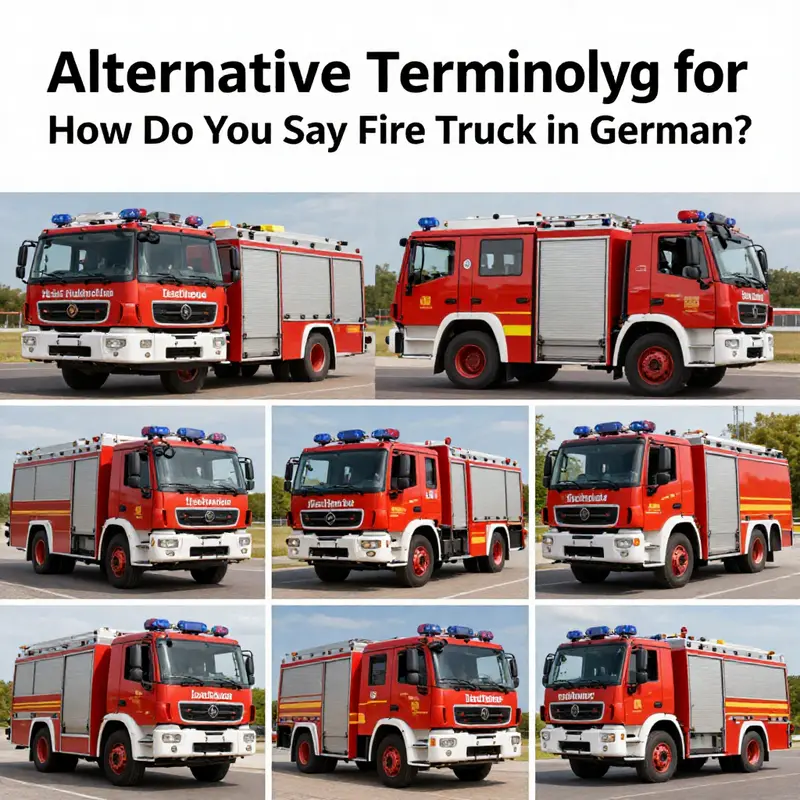
In speaking about emergency response vehicles in Germany, one must grasp a spectrum of terms that provide a rich insight into the language of firefighting. The German vocabulary surrounding fire trucks is not limited to a single term. Instead, it offers a robust set of expressions that reveal nuances and specific functions that each vehicle performs. Among these, the most common word in everyday language is Feuerwehrfahrzeug, which translates literally to “fire department vehicle.” This term signifies the vehicle used by firefighters and neatly encapsulates the idea of readiness and service.
Understanding the distinction between terms is essential when discussing emergency services in Germany. The word Feuerwehrfahrzeug broadly refers to any apparatus that is part of a fire department. This can include ladder trucks, rescue vehicles, pumpers, and even more specialized vehicles. The versatility of the term mirrors the complex nature of firefighting operations. Every vehicle plays a unique role during emergencies, and the language mirrors this diversity.
Another term that frequently appears in informal conversation is Löschzug. While some might use it interchangeably with Feuerwehrfahrzeug, Löschzug often refers more specifically to a fire engine equipped with a pump and hoses. This subtle difference matters to professionals and enthusiasts alike. The use of the word Löschzug highlights the technical aspects of fire-fighting vehicles. Just as there are nuances in vehicle design, there are nuances in how these vehicles are labeled.
In everyday usage, it is not uncommon to hear das Feuerwehrauto. This term is at the core of the language when addressing fire trucks directly. However, when one explores further into the vocabulary, it becomes clear that nuances exist. For instance, some contexts may call a vehicle a Löschfahrzeug to emphasize its extinguishing role. The choice of a term often depends on specific functional attributes. As such, an untrained listener might not distinguish between the terms, but experts and emergency responders pay attention to these details.
Language is dynamic and evolves with the needs of society. In Germany, the terms assigned to fire trucks have grown to accommodate both the technical and operational aspects of firefighting. Each term resonates differently with various audiences. Firefighters, translators, emergency training professionals, and even the general public may prefer one term over another based on context. It is this interplay of language and function that adds a layer of depth to the study of German emergency vehicle terminology.
It is helpful to view these terminological differences as reflective of broader cultural and administrative practices in Germany. Fire departments here are organized with strict protocols and a wide range of specialized vehicles. Each vehicle is designated with a name that highlights its primary purpose. The expression Feuerwehrfahrzeug, for example, is widely used in official documentation. It appears in training manuals, dispatch communications, and operational guidelines. Its prevalence in such texts reinforces its status as the most comprehensive term for a fire-fighting vehicle.
Delving into the history of these terms reveals further insights. German language and emergency services have a rich tradition that extends back decades. As fire departments modernized, new vehicles were introduced and with them came the need for more precise language. The evolution from using a single descriptive term towards a variety of words mirrors the advancement in technology and operational strategies. In earlier decades, simpler terms might have sufficed. As vehicle design has grown more complex to meet modern challenges, the language has adapted to carry new connotations and hints at the intricate function of each apparatus.
For those exploring translation or language studies, it is important to recognize the role that context plays in choosing the right category of words. When a translator or learner encounters terms like Feuerwehrfahrzeug, Löschzug, or Feuerwehrauto, understanding the subtle contextual hints associated with each word can improve both accuracy and clarity in communication. In educational settings, dictionaries such as the Cambridge Dictionary provide examples and detailed explanations that are invaluable to language learners. Grasping these nuances enhances communication among emergency service personnel who might be called upon for international operations or training sessions.
The landscape of fire-fighting terminology is not static. With increasing specialization and technological advancements, new categories and subcategories continue to emerge. For example, vehicles equipped for water rescue, aerial operations or hazardous material responses might be designated with extended terminologies. In some instances, the base term – whether it is Feuerwehrfahrzeug or das Feuerwehrauto – is combined with additional qualifiers to describe its capabilities more precisely. This trend is observable in many modern emergency services where functional precision is paramount.
The evolution of language in the public safety arena is mirrored across different languages, though German offers a distinctive approach. While the English language opts to describe fire trucks with descriptors such as “firefighting vehicle,” the German language has a preference for compound words that convey both function and affiliation. The use of compounds not only compresses meaning but also reveals deeper cultural attitudes toward communal safety and responsibility. Firefighting in Germany is as much about community engagement as it is about rapid technological response.
A key element in this terminological tapestry is how each word carries with it a sense of identity and pride. Emergency services have traditionally been at the forefront of community recognition. As such, the terms become a symbolic representation of trust and resilience. Whether it is Feuerwehrfahrzeug or das Feuerwehrauto, the language serves both a functional and a ceremonial purpose. It reminds citizens that behind each impressive vehicle lies a dedicated team of individuals prepared to risk their lives for public safety.
Moreover, the detailed naming convention in German emergency services reflects a methodical approach to public safety. In many cases, the terms are chosen to reduce ambiguity during high-stress situations. When an emergency call is made, clear communication is critical. Distinguishing between different types of vehicles through specialized terminology can save precious seconds on the road to a crisis scene. This precision is not accidental but rather a key feature of a communication system designed to work efficiently under pressure.
The specificity embedded in these terms also facilitates better interoperability between different emergency services. Firefighters, paramedics, and police officers all rely on precise language in order to coordinate responses effectively. In multi-agency responses, where various types of vehicles converge on a single scene, the use of detailed terminology such as Feuerwehrfahrzeug versus Löschzug can be critical. It ensures that command and control teams are fully aware of the specific resources available during an emergency, thereby optimizing the overall response.
In many ways, the choice of terminology can be seen as a reflection of German engineering and cultural attention to detail. Every aspect of the vehicles is designed with efficiency and functionality in mind, and this meticulous nature extends to language. This level of detail in vocabulary reinforces the notion that language itself is a tool for precision and clarity. In the heat of an emergency, every term matters and each word is chosen with care.
The discussion of these terms reaches a level of complexity that may seem daunting for a learner at first. However, it is important to remember that language learning is a process. While a novice might initially struggle to differentiate between terms like Löschzug and das Feuerwehrauto, with time and exposure, the distinctions become clearer and more intuitive. Many language courses now include modules on technical vocabulary specifically tailored to emergency services. These modules create context and provide practical examples of how each term is used in live scenarios.
The practical applications of this vocabulary extend beyond the realm of emergency response. Every day, translators and language professionals engage with technical texts and manuals that incorporate these terms. An accurate understanding of these distinctions can lead to better translations and more effective communication across language barriers. In particular, when preparing documents intended for international audiences or training sessions, choosing the correct term can have significant operational implications.
A solid grasp of German fire truck terminology does more than merely enhance linguistic proficiency; it builds a bridge between cultures. With increasing collaboration in international emergency response training and equipment sharing, clarity in communication is indispensable. A well-translated term or phrase can often serve as the first step towards building trust between different emergency services. In this way, the language does more than facilitate communication—it fosters a collaborative spirit that is essential for effective international cooperation.
Furthermore, the evolution of terminology within firefighting circles also highlights the continuous progression of technology within the field. As new technologies emerge to assist in fire suppression and rescue operations, new vehicles are introduced and the language must adapt to describe these innovations accurately. For instance, specialized vehicles built to handle chemical spills or mountainous rescues are given additional descriptions. These new designations are typically modifications of the base term and ensure that the full breadth of firefighting capabilities is spelled out in language as well as in practice.
This dynamic nature of emergency service vocabulary mirrors the pace of innovation in other fields. Just as the automotive industry evolves with increasingly sophisticated machinery, so too does the language keep pace with the technological marvels introduced to the fire department. Each new vehicle comes with its own set of functions and potential challenges, and these must be accurately captured in terminology. In this sense, the language serves as a living record of innovation, documenting the growth and transformation of fire response strategies over time.
A practical example of understanding these nuances in everyday life can be found in the varied appearances of fire trucks on German roads. A passerby may easily observe a large, red vehicle bearing signs in bold letters. To an untrained eye, it might simply be seen as a fire truck. Yet, locals know that the subtle differences in labeling imply very specific functions. The vehicle marked as Feuerwehrfahrzeug signals a multipurpose unit. Meanwhile, one tagged as Löschzug usually points to a specialized engine designed primarily for extinguishing fires with water. This differentiation extends into the training that emergency service members receive. Through rigorous education, firefighters learn not just how to operate these machines, but also what nuances in signage and nomenclature indicate about a vehicle’s role.
Experts in fire safety often underline the importance of this precise language, especially when responding to large-scale emergencies or natural disasters. In such critical moments, clear and unambiguous communication becomes paramount. The ability to quickly identify the correct resources can have life-saving implications. Every participant in an emergency operation, from dispatch center operators to on-scene leaders, benefits from the shared understanding of these terms. The language, therefore, becomes a crucial tool in minimizing confusion and maximizing operational effectiveness.
For those intrigued by the technical evolution of these vehicles and their corresponding terminology, it might be useful to explore more detailed insights. One can delve into histories of participation, design evolution, and even the documented accounts of large emergencies where language played a key role. The interplay between rapid technological advancement and linguistic adaptation is fascinating in itself. It reveals how deeply human ingenuity is intertwined with language—a tool that continuously adapts to describe and facilitate new forms of interaction.
The German approach to fire truck terminology is also notable for its use of compound words. In constructing compounds, the language allows for dense packing of meaning into a single term. This approach is efficient, especially in high-stress environments where there is little time for lengthy explanations. In the development of the term Feuerwehrfahrzeug, multiple concepts merge: duty, safety, and technical capability, all within one word. Such language design not only mirrors the efficient German mindset but also serves to enhance mutual understanding among service members.
It is also worth noting that these details ripple out into how vehicles are marketed and described in public forums. Enthusiasts and professionals alike often turn to dedicated resources to learn more about the implements of modern fire-fighting. Interested readers can find elaborate descriptions of vehicles in online catalogs. For instance, one can explore the rich selection of models and detailed specifications on a site dedicated to various fire-fighting trucks. Information on a range of vehicles—from light-duty apparatus to more heavy-duty models—is available for those who desire a deeper understanding of what each term means in practice. You can explore further details on comprehensive fire-fighting vehicles by visiting this resource on a wide variety of fire-fighting truck solutions.
These intricacies in language underscore an important lesson about precision across cultures and industries. A seemingly simple term like das Feuerwehrauto carries with it a legacy of evolution, expertise, and operational significance. For those engaged in translation, training, or even casual conversation, a deep dive into the vocabulary of German fire trucks can reveal layers of meaning that are both professionally relevant and culturally enriching. Language, in this context, is far from static and becomes a dynamic component of the entire fire emergency ecosystem.
The practical takeaway is that anyone involved in emergency services, language translation, or cross-cultural communication should take the time to understand these terms. Whether one is reading technical manuals, watching emergency service broadcasts, or participating in international training programs, an awareness of the precise meaning behind words like Feuerwehrfahrzeug and Löschzug is indispensable. The choice of words not only clarifies intent but also honors the traditions and technical precision inherent in German public safety.
To conclude, although it might seem that the words for a fire truck in German are few, their correct application and interpretation are critical to effective communication. The nuances between terms such as das Feuerwehrauto, Feuerwehrfahrzeug, and Löschzug reveal layers of technical and cultural meaning. These linguistic details are not trivial; they shape how emergency services are organized, coordinated, and recognized by the public.
For those who wish to further explore the world of German emergency service terminology, additional insights and resources are readily available. A valuable external reference on the subject is the comprehensive information provided at Feuerwehr.de. This website offers detailed perspectives on the operational, technical, and cultural dimensions of firefighting in Germany. Engaging with such resources can expand one’s understanding and appreciation of the care that goes into safety measures and language alike.
This exploration of German fire truck terminology exemplifies how language evolves to meet practical demands. It reminds us that behind every compound word lies a story of historical evolution, technological adaptation, and unwavering commitment to public safety. The precision embedded in these terms fosters clarity in communication during critical moments and reflects the deep-rooted culture of efficiency and reliability. Recognizing these details empowers not just those who use the language, but also those who work to save lives and protect communities. The narrative of words is intertwined with the narrative of human valor and technological progress, creating an enduring legacy that continues to inform and inspire future generations.
Embracing Germany’s Firefighting Heritage: Unraveling the Power and Precision of the ‘Feuerwehrauto’
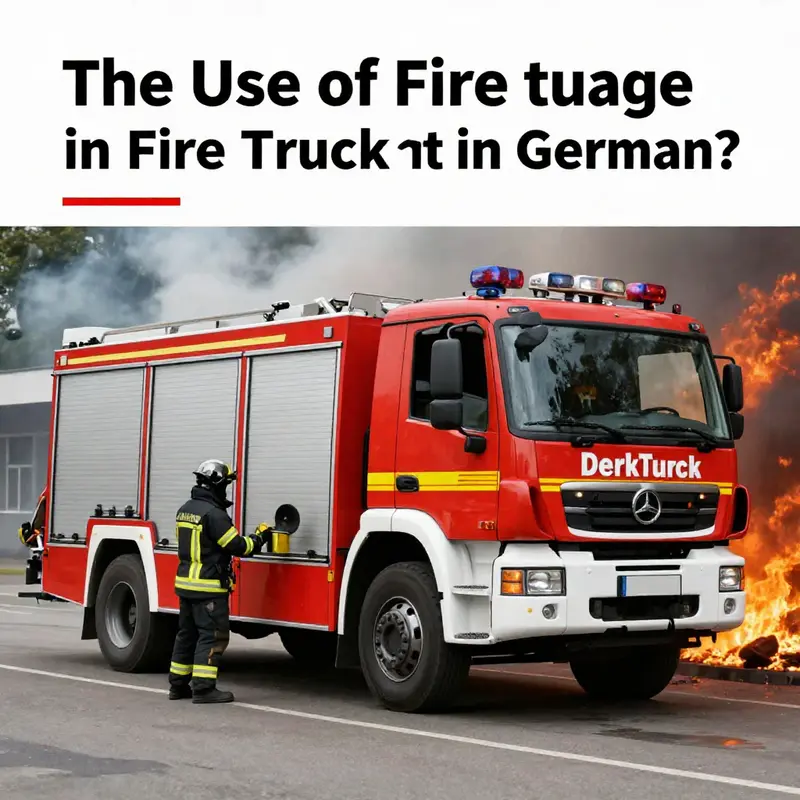
In the landscape of emergency services, Germany stands out for its precision, innovation, and unwavering commitment to public safety. The journey of understanding how to say ‘fire truck’ in German takes us deep into the heart of the country’s firefighting tradition, where language, technology, and rigorous training converge to protect communities and save lives. At the center of this narrative is the term das Feuerwehrauto, a compound word that elegantly encapsulates the essence of rescue and rapid response. In German, the word is built from Feuer (fire) and Wehrauto (rescue or emergency vehicle), precisely defining its purpose and function. However, language in the realm of emergency services is rarely static. Over time, terms such as Löschfahrzeug – literally meaning ‘extinguishing vehicle’ – and Feuerwehrfahrzeug – meaning ‘fire department vehicle’ – have evolved to capture the diversity of apparatus used by modern fire services.
As one delves into the history and structure of Germany’s emergency operations, it becomes clear that the nomenclature is just one part of an intricate system. German fire trucks are not merely vehicles on wheels; they are the result of decades of innovation, engineering, and commitment to efficiency. Each fire truck is designed with one primary mission: to be the frontline responder in times of crisis. Crafted to handle a broad spectrum of emergencies—from urban building fires to industrial hazards and environmental disasters—these vehicles come equipped with state-of-the-art equipment such as high-pressure pumps, robust hoses, extendable ladders, and specialized rescue tools designed for technical interventions.
The lexicon of firefighting in Germany is reflective of a culture that values clarity and precision. While Feuerwehrauto is the most common term encountered by both locals and outsiders, the existence of synonyms like Löschfahrzeug and Feuerwehrfahrzeug underscores the categorization and differentiation of units within a fire service. Some vehicles are built specifically for rapid water discharge, while others are optimized for high-elevation rescues or hazardous material incidents. For instance, in cases where buildings are towering over the skyline, a specialized unit known as a turntable ladder truck (commonly referred to as Drehleiter) is dispatched. Each variant demonstrates a nuanced function essential to the effective operation of a modern fire department.
The German fire service – the Feuerwehr – prides itself on a blend of traditional values and high-tech capabilities. Every vehicle, every tool, and every training session is part of an ongoing commitment to improve response times and safety outcomes. This dedication is evident in the meticulous care taken in both the design and operation of these vehicles. Fire trucks in Germany are often equipped with features that allow them to confront various emergency scenarios head on. The integrated systems include not only water pumps and extinguishing agents but also communication devices that keep both the truck crews and incident command centers closely linked during rapidly evolving emergencies. The culture of precision is further accentuated by the comprehensive training programs that firefighters undergo. These rigorous courses, steeped in both theoretical learning and practical drills, ensure that every crew member is prepared for the multifaceted challenges of modern rescue work.
In contemplating the power of these vehicles, one cannot ignore the role of language as both a practical tool and a cultural artifact. German compound words embody a tradition that values detailed description and functional clarity. Over centuries, the language has adapted to the needs of its speakers, with terms like das Feuerwehrauto emerging not only as a descriptor but also as a symbol of community resilience. The language mirrors the operational mandates of fire services—compounded words that leave little room for ambiguity, each syllable a reminder of the responsibilities carried by firefighters every day. For individuals involved in fire safety, emergency response, or translation services, understanding these terms is more than a linguistic exercise; it is an immersion into a system where precision can be a matter of life and death.
Beyond the linguistic realm, the integration of modern technology into traditional firefighting practices represents a fascinating intersection of innovation and legacy. In the past few decades, the advent of advanced materials, smarter diagnostics, and real-time communication technologies has transformed how fire trucks are built and deployed. German fire departments have embraced innovations that enable rapid deployment, ensuring that even in densely populated cities, resources can be mobilized in minutes. The vehicles are designed not only to combat flames but also to perform search-and-rescue operations under adverse conditions, including collapsed structures, chemical spills, or traffic accidents. Every component, from the high-powered water cannons to the extendable aerial platforms, reflects the industry’s pursuit for perfection—a relentless quest to blend durability with agility.
Moreover, the operational framework within which these vehicles function is a rich tapestry of coordination and teamwork. Emergency response in Germany is a highly structured process. When an emergency alert is issued, a centralized communication hub disseminates information to various fire stations, which then deploy their respective units based on proximity and the nature of the incident. This harmonized effort is supported by an infrastructure that often integrates modern data analytics and mapping technologies. It is within this high-stakes environment that the specific naming of vehicles – such as Feuerwehrauto – gains importance. Clear communication is paramount when coordinating between multiple units, each with its specialized role and designated equipment. In intense situations where every second counts, the ability to quickly identify the correct apparatus via its designated term can make a tangible difference.
A compelling aspect of German firefighting culture is the balance between specialization and unity. Despite the diversity of terminology and the varied functions of the vehicles, there is a consistent understanding that all these tools are part of a singular mission: protecting lives and property. Regardless of whether a unit is referred to as a Feuerwehrauto, a Löschfahrzeug, or a Feuerwehrfahrzeug, each plays a critical role in the broader response strategy. This uniformity in purpose also creeps into the uniformity of training and equipment standards. The modern firefighter in Germany is not only trained to operate a vehicle but is also well-versed in a range of emergency procedures. This dual-focus training, which combines technical know-how with rapid decision-making skills, underscores the advanced state of emergency management in the country.
Integral to understanding this system is a look at the technological advancements that have augmented the capabilities of German fire trucks. Incorporating computerized control systems and real-time telemetry, the equipment aboard these vehicles represents a fusion of traditional firefighting techniques with contemporary digital solutions. For example, many trucks now come equipped with GPS tracking and sophisticated diagnostic tools that help in monitoring the health of critical systems during an emergency. Such innovations are essential in both urban and rural contexts where variables can significantly influence the outcome of a rescue operation. The deep integration of such technologies highlights why language and terminology evolve alongside operational practices. As equipment becomes more advanced, the vocabulary must adapt to encapsulate these changes, ensuring that communication remains as efficient as the vehicles themselves.
Cultural factors also play a significant role in shaping the German approach to firefighting. There is a palpable sense of pride and responsibility within the fire services that transcends mere job functions. This pride emanates from a long history of community service and mutual aid, reminiscent of customs that have been preserved through generations. Many local volunteer fire departments, which operate alongside professional units, have deep roots in community tradition, instilling values that both honor the past and drive modern innovation. Their contributions are often celebrated in local festivities and commemorative events where fire trucks, in all their varied forms, are revered as symbols of hope, courage, and resilience.
Interwoven with the operational and cultural dimensions is a notable emphasis on safety and prevention in everyday life. German fire departments are actively involved in public education initiatives aimed at reducing fire risks and improving emergency preparedness. These educational campaigns often feature demonstrations of equipment, including detailed explanations of how various fire trucks are utilized during emergencies. By demystifying the complex technology and procedures behind these vehicles, departments help to foster informed communities better equipped to respond in crisis situations. In doing so, they not only build trust between the public and emergency services but also contribute to a broader understanding of the role that language, as seen through terms like das Feuerwehrauto, plays in everyday safety.
For those interested in exploring the diverse range of firefighting vehicles further, a closer look into the variety of specialized trucks used across different scenarios can be both enlightening and inspiring. One can gain valuable insights into these powerful machines by examining detailed profiles available in online resources such as the comprehensive coverage of heavy-duty fire trucks available at Heavy Duty Fire Trucks. This exploration underscores the significance of every term and every vehicle’s function within Germany’s robust emergency response network.
The evolution of these terms and technologies is not merely an academic curiosity, but a reflection of the dynamic nature of firefighting and emergency response in Germany. The language serves as both a historical record and a blueprint for the future. It encapsulates a system that values clarity, efficiency, and rapid deployment – all essential attributes in the unpredictable realm of emergencies. Over time, as new challenges emerge and technology continues to advance, the terminology will likely evolve even further. Nonetheless, the core principles embodied by das Feuerwehrauto and its synonymous counterparts will remain a testament to Germany’s relentless pursuit of safety and its deep-seated commitment to protecting its people.
As the dialogue about fire safety and emergency responsiveness continues to unfold, it is crucial to appreciate the interplay of language and technology, tradition and modernity. The German fire truck is not just a tool of rescue; it is an icon of a society that believes in preparedness, unity, and perpetual improvement. Each component, every carefully crafted term, and every technological advancement work in tandem to form a seamless response network. It is this unity that makes the German model of firefighting so effective, ensuring that when disaster strikes, communities are met with an organized, well-equipped, and thoroughly trained team ready to act. For more detailed technical insights and current practices in the field, interested readers are encouraged to visit external resources such as the extensive information available on Feuerwehr technology at https://www.feuerwehr.de/feuerwehr-technik/feuerwehrautos/.
In summary, the journey to discover how to say ‘fire truck’ in German opens up a wide vista into the country’s meticulous approach to emergency management, where language and machinery combine to create systems of remarkable precision. The term das Feuerwehrauto stands as a beacon of clarity and purpose, while its synonyms echo the diverse capabilities and specialization inherent in Germany’s fire services. As both a subject of linguistic interest and a symbol of technological advancement, the German fire truck embodies the spirit of continuous innovation and commitment to safety that defines the nation’s approach to public service. And as the future holds new challenges, the enduring legacy and evolving nature of these vehicles will undoubtedly continue to inspire and protect communities across Germany and beyond.
The Enduring Symbolism of Fire Trucks in Culture and Language: A German Perspective
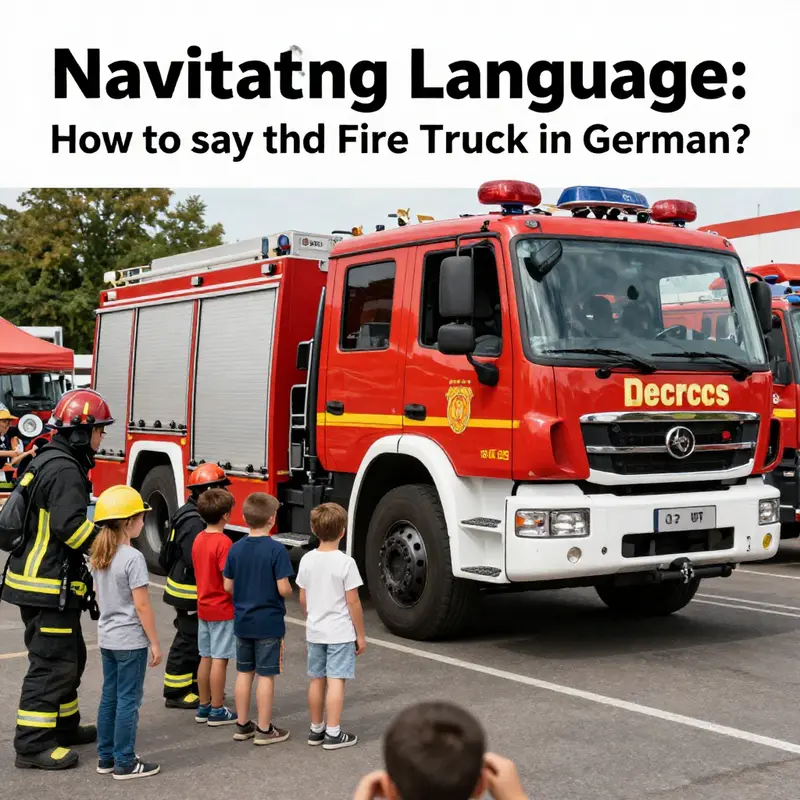
Fire trucks have long held a place of honor not only as instruments of emergency response but also as enduring symbols of courage, community spirit, and resilience. In many cultures, these mobile fortresses of safety represent the unwavering commitment to defend life and property. Their vivid appearance and dynamic presence evoke admiration and trust, and this symbolism extends into the realm of language. When exploring how to say “fire truck” in German, one discovers that the term is woven into the fabric of German emergency services culture, embodying both function and tradition.
In German, the common term for a fire truck is das Feuerwehrauto. This term is widely recognized and used by the public as well as professionals within the emergency services community. Additionally, Germans sometimes refer to a fire truck as Löschfahrzeug, a word that translates to “extinguishing vehicle.” Another frequent term is Feuerwehrfahrzeug, meaning “fire department vehicle.” Each of these nomenclatures highlights a slightly different aspect of the role and function of fire trucks. While das Feuerwehrauto calls to mind the specific design and immediate purpose of the vehicle, Löschfahrzeug emphasizes the equipment’s ability to extinguish fires, and Feuerwehrfahrzeug reinforces its connection to the organized services provided by the fire department.
The multiple terms in the German language reflect the diverse functionalities of fire trucks. In many communities, fire trucks are not monolithic in design; rather, they come in a variety of configurations tailored to meet different emergency needs. Some vehicles are equipped with water cannons and hoses for general firefighting, while others are outfitted with specialized tools for hazmat incidents, water rescue, or aerial operations. This diversity is mirrored in the rich vocabulary that has evolved to describe them in German. The use of multiple terms for a single concept is not uncommon in any language, but in German, it also indicates a deep respect for the intricacies of a profession that balances technological innovation with tradition and civic duty.
The aesthetic design of fire trucks is also a crucial part of their cultural significance. Across the world, the image of a red fire truck speeding toward danger has become an icon of hope and bravery. In many Western societies, the traditional red of a fire truck is chosen for more than just style; it is selected for its high visibility and its psychological impact. Although modern safety standards have led some fire departments to adopt alternative colors for improved safety and efficiency, the emblematic red remains synonymous with emergency service vehicles in the popular imagination. This choice of color has profound implications in Germany as well as other countries, where the red fire truck stands as a reminder of both the history of firefighting and the present-day commitment to public safety.
Beyond its visual appeal, the fire truck has a significant presence in cultural rituals and community events. In towns and cities across Germany and around the world, fire trucks are central features in parades, public festivals, and commemorative ceremonies. They are often displayed during local celebrations, exemplifying community spirit and the essential role of first responders in everyday life. For many residents, the local fire station is not just a place where emergencies are managed; it is a symbol of safety and solidarity. Fire stations host open house events and educational programs that invite community members to learn about fire safety, fostering a mutual respect that underpins the relationship between the public and emergency services.
This sense of belonging and community is especially apparent in Germany, where historical traditions in firefighting trace back many centuries. Whether it is the legacy of volunteer fire brigades that date back to medieval times or the modern-day professionalism found in today’s fire departments, fire trucks continue to represent both heritage and innovation. Their evolution over time mirrors changes in technology and urban development, yet the core values of bravery, service, and civic commitment remain constant. The German language encapsulates these values within the terms used to describe fire trucks, linking linguistic expression to the societal role these vehicles play.
Moreover, fire trucks are more than just machines; they are trust-building agents among citizens. The sight of a fire truck approaching an emergency scene can reduce panic and instill calm. When residents hear the familiar sirens and see the flashing lights, they are reassured that a dedicated team of professionals is on route to help. This emotional reassurance is vital at moments of crisis, as it symbolizes the community’s ability to overcome adversity with collective strength and expert intervention. In German communities, the call of Feuerwehrfahrzeug is not merely a technical term but a beacon of hope, signifying that assistance is near.
Language and culture are intertwined, and the interplay is especially evident in technical vocabularies related to public safety. For language learners, translators, or professionals engaged in emergency response training, understanding these terms is crucial. The German language distinguishes nuances in the terminology that can affect interpretations and, ultimately, the clarity of communication in high-pressure situations. For instance, a translator working with emergency services documents must be aware that while das Feuerwehrauto is a common reference, the more formal term Feuerwehrfahrzeug may be preferred in official manuals and procedural outlines. Similarly, the term Löschfahrzeug provides an important descriptive element, highlighting a vehicle’s primary function. Such careful use of language is not accidental but reflects a long tradition of precision in matters of public safety and emergency management.
In educational contexts, both within Germany and internationally, the language of emergency services is often studied in depth. Students undertaking courses in fire safety, emergency management, or even German language studies are encouraged to explore the etymology and usage of these specialized terms. Workshops, translation seminars, and training sessions often emphasize the importance of learning not only the direct translations but also the historical and cultural contexts behind them. This comprehensive approach ensures that future professionals are well-equipped with both linguistic expertise and an appreciation for the role that language plays in shaping public perceptions of safety and heroism.
The importance of detailed language instruction in emergency services extends into the realm of international cooperation. In scenarios where cross-border emergencies require the coordination of efforts between different countries, a clear understanding of terminology can be a lifesaver. German terms such as das Feuerwehrauto, Löschfahrzeug, and Feuerwehrfahrzeug are more than mere words; they are standardized codes in a global network of emergency protocols. Such precision in language is particularly significant when coordinating multinational rescue operations or sharing best practices with international colleagues. The shared understanding facilitated by these terms helps bridge cultural and linguistic divides, ensuring that every professional involved in an emergency can operate with a clear, unified understanding of their duties.
The narrative surrounding fire trucks is also rich with tales of personal heroism and sacrifice. Countless stories have emerged from communities where firefighters, risking their own lives, have gone above and beyond to save others. These real-life accounts are frequently commemorated through public memorials, local traditions, and academic studies. German cultural narratives are replete with instances where the arrival of a Feuerwehrfahrzeug symbolized not just an imminent intervention but a reaffirmation of a community’s trust in its protectors. In schools, literature, and even popular media, fire trucks serve as metaphors for hope and perseverance. Such narratives are further enriched by the linguistic choices that describe these vehicles, with each term carrying connotations of duty, skill, and honor.
Equally, the global evolution of fire truck design and technology has deep implications for cultural symbolism. As innovations lead to modernizations in safety features, navigation systems, and fire suppression techniques, the image of the fire truck continues to evolve while remaining a steadfast symbol of emergency readiness. In German-speaking regions, the evolution of fire trucks has been accompanied by a parallel progression in terminology. Modern vehicles may include high-tech enhancements and specialized configurations, and the language adapts to these advancements by incorporating new terms and refining existing ones. For example, as some fire trucks become hybridized with advanced robotics, the traditional nomenclature can be expanded in official settings to acknowledge these developments. This dynamic relationship between technology, culture, and language underscores the adaptability of human communication and the enduring importance of accurate, culturally aware expression.
The practical aspects of fire trucks are also integrally linked to the careful selection of vocabulary in German. For professionals involved in the design, manufacture, or maintenance of these vehicles, a precise understanding of terms is essential. Engineering teams within German-speaking regions often collaborate closely with emergency services to ensure that every element of a fire truck meets strict operational standards. In these technical discussions, the terms Feuerwehrfahrzeug and Löschfahrzeug are used to designate specific models and functionalities, ensuring that there is no ambiguity about a vehicle’s intended use. This level of precision is a testament to the rigorous standards that define the field of emergency services, from the drawing board to the frontline.
For individuals in various sectors, whether they work in public safety or study language and translation, the term for fire truck in German is more than a lexical item; it is an insight into a culture that values effectiveness, community service, and historical continuity. German emergency services are built on a foundation of tradition that honors both cutting-edge technology and time-tested practices. In classrooms and training grounds alike, the vocabulary associated with fire trucks serves as a bridge between the technical and the human, connecting the precision of language with the vital work of saving lives. This interplay between term usage and cultural identity is particularly empowering, as it reinforces the idea that words are vessels carrying the weight of tradition, innovation, and collective hope.
At times, the discussion of fire trucks and their cultural significance might even inspire policy discussions and community planning sessions. Urban planners and local government officials must consider how the placement of fire stations and the routing of emergency vehicles can best serve the public. In these discussions, the symbolism of fire trucks is not lost; instead, their role as community guardians is underscored by both their design and the language used to describe them. When officials refer to a Feuerwehrfahrzeug in official documents or planning proposals, they are invoking a rich tradition that calls upon centuries of experience and civic pride. The resulting policies not only focus on operational efficacy but also on upholding the trust and emotional connection that residents have with their emergency services.
The interconnectedness of technology, culture, and language in the realm of firefighting is further reflected in public outreach initiatives. Many communities actively work to demystify the language of emergency services by hosting interactive events, school visits, and training demonstrations. These events allow citizens to experience firsthand the expertise behind the operation of fire trucks. Through these outreach efforts, the German language terms become more than just abstract concepts. They are imbued with stories, memories, and experiences that shape the public’s understanding of what it means to protect life and property.
For many interested individuals, the challenge of understanding how to say fire truck in German opens up an exploration of both language and culture. It is a reminder of how specific words carry with them the history of a profession that has saved countless lives. In a sense, every utterance of das Feuerwehrauto or Feuerwehrfahrzeug is a tribute to an enduring legacy of service and sacrifice. This linguistic journey not only enriches one’s vocabulary but also deepens appreciation for the complex ways in which language and culture interact. Each term is a lens through which one can examine the evolution of emergency services, the importance of community, and the role of technology in safeguarding modern life.
For those with a passion for exploring the nuances of emergency vehicle technology and design innovations, more detailed explorations of specialized equipment can be found by visiting discussions on modern advancements in fire response. One may, for instance, explore the fascinating developments in fire-fighting equipment available in today’s market by reading about innovative designs and robust safety features in various fire-fighting vehicles, which offer insight into the evolution of these essential machines. To delve further into the technical aspects of these vehicles, interested readers can check out information on a range of modern emergency apparatus, including developments in fire-fighting technology and cutting-edge design. For a closer look at the latest advancements, consider exploring the range of insights available on innovative fire-fighting trucks, which showcases the melding of tradition and technology.
The discussion of fire trucks and their multifaceted impact on society would be incomplete without acknowledging the emotional and psychological comfort they provide. When a community sees a fire truck approaching, it is not merely a mechanical response to a problem; it is an affirmation that the community is prepared, protected, and united. In moments of crisis, the reliable terminology and the revered image of the fire truck instill a sense of order and clarity. In German-speaking regions, this reassurance is communicated powerfully through the language used to describe these vehicles. The careful choice of words, borne out of decades of experience and training, ensures that clarity prevails even in the most chaotic situations.
As we consider the ways in which language frames our perception of safety, it becomes evident that the discussion of fire trucks in German is also a celebration of human ingenuity and compassion. Fire trucks symbolize the best of community service, technological achievement, and cultural continuity. By understanding the German terms associated with these vehicles, learners and professionals alike are invited to appreciate a broader narrative—a story that spans history, technology, and collective resolve in times of need. The language we use carries deep emotional resonance, and in the case of emergency services, it reminds us that every word is imbued with a legacy of heroism and dedication.
For anyone interested in further exploring the cultural and technical aspects of fire trucks, the National Geographic article on fire trucks offers a rich, visually engaging narrative that complements the linguistic exploration presented here. National Geographic’s article on fire trucks provides additional context and vivid imagery that bring the legacy of these indispensable emergency vehicles to life.
Final thoughts
Understanding how to accurately say ‘fire truck’ in German, along with its corresponding terms and their unique implications, is essential for professionals engaged in emergency services, translation, and communication. Recognizing these distinctions enhances interactions within the firefighting domain, ensuring clarity and effectiveness in operations. Fire trucks are not merely vehicles; they embody a commitment to safety and community well-being in Germany, highlighting the importance of language in translating these values.

