
















The effectiveness of firefighting equipment can often hinge on simple yet crucial specifications like fire hose length, particularly on fire trucks. For business owners, understanding these lengths is not merely a technical detail; it speaks to safety preparedness and local fire response efficiency. This article will delve into the standard fire hose lengths found on fire trucks, variations across different types of trucks, the specific types of hoses and their lengths, and the significance of these measurements in operational efficiency during firefighting. By comprehensively examining these aspects, business owners will grasp how fire hose lengths impact their emergency readiness and overall fire safety strategies.
Stretching the Line: How Standard Fire Hose Lengths Shape Tactics on the Fire Truck
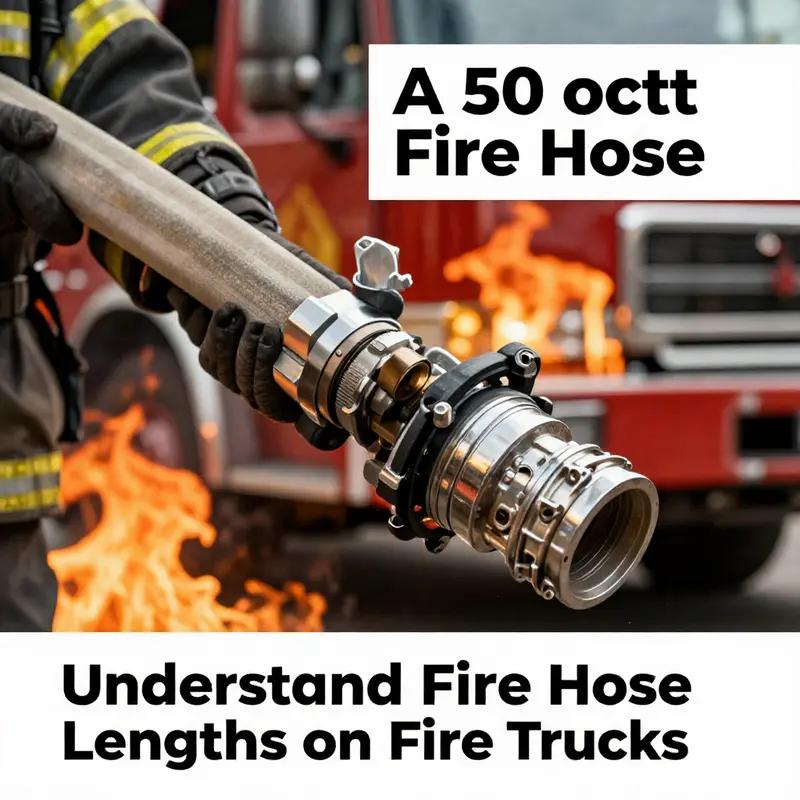
When a fire truck roars into a fire scene, the scene feels immediate, urgent, and exacting. Firefighters don’t operate a generic toolkit; they deploy a modular system where each component has a precise job, a defined range, and a predictable effect on the outcome. The hose, that seemingly simple coil of fabric and rubber, is the most visible and most critical link in that system. Its length is not a mere convenience but a fundamental constraint and a strategic asset. A truck’s hose compliment is pared down to the essentials that allow crews to connect water from the apparatus to the heart of the fire, while maintaining control, safety, and momentum. In that light, there is a practical reason behind the way hose lengths are standardized, why a typical attack line—launched to push water directly onto the flames inside a structure—tends to be 50 feet long, and why supply hoses that run from the engine to the scene are commonly longer, often 100 feet or more. The answers lie at the intersection of geography, physics, and the dynamic realities of the fireground, where the best gear is the gear that integrates seamlessly with the people who wield it and the spaces in which they operate.
The standard length story begins with the attack hose. A 50-foot length, roughly 15.2 meters, is the familiar workhorse that most firefighters reach for when they step into a building, move toward the seat of the blaze, and need to position a nozzle to apply water with precision. This length is a balance, not an absolute maximum or minimum, between reach and manageability. Ten feet added or removed can alter how a firefighter twists through a doorway, how a team lines up in a hallway, and how much space remains for other actions like moving a victim, advancing another hose line, or stepping to the side to avoid a sudden surge of steam and heat. Fifty feet is not magic; it reflects a compromise achieved from decades of on-site trial and refinement. It is short enough to be maneuverable in tight interiors, but long enough to connect the pump on the truck to the nozzle at a reasonable distance from the point of ignition. The length is also compatible with the common configurations of coupling systems, the ways hoses are coiled and deployed, and the typical layouts of buildings that firefighters encounter, from narrow stairwells to crowded doorways.
Yet the choice of a 50-foot standard does not mean a one-size-fits-all approach. Fire departments routinely carry hoses in other lengths to meet specialized needs. A 25-foot section may seem modest, but in certain situations it serves a vital function: it allows crews to bridge small gaps, connect to a standpipe at a particular floor landing, or reach a doorway without over-extending a line that would be awkward to maneuver. Shorter lengths can reduce the weight burden on ground crews when they are forced to carry multiple lines or when the interior space is clogged with debris, furniture, or trapped occupants. On the other end of the spectrum, 100-foot supplies are commonplace for connecting an engine to a remote water source or for building a longer conduit from engine to the edge of a scene where a hydrant is scarce, or not easily accessed. In departments that employ larger-diameter hoses—such as 3-inch or 4-inch lines—the longer lengths become even more practical, because the larger the hose, the more weight each additional foot adds and the more important it becomes to manage that weight by using sections that can be slung, carried, and deployed with a minimum of awkward handling. These longer lengths are not a mere extension; they facilitate the flow of larger volumes of water, support more robust streams, and enable crews to maintain pressure across greater distances without sacrificing the agility needed to fight the fire.
The variations in hose length reflect the realities of the environments firefighters face. A city with dense multistory structures, a district with long street fronts, or a rural fire district serving wide distances will shape how fleets of hoses are configured and deployed. In some operations, the same engine may carry both 50-foot attack lines and 100-foot supply lines, each tucked into separate compartments or strapped to reels within easy reach. The result is a modular toolkit rather than a single, monolithic line. This practicality is reinforced during training, when recruits learn to anticipate the limitations of distance, the friction losses that accompany longer runs, and the need to adapt if the first line is insufficient or blocked. In practice, the choice of length becomes a decision point in the heat of the moment: the crew evaluates the fire’s scale, the interior layout, the presence of obstacles, and the need to move quickly to a better position. A longer line might enable reaching a distant corner or an upper floor, but it can also complicate handling and increase the time required to advance and secure the water supply. A shorter line offers nimbleness but may force the team to reposition several times or to work in parallel with additional lines. The operator’s ears, training, and experience guide this judgment as much as the meters of hose laying on the ground.
Beyond the basic distinction between attack and supply hoses, the practical logic of hose lengths involves the mechanics of the firefighting apparatus itself. Hoses are stored in bundles or on reels designed to deploy quickly under pressure. The layout of compartments on a truck, the way hoses are coiled, and the presence of hose bed racks influence how effectively a given length can be brought to bear in a crowded interior. When a nozzle is connected to a 50-foot attack line, firefighters have a predictable amount of hose to move through doorways, down corridors, and around corners before they reach the point where the water must act. If the distance is longer—due to the geometry of the structure or the position of the hydrant relative to the fire—the crew can connect multiple lengths end-to-end, creating an extended run that preserves the same basic handling characteristics while extending the reach. This modularity is not accidental; it is a deliberate design choice that allows departments to adapt their tools to the scene without sacrificing the frictionless transition from standby to action.
The physics of water flow also plays a central role in decisions about hose length. Every foot of hose adds a small amount of friction, which translates into pressure loss at the nozzle. The longer a line is, the more pressure must be supplied by the pump to maintain an effective nozzle pressure. This is not a purely theoretical concern; in practice, it shapes how crews set up their attack patterns. If a hose is too long for the available pump capacity or the nozzle’s needs, the water may arrive weakly, making it harder to control the stream, maintain reach, or sustain an interior attack against the flames. Therefore, the choice of length harmonizes with the pump operator’s settings, the type of nozzle, and the overall water supply plan for the incident. In operations where a larger-diameter supply line is deployed for a longer stretch from the engine to a distant hydrant or water source, the same principle applies, but with amplified effects: more velocity, more volume, and more potential for pressure drop that must be compensated by the engine crew and the surrounding team.
The interdependence of length, pressure, and mobility becomes especially vivid in real-world scenarios. Consider a stairwell that spirals upward in a high-rise setting. A 50-foot attack line might span the distance from the entry door to a landing, still leaving enough hose to turn a corner and aim the nozzle at the base of the flames without getting tangled in clutter or heat. In a longer, more open area or in a building with distant rooms, crews may opt for a longer supply line to maintain a steady feed of water as they move toward the seat of the fire or to support a second line that advances from another point. In less accessible terrains—rural roads, for instance—a 100-foot or longer line may be essential to bridge the gap to the nearest water source, enabling the engine to deliver the required gallons per minute with manageable friction losses while still allowing operators to keep the line under control as it snakes toward the blaze.
The choreography of hose deployment is also a study in organization and space management. Firefighters train to coil, tote, and pivot their lines with an almost instinctual sense of balance. A 50-foot section is short enough to be moved with one or two people in a narrow hallway and long enough to protect a doorway or a vestibule from the heat of the fire, while providing enough slack for the crew to adjust their stance, pivot their bodies, and maintain a steady hold on the nozzle. The longer 100-foot lines are typically handled by teams that conserve energy through teamwork, passing the hose back along the line, and using the weight of the water-filled segment to keep the line taut as they advance. The different weights and resistance of the hose when charged with water impose practical limits: the heavier the line becomes, the more crucial it is to maintain a steady pace, avoid kinks, and prevent the line from twisting around obstacles or the operators themselves.
This interplay of length and load also motivates thoughtful equipment design and truck layout. The hose bed is organized so that a 50-foot attack line can be rapidly deployed with a single motion, while longer supply lines are placed for quicker access without requiring crews to climb over or around other gear. Training reinforces the sense that a well-chosen length is as important as a properly connected coupling or a clean nozzle. Firefighters rehearse the sequence of unrolling, advancing, and coupling ends, ensuring that the lines remain free of obstructions and unnecessary twists. They learn to anticipate how many lengths of hose will be needed for typical scenes and to adapt when confronted with unusual configurations, such as a building with a long, straight hallway or a stairwell that forces a long horizontal traverse before reaching the interior rooms.
The overarching theme is that hose length embodies tactical flexibility. It is a变量 that interacts with the scene’s geometry, the structure’s construction, and the fuel load involved in the blaze. Departments recognize this and therefore carry a spectrum of lengths that can be combined in a way that preserves both reach and control. The decision to rely on 50-foot attack lines, plus the option of longer supply lines or shorter special-purpose lengths, is a reflection of a long tradition of empirical learning—one that honors the necessity of moving quickly and safely under pressure while ensuring a reliable water supply. It also mirrors the broader principle of firefighting as a system of interlocking parts: engines, pumps, hoses, nozzles, and firefighters all coordinate to make the amount of water delivered at the nozzle as effective as possible. The length is not an isolated variable but a lever that crews can adjust in concert with rate of flow, nozzle type, and the fire’s behavior, all within the constraints of the building’s design and the street’s geography.
In addition to the general rationale, it is worth noting how local practice, codes, and manufacturer considerations shape what is carried aboard a given truck. The exact specifications of hose length can vary slightly from one jurisdiction to another, reflecting local building codes, firefighting norms, and the expectations placed on departments by their communities. Firefighters learn to read their apparatus with a practiced eye, knowing how many 50-foot sections and how many 25-foot or 100-foot lines are loaded, and how to retrieve them efficiently when the call comes in. They understand that while a standard length serves as a reliable baseline, the incident may demand improvisation. A particular doorway, a stairwell, a courtyard, or a parked vehicle may necessitate adding a shorter piece to a longer run or replacing one segment with another from a different part of the hose bed. This adaptability is an essential feature of modern firefighting, enabling responders to respond with rapidity and precision across a wide landscape of emergencies.
From a planning perspective, the 50-foot standard for attack lines serves as a common language for training, drills, and mutual aid. When neighboring departments share equipment and coordinate responses, a shared expectation of hose length smooths the transition from one team to another, reduces confusion at critical moments, and makes it easier to synchronize water supply and fire control activities. The standardization also helps engine operators calculate the equipment needed for a given scene, estimate the delivery time of water, and gauge the friction losses that will occur along the line. While the reality on the ground will always call for adaptation, the established norms provide a robust framework upon which crews can build their strategy and execute it with confidence.
In sum, the length of a fire hose on a fire truck is more than a measurement; it is a core element of tactical design, an influence on water delivery, and a practical tool for managing the unpredictable terrain of a fire scene. The 50-foot attack line remains the workhorse for interior operations because it strikes a practical balance between reach and maneuverability. The longer 100-foot supply lines, or the shorter 25-foot segments kept for specialized tasks, extend the toolkit to cover a broader range of scenarios. The choice of length is a dynamic math problem on the street, solved by trained crews who weigh distance, friction, weight, and the geometry of the building while keeping the mission—saving lives and protecting property—at the center of every move. And as departments evolve, they keep refining their approach, ensuring that the hoses on their trucks remain not only adequate in length but also aligned with the realities of the communities they serve. For those who study the science and practice of firefighting, the lengths tell a story of balance, discipline, and the relentless pursuit of effective, dependable water delivery when every second counts.
External resource: https://www.firefightingnews.com/fire-hose-standards-and-lengths/
null
null
Stretching the Line: How Fire Hose Length Shapes Tactics and Safety on the Fire Engine
When a fire alarm pulls and the first engine doors swing open, a forest of questions opens with it. Where do we find water? How much hose can we deploy before the line becomes a liability? And how does the length of the hose on a fire truck influence every move from the initial approach to the final knockdown? These questions may sound technical, but they sit at the heart of every practical decision firefighters make in the heat of an incident. Hose length is not just a measure of reach; it is a dynamic factor that shapes tactics, pressure management, crew safety, and the tempo of a scene. The lengths carried on a fire engine are the result of centuries of firefighting practice condensed into practical numbers. They are chosen to offer flexibility, maintain control of flow, and keep the operation portable enough to adapt to the unpredictable nature of real fires. As with many tools on a truck, the true value of hose length emerges only when it is placed in the right hand at the right moment, under the right pressure, and in a way that keeps every firefighter moving toward the goal of salvation rather than getting tangled in a longer, heavier, less controllable line.
To understand why hose length matters so deeply, it helps to picture a typical incident from the moment a crew arrives. The engine brings water to the scene in two primary ways: the onboard tank, which has a finite amount of stored water, and an outside water source that can be connected through hydrants or other supply points. The transition from one source to the other is not a single moment but a choreography of hoses, couplings, pumps, and valves. In this choreography, the length of hose deployed from the apparatus plays a central role. A shorter, well-handled attack hose—commonly 50 feet in many departments—offers nimble maneuverability for interior operations where space is tight and the nozzle operator must be able to adjust quickly to room layouts, hallway intersections, and the evolving heat panorama of a structure. A longer length, often 100 feet or more, becomes a strategic option when the fire scene opens up, when crews need to lay a larger distance of hose to reach a hydrant, to span a yard or street, or to sequence a supply line from the engine to a distant point of water. The choice between these lengths is not arbitrary; it reflects a balance between reach, weight, friction loss, and the practical realities of access and safety at the scene.
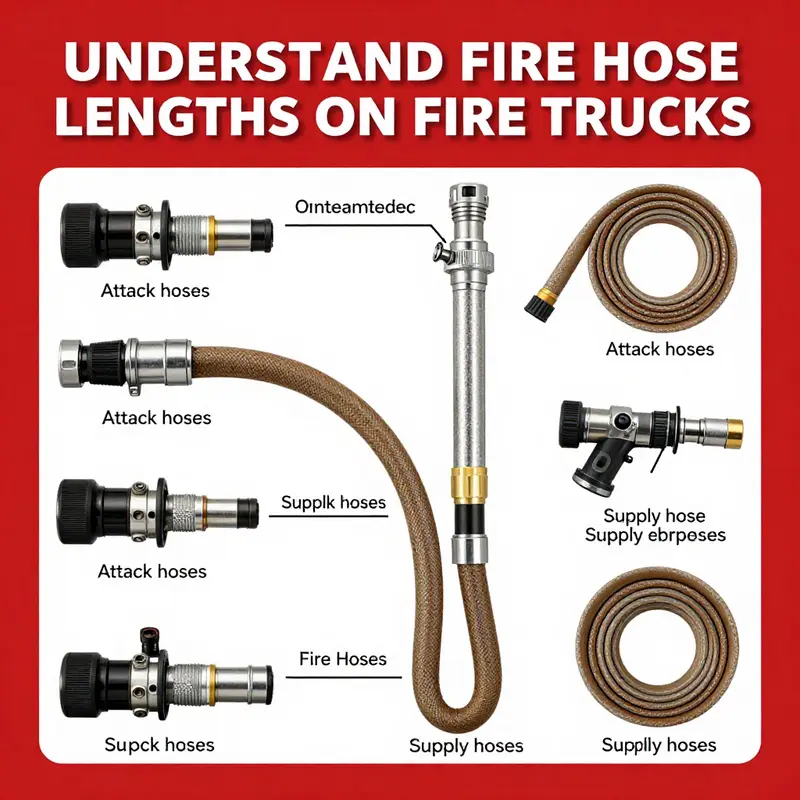
Two broad categories illustrate the most common lengths and their purposes: attack hoses and suction hoses. Attack hoses are the primary workhorse for direct fire suppression. They are designed to transport water at high pressure from the apparatus to the nozzle where firefighters apply it to the flames. The duplicated choices here—50 feet and 100 feet—provide a spectrum of operational options. The 50-foot length is prized for interior structural attacks because it minimizes the amount of hose that has to be dragged through hallways, up stairs, or into tight rooms. Shorter hoses reduce friction loss over shorter distances, which helps sustain the pressure firefighters count on to keep streams strong and effective. The shorter length also simplifies handling, reduces fatigue, and lowers the risk of tangling or tripping in complex layouts. On the flip side, the 100-foot option offers extended reach, which is invaluable in exterior operations, larger rooms, or when crews need to keep a safe distance from the point of attack while maintaining a steady water supply. In those cases, a longer lay allows for more strategic positioning, reduces the need to reposition as the scene changes, and supports a staged approach where water can be fed progressively as conditions permit.
Suction hoses present a different set of constraints. Their primary job is to draw water from an external source—hydrants, streams, ponds, or portable tanks—into the pump so water can be pressurized and discharged toward the fire. Suction hoses must function reliably under vacuum as the pump creates negative pressure to pull water through the line. Because suction hoses operate in conjunction with gravity-fed water sources and the pump’s suction dynamics, they are typically shorter, commonly 20 or 25 feet. The shorter length helps ensure a secure connection and reduces the risk of air leaks, kinking, or hose collapse under vacuum. The aim is not to stretch beyond the point where the pump can maintain a steady draw but to position the truck close enough to a water source to establish a robust intake quickly. In practice, this means the suction hose is kept compact and readily accessible so the operator can couple it to a hydrant or other source with minimal delay, then guide it into the pump with a controlled, deliberate motion.
Standpipe hoses occupy a more specialized niche. Standpipes are part of a building’s permanent fire protection system and, in many cases, are installed to provide direct access to water within high-rise structures. Firefighters may rarely carry portable standpipe hoses on every occasion, since the building’s own system serves as a primary water conduit. When portable standpipe hoses are deployed, they resemble attack hoses in length—typical options of 50 feet or 100 feet—but their function is to extend the water supply within a building, enabling crews to reach floors and compartments that the building’s fixed system cannot immediately serve. In such situations, the hoses must be long enough to traverse stairwells and corridors and allow at least one operator to stay safely out of the main fire path while delivering a controlled stream toward the nozzle team. The presence or absence of a standpipe connection often dictates the choice between shorter vs longer portable lengths, and the decision is driven by the building layout, compartment density, and the fire’s location.
Booster hoses add another layer to the story of length and purpose. These smaller, lighter hoses are designed for rapid initial attack or for vehicle incidents where a full-scale lay would be excessive or impractical. Booster hoses typically range from 25 to 50 feet. They are prized for their maneuverability and quick deployment in situations that demand a fast response with minimal setup. In many scenes, boosters serve as a bridge between the earliest seconds of detection and the more deliberate, longer hose lays that might come into play once the fire’s reach and intensity are better understood. The booster’s short length means less weight and easier handling, enabling a crew to establish a first, effective line quickly, while other members prepare the longer lines that may eventually be necessary.
The choices around hose length are not made in a vacuum. They respond to the physics of water flow, the geometry of today’s fire scenes, and the human factors at the scene. Water, while powerful, loses pressure as it travels through hose due to friction. This friction loss accumulates with length, increasing with the diameter and the roughness of the interior hose surface, the number of bends, and the number of couplings. A longer hose run means the pump must generate higher pressure at the source to compensate for these losses and to maintain a usable pressure at the nozzle. Firefighters continuously balance this hydraulic reality with the practicalities of handling, dragging, and placing the hose. A longer line can increase the distance between the pump operator and the nozzle team, complicating communications and making real-time decisions more fluid and often more demanding. Conversely, a shorter line concentrates the water’s power more directly at the nozzle but can limit reach and require additional repositioning of the engine or more complex layouts to sustain a growing attack.
Within this balancing act, the standard lengths used across many departments are more than mere conventions. They are designed to be interoperable, predictable, and adaptable across a range of scenarios. When a firefighter sees a 50-foot attack hose reel or a 100-foot supply line, there is an expectation that another crew member will be there with the correct length in the next compartment or the next vehicle. The predictability of these lengths translates into faster, safer deployments, a smoother progression of the attack, and fewer opportunities for confusion when multiple units respond to the same incident. This standardization does not imply rigidity. It is the opposite: it provides a framework within which improvisation can occur. Real fires rarely unfold as planned, and the ability to swap in a 50-foot piece for a 60-foot need, or to run a 100-foot line when only a 50-foot piece is immediately at hand, is the difference between steady progress and stoppage.
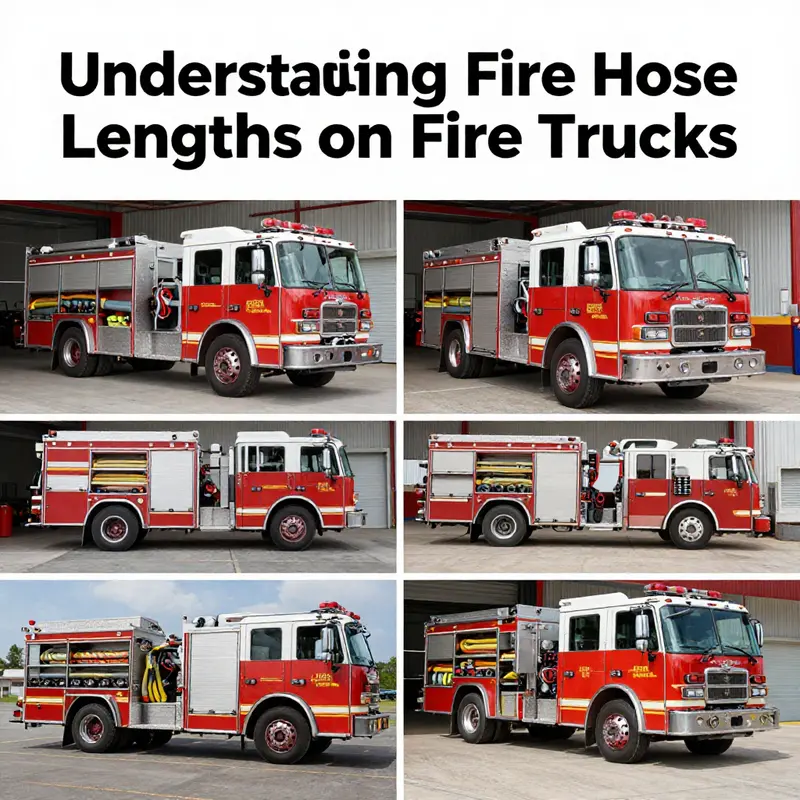
A key but often overlooked aspect of hose length is the logistics of storage and means of deployment on the apparatus. Fire trucks are engineered with compartments, reels, crosslays, and pre-connected lines that streamline the transition from a parked engine to a moving attack. The way hoses coil, connect, and uncoil across a scene influences not only how quickly water can reach the nozzle but also how the team communicates and how safe the crew remains during a high-stakes operation. Shorter hoses can be deployed rapidly from pre-connected crosslays, enabling the first arriving crew to begin cooling and searching almost immediately. Longer lines, stowed in a ready-to-pull configuration, give the team options to extend reach when interior access is blocked, when structural layout requires a longer lay to reach the seat of the fire, or when the nearest hydrant must be reached by a longer, safer path.
Another essential dimension is the broader operational context. In urban settings with tall structures and dense occupancy, standpipe or extended attack hose lays become critical. In sprawling suburban neighborhoods or rural areas, supply lines of 100 feet or more can reduce the need to shuttle water across open ground or to bridge long street blocks. For interior structural attacks, the preference often leans toward shorter lengths to preserve maneuverability and maintain nozzle control in constricted corridors. For exterior operations, long lines reduce the number of hose moves required to reach a water source, which can save precious seconds when every moment counts. The decision matrix is further complicated by the presence of multiple hoses, the interplay of two or more engines, and the need to coordinate water supply with pump pressures. In such scenes, the interplay of lengths becomes a choreography: separate lines for supply and attack, carefully sequenced to maintain adequate flow and consistent nozzle pressure while the fire scene evolves.
Across departments, the adoption of standardized lengths is guided by national safety standards that seek interoperability and safety. The idea is to ensure that hoses and their couplings can reliably connect across different jurisdictions and equipment configurations. While regional variations exist, the underlying principle remains consistent: provide enough length to reach the target while preserving control, minimizing friction losses, and enabling rapid deployment. The standards encourage crews to plan ahead, to practice their layouts, and to train in the kinds of environments they are most likely to encounter. A key touchstone for any discussion of hose lengths is the broader framework of guidelines and codes that govern firefighting equipment. For authoritative information on hose types and dimensions, refer to NFPA 1961, which codifies the expectations for how hoses should perform and how they should be used in practice: https://www.nfpa.org/Code-Development/All-Codes-and-Standards/NFPA-1961
In the end, hose length on a fire truck is less about the number printed on a reel or a catalog and more about the story those numbers tell on the scene. The 50-foot class of attack hoses tells a tale of agile, intimate work inside rooms where access is tight but urgency is high. The 100-foot class speaks to reach and endurance, the ability to build a water supply from a source that lies beyond the first line of defense. The 20- or 25-foot suction lines tell of quick connections to hydrants, minimal air intake challenges, and the value of keeping the pump fed with a steady stream of water. The booster lines, short and light, symbolize the earliest moment of action, when a crew tests the waters, calms the environment, and establishes a foothold before a longer, more deliberate attack can unfold.
This tapestry of lengths is enhanced by training, teamwork, and the shared knowledge forged in drills and real-life calls. Firefighters rehearse the exact motions of unrolling, coupling, and advancing hoses, learning to anticipate friction losses and to adjust pump pressures with surgical precision. They practice coordinating the movement of multiple lines, communicating through loud radios and the rhythm of steps and hands, so that the practical questions—how long is the hose, how far can we reach, how much water can we deliver—become second nature. The goal is not to maximize the complexity of the system but to simplify execution under stress. A well-chosen hose length, one that aligns with the scene’s geometry, the crew’s capabilities, and the water source available, becomes a quiet ally that keeps the team focused on extinguishing the blaze and protecting lives.
Of course, these considerations are not unique to any single department. They reflect a shared understanding within the firefighting profession: hose length is a tactical variable that can tip the balance between a swift, controlled response and a cumbersome, extended siege. Departments tailor their standard lengths to their typical buildings, their common response patterns, and the terrain they serve. This is why, in some places, you’ll find a heavier emphasis on 50-foot crosslays that permit rapid interior access, while in others the emphasis may be on 100-foot supply lines designed to reduce the number of separate hose runs across a street or yard. The choice is shaped by practical experience as much as by theory. The effective fire engine is not merely a machine for pumping water; it is a carefully arranged ecosystem of hoses, couplings, nozzles, and the crew that wields them, all designed to convert water pressure into controlled, effective suppression.
Looking ahead, the evolving landscape of firefighting equipment and practice may echo and refine these lengths further. Advances in hose materials, coupling design, and pump technology could alter how much friction loss is tolerable at a given pressure or how light a hose feels when it’s being advanced through a complex structure. Yet the core principle will endure: hose length is a tool that must fit the task. It must enable fast, reliable water delivery while preserving safety. It must align with an incident’s geometry and the building’s contents, and it must integrate with the crew’s training and the command structure guiding the operation. When a fire is declared under control and the scene returns to a safer state, the hoses are stowed again, their lengths reduced to a manageable inventory ready for the next call. The cycle repeats, and with it the implicit trust that the right length—neither too long to waste energy nor too short to hinder reach—will always be there when needed.
Stretching the Reach: How Fire Hose Length Shapes Strategy, Safety, and Success on the Fire Truck
In firefighting, the length of a fire hose carried on every engine is more than a simple measurement. It is a strategic tool that influences how quickly crews reach the seat of the fire, how much pressure can be sustained at the nozzle, and how safely teams move through smoke and heat. Hose length requires balancing reach with weight, deployment speed with maneuverability, and the realities of stairs, corridors, and obstacles that define each incident. The result is a tool that informs tactics, drives work rhythms at the scene, and anchors the decisions made by command from the first alarm to overhaul.
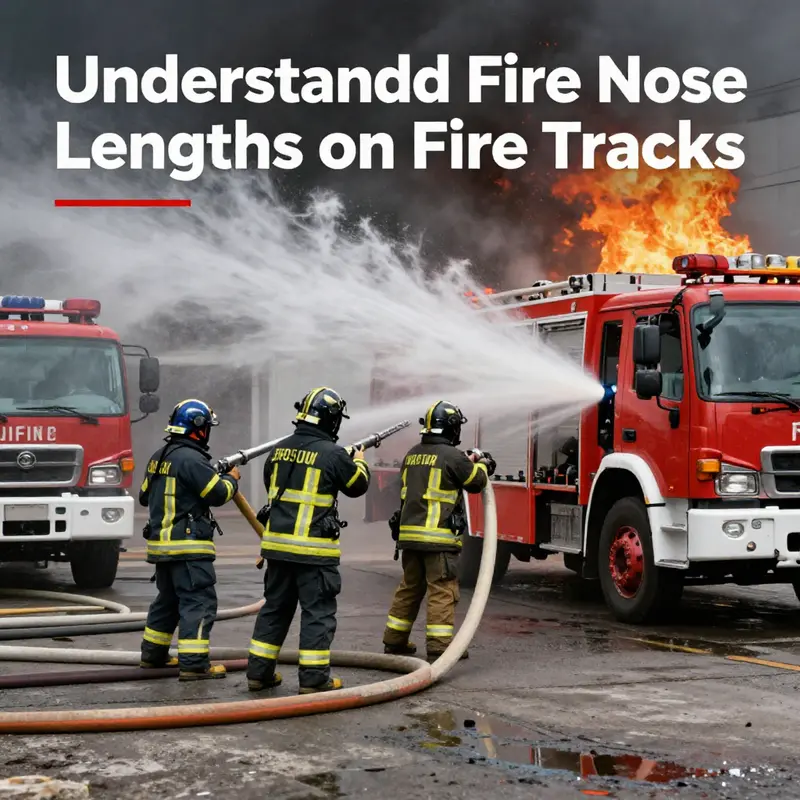
Attack lines are commonly 50 feet long in many departments, about 15 meters. These lines allow rapid initial action while keeping the nozzle within reach of the team at the door. Longer supply lines, often 100 feet or more, connect the pump to the scene water source and support relay pumping across terrain and distance. The choice of lengths reflects geography, hydrant placement, and the need to maintain steady water pressure as teams move through a building or across uneven ground.
Longer hoses increase friction losses and add weight that can slow movement and complicate handling in tight spaces or on aerial devices. They also impose higher demand on pump operators to adjust discharge pressure. Departments tailor their baselines to vehicle design, hose bed space, and typical incident layouts. Many engines carry a mix of shorter attack lines for quick interior work and longer supply lines for sustained operations, enabling a staged approach that preserves water supply and rider safety while expanding reach.
Standards such as NFPA 1961 provide guidance to align hose selections with vehicle type, mission profiles, and environmental contexts, but they do not dictate a universal exact length. The objective is to balance reach, reliability, and safety while keeping equipment workable for responders on the ground. In practice, hose length becomes a tactical variable that drills down to how a team moves, where it positions the engine, and how it maintains pressure as the scene evolves.
For departments and readers seeking authoritative guidance, NFPA codes and the standard for automotive fire apparatus offer a framework to align equipment with local conditions and mission requirements. The emphasis is on practical, adaptable length strategies that support effective fire control and the safety of every member of the crew. https://www.nfpa.org/codes-and-standards/all-codes-and-standards/list-of-codes-and-standards/detail?code=1961
Final thoughts
Understanding fire hose lengths is critical for business owners concerned with fire safety and preparedness. The standard lengths, variability based on truck types, classifications of hoses, and their critical role in operational effectiveness highlight the necessity for strategic planning and investment in proper firefighting equipment. Ensuring that local fire departments are equipped with the appropriate hose lengths not only enhances operational efficiency but ultimately fortifies safety measures that protect lives and property. The knowledge gained from this guide empowers businesses to better align with fire safety protocols and prepares them to respond swiftly and effectively in case of fire emergencies.

