
















Fire brush trucks play a crucial role in wildland firefighting, particularly in areas where access is challenging. As business owners invested in environmental safety and community protection, understanding the characteristics and operational uses of these specialized vehicles is essential. In this exploration, we will delve into the unique features of fire brush trucks, their operational effectiveness in wildfire management, and their advantages in both rural and urban interfaces. Additionally, we will highlight the technological innovations that are shaping the future of fire response, culminating in an overview of their economic impact on wildfire management strategies. Each chapter will layer knowledge, emphasizing the importance of robust firefighting resources in protecting lives and property in fire-prone areas.
Rugged Responders: How Fire Brush Trucks Navigate Rough Terrain to Suppress Wildland Fires
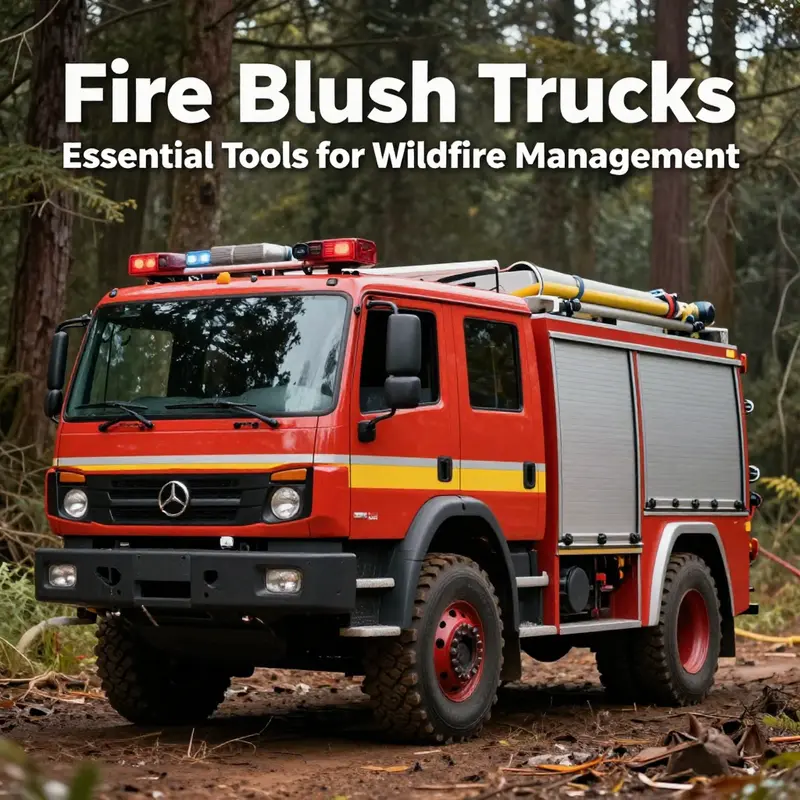
In the shifting light of a smoke-filled afternoon, a compact fire engine threads along a narrow dirt road that curls between scrub and pines. The air carries the scent of resin and ash, and the vehicle itself seems to have grown out of that landscape, built to endure heat, dust, mud, and the uneven demands of wildland firefighting. Fire brush trucks are not the biggest engines in a fleet, nor are they designed to stand out in a city fire scene. They are purpose built for the space between a suburban hydrant and a raging wall of brush, where access is treacherous and every minute counts. The essence of these machines lies in mobility, durability, and the wisdom to know that a rapid initial attack can mean the difference between a small, contained flame and a spreading disaster. Their design prioritizes the ability to reach the fire now, not later, and to begin suppression long before larger apparatus arrive to reinforce the effort.
The terrain of wildfires is the first variable that dictates what a brush truck must be. A roadless slope can hinge on traction, the mud can swallow a chassis that is too tall or too heavy, and a forest trail can demand a turning radius that is kinder to the driver than to a full-size engine. To meet these challenges, brush trucks are built with high ground clearance and sturdy off-road capability. They rely on robust suspension systems and large, rugged tires that bite into uneven ground and resist puncture from rocks and branches. The result is a vehicle that can stay upright on a grade while the engine behind it works to contain the flame. In practical terms, this means a truck that can navigate muddy ruts, loose soil, and rocky outcrops without becoming immobilized, a capability that keeps the firefighting effort moving and reduces the time firefighters must spend reconciling the terrain with their tactics.
Compact size is equally essential. The wildland environment often presents tight spaces: forest roads, narrow corridors between trees, cascades of brush that limit space for turning. A larger pumper, though powerful, may never reach the heat behind a knot of vegetation if the path is blocked by branches or a culvert. By contrast, a brush truck offers a smaller footprint and a lighter touch, enabling it to slip through gaps and position itself at the most strategic point for applying water or foam to the active edge of a fire. The smaller frame also means quicker acceleration and more responsive handling, qualities that matter when every second on scene translates into fewer acres burned and fewer structures threatened.
The heart of the brush truck is its water delivery system, which must balance the need for immediate application with the realities of remote locations. These vehicles typically carry a dedicated water tank that ranges in capacity from several hundred to around a thousand gallons, paired with a pump capable of delivering a brisk stream even when supply lines from hydrants are unavailable or impractical. The ability to reach out with a reliable nozzle and hose in the first minutes of an incident is a strategic advantage; it slows the fire’s spread and buys time for larger engines to join the response, create lines, and apply a greater volume of water from more favorable positions. In many scenarios, that initial attack consists of establishing a cool perimeter around the edge of the fire, cooling hot embers, and interrupting the fuel continuity in the most vulnerable areas. The psychological impact is also meaningful: the sight of a rapid response on a brush line can deter the fire’s advance and reassure residents that the incident is being addressed with urgency and skill.
A brush truck’s equipment package further defines its effectiveness on scene. In addition to basic spray capability, these vehicles often carry specialized attachments and tools designed for vegetation fires. Long-range hose lines extend from the pump to the outside of the vehicle, enabling suppression work at a distance where the brush line meets the wildland. Foam systems, when present, help extend the effectiveness of the water in porous fuels like dry grasses and chaparral, turning a jet stream into a more potent agent against lighter fuels that flare quickly. Dry chemical suppressants, too, find a role in limiting the spread of embers and helping to secure a perimeter around hotspots. Beyond liquids, brush trucks are equipped with hand tools, forcible-entry gear for quick access to structures when fires threaten homes, and a set of cutting or clearing tools that can be used to create a firebreak when vegetation or debris blocks the path of containment.
The nature of the chassis and construction is another critical facet of their performance. A rugged frame built from high-strength steel or aluminum supports a body that must stand up to repeated exposure to heat, vibration, and the physical abuse of off-road work. The cab is often stripped of nonessential comforts to reduce weight and complexity, which translates into better fuel economy, more payload margin for water and gear, and improved maneuverability. In the rough context of a brush fire, even small efficiency gains matter: every pound saved on the chassis translates into more water reach or more tools that can be carried without sacrificing the truck’s ability to traverse a difficult landscape. The shell of the vehicle is designed to resist heat and abrasion; rugged protection around vulnerable components ensures that the engine, pump, and hydronic systems can endure long days on rocky trails or in searing sun. The overall philosophy is resilience: a brush truck must endure season after season of rugged use without compromising the crew’s safety or the mission’s effectiveness.
The operational tempo of brush trucks reflects their role as rapid attack units. They are deployed in wildland-urban interface zones where homes meet forests, and they serve as the lead edge of a broader suppression strategy. In these zones, the first responders must deliver water quickly, lay down a defensive line, and create a cushion of safety around structures while more capable engines arrive from the main staging areas. The brush truck’s agility makes it ideally suited to scouting a fire front, identifying the most active spots, and positioning the crew to exploit supportive wind shifts or terrain features. This early intervention helps keep embers from igniting new fuels and buys crucial time to call in air support, additional ground crews, and larger engines that can blanket the fire with sustained water and foam suppression.
The brush truck also functions as a bridge between tactical approaches and the realities of field conditions. A good unit is not only technically competent; it is also a mobile workshop and a source of reliable information on the ground. The crew must read smoke, assess fuel load, and adjust water application strategies on the fly. They may need to forage for additional water from a nearby source, deploy a temporary line across a slope, or coordinate with a nearby structure fire response to ensure a unified plan. In this sense, the brush truck embodies a philosophy of frugal efficiency: keep the operation simple enough to be dependable, yet flexible enough to adapt to changing conditions as the fire line moves. The result is a model of resilience that is as much about the crew’s decision-making as it is about the hardware they operate.
Within the broader taxonomy of wildland firefighting, brush trucks sit alongside other specialized vehicles that extend suppression capabilities into steep terrain and remote areas. They are not designed to replace larger pumpers or aerial assets; they are designed to complement them. The interplay between these apparatus depends on coordinating drills, communications, and shared objectives so that the team on the ground can progress from quick containment to full suppression with a smooth handoff of responsibilities as larger units become available. The importance of clear command structures and well-practiced procedures is evident each time a brush truck wheels into a canyon or across a rutted hillside where hydrants do not exist and every drop of water must be strategic. In regions where wildfires recur with seasonal regularity, the brush truck becomes a keystone asset—small in stature, but mighty in its ability to open a frontline where others would stall.
To appreciate the broader context, one can think of brush trucks as a tangible embodiment of a fire management strategy that recognizes terrain, timing, and human endurance as core variables. They are designed not for spectacle, but for practical effectiveness in places where terrain dictates that the first line of defense must arrive before fire behavior accelerates. They carry just enough water, just enough equipment, and just enough structural simplicity to fulfill a critical mission quickly and reliably. Their presence signals a proactive approach: a commitment to reach the line, establish a workable attack, and create the conditions for success that only a well-coordinated team can achieve when the landscape itself tests every plan. In the end, the value of fire brush trucks lies not only in what they can do on the ground, but in what their approach represents—a disciplined mix of mobility, ruggedness, and thoughtful design that keeps communities safer in the wildland urban interface and reminds responders that sometimes the smallest engine in the fleet can carry the most significant part of the fight against a fast-moving blaze. For readers seeking a broader sense of the field, the fire fighting truck category offers a comprehensive look at how these vehicles fit within a larger spectrum of suppression tools and tactics. https://cimcfiretruck.com/product-category/fire-fighting-truck/
External reference: https://www.isuzu.com/fire-fighting-trucks/
On the Edge of the Flames: The Real-World Deployment of Fire Brush Trucks in Wildfire Fronts
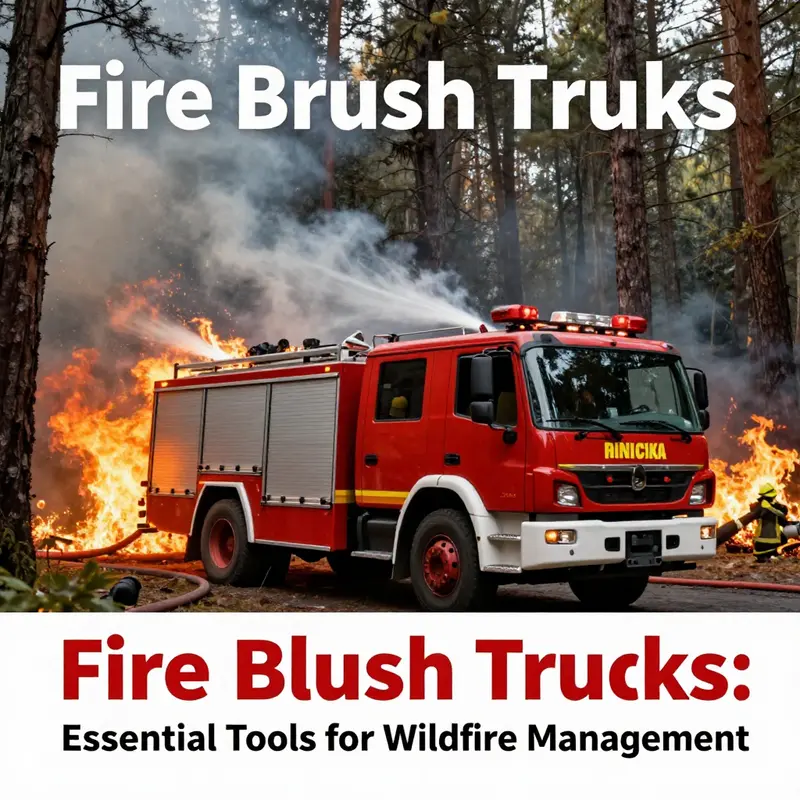
The first minutes of a wildfire often determine its trajectory, and the people who respond in those early moments rely on tools that can reach the flame line where roads end and terrain becomes unpredictable. Fire brush trucks—often described as wildland fire engines—occupy a crucial middle ground between hand crews and larger, road-bound pumpers. They are engineered for rugged, remote terrain, with a focus on mobility, rapid knockdown capability, and the ability to begin suppression before larger apparatus can arrive. Their design priorities reflect the realities of wildland firefighting: steep slopes, narrow tracks, loose soil, dense brush, and the need to protect homes and ecosystems that sit at the wildland‑urban interface. When these trucks roll up to a fire, they bring not just water but an adaptable arsenal of tactics tailored to the local landscape and the evolving fire behavior. In practice, a well-coordinated brush truck operation blends direct attack with indirect strategies, leveraging the vehicle’s mobility to place water where it can do the most good while opening gaps in the fuel bed that limit spread.
Direct attack methods are the most immediate response a brush truck offers. Its onboard water tanks, which commonly hold hundreds of gallons, are paired with high-capacity pumps and robust hose lines that can pressurize a stream to reach through smoke and heat to cool a critical edge of flame or wet a hot shoulder along a line of vegetation. The choice of nozzle, the pressure applied, and the length of the hose lay are shaped by terrain and fire intensity. In some scenarios, crews may supplement water with retardant or foams to slow rapid fire spread or to anchor a defensive line where ground access is limited. The operator’s skill becomes as important as the equipment, because water application in rough terrain requires careful control to avoid causing erosion, creating dangerous throw distances, or inadvertently pushing flames into unburned pockets.
Equally important is the indirect approach that brush trucks enable. When direct suppression is challenged by the terrain or the rate of spread, crews pivot to firebreak creation and vegetation clearance. The vehicle’s compact footprint and reinforced chassis allow it to work close to the line, delivering a controlled burn or clearing enough brush to interrupt the fuel continuity. Some models are equipped with plows or bulldozer blades designed to clear a path through brush and leaf litter, while a heavy blade can quickly establish a defensible space that prevents flame contact with structures or critical resources. In practice, the indirect method is a steady, meticulous process that buys time for ground crews to construct a stronger line with hand tools and bulldozers if needed. The combination of direct water application and strategic fuel removal often yields a faster, more complete early containment than either tactic would alone.
The design of these machines reflects the specific demands of their mission. A high ground clearance and four‑wheel drive enable traversal of mud, rocky ruts, and steep slopes that would stall larger apparatus. The smaller, nimble frame allows entry into tight canyons, narrow ridges, and rural road networks where access is a constant constraint. The water load—typically in the range of 300 to 500 gallons—balances the need for immediate suppression with the reality that refills will follow, sometimes at distant, improvised points along the periphery of the incident. The pumps, hoses, and nozzles are chosen to deliver effective pressure over varying distances and obstacles, while light but durable construction reduces maintenance burdens after rough terrain tests. In addition to water systems, a number of brush trucks carry specialized tools such as a brush hog or flail-type device, designed to clear vegetation quickly and to form defensible gaps that slow advancing flames. These capabilities—combined with reinforced frames and corrosion-resistant materials—enable the vehicles to endure the rigors of harsh climates, rocky trails, and charred air that accompanies fast-moving fires.
Deployment strategies for brush trucks emphasize early presence and integration within a broader incident management approach. They are typically among the first responders to reach a wildland flare-up, positioning themselves to deliver an immediate attack while ground crews advance to safer ground or establish a more robust anchor line. The effectiveness of this early intervention improves when brush trucks operate as part of a coordinated system that includes aerial units and hand crews on the ground. Air support can shadow the ground deployment, dropping water or retardant to cool and slow flame fronts ahead of a direct push. At the same time, ground crews work in tandem with the brush trucks to extend the reach of suppression efforts, secure the perimeter, and identify opportunities for further line construction. In regions where wildfires frequently threaten homes, brush trucks also play a vital role in structure protection by maintaining a water‑rich buffer around properties and ensuring that access routes remain open for firefighters and evacuations.
The operational realities of brush trucks extend beyond suppression tactics to encompass terrain mastery and crew safety. Operators must be adept at reading slope, soil conditions, and vegetation distribution to minimize rollover risk and to protect the engine and crew from sudden loads of ash, heat, and embers. Training emphasizes situational awareness, proper vehicle handling on uneven surfaces, and the prudent use of water to avoid creating uncontrolled washouts or muddy trails that could impede subsequent access. A key element of safety is the discipline of water management: every refill, every pump setting, and every deployment of hoses is planned with the anticipated rate of fire growth, potential wind shifts, and anticipated shift changes in mind. When a brush truck is part of a larger package of resources, it also has to coordinate with aerial and ground teams to prevent conflicts over line placement and to ensure that the overall attack remains cohesive and reversible if conditions deteriorate.
The advantage of a brush truck lies not only in its ability to reach difficult terrain but in its capacity to deliver a measured, adaptive response within minutes of ignition. This means protecting lives, reducing damage to structures, and limiting ecological impact by keeping fires controlled on the ground rather than allowing them to leap across ridgelines. The experience of crews operating these vehicles is built on the willingness to adapt—choosing a direct stream when flame collapse presents a danger to a structure, or switching to a regulated clearance when fuel loads are heavy and flame fronts are advancing unpredictably. The best practice is to view the brush truck as a flexible platform that can morph from a pinpoint attacker into a line-building partner within minutes, depending on what the landscape and the fire are asking for at that moment.
For practitioners seeking to understand the spectrum of compact responders suited for tight terrain, the Small Fire Trucks category offers accessible examples of vehicles optimized for brush and woodland settings, and can serve as a practical reference for departments building their rapid-response capability. See the Small Fire Trucks category Small Fire Trucks for a sense of how similar platforms are configured to meet these demanding tasks.
The broader value of brush trucks also rests in their ability to work in the wildland‑urban interface where instability and unpredictability are common. They are not a solution for every fire scenario, nor should they replace larger apparatus where access and water supply allow. Rather, they are a critical first line of defense, a bridge between hand crews and larger engines, and a mobile footprint that brings suppression to places a ladder truck would never reach and a pumper could never navigate in time. In the context of regional wildfire management, brush trucks contribute to a layered response that prioritizes rapid containment, minimizes the potential for structure loss, and preserves natural resources at a moment when speed and terrain knowledge become decisive factors. The result is a firefighting strategy that respects both the harsh realities of wildland fires and the need for coordinated, multi‑unit action that can adapt to shifting weather, fuel conditions, and community needs.
External resource: https://www.nwcg.gov/
Edge of the Flame: Harnessing Fire Brush Trucks at the Rural and Wildland-Urban Interface
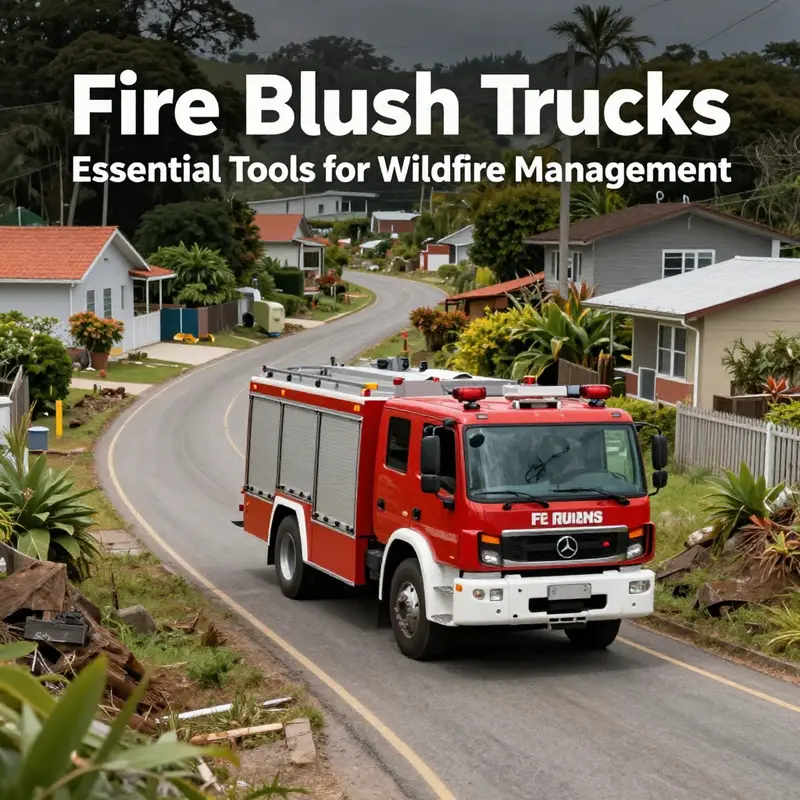
The edge where civilization meets the wild is not merely a boundary on a map; it is a living, breathing frontier that tests strategy, equipment, and courage. In these landscapes, where forested hills roll into communities and unpaved lanes carry the weight of timber, brush fires can flare with alarming speed and unpredictability. It is here that fire brush trucks prove their worth not as a luxury but as a critical line of defense. They are built to answer a particular call: to arrive swiftly, to operate where hydrants are scarce or nonexistent, and to begin suppression before larger, full-scale apparatus can maneuver into a constricted site. The rural and wildland-urban interface zones demand mobility, resilience, and a degree of autonomy that many conventional fire engines cannot provide. In this setting, the brush truck is less a specialized tool and more a bridge between the first spark and the deployment of a full incident management plan.
The fundamental design philosophy behind brush trucks centers on practicality born from necessity. They combine rugged durability with the nimbleness required to negotiate rough terrain. A high ground clearance allows these vehicles to traverse rutted dirt roads, rocky trails, and muddy slipways that would impede larger equipment. Four-wheel drive, coupled with a compact footprint, yields a machine that can pivot through tight switchbacks and dense vegetation, where every inch of clearance matters and where time spent maneuvering can mean a line of fire advancing or being checked. This combination of strength and agility is not merely about reaching firelines; it is about placing suppression forces where they can be most effective in the critical minutes after ignition.
Beyond mobility, the on-board water capability of brush trucks is a principle of operational independence. In many WUI settings, the absence of hydrants or the inaffordability of laying large-diameter supply lines makes a rapid, self-contained attack essential. Onboard water tanks, paired with portable pumps, drafting gear, and the ability to draw from natural water sources when needed, allow responders to establish a first line of defense without waiting for distant apparatus. This autonomy shortens the interval between discovery and suppression, which in wildfire terms translates into fewer acres burning before a sustained attack can be mounted. It also relieves pressure on the incident commander to immediately assemble a large water supply, enabling a more measured, staged response that can be scaled as the fire behavior evolves.
Inside the cab and along the chassis, the emphasis on reliability is evident. The equipment list is lean but purposeful: high-flow nozzles, compact hose reels, and a groomed set of hand tools designed for rapid line construction and vegetation management. Some brush trucks carry a brush hog or flail-type device as a strategic asset for creating firebreaks by removing continuous fuel ahead of the advancing flame front. The ability to clear surrounding vegetation not only protects property but also disrupts the path of a fire, altering its intensity and rate of spread. These features are not cosmetic add-ons; they are tactical options that can shape the trajectory of a fire front when every second counts.
Durability is another cornerstone. The harsh environments of rural roads, forest rims, and steep slopes demand bodies and frames built to withstand vibration, impacts, and the occasional collision with debris. The materials chosen for these vehicles—often high-strength steel or corrosion-resistant aluminum—work in concert with reinforced suspension and rugged tires to weather the rough conditions typical of wildland engagement. This sturdiness is paired with thoughtful ergonomics and protective systems that keep crews safe when visibility is limited by smoke, dust, or sudden embers. As a result, responders can remain focused on suppression tasks rather than worrying about the vehicle’s reliability under stress.
The role of technology in brush trucks is equally pragmatic and protective. Thermal imaging cameras, for instance, provide crews with critical visibility through smoke and low light, allowing them to identify hidden fuels and to pinpoint hot spots that might escape the naked eye. Personnel monitoring systems can track crew location and physiological status, a safeguard when operations occur in uneven terrain and variable weather. These tools do more than enhance efficiency; they enhance safety, an essential consideration when firefighters are dealing with rapidly changing fire behavior in brush and woodland ecosystems. The technology is carefully integrated so it complements, rather than overwhelms, the task at hand, ensuring responders can focus on fire suppression, line construction, and situational awareness.
The advantages of brush trucks extend into their operational tempo. In WUI zones, the initial minutes after ignition are often the most decisive. Brush trucks are designed for rapid deployment, arrival on scene with a lightweight footprint, and immediate suppression action. They can work in concert with aerial resources and ground crews, serving as a force multiplier that buys time for larger apparatus to position themselves for a sustained attack. In many cases, this rapid initial response is not merely about fighting the fire at its edges; it is about creating a buffer, protecting structures, and transporting personnel and equipment quickly to critical points along the line of defense. The synergy between quick on-scene attack and subsequent escalation to larger resources defines the brush truck’s strategic value in these complex environments.
It is worth noting how these vehicles fit into broader standards and practices. The National Wildfire Coordinating Group (NWCG) maintains guidelines for wildland fire apparatus, including brush trucks, that help ensure consistency in performance, safety, and interoperability across jurisdictions. Those standards underscore a shared understanding: the brush truck is a specialized instrument designed to operate where the urban-rural boundary becomes a pressure point for fire behavior, access, and resource availability. In parallel, coordination with local, state, and federal incident management frameworks allows brush trucks to integrate smoothly into larger suppression plans, ensuring that a rapid initial attack can evolve into a structured, effective response that leverages the most appropriate assets at each stage of the incident.
In practice, these theoretical advantages translate into tangible outcomes in the field. When a wildfire or brush fire starts on a remote hillside or within a dense pocket of vegetation, a brush truck can be the first responder on the line. It can establish a defensible space around structures, halt or slow forward progress on the most influential fronts, and support incoming engines by providing water and access where hydrants are not available. The compactness of these vehicles makes them especially valuable in tight neighborhoods or rural corridors where homes nestle along winding roads or sit at the fringe of open land. This positioning is not just about proximity; it is about optimizing the geometry of suppression—getting water where it is needed, placing crews where they can work safely, and shaping the fire’s behavior through a combination of direct attack, line construction, and vegetation management.
As communities strive to protect expanding WUI landscapes, the role of brush trucks will continue to evolve. The ongoing integration of newer features—improved payloads, advanced monitoring, and even smarter propulsion systems—will further bolster their ability to respond when time is of the essence. Yet the core value remains grounded in the simplest truth: when access is challenging, mobility and autonomy are as essential as water and hose lines. The brush truck embodies this truth, offering a versatile, reliable, and efficient approach to initial attack that can transform a potentially catastrophic incident into a controllable one.
For readers seeking a sense of how these capabilities sit within a larger catalog of fire-fighting equipment, there is a broader family of vehicles that includes the category dedicated to fire fighting trucks. This category highlights the continuum of apparatus designed for different roles, from tight-spot maneuverability to specialized response functions. Exploring this category helps situate brush trucks within a broader ecosystem of life-saving tools and shows how agencies balance capability with practicality in everyday operations. Fire fighting truck category.
The practical, field-tested advantages of brush trucks in rural and WUI areas are reinforced by real-world deployments and ongoing research. Notably, several regions have expanded their fleets to better address seasonal wildfires and the shifting risk profiles of rural communities. These developments reflect a broader recognition: that early, aggressive, and well-supported suppression actions can reduce the cumulative damage of a fire season and protect both people and property in vulnerable zones. The scientific and administrative framework behind this practice, including guidelines from interagency bodies, continues to evolve as new data and lessons from each incident are gathered and integrated.
In sum, the value proposition of fire brush trucks in rural and wildland-urban interface environments rests on a mix of practical design, autonomous capability, and strategic use. Their small footprint belies a significant impact: rapid access to rough terrain, self-sufficient water handling, and a suite of tools optimized for the early, high-stakes moments of a brush fire. As communities continue to live at the edge of forests and grasslands, these vehicles will remain indispensable elements of a broader, layered approach to wildfire prevention and suppression. They are not a final solution, but they are a powerful first answer, enabling responders to begin the job with urgency, safety, and effectiveness.
External resource: https://www.nifc.gov
From Off-Road to On-Scene: The Tech-Driven Evolution of Fire Brush Trucks
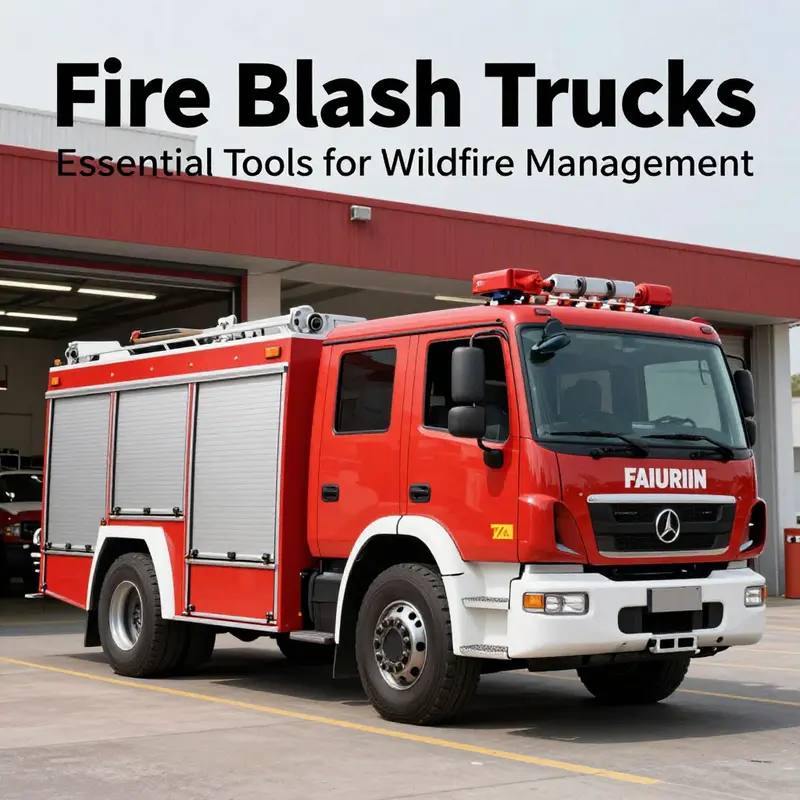
Fire brush trucks have long stood at the edge of conventional firefighting, a nimble, rugged solution forged for terrain that would stall a full-size pumper. They are designed to operate where roads vanish, where vegetation crowds the path, and where time matters more than pomp. In this setting, a truck’s ability to leave the main artery and press into rough ground is not a luxury but a necessity. The design philosophy is clear: maximize reach and resilience while preserving mobility. High ground clearance and four-wheel-drive capability let these vehicles climb uneven slopes, power through mud, and navigate narrow trails that thread through forests and scrublands. Their compact footprint is not a vanity metric; it translates directly into the maneuverability required to traverse dense brush, slip between trees, and position a line for suppression with precision. A brush truck’s water supply, though smaller than that of a full-size pumper, is calibrated for rapid initial attack, a crucial pressure point in wildland firefighting when every second counts and larger apparatus may still be en route. The onboard equipment—nozzles, hoses, and a sometimes rugged attachment for clearing vegetation to create a break—speaks to a broader objective: enable frontline action in the critical minutes following ignition. The chassis and hulls are reinforced for rough service, often built from high-strength steel or advanced aluminum alloys that can survive the jolts of off-road operation while resisting impact from thorny brush or stone that would compromise a lesser machine. This combination of ruggedness, compactness, and purpose-built gear allows brush trucks to act as rapid-response units in the wildland-urban interface, where homes meet undeveloped land and the risk profile demands fast, adaptive action rather than waiting for a larger, less mobile system to arrive.
In many regions—where forests meet farms, chaparral clings to foothills, and remote communities rely on quick access—the brush truck is not simply a backup but a first line of defense. The role it plays is shaped by geography as much as by doctrine. In flatter, more accessible terrains, a larger engine could take the lead, but in the steep, narrow terrain of pine flats and brush pockets, the brush truck becomes the crucial conduit between ignition and suppression. Its ability to reach the heart of a fire while avoiding bottlenecks on gravel and dirt roads makes it indispensable for initial attack and for staging long enough to allow larger units to arrive with full suppression capacity. The integrated design framework borrows practice from rugged off-road vehicles and blends it with fire service requirements: durability that can endure repeated exposure to heat, dust, vibration, and the occasional impact; modularity that supports rapid maintenance and field repairs; and ergonomics that keep firefighting crews efficient and safe in demanding environments. This is not a mere evolution of a niche machine; it is a reimagining of where, how, and when suppression can begin, especially in landscapes where wildfires can outrun the clock and initial containment is the most decisive factor.
A further stream of progress comes from the wave of technological innovations reshaping every facet of brush trucks, from their core propulsion to the way they manage water and coordinate with the broader firefighting ecosystem. Modern iterations often sport higher-capacity water tanks and more powerful pumps than their predecessors, enabling longer engagement and more consistent suppression pressure in challenging terrain. A larger tank means fewer immediate refills and a steadier stand of water to slow or halt a fire’s advance, while advanced pumps deliver the necessary flow rates to punch through heat, smoke, and variable nozzle pressures. The spray systems themselves have grown more sophisticated, allowing crews to tailor droplet size, spray pattern, and discharge rate to changing conditions on the ground. These refinements support both direct attack and indirect tactics, such as protecting exposures or creating small, manageably sized firelines in brush where a traditional engine cannot operate efficiently.
Mobility continues to be a focal point of innovation. All-wheel drive remains a mainstay, but manufacturers are refining traction control, suspension tuning, and ground clearance to maintain stability on uneven soil and through rock gardens that can puncture a chassis or destabilize a crew. The aim is not merely to climb a hill but to arrive at the right angle for effective suppression—a nuance that often decides whether a line can be laid down before the fire makes a sharp turn. Enhanced mobility also supports rapid repositioning. As fires pivot with wind shifts, the ability to move a few meters at a moment’s notice can prevent a collapse of a contained line and provide fresh ground for extraction or evacuation routes. The trend toward lighter, stronger materials in certain zones of the truck—without compromising the integrity of critical safety systems—contributes to better fuel efficiency, reduced wear, and improved handling. The conversation around durability is not about brute force alone; it is about predictable behavior in unpredictable environments, which translates into better crew performance and safer operations.
Beyond the mechanical, the most transformative changes occur in the realm of real-time data and automated systems. Modern brush trucks often integrate GPS for precise navigation and resource tracking, turning every mile into a logged datum that supports dispatch decisions and on-the-ground maneuvering. Real-time location data helps coordinators balance the fleet, minimize response times, and anticipate needs at the incident scene. Thermal imaging cameras are increasingly standard, offering firefighters a window into hidden fire contours, hotspots, and concealed burning material that might threaten a crew’s line or a nearby structure. When used in conjunction with unmanned aerial support or direct drone feeds, these tools create a layered situational picture that is far richer than what any single sensor could provide. Drone coordination, specifically, has moved from speculative showcase to practical asset in many programs, delivering air-based reconnaissance that feeds ground crews with live video, thermal maps, and evolving fire perimeters. The value of such integration is measurable: faster, more accurate decisions; safer crew distances; and more efficient use of water and suppression lines.
In certain high-end configurations, brush trucks are equipped with semi- or fully automated firefighting systems. These technologies sense heat signatures and can initiate preliminary suppression sequences under controlled conditions, reducing exposure for crews in the most hazardous zones. While automation does not replace human judgment, it acts as an intelligent partner, extending reach and reaction speed where trained personnel might otherwise be overwhelmed by the intensity of the blaze. The potential gains here are substantial: decreased response times, fewer close-quarters engagements in active fire fronts, and the ability to sustain suppression while crews reposition for more effective attacks. This trajectory of automation and sensor fusion is tightly aligned with broader wildfire management strategies, which emphasize rapid containment, targeted application of water and retardants, and a harmonized approach across engines, aircraft, and incident command.
At the policy and standards level, the adoption of these innovations is guided by established frameworks that aim to keep wildland apparatus within a defined performance envelope. National and regional guidelines specify minimum capabilities for wildland fire equipment, including brush trucks, ensuring a baseline of reliability and safety for responders. Such standards help ensure that the rapid advances in propulsion, hydraulics, and sensing do not outpace the training, maintenance, and interoperability that are essential for effective response. In practice, this means that a brush truck is not a standalone device but a component of a coordinated system that spans dispatch centers, ground crews, aerial assets, and post-incident analysis. The end user experience—whether at a remote brush fire or at the edge of a wildland-urban interface—depends on this ecosystem functioning in concert. The latest developments are also shaping how departments plan their fleets, prioritize maintenance, and train personnel to exploit the full spectrum of capabilities now available in the field.
For readers seeking a tangible touchpoint in the broader landscape of firefighting technology, consider the range of available brush-compatible platforms that cater to smoke, heat, and rugged terrain, which you can explore in more detail in the fire-fighting trucks collection. This repository illustrates how manufacturers adapt a common chassis concept to address diverse mission profiles, from compact responders to heavy-duty platforms, each tuned for specific operational theaters. The adaptability of these platforms underlines a critical truth: technology alone does not win fires; it amplifies the judgment, skill, and coordination of trained crews operating in complex landscapes. As sensors multiply, batteries and hydraulics become smarter, and autonomy edges closer to routine practice, brush trucks will continue to evolve as mobile laboratories on wheels—testing, refining, and delivering suppression in places where the challenge is greatest.
External resource: https://www.sanyglobal.com/en/news/sany-heavy-fire-truck-tech-heats-up-expo
Bringing Fire Management to the Edge: The Economic Impact of Brush Trucks on Wildland Fire Economics
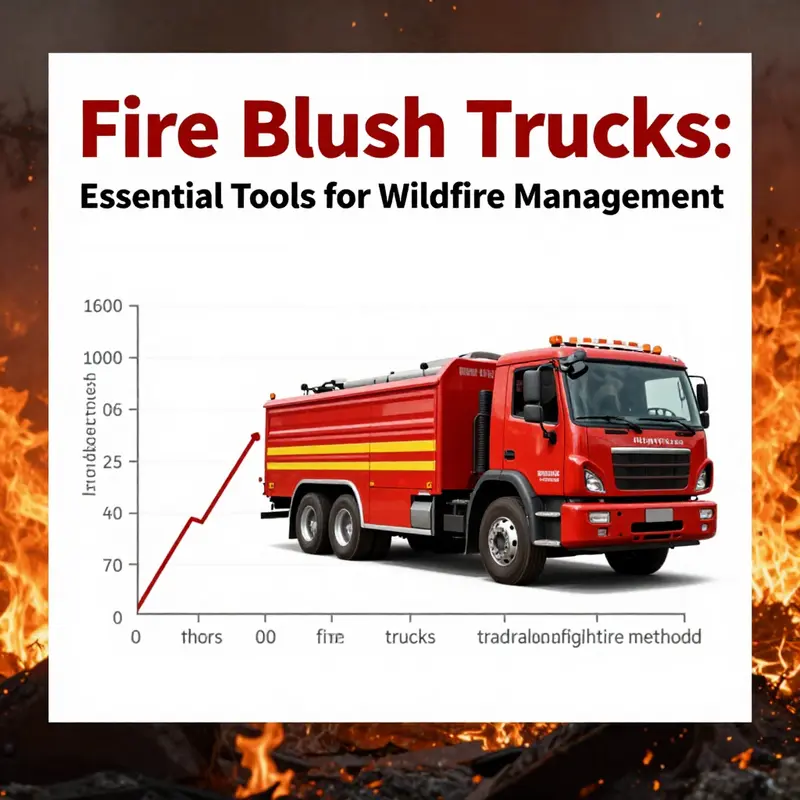
Brush trucks are not glamorous icons of firefighting; they are economic instruments that convert risk into manageable actions on the ground. In the wildland-urban interface and in remote rural landscapes, where access is a tangle of dirt roads and steep slopes, these small, rugged vehicles provide a bridge between early detection and durable containment. Their value isn’t only measured in gallons of water or seconds shaved from arrival times; it is measured in dollars saved, in avoided damages, and in the resilience built within communities that often live where forest meets the fence line.
The physical design of brush trucks—high ground clearance, four-wheel drive, compact footprints—matters because it translates into operational cost savings. A vehicle that can navigate rough terrain without escalating into a costly rescue operation or the deployment of an entire engine company reduces fuel burn, personnel hours, and equipment wear. Onboard water systems, while modest compared to larger pumpers, enable initial containment before heavier apparatus can be arranged. Some configurations add a foam system or a compact pump with the reach of long hose lays, allowing crews to stage a defensive line from the outset rather than waiting for a distant handline to be established. The result is a cascade of savings that compounds as the incident unfolds in the first critical minutes.
Beyond raw capabilities, the timing of response is a central economic driver. Fire does not respect property lines or jurisdictional boundaries, but the economics of suppression do respond to time. The U.S. Fire Administration has long underscored that early intervention can dramatically cut the cost of containment. When a fire is checked within the first 6 to 12 hours, the suppression footprint is smaller, and the total expense—fuel consumption, crew rotations, and consecutive assignment costs—tends to be far lower. In that sense, brush trucks function as economic accelerators. They compress the window between detection and suppression, shifting the curve away from rapid escalation toward manageability. This is especially important in rugged terrains where larger engines arrive later or access constraints would otherwise delay a first attack.
The design of brush trucks is also a study in efficiency. They are not overbuilt; instead they are fortified for their mission. A reinforced chassis, high-strength materials, and simplified, reliable pump systems reduce maintenance demands. In remote agencies, where budgets must be stretched across maintenance, fuel, training, and replacement parts, the reliability of a brush truck lowers the risk of downtime during peak fire season. When a unit is ready and operational at a moment’s notice, it avoids the cascading costs of vehicle breakdowns during critical deployments. The economic logic here ties directly into lifecycle costs: the upfront purchase is amortized across years of service, while the marginal costs of operation—fuel, tires, and routine service—are kept predictable through standard configurations and shared parts.
Public policy and budget planners also view brush trucks as a strategic investment in preparedness. They support fuel-reduction efforts and proactive hazard mitigation by permitting rapid deployment of tools that clear vegetation, lay down firelines, and secure defensible spaces. During controlled burns and fuel breaks, a brush truck can move crews and equipment with agility, making the days spent on prescribed work more efficient and less risky. The financial returns to scale become evident when one compares the upfront capital to the long-run savings in suppression costs and avoided damages. National interagency analyses around 2023 indicate a compelling cost-benefit dynamic: for every dollar invested in pre-fire preparedness, including brush trucks used for fuel break activities, roughly four dollars are saved in direct suppression costs and property damage. That ratio does not merely reflect dollars; it reflects avoided disruption to communities, reduced erosion and sedimentation in waterways, and quicker recovery for ecosystems that would otherwise bear the brunt of a larger fire event.
The broader economic landscape of wildfire also shapes the rationale for fleet decisions. In the United States, the aggregate annual cost of wildfires runs into hundreds of billions of dollars when one accounts for suppression expenses, evacuations, damaged infrastructure, and environmental remediation. While brush trucks are not a panacea, they are an intelligent form of preventative spending that shifts the cost curve in favor of less catastrophe and more rapid stabilization. When analysts estimate that total wildfire costs approach 347 billion dollars, representing about 2.5 percent of GDP, the savings generated by early, on-scene action begin to look material at state and federal budgets alike. The argument for investment is not purely fiscal; it is also about resilience. Communities that can mount a rapid initial attack on the fire edge reduce evacuation risk, protect critical utilities, and preserve local economies tied to timber, recreation, and tourism. In other words, the economic calculus is inseparable from social and environmental outcomes.
From a budgetary perspective, brush trucks contribute to a more balanced resource distribution during wildfire seasons. Their small size and relative maneuverability enable departments to span wide geographic areas—often remote and fragile ecosystems—without the heavy, duplicative costs of deploying multiple larger engines to incongruent sites. They also serve as a cost buffer when larger assets are engaged, providing a first-attack capability that helps prioritize and sequence incidents, thereby reducing the negotiable price tag of an entire response. The consequence is a more predictable, scalable response framework in which investments in training, maintenance, and spare parts yield dividends over time. Many rural districts, facing tight capital budgets, view these platforms as force multipliers: a modest investment that multiplies the effectiveness of a smaller team, enabling it to stabilize a scene long enough for larger crews to reposition and take over without paying a premium for rushed, last-minute solutions.
The economic case is strengthened when we consider preventive deployment opportunities. Brush trucks are often part of a holistic approach that includes fuel management, hazard mitigation, and community education. They work in concert with other assets to create defensible space and reduce ignitions at the source. Their role in proactive work—spot treatments, targeted raking, and the creation of early lines—translates into a measurable reduction in subsequent suppression demands. In practical terms, this means fewer acres burned, less long-term environmental repair, and a lower risk of property losses—all factors that improve the bottom line for taxpayers and insurance systems alike. The alignment of equipment capability with community risk profiles is essential. When agencies tailor brush truck fleets to their local terrain and vegetation, they optimize capital expenditure by ensuring the right tool arrives quickly where it is most needed.
To make this argument tangible for stakeholders, consider the practice of linking vehicle readiness with the broader loss-prevention strategy. The presence of a well-maintained brush truck fleet reduces the pressure to mobilize premium aircraft or large engine fleets for every brush fire. Aircraft and large engines have high hourly costs and are not always feasible in rough terrain or remote communities; brush trucks fill a critical gap by delivering initial containment and stabilizing the situation so that more costly resources can be used more effectively and only where necessary. This is where the external landscape of wildfire economics intersects with the internal calculus of a fire department’s budget. The ROI is not simply a matter of dollars saved in suppression; it also covers the value of avoided evacuations, protected schools and hospitals, and the preservation of commercial corridors that support local economies. The economic argument grows stronger when one considers maintenance and life-cycle planning: routine inspections, tire replacements, engine servicing, and battery health become predictable line items, countering the fear that specialized equipment automatically drains scarce funds.
Insurance markets, too, reward preparedness. When communities demonstrate readiness with reliable, well-maintained fleets, insurer confidence rises, and premium costs can stabilize or decline. The net effect is a healthier funding environment for ongoing readiness, rather than a scramble to cover catastrophic losses after the fact. In a practical sense, that translates into lower risk-sharing costs for homeowners and small businesses across the region, which helps sustain local livelihoods that might otherwise struggle in the wake of a fire season.
For readers who want a concrete sense of how these figures translate into policy and practice, it helps to view brush trucks as part of a coordinated, data-informed system. The National Interagency Fire Center and related agencies provide ongoing evaluation of suppression costs and the effectiveness of various asset types, including brush trucks, under different fire regimes. The message is clear: prepared communities can contain fires earlier, costs stay manageable, and the social and economic fabric of the region endures with less disruption. It is a narrative of pragmatic optimization rather than romance: a fleet that is small enough to traverse backroads, yet tough enough to stand up to the hardest brush and the fiercest winds. The net effect is to turn what could be a devastating sequence of events into a series of controlled, contained actions—each step reducing uncertainty, risk, and expense.
For both policymakers and on-the-ground leaders, the data point that most often justifies expansion of brush truck fleets is the potential to produce measurable returns over time. This is especially true when fleets are integrated with training programs that emphasize rapid hazard assessment, community risk reduction, and efficient resource coordination. The synergy among readiness, prevention, and response creates a durable value proposition for elected officials, municipal finance officers, and rural residents who bear the indirect costs of wildfire. The result is not merely a ledger of expense; it is a vision of a more resilient landscape where a modest, well-designed asset helps transform a crisis into a controlled, commercial-friendly outcome.
To contextually anchor the discussion in available resources, the equipment category and related fire-fighting assets can be explored to gain a deeper understanding of how these platforms fit into practical operations. For context about the equipment category and related resources, see the fire-fighting-truck category. fire-fighting-truck category
External resource: https://www.nifc.gov/
Final thoughts
In sum, fire brush trucks serve as vital assets in firefighting, especially in the critical interface between urban and wildland areas. Understanding their unique features, operational capabilities, and technological advancements is essential for business owners invested in community protection and environmental responsibility. Moreover, recognizing the economic implications these vehicles have on wildfire management illustrates their importance not just as emergency response tools but as integral components of proactive fire safety strategies. By prioritizing the acquisition and maintenance of fire brush trucks, businesses can contribute to a safer environment while potentially reducing long-term wildfire management costs.

