















In recent times, the devastating wildfires in California have raised questions about interstate collaborations during emergencies. One such question is whether Oregon sent fire trucks to Los Angeles as part of wildfire relief efforts. This article delves into the intricacies of inter-state mutual aid agreements, the coordination efforts between Oregon’s fire departments and California, and the overall role of Oregon’s resources in tackling such national emergencies. By exploring these facets, business owners can gain a comprehensive understanding of how cooperative strategies function, the support networks available, and the implications for their operations during crisis situations.
Tracing Mutual Aid Across State Lines: Did Oregon Send Fire Trucks to Los Angeles for Wildfire Relief?
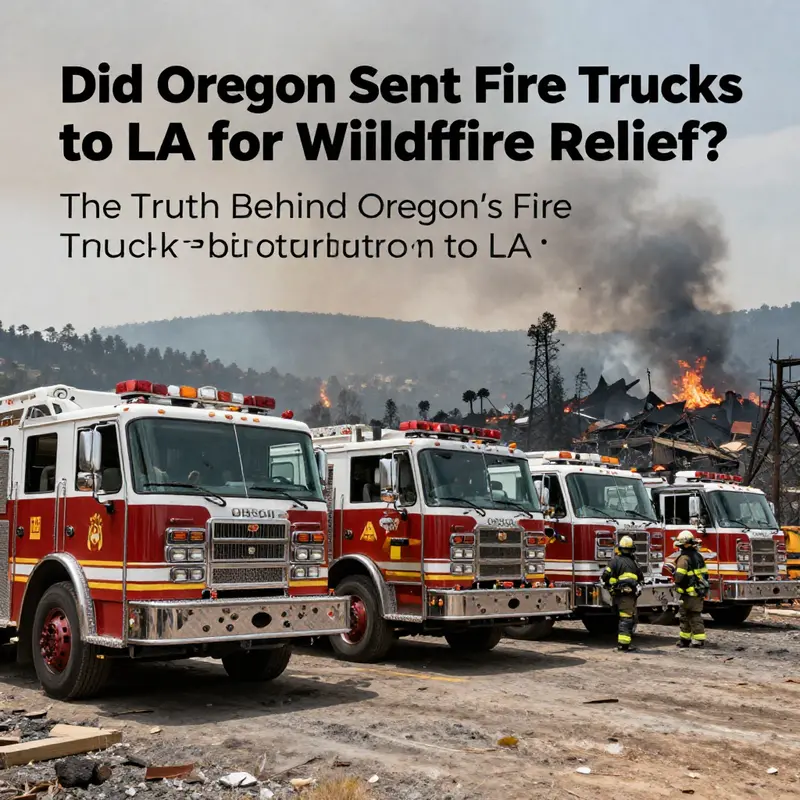
When the smoke cleared from the latest wildfires, questions loomed about which states sent help where and when. In the western United States, fire seasons can become a collective test of resilience, improvisation, and cross-border coordination. The central question—Did Oregon send fire trucks to Los Angeles for wildfire relief?—puts a spotlight on how mutual aid actually works in practice and why, in some cases, the answer remains simple: there is no public confirmation of such a deployment. To understand why that is, it helps to step back from headlines and look at the mechanics behind inter-state assistance during large-scale emergencies.
Mutual aid among states is not a random act of goodwill; it is a structured, documented process designed to move resources where they are most needed as quickly as possible. California, with its own vast wildfire burden, relies on a network of agreements that enable neighboring states to lend equipment, personnel, and support during extreme events. The California Department of Forestry and Fire Protection (CAL FIRE) handles many of these coordination tasks for out-of-state aid within the state’s emergency framework, while the California Governor’s Office of Emergency Services (Cal OES) maintains the broader system-wide oversight. The National Interagency Fire Center (NIFC) serves as a national hub for situational awareness, resource tracking, and dispatch coordination when fires reach a regional or national scale. Together, these entities create a transparent backbone for requests, deployments, and reporting.
Public documentation matters here. When a request for mutual aid is approved, the event-specific official channels are typically the first place to confirm it. Incident status reports, resource deployments, and interagency orders are expected to appear in public-facing dashboards or through formal press releases from Cal OES or from CAL FIRE. In the imperfect world of fast-moving disasters, rumors can circulate quickly, but credible confirmation tends to emerge from established channels. The absence of an official report is not proof that nothing happened, but it is a strong signal that no formal deployment was activated through the recognized mechanisms for that period. This distinction matters because, during large incidents, every truck, every engine, and every crew must be accounted for in a coordinated, auditable way.
Historical context helps temper expectations. In past major wildfire events—events that stretched state lines and tested mutual aid agreements—California has indeed coordinated with neighboring states, including Oregon, Washington, and Nevada, to deploy resources. These deployments are not arbitrary; they are the product of needs assessments, incident command decisions, and the readiness of responding agencies to contribute under mutual aid compacts. When such deployments occur, they usually appear in official dashboards, through Cal OES incident status updates, or in CAL FIRE’s public briefings. The pattern is consistent enough that emergency management professionals and researchers look first to those official sources when assembling a factual timeline of responses. In other words, the existence of a mutual aid tradition is real, but the specifics of who sent what, when, and where are documented in formal channels rather than filtered through social media chatter or speculative reporting.
That framework also clarifies what is plausible and what is less likely in a given moment. Firefighting apparatus is designed for rapid, on-call deployment, but the decision to move equipment across state lines involves multiple steps: a need is identified, a request is issued, a chain of command approves the deployment, and a transport plan is set in motion. The availability of crews and apparatus must align with the incident’s duration, the incident command’s priorities, and the current load on the requesting state’s own resources. For a city like Los Angeles facing a regional fire threat, a request, if made, would come through Cal OES and be coordinated with CAL FIRE or other California agencies depending on the resource type and jurisdiction. Some readers may wonder whether a rural Oregon district could suddenly redirect a line of engines into a major metropolitan area. In practice, this would be unusual unless California had formally asked for that specific support and Oregon had agreed to provide it under a mutual aid framework. The lack of such a report remains the strongest indicator that no formal Oregon deployment to Los Angeles occurred in the period in question.
The reasons for the absence of a documented Oregon push to LA are not mysterious; they are practical. First, resource requests are driven by on-the-ground conditions. If Los Angeles or a neighboring county faced a surge of fires beyond its capacity to respond with local resources, regional mutual aid would be considered first. Only if those regional resources proved insufficient would a broader multi-state ask surface. Second, the mechanics of deployment matter. Fire apparatus, especially specialized units, require transport, staging areas, and a command structure that can integrate with the host incident. A cross-border move can be logistically feasible, but it must be justified by the incident’s scale and the available mutual aid commitments. Third, the communications ecosystem matters. Transparent, timely updates rely on three pillars: the incident command system in use, the state’s emergency management communications, and public-facing dashboards. If no credible report appears, it suggests that either the incident did not trigger a cross-state dispatch, or that any such dispatch proceeded under separate, less visible arrangements that did not involve Oregon’s direct involvement.
The public-facing reality, then, is not a verdict on whether cross-state assistance was possible, but a reflection of what was officially acknowledged. In the absence of confirmed reporting, the prudent reader must turn to the trusted anchors in emergency management reporting. Cal OES, CAL FIRE, and NIFC maintain incident pages and resource status boards that are designed to illuminate what assistance is in play and which agencies are contributing. Those channels serve not only journalists and researchers, but also community members who want assurance that help is arriving when and where it is needed. They are the places where the story of mutual aid is written in real time, and where the tentative uncertainties of a rumor are replaced by verifiable facts.
The broader lesson extends beyond any single question about a particular deployment. Mutual aid is a collective enterprise that depends on timely assessment, clear authority, and transparent documentation. It is built to prevent a situation in which a state’s own resources are overwhelmed while neighboring states stand idle. Yet it also respects jurisdictional boundaries and the priorities of incident command. When people ask whether Oregon sent fire trucks to Los Angeles, they are really asking about how such decisions are made, who authorizes them, and how rapidly the information can reach the public. The answer, grounded in current public records, is that there is no credible public confirmation of a Oregon-to-LA dispatch in the latest period under review. That does not erase the potential for mutual aid in the future, nor does it diminish the readiness of Oregon, California, or any neighbor to mobilize resources when the situation demands it.
For the reader seeking a definitive, up-to-date conclusion, the proper visit is to the official portfolios that track incidents and resource movements. Cal OES maintains incident-specific updates that reflect the state’s overall posture and any cross-border commitments. CAL FIRE’s public updates provide deeper visibility into the state’s interagency coordination and mutual aid engagements. And for a national lens, NIFC offers broad situational awareness and resource tracking that captures patterns across multiple states, including the Pacific West network. These sources do not merely fill space; they anchor the narrative of mutual aid in observable action, rather than supposition.
The stakes extend beyond the mechanics of trucks and engines. When communities wonder whether help is arriving, they expect honesty, speed, and accuracy. The absence of an official Oregon-to-LA dispatch in public records during a given window should be read as part of a disciplined emergency-management protocol—one that prioritizes verified information over rumor, and that seeks to keep the focus on the actual conditions on the ground. This clarity matters for residents who want to understand the flow of aid, for policymakers who design and fund mutual aid frameworks, and for journalists who map the contours of resilience in real time. Above all, it reinforces the idea that mutual aid is a continuous, living system, not a single act that can be easily captured in a single headline.
As weather patterns evolve and communities confront new wildfire challenges, the question of inter-state assistance will recur. Each time, the answer will depend on current conditions, resource availability, and the precise language of official orders. The careful reader will stay anchored in primary sources, checking incident dashboards, and monitoring state emergency-management channels for the freshest, most reliable information. In that sense, the Oregon-to-LA inquiry serves as a case study in how to read the terrain of mutual aid: not as a simple yes-or-no verdict, but as a reflection of how modern emergency response operates across borders, governed by protocols, transparency, and a shared commitment to protecting lives and property when flames threaten communities far from their home base.
External resource: For authoritative, up-to-date information on mutual aid and resource deployment, consult CAL FIRE’s official mutual aid information at https://www.fire.ca.gov/operations/mutual_aid/.
null
null
Across State Lines and Back: What Oregon’s Fire Truck Deployments Reveal About Mutual Aid—and the LA Question
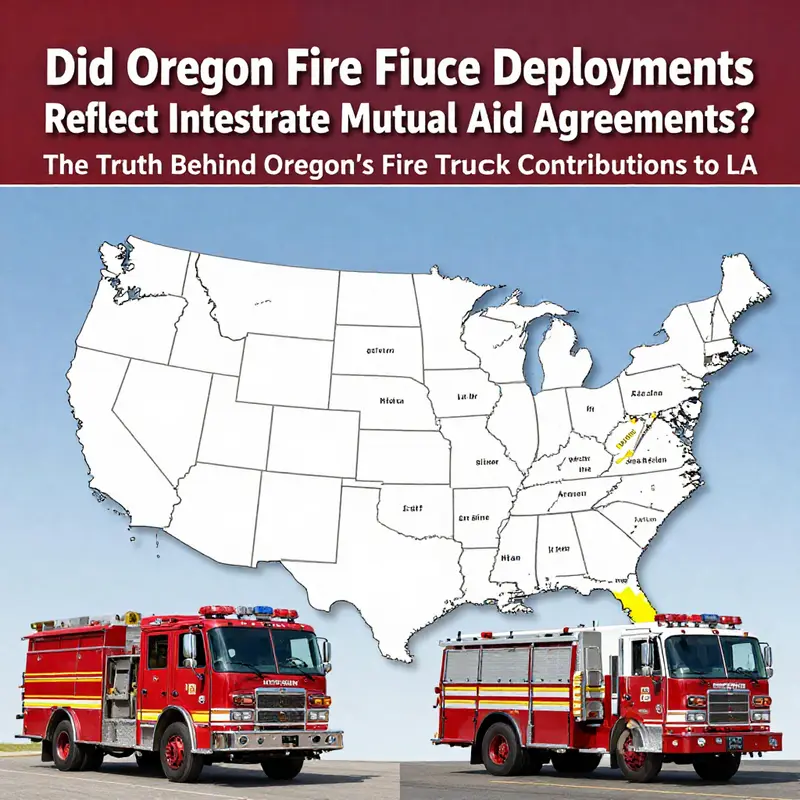
The question that fuels many online discussions during the height of a wildfire season—Did Oregon send fire trucks to Los Angeles?—repeats itself in echo chambers, newsroom chats, and emergency management briefings whenever large fires flare up on the West Coast. The short answer, based on official reporting available through early March 2026, is not straightforwardly yes or no. There is no credible information or official report publicly confirming that Oregon dispatched fire trucks to Los Angeles in response to recent wildfires or emergencies. But the absence of a published announcement does not mean the broader system of mutual aid did not function in the region. Interstate mutual aid is a well-oiled channel in which agencies prepare to lean on each other when a local incident exceeds capacity. The distinction matters because it situates the LA question inside a larger, ongoing practice of shared fire protection duties that crosses state lines, aided by national coordination and state-level readiness programs. When we examine this question, we must first understand how Oregon, and states at large, organize their mutual aid networks, how those networks operate during peak fire periods, and how the public record captures deployments so that curious readers can distinguish between routine readiness and headline-grabbing missions.
Central to Oregon’s mutual aid story is the Oregon Fire Mutual Aid System, OFMAS. This formal network links local districts, county authorities, the state fire marshal, and neighboring jurisdictions into a single working ecosystem that can marshal engines, crews, and equipment across borders. The aim is simple and powerful: to prevent disaster by aligning scarce resources with escalating need, regardless of state boundaries. OFMAS sits within a broader framework that includes the National Interagency Fire Center (NIFC), which coordinates cross-state deployments on a national scale. When a regional fire grows beyond a local inventory of engines and incident management teams, OFMAS can request assistance through established channels that are recognized and activated before an emergency even begins. The logic is procedural as much as it is practical; it reduces decision time during crisis and ensures that when a request is made, there is a pre-vetted chain of command ready to execute.
The nationwide structure that supports these cross-border actions rests on a network of mutual aid agreements that states negotiate with one another and with federal entities. In Oregon, a combination of OFMAS, state statutes, and grant-funded staffing initiatives shaped both the capacity to give help and the capacity to accept it. One notable program—the Wildfire Season Staffing Grant—supplied additional personnel to 185 local fire agencies, a boost that rippled through the mutual aid system. This increased staffing translated into greater flexibility for Oregon to share resources with neighbors when demand peaked, and it also meant Oregon could more readily absorb incoming help when its own fires demanded more hands than any single local department could provide. The grant did not single out any one kind of apparatus, but in practice, it supported a broad picture of readiness—engines, crews, aircraft support, and the management structures that coordinate them.
Against this backdrop, the 2023 wildfire season offers concrete illustrations of interstate cooperation. During significant incidents, such as the Bootleg Fire and other large-scale events, Oregon activated interstate mutual aid protocols to deploy engines and personnel to other states, while receiving comparable support from California, Idaho, Washington, and others when their own fires demanded additional capacity. The experience from that season underscored a simple truth: mutual aid works best when it is routinely rehearsed, not only during a crisis. Pre-existing agreements, joint training exercises, and a shared lexicon for incident command enable rapid mobilization, rapid risk assessment, and rapid staging of resources at the edge of the fire line. In Oregon’s case, the OSFM’s reporting has highlighted the effectiveness of these mutual aid loops in slowing the spread of flames and protecting communities. When you read the narrative produced by the state’s fire marshal, you encounter the language of timeliness and coordination: minutes saved, miles gained in resource mobilization, communities spared from worse harm.
If you read the public record closely, what you find is a pattern of outbound assistance and inbound support that is fluid but bounded by the realities of supply and demand. Fire trucks and crews traveled outward not as a one-off gesture but as part of a managed exchange, coordinated through OFMAS and reinforced by the national framework that NIFC embodies. The same machinery that allowed Oregon to dispatch engines to a neighboring state allowed those receiving jurisdictions to request help with a confidence rooted in previously established mutual aid. These trades are reciprocal in nature; California, Idaho, and Washington extended comparable mutual aid shipments into Oregon when their fires surged, which in turn allowed Oregon to reciprocate in other directions as needed. The mutual aid system is thus less about a single mission or a single destination and more about a disciplined ecosystem that can reconfigure itself as landscapes and weather patterns shift with the season.
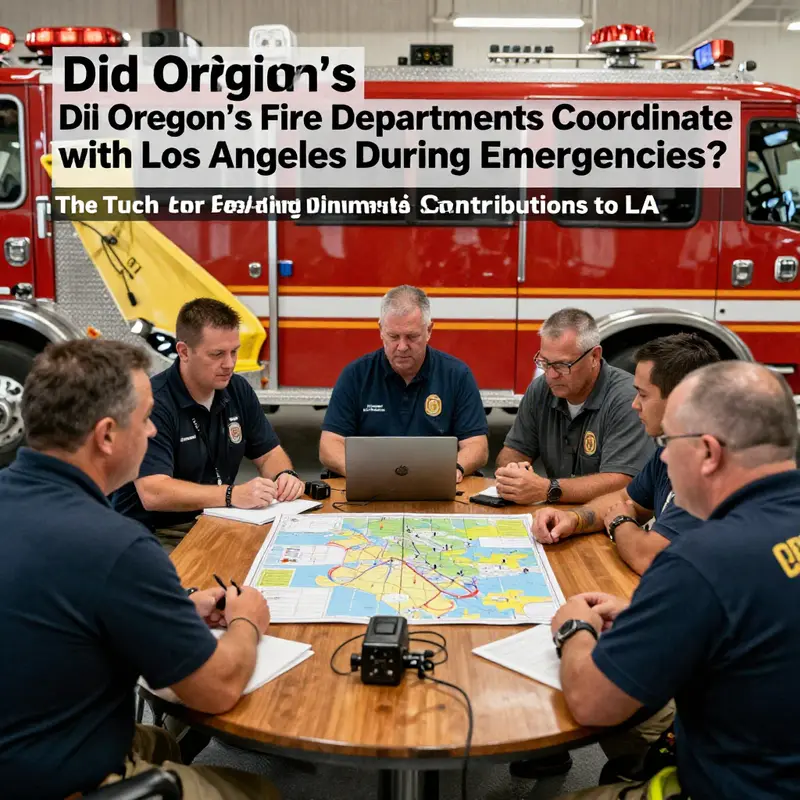
This is where the LA question sits once more in the frame. Los Angeles and the wider Southern California region fall under a different operational umbrella—Cal OES and related regional response centers—but they participate in the same national habit of asking for help when fire behavior and resource gaps demand it. If Oregon were to send engines to Los Angeles, the transaction would be documented through the public channels that track inter-state deployments, and it would appear in Cal OES incident status reports, or in the National Interagency Fire Center’s incident status pages. The absence of such a published deployment at a given moment does not prove that no mutual aid occurred elsewhere in the region; it simply means that, at least in the latest windows of reporting, Oregon’s resources were not publicly cataloged as having been diverted to the LA area. The public record, after all, relies on official agencies publishing status updates, which are then cross-referenced by state governors’ offices and federal coordinators. In this sense, the LA-specific question cannot be resolved by rumor or by a single Department of Forestry press release; it requires a synthesis of Cal OES postings, NIFC dashboards, and OSFM or OFMAS communications, all cross-checked for consistency and timeliness.
From a narrative standpoint, the mutual aid system’s success does not hinge on dramatic cross-border headlines but on the reliability of the process itself. The fact that Oregon could mobilize resources outward with the same ease that it could accept help inward speaks to a resilience embedded in the state’s emergency preparedness culture. This is not a footnote about the spectacle of a particular dispatch but an affirmation of a working model: agencies anticipate, coordinate, and execute with the shared aim of reducing risk to people and property. The more these practices become routine, the more confident residents can be that when a large fire threatens their communities, help is not only available—it’s organized and reachable in real time. That reliability is the quiet backbone of mutual aid, and it helps explain why debates about specific deployments sometimes become proxies for broader questions about governance, inter-state cooperation, and the transparency of emergency response.
The question of whether Oregon sent fire trucks to Los Angeles is therefore best answered not by a single report but by reading the contours of mutual aid as a system. Within that system, the answer to “Did Oregon dispatch trucks to LA?” is contingent on the timing of a particular incident, the existence of an active mutual aid request, and the public sharing of incident status. When those pieces align and a deployment is verified, it becomes part of the public record. When they do not, the absence of a published deployment should not be interpreted as definitive evidence of non-action; it may reflect that resources were directed to a nearby outbreak or that inter-state coordination was employed in ways that did not result in a direct, LA-bound dispatch. What remains clear is that Oregon’s deployments during the 2023 wildfire season were framed by interstate mutual aid—an arrangement that has repeatedly proven its value when fires demand more engines, more crews, and more rapid movement than a single jurisdiction can sustain.
For readers who want a window into the broader readiness that makes such cross-border deployments possible, official context on Oregon’s preparedness framework is available through the state’s Response Ready Oregon Initiative. This program highlights how readiness, staffing, and cross-jurisdictional coordination are built into everyday practice, not only during major fires. See the official resource at https://www.oregon.gov/odfs/Pages/response-ready-oregon.aspx for a more detailed account of how readiness translates into real-world deployment and mutual aid activations across state lines.
If readers want to explore the mechanics of firefighting equipment and the kinds of apparatus that might participate in such mutual aid movements without getting mired in product names, a broader look at emergency response equipment categories helps ground the discussion. Resources and equipment types deployed through mutual aid are designed to support rapid response, secure staging, and effective suppression in diverse terrains. The system relies on compatibility, interoperability, and a shared tactical vocabulary that allows crews from different jurisdictions to integrate quickly on the same incident command structure. In that sense, the LA question becomes a lens through which to view how a region’s readiness, not a single dispatch, determines the reach of mutual aid when the smoke thickens and the flames advance. Ultimately, the resilience of the West Coast fire response depends less on a solitary crossing of borders and more on a well-practiced, multi-state choreography that can adapt to the unpredictable nature of wildfire seasons.
null
null
Oregon Firefighters and the National Web of Wildfire Response
Discussions about whether Oregon sent fire trucks to Los Angeles during wildfire seasons hinge on public records and official dispatch logs. In practice, there has not been a publicly verified, widely reported deployment of Oregon engines to Los Angeles for a specific incident. But this question points to a larger pattern: Oregon firefighters participate in a nationwide mutual-aid framework that activates resources across states when wildfires exceed local capacity. Oregon’s role in national emergency response is real, though the specifics of any single vehicle transfer depend on official declarations, incident status updates, and the readiness of mutual-aid networks coordinated through federal and state authorities.
The backbone of this system is formal mutual-aid agreements and reporting structures that track deployments. The National Interagency Fire Center (NIFC) coordinates a national response that brings together personnel, equipment, and expertise from many states. California’s emergency-management apparatus, including Cal OES, documents and manages cross-border assistance. These agencies are not only operators but public records of action; incident status reports and resource dashboards provide transparent accounting about who is deploying where, under what authority, and for how long. In recent years, large fires have seen Oregon, Washington, Nevada, and other nearby states collaborating within a shared operational picture, ensuring that pumps, engines, and hand crews match evolving ground needs.
Deployments are situational and constrained by hazard severity and incident command structure. When a state’s resources are stretched, mutual aid can be triggered across jurisdictions, but a direct city-to-city transfer—Oregon engines arriving in Los Angeles—would require a publicly documented activation. The absence of such documentation, as of early 2026, signals that no Oregon-to-Los-Angeles deployment has been publicly confirmed for a given incident. That said, Oregon crews have contributed to national wildfire suppression through cross-border and interagency coordination during broader crises.
The broader pattern is clear: Oregon firefighters contribute to national wildfire suppression by joining with teams from other states, and they do so within a framework designed to maximize safety and effectiveness. The National Interagency Fire Center anchors this process with interagency coordination and deployment pipelines that move equipment and personnel to where they are needed most.
For readers who want to track real-time movements, official sources such as NIFC and Cal OES incident dashboards provide the most authoritative information about current deployments and resource availability. The absence of a confirmed Oregon-to-Los-Angeles transfer does not diminish Oregon’s broader participation in nationwide efforts; it simply reflects the disciplined channels that govern resource allocation across state lines. The mutual-aid ethos remains central: jurisdictions honor each other’s capacity while federal and regional coordinators maintain a shared operating picture that strengthens response everywhere.
Final thoughts
The complexities of wildfire management and emergency response involve significant coordination among states. While there is no confirmed report of Oregon fire trucks being deployed to Los Angeles for wildfire relief, the principles behind mutual aid agreements and interstate cooperation remain crucial. By understanding the mechanisms of support structures, business owners can better grasp how collective efforts can enhance emergency responses and safeguard local interests during such crises. As the wildfire season continues to pose threats, the importance of inter-state collaborations in firefighting strategies will only become more apparent.

