
















Fire truck sirens play a pivotal role in urban safety and emergency responses, ensuring the swift passage of first responders. For business owners, understanding the intricacies of these sirens—from their sound production mechanisms to their regional designs and global manufacturing processes—can provide insights into how critical safety measures are engineered. This article will explore the technology that enables fire truck sirens to penetrate urban noise, the design variances observed globally, and the global supply chains that facilitate their production, ultimately highlighting the importance of these systems in maintaining public safety.
The Voice of the Alarm: How Fire Truck Sirens Cut Through City Noise and Save Lives
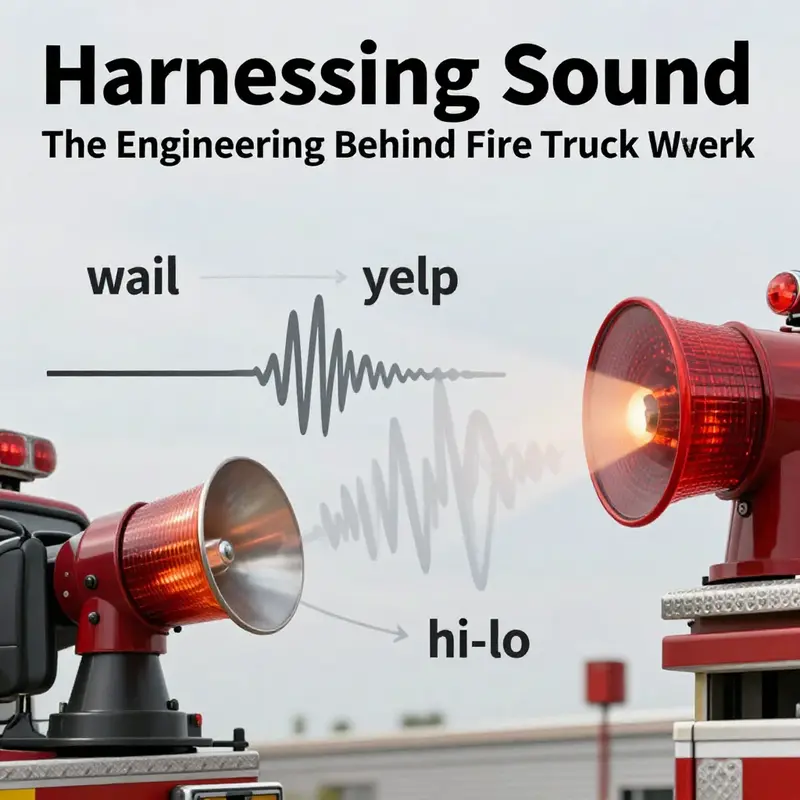
The siren is more than a loud sound; it is a designed signal, a balance between volume, clarity, and the way humans hear in crowded environments. When a fire truck roars onto a street, every passerby relies on something more than flashing lights. The siren is meant to pierce the din of urban life—cars idling at red lights, buses coughing diesel, pedestrians talking, and the hum of HVAC systems—and to do so in a way that is easy to distinguish from other sounds. The goal is audibility at distances long enough for drivers to react, while preserving tonal clarity that avoids fatigue and confusion. Behind this goal lies acoustics, electronics, and practical design choices that fade into the background when the vehicle is in motion and the crew needs to focus on the task at hand.
Patterns such as wail, yelp, and air-horn tones are designed for recognizability. The wail is intended for long-range notice with a rising and falling cadence that helps locate the vehicle; the yelp accelerates the rhythm for dense traffic or complex acoustics; the air-horn tone delivers an immediate alert with a crisp edge that cuts through irregular city noise. A pulse or short tone sequence can indicate a change in urgency or direction. The purpose of these patterns is not simply loudness but a predictable waveform that remains distinguishable under varying noise conditions.
Electronic generation relies on digital signal processing, microcontrollers, and calibrated speakers. The operator selects a pattern, adjusts cadence, and the system adapts to the environment in real time. The mathematics of sound design aims at perceptual salience: rapid frequency modulation within a practical envelope tends to be more noticeable than a static roar. In urban canyons, reflections and diffractions shape what the listener actually hears, so siren designers optimize frontward radiation and minimize tonal distortion.
From a maintenance perspective, reliability is key. The siren system depends on power, amplification, tone generation, and speaker elements that must work in harmony. Regular checks, weatherproof housings, and proper mounting ensure signal clarity when every second counts. Standards bodies and researchers continually study perceptual effectiveness to refine patterns, ensuring that the alarm remains legible across regions and devices.
Sound Across the Street: The Acoustic Engineering and Regional Craft Behind Fire Truck Sirens

Sirens on fire trucks do more than shout over traffic. They are carefully engineered sound systems that translate a vehicle’s urgent mission into an audible cue people can recognize and react to. The goal is simple in description but intricate in execution: create a sound that rises above the city’s ambient roar, travels through concrete canyons and open avenues alike, and conveys unmistakable urgency without causing confusion or fatigue. To understand how fire truck sirens work, it helps to start by listening closely to what the siren must accomplish. It must grab attention rapidly, signal a clear urgency, and persist long enough to guide pedestrians and drivers out of the way without becoming a background noise that people simply tune out. The design teams behind these systems approach the task as a problem of acoustics, human perception, and urban engineering, all intersecting with evolving standards and the realities of manufacturing and supply chains that stretch around the globe.
At the heart of a modern fire truck siren is an electronic system that generates sound through carefully tuned frequencies and patterns. Unlike the old days when sirens relied on mechanical rotors or simple horn blowers, today’s sirens are built around tone generators, digital signal processing, and multi-speaker arrays. The electronic core can create a family of signals—patterns such as wail, yelp, hi-lo, and air-horn-like tones—each with its own time-domain silhouette. The word “pattern” is important here. A siren is not a single tone but a sequence of tones that modulate in pitch, tempo, and amplitude to produce a shape that’s both recognizable and resistant to being masked by other sounds. In practice, the operator can switch among patterns with a press of a control, or the vehicle’s system can cycle through them automatically to maximize audible impact across different urban scenarios.
The mechanism that translates those signals into audible waves is the loudspeaker array. Multiple drivers, sometimes arranged in a horn-loaded configuration, radiate sound in different directions. A well-designed array can create directional cues so that the siren sounds louder in the fronts and flanks where traffic agencies want drivers to look, while keeping the rear relatively quieter to minimize noise annoyance for people behind the vehicle. The geometry of the array matters as much as the electronic content. The quality of the transducers—their frequency response, efficiency, and distortion characteristics—directly influences how clean the sound remains as it travels through air and bounces off walls, vehicles, and storefronts. When designers talk about acoustics, they are not just discussing loudness. They discuss the spectral content of the signal—how much energy lives at low versus high frequencies—and how that energy travels and degrades across distance and obstacles. The result is a siren that is robust in a hum of traffic yet precise enough to be distinguished from other loud noises.
Sound is a traveler in urban spaces. The urban canyon can bend waves, create echoes, and transform timbres in ways that may confuse the listener. To counter this, engineers build sirens with frequency content that cuts through background noise. In European contexts, a recurring theme is the emphasis on tonal clarity and distinctness in complex acoustical environments. The siren patterns designed there often integrate alternating high- and low-frequency components, a strategy that leverages human auditory processing to create a sound that remains identifiable even when other sound sources are vying for attention. The practical upshot is not simply to be loud but to be legible—the signature of a European approach. In practice, these designs favor patterns with a mix of tonal lines and modulations that make the siren’s identity easy to pick out from a bustling soundtrack of city life.
Across the Atlantic, design philosophies have long been associated with sheer volume and continuous wail patterns. The American tradition has valued amplification and persistence, especially in open or suburban contexts where line-of-sight is less often obstructed by dense building facades. This emphasis on volume—while sometimes inviting critiques about noise pollution—has driven the evolution of siren systems toward digital multi-tone capabilities. Modern U.S. systems increasingly integrate European concepts, blending high intelligibility with controlled noise outputs. The adoption of digital signal processing and more sophisticated tone generation allows a single siren unit to deliver adaptable patterns that can be tuned for specific locales, from narrow downtown corridors to broad highways. In other words, regional differences reflect a balance of regulatory expectations, urban geometry, and the perceived urgency of the audible cue. The aim remains the same—to clear the road and prompt action—yet the means to achieve it reveal regional priorities.
The send-out of those patterns is not a single act but a coordinated orchestration of electronic design, mechanical layout, and regulatory compliance. Modern siren systems rely on tone generators that produce precise harmonics and controlled envelopes. These tones are shaped by DSP algorithms that modulate frequency, amplitude, and timing. The patterns—whether they streak through a wail, rise and fall in a yelp, shift to a low, forceful tone, or mimic the brassy bite of an air horn—are selected to stimulate alertness while remaining intelligible across a spectrum of listening conditions. The control logic behind this orchestration has to be robust. A siren may be driven by a dedicated siren control unit, but it often sits within a larger vehicle network that also handles lighting, communications, and engine management. As a result, the siren system must be resilient to power fluctuations and electromagnetic interference, and it must provide fail-safes so that a missed or stuck tone does not create a new safety risk on the street.
From a design perspective, another layer of complexity lies in how sound travels within the vehicle and into the environment. The intake of the siren, the enclosure of the loudspeakers, and even the material characteristics of the vehicle’s body affect the emitted sound. An enclosure that resonates too strongly at a certain frequency can color the siren with buzzes or booms, while a poorly damped mount can transmit vibrations that people feel as well as hear. Engineers therefore test siren systems in both anechoic environments and real-world streetscapes. They measure how sound decays with distance, how it interacts with parked cars and storefronts, and how it sounds when heard from different angles. The testing is not just about peak loudness; it’s about the shape of the sound over time and space—the envelope that makes a siren instantly recognizable from a distance and unmistakable up close.
A crucial dimension of this work is the supply chain that underpins siren manufacturing. The modern siren is a product of a global ecosystem. Electronic components, metal housings, and acoustic horns are sourced from regions where integrated industries blend electronics, machining, and audio engineering into a single capability. In recent years, major production ecosystems in parts of East Asia have become central to siren development, with suppliers offering customization options to match local regulations, tonal preferences, and acoustic environments. The result is a global market in which a department in one country might specify a siren profile that is produced in a distant region, then adapted through software to fit the regulatory framework and urban acoustics of that department’s city. This global collaboration helps keep costs manageable while enabling more nuanced sound designs. It is a reminder that even something as seemingly simple as a siren is the product of a network of technologies and organizations spanning continents.
This interweaving of regional philosophy, technological capability, and logistical capability helps explain why Europe and the United States can feel like different acoustical cultures when you listen to a siren in the street. In Europe, you might hear a siren that blends alternating tonal layers, a careful modulation that seems to peel away from the background hum of traffic. In the United States, you might notice a broader palette of patterns with evolving digital controls, designed to maintain recognition as traffic lanes change and environmental noise shifts. Yet the two regions are converging. Digital processing and multi-tone capabilities enable both sides to craft sound profiles that maximize clarity without indiscriminate loudness. The overarching objective remains the same: to reduce response times, to improve safety, and to cultivate a soundscape in which emergency vehicles can move with confidence through urban complexity. Understanding these design approaches helps illuminate why a siren’s identity matters beyond mere decibels. It is about how the sound is built to be heard, understood, and acted upon in the real world.
For those curious about how these systems relate to the hardware that houses them, consider the broader ecosystem of emergency vehicles and their platforms. The siren must be integrated into a chassis and an electrical architecture that can support high-current demands, rapid switching, and the environmental rigors of field service. The physical form factor of the siren—its mounting points, weatherproofing, and thermal management—affects sound propagation and durability. On the road, a siren’s performance becomes a function of both the signal it emits and the vehicle that carries it. This interplay between software and hardware reflects a philosophy that places the siren at the intersection of acoustics, electrical engineering, and vehicle design. If you want to explore the platforms that house these systems and the broader vehicle architectures that carry them, you can look at the fire-fighting truck category for an overview of how these platforms are organized and deployed on real-world machinery. fire-fighting truck category
As important as the engineering itself is an awareness of how communities interpret and respond to sirens. Sound is as much social as it is technical. People’s reactions are shaped by habituation, cultural expectations, and personal experience with emergency vehicles. A well-designed siren pattern can become a social cue—an audible signal that is quickly associated with urgency, but without provoking unnecessary alarm in ordinary circumstances. This is why standardization, regional preferences, and regulatory oversight matter. Standards bodies and safety agencies seek to ensure that a siren’s identity remains legible across cities and nations, even as traffic patterns, building codes, and noise regulations evolve. The result is a dynamic field where engineers continually refine patterns, frequencies, and sequences to keep pace with changing urban realities.
The story of fire truck sirens is thus a story of cross-disciplinary collaboration. Acoustic engineers work with digital designers who speak in code, with mechanical engineers who understand heat and vibration, and with regulatory specialists who translate safety norms into concrete performance criteria. It is a story that unfolds in laboratories, on test tracks, and on crowded city streets where a single siren can alter the rhythm of traffic and the pace of a rescue. The sound that arrives at a pedestrian’s ears is the product of a chain of decisions: which frequencies to emphasize, which modulation patterns to employ, how many speakers to deploy, and how to calibrate the system for the city in which it operates. It is also a story about responsibility—the responsibility to design for clarity while mitigating unnecessary noise, to respect local regulations and cultural differences, and to safeguard the people who rely on these signals every day.
In the end, the siren is more than a device. It is a language spoken by metal, electronics, and air—a language that travels through urban airspace to tell a story of urgency and service. The next time you hear a siren, listen not just for its volume but for its cadence. Listen for the way the pattern shifts as the vehicle moves from a wide boulevard into a narrow street, or as it approaches an intersection with a wall of glass storefronts that might reflect the sound in surprising ways. Listen for how the sound changes with different weather and background noise, and how, in some places, a siren’s identity feels different because the sound landscape itself is different. This is the essence of acoustical engineering at work: a craft that blends science with the street, producing sounds that matter when lives are at stake.
For readers who want a deeper dive into the technical and regulatory landscape behind emergency vehicle sirens, there is a rigorous body of research and standards that can illuminate the details. The National Institute of Standards and Technology hosts authoritative resources on emergency-vehicle sirens, exploring the theory and practice that underlie real-world performance. Those seeking technical substantiation and testing methodologies can consult this resource to understand how measurements are conducted, how sound pressure levels are standardized, and how region-specific requirements shape the final system design. [External resource: https://www.nist.gov/technology-transfer/emergency-vehicle-sirens]
As the field evolves, the story of fire truck sirens will continue to unfold in response to changing cityscapes, regulations, and public expectations. It remains a vivid example of how engineering translates into public safety: a disciplined blend of acoustics, electronics, and practical know-how aimed at clearing a path through the chaos of urban life. And it reminds us that behind every department’s siren is a team of technicians, designers, and planners who asked the right questions about what it means to be heard when it matters most. If you are curious about how this translates to the broader world of emergency vehicle platforms and equipment, the linked internal resource provides a gateway to the kinds of platforms that carry these sound systems into service and into the daily life of the communities they serve.
Sound Across the City: The Global Manufacturing and Technology Behind Fire Truck Sirens
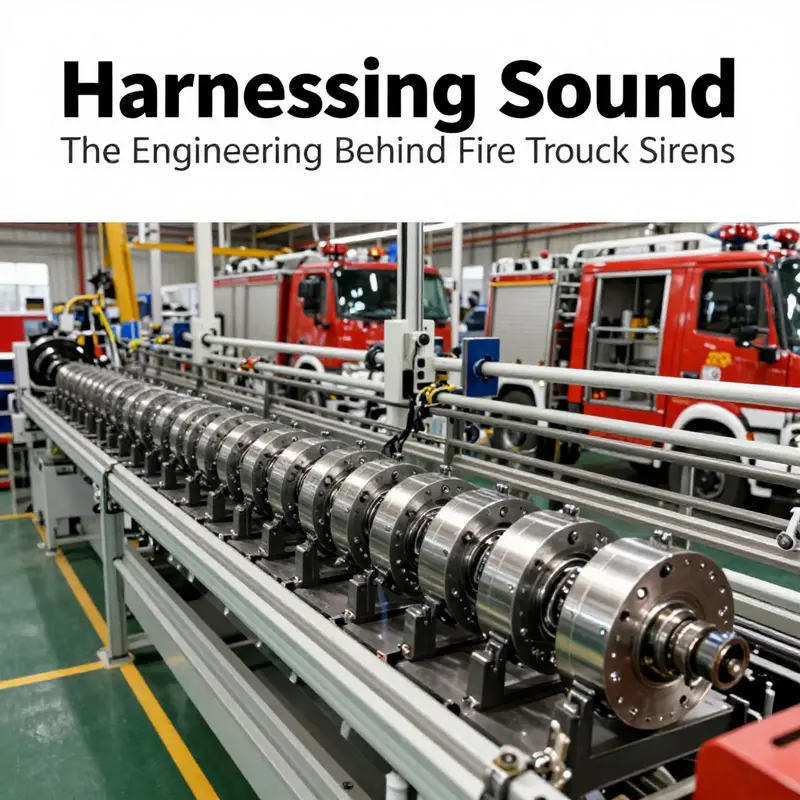
The siren is more than a loud gadget on a fire truck. It is a carefully engineered voice that cuts through car horns, weather, and city noise to summon attention, clear a path, and save lives. The way a siren sounds, how it is produced, and how it is integrated into a firefighting vehicle reveal a broader story about technology, design philosophy, and the global web that makes emergency response possible. At its core, a fire truck siren is an acoustic system that translates electronic signals into high-decibel, highly distinctive sound waves. Those waves must survive the din of street life—sirens must be heard over idling traffic, thunderous engines, and the hum of air conditioning, from the narrow lanes of a dense urban core to the open stretches of a highway. The goal is not just to be loud, but to be instantly recognizable. Patterns such as wail, yelp, and air horn-like tones provide a quick auditory fingerprint that trained drivers and pedestrians can identify quickly, even in crosswinds or when other vehicles are using their radios and horns. This functional requirement has guided decades of evolution in how sirens are produced, tested, and deployed.
Today, the field is dominated by electronic systems that generate and shape the sound digitally, rather than by simple mechanical devices that rely on spinning rotors or fixed-tone emitters. A modern siren typically relies on electronic tone generators—digital signal processors or equivalent microcontroller-based platforms—that choreograph a sequence of tones, frequencies, and amplitude envelopes. Those tones are then amplified by powerful amplifiers and projected through robust speaker arrays. The result is a loud, clear, and highly directional presentation that can reach pedestrians and drivers at significant distances, even as the comfort of the human ear is tested by sustained urban noise. The electronic approach offers flexibility. Siren designers can program multiple patterns, fine-tune the amplitude of each tone, and adapt the output to local regulations or environmental needs. In some configurations, the system can switch between patterns with the press of a button, or in sophisticated setups, synchronize with other vehicle signals such as flashing lights or public address elements. The shift from mechanical to electronic tone generation reflects a broader trend in emergency-vehicle technology: more capability delivered through software and modular hardware, with an emphasis on reliability, ease of maintenance, and compatibility with modern vehicle networks.
Even as the software defines the audible signature, the hardware that delivers it matters just as much. A siren’s power comes from its amplifier stage, which must deliver clean, high-current audio without distortion that could mask the critical characteristics of the tone. The amplifier’s job is to maintain a consistent output as the vehicle negotiates bumps, pivots around corners, or climbs inclines. The speakers themselves are not mere loudspeakers; they are rugged, weatherproof arrays designed to withstand heat, cold, moisture, and the vibrations that come with long drives and rapid accelerations. In practice, many systems use high-output speaker arrays capable of delivering several hundred watts of audio power, ensuring that even distant pedestrians can perceive the warning. Yet power alone does not guarantee efficacy. The architecture of the speaker array—the way elements are arranged, how phase and dispersion are controlled, and how the array interacts with the vehicle’s bodywork and surrounding air—determines how well the siren’s sound penetrates urban clutter. The very physics of sound in city environments means engineers must think in three dimensions: the vertical dispersion for riders on sidewalks and crosswalks, the horizontal spread along a busy street, and the frequency content that carries through barriers like parked cars and storefronts.
Alongside the sound itself, sirens are increasingly integrated into the broader electronic ecosystems of modern fire apparatus. Remote control features let operators adjust tones or switch patterns from the cab, while wireless interfaces enable maintenance teams to reprogram sequences without climbing onto the vehicle. In some designs, sirens are linked with the vehicle’s CAN bus or other vehicle-network frameworks, enabling coordinated behavior with lighting, audible warnings, and even digital dispatch data. The interplay between siren and vehicle electronics is not trivial. It requires careful attention to electromagnetic compatibility, shielding, shutdown protocols, and safety interlocks. The goal is to prevent unintended triggering, avoid feedback loops with other equipment, and guarantee that the siren will function when it is most needed—without draining the vehicle’s power reserves or interfering with critical communications.
The design of sirens is not uniform around the world. European systems have cultivated certain priorities that differ from those commonly emphasized in the United States. In many European implementations, the emphasis is on frequency modulation and tonal clarity. The idea is to preserve a distinct harmonic ladder that remains intelligible even when background noise is intense or when multiple sirens sound in proximity. This approach tends to favor more refined control over the spectral content of the signal, ensuring the audible signature remains crisp and recognizable in dense urban environments with high ambient noise. By comparison, some American configurations historically leaned toward maximizing overall volume to guarantee audibility at long distances. While both approaches share the same essential objective—prompt attention and unambiguous warning—their methods reflect different design philosophies and regulatory frameworks. Those differences ripple through procurement choices, maintenance practices, and the kinds of updates manufacturers pursue when adapting a siren to a new jurisdiction.
Standards and testing help translate these design philosophies into reliable, repeatable performance. International and regional standards set minimum criteria for sound pressure levels, spectral content, and durability. For instance, ISO and EN standards govern the testing of emergency-signal devices, including the way a siren must perform in different acoustic environments and the way it must endure weather and vibration. The EN 54 family, with components like EN 54-25, is especially focused on audible alarms within building and vehicle environments and informs the integration of sirens into fire-truck systems. Other standards govern more general aspects of emergency signaling and vehicle safety, ensuring that a siren’s loudness does not cause unintended harm and that its operation aligns with broader traffic-safety expectations. The practical consequence for manufacturers and fleet operators is a disciplined process of design validation, environmental testing, and field trials that confirm the siren can perform when every second counts.
Behind these devices lies a sprawling global supply chain that coordinates the production of electronic components, mechanical housings, and finishing parts across continents. The core electronic heart of most sirens is organized around digital signal processing and solid-state amplification. Modern DSPs allow engineers to craft and store multiple tone patterns, modulate frequency sweeps, and shape envelopes that yield the familiar “rise and fall” dynamics that our ears recognize instantly. The amplifier stage must handle robust loads and deliver clean power even in less than ideal electrical conditions on a moving vehicle. These electronics rely on printed circuit boards, microcontrollers, memory devices, and a suite of passive components that meet demanding standards for heat, vibration, and moisture resistance. The loudspeakers and horn systems are designed to work in concert with the drivers and the chassis, which means enclosure materials, sealing, and the geometry of the speaker array are tailored to the vehicle’s dimensions and the expected duty cycles on emergency runs.
A crucial aspect of the global story is how and where these components are manufactured. The supply chain has become regionally specialized, with clusters of capability developing in major electronics hubs across Asia and in increasingly sophisticated manufacturing ecosystems closer to the markets where sirens are sold and tested. In practice, suppliers in these regions deliver not only the raw or semi-finished parts but also complete, tested subassemblies that can be integrated into different fire-truck platforms. This regional specialization brings efficiency and scale, allowing for rapid customization to local standards, acoustic preferences, and regulatory requirements. It also introduces sensitivity to global market dynamics, such as shifts in demand, currency fluctuations, and the availability of skilled labor and advanced manufacturing equipment. The result is a complex, interwoven system in which a single siren might rely on design inputs from one side of the world, a printed-circuit-board assembly produced in another region, and a final integration tested on a third. The optimization challenge for manufacturers is not simply to build a louder siren, but to assemble a system that meets the performance criteria while remaining dependable, serviceable, and maintainable across decades of use in diverse climate zones and road conditions.
Within this global framework, the selection of suppliers is driven by a blend of technical capability, regulatory compliance, and the capacity to support ongoing research and development. Manufacturers seek partners who can deliver compact multi-tone units for tight urban spaces or higher-wattage configurations for rural and highway applications. They look for suppliers who hold appropriate safety certifications and who can demonstrate traceability and quality-control discipline across components. Suppliers must also be capable of aligning with advanced testing regimes, which may include acoustic field testing, vibration testing, and thermal cycling to simulate real-world service conditions. The most successful partnerships are those that can adapt quickly to regional needs, offering customization without sacrificing reliability or lead times. In practice, this means a reliance on modular design principles, where core signal-generation and amplification platforms are complemented by configurable tone libraries, programmable controls, and software updates that can be deployed remotely or during routine maintenance checks. Such adaptability has become a selling point in a market where fleets evolve with changing regulations, new dispatch workflows, and the increasing integration of sirens with broader vehicle-systems networks.
The integration with vehicle systems is not only about power and signal routing. It also involves a thoughtful approach to physical design and environmental resilience. Fire apparatus operate in demanding settings: exposure to rain, salt spray near coastal regions, dust in desert conditions, and the vibration of rough roads. The siren’s enclosure must protect sensitive electronics while allowing the sound to project with minimal obstruction. Materials are selected to resist corrosion and withstand thermal stress, while seals and gaskets maintain integrity across a range of temperatures. Maintenance considerations shape design choices as well. Ease of access for checks, the availability of spare parts, and the simplicity of replacing failed components influence both the initial engineering and the downstream supply chain network. The global dimension of manufacturing reveals itself in the way maintenance is conducted around the world: technicians rely on standardized modules and common test procedures so that a siren purchased in one country can be serviced with familiar procedures in another. This harmonization eases logistics and helps keep fleets in service during emergencies, a practical benefit of the modular, standardized approach that many manufacturers now champion.
For readers who want to see the broader ecosystem at work and to appreciate the specificity of the components involved, it helps to consider how a siren fits into the larger catalogue of fire-truck parts. The siren does not stand alone; it is a node in a network of devices and subsystems that share electrical interfaces, mounting provisions, and diagnostic data outputs. When procurement teams assemble a fleet, they consider not just the siren’s performance but how the device will interact with other parts of the vehicle. The connection points, power budget, and signal-tainting risks must be managed with an eye toward reliability under field conditions. A well-integrated siren system reduces maintenance overhead and increases the likelihood that the vehicle can respond when called upon. The practical reality is that sirens are part of a broader tapestry of equipment—pump controls, lighting systems, communication interfaces, and safety interlocks—that must all work in harmony. In this sense, the siren’s electronic heart and the mechanical shell that houses it are not isolated, but rather fused with a wider engineering discipline that governs how modern fire apparatus perform under pressure.
The global supply chain narrative also illuminates how standards and certifications flow from lab benches to the streets. Compliance is not merely about passing a single test; it is about enduring a portfolio of regulatory and quality-control checks that span manufacturing sites, component suppliers, assembly lines, and field service networks. The international nature of the supply chain means that a siren designed to satisfy a European regulation must still work within a North American electrical environment, a process that often requires modular design choices and software configurability. The ability to tailor tones and patterns, to adapt to voltage and interface standards, and to integrate with local dispatch workflows becomes a competitive differentiator. It reflects a broader reality in emergency-vehicle technology: global collaboration can enable quicker adaptation, improved reliability, and better after-sales support, as teams across continents share data, test results, and maintenance insights.
In reflecting on these dynamics, one can appreciate how tightly coupled the science of sound is to the economics of manufacturing. The siren’s auditory design, its spectral content, and its dynamic envelopes speak to a nuanced balance of engineering creativity and practical constraints. The loudness and tonal clarity have to be achieved within the power and space limits of the vehicle, while also fitting within regulatory boundaries and local expectations. The global supply chain makes this possible by materializing the specialized components and expertise needed to execute that design at scale. A single siren project becomes a microcosm of international collaboration, where acoustics, electronics, mechanical engineering, quality assurance, and regulatory compliance converge to deliver a device that may be heard in moments of crisis and trusted for years afterward. When fleets deploy these systems in varied environments—from crowded city streets to open rural roads—their performance is a testament to the long arc of engineering that connects a technician’s bench to a street corner where lives may depend on a timely signal.
For readers who want a deeper, more technical dive into how these systems are developed and validated, a useful resource outlines the broader field of emergency-vehicle sirens and their technical foundations. A good starting point is the authoritative compilation of standards, testing methodologies, and practical guidance that researchers and practitioners use to align design with safety requirements. This resource helps translate the chapter’s overview into concrete criteria for engineers, procurement specialists, and policy makers who shape how sirens are implemented in the field. As you explore the details, the interconnected nature of the siren’s design—from digital tone generation to robust enclosure design and vehicle-network integration—becomes clearer. The siren is not simply a loudspeaker on wheels; it is a sophisticated, distributed system that embodies the collaboration of global manufacturers, local practitioners, and the standards that keep emergency response effective and reliable in an ever-changing urban landscape.
To connect these ideas back to the practical world of procurement and maintenance, consider the way siren components are treated within the broader catalog of fire-truck parts. The parts ecosystem supports rapid upgrades, customized configurations for different regions, and ongoing serviceability—ensuring that fleets can sustain high performance across long service lives. For those curious to explore a catalog that highlights related components and assemblies, the fire-truck-parts collection offers a window into how sirens coordinate with other critical devices on the vehicle. This integrated view underscores the point that sound, power, and control are not isolated features but parts of a comprehensive approach to emergency-response readiness. Through this lens, the siren’s journey—from design studio to the city street—reads as a story of global collaboration, technical ingenuity, and a steadfast commitment to public safety.
External resources provide a broader, authoritative frame for understanding the science, testing, and regulatory environment surrounding emergency-vehicle sirens. For a detailed technical overview and established guidelines, the National Institute of Standards and Technology hosts a robust resource on emergency-vehicle sirens that researchers and practitioners can consult to align practice with proven standards and tested methodologies. This resource helps translate the qualitative insights of this chapter into concrete, implementable steps for engineers and fleet operators who are shaping the next generation of siren technology. By combining the practical storytelling of how a siren sounds in a city street with the formal frameworks that govern its design and testing, we gain a rounded picture of how these devices function in the real world.
In sum, fire truck sirens exemplify how modern emergency signaling sits at the intersection of acoustics, electronics, and global manufacturing. The patterns we hear—the wail, the yelp, the air-horn-like tones—are the result of precise digital synthesis, amplification, and speaker design that must perform under diverse conditions. The global supply chain—regional electronics hubs, standardized components, rigorous testing, and adaptable software—underpins the siren’s reliability and versatility. Yet the most telling measure of success is straightforward: can the siren break through urban noise and prompt swift, safe action when every second matters? The answer lies in the careful alignment of sound design with power, enclosure, network integration, and a manufacturing approach that embraces both standardization and customization. As cities continue to grow and as fleets modernize with smarter, more interconnected vehicles, the siren remains a focal point where engineering meets public safety, and where global collaboration translates into local calm in moments of crisis.
If you want to learn more about related components and the broader ecosystem of fire-fighting equipment and parts, you can explore the related catalog and resources for fire-truck components, which provides a practical sense of how siren systems are positioned within the wider maintenance and upgrade landscape. For a broader technical foundation, see the external resource linked above for comprehensive standards and testing guidance on emergency-vehicle sirens.
External resource for further reading: https://www.nist.gov/technology-transfer/emergency-vehicle-sirens
Final thoughts
Understanding the intricacies of fire truck sirens—from their acoustic engineering to regional design variances and global manufacturing processes—underscores their critical role in emergency services and urban safety. As business owners, recognizing these factors not only highlights the technology behind public safety but may also influence future investments in related sectors. These systems are a testament to how advanced engineering can save lives and ensure safer communities.

