
















As a business owner, understanding the operational capabilities of emergency vehicles, particularly fire trucks, can significantly influence your strategy for safety and emergency preparedness. The speed at which fire trucks can respond to incidents is vital, not only for saving lives but also for protecting properties and minimizing business disruptions. This article explores the average speeds of fire trucks across different road types, emergency response protocols, factors influencing their speed, and how various models uniquely contribute to emergency services. By delving into these aspects, you will gain insights that can help enhance your business’s emergency response plans.
Racing the Sirens: Unraveling Fire Truck Speed Across City Streets, Suburban Roads, and Wide-Open Highways
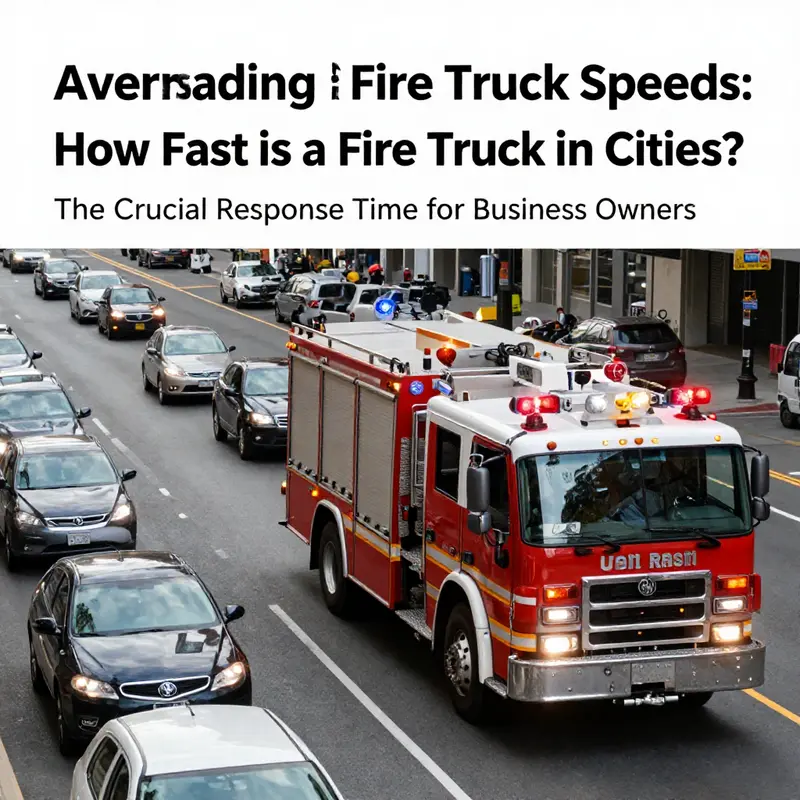
Speed, for a fire truck, is never a stand-alone metric. It sits inside a complex choreography of urgency, safety, vehicle design, and the geography of the streets. When a call comes in, every element of the system is pressed into service to shave seconds off response times, yet the mission remains clear: arrive ready to work, with equipment intact, water pressure stable, and the crew prepared to act under changing conditions. The city is a living mosaic of traffic patterns, signals, pedestrians, and weather, and this mosaic shapes how fast a fire truck can truly go. In urban cores, where congestion, traffic control, and the sheer density of street networks dominate, speed rarely exists in isolation. In suburban stretches with lighter flow, motorists expect a different rhythm. On highways, where emergency vehicle priority can, in ideal conditions, unlock higher speeds, the speed envelope expands—but only within strict safety and engineering constraints. Across these environments, the common thread is that speed is a tool, not a goal; the best fire agencies optimize response time while preserving control and minimizing risk to the public and responders alike.
In routine travel through dense neighborhoods, the speed of a fire truck is typically tethered to the posted limits and the dynamic realities of the moment. When the call is not imminent, engines cruise with traffic, slide into gaps, and respect the cadence of red lights and pedestrian crossings. In those ordinary stretches, a city fire apparatus may move around 30 to 40 kilometers per hour, a range that converts to roughly 18 to 25 miles per hour. This pace is not a failure of speed but an acknowledgment that the urban fabric—curbside parking, narrow lanes, bus stops, and crosswalk activity—creates friction that even the most purpose-built apparatus cannot wholly erase. Drivers develop an acute sense for the soundscape of a city in motion: where a bus may pause to yield, where a cyclist may drift into a narrow lane, where a delivery truck might swing wide at an intersection. The operator must read these signals with the same attention given to a hydraulic gauge or a water pressure regulator. The urgency of a routine call can be high, but it remains essential to respect the pace of other road users and to navigate with discipline rather than bravado.
When the call escalates into emergency response, the calculus shifts. Visibility and the likelihood of collision become the dominant factors. Sirens and flashing lights become standard tools for signaling priority, but they do not erase risk. The speed limit in this mode is a moving target, heavily influenced by traffic density, road geometry, and the presence of pedestrians. In many urban corridors, during emergencies, fire crews may push toward speeds in the neighborhood of 50 to 65 miles per hour, which is about 80 to 105 kilometers per hour, on routes where traffic is light enough to permit safe survival of higher velocity travel. This does not imply free rein to hit top speed anywhere, but rather it reflects a negotiated corridor where priority is granted under strict conditions. Even at these elevated speeds, the driver must maintain control, anticipate intersections, and be ready to slow for conflicting vehicles, evolving weather, or pedestrians who may step into the path of an accelerating rig. Some districts also deploy signal preemption or traffic control measures to optimize the flow for emergency responders; in those cases, the corridor can be cleared with greater efficiency, but the driver still shoulders the responsibility of navigation, wheel control, and timely braking.
The road type fundamentally redefines what “fast” looks like for a fire truck. Suburban arterials, with their interlaced driveways, medium-speed limits, and evolving road designs, offer a different performance envelope than hyper-urban grids or wide, mechanical-free highways. On these suburban routes, average speeds can rise into the low-to-mid 50s kilometers per hour, roughly 30 to 37 miles per hour, provided traffic remains manageable and the call warrants a more rapid approach. Here the balance between speed and stability remains especially delicate: longer sight lines and fewer pedestrians help, but residential driveways, school zones, and busy shopping centers still demand vigilance and controlled accelerations. Highways present the most predictable environment for speed, yet even there, top-end performance is bounded by safety protocols and vehicle dynamics. With emergency priority on unobstructed sections of roadway, a fire apparatus can approach its higher speed thresholds—around 80 to 90 kilometers per hour, or about 50 to 56 miles per hour—when the road remains clear, visibility is high, and traffic can be managed through coordinated signals and dispatch. These numbers, of course, can be tempered by weather, road surface conditions, load weight, and the age or condition of the fleet. It is not unusual for a loaded apparatus—water tanks, hoses, foam tanks, and all the ancillary gear—to weigh well over several tons. The added mass affects acceleration, braking distance, and cornering. The physics of mass and momentum are inseparable from the mission of rapid response.
Behind the wheel, the drivers who operate these heavy, purpose-built vehicles train relentlessly to turn speed into a reliable outcome rather than a reckless surge. They learn to read traffic patterns, coordinate with other emergency units, and anticipate the early actions of other drivers who may not immediately grasp the urgency of the siren. The discipline of emergency vehicle operation is grounded in safety-first principles. Even as the sirens wail and the lights flash, the objective remains to minimize risk: to responders, to the public, and to the property at stake. Fire departments emphasize that emergency operations should be conducted with a keen sense of situational awareness—knowing when to accelerate, when to slow, and how to negotiate through intersections with decisive yet controlled movements. This approach protects the crew from the hazards associated with high-velocity travel, including abrupt braking, tire blowouts, or loss of vehicle control in adverse weather or on slick street surfaces.
A facet often overlooked in casual discussions about speed is the payload carried by modern fire apparatus. The apparatus serves as a mobile workshop and a lifeline to the scene. It houses high-pressure pumping systems, hoses, connectors, water, extinguishing foams, rescue tools, and a crew ready for immediate action. The mass and arrangement of this equipment require you to see speed as a compromise rather than a single metric to chase. With more water onboard and a larger load of mechanical gear, acceleration can slow and braking distances can lengthen. In practical terms, this reality translates into engine designers and operators respecting a speed ceiling that aligns with safe handling, braking performance, and stable handling, particularly when the vehicle is fully loaded on urban streets or when approaching sharp corners and busy cross-traffic. The design philosophy behind modern fire apparatus is, therefore, not to maximize top speed but to maximize the speed at which the crew can safely deploy essential activities—colloquially described as the time from the dispatch to the pre-fire readiness on arrival. Some features, like a broad hose reel for rapid reach or high-flow pump capacity, optimize firefighting capability once on scene and can indirectly influence decisions about pace en route, since crews anticipate what must happen immediately after arrival. An efficient balance between forward momentum and precise control becomes the bedrock of effective emergency response.
Beyond urban or suburban assumptions, terrain and geography can further modulate how fast a fire truck can operate. Forested areas, rugged backroads, or mountain routes introduce off-road limitations and safety concerns that often constrain top speeds well below the highway numbers. In these settings, the mission remains steadfast, but the speed envelope contracts to preserve stability on uneven ground, avoid ground damage, and protect both the vehicle and crew as they negotiate natural obstacles. In practice, this means that even the most capable fleets adopt conservative travel speeds in challenging terrain, prioritizing a safe, continuous approach to those in need rather than a velocity-driven performance metric. The overarching aim—speed with purpose—ensures that even when the environment compels slower travel, the team still reaches the target quickly enough to alter the course of a fire or other emergency.
The public safety framework surrounding these decisions amplifies the emphasis on safety and coordination. Official standards and guidelines—such as those developed by national safety organizations—underscore that the priority in emergency vehicle operations is to minimize risk while delivering rapid response. They stress that the combination of training, vehicle design, navigation protocols, and traffic management strategies collectively determines how fast a fire truck can travel on any given route. The practical takeaway is that speed is context-dependent: a well-timed dispatch and a well-managed route can shave precious seconds, whereas reckless acceleration can increase the likelihood of a tragedy on the way to the scene. The numbers themselves—urban speeds around the 30–40 km/h range in routine conditions, higher ranges on clear suburban or highway corridors, and the safety-bound limits imposed by all-weather realities—represent a spectrum rather than a single fixed value. This spectrum is a testament to the complexity of emergency response and the disciplined culture that surrounds it.
For readers who want to explore how these considerations translate into equipment choices and fleet configuration, the broader family of fire fighting trucks offers a range of specialized roles, each optimized for specific tasks while still sharing the core imperative of rapid, controlled response. Use this as a reminder that, in practice, speed is only one component of a broader system designed to save lives and protect property. The interplay of driver skill, vehicle physics, road geometry, and dispatch strategies creates a dynamic environment in which every kilometer per hour matters—but only when it contributes to a safer and more effective arrival on scene. For those curious about how departments translate speed into operational readiness and how gear selection supports faster, safer responses, a closer look at the equipment ecosystem is illuminating. A robust fleet is one that harmonizes mobility with firefighting capability, so the crew arrives prepared to act at the maximum safe tempo.
A practical reference point for readers seeking more detailed guidelines is the NFPA’s framework for fire truck speed and performance standards. These standards articulate performance expectations and safety protocols that govern the pace at which emergency vehicles operate, reinforcing the principle that speed must be earned through training, coordination, and careful design. For those who want direct access to the official guidelines, see NFPA’s standards on fire truck performance and response speeds: https://www.nfpa.org/standards/fire-truck-performance-and-response-speeds. Within the industry, this body of guidance provides a backbone for evaluating how fast a fire truck should travel in various scenarios and how those speeds are reconciled with the imperative to preserve life and safety on every call.
Alongside this, the broader ecosystem of fire service information—ranging from fleet configurations to the availability of specialized equipment such as aerial devices or foam systems—offers a contextual backdrop that helps explain why speed remains bounded by practical considerations. For readers who want to explore related equipment categories and understand how speed interacts with the capabilities of different apparatus, the fire-trighting equipment catalog provides a comprehensive view of options and configurations. For one such overview, you can explore the fire fighting truck category as a starting point in the equipment landscape: fire fighting truck category. https://cimcfiretruck.com/product-category/fire-fighting-truck/
In sum, the speed of a fire truck cannot be measured in isolation. It is a function of road type, traffic conditions, urgency level, and the physical realities of a fully loaded apparatus. Rural and forested routes may demand a tempered pace; urban streets will demand a careful, disciplined rush; and highways, when conditions permit, open a higher ceiling for speed. Yet in every case, speed is bounded by safety—a discipline rooted in training, standards, and the shared goal of arriving ready to work. The numbers—30–40 km/h in congested urban travel, 50–60 km/h on lighter suburban roads, and 80–90 km/h on unobstructed highway segments—reflect a spectrum shaped by circumstance, not a universal rule. Understanding these nuances helps readers appreciate why fire trucks, though capable of impressive bursts of velocity, are designed primarily for rapid response with an emphasis on control, coordination, and readiness to execute on arrival.
Velocity at the Suburban Threshold: Reading Fire Truck Speed, Safety, and Mission in Residential Corridors
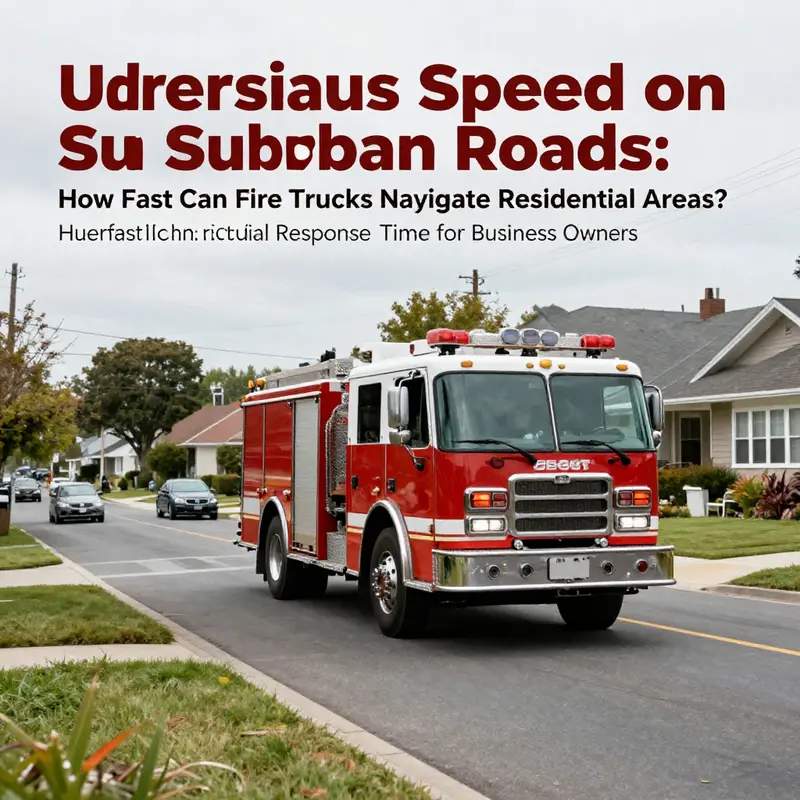
On a fire call, seconds matter, but in suburban neighborhoods speed is shaped by streets, traffic, pedestrians, and the geometry of driveways and curbside vegetation. Speed serves a mission: deliver water, equipment, and trained crews to the scene while keeping responders and bystanders safe. The suburban transit favors controlled motion and careful navigation over unbridled acceleration.
In general terms, fire trucks travel faster on clear arterial streets but are constrained by signals, parked cars, and neighborhood layouts. Real-world speeds commonly range from roughly 30 to 50 km/h depending on traffic, intersections, and road design. The goal is steady progress with lights and sirens, not reckless acceleration; the priority is reliable arrival with water on target and crew ready to deploy.
Vehicle design matters: compact, agile pumper units offer quick response and tight turning radii, which is valuable in residential streets. These vehicles balance modest water capacity with rapid readiness. Larger, higher-capacity units add mass and can slow transit, but bring more water and equipment for longer operations. The choice reflects the environment and mission mix of the department.
Human factors—driver training, dispatch coordination, and traffic management—shape how quickly a unit moves through the transit phase. Preemption at intersections and signal coordination can shave precious seconds, but safety and predictability remain paramount. In all cases, speed and safety are two sides of the same coin, aligned toward a controlled, confident arrival.
Velocity Under the Siren: Real-World Fire Truck Speeds, Highways, and the Subtle Trade-Offs of Rapid Response
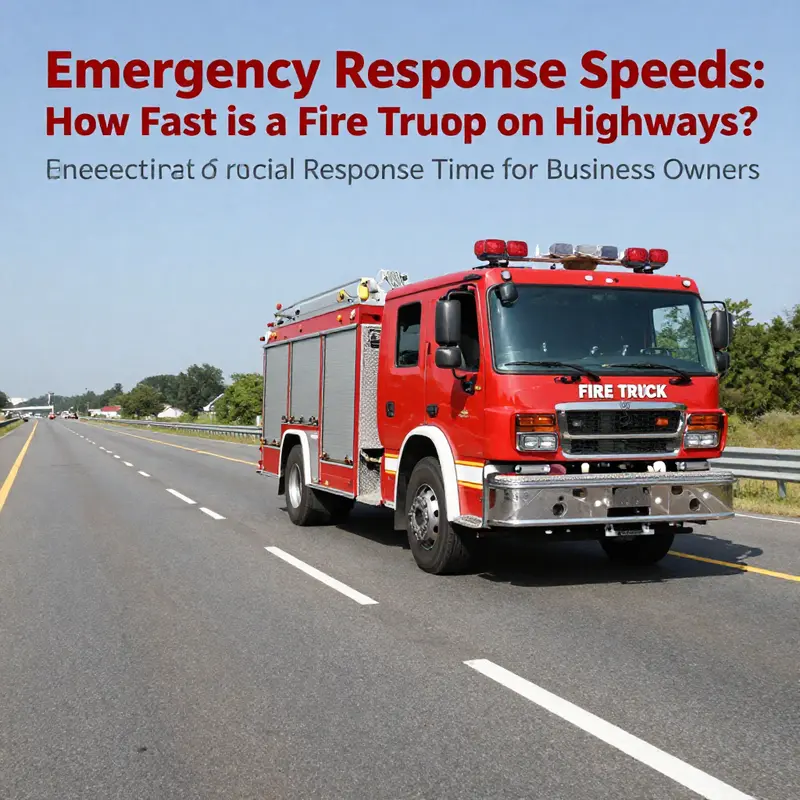
When the siren begins to wail and lights flare, every second feels inescapably precious. The image of a fire truck tearing through streets has become a symbol of urgency, courage, and coordinated action. Yet speed is not the sole measure of effectiveness. Fire departments design these vehicles to arrive ready to deploy—pumping water, discharging foam, and deploying hoses—long before the first flake of a fire fully reveals itself. In the real world, speed is a carefully managed variable, shaped by road type, traffic conditions, and the hardware that compartments within the chassis must carry. The numbers that appear in official recaps—on urban lanes, rural byways, or on fast-moving highways—tell a story of both capability and constraint. They reveal an engineered balance, where velocity is a tool to be wielded judiciously, not a badge to be flaunted.
On urban roads, the pace settles into a rhythm that acknowledges the density of life around hydrants, crosswalks, and the predictable inertia of city traffic. The typical average hovers around the range of 30–40 km/h, a pace that might seem modest by highway standards but is, in context, a deliberate speed. It reflects a responsive system in which every approach to an intersection, every rotation of a wheel, and every light change must be anticipated by a trained driver who is constantly weighing risk against urgency. The siren’s wail is not a permission to ignore pedestrians, bicycles, or the subtle choreography of traffic signals. Rather, it is a call to negotiate space quickly and safely, to minimize delays without provoking new emergencies of their own. In the dense fabric of the city, where streets thread together with traffic lights and stop signs, a fire truck must be both assertive and attentive—a balance that keeps response times efficient while preserving the integrity of neighboring road users.
As we move outward into suburban corridors, the ground under the tires becomes a little less crowded, the sightlines longer, and the decisions less encumbered by near-daily gridlock. Here, the average speeds tend to rise into the 50–60 km/h territory. Suburban roads, with fewer signals and moderate speed limits, allow a more fluid progression. Yet this space is not simply a more permissive version of the city. The same weight that anchors the apparatus—the water, foam concentrates, hoses, ladders, power units, and rescue tools—remains a factor. The driver and crew must still manage lane positions, anticipate potential hazards, and prepare for abrupt stops when a driveway or a driveway-like access point forces a pause. The possibility of encountering schools, parks, and commuter traffic during peak hours creates a need for disciplined acceleration and braking, ensuring that every maneuver preserves a margin of safety for all involved.
Highways, meanwhile, present a different calculus. When a fire truck has priority, and the road ahead is relatively unobstructed, speeds can rise to the more elevation-oriented range of 60–80 km/h, and in ideal setups, even toward the upper end of that spectrum. These conditions—emergency vehicle priority, light or absent congestion, and a driver who is prepared to navigate high-speed deceleration and rapid re-acceleration at exits or junctions—allow for a much quicker response over longer stretches. Yet even here, the top-end speed is less a default state than a controlled capability. Highways demand a degree of restraint for two reasons: safety for the crew inside and safety for the other travelers who must share the road. Emergency protocol often includes preemption where available, coordinated with traffic management systems and law enforcement. Vehicle design choices, such as powerful but well-tuned drivetrains and steering systems, are engineered to offer brisk acceleration and stable high-speed handling without compromising control during abrupt lane changes, siren-guided merges, or sudden braking under heavy loads.
Among the broad categories of modern fire apparatus, the tension between speed and capability is most visible in how the vehicle is equipped to perform its core mission once it arrives on scene. The apparatus is optimized for rapid deployment of resources: high-capacity pumps, large water tanks, long-reach hose reels, and foam delivery capabilities. A contemporary unit may incorporate a 30-meter high-pressure hose reel and an eight-minute effective firefighting duration in certain configurations. These features illustrate a fundamental point: the speed of arrival matters, but it is the readiness to confront the blaze that determines the arc of the incident. The gear carried on board translates potential energy into action on the ground, and the design choices that enable long battery life, robust pumps, and efficient water management can influence how a truck performs once it stops and the crew begins the work. In that sense, the vehicle’s efficiency is a composite of travel speed, acceleration reliability, and operational endurance.
The broader picture of speeds across road types gains depth when we consider what determines those numeric ranges. Road priority and regulatory frameworks shape the speed envelope more than any single engine or chassis. Traffic laws, preemption rules at traffic signals, and the presence of dedicated lanes for emergency vehicles can boost average travel speed when conditions allow. These are not mere conveniences; they are part of a system designed to minimize the time from alarm to extinguishment. The dispatcher’s role is critical in this chain. Real-time data, weather and road conditions, and even incidents on adjacent corridors can redirect a response route to preserve both speed and safety. In practice, the fastest path is not always the straightest path; sometimes the quickest route is the one that minimizes the probability of conflict with other road users while still prioritizing the mission’s critical timing.
To connect these observations with the broader landscape of fire-truck performance, it helps to recognize that the most dramatic demonstrations of speed—such as ultra-fast acceleration orflight-speed top-lines on specific platforms—are less common and less representative of routine operations. For example, some modern fleets have shifted toward configurations that maximize readiness and operational speed rather than peak velocity. Acknowledging this distinction keeps expectations aligned with real-world outcomes. Even when a department operates an electric or high-performance chassis, the top speed is tempered by the need to maintain traction, manage weight distribution, and ensure that braking systems hold under heavy loads. The result is a measured, disciplined tempo that serves the incident scene as much as it serves the clock on the dashboard. The emphasis is on getting the crew to the fire with the most useful tools in hand, not merely on reaching high speeds for their own sake.
This nuanced view of speed helps explain why some potential road scenarios impose stricter limits than the highway numbers would suggest. In forested or rugged terrain, for instance, even a vehicle designed for rapid response may intentionally reduce speed to protect the crew from rollovers or to avoid destabilizing the fragile balance of a pump and water system under dynamic loads. Similarly, off-road capability for certain special-purpose units remains bounded by safety margins and the realities of terrain, which can dramatically affect travel time. The practical takeaway is straightforward: speed is a function of context. The fastest possible run is a combination of vehicle capability, crew proficiency, and situational management—an orchestration rather than a simple sprint.
Within this intricate balance, one often finds something surprisingly simple: speed alone does not guarantee speed-to-firefighting success. The effective response time—the interval between alarm and the moment the nozzle begins to douse flames—is shaped by multiple linked factors. The reliability of the pump, the integrity of the water supply, the readiness of the ladder and rescue tools, and even the ability to pre-stage units at strategic locations all contribute to an overall tempo. A department may deploy a mix of fleet configurations that optimize certain phases of the response—the travel phase, the on-scene setup phase, and the treatment phase—so that no single element dominates the entire operation. When evaluated in that light, highway speeds take their rightful place as one component of a broader, systems-level approach to emergency response.
An important caveat about the data you’ll encounter in official guides is that speeds are averaged under typical conditions. Those averages can gloss over the variance that occurs in a single incident. A city with heavy congestion may see urban speeds clustered near the lower end of the range, while a bridge-free corridor with light traffic might allow trucks to punctuate the upper limits. The same holds for suburban routes where a minor accident ahead or a school zone during school hours can temporarily compress speeds beyond what a simple number might suggest. It’s the combination of these micro-dynamics—traffic signal timing, traffic volume, incident-related detours, and driver decisions—that injects texture into the raw numbers. For readers who want a more formal frame of reference, a look at how standards and performance guidelines lay out speed and response metrics can be enlightening. The technical landscape captures the intent behind these numbers, ensuring that cities, agencies, and manufacturers share a common language about what counts as a rapid response in practice.
From this vantage point, a single sentence can summarize the essential truth: fire trucks move fast where the road and rules permit, but their speed is intentionally bounded to protect life and property, and to ensure the crew can operate effectively once they arrive. The speed that matters most to the incident is not the top speed alone but the total time from alarm to extinguishment. In that spectrum, the high-speed highway stretch is a critical but narrow window—an opportunity to gain ground quickly while maintaining the discipline to avoid creating new dangers. Fire departments are increasingly turning to a blend of advanced propulsion, smarter routing, and procedural refinements to shave seconds without compromising safety. The result is a more reliable, predictable, and ultimately more effective response engine.
For those who want a deeper, data-driven look at how road type and status influence average fire truck speed, official benchmarks exist from national standards bodies. These assessments provide a formal backbone to the practical experience on the ground, helping agencies calibrate their expectations and plan for contingencies across diverse geographies. To explore this in detail, refer to the external resource that offers a comprehensive analysis of average speeds by road type and status, which helps place the highway numbers in a broader context and shows how real-world conditions modulate performance across the spectrum of emergency response.
Additionally, for readers interested in the broader ecosystem of fire apparatus and how different configurations support rapid response in specialized environments, one internal resource worth examining is the airport-focused fleet category that highlights vehicles designed to reach aircraft incidents with speed and precision. These units illustrate how speed, weight management, and targeted capabilities come together in mission-specific ways. You can learn more about these specialized platforms through the airport-focused category linked here: airport fire trucks.
In sum, the highway performance of a fire truck sits at the intersection of physics, engineering, and policy. When a crisis unfolds on a fast road, the goal is to convert every possible second into effective action: to reach the scene swiftly, to begin water or foam application as quickly as feasible, and to set the stage for a safe, efficient firefighting operation. This is why the speed numbers—while telling in their own right—are best interpreted as a snapshot of a dynamic system, where human judgment, vehicle design, and public safety protocols converge to shape the true pace of emergency response. The next layer of understanding comes from comparing these real-world speeds with formal performance standards and road-by-road analyses, which illuminate how well a system can adapt to changing conditions and how effectively it translates speed into lives saved and property protected.
External reference for formal benchmarks: Average Fire Truck Speed by Road Type and Status. https://www.nist.gov/publications/average-fire-truck-speed-road-type-and-status
Speed by Design: The Real Dynamics Behind How Fast a Fire Truck Really Moves When Seconds Count
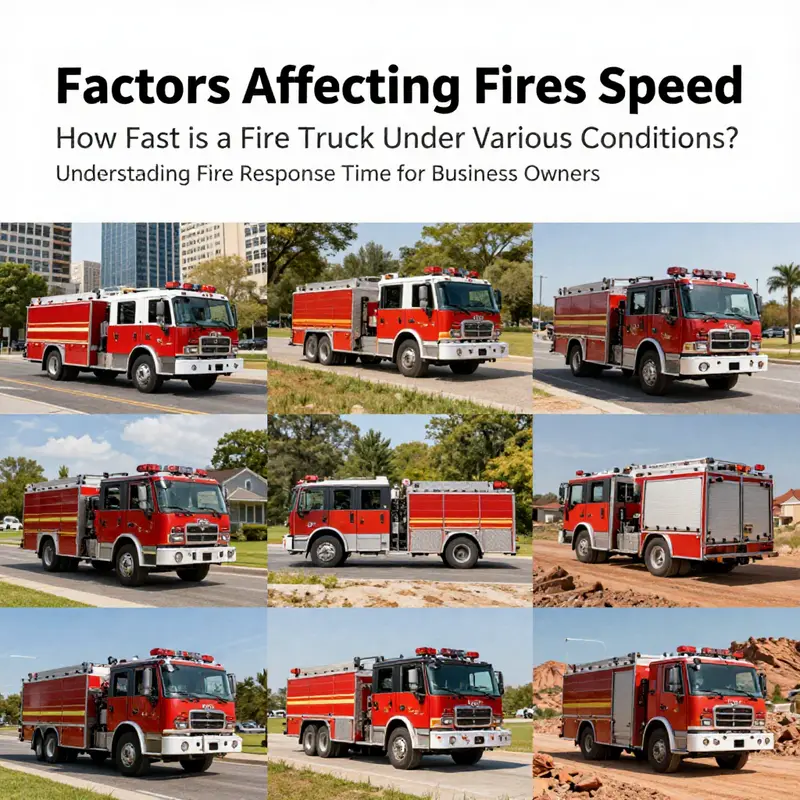
When the siren cuts through the air and the beacon lights flare, speed becomes a crucial but carefully managed factor. Fire trucks are not built to race for glory; they are engineered to arrive fast, with the equipment and people needed to save lives and tackle flames. The speed they can achieve is a function of many interacting elements—road type, traffic, weather, load, and the drivers’ trained handling of a heavy, high-traction vehicle. In practice, the question “how fast is a fire truck?” unfolds into a layered answer: the maximum capability under ideal conditions, and the more modest, real-world speeds that govern everyday emergencies. The numbers from recent, authoritative summaries illustrate the pattern clearly. On congested urban streets with lights and intersections, response speeds often settle into the range of roughly 30–40 kilometers per hour. Suburban routes with lighter traffic and standard speed limits see a noticeable rise, typically around 50–60 kilometers per hour. When the road opens up to a highway with emergency clearance, the potential increases further, sometimes approaching 80–90 kilometers per hour, though those higher numbers belong to a restricted envelope where safety, vehicle design, and strict protocols govern every decision. The practical core, however, is that fire trucks routinely operate well below their theoretical maximum. They are designed for rapid response, but speed is constrained by safety, regulations, and the imperative to move heavy gear with precision through every kind of terrain and traffic pattern.
To understand why, it helps to translate those road-type numbers into the lived constraints of emergency driving. Urban environments are defined by stop-and-go rhythms, signal cycles, pedestrian activity, and competing vehicles. Even if the siren and lights clear some space, the driver must anticipate turning lanes, cross streets, and sudden obstructions. The result is a disciplined glide between intersections, rather than a straight sprint. In such settings, acceleration is moderate, and braking must be smooth enough to keep the crew and equipment from shifting abruptly inside the cab or behind the water tanks. The suburban corridor, while less congested, still demands careful planning of the route, especially at peak travel times and near schools or dense residential zones. Here the momentum can be built more confidently, yet the driver remains tuned to the possibility of a sudden halt or a narrow passage around a parked car or a roadwork barrier. Highways present a different calculus entirely. They offer the potential of high sustained speeds, particularly when traffic is light and an emergency lane is available. But even there, the vehicle is not simply a car with more horsepower; it is a heavy, long, and tall machine with specialized equipment that influences handling, braking distances, and visibility for other drivers who may be unexpectedly sharing the road.
The research materials anchor these observations in concrete data. In open, unrestricted highway conditions, the theoretical ceiling can reach into the 80–97 kilometer per hour band, equivalent to roughly 50–60 miles per hour. This is a speed range that emphasizes what the truck could do, not what it should do in a typical call. The real world collapses this ideal into lower figures as soon as safety, traffic laws, and incident context come into play. Across much of the day, the manufacturing emphasis shifts away from raw velocity toward operational readiness. Fire apparatus are designed to carry heavy water loads, ladders, hoses, and a crew that adds weight and changes center of gravity. The vertical aspect of a ladder or the horizontal spread of a long hose bundle alters how the vehicle accelerates, steers, and brakes. In heavier configurations, turning radii expand, stopping distances grow, and the driver must balance urgency with the risk of destabilizing the load. This balancing act is not a compromise so much as a required discipline that keeps the entire operation safe, predictable, and effective at the incident site.
If you step back from the numbers, a more intuitive picture emerges. The emergency vehicle with its sirens and lights is an instrument of priority—not of reckless speed. The speed limits that exist for ordinary traffic still apply in a practical sense, even as the response protocol allows for speed augmentation when the situation truly warrants it. Many jurisdictions permit emergency vehicles to exceed posted limits when doing so would enhance public safety, but only when the maneuver can be executed with a clear assessment of risks and with due regard to other road users. In this framework, the driver’s judgment becomes a central factor. A well-trained operator who understands weight distribution, tire grip, and the vehicle’s dynamic response can maneuver through urban canyons more swiftly and safely than a novice driver, especially when the crew must negotiate tight streets, parked cars, or a congested intersection with a crucial objective in view.
The factor of load is a constant counterweight to speed. A fully equipped pumper or aerial platform carries hundreds, sometimes thousands, of pounds of water, equipment, and crew. This heft affects how quickly the truck can accelerate, how aggressively it can brake, and how stable it remains when changing direction at speed. A lighter configuration provides a more responsive chassis, but it gives up water capacity or onboard tools needed at the scene. The crew must also manage the weight distribution as doors open, hoses uncoil, and ladders slide into or out of place. In practice, each mission can present a unique balance between speed and readiness. A rapid response might favor a shorter, more direct route with fewer stops, while a longer travel segment could prioritize maintaining momentum while minimizing risk to the crew as they approach a complex or evolving incident.
Weather and road surface amplify or dampen the inherent capabilities of any fire truck. Wet pavement, ice, or snow reduce traction and increase stopping distances. In rain or fog, drivers temper even the best-trained reflexes with slower, more deliberate maneuvers to preserve control over a vehicle that weighs far more than a typical automobile. The same principle applies to uneven pavement, potholes, or gravel shoulders that can destabilize a vehicle traveling at speed. In such conditions, speed is not merely a function of the road but a composite of grip, perception, and reaction time. Fire departments routinely adjust their operating speed to reflect current conditions, prioritizing the safe passage of the team and the protection of bystanders and occupants. Even in forested or rugged environments where the incident demands off-road or mixed-terrain travel, the vehicle design and the operator’s training converge to limit speed to safer levels while enhancing maneuverability. The result is a dynamic range of performance that is event-specific rather than a single, universal figure.
To paint a fuller picture, the narrative must acknowledge a tension that exists in many public safety discussions: the drive to reduce response times versus the imperative to prevent accidents that could escalate the emergency. The speed figures cited for urban, suburban, and highway scenarios reflect a spectrum of practical outcomes rather than a single standard. A study that surveys real-world operations finds speeds often hovering in the mid-range—roughly 25–45 miles per hour (40–72 kilometers per hour) in typical response scenarios. This range translates across environments, indicating that the most critical factor is not the highest possible speed but the capability to reach the scene quickly and safely. It is also worth noting that on a well-designed route with efficient traffic management and clear incident paths, the average speed can trend toward the upper end of that band, especially if the crew coordinates with other responders and uses pre-planned routing to minimize delays.
The interaction between speed and safety is not a checklist but a continuous assessment. The driver must track multiple signals at once: the meandering approach of the route, the position and speed of other vehicles, wind direction at the fire site, and the evolving geometry of the incident. The crew relies on training that emphasizes anticipation, controlled acceleration, and measured braking, ensuring that the apparatus remains stable as it carries life-saving equipment. When a driver has to turn a corner with a full water tank and a long ladder, the vehicle behaves differently from a standard sedan. The fatigue and concentration required to perform under such conditions add a mental dimension to how speed is judged and deployed. In this sense, speed is a tool rather than a goal, and the best outcomes arise when speed is harmonized with precision and situational awareness.
For readers who want to explore the equipment ecosystems that underpin these performance characteristics, a deeper look at the broader category of fire fighting trucks can illuminate how various configurations support different response paradigms. The range of apparatus—from compact, agile units to heavier, specialized platforms—illustrates how speed, capacity, and reach are balanced for specific kinds of incidents. For a look at the broad range of equipment, see fire fighting truck options. This internal exploration helps connect the kinetic aspects of speed with the functional demands at the scene, reminding readers that velocity is one dimension among many that determine how quickly and effectively firefighters can act. If you are curious about the types of configurations available and how they map to incident needs, this resource offers a practical gateway to understanding the tradeoffs involved in choosing the right tool for the job.
Ultimately, the question of “how fast is a fire truck?” resolves into a narrative about timing under pressure. It is a story of engineered capability meeting real-world constraints. It is about the careful calibration of speed with control, the discipline of professional drivers who operate under the most demanding conditions, and the way departments manage the complex mix of road, weather, load, terrain, and human factors. The numbers—urban 30–40 km/h, suburban 50–60 km/h, highway up to 80–90 km/h under optimal conditions, with typical operating ranges often well below these extremes—are not competing metrics. They are windows into a broader system designed to maximize life-safety outcomes while preserving the integrity of the responders and the communities they serve. In the end, speed serves the mission, and the mission governs the speed.
For those seeking a firmer metric baseline grounded in established standards, consider consulting the NFPA’s official guide on Fire Truck Speed and Performance Standards. It provides detailed performance metrics and safety considerations that illuminate why these vehicles move the way they do in different settings. https://www.nfpa.org/standards/fire-truck-performance-and-response-speeds
Speed on the Call: Understanding How Fast Fire Trucks Move Within the Demands of Emergency Response
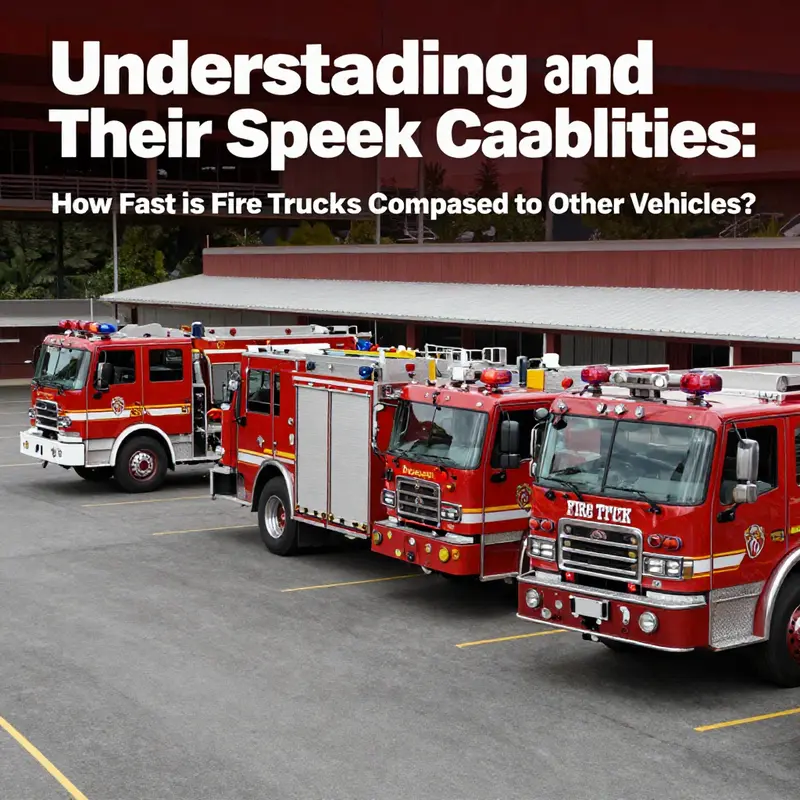
When a siren slices through urban quiet or a forested ridge carries the echo of distant crackling, the question of how fast a fire truck can move seems straightforward: how quickly can it get to the scene? In practice, speed is a carefully balanced thing. Fire trucks are built to arrive with the right mix of stability, maneuverability, and capacity for heavy equipment, water, foam, and personnel. Their speed is a tool, not the endpoint of a mission. The real art lies in how speed is managed in the face of traffic, terrain, and the unpredictable dynamics of an unfolding emergency. As data from recent performance analyses show, the typical range of speeds a modern fire apparatus achieves depends on road type, traffic conditions, and the specific design priorities of the vehicle, and it becomes clear that rapid response is a function of more than raw velocity alone. In urban streets lined with signals and congestion, travel is often slow and deliberate, while in suburban corridors with lighter traffic and moderate speed limits, response times can be brisker. On highways, with emergency vehicle priority, a fire unit can push into higher speeds, but even then, speed is tempered by safety protocols, vehicle load, and the demands of firefighting work. These realities are not a contradiction but a reflection of a specialized vehicle class whose mission is to deliver people and gear to a scene with reliability, not simply to outrun other vehicles on the pavement. The journey to the fire ground begins the moment the call is received, and the first metric the crew considers is not the top speed they could reach in perfect conditions but how quickly they can navigate the actual route, clear the way through traffic, and set the stage for effective firefighting. The daily road profile of a fire truck is a map of compromises: acceleration must cope with heavy payloads, braking must endure repeated high-load demands, steering must remain precise under torque and swaying winds, and suspension must absorb vibration while keeping a stable platform for the water and hose reels that define the unit’s firefighting capability. This balance is visible in the speed ranges that professionals typically observe across urban, suburban, and highway environments. On urban roads—those busy streets with traffic lights, pedestrians, and parking maneuvers—a vehicle often travels in the range of roughly 30 to 40 kilometers per hour. In neighborhoods with tree-shaded arterials and cul-de-sacs, the same units can speed up a notch as traffic disperses, reaching roughly 50 to 60 kilometers per hour when it is safe to do so and the emergency has the right-of-way. The highway scenario presents a more nuanced picture. When a fire crew can secure priority traffic management, the vehicle can push into the upper ranges of traffic speed, around 80 to 90 kilometers per hour. But even here, the speed is not unlimited. It is constrained by the vehicle’s design, the loads it carries, the anticipation of curves and grade, and the imperative of not compromising crew safety or the stability of the water flow system during high-speed maneuvers. The numbers tell a story that aligns with the ethos of modern firefighting equipment: the emphasis is on precision, reliability, and the ability to perform a critical function under demanding conditions, rather than simply hitting a peak velocity. A useful counterintuitive observation from broader performance literature is that while fire trucks can reach higher speeds under optimal conditions, those speeds sit within a practical envelope. Across many contemporary fleets, typical upper bounds for the kinds of heavy-duty emergency vehicles involved in municipal service hover in a band approaching 90 to 110 kilometers per hour. That translates to roughly 56 to 68 miles per hour. It is a useful reference point because it situates the practical speed of a fire truck within the same spectrum as ordinary highway travel, yet with the safety margins and performance characteristics that only a purpose-built emergency vehicle can provide. The important distinction, however, is that these figures assume favorable conditions, a fully fueled and loaded chassis, and the absence of structural or environmental constraints that might arise in a real incident. In the field, water weighs on the truck in more than a figurative sense. A loaded apparatus often exceeds ten tons when water, foam concentrate, pumps, hoses, and protective equipment are counted. This mass is not just a static figure; it translates into dynamic handling: acceleration is slower, braking distances extend, and cornering stability becomes a priority. The heavy payload also influences the optimal engine torque curve, gear ratios, and electronic stability systems that help the driver maintain control in emergency maneuvers. Even with a high-performing engine and sophisticated driveline, the vehicle’s speed is a compromise between the desire to reach the scene quickly and the need to preserve traction, avoid skidding, and protect the crew from the hazards of a fast, unpredictable ride. A further layer of complexity arises from terrain and environmental conditions. In forested or rugged landscapes, for example, the safest and most effective response may call for lower speeds than highway cruising would suggest, because surface irregularities, limited traction, and the potential for rollover or damage to fragile ground surfaces require a more cautious approach. This is not a sign of weakness; it is a recognition that speed must harmonize with control and the ability to deploy water streams or foam with precision as soon as the apparatus arrives. If a vehicle is tasked with rapid access to a rural or austere site, there may still be a strong pressure to move quickly. Yet even in those contexts, certain off-road remains a limiting factor. Safety protocols and the physical realities of navigating such terrain often prevent pushing the vehicle to the same top-end speeds available on smooth highways. The net effect is that while a fire truck can, under the right conditions, reach relatively high speeds, the operation is designed to preserve stability and ensure the equipment can be deployed with equal speed and effectiveness. In other words, acceleration and top speed are complemented by the wheels-on-the-ground requirement to access, attack, and extinguish with the equipment in place. The narrative about speed also benefits from considering the functional priorities that define the vehicle’s purpose. Fire trucks are not only conveyances; they are rolling workshops. They carry high-pressure pumping systems, ladders, water tanks, foam systems, rescue tools, and protective gear for personnel. The layout of these systems means that there is a significant weight distributed across the chassis, with the water tank itself occupying a substantial fraction of the weight. The design therefore emphasizes stable handling and robust braking over raw sprint capability. Hydraulics, hose reels, and onboard pumps demand careful weight distribution to maintain a stable platform during deployment. A modern unit may feature high-pressure hose reels that can extend up to 30 meters, a capability that underscores the emphasis on rapid, controlled firefighting rather than on-the-fly speed. In practice, the eight-minute window of effective firefighting capacity is a metric of readiness rather than velocity. A fire unit may be ready to start applying water or foam within minutes and maintain pumping and delivery for a defined period, but the overall response sequence—from dispatch to water application to containment—relies on coordinated operations of crew, equipment placement, and scene assessment. The speed of the vehicle is thus nested within a broader operational choreography that includes traffic management, siren and lighting signals to create an emergency corridor, and the strategic placement of resources to maximize impact at the fire ground. For readers seeking a deeper, standards-based perspective on performance, the official guidance documents maintained by professional standards bodies offer a structured framework for understanding how speed, acceleration, braking, and response times are evaluated under controlled conditions. These sources emphasize that the metrics are not just about a number on a speedometer but about the interplay between vehicle dynamics, driver training, road geometry, and the reliability of firefighting systems under load. If you are exploring the spectrum of configurations within this class of vehicles and want to see how different chassis, bodies, and payloads shape performance across real-world routes, the heavy-duty fire trucks category provides a representative cross-section of design approaches that balance power, stability, and equipment capacity with the urgency of rapid response. It is a reminder that the core objective remains consistent: to deliver the tools and personnel needed to control a scene as swiftly and safely as possible. The bottom line is that speed matters, but it is always tempered by the practical realities of emergency response. A fire truck’s velocity must be understood in the context of weight, road type, terrain, traffic dynamics, and the imperative to deploy the apparatus’s capabilities effectively at the incident site. This is why, even when the siren is blaring and the lights are flashing, the pursuit of speed on the open road is always mediated by safety, discipline, and the mission’s broader strategic goals. For formal, standardized performance metrics and the official guidance that informs training and practice, see the external resource available through the standards body cited in contemporary research on fire-truck performance and response speeds: https://www.nfpa.org/standards/fire-truck-performance-and-response-speeds
Final thoughts
Understanding the speed of fire trucks and the variables that affect it is crucial for business owners seeking to refine their emergency preparedness strategies. While urban settings impose speed limits that can hinder rapid response, suburban and highway conditions allow for greater flexibility. By recognizing how these factors play into emergency situations, businesses can better navigate their safety protocols and engage with local firefighting services to optimize preparedness. An informed approach to fire safety not only protects lives but preserves property and ensures a resilient business operation.

