
















Fire trucks are critical assets for any fire department, combining advanced engineering, safety standards, and efficiency to combat emergencies. This article will delve into the intricate process of fire truck manufacturing, emphasizing the significance of chassis selection, integration of firefighting systems, aerial ladder technologies, and regulatory compliance. Each chapter will illuminate aspects of how these vehicles are meticulously engineered, ensuring they are equipped and ready for life-saving operations.
From the Ground Up: Chassis Mastery and Engineering Behind Fire Apparatus
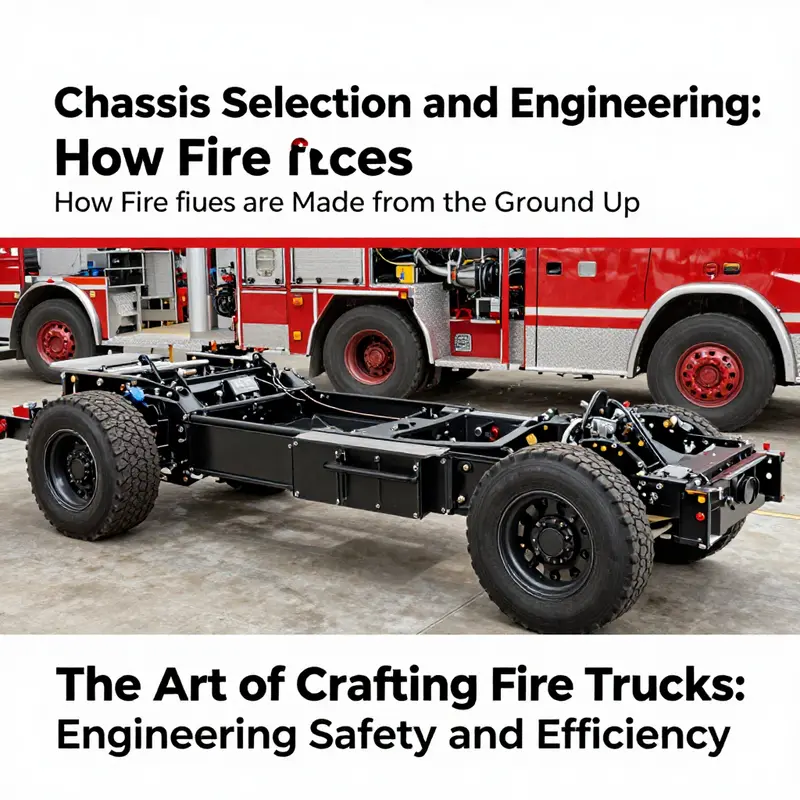
Every fire truck begins with a foundation that doesn’t shout but carries the responsibility of rapid, precise action. The chassis is more than a frame; it is the structural skeleton that transmits power, confronts terrain, and supports the heavy equipment that turns a fire call into a controlled response. In design terms, the chassis must withstand years of duty cycles, unpredictable loads, and frequent maneuvering through tight urban spaces. From urban streets to rural backroads, the way a truck behaves on the road depends on how its base is engineered. That is why manufacturers treat the chassis as a blank canvas that will be adapted through a careful conversion process. The aim is not simply to mount more gear but to integrate it in a way that preserves handling, ride quality, and safety under the unique demands of firefighting. This balance—strength without stiffness, mass without compromising maneuverability—defines the philosophy behind chassis selection and engineering.
The selection begins with a simple truth: the base must be capable of carrying a heavy, ever-changing payload while still delivering predictable performance under emergency conditions. Builders favor heavy-duty commercial chassis because they are designed for long service life, high mileage, and minimal downtime. These platforms offer robust frames, durable suspensions, and proven powertrains that can endure the cycles of rapid acceleration, frequent stopping, and constant braking that firefighting work requires. The choice of configuration—whether two-wheel drive, four-wheel drive, or all-terrain variants—depends on the intended environment: busy city streets with narrow lanes, long rural routes demanding reliability in remote areas, or rough terrain where traction and ground clearance become critical. In practice, this means engineers begin with a chassis that is inherently capable and then tailor it to the specific mission profile of the department it will serve. The goal is to maintain highway stability at high speeds while distributing weight in a way that plants the vehicle firmly on the road when responding with ladders, pumps, and water tanks in tow.
Once a base platform is selected, the conversion process begins in earnest. This is where the chassis becomes more than a frame; it becomes a conduit for life-saving capability. The most visible transformations happen along the frame rails, which are reinforced and bridged with additional cross-members and gusseting to handle the extra stress of firefighting equipment. The engine and transmission are often upgraded or tuned to deliver higher horsepower and torque, ensuring the truck can surge with purpose when every second counts. The powertrain must not only haul a full complement of pumps and water tanks but also provide the smoothness and response firefighters rely on during critical maneuvers. Transmission gearing is matched to anticipated loads so that acceleration remains decisive without sacrificing efficiency on longer runs to the scene. In tandem with powertrain upgrades, the cab and chassis receive enhancements for ergonomic access, control placement, and durability under extreme conditions. This is not a cosmetic refresh; it is a structural and mechanical recalibration that enables the vehicle to work as hard as the responders who depend on it.
A core aspect of this engineering evolution concerns the integration of firefighting systems into the chassis. Water or foam tanks are mounted with precision to optimize capacity while preserving handling. The tanks themselves are designed to fit within the wheelbase and the frame geometry without creating dangerous CG shifts. Depending on the department’s needs, capacities can vary widely, and the tanks are often fabricated or reinforced to meet exacting standards. The high-pressure pumps that drive extinguishing streams must be positioned to minimize vibration and heat transfer to the chassis, and the hydraulic systems that operate ladders, platforms, and nozzles are integrated with fail-safe redundancies. In this environment, hydraulic lines and control manifolds are routed with an eye toward protection from road debris and heat, while still allowing quick access for maintenance. The result is a compact, highly integrated system where weight distribution is accounted for with scientific care.
Weight distribution and dynamic stability sit at the heart of safe, effective firefighting. A fire apparatus carries a substantial, uneven load that shifts as water is consumed, ladders extend, and tools are deployed. Engineers use advanced simulation tools—finite element analysis to evaluate structural stiffness, multi-body dynamics to model suspension behavior, and material fatigue studies to anticipate wear. These tools help engineers predict how the vehicle will behave during high-speed evasive maneuvers, abrupt lane changes, or on-grade climbs with a loaded apparatus. The center of gravity is carefully positioned so that even with tall ladders and heavy water tanks, the chassis maintains a predictable roll angle, minimal sway, and robust braking performance. This predictive approach reduces the need for heavy, overbuilt structures and instead relies on intelligent design that harmonizes strength with agility.
Beyond raw strength, the chassis must accommodate the practical realities of field operations. Fire apparatus increasingly incorporate features that support rapid response and resilience in harsh weather. Wind loads, for instance, influence the design of exterior panels and doors. Roll-up doors used for compartments are often engineered with galvanized steel or reinforced aluminum, paired with heavy-duty tracks and reinforced slats to resist bending in high winds and to maintain a reliable seal under driving rain. Such details may seem small, but they contribute to a vehicle that can be deployed quickly and remain dependable after repeated exposures to the elements. Similarly, the mounting of pumps, air tanks, and onboard diagnostics demands careful alignment with the chassis so that vibration does not degrade performance or shorten the life of sensitive components. The chassis, then, becomes a platform that hosts a symphony of subsystems, each tuned to function in concert when seconds matter.
A final, essential thread in this tapestry is safety, compliance, and certification. Fire apparatus must meet a spectrum of national and international standards. Engineers design to those benchmarks from the outset, not as afterthoughts. This means the base platform and the converted frame are validated against recognized codes for structural integrity, emission controls, and environmental resilience. Third-party inspections and certifications verify that the chassis, the conversion, and the integrated systems perform reliably under real-world conditions. In practice, this translates to rigorous testing—simulated emergency driving scenarios, payload and brake testing, and extensive checks of the pumping and hydraulic systems under load. Compliance is not merely a checkbox; it is the assurance that every component will endure the demanding life of a fire truck, from the first deployment to the last shift of a long service horizon.
As the final assembly nears, the chassis becomes inseparable from the entire vehicle’s mission: to deliver water, tools, and rescue capability to the scene with speed, precision, and safety. The journey from a rugged base platform to a purpose-built firefighting machine is a disciplined sequence of engineering decisions, material science, and system integration. Each decision about frame reinforcement, powertrain tuning, tank placement, and door design echoes the department’s specific operational realities. It is this careful calibration that transforms a general-purpose chassis into a mission-ready backbone, capable of supporting the heartbeats of firefighters in the moments they need their equipment the most. In this sense, the ground-up approach to chassis selection and engineering is not merely a technical preference; it is the explicit recognition that the frame, the core of any fire apparatus, must be trustworthy under pressure, adaptable under changing demands, and enduring through years of demanding service.
For readers seeking deeper technical detail on related components and materials in fire apparatus design, a broader overview of roll-up door engineering offers complementary context on how exterior access panels balance strength, weight, and weather resistance: https://www.fireapparatus.com/roll-up-door-technical-details/.
The Engineered Heart of a Rapid Response: Integrating Firefighting Systems to Equip Modern Fire Trucks
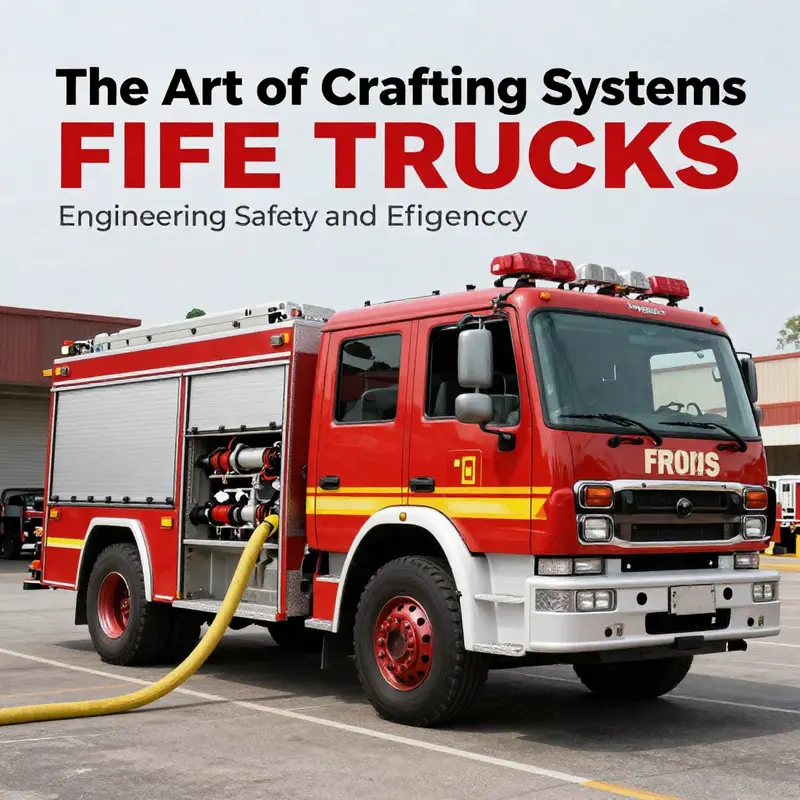
Fire trucks are more than just big engines with big tanks. They function as mobile command centers where the art and science of system integration come together under strict safety constraints. The core of a modern fire apparatus lies in how it marries water delivery, pressure management, and on-board tools into a seamless whole that can be deployed at a moment’s notice. When a department orders a new unit, engineers begin with the understanding that every hose, gauge, lever, and sensor must perform under the stress of real emergencies, where seconds count and the environment may include smoke, heat, and shifting loads. At the center of this cohesive system is the fire pump, a compact powerhouse that draws water from hydrants or the vehicle’s own tanks and pressurizes it for delivery through a network of attack hoses and longer supply lines. The pump is not a solitary device but part of an integrated hydraulic and electrical system that controls how water moves, how pressure is maintained across branches, and how different hoses shed or extend pressure as needed in complex scenes. The pump is designed to sustain pressures that exceed a thousand pounds per square inch, enabling combinations of stream reach, nozzle selection, and flow that match the evolving demands of a blaze or a rescue operation. This remarkable capability rests on careful pipeline design within the chassis frame, ensuring that the intake, discharge, relief valves, and electronic controls work together without bottlenecks or overheating. The hoses themselves are selected and configured to complement this pumping architecture. Attack hoses, typically in the range of about one and a half to two and a half inches in diameter, are optimized for directing water precisely where it is needed during an interior attack or exterior spray. In contrast, supply hoses, larger in diameter at four to six inches, act as the lifelines that draw water from hydrants or from onboard tanks to the pump. The couplings that join segments of hose must withstand repeated high-pressure connections, with instantaneous couplings forged from high-strength metals to resist corrosion, fatigue, and the rigors of urban and rural environments. The durability of these fittings is as critical as the materials that carry the water itself; any weakness in a coupling or hose seam can compromise the entire operation and endanger crews. The water-delivery systems extend beyond flat hoses to include integrated foam induction, where applicable, allowing responders to mix firefighting foam with water on the fly for Class B fires where hydrocarbons or other flammable liquids are involved. The pump and its associated piping are engineered to ensure that foam concentrate blends at the optimal ratio and at the right moment, minimizing wasted foam and maximizing the efficiency of the thrust toward the seat of the fire. As water travels through the system, the need for reliable monitoring and control becomes evident. Modern apparatus integrates pressure sensors, flow meters, and electronic controls that provide the incident commander with real-time data on how much water is available, how fast it is moving, and where losses due to friction or leaks may be occurring. This data helps operators balance speed with safety, ensuring that crews facing intense heat do not suffer from unanticipated pressure drops that could compromise a critical attack line. The engineering philosophy behind these systems emphasizes modularity and fault-tolerance. The pump may be complemented by parallel or auxiliary pumps to ensure there is always a backup if a component fails or requires maintenance during a response. This redundancy supports mission readiness, a core objective in which downtime is minimized and response times are preserved. The pipework, valves, and manifolds are designed so that maintenance can be performed without shutting down the entire system, an essential feature when departments rely on a fleet that must stay in service across multiple shifts and seasons. Hoses and nozzles are only part of the package when it comes to effective water delivery. A fire truck carries a suite of nozzles, tips, and baffle plates that shape the spray pattern for different scenarios, from a focused pencil stream for interior work to a wide fog pattern for protection during roof openings or smoke venting. The selection of nozzle types is integrated into the pump and hose layout so that the operator can optimize reach, cooling, and visibility without having to swap out critical connections at the scene. Coupled with the water delivery are the onboard storage and handling systems that keep equipment ready for immediate use. Firefighters rely on sturdy compartments to house personal protective equipment, self-contained breathing apparatus, and a well-organized assortment of tools for forcible entry or search and rescue. The storage strategy influences not only speed but safety. A unit that presents a cluttered cockpit or a tangled toolbox increases the risk of injury or delay during a high-stress operation. Onboard SCBA storage is a deliberate design choice; these air tanks are kept close at hand in protective, easily accessible lockers so that teams can suit up and enter smoky environments without missing crucial seconds. The same principle applies to PPE management. Turnout coats, helmets, gloves, and boots are stored in a way that allows a firefighter to reach needed gear instantly while maintaining the integrity of each item. In addition to protective gear, the crew compartment embodies the broader aim of an integrated design: to minimize cognitive load during emergencies. The modern fire truck must support clear, rapid communication between crew members and with dispatch or incident command. The communications suite includes two-way radios, GPS-based navigation, and data links that feed information back to the incident scene. Real-time data sharing helps coordinate multi-unit responses, track firefighter locations, and adapt tactics as conditions change. This level of integration also supports post-incident analysis and training, because data from past responses can inform future configurations and improvements. The vehicle’s exterior and interior design are shaped not only by performance but by the expectation that every system can be accessed quickly and safely under duress. The cab itself is linked to a broader electrical architecture that powers lighting, sirens, and scene safety features. Emergency lighting, warning beacons, and reflective markings are coordinated to provide maximum visibility while ensuring that power demands do not overwhelm the chassis or pump controls. Aerial platforms, ladders, and hydraulic equipment are integrated into the same system so that the movement of a ladder or a platform does not disrupt water delivery or overtax the power supply. In urban environments, where the capacity to reach upper floors matters, a portion of the truck’s architecture supports the mounting and operation of ladder and platform systems. These components require precise hydraulic control and structural balance to maintain stability while a platform is extended. The hydraulics, electrical, and mechanical subsystems must be designed so that the activation of a ladder or a platform does not compromise the vehicle’s handling, braking, or fuel consumption. When a department specifies a ladder or platform package, engineers must consider the torque, the center of gravity, and the distribution of weight as the vehicle maneuvers through traffic and around corners. The interplay between all these subsystems demands rigor in testing and certification. Standards bodies and third-party inspectors evaluate whether the integrated package meets safety, performance, and interoperability requirements. The NFPA 1917 standard, for Automotive Fire Apparatus, provides a framework that governs pump specifications, hose coupling types, crew compartment safety, emergency lighting, and many other critical aspects. Adherence to these standards is not a mere checkbox; it is a design discipline that informs material selection, manufacturing tolerances, and the sequencing of assembly steps. Beyond the standard, manufacturers anticipate a vast array of use cases. Local conditions, climate, terrain, and water supply networks shape the configuration of a given unit. In some regions, for example, foam systems may be emphasized to tackle fuel fires, while in other regions, a high-capacity pump and extended water tank may be prioritized for rural wildfire risk or industrial settings. Customization is an essential feature of modern fire apparatus, allowing departments to tailor interiors, tool storage, lighting, and even the integration of specialized rescue equipment. The result is a vehicle that functions as a comprehensive toolkit on wheels, capable of intervention in a broad spectrum of emergencies. As the integration work proceeds, teams also plan for long-term reliability. Maintenance access, component reuse, and spare parts availability are built into the design so that a unit can remain in service for many years with minimal downtime. Training, support, and service networks help departments maximize the return on investment by ensuring that crews understand how to operate, troubleshoot, and maintain the integrated systems. The end product is not only a powerful piece of apparatus but a responsive system that can adapt to evolving threats and changing emergency scenes. The integration of firefighting systems, from water delivery to onboard equipment handling and advanced communications, constitutes the heartbeat of the modern fire truck. It is the product of careful engineering, disciplined standards, and a deep understanding of the realities faced by firefighters on the ground. External resource: https://www.nfpa.org/Code-Development/Standards-Development/All-standards/1917
Raising the Skyward Shield: How Aerial Ladders and Platforms Are Engineered into Fire Trucks
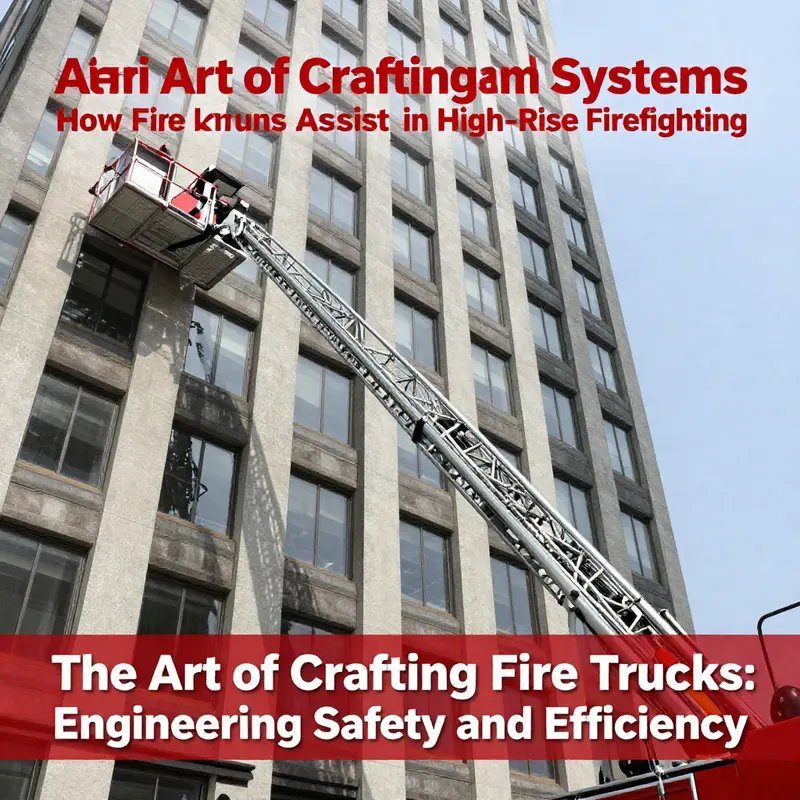
From the moment a firefighting chassis leaves the line, the aerial ladder system begins its ascent into the realm of precision engineering. This component does more than reach tall buildings; it defines how a crew can create safe access, deliver water, and coordinate rescues from heights that would otherwise be unreachable. In the broader arc of how fire trucks are made, the aerial ladder and platform system stands as a keystone, demanding seamless integration with the vehicle’s structure, powertrain, and control architecture. Every joint, every hydraulic hose, and every sensor is chosen not only for strength but for fail-safe behavior under the unpredictable loads of an emergency. The result is a machine that can move with deliberate grace, holding a position in space while people and tasks unfold beneath it.
Platform aerials, sometimes called snorkels or ladder towers, end in a secure basket that can hold firefighters and equipment. They stabilize and isolate motion, allowing workers to perform ventilation, search and rescue, or medical evacuation from elevated heights. In contrast, straight aerial ladders offer a lighter, more flexible reach in tight spaces but lack the enclosed platform. Both types share core features: 360-degree rotation, extendable booms, and hydraulic power, all designed to operate with maximum steadiness even in gusty conditions. The choice between them hinges on the department’s typical terrain, building stock, and anticipated rescue profiles, but the engineering logic behind both remains centered on reliability, control, and safety under pressure.
At the heart of the aerial system is the boom, which may be telescoping or articulating. A telescoping boom extends in stages, sliding within one another to reach considerable heights, while an articulating boom moves through multiple joints to navigate around obstacles. Regardless of the configuration, the boom is manufactured from high-strength materials—often aluminum alloys and reinforced steels—to balance lightness with the ability to bear heavy loads near the basket. The base rotation is driven by a robust rotary drive that sits on a heavy turntable, allowing a full 360-degree sweep. This rotation is critical when firefighters must maneuver around the exterior of a building without repositioning the vehicle. The platform, when present, is a compact, enclosed space with guard rails, non-slip flooring, and mounting points for ventilation tools, lighting, and water delivery hardware. Protecting occupants and operators requires careful attention to modular attachment points, with standardized interfaces so components from different suppliers can be integrated without compromising safety.
Behind the visible hardware lies a sophisticated hydraulic and control architecture. The boom’s extension, elevation, and rotation are powered by a dedicated hydraulic system, typically driven by the engine’s powertrain or an auxiliary generator. Hydraulic lines are routed through protected chases to minimize wear, with sensors that monitor pressure, temperature, and position. Operators access the system through a control console that provides intuitive, real-time feedback on reach, angle, load, and stability. Modern configurations incorporate load-sensing functions that automatically limit extension when the platform would exceed safe parameters. Interlocks prevent hazardous combinations of moves, such as extending the boom while outriggers are not fully deployed or attempting a rotation while the basket is over-stressed. In events of power loss, emergency lowering procedures engage automatic safety measures to descend the platform in a controlled manner. These features are not luxuries but necessities, ensuring that a critical operation proceeds without compounding risk.
The structural integration of the aerial system into the fire truck is a meticulous engineering problem. The chassis must be reinforced to support the extra weight during operations, with attention to center of gravity, load distribution, and street-legal performance. Engineers design mounting frames and attachment points that distribute stress into the chassis without compromising the vehicle’s core duties, such as transporting crew, water, and equipment. The hydraulic system’s pumps, valves, and reservoirs must be sized to respond quickly and reliably under load, with redundant pathways and fail-safe shutoffs in case of a component failure. Electrical systems are expanded to power lighting, cameras, and control electronics, all of which contribute to situational awareness for the operator and the team below. The integration process also calls for environmental considerations: vibration isolation, weatherproofing, and corrosion resistance, because the ladder and platform must endure exposure to heat, rain, and road salt for decades.
Operational life in the field demands that the aerial system be easy to inspect and maintain, even when time is scarce. Pre-operation checks describe a routine that spans nuts and bolts, hydraulic fluid levels, and the integrity of control interlocks. The manufacturer designs serviceable modules and keeps spare parts readily accessible to fire departments, recognizing that downtime translates to lost readiness. The training ecosystem mirrors this emphasis on reliability. Operators and crew members undergo rigorous instruction in hydraulics, load management, wind effects, and coordinated team movements. In high-stakes environments, training ensures that a well-aimed stream of water or a precise rescue maneuver is not undermined by hesitation or miscommunication.
Environmental and situational realities shape how these systems are used and how they are built to endure. High-rise firefighting exposes equipment to strong winds, thermal stress, and the potential for entanglements with overhead wires or unpredictable architecture. The aerial system must remain stable while the building itself sways and smoke obscures visibility. Designers compensate for wind by optimizing the weight distribution and incorporating stabilizing outriggers that anchor the vehicle to solid ground or uneven terrain. Cameras, radios, and hand signals become indispensable tools for precise coordination. The platform’s enclosure protects firefighters and rescued occupants from falling debris and heat, while integrated ventilation tools help clear smoke or create egress corridors. The end-to-end design philosophy is straightforward: the system must extend the reach, perform the work, and return to a safe, rest state with minimal risk, even when conditions are far from ideal.
Advancements in materials and control theory continue to push aerial ladders and platforms toward greater reach without sacrificing maneuverability. Lighter alloys and composite components reduce overall weight and improve fuel efficiency, though they must meet strict safety margins for fatigue and impact resistance. Electronics have grown more capable, enabling remote diagnostics, predictive maintenance, and smarter load management that helps prevent overstressing the booms during operations. As urban landscapes evolve, taller and denser structures demand longer reaches and more versatile platforms, driving the industry toward modularity where sections of the boom can be replaced or upgraded without a full rebuild. Automation and assisted positioning are creeping into the cockpit through improved sensing and feedback loops, enabling technicians to focus on critical tasks rather than wrestling with manual controls in hot or chaotic environments.
From a manufacturing perspective, aerial ladder and platform systems are not standalone add-ons but integrated subsystems that propagate through every stage of the build. The process begins with the chassis, selected for its strength and compatibility with heavy hydraulics and the added weight of the boom. The next steps involve fabricating and attaching the subframes that will rigidly carry the booms, then routing the hydraulic arteries that feed each motion axis. Once the primary structure is sound, the boom assembly—whether telescoping or articulating—is mounted and synchronized with the turntable, rotation drive, and safety interlocks. The basket or platform is installed with critical guard rails and attachment points for tools, while the electrical harness is extended to power lighting, cameras, and communication gear. Finally, the system undergoes a battery of tests that simulate real-world loads, including static checks for balance and dynamic tests that require the operator to perform coordinated extensions, rotations, and deltas in lift and reach. The aim is not only to prove the capability of the equipment but to demonstrate that it can be deployed under the same reliability and predictability that emergency responders rely on when every second counts.
Testing remains a crucible for this technology. Aerial ladders and platforms are evaluated for stability, reach, and control fidelity under a spectrum of conditions. Static load tests verify that the structure can carry the maximum intended weight at various angles. Dynamic tests simulate wind gusts and vehicle movement, ensuring that outriggers and stabilizers hold firm and the operator retains precise control. Endurance tests push the system through repeated extensions and retractions, validating that hoses, seals, and actuators do not leak or degrade under heat and vibration. The testing regimen aligns with established safety standards that govern rescue ladders and aerial platforms, guiding manufacturers toward uniform performance expectations and contributing to a shared culture of safety in the profession.
Ultimately, aerial ladders and platforms are among the most visible, yet technically intricate, elements of a modern fire apparatus. They embody a fusion of mechanical engineering, fluid power, and human-centered design. Their development is driven not just by the demand for height but by the imperative to move people and water with confidence in the most dangerous environments. The narrative of how fire trucks are made is incomplete without appreciating the care, calculation, and craftsmanship poured into these skyward tools. They are designed to expand a firefighter’s reach while shrinking risk, a paradox that underscores the art of turning a rolling chassis into a portable lifeline in the urban wilderness. As cities rise and evolve, so too will the aerial systems that crown the fire engine, sharpening the balance between extension, control, and safety that keeps communities protected.
For those seeking deeper technical grounding on current standards and best practices in aerial ladders and platforms, the National Fire Protection Association provides comprehensive guidance, including the NFPA 1917 standard for rescue ladders and aerial platforms. This external framework supports manufacturers and departments alike in maintaining a high bar for performance, safety, and operator training.
Standards in Motion: How Regulatory Craftsmanship Shapes Fire-Truck Safety and Readiness
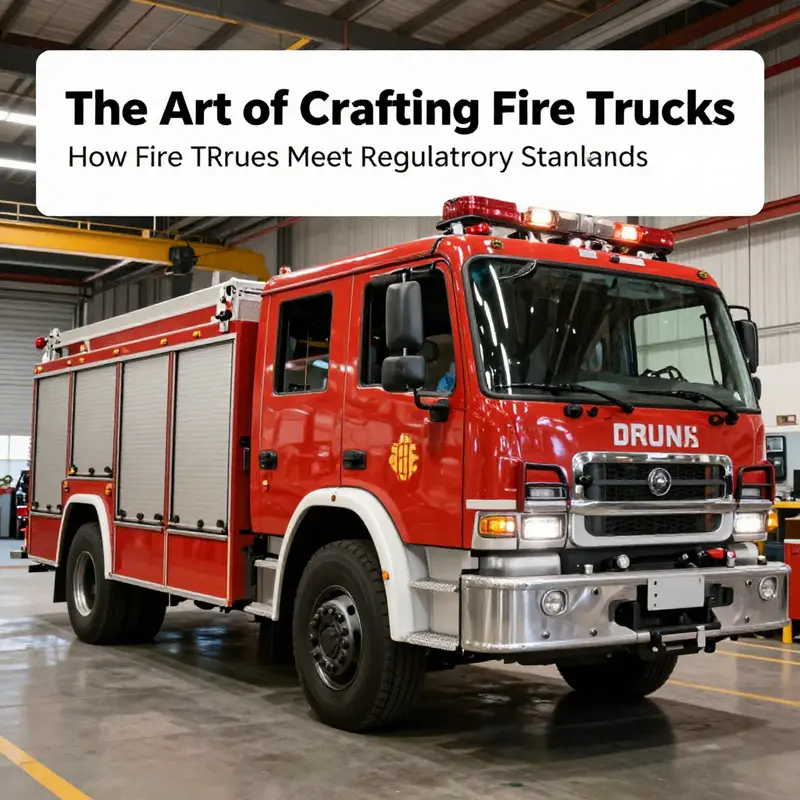
When a fire engine rolls out of a shop, its outward appearance tells only part of the story. The true backbone is invisible, woven through every system, connector, and control. It is a carefully engineered assurance that the apparatus will perform reliably when seconds count. This assurance comes from a dense web of safety, compliance, and certification standards that govern design, testing, and operation. In practice, standards function as a contract between manufacturers, fire departments, and the communities they serve. They codify expectations for strength, visibility, control, and resilience, ensuring that a vehicle built for urban streets and distant hills behaves predictably in the most demanding moments of a fire or rescue. The result is not a one-size-fits-all product but a highly disciplined convergence of chassis robustness, firefighting systems, and protective features that can be customized to local realities while still meeting universal benchmarks for safety and performance.
Central to this regulatory orchestra is the standard for automotive fire apparatus, a comprehensive framework that outlines how a fire truck should be structured and how its core subsystems must function under stress. The standard speaks to structural integrity, which keeps the weight of a water tank and the machinery of hoses, pumps, and ladders securely supported during rapid acceleration, emergency maneuvers, and even rough terrain. It defines the reliability demands of fire suppression systems, ensuring that water, foam, or other extinguishing agents can be delivered with precise control and at the necessary pressure. It also specifies visibility and signaling requirements—coordinated lighting, sirens, and reflective markings—so that responders and bystanders can see and understand the vehicle’s intent in complex emergency scenes. In short, this standard translates field experience into a blueprint that guides engineering choices from the factory floor to deployment on a quiet suburban street at dawn or a windy high-rise district after dark.
The practical implications of such standards extend to every component a department relies on. High-pressure pumps, for example, must deliver reliable performance while integrating seamlessly with water and foam tanks. The standard sets expectations not just for maximum capability, but for consistency of operation across a wide range of temperatures, elevations, and pressures. It also governs the compatibility of pre-connected attack lines and monitors, which are critical for rapid, pre-planned responses to common fire scenarios. When a crew arrives at a structure fire, the truck’s on-board tools—nozzles, monitors, and high-intensity lighting—must perform in unison. The standards ensure these tools are not merely capable in isolation but integrated, validated through testing that simulates real-world conditions from extreme heat to driving rain. The result is a vehicle whose subsystems are proven to work as a cohesive whole, a necessity when every decision can tip the balance between containment and escalation.
Beyond the core automotive framework, the standards landscape expands to acknowledge evolving operational needs and environmental responsibilities. Urban and rural teams alike benefit from clear guidance on emission controls and fuel efficiency, particularly as municipalities pursue cleaner air and quieter streets. The standards thus accommodate a spectrum of propulsion options, including traditional combustion engines and electric variants. In electric configurations, the emphasis shifts toward battery safety, electrical reliability, and thermal management. Battery enclosures must resist mechanical impact, withstand thermal events, and maintain performance in adverse weather. Charging systems and high-voltage safety protocols become integral parts of the design envelope. These considerations do not erode capability; they extend it by enabling departments to deploy quiet, zero-emission solutions in dense urban cores while sustaining the same level of firefighting readiness. In all cases, the underlying requirement remains unwavering: even as technology advances, the vehicle must meet or exceed the tested standards that judges, inspectors, and end users trust.
Certification bodies play a pivotal role in translating standards into verifiable reality. They conduct rigorous examinations that go beyond a manufacturer’s own tests. Independent testing labs assess structural joints, pump performance, ladder stability, and wind resistance on elevated platforms. They review documentation for traceability—materials, fabrication processes, and quality-control measures—so that every vehicle carries a documented lineage of safety and reliability. This process also captures the functional aspects that matter most to responders: the ability to maintain stable platforms during hoisting, the predictability of monitor streams under varying nozzle angles, and the resilience of emergency lighting during a blackout or power surge. In every case, certification serves as an external verification that a truck that looks sound on the surface has earned its reputational trust through transparent, repeatable testing and clear compliance with established performance criteria.
The standards ecosystem also shapes how manufacturers approach customization. Fire departments operate in diverse landscapes—dense city blocks, winding rural routes, industrial sites with unique risks—and the fleet must reflect those realities without compromising safety. Customization workflows are driven by the same regulatory logic: every add-on, from interior tool storage to auxiliary lighting and specialized rescue equipment, must preserve the vehicle’s certified safety margins and not undermine critical systems. The result is a dynamic balance between tailored capability and universal protection. Departments benefit from having a clear framework that explains which adaptations are permissible and how they will be validated during testing and certification. This framework accelerates deployment while preserving the rigorous safeguards that standards demand.
The chapter’s focus on safety, compliance, and certification would be incomplete without acknowledging the broader regulatory environment that shapes how fire trucks are designed and operated. National and international bodies establish core expectations that transcend borders and time zones. These include regulatory oversight for vehicle licensing and roadworthiness, environmental rules related to emissions and fuel handling, and occupational safety standards that protect crew members during routine maintenance and in the heat of a call. The interaction of these layers matters because a fire truck must not only reach the fire ground but do so with predictable behavior throughout the vehicle’s life cycle. The chassis, the water and foam systems, the aerial ladder, and the on-board safety measures all ride within a framework that makes reliability a visible, measurable property rather than a hoped-for outcome.
To stakeholders, this regulatory architecture offers more than assurance; it delivers operational clarity. Departments know what to demand in specifications, and manufacturers know how to design with those expectations in mind. The pump capacity and tank volume figures mentioned in industry practice—often cited as ranges such as 1,000–2,000 gallons per minute and 1,000–4,000+ gallons for water storage—are not arbitrary. They represent performance envelopes validated by standards and test protocols. They guide decisions about chassis selection, hydraulic systems, and the layout of compartments for hoses and tools. They influence decisions about symmetry and balance, critical for aerial platforms that extend high above the ground. And they inform maintenance schedules, service intervals, and spare-parts planning so that a department can keep its fleet mission-ready with minimal downtime.
The story of safety and compliance culminates in the ongoing pursuit of improvement. Standards bodies periodically revise guidelines to reflect new data, new materials, and new operational realities. Engineering teams respond with iterative design changes, enhanced testing regimes, and updated documentation. In this ongoing loop, the fire truck becomes not just a product but a continuously evolving platform that embodies lessons learned from real emergencies and simulations alike. For the professionals who service, drive, and operate these machines, the resulting trust is practical: they know the vehicle they rely on has withstood the most stringent checks and continues to meet a living standard of performance under pressure.
For those seeking more formal grounding, the NFPA 1901 standard—often cited as the benchmark for automotive fire apparatus—serves as a cornerstone. It articulates expectations for how a modern fire truck should perform when called upon to defend life and property. The document details criteria that touch every facet of design, testing, and operation, from structural integrity to the precision of attack equipment. While the standard provides a universal language, it also leaves room for local adaptation within a verified safety framework. In practice, departments rely on this balance to procure apparatus that respects regional needs while maintaining the highest levels of safety and reliability. The standard, together with ISO principles and regional regulatory guidelines, creates a harmonized ecosystem that supports rapid, confident decision-making at the scene of a blaze or a rescue operation.
As the firefighting mission evolves with urban densification, climate-impacted hazards, and new rescue challenges, the standards landscape will continue to adapt. Electric fire trucks, for instance, bring forward new certification considerations for battery safety, electrical isolation, and safe hot- ground handling during operations. The core idea remains steadfast: rigorous testing, transparent documentation, and independent validation ensure that every vehicle not only meets current requirements but is prepared for the unknowns of tomorrow. Practitioners from fleet management to frontline crews rely on this reliable foundation to deliver swift, decisive action when every second matters.
In sum, safety, compliance, and certification are not remits confined to a paperwork trail. They are the practical discipline that transforms a collection of parts into a trusted instrument for public protection. They define how a chassis carries its load, how water and foam flow under pressure, how ladders extend with authority, and how the vehicle withstands the worst weather and the fiercest winds while perched hundreds of feet above the ground. They validate the idea that a fire truck, at its core, is a carefully engineered tool—only as strong as the standards that govern its birth, its testing, and its life on the street. For readers charting the path from concept to deployment, the takeaway is clear: the most reliable fire trucks are the ones whose design, build, and validation are tightly governed by a rigorous, living framework that translates field experience into enduring safety and readiness.
External resource for further reading: NFPA 1901: Standard for Automotive Fire Apparatus. https://www.nfpa.org/codes-and-standards/all-codes-and-standards/list-of-codes-and-standards/detail?code=1901
Final thoughts
The manufacturing of fire trucks is a multifaceted process that involves rigorous engineering, compliance with stringent safety standards, and customization for specific operational needs. Understanding how fire trucks are crafted—from chassis selection to the integration of life-saving technologies and ensuring compliance—highlights the dedication present within the industry. This knowledge not only reinforces the importance of these vehicles in emergency response but also emphasizes the critical role of innovation and safety in firefighting operations.

