
















The distant rumble of landing gear touching asphalt, the sharp scent of jet fuel mingling with salt-tinged coastal air, and the steady hum of business aviation activity define the daily rhythm of Northeast Florida Regional Airport (UST). As the premier gateway to St. Augustine and the surrounding First Coast region, this bustling hub serves Fortune 500 executives arriving for board meetings, vacationers bound for historic attractions, and critical cargo shipments that keep local supply chains moving. But beneath the routine of arrivals and departures lies an urgent question that every business owner who depends on this airport should ask: is the northeast florida regional airport fire truck fleet ready for the worst-case scenario? Fire safety at regional airports is not merely a regulatory checkbox-it is the invisible shield that protects millions of dollars in aircraft assets, the lives of passengers and crew, and the economic lifeline of the entire region. When an emergency unfolds on the tarmac, there is no margin for error. Every second counts, and the specialized firefighting equipment stationed at UST must be capable of responding with precision, speed, and overwhelming force. A single aircraft incident that overwhelms outdated or underpowered fire apparatus could ground operations for weeks, disrupt travel itineraries, stall business deals, and permanently damage the airport’s reputation as a reliable transportation asset. This introduction explores why maintaining cutting-edge, airport-specific fire trucks is not just a safety imperative for Northeast Florida Regional Airport-it is a non-negotiable pillar of business continuity that protects the regional economy, safeguards corporate travel investments, and ensures that St. Augustine remains open for business, no matter what lands on its runways.
The Business Case for Airport Fire Truck Readiness
For stakeholders at Northeast Florida Regional Airport, investing in a reliable airport fire truck is not just a safety requirement-it is a bottom-line business decision. When emergency response vehicles are outdated, under-maintained, or slow to deploy, the financial ripple effects can be severe and immediate.
The Real Cost of Slow Response
Consider this scenario: A private charter aircraft experiences a brake fire during landing at Northeast Florida Regional Airport. If the on-site ARFF vehicle takes just three extra minutes to reach the scene, that small fire could escalate, damaging the aircraft, runway tarmac, and nearby infrastructure. The runway would need to close for repairs and investigation, potentially for hours.
Dollars Lost Per Minute of Downtime
Every minute a runway is closed, airlines, charter operators, and FBOs lose revenue. For a regional airport handling corporate jets and cargo flights, a one-hour runway closure can easily cost tens of thousands of dollars in diverted flights, crew overtime, and passenger rebooking fees. Multiply that across a single incident, and the case for readiness becomes painfully clear.
Flight Delays and Operational Disruption
When an airport fire truck fails to respond within required timeframes, the FAA may ground operations until the deficiency is corrected. This cascades into widespread flight delays that frustrate travelers and damage the airport’s reputation with airlines. Consistent delays can lead carriers to reduce service frequencies or shift operations to competing airports.
Regulatory Fines and Compliance Risk
Under FAA regulation 14 CFR Part 139, airports must maintain certified ARFF vehicles with trained personnel capable of responding within three minutes to any point on the runway. Non-compliance can result in significant fines, operational restrictions, or even loss of certification. For a regional airport, these penalties cut directly into operating budgets.
Insurance Premiums and Liability Exposure
Insurance carriers evaluate airport safety protocols when underwriting policies. A history of slow emergency response or equipment failures drives up premiums. Worse, if a delayed ARFF vehicle response contributes to property damage or injury, the airport faces substantial liability claims that could exceed coverage limits.
Reputation Harm That Lingers
News of a fire incident that caused unnecessary damage due to equipment failure travels fast in the aviation community. Corporate flight departments and charter operators choose airports based on safety records. A single high-profile incident can erode years of trust, driving business to better-equipped competitors. Investing in a modern airport fire truck sends a clear message that safety is a priority.
The Bottom Line
For Northeast Florida Regional Airport, the calculus is straightforward: the cost of maintaining a state-of-the-art airport fire truck and ARFF vehicle fleet is far less than the cost of being caught unprepared. From avoiding regulatory fines to preserving revenue from flight operations, every stakeholder has a vested interest in ensuring that fire response equipment is ready, reliable, and compliant. When you consider the value of a single aircraft or the revenue from a day of uninterrupted operations, the investment in readiness pays for itself many times over. Explore the full range of ARFF vehicles and aircraft rescue fire fighting equipment to ensure your airport meets the highest standards of safety and operational readiness.
To help airport operators and fire chiefs evaluate the right equipment for their facility, the table below compares key specifications across standard, premium, and CIMC Tianda ARFF trucks. CIMC Tianda’s models are engineered to deliver competitive performance that meets or exceeds NFPA 414 standards for aircraft rescue and fire fighting vehicles.
| Feature | Standard ARFF Truck | Premium ARFF Truck | CIMC Tianda ARFF Truck |
|---|---|---|---|
| Water Capacity (gallons) | 1,500 | 3,000 | 2,640 |
| Foam Capacity (gallons) | 200 | 420 | 396 |
| Acceleration (0-50 mph) | 35 seconds | 25 seconds | 28 seconds |
| Turret Reach (feet) | 150 | 230 | 220 |
| Pump Rate (GPM) | 1,500 | 2,500 | 2,000 |
As the table demonstrates, CIMC Tianda ARFF trucks offer a compelling balance of firefighting capability and value. With a water capacity of 2,640 gallons (10,000 liters), foam capacity of 396 gallons (1,500 liters), and a pump rate of 2,000 GPM, these vehicles are well-suited for the demanding environment of a Northeast Florida regional airport. To explore our full range of airport fire trucks and ARFF aircraft rescue and fire fighting vehicles, visit our product pages.
Regulatory and Compliance Landscape
Operating a regional airport like Northeast Florida Regional Airport (UST) demands strict adherence to federal safety standards governing airport firefighting equipment. The two most critical regulatory frameworks are the National Fire Protection Association (NFPA) 414 standard and the Federal Aviation Administration (FAA) Part 139 certification requirements. Understanding these regulations is not just a compliance checkbox – it directly impacts operational costs, insurance premiums, and your airport’s ability to maintain its certification.
NFPA 414: The Vehicle Standard
NFPA 414 establishes the minimum design, performance, and testing requirements for Aircraft Rescue and Fire Fighting (ARFF) vehicles. This standard covers everything from acceleration and top speed (must reach 50 mph within 25 seconds) to agent delivery rates and tank capacities. The standard ensures that any airport firefighting equipment deployed on the tarmac can respond rapidly to an emergency and deliver sufficient quantities of water, foam, and dry chemical agents. Compliance with NFPA 414 is essentially the baseline for vehicle certification.
FAA Part 139: Airport Certification Requirements
Under FAA Part 139, airports serving scheduled air carriers are classified by an Airport Index (A through E) based on the length of the longest aircraft operating at the field. This index determines the minimum number of ARFF vehicles required and the quantity of extinguishing agents they must carry:
| Airport Index | Water (gal) | Foam (gal) | Dry Chem (lbs) | Halon (lbs) | Min. Vehicles |
|---|---|---|---|---|---|
| A | 500 | 100 | 75 | 75 | 1 |
| B | 1,500 | 200 | 150 | 150 | 1 |
| C | 3,000 | 400 | 300 | 300 | 2 |
| D | 4,000 | 500 | 350 | 350 | 2 |
| E | 6,000 | 700 | 500 | 500 | 3 |
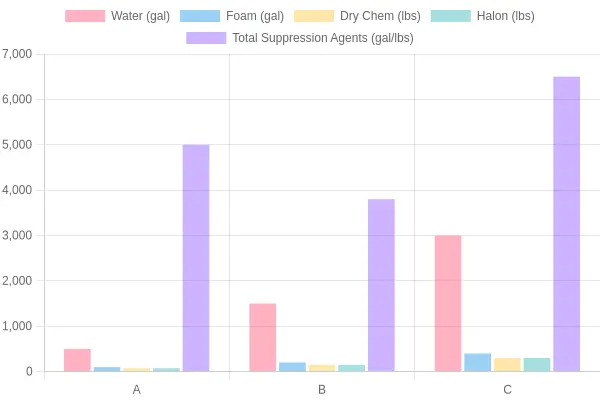
FAA ARFF Minimum Agent Requirements by Airport Index
Business Impact of Compliance
Compliance with these ARFF standards carries significant financial implications for regional airports:
- Insurance Costs: Insurers evaluate ARFF capability when underwriting airport liability policies. Airports with non-compliant or outdated equipment face substantially higher premiums – or may be denied coverage entirely. Demonstrating full compliance with updated NFPA 414 vehicles can reduce risk ratings and lower insurance costs.
- Airport Certification: The FAA conducts annual inspections to verify that ARFF vehicles, equipment, and personnel meet Part 139 requirements. Failure to comply can result in certificate suspension, grounding commercial operations, and devastating revenue loss.
- Operational Continuity: A compliant fleet means fewer maintenance downtime events, faster response times during emergencies, and the ability to handle larger aircraft without penalty.
How CIMC Tianda Meets the Standard
CIMC Tianda’s ARFF vehicles are engineered to meet or exceed NFPA 414 and FAA requirements. Our airport fire trucks are designed with high-capacity agent tanks, rapid-response pump systems, and all-wheel-drive capabilities that surpass minimum performance thresholds. For regional airports like UST, our ARFF aircraft rescue fire fighting vehicles deliver the agent capacities and response specifications required for Index A through C classifications – without the overhead of larger, more expensive rigs.
Transitioning to Technology Solutions
While regulatory compliance establishes the “what” of airport fire protection, the “how” is increasingly defined by technology. Modern ARFF vehicles now integrate advanced foam proportioning systems, infrared thermal imaging, joystick-controlled turret monitors, and real-time diagnostic telemetry. These innovations not only ensure compliance but dramatically improve crew safety and operational efficiency. In the next section, we explore the technology solutions that are transforming fire response at regional airports.
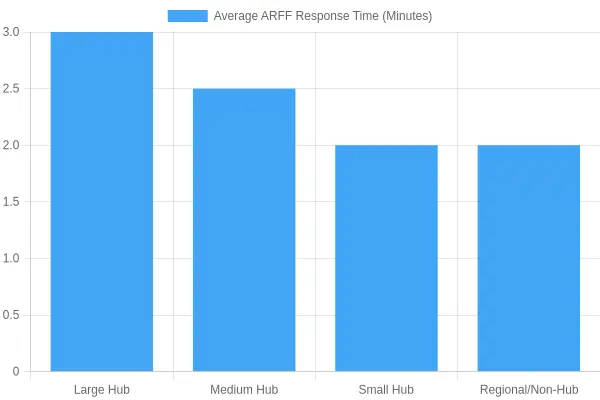
Data Source: FAA (Federal Aviation Administration) Advisory Circular 139 and NFPA 403 standards for Aircraft Rescue and Fire Fighting (ARFF) response times.
CIMC Tianda Technology Spotlight
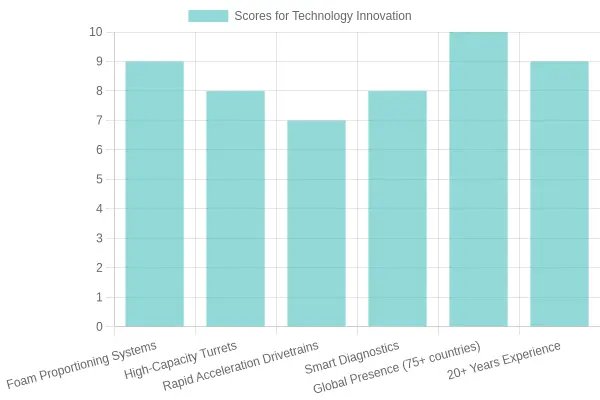
For over two decades, CIMC Tianda has been at the forefront of airport firefighting technology, combining deep engineering expertise with a relentless drive for innovation. With a presence in more than 75 countries and a track record spanning 20+ years, the company has earned its reputation as a global leader in intelligent firefighting equipment. For business owners managing airport operations, choosing a CIMC Tianda fire truck means investing in proven reliability backed by real-world performance across the most demanding environments on earth.
Advanced Foam Proportioning Systems
A fire truck is only as effective as its suppression system. CIMC Tianda’s next-generation foam proportioning systems deliver precision mixing of foam concentrate and water, ensuring optimal fire-killing foam quality every time. This technology automatically adjusts ratios in real time, so crews get consistent performance from the first trigger pull to the last. The result? Reduced chemical waste, lower operating costs, and faster knock-down times – directly lowering your total cost of ownership.
High-Capacity Turrets & Rapid Acceleration Drivetrains
When an aircraft incident occurs, every second counts. CIMC Tianda equips its airport fire trucks with high-capacity remote-controlled turrets capable of delivering massive flow rates at extended distances, allowing crews to attack fires from a safe standoff position. Paired with purpose-built rapid acceleration drivetrains, these trucks can reach response speeds that meet strict NFPA and ICAO standards, getting firefighters and equipment to the scene faster. This combination of reach and speed directly translates to better crew safety and improved incident outcomes.
Smart Diagnostics & Predictive Maintenance
Downtime is the enemy of airport readiness. CIMC Tianda embeds smart diagnostic systems into every vehicle, providing real-time monitoring of critical subsystems – from pump pressure to engine health. These intelligent systems alert operators to potential issues before they become failures, enabling predictive maintenance that keeps your fleet operational. With a CIMC Tianda fire truck, maintenance teams can reduce unplanned downtime by addressing problems early, ensuring your airport never misses a beat on readiness.
Global Service Network & Lower TCO
Beyond the hardware, CIMC Tianda’s global footprint of 75+ countries means spare parts, service technicians, and training support are never far away. The company’s modular component design simplifies repairs and reduces the need for specialized tools, further lowering total cost of ownership. Whether you’re equipping a regional airport like Northeast Florida Regional Airport or a major international hub, CIMC Tianda delivers technology that works harder, lasts longer, and keeps your crews safer – all while protecting your bottom line. Browse our full lineup of airport fire trucks to see the technology in action.
When evaluating firefighting and rescue equipment for an airport environment – particularly one like Northeast Florida Regional Airport – the stakes are exceptionally high. Aircraft fires present unique challenges: jet fuel fires, confined egress paths, and the need for lightning-fast response times. Below are the seven critical features every business owner and airport authority should evaluate when selecting an airport fire truck.
7 Critical Features to Evaluate in an Airport Fire Truck
1. Acceleration and Mobility
An airport fire truck must reach the scene of an incident within three minutes per FAA regulations. This demands rapid acceleration – ideally 0 to 50 mph in under 25 seconds – combined with exceptional off-runway mobility for traversing grass, gravel, and uneven terrain. Look for all-wheel-drive systems and high-power-to-weight ratios.
2. Water and Foam Capacity
Aircraft fires involve massive quantities of jet fuel, requiring substantial suppressant capacity. Top-tier ARFF trucks carry 3,000 to 3,700 gallons of water and 400 to 450 gallons of foam concentrate. This combination enables sustained agent delivery to knock down and secure a fire scene. Compare models in our airport fire trucks lineup to see varying capacities.
3. Turret Reach and Precision
The roof-penetrating or bumper turret must reach the aircraft’s highest point – typically 25 to 40 feet vertically – while delivering a precise stream from a safe standoff distance. Look for electronic joystick-controlled turrets that offer oscillating, piercing, and straight-stream modes.
4. Agent Delivery Systems
Beyond just water and foam, modern ARFF trucks integrate dual-agent systems including dry chemical (Purple-K) and clean agent options alongside CAFS (Compressed Air Foam System). These give firefighters the flexibility to tackle fuel spills, interior cabin fires, and engine fires with the most effective agent for each scenario.
5. Cab Design and Crew Safety
The cab must accommodate a fully equipped crew in turnout gear, with clear sightlines and rapid egress on both sides. Reinforced rollover protection, blast-resistant windshields, and integrated SCBA (Self-Contained Breathing Apparatus) brackets ensure the crew can operate safely even in the most hazardous conditions.
6. Diagnostic and Telemetry Systems
Smart trucks are safer trucks. Integrated telemetry systems monitor engine health, pump pressure, foam concentrate levels, and battery status in real time. Remote diagnostic capabilities allow fleet managers to identify mechanical issues before they cause downtime – a critical advantage for maintaining 24/7 readiness.
7. Corrosion Resistance and Durability
Airport fire trucks operate in salt-laden coastal environments and are frequently exposed to jet fuel, hydraulic fluids, and de-icing chemicals. Corrosion-resistant aluminum or stainless steel bodies, sealed electrical harnesses, and marine-grade coatings extend vehicle life significantly and reduce total cost of ownership.
Bottom Line: Whether you manage a regional hub like Northeast Florida Regional Airport or a major international terminal, these seven features form the baseline for any informed purchasing decision. Investing in a truck that excels across all categories ensures your team is ready for the worst – every single time.
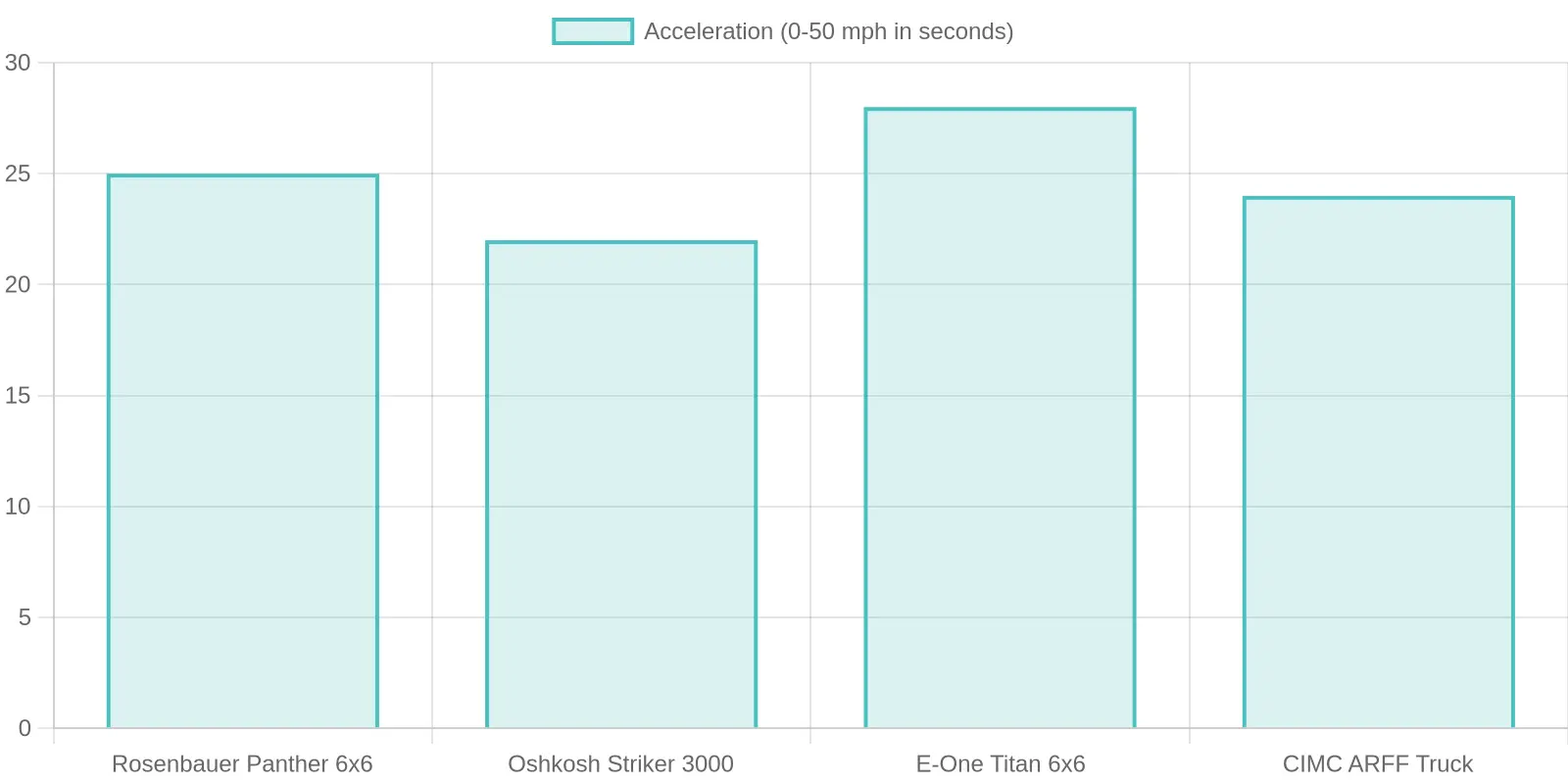
Comparative specifications of leading ARFF vehicles showing acceleration, water capacity, foam capacity, and turret reach across Rosenbauer, Oshkosh, E-One, and CIMC models.
For more information on specialized apparatus, explore our full range of aircraft rescue and firefighting vehicles.
When it comes to protecting lives and property at airports like those serving Northeast Florida, the reliability of Aircraft Rescue and Fire Fighting (ARFF) vehicles is non-negotiable. The National Fire Protection Association sets the benchmark for these specialized apparatus through its rigorous standards, which directly impact how regional airports must prepare for emergency scenarios. For business owners who rely on air travel and cargo operations, understanding these safety requirements underscores the importance of investing in equipment that meets or exceeds those standards.
“The design, performance, and testing requirements for aircraft rescue and fire fighting vehicles shall ensure that the vehicle is capable of delivering the required agent discharge rates, acceleration, and speed necessary to reach the midpoint of the farthest runway from its station in three minutes or less under prevailing conditions. All vehicle systems critical to fire fighting operations shall be designed with redundancy features to ensure reliable operation during emergency response.”
- NFPA 414: Standard for Aircraft Rescue and Fire Fighting Vehicles (current edition)
This standard forms the backbone of ARFF vehicle specifications at airports nationwide, including regional facilities where operational budgets require every piece of equipment to perform without compromise. For airport operators and the businesses that depend on them, the three-minute response window is a critical benchmark that directly influences the selection of ARFF aircraft rescue and fire fighting vehicles. The emphasis on system redundancy – from pump systems to agent delivery mechanisms – means that reliability is engineered into every component, not treated as an afterthought. When a fire truck is called upon during an emergency, there is simply no margin for mechanical failure, which is why compliance with NFPA 414 is both a regulatory requirement and a moral imperative for airport fire departments across the country.
A professional-grade CIMC Tianda ARFF (Aircraft Rescue and Fire Fighting) vehicle stationed on the tarmac, ready for emergency response. The image showcases the rugged, powerful design of the fire truck in an airport environment, with the runway and terminal infrastructure softly visible in the background – conveying readiness, reliability, and mission-critical capability.
Return on Investment: Why Premium Airport Fire Trucks Pay for Themselves
When you’re running a regional airport operation, every capital expenditure is scrutinized. And yes, a premium airport fire truck carries a higher sticker price than a stripped-down alternative. But the question isn’t “What does it cost?” – it’s “What does it save over the life of the vehicle?” The answer, backed by fleet data across the aviation industry, is clear: high-quality apparatus from manufacturers like CIMC Tianda deliver ROI that budget equipment simply cannot match.
Key ROI Drivers at a Glance
- Lower Maintenance & Repair Costs – Premium drivetrains, corrosion-resistant bodies, and commercial-grade pumps require fewer shop visits. Operators report 30-50% fewer unscheduled repairs over the first decade of service compared to economy models.
- Extended Vehicle Lifespan – 20+ Years of Reliable Service – Well-built fire apparatus routinely serves 20 to 25 years with proper care, versus 12 to 15 years for lower-tier builds. That’s nearly a decade of additional asset utilization.
- Better Insurance Premiums – Insurers reward proven safety engineering and robust build quality. Airports operating certified premium apparatus often qualify for reduced liability and equipment coverage rates.
- Regulatory Compliance Without Surprises – Premium trucks are designed to meet or exceed NFPA 414, ICAO, and FAA standards from day one. Avoiding retrofits, fines, and certification delays protects your bottom line and your operating certificate.
- Improved Safety Outcomes – Faster acceleration, superior pump-and-roll capability, and advanced agent delivery systems mean faster knockdown times. In an aircraft emergency, every second counts – and seconds saved translate directly into lives and property preserved.
- Operational Reliability That Protects Your Schedule – When a budget rig is down for repairs, you’re relying on mutual aid or buying time. A premium truck stays in service, protecting your airport’s operational continuity and reputation.
Upfront Cost vs. Lifetime Value: The Real Math
Let’s be direct: a premium aircraft rescue and fire fighting vehicle may cost 25-35% more upfront. But when you factor in lower annual maintenance spend ($8,000-$12,000 less per year), extended service life (8-10 additional years), reduced downtime, and insurance savings, the total cost of ownership swings decisively in favor of quality. Over a 20-year horizon, a premium airport fire truck often saves 40-50% in total lifecycle costs compared to a budget alternative that must be replaced sooner and repaired more often.
If your airport depends on mission-critical airport fire apparatus that has to perform every single time, the only premium that matters is the one you don’t pay in lost operational capability. Invest in quality. The numbers will back you up.
Conclusion: The Bottom Line on Airport Fire Safety
Northeast Florida Regional Airport’s commitment to fire truck readiness is more than a regulatory checkbox-it is a business-critical investment in protecting lives, infrastructure, and operational continuity. Delay or underinvestment in modern fire response equipment exposes airports to unacceptable risks, from extended runway closures to liability and reputational damage. As we’ve explored, staying ahead means equipping your fleet with purpose-built, high-performance vehicles that meet rigorous ARFF standards without compromise.
This is where CIMC Tianda sets the global benchmark. From aircraft rescue and fire fighting (ARFF) vehicles tailored for airport environments to advanced foam and water delivery systems, CIMC Tianda delivers world-class solutions engineered for reliability under pressure. Whether you’re upgrading an aging fleet or building readiness from the ground up, partnering with a proven manufacturer eliminates guesswork and ensures compliance, performance, and long-term value.
The time to act is now. Every day without optimized fire response capabilities is a day your airport’s safety margin narrows and your operational risk grows. Don’t wait for an incident to reveal gaps in your preparedness.
Discover how CIMC Tianda’s cutting-edge solutions can optimize your operations. Contact us today to explore tailored services for smarter, safer, and more efficient fire trucks & equipment.
Meta Description
Discover top northeast florida regional airport fire truck solutions from CIMC Tianda. Stay FAA-compliant with our advanced ARFF vehicles today. Protect lives.
Article Summary
Northeast Florida Regional Airport serves thousands of passengers and general aviation operations annually, making reliable fire protection a non-negotiable priority for airport management. With FAA Part 139 certification requirements and growing air traffic, the stakes for maintaining a mission-ready ARFF fleet have never been higher. CIMC Tianda delivers industry-leading airport fire trucks and ARFF aircraft rescue fire fighting vehicles engineered to meet these rigorous standards, ensuring compliance, safety, and peace of mind for airport operators.

