
















Fire trucks serve a critical role in emergency response, but their large size and mass provoke questions about their interactions with civilian vehicles. Can those mighty giants ram cars? While not a typical aspect of firefighting operations, situations may arise where fire trucks need to push vehicles or obstacles to maintain safety on the roads. This article unpacks the complex relationship between fire trucks and vehicles, examining their operational functionality, the emergencies that may necessitate ramming, the rigorous safety protocols in place, the structural design of fire trucks for durability, and the public perception that shapes policy decisions around such actions.
The Heavy Hand of Urgency: Fire Trucks, Momentum, and the Line Between Necessity and Harm
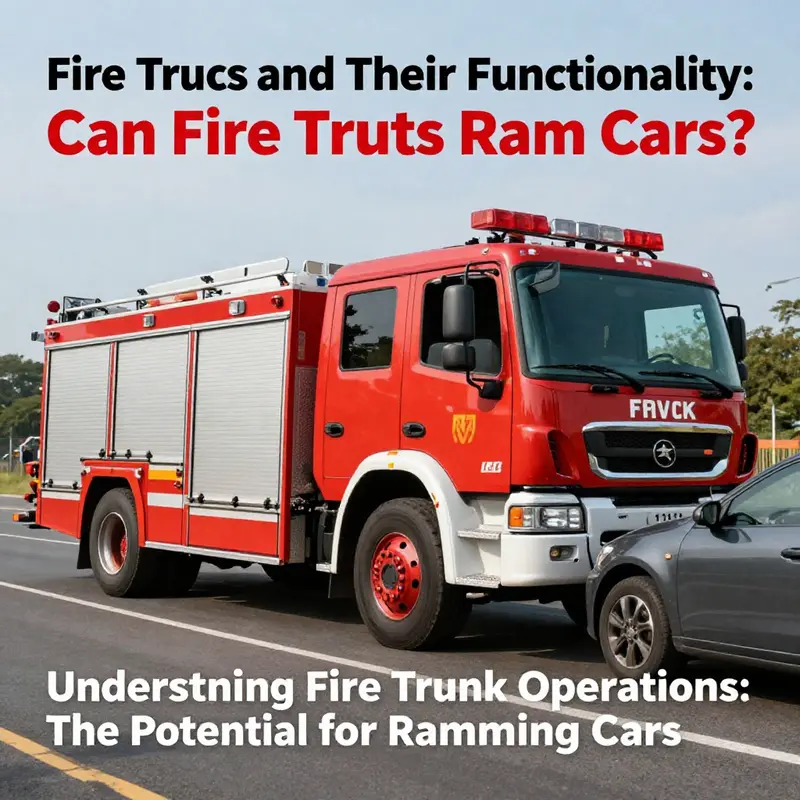
When a siren wails and lights flash, a fire truck becomes more than a vehicle; it is a mobile extension of a life saving mission. The central question about whether fire trucks ram cars is not a black and white one but a nuanced issue that blends urgency, physics, safety protocols, and public trust. This essay explores how responders balance the need to reach the scene quickly with the obligation to minimize harm to bystanders and other drivers.
The core physics is straightforward: a modern fire apparatus weighs tens of thousands of pounds. In congested urban streets, even carefully measured acceleration can produce momentum that matters if another vehicle cannot yield fast enough. The weight is an asset for stability and for moving obstacles, but it also raises the stakes when contact occurs.
Legally, emergency vehicles may claim a right of way when responding to calls. This emergency vehicle privilege allows faster navigation through intersections, but it does not grant a license to collide without reason. Operators are trained to balance speed with the duty to avoid unnecessary harm, and in most cases contact is framed as a last resort or a byproduct of unavoidable circumstances rather than a preplanned tactic.
Ethically the aim is to preserve life and protect responders. Departments emphasize rigorous training, spotters, clear signaling, and disciplined driving. The guiding principle is to minimize risk while accomplishing the mission. When contact does happen, it is treated as a serious event to be learned from and to prevent recurrence.
In practice, the drive to create a clear path may require displacing obstacles rather than slamming into them. Some incidents rely on additional equipment or coordinated strategies to reduce the need for direct contact. There is a broader ecosystem of responder mobility, designed to preserve access without exposing the public to harm.
The conclusion is clear. Ram through is not a standard tactic and never the default. Emergency vehicle operation centers on situational awareness, controlled maneuvers, and protocols that aim to reduce harm while delivering lifesaving services. Public understanding matters, and transparency about the limits and safeguards helps sustain trust.
For readers seeking a standards oriented understanding, national guidelines on emergency vehicle operations provide context for how responders balance urgency and risk. They remind us that while a fire truck can interact with the environment, such actions are deliberate, constrained, and governed by professional ethics and safety designs. In short, urgency is tempered by training and technology, and the ultimate aim remains the protection of life.
External resource: https://www.nfpa.org
Between Protocol and Urgency: The Rare, Deliberate Use of Fire Trucks to Clear Obstacles
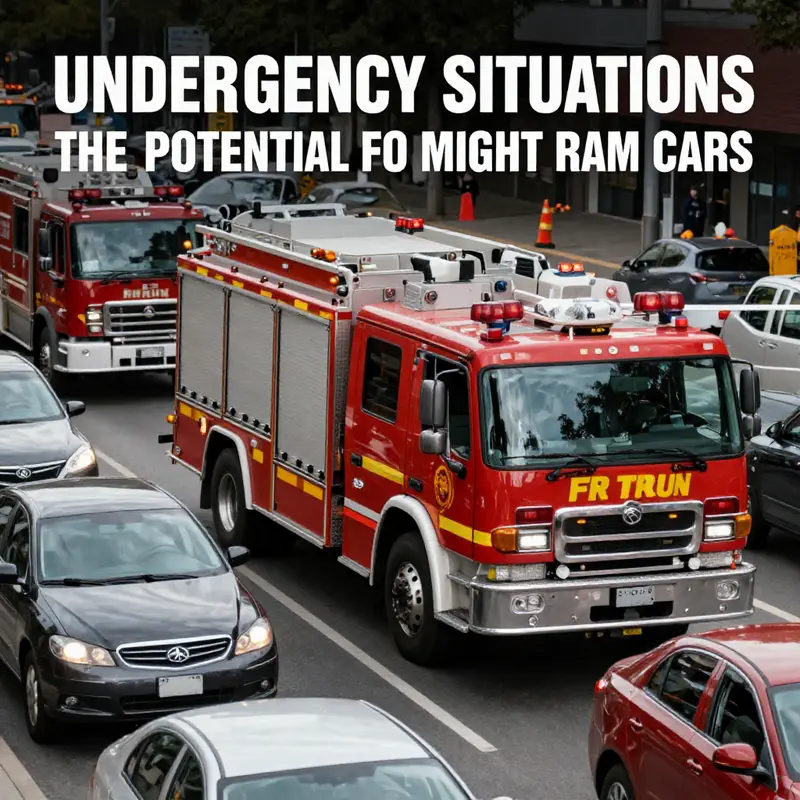
Emergency response operates within a strict framework of protocols, but it lives at the edge where life and property hang in the balance. In that edge, the fire apparatus known to the public as vehicles for rescue and relief can, on extremely rare occasions, become agents of extreme action. The phrase can evoke sensational imagery, yet the reality is steadier and more guarded: fire trucks are not built for assault, nor are they deployed to collide with civilians as a routine tactic. They are, first and foremost, mobile laboratories of safety, designed to deliver water, personnel, and equipment to scenes where time is the enemy. Their weight, their engineering, and their training give them formidable tools to overcome obstacles, but every use of force travels through a maze of laws, ethics, and safety calculus. In this sense, the idea of ramming a car is better understood as a last-resort decision, a convergence of necessity, legality, and measured risk under life-saving pressure, rather than a standard maneuver in firefighting. The public-facing image of a fire truck plowing through traffic is not a reflection of typical practice; it is a glimpse into a terrain where decision-making must sometimes pivot from routine to extraordinary with astonishing speed.
To grasp how such moments arise, it helps to start with the physics of the vehicle itself. Fire apparatus are heavy, tall, and stable, engineered to absorb bumps and keep traction while carrying thousands of pounds of water, ladders, hoses, and crew. They win their advantage not through speed alone but through deliberate momentum combined with driver skill and precisely choreographed teamwork. The momentum is not a weapon to be wielded indiscriminately; it is a resource to be managed. When a vehicle blocks a corridor of life-saving potential—whether in a congested city street, a collapsed roadway, or a perilous choke point—responders must decide quickly whether any alternative path exists that would allow them to advance without creating greater harm. In this sense, the act of “ramming” becomes a shorthand for a deliberative action that uses the truck’s mass and motion to displace or bypass an obstacle when every other choice would jeopardize lives.
The professional frame for this choice rests on a delicate balance of risk and responsibility. The National Fire Protection Association (NFPA) has documented that collisions between fire trucks and cars are exceedingly rare. When such incidents do occur, they trigger legal, ethical, and operational inquiries that can shape policy and training for years to come. The chapter of this ethics reads like a cautionary tale: the same forces that empower responders to reach victims must be guided by standards that protect not only those in imminent danger but bystanders who could be affected by the operation. Training programs rarely simulate the exact moment of a collision; instead, they emphasize decision-making under pressure, hazard assessment, and the art of exploiting every option while minimizing risk. Drivers practice rapid evaluation of alternatives, including re-routing, strategic gaps through traffic, and controlled contact only when it is demonstrably necessary to save lives or prevent a greater catastrophe.
In urban centers where roads teem with vehicles and pedestrians, the scenario becomes particularly acute. A car refuses to yield, a lane is blocked by a stalled vehicle, or debris from a previous incident creates a treacherous widening of the path forward. In those moments, suppressing the impulse to take a more forceful route requires a disciplined approach. There is a line between prudent pressure and reckless harm, and keeping that line discernible depends on a culture of continuous learning. Fire departments frequently rehearse high-risk scenarios to ensure drivers can maintain composure, apply the right amount of force, and recalibrate tactics as conditions evolve. The purpose of such drills is not to normalize collision as a tactic but to ensure responders recognize when the spectrum of choices has narrowed to a single, viable action that preserves the integrity of the mission and the safety of the public.
The legal and regulatory backdrop helps clarify what is permissible when lives are at stake. Laws give fire engines the right of way in emergency missions, requiring other motorists to yield proactively. However, consent to yield is a social contract that relies on clear expectations and real-time compliance. If drivers do not cooperate, responders must weigh the potential consequences of every possible maneuver, including the option of moving obstacles by contact. This is not a carte blanche; rather, it is a constrained choice calibrated to the seriousness of the moment. The decision to contact another vehicle is accompanied by considerations of vehicle dynamics, potential injury, and the possibility of secondary harm. The driver must assess the risk of delaying an evacuation, the probability of a more severe fire spread, and the likelihood that a halted path will remain blocked long enough to endanger lives. In the most extreme instances, the act of advancing through a stubborn impediment becomes not an aggressive act but an effort to prevent a catastrophe of equal or greater scale.
The equipment and personnel aspects of this practice matter as well. Fire trucks are not designed to be all-purpose battering rams; they are designed to be versatile platforms for rescue and suppression. The chassis, tires, suspension, and protective systems are built to absorb impacts while maintaining control, yet the goal remains to contact only what is necessary and to protect bystanders whenever feasible. When a decision to push or nudge an obstacle is made, a careful, team-driven assessment follows: the dispatcher confirms the route, the officer signals clearance to proceed, and the vehicle’s speed is adjusted to the minimum level required to achieve the objective. The maneuver is executed with a synchrony that reflects years of training, discipline, and reliance on a shared mental map of the scene. In such moments, a single misstep can cascade into an accident with cascading consequences, which is why the emphasis on safety and accountability grows ever stronger.
Within this context, the concept of a professional judgment call takes on lived meaning. The fire service’s understanding of right of way is not a license to violate, but a framework to expedite life-saving work when every second counts. The tension between following established rules and responding to a human emergency is not a contradiction; it is a test of whether the system as a whole can deliver lives back to their communities with the least harm possible. The decision to employ an extreme measure—to move a car out of the way—reflects a determination that the risk of inaction would be catastrophic, while the risk of contact can be mitigated through trained technique, speed management, and constant situational awareness. The ethical equation, then, is not about aggression but about proportionality: does the action align with the goal, does it minimize harm, and does it serve the public good in a moment of crisis?
To connect theory to practical assets, consider how these scenarios shape the broader landscape of emergency response equipment and strategy. While the arrows of policy are aimed at preventing harm, the reality of urban risk makes it necessary to contemplate the limits of non-contact tactics in the most extreme moments. In conversations about what counts as acceptable practice, many departments refer to the broader class of assets known as emergency rescue vehicles. These platforms are part of a coordinated family of responders whose function is to bring life-saving equipment, specialized personnel, and technical expertise to bear swiftly. For a sense of how these resources are organized and deployed, see the emergency rescue vehicle category as a reference for the kinds of assets that might be called upon in a congested or blocked corridor when time is of the essence. emergency rescue vehicle
As this discussion unfolds, it is crucial to acknowledge the human element at the heart of every decision. Firefighters bring not only training and strength but a sense of responsibility to the public who depend on them. A vehicle’s mass can be a tool, but it can also become a risk that must be managed with care. The operator’s situational awareness, the crew’s communication, and the team’s ability to anticipate bystanders’ reactions all influence the outcome. A split second can determine whether a bystander is spared harm or whether a rescue is completed with the minimum collateral damage. The public—often arriving after the fact—will judge outcomes in terms of lives saved, homes protected, and the integrity of the incident command system. In those judgments, the rare act of moving through an obstacle by contact is weighed against the broader obligation to maintain trust, demonstrate accountability, and adhere to the highest standards of safety.
In closing, the idea that fire trucks might ram cars is not a simple assertion about power or force. It is a nuanced recognition that life-saving operations require a spectrum of responses, one that sometimes brushes against the edge of permissible physical action. It is a reminder that the equipment and personnel involved in firefighting are trained to balance speed with safety, and urgency with restraint. The practice remains rare, carefully regulated, and deeply contextual. It stands as a testament to the complexity of protecting communities under pressure, where every choice is a trade-off among competing risks and where protocol must adapt, moment by moment, to the unique choreography of each emergency scene. For practitioners, researchers, and citizens alike, the conversation continues as protocols evolve, training deepens, and the ethical boundaries of emergency action are clarified in policy, practice, and ongoing professional reflection.
Further reading: NFPA discussions on when fire trucks might ram cars provide a professional context for these difficult decisions. See https://www.nfpa.org/News-and-Research/News/2023/February/When-fire-trucks-might-ram-cars for more on the topic.
null
null
Fortress on Wheels: The Design and Durability Behind Fire Trucks Built to Push Through Barriers
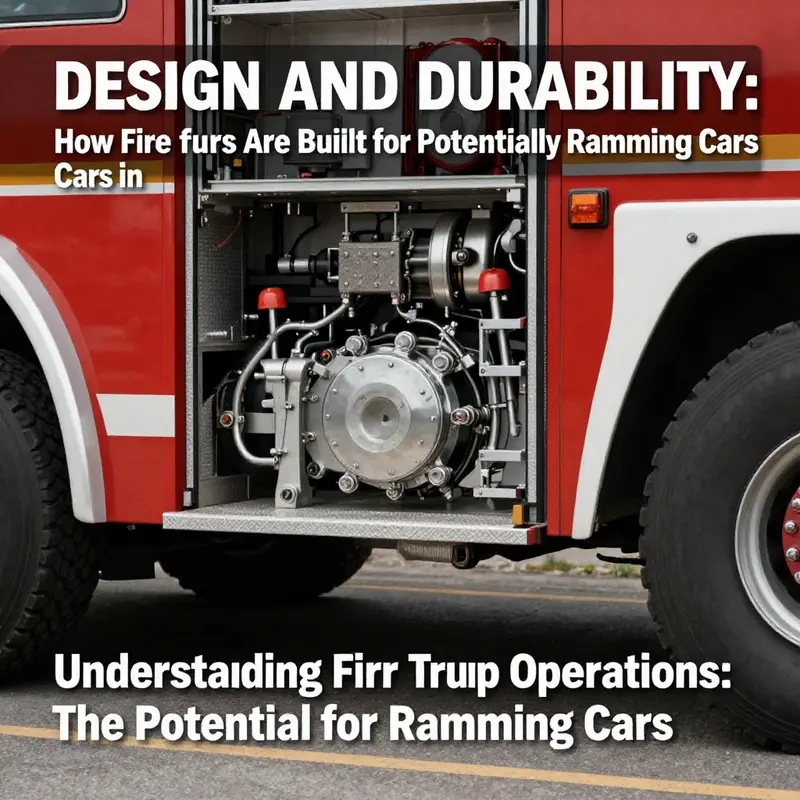
When people ask whether fire trucks can ram cars, the response isn’t a simple yes or no. These vehicles are first and foremost mobile tools for firefighting, rescue, and the protection of life and property. Their mass and momentum are real, and in rare, carefully controlled emergencies they may be used to create a path through obstacles, clear debris, or gain controlled access where conventional maneuvering would fail. Yet ramming is not a standard tactic, nor is it a design aim. Fire apparatus are engineered to maximize reliability, safety, and resilience in the face of unpredictable hazards. The very idea of ramming a barrier sits at the intersection of physics, safety engineering, and disciplined command decisions. It requires a chassis that can absorb energy, a front end that can distribute it, and a vehicle system that can keep functioning after contact with another object. Understanding how these machines are built, and why certain design choices are made, illuminates why a fire truck can, in extremis, push through or displace obstacles while continuing to perform its essential duties.
Central to this discussion is the principle of crashworthiness. The front end of a fire apparatus is not a blunt instrument; it is a carefully contoured mass with an emphasis on energy management. A robust, sloped bumper and reinforced chassis are designed not to produce maximum crushing force but to absorb and distribute impact energy in a way that reduces the likelihood of catastrophic damage. This energy management matters for the crew inside as well as for the vehicle’s ability to continue mission-critical functions. A collision can happen at various angles and speeds, especially in congested urban environments, where a truck may need to clear a narrow corridor, push aside a stalled vehicle, or create enough space to extend equipment and operate pumps. The aim is to minimize the severity of any contact while preserving the truck’s capability to respond to the incident.
The engineering philosophy extends beyond the bumper. Fire apparatus are built with high-strength steel and reinforced frames that provide a resilient backbone for the entire vehicle. The rails, cross-members, and major welds must withstand repeated cycles of stress as the truck negotiates uneven pavement, potholes, curbs, and the occasional misjudgment in a tight turn. In addition, critical components—such as the engine, hydraulic systems, and water tanks—are positioned and protected to endure shocks and remain serviceable after an impact. Structural barriers, armor-like plating, or protective shielding around vital systems help prevent collateral damage that could render the truck temporarily out of service. The logic is simple: when a team is en route to an emergency, the integrity of the apparatus cannot be taken for granted. If the vehicle fails mid-response, the consequences extend far beyond one incident and can jeopardize every member of the crew.
This emphasis on durability is not cosmetic. It is practical engineering that enables life-saving work under demanding conditions. The front-end geometry, for instance, is designed to withstand frontal contact while avoiding unexpected propulsion of the truck in a way that could injure nearby bystanders or firefighters. A well-designed crash path channels energy away from vulnerable components and toward structural members built to handle the load. The result is a chassis that remains stable enough to brake, steer, and maneuver after a minor collision, reducing the chance that a crash will escalate into a loss of control or a complete systems failure.
To support this durability, manufacturers in the fire-apparatus market incorporate a range of design features that collectively raise the bar for performance under stress. Instead of treating the truck as a single monolithic unit, designers adopt a holistic view of the vehicle’s resilience. The engine area is framed and shielded to resist intrusion; the transmission and hydraulic pump assemblies are mounted with dampers and guards to absorb vibrations and absorb impact energy. The water tanks, which are heavy and essential for firefighting operations, are housed in reinforced compartments with secondary containment and protective skids to resist puncture and rupture. Tires and suspensions are chosen for both load bearing and reliability in rough conditions, with suspension components tuned to maintain a stable platform even when the vehicle rolls over uneven surfaces during aggressive driving maneuvers. The braking system is upgraded to cope with high-speed decelerations and the stop-and-go nature of emergency response, ensuring that an incident-driven acceleration does not translate into a loss of control during a critical moment.
The question of durability also extends to how the truck behaves when it makes contact with other objects. Consider debris, immobilized vehicles, or barricades that block a path. In such scenarios, the goal is not to maximize damage but to minimize risk while preserving function. A crash- energy management approach reduces the peak forces transmitted to the crew and the vehicle’s essential systems. The front structure, with its protective layers and energy-absorbing zones, is designed to surrender a portion of the impact while still enabling the truck to roll forward, re-establish a lane, and continue work. Even when the objective is to move or displace an obstacle, the design intent remains safety-first: maintain control, avoid unexpected rebound, and keep the crew protected as they perform critical tasks.
This is not a matter of guesswork. The design principles described here are reinforced by standards that guide the fire-service community. The measures of crash resistance and energy management are validated through testing and real-world experience, not by anecdote alone. In practice, a department’s fleet strategy balances the need for robustness with the realities of maintenance, uptime, and the diverse missions a fire apparatus is called to perform. The weight distribution that gives a truck its stability also imposes constraints. Heavier front-end mass contributes to momentum, but it can also challenge steering and braking if the vehicle encounters a sudden obstacle. Engineers address this by optimizing the alignment of axles, ensuring that braking force is evenly distributed, and selecting tires capable of handling high loads without excessive heat buildup. The result is a vehicle that remains predictable even when subjected to unexpected forces, a crucial attribute when every decision is a matter of minutes and sometimes seconds.
In the broader landscape of fire apparatus design, the emphasis on durability is part of a larger mission: to keep responders safe while enabling rapid, reliable response. When a fire truck arrives on scene, its purpose is to deliver water, equipment, and personnel with maximum efficiency and minimal risk to bystanders. The capacity to clear a path by displacing obstacles is sometimes necessary in densely built environments where space is tight and every inch counts. Yet the practice is governed by strict safety protocols, command decisions, and situational awareness. Training plays a vital role here. Operators learn how to assess when and where it is appropriate to apply force, how to maintain traction and control during contact, and how to communicate with teammates to coordinate the sequence of actions that will follow the maneuver. The crew’s safety is inseparable from the vehicle’s physical design. A truck that can absorb energy and still function is not a luxury; it is a prerequisite for effective, life-saving work under duress.
To illustrate the practical implications of these design choices, consider the everyday reality of urban response. Fire trucks operate in environments peppered with parked cars, pedestrians, and other hazards. The ability to move through or around obstacles without compromising operation is a testament to engineering discipline. It is not about aggression but about resilience—the capacity to remain steady, to keep pumping water, to extend ladders, to provide rescue, and to do so despite the friction of contact with the built world. The front bumper and the underlying structure are constructed not to smash for its own sake, but to minimize the risk of a time-sensitive mission being derailed by a stubborn barrier. In this sense, the so-called ram is a carefully measured tool, a measured act enabled by the vehicle’s design rather than an elective feature.
For readers curious about the practicalities of how such systems are conceived in the industry, a quick visit to the broader category of heavy-duty fire trucks offers a window into the engineering mindset. These vehicles are designed to endure, to persist in service, and to return to duty quickly after an encounter with rough conditions. The emphasis on durability—across the chassis, drivetrain, hydraulics, water systems, and safety features—reflects a commitment to dependable performance when every moment that passes without a successful outcome could mean a life lost or property saved. The result is a chassis that balances weight, strength, and flexibility, a combination that makes it possible to navigate a world that is often far from forgiving while remaining capable of delivering critical fire- and rescue-oriented outcomes. heavy-duty fire trucks
In sum, the question of ramming, in the context of fire apparatus, is really a question of design philosophy and operational judgment. The trucks that might, under rare circumstances, influence the course of an emergency through deliberate contact with obstacles are built to do so with calculated restraint. Their durability is not an afterthought but a core function, ensuring that the vehicle can endure contact, stay operational, and reduce risk to the crew and bystanders. The driving force behind these choices is a simple, uncompromising aim: to preserve the ability to save lives when every second matters, even if that means engaging in a controlled, precise, and safety-conscious form of vehicle-assisted obstacle management in the most challenging urban environments. External resource: https://www.piercemfg.com/
Momentum, Perception, and Policy: Understanding the Implications of Fire Trucks Ramming Cars
When a fire truck moves through a congested street with sirens wailing and lights flashing, the default expectation is that the vehicle is there to save lives, not to collide with other objects. Yet in rare emergencies, the physical reality of a heavy, high-momentum machine arriving at a blocked scene can lead to deliberate contact with obstacles, including parked or stalled cars. This is not the norm, and it is not the primary function of firefighting apparatus. Still, the idea of a fire truck using its mass to push aside a barrier raises important questions about safety, ethics, and governing rules. The chapter that follows considers how the public perceives such actions, how policy navigates the line between rapid response and restraint, and how these perceptions shape future standards and training. It also examines how a broader understanding of emergency vehicle conduct can reduce misinterpretation and support clearer accountability when fast, high-stakes decisions are taken under pressure.
Public perception is the first and most powerful force shaping policy in this area. Dramatic incidents—especially those captured by cameras and shared across social and traditional media—turn a moment of urgency into a narrative that sticks with the public. When a truck makes contact with a car in the course of clearing a lane or tearing through debris, viewers may interpret the act as reckless or as an instance of excessive force. But for responders, the calculus is more nuanced. The primary aim is to restore access to a life-threatening scene as quickly and safely as possible. Officers and firefighters operate under a framework that prioritizes the safety of bystanders, colleagues, and the person needing help. The tension between speed and safety is not a philosophical debate but a practical constraint—one that must be explained to a public whose trust depends on clear, consistent messaging about when and why a vehicle might be used to move objects or bypass an obstruction.
The legal and policy dimensions of this choice are equally nontrivial. The use of force, including any deliberate contact with other vehicles, is generally framed as a last resort. It is governed by departmental policies, standard operating procedures, and applicable laws that vary by jurisdiction. Public opinion often reveals a split: many people understand the imperative to reach a fire or a medical emergency rapidly, while others worry about liability, risk to bystanders, and the long-term impression of heavy-handed tactics. In this space, transparency is not a luxury but a necessity. When departments communicate why a decision was made in a given moment, what alternatives were considered, and what measures were taken to minimize risk, they help the public evaluate the action more accurately. Clear incident reporting, forensic review after events, and accessible explanations of the triage logic that guided a response all contribute to maintaining public confidence.
The policy framework governing emergency vehicle conduct in the United States—and many other parts of the world—emphasizes a philosophy of risk minimization. Organizations responsible for setting standards, including national bodies and local agencies, push for protocols that limit potential harm and maximize accountability. These standards recognize that a fire truck is designed to transport firefighters and equipment, provide structural stability in rugged environments, and perform rescue tasks, not to function as a weapon. Yet the weight and momentum of a modern apparatus make it a uniquely powerful tool. When obstacles impede urgent action, the vehicle’s mass can be employed as a strategic asset—carefully, with restraint and clear justification. This nuanced stance reflects an overarching commitment to safety while preserving the ability to act decisively in the most demanding circumstances. In practice, this means thorough training on when and how to apply force, continuous evaluation of risks to bystanders, and mechanisms to document why a controverted action was deemed necessary at the scene.
A case study that captures the complexity of public response and policy considerations involves an incident from February 2026. Local reporting described a reckless act by an individual that escalated an emergency and resulted in the destruction of more than thirty vehicles. In such a scenario, observers may attribute the broader consequences to the emergency vehicle’s behavior, even though the chain of causation includes the initial disruption and subsequent decisions made under pressure. For the public, this underscores how a single, startling incident can shape attitudes about entire protocols. It also highlights why context matters: the presence of a risk-laden, time-critical situation can alter the perceived necessity and proportionality of a truck’s actions. When observers lack context, the risk of misinterpretation grows, which in turn feeds calls for tighter controls, stricter reporting, or, conversely, for more explicit exemptions that would permit faster action in specific situations. The tension is not easily reconciled, but it can be managed through deliberate communication and robust governance.
From a policy perspective, one of the most enduring recommendations is to improve public education about emergency vehicle behavior. A well-informed community understands that the goal is rapid, reliable access to danger, not unthinking aggression. Outreach efforts should situate specific actions within the broader framework of safety and necessity, explaining how responders weigh competing risks in real time. Additionally, there is a strong case for enhanced incident reporting transparency. Publicly accessible summaries of what happened, what decisions were made, and what safeguards were in place can build trust and reduce rumors that distort understanding. When people can access a straightforward account of the factors involved, they are less likely to rely on sensationalized narratives and more likely to support policy developments designed to reduce risk while maintaining swift response capabilities. This form of accountability does not erase the emotional weight of the event; it legitimizes the professional judgment used in that weighty moment.
The operational environment further complicates perception. Firefighters operate within harsh spatial constraints, competing priorities, and the ever-present possibility of unpredictable hazards. The apparatus itself is a product of engineering designed to support rescue operations under pressure, with considerations for stability, maneuverability, and force distribution. The decision to apply force to an obstacle, such as moving a vehicle out of the way, is never a reflex; it is a considered choice grounded in training, policy, and the specific dynamics of the scene. Departments continually assess whether new tools or configurations could improve safety and effectiveness without compromising public trust. In some cases, planners consider integrating heavier or more specialized equipment that is purpose-built for obstruction removal or debris clearance. For readers curious about the types of gear that might underpin such decisions, the field includes a range of heavy-duty vehicles and support apparatus that are designed for resilience and controlled application in dangerous environments—exemplars of the broader category of industrial fire response capabilities. [Industrial Fire Trucks] can serve as a reference point for understanding how specialized platforms reinforce the decision-making process in high-stakes settings.
As this discussion unfolds, it is important to recognize that the issue is not simply about whether a truck can ram a car, but about how to govern a tool that can, if necessary, shift a scene toward safety despite imposing risks. The policy conversation thus centers on three pillars: first, clarity about when such actions are permissible and what constraints apply; second, robust training that simulates the most challenging, time-pressured scenarios to minimize uncertainty at the incident; and third, open channels for feedback and critique that help refine guidelines over time. The public, policymakers, and responders all benefit when there is continuity between training, practice, and public reporting. In this way, the debate moves from sensationalized anecdotes to constructive policy development that aligns public expectations with professional responsibility.
Looking ahead, the chapter argues for a measured approach to both perception and policy. On the perception side, media literacy and transparent communication help the public interpret actions as part of a whole response rather than as isolated, potentially alarming incidents. On the policy side, adopting a framework that balances speed with safety—and that makes decision criteria explicit—can reduce ambiguity and support accountability without hamstringing critical operations. This approach also invites ongoing engagement with external standards bodies, local authorities, and the communities served by the fire service. It acknowledges that while the moment of action is brief, its implications extend far beyond the confines of a single scene. Finally, it reinforces the idea that public trust is earned through consistent behavior, openness about the complexities of emergency response, and a commitment to continual improvement.
External resource: https://www.nfpa.org/
Final thoughts
Fire trucks are indispensable in emergency response, yet their large size can lead to unique challenges, including the potential for ramming vehicles in urgent situations. Understanding the operational context in which fire trucks could push through obstacles highlights the balance between efficiency and safety. As public perception and policies evolve, ongoing dialogue is essential to ensure that fire departments can efficiently navigate emergencies while prioritizing the well-being of the community and maintaining trust.

