
















Understanding the rules and risks associated with passing fire trucks is crucial for business owners who prioritize safety and compliance. This article delves into four critical chapters that highlight the legal considerations, safety implications, respect for emergency services, and proper driving etiquette in response to fire trucks. Each chapter builds on the previous one to provide a comprehensive overview of why yielding to emergency vehicles not only minimizes legal troubles but also protects lives and upholds community responsibility.
Yielding to the Lifeline: The Legal and Moral Imperative Not to Pass a Fire Truck
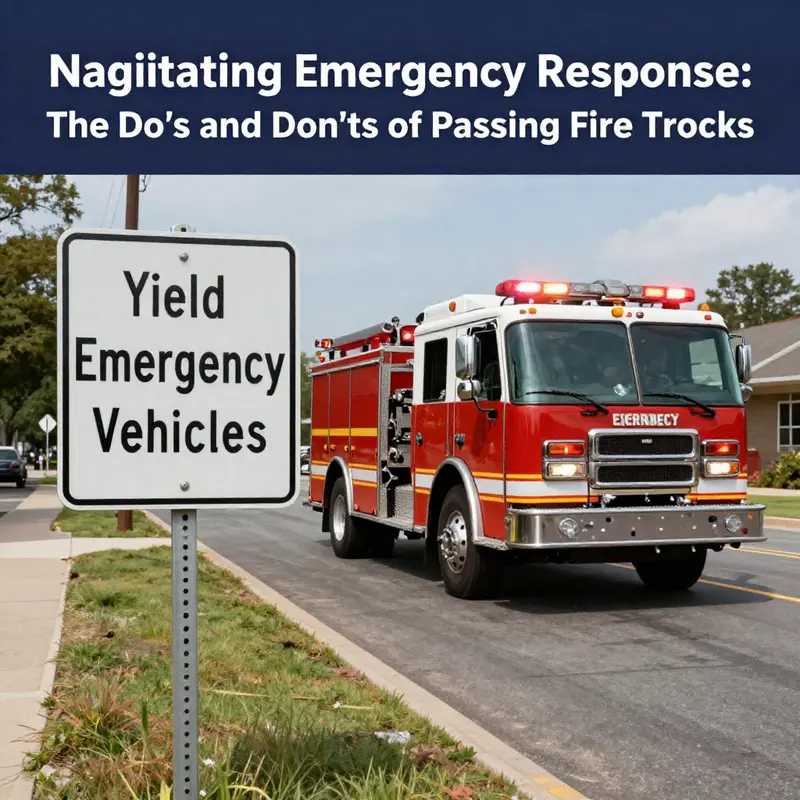
When a fire truck appears on the road, its siren becomes more than a sound; it becomes a signal of urgent need, a lifeline that can determine whether a home, a storefront, or a neighborhood is saved from catastrophe. The instinct to move quickly, to surge ahead and slip past a vehicle in motion, is a natural reflex for many drivers. Yet that reflex collides with two equally clear truths: first, that emergency responders operate under life-and-death pressure and must be able to move unimpeded; second, that the rules of the road exist to safeguard everyone on the move, including those responders. The practical reality is that you cannot pass a fire truck when its lights and sirens are active. This rule is not a mere technicality but a carefully calibrated boundary designed to protect the people who rely on these vehicles every day and the bystanders who share the road with them. It is a boundary that holds even when the road seems almost calm, even when the truck appears to be far ahead. The moment that siren fills the air, the calculus of safe driving changes: the path of least risk is not the path that bends around the emergency vehicle, but the path that yields to it.
To understand why this rule matters so deeply, consider the simple physics at play. Fire trucks are heavy, tall, and often loaded with equipment that shifts weight and momentum. They accelerate quickly when they are unladen, but they still require a wide margin to maneuver. They enter intersections with eyes focused forward and ears tuned to the sounds of surrounding traffic. A driver attempting to pass, especially in a multi-lane flow or on a two-lane road with oncoming traffic, risks forcing sudden lane changes on the truck or compromising the lane the truck must occupy to navigate a turn or an obstacle. The potential consequences are not theoretical. A single miscalculation can produce a chain reaction—rear-end collisions, sideswipes, or a forced stop that blocks not only the lane you occupy but adjacent lanes, hindering additional responders who may be following behind.
The legal framework surrounding passing a fire truck in emergency mode is explicit in most jurisdictions. It is grounded in the public interest: the timely arrival of firefighters dramatically changes outcomes in fires, medical emergencies, vehicle crashes, and other life-threatening events. When a fire truck is using its flashing lights and siren, drivers are usually required to pull over to the right and stop, allowing the emergency vehicle to pass with clear space. Failing to yield can lead to traffic violations, fines, and, in some places, more severe penalties such as license suspension, depending on local statutes and the severity of the incident. The penalties reflect a public safety priority: the faster responders can reach a scene, the greater the chance someone will survive or be protected from harm. The National Highway Traffic Safety Administration (NHTSA) highlights this expectation in its guidance on emergency vehicles, underscoring that drivers must yield and clear the way when emergency signals are active. This guidance is not merely advisory; it is a law of the road that carries consequences for those who ignore it.
The moral dimension of this issue runs parallel to the legal one. Firefighters put their lives on the line to protect others, and yielding to them is a direct form of respect. It is an acknowledgment that the responders are doing work that ordinary driving rules cannot accommodate. Their mission often requires rapid decision-making in uncertain environments, with the safety of civilians, themselves, and fellow responders at stake. When a driver chooses not to yield, it is not simply a personal infraction; it has the potential to undermine the entire scene’s safety and the efficiency of the response. In this sense, compliance is a sign of civic responsibility, a recognition that individual convenience must bend to collective safety in moments of acute risk.
This is not to say that all emergencies unfold in obvious, easily navigable spaces. There are moments when a fire truck is on the move in heavier traffic, during a lull in congestion, or when it is maneuvering through a complex intersection. Even in such moments, the correct course is typically to reduce speed, maintain a controlled lane position, and allow the vehicle to proceed on its own terms. The driver should not assume that a pass is permissible simply because the truck seems to be proceeding slowly or appears to have space in front. The emergency vehicle’s path can change in an instant: a right turn may become a narrow alley, a lane merge may require rapid reconfiguration of the road, or a fire crew may need to reposition in a way that demands a clear sideline. These are not hypothetical risks; they are daily realities for those who keep cities safe.
In practical terms, the recommended response when you encounter a fire truck in emergency mode is straightforward and repeatable. Look for the location of the siren and emergency lights, and gauge whether there is a safe opportunity to yield. If you are driving in a single lane or in a situation where passing would involve crossing into the path of the truck or into oncoming traffic, you should move to the right and come to a complete stop as soon as it is safe to do so. Do not slow down or drift sideways while the truck is nearby. Do not change lanes abruptly, and do not attempt to pass even if you believe you can safely do so. The goal is not to outpace the emergency vehicle but to create a clear corridor for it to pass unimpeded. This approach protects everyone on the road—the emergency crew, other motorists, pedestrians, and, crucially, bystanders who might otherwise be drawn into the scene by curiosity or confusion.
Some drivers worry about the right-of-way in rural areas where shoulders are narrow or where a pass might seem feasible with careful timing. In those contexts, the same rule applies: yield to emergency vehicles. If you are in a situation where you cannot safely move to the side due to a narrow shoulder or rough terrain, continue to slow, maintain a straight path, and wait for the truck to pass, even if that means extending your travel time by a few seconds or minutes. The shortest route to safety is found not in passing, but in creating a stable, unobstructed lane for responders who may be at a critical moment in their mission. The decision to yield is a decision to prioritize human life over personal convenience, a choice that aligns with the ethical responsibilities we bear as drivers within a shared public space.
For readers who want to explore the broader fleet and capabilities that support emergency responses, it can be helpful to consider the concepts behind the specialized vehicles that responders rely on. The category of emergency rescue vehicles encompasses a range of tools designed to extend reach, heighten safety, and support rapid deployment. Seeing these vehicles as part of a cohesive system can deepen understanding of why it is so important to keep the road clear. If you are curious about the kinds of equipment and configurations that enable emergency operations, you can explore the Emergency Rescue Vehicle category to gain a broader sense of the resources that responders mobilize when seconds count. This broader perspective reinforces the point that the road is a shared platform where every driver has a part to play in the chain of safety.
Beyond the immediate actions of yielding, there is a broader cultural and policy dimension to this topic. Municipalities invest in signage, training programs, and enforcement strategies that reinforce the expectation that drivers must yield to emergency vehicles. This investment is more than a legal formality; it is a public commitment to ensure that emergency responders can perform their duties with the minimum possible delay. The rules are reinforced through education, public service campaigns, and the visible presence of law enforcement monitoring traffic behavior around incidents. In this environment, the simple act of pulling over and stopping when you hear a siren becomes a practiced habit, a reflex that can be counted on during critical moments.
It is also worth addressing a common misperception: that a fire truck is merely another vehicle in a long convoy. In reality, a fire apparatus is a mobile incident command post, a source of life-saving tools, and a signal that a coordinated response is underway. The crew may include firefighters, paramedics, and drivers who must coordinate with other emergency units, traffic control teams, and hospital staff. The movement of a single fire truck through traffic is not isolated; it interacts with the entire incident command system, which is designed to optimize the allocation of scarce resources and maximize the chance of saving lives. Therefore, a driver who chooses to pass risks creating confusion, miscommunication, and dangerous splits in the response—outcomes that can ripple through the scene and slow the overall operation.
To translate these ideas into everyday practice, the behavior you adopt behind the wheel when you hear or see an emergency vehicle matters. If you are driving in the opposite direction and the road is divided, the rule often requires you to stop and wait until the vehicle passes and the signal is no longer active. If you are in a lane that must turn or yield to oncoming traffic, you should still slow and proceed with caution, ensuring that you have a clear path for the emergency vehicle to travel without obstruction. If the road situation allows you to safely pull to the far right and stop, do so, and remain there until you are certain the emergency vehicle has passed. The emphasis is on controlled, deliberate action rather than speed or a momentary sense of getting ahead. The quieter discipline of yielding can seem mundane, but it is precisely this steadiness that keeps streets safer for everyone involved.
In the narrative of road safety, every encounter with an emergency vehicle is a reminder that the road is a shared space with shared responsibilities. The imperative not to pass during emergency mode is grounded in both law and ethics. It is a rule that protects the responders who are on the front line, the bystanders who watch events unfold, and the drivers who must trust that others will act with care and restraint. When you encounter a fire truck on the move, your role is not to race it to the scene but to ensure its passage is unimpeded, fast, and safe. By choosing to yield, you participate in a system designed to minimize harm and maximize the speed with which aid reaches those in need. This is the essence of why passing a fire truck in emergency mode is not just a legal misstep but a moral misstep as well: it places the vulnerable and the dedicated at risk, and it undermines the essential work of saving lives when seconds count.
For readers seeking practical reminders, a concise guideline is useful: if a fire truck is approaching with lights and siren, move to the right, stop completely, and wait until the vehicle has passed. Do not re-enter traffic until the truck has cleared your vicinity and the siren is silent. If you are unsure of what to do, err on the side of caution and yield. The safest choice is always to let the emergency vehicle pass with a clear corridor. In the broader context of road safety education, this approach aligns with ongoing efforts to reduce preventable incidents on the road and to cultivate a culture of respect for those who put themselves in harm’s way to protect others. The simple act of yielding can be a life-changing decision, and it carries the weight of a societal commitment to prioritize human life over personal speed.
Internal link: Emergency Rescue Vehicle category
External resource for further reading: https://www.nhtsa.gov/vehicle-safety/emergency-vehicles
Yielding to the Fire Front: Why Passing a Fire Truck Is the Wrong Move and How to Respond Safely
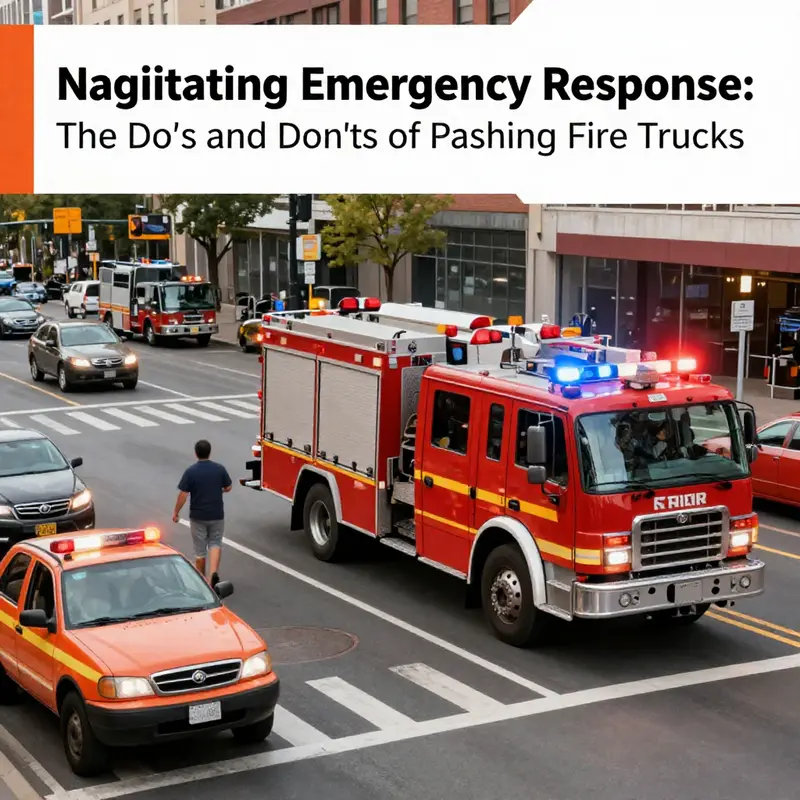
The moment a fire truck appears on a crowded city street, the clock stops for everyone else. Sirens cut through traffic, lights flash with a brightness that feels almost loud in the air, and the road seems to narrow as people instinctively reach for the speed they think they can still manage. In that narrow window between alarm and action, a single choice can ripple through an entire emergency response: to pass or to yield. The impulse to hustle forward, to beat the vehicle to a destination, is common. But it is exactly the impulse that endangers everyone involved, from the firefighters at the wheel to the pedestrians who may be just steps away from danger. The safety implications of not passing a fire truck—of yielding, decelerating, and creating space—are not abstractions. They are practical, measurable realities that protect lives, preserve critical response times, and uphold the dignity of the emergency responders who carry out delicate, high-stakes work under impossible pressure.
To understand why passing a fire truck is rarely, if ever, prudent, it helps to imagine the scene from the truck’s perspective. Fire apparatuses are heavy, long, and unwieldy compared with private vehicles. A standard ladder truck, for example, can weigh in at tens of tons. Its steering geometry is designed for stability and controlled aggression rather than nimble lane leadership. When such a vehicle accelerates with the siren going, the driver is not just navigating lanes; the driver is predicting the unpredictable. Pedestrians may step into the street, other drivers may drift from attention, and cross streets may still be filling with vehicles that themselves must slow, stop, and stagger through a phalanx of conflicting signals. The truck’s blind spots—areas behind and to the sides where the driver cannot see with certainty—are a constant hazard. If a car tries to slip by in those blind spots, the cognitive task of judging relative speed and distance becomes a high-stakes guess, and guesswork in that zone can end in tragedy.
This is not a simple matter of courtesy; it is a matter of geometry, momentum, and timing under emergency conditions. A fire truck does not travel as a car does. It does not rely on the same navigational flexibility in a dense urban corridor. It may be required to change lanes abruptly, to brake hard when a street narrows, or to reverse briefly to avoid an obstacle or to reposition for a corner that simply cannot be cut cleanly. Each of these possibilities multiplies the risk for any vehicle sharing the lane. Even if a driver believes there is room to pass, that space can disappear in a heartbeat as the truck negotiates a sudden turn, a narrowed roadway, or a traffic signal that is out of alignment with the fastest path to the scene. The physics of this encounter—the relative mass, the stopping distance, the turning radius—does not permit a simple arithmetic calculation to justify overtaking. The margin for error is simply too small.
Beyond the physics lies the obligation that binds drivers to the rule of the road in emergencies: yield to the right-of-way. In cities across the country and around the world, laws empower emergency vehicles such as fire trucks to demand priority. When a siren wails and the lights flash, other motorists are legally required to slow, pull over, and stop if necessary to clear a path. The practical effect of this law is to create a corridor of safety that lets firefighters arrive at a blaze or a rescue with the Maximum Likelihood of a favorable outcome. Overtaking a responding fire truck—whether in the same lane, in an adjacent lane, or by weaving through traffic—seeks to rewrite that corridor during a moment when it is most fragile. The consequences are not limited to a single collision. A misjudged pass can trigger a multi-vehicle pileup that compounds injuries, delays, and the risk to bystanders. It can also create additional emergencies if the truck must detour to avoid a crash, thereby delaying life-saving interventions at the actual incident.
The ethical dimension is equally compelling. Firefighters put themselves in harm’s way to protect strangers. They operate with public trust and professional discipline, aware that every decision is under scrutiny, not just for its technical correctness but for its humanity. When a driver chooses to overtake a fire apparatus, that decision carries moral weight: it signals a willingness to prioritize speed over safety, convenience over collective well-being, and personal progress over a shared obligation to support those who risk themselves for others. It is a failure of a social compact built on the expectation that citizens will respond to danger with restraint, not bravado. In this sense, the act of yielding becomes a form of civic respect, a quiet acknowledgment that saving a life may entail delaying one’s own arrival or altering one’s route for the greater good.
The practical guidance on what to do when you encounter a fire truck is direct and repeatable. When you hear sirens or see flashing lights, the best action is to slow down and pull over to a safe edge of the roadway as soon as possible. If you are in a multi-lane situation, you should move to the far right lane if you can do so safely, and come to a complete stop once you have reached the side of the road and are clear of the truck’s immediate path. Do not brake abruptly in the middle of the flow; instead, decelerate smoothly to avoid causing another accident as you transition out of traffic. It is crucial to avoid sudden steering inputs or lane changes once the emergency vehicle is in proximity. A stable, predictable response helps every other driver and reduces the likelihood of a collision that could involve the emergency crew and bystanders.
This guidance also has a preventative dimension. In many communities, public safety campaigns emphasize not only what to do when an emergency vehicle is near but also how to prepare for the possibility of encountering one in the first place. Keeping your vehicle in good condition, with functional brakes and tires, and ensuring your attention remains focused on the road—free from distractions like mobile devices—are essential. A driver who remains focused is less likely to misinterpret the movements of an approaching truck or misjudge the distance required to yield safely. The mental model is simple: treat every siren as a signal to pause judgment long enough to let the professionals do their job. On that pause rests the chance that a crew reaches the scene with the minimum additional risk to themselves, to bystanders, and to anyone else who happens to be in the crossfire of a life-threatening event.
The discussion of safety would be incomplete without acknowledging that not all emergencies unfold in the same way. A fire truck may carry hazardous materials, or it may be called to a scene where rapid, unpredictable changes in environmental conditions occur. An accidental collision in such contexts could escalate into chemical spills, fire spread, or dangerous exposures. Even in cases where the vehicle carries standard firefighting equipment, the dynamics of a sudden stop or a sudden turn near a busy intersection can trigger secondary incidents. These scenarios reinforce the core message: the safest course is to yield and give the truck room to maneuver. There is no heroic maneuver that replaces the calm, deliberate action of moving aside, stopping, and allowing the emergency responders to put their plan into action.
The chapter’s thread of logic circles back to a practical, teachable habit: how to respond if you find yourself unexpectedly close to a fire truck while you are also trying to reach your own destination. If you are behind a responding vehicle, do not attempt to pass on the right-hand side where the truck might be transitioning lanes or preparing to turn. Do not try to slip into a gap that closes as the truck approaches an intersection or a narrow street. Instead, slow down with confidence, maintain a steady course, and give the truck the space it needs. If you are in an adjacent lane and the truck is moving alongside you, avoid aggressive or reckless lane changes that could place you between the truck and the curb or create a crushed space that leaves no safe escape path for the driver. The goal is to keep a generous buffer around the emergency vehicle while preserving the orderly flow of traffic for the vehicles that must continue on their routes.
Within this broader frame, a small but meaningful point often appears in training and in real-world practice: even minor changes in traffic dynamics can have outsized effects on emergency response. A single vehicle attempting to pass can cause a ripple effect throughout the corridor of access, delaying not only the current responders but also those en route to other critical calls. The ripple effect underscores a central truth of road safety in the era of rapid response: the objective is not speed for its own sake but speed with control, speed that respects the constraints of the road and the crew’s need for a clear path. In many ways, the act of yielding is a daily act of public service—one that demonstrates a readiness to subordinate personal time to the immediate needs of the vulnerable and the afflicted.
For readers who work in or around roadways—whether they are professional drivers, everyday commuters, or participants in the rhythms of city life—the practical takeaway is straightforward. Recognize that passing a fire truck while it is responding to an emergency is neither clever nor heroic when measured against the risk it creates. Instead, cultivate a reflex to slow, pull over, and stop if necessary. Keep your hands on the wheel, your eyes on the road, and your mind on the shared responsibility that makes emergency response possible. If you ever find yourself unsure of the right action in a given moment, remember that the simplest, safest option is almost always the best: yield, wait, and let the emergency vehicle pass unhindered. This is not passive compliance; it is active protection, a deliberate choice to honor the expertise and sacrifices of the personnel who stand between danger and the community they serve.
In the wider ecosystem of emergency readiness, even the maintenance and readiness of equipment matter. The functioning of a fire department, the reliability of its fleet, and the ability of its crews to deploy without delay depend on robust supply chains and proper upkeep. A small component failed or a temporary bottleneck in a support vehicle could complicate a scene that is already high-stakes. The connection between safe road behavior and the readiness of the response system is a reminder that safety is not a single action but a network of decisions that begin on the road and ripple into the heart of a fire scene. For those who want to learn more about the kinds of tools and parts that keep emergency fleets ready, consider exploring resources on fire-truck parts, which cover the essential equipment and maintenance that help ensure a truck is prepared when its crew calls for help.
In closing, the question of whether you can pass a fire truck is answered not by the cleverness of a driving maneuver but by the integrity of a driver’s restraint. Yielding to the right-of-way is a sign of respect for the extraordinary work that firefighters perform every day. It is a recognition that every second saved by a clean corridor is a second more for a life to be saved, a property to be protected, and a neighborhood to heal. The road is not a battlefield where speed wins; it is a shared space where safety is the objective and cooperation is the method. When sirens cut through the noise, the safest choice is to slow, narrow the gap, and allow the apparatus to move with the minimum friction possible. To keep this principle alive in the rhythm of daily life, it helps to remember that even seemingly small actions—like giving a truck room to maneuver or keeping distractions at bay—contribute to a larger chain of events that culminates in successful rescues and safer communities. For those who want to dive deeper into the practical materials that support emergency fleets and their ongoing readiness, a useful avenue is the Fire Truck Parts resource, which offers insight into the components that make these machines reliable under pressure.
External resource: https://www.nhtsa.gov/risky-driving/avoiding-emergency-vehicles
Yielding for Emergency Lives: The Critical Role of Fire Trucks on Our Roads
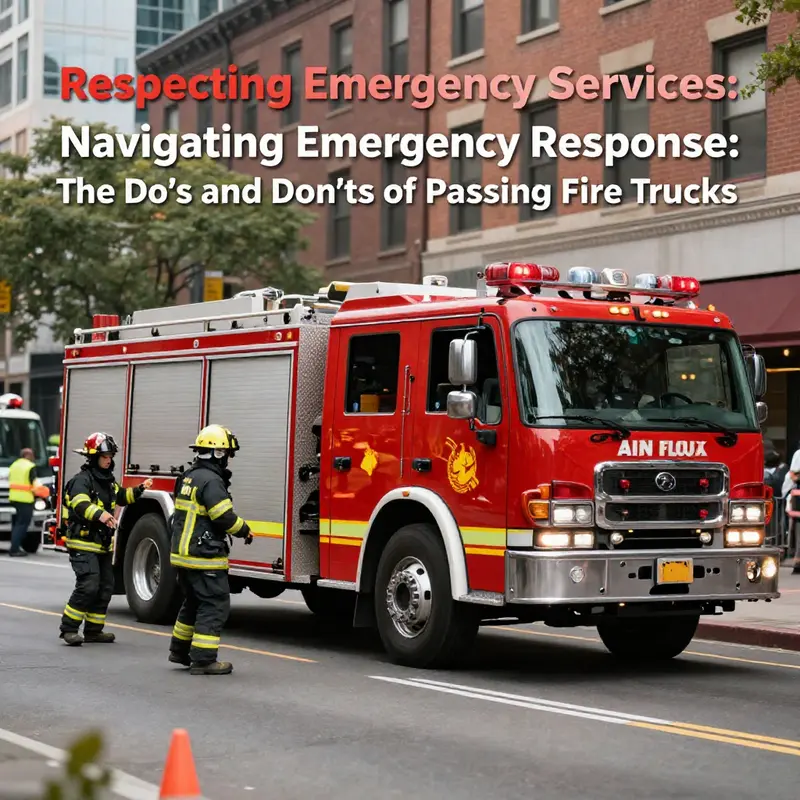
When a fire truck speeds into view with its lights flashing and siren wailing, the road becomes a narrow test of patience, judgment, and communal responsibility. The moment you hear that wail or see the glow of emergency lights, a simple choice unfolds: slow, clear a path, and let the responders do their work. This is not a suggestion about etiquette alone. It is a procedural imperative that packs around it a cascade of safety consequences, legal obligations, and moral duties to the people who stand between crisis and continuity. The core question behind the chapter’s provocative title—can you pass a fire truck?—is answered quickly by both law and logic: no, you cannot pass a fire truck that is in transit to an emergency. Yet the deeper significance lies in understanding why fire trucks exist in the first place, how their work unfolds in real time, and how the public’s behavior can either amplify or diminish the firefighters’ ability to save lives and property.
Fire trucks are not just big vehicles with loud horns. They are highly specialized modules designed to respond rapidly to fires, crashes, hazardous material incidents, medical emergencies, and a spectrum of crises that require immediate, coordinated action. A modern fire engine carries an array of capabilities: powerful pumps that can deliver water at high pressure, ladders capable of reaching upper floors, hoses and nozzles calibrated for precise spray patterns, compartments that hold medical supplies, harnesses, extrication tools, and sophisticated communications gear. On the street, those features translate into a trained, disciplined response when seconds count. The crew’s choreography matters. The driver navigates through traffic with precision; the officer communicates strategy; the firefighters deploy ladders, connect hoses, assess hazards, and stabilize victims. This is a coordinated ballet where every move can alter outcomes for people who are trapped, disoriented, or in moments of paralyzing fear.
To understand why you should never attempt to pass a motorized emergency unit en route to an incident, it helps to think about the geometry of an emergency scene. An approaching fire truck often travels with the current of traffic but must still weave around intersections, curbs, parked cars, and pedestrians. The siren commands attention, but attention is not permission to intrude into the path that the truck must take. Even a vehicle traveling seemingly gently at a few miles per hour can cause a dangerous chain reaction if it cuts in front of a responding unit or fails to yield at a critical moment. A split-second misjudgment can force a firefighting crew to brake abruptly, lose precious momentum, or overshoot a turn, which could allow the fire to advance, or the patient to deteriorate, before help can be re-routed. In practical terms, the act of passing a fire truck is rarely a benign maneuver; it introduces a new layer of risk at a moment when risk is already at its peak.
The moral center of this discussion is the value that communities assign to emergency responders. Firefighters are not only tasked with suppressing flames; they perform rescues, stabilize hazardous scenes, provide emergency medical care, and coordinate with other agencies under stressful conditions. Their work is physically demanding, technically complex, and emotionally taxing. The presence of a fire truck at a scene is a signal of a broader system in motion—dispatch centers directing people, equipment, and expertise to the same location, with the shared objective of protecting life and reducing damage. When a driver chooses to speed past, divert, or block the apparatus, the impact is measurable. Delayed arrival times can mean more extensive fire spread, longer exposure to heat and toxins, and greater complexity for rescue operations. In many emergencies, every minute matters; the choice to yield can translate into outcomes that are literally life-saving.
Safety is the most immediate reason to yield. Firefighters anticipate traffic conditions differently from ordinary drivers. They may need to stop suddenly to adapt to a changing scene, reroute around a blocked road, or slip into a narrow alley that a civilian vehicle cannot safely navigate. The lockstep routine of turning wheels, engaging brakes, and deploying stabilizing gear is a calculated risk management process. If a civilian vehicle decides to move to the center line or to accelerate to “get out of the way,” the risk multiplies. The driver behind the wheel has jurisdictional authority, but the larger public interest—and the safety of the crew and any people they encounter—demands restraint. The principle of yielding is not merely about clearing a lane; it is about ensuring that the responder can proceed with the least resistance and the least hesitation possible.
Legality reinforces the moral argument. In most places, passing an emergency vehicle on the scene or while it is responding to an incident is a traffic violation that can trigger fines, points on a license, or even more serious penalties if the act leads to injury or worse. The severity of the penalties reflects the gravity of the risk involved. Moreover, when the law treats such maneuvers as offenses, it underscores a public policy choice: safety and rapid emergency response are non-negotiable public goods. The consequences extend beyond the individual driver; they affect municipalities, fire departments, and the citizens who rely on prompt service during fires, medical crises, or natural disasters. Understanding the legal framework is part of the duty of citizenship, just as understanding road rules or the meaning of a yield sign is part of everyday driving competence.
Beyond compliance, there is a wider ethic at play. Respect for emergency personnel begins with the decision to yield and to acknowledge the urgency they carry. Firefighters operate in zones where ordinary rules must bend to extraordinary circumstances. The respect owed to them is not an abstract courtesy; it is a concrete expression of solidarity with those who place themselves in harm’s way to protect strangers. This ethical stance is reinforced by community education campaigns that aim to empower drivers with the right instincts when an emergency vehicle approaches. Public awareness initiatives remind people to pull over to a safe, unobstructed area and to stop until the vehicle has passed. They emphasize predictable actions—no sudden lane changes, no tailgating, no turning across the path of a responding unit—that collectively reduce the likelihood of a collision or delay.
The modern landscape adds new challenges to the work of fire services, and these challenges, in turn, shape the urgency of yielding. For example, the growing prevalence of electric vehicles and the increasing use of high-energy batteries in industrial and urban settings bring additional hazards to fire scenes. Lithium-ion batteries, while offering many benefits, can pose unique ignition risks and can reignite after initial suppression. Fire departments must adapt with training, equipment, and procedures to manage battery fires and to protect responders and civilians from toxic fumes and thermal runaway. In such environments, the need for swift, clear access to the scene is even more pronounced. It is not just about extinguishing flames but about controlling a whole spectrum of hazards that can evolve quickly after ignition. The takeaway is simple: the faster responders reach the origin of the incident in a safe, unimpeded way, the better the outcome for those affected by the event.
Communities can also play a direct role in enhancing emergency response by aligning everyday behavior with best practices. Public education campaigns emphasize the proper use of sirens and lights, the importance of minimizing distractions, and the need to maintain safe driving distances. When drivers understand that sirens are not merely a signal for attention but a directive to yield, the reflex to slow down becomes a habit rather than a reaction. The presence of educational resources, such as accessible information about emergency vehicle protocols and the practical path to safety during emergencies, helps transform a potentially chaotic moment into a structured, predictable response. It is in this space—between individual action and collective norms—that safety improves and the moral compact between firefighters and the communities they serve is renewed.
For those seeking concrete pathways to deepen their understanding or to explore the practical resources that communities may offer, consider resources that focus on emergency vehicles and their role in crisis response. One accessible avenue is the Emergency Rescue Vehicle category, a reference point for communities looking to learn about the kinds of equipment and capabilities that enable effective on-scene operations. The internal resource linked here provides context for how responders coordinate with other agencies, how equipment supports rapid intervention, and how public-facing information can help people act correctly when an emergency vehicle approaches: Emergency Rescue Vehicle category.
Across jurisdictions, the rules of the road when an emergency vehicle is approaching are often straightforward but can be misunderstood. You should slow down and pull over to the side of the road, stopping completely if necessary, and you should remain stopped until the emergency vehicle has passed. Do not re-enter traffic until the unit is gone. Do not attempt to outpace it or “beat” it through a green light. These steps, while simple, embody a trust that the public places in emergency services: that they will arrive quickly, work efficiently, and return safely. That trust hinges on the behavior of every driver who shares the road, not just the professionals who operate the trucks. When you choose to yield, you honor that trust and contribute to a safer, more resilient community.
The broader takeaway, then, is not merely a rule about not passing a fire truck. It is a reminder that roads are shared spaces built on a balance of speed, safety, and mutual obligation. Fire trucks do not exist to command the traffic they encounter; they exist to save lives in environments that are often unstable and unpredictable. Yielding to them is a practice that preserves life, minimizes risk, and reinforces social trust in essential services. The more deeply a community understands this, the more effective its emergency response becomes, and the more quickly ordinary citizens can return to ordinary life after a crisis.
For more information about the standards, guidelines, and educational resources that underpin emergency response, the National Fire Protection Association (NFPA) offers comprehensive materials and documentation that frame best practices and public expectations. See NFPA at https://www.nfpa.org for formal standards, guidance, and public outreach materials that reinforce the principles discussed here.
When the Siren Calls: The Moral, Legal, and Practical Imperative Behind Not Passing a Fire Truck
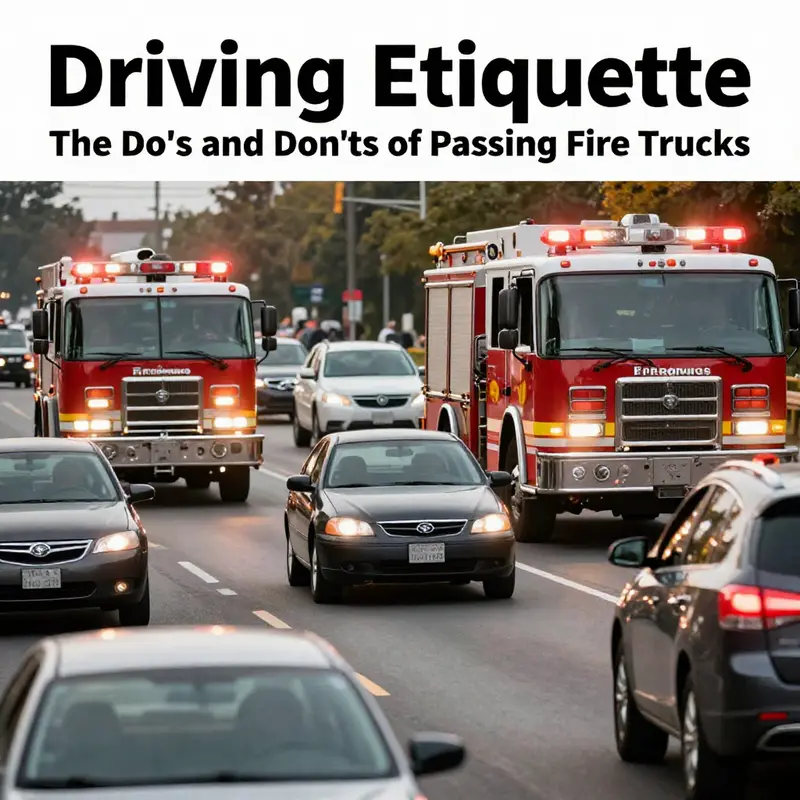
When a fire truck roars toward a scene, the road around it becomes a fragile, momentary stage where every driver must perform a split-second, high-stakes choreography. The question “can you pass a fire truck?” is not a simple yes-or-no query about maneuvering speed. It is a test of judgment, restraint, and social responsibility that sits at the heart of driving ethics in the modern world. The answer, unequivocally, is no, and the reasons extend far beyond personal bravado or the thrill of a quick commute. They touch the core purpose of emergency response, the safety of strangers, and the legal frameworks that bind us to a shared traffic order. To pass a fire truck is to risk obstructing a lifesaving mission, to disregard the tacit covenant we all share as road users, and to invite consequences that can ripple through neighborhoods in minutes rather than hours.
Consider the moment when the siren first cuts through the ambient noise of city life. There is a sound that is both urgent and unnerving: the wail of the siren, the flashing light that paints the edges of the road with unambiguous warning, and the sense that time itself accelerates for someone who needs a rapid, unobstructed path. In that moment, the driving task shifts from personal convenience to civic duty. The fire truck is not a show of force or a request for priority by means of speed alone; it is a moving, life-saving instrument that depends on every other driver yielding, decelerating, and moving out of the way with predictable, disciplined behavior. The decision to pass, to race ahead, or to linger in a lane that could impede the vehicle’s route is the difference between enabling firefighters to reach a burning building or medical crisis moments sooner and trapping them in gridlock where even a few seconds can become a matter of life or death.
From a practical standpoint, the key rule is visibility and space. The first instinct when a siren approaches might be to gauge whether you can slip ahead, especially on an open highway or a broad city street. Yet the geometry of an emergency response is rarely so accommodating. Fire apparatuses are wide, and their turning radii can be deceptive. They often need to swing wide to avert an obstacle, negotiate a curve, or avoid a sudden hazard on the road ahead. When you attempt to race past, you not only narrow the space available for these maneuvers but also invite a chain reaction: a sudden brake, a misjudged lane change by another driver, or a collision with the truck itself if the vehicle pivots to avoid a sudden obstacle. The risk is not a distant possibility; it is a vivid probability whenever you break the flow of yielding traffic.
The legal dimension cannot be dismissed. In many jurisdictions, failing to yield to an emergency vehicle when its lights and sirens are active is a traffic violation that carries fines, points on a license, or even suspension. The penalties reflect a recognition that the act of obstructing an emergency response is not a mere breach of etiquette but a risk to public safety. Lawmakers exert this emphasis because the consequences extend beyond the individual offender. A slow or blocked lane can delay seismic responses to a fire, a pile-up at an intersection, or a medical emergency where minutes count. When we choose to pass or to block, we participate in a risk calculus that prioritizes immediate convenience over urgent community needs. The moral responsibility of the driver, in this sense, is not abstract; it is measurable in what happens to the people waiting for help just a few blocks away.
The social dimension of this behavior also deserves careful attention. Firefighters enter burning structures and hazardous environments knowing the dangers, often with little time to prepare. They rely on the discipline of the surrounding traffic to keep their path clear so they can perform critical tasks without delay. This is a dynamic where respect translates into action: a driver pulls over in a calm, deliberate fashion; the vehicle comes to a complete stop when necessary; and movement resumes only after the emergency vehicle has passed. The expression of respect here is both practical and symbolic. It signals to the responders that the road is theirs, that their mission is prioritized in the shared space of the city, and that ordinary citizens understand the stakes involved. In communities where this social contract is strong, the pace of life adjusts to the cadence of emergency work. The siren becomes less a nuisance and more a rhythm that everyone, in their own way, respects.
A thorough understanding of what to do instead can prevent a lot of dangerous decisions. The simplest and most effective action is to pull over to the right-hand side of the road and come to a complete stop if necessary. This maneuver creates a corridor for the emergency vehicle to pass with minimal interference. It also reduces the likelihood of confusion, as drivers who have halted are not attempting to re-enter traffic at the moment the truck needs to maneuver. If you are unsure about whether the vehicle is indeed an emergency unit—an anxious, common doubt in heavy traffic—the safest approach is to yield immediately. Assume the approaching vehicle has the potential to be a fire truck, an ambulance, or another type of emergency responder. The precautionary principle in this context is prudent: better to err on the side of caution than to misjudge and obstruct.
The shift from instinctive racing to disciplined yielding is also a reminder of the value of cognitive and motor discipline on the road. When your attention is fully engaged, you can anticipate emerging hazards and respond with less abruptness. Sudden lane changes, abrupt braking, and last-minute accelerations are the kinds of moves that ripple into accidents in the wake of an emergency vehicle. Instead, a steady, predictable sequence—signal, slow, move to the right, stop if needed, and wait until the line of sight is clear—reduces the chance of misunderstandings among other drivers and keeps the roadway predictable. Predictability is a common thread in road safety, but it takes on heightened importance in the vicinity of fire trucks, where the margin for error is slim and the consequences, occasionally catastrophic.
There is also a human element to this behavior that deserves attention. Firefighters work under pressure, often in dangerous conditions. The gratitude we offer in the form of yielding behavior is not about politeness alone. It is a practical acknowledgment of the courage on display and the risks being shouldered by others in the street. In everyday driving, we encounter countless decisions that reveal how seriously we take this obligation. Some drivers choose to ignore the siren, others to accelerate, and still others to slow down, but then weave back into traffic. None of these responses align with the aim of creating a clear, open path. The responsible response remains the same: slow down smoothly, maneuver with care, and allow the emergency vehicle to pass without obstruction. This approach protects not only those inside the truck but also bystanders and other responders who may be arriving at the scene.
Another layer to consider is the role of technology and driving culture in shaping these behaviors. Modern vehicles equip drivers with more information and, sometimes, more distractions, which can complicate decisions in the moments when a siren is heard. The expectation is that drivers will translate this information into a disciplined action rather than a reflexive maneuver. The culture of driving—how a community teaches its young drivers about yielding, how established norms evolve on busy corridors, and how training programs emphasize the duty to yield—profoundly influences real-world outcomes. The habit of pulling over and stopping when an emergency vehicle appears is not an arcane rule so much as an everyday practice that keeps hope alive for people in distress. It is the difference between a passerby who understands the stakes and someone who sees the road merely as a place to get somewhere faster.
To support this discussion with practical guidance, many official resources emphasize the same core actions: observe the vehicle, identify the safest place to yield, move out of the path, and remain stationary until the emergency vehicle has passed. This guidance is not limited to a single jurisdiction; it reflects a universal principle of traffic safety. It is also worth noting that specific situations can call for adaptation—such as when an emergency vehicle approaches on a two-lane road, or when you are in an area with limited shoulder space. Still, the central rule remains consistent: do not attempt to pass. Do not chase after the vehicle to “beat” it to a next intersection. Do not assume you can outpace the urgency of a life-threatening call. The priority is always safety—your safety, the safety of the responders, and the safety of anyone else on the road.
Within this broader frame, you can cultivate a mindset that makes the right choice almost instinctive. Regular practice can train you to recognize emergency signals early and to respond in a way that minimizes risk. Reading the road, anticipating how other drivers might react, and keeping a calm, controlled demeanor are all skills that improve with experience. If you find yourself in a situation where a fire truck is approaching and you are unsure what to do, the best course is straightforward: slow down, pull over to the right, and come to a complete stop if necessary. Once the vehicle has passed, re-enter traffic in a controlled, patient manner. There will be another day when you will be grateful for the restraint you showed in that moment, when the alternative result could have been catastrophic. This is the quiet, enduring value of correct driving etiquette—a value that transcends any one encounter and contributes to a safer road environment for everyone.
As you keep these principles in mind, you begin to see how a single decision can ripple outward in meaning and consequence. The act of yielding is not simply about compliance; it is about honoring the social contract that makes collective safety possible. It is about recognizing that the road is a shared space where urgency exists alongside routine travel. When we choose to yield, we acknowledge the humanity of those who rush toward danger to save others. We also acknowledge the vulnerability of those we share the road with, including families, commuters, and pedestrians who rely on a stable system to reach their destinations without added peril. The ongoing practice of this discipline—pull over, stop, and wait for the emergency vehicle to pass—becomes a daily reminder that responsible driving is a moral act as much as a technical one.
For readers seeking further guidance and formal standards, the National Highway Traffic Safety Administration (NHTSA) provides comprehensive resources on proper driving etiquette around emergency vehicles. This body of guidelines reinforces the messages outlined here: be vigilant, yield promptly, and maintain a clear path for responders. You can consult official guidelines to understand how laws apply in your area and to learn about best practices that help protect life and property during emergencies. See the guidance at the official site: https://www.nhtsa.gov/. And for readers who want practical context tied to emergency response equipment and operations, consider exploring the broader category of emergency vehicles within the field, which includes various specialized apparatus designed to support responders in different scenarios. For a deeper look into the range of emergency-response equipment and the kinds of vehicles that teams rely on, you may also engage with related information about emergency equipment and vehicles, including the category dedicated to emergency-rescue vehicles, which highlights the tools and support systems that make a difference on the front lines. Emergency rescue vehicles.
In sum, the question of whether you can pass a fire truck is answerable in one respectful word: no. But the rationale runs deeper than legality or fear of fines. It is a proposition about how we choose to live in a community, how we respect the people who risk their lives for others, and how we safeguard the fragile, urgent mission of emergency response. By choosing to yield—by pulling over, stopping, and waiting for the truck to pass—you participate in a shared act of bravery: the ordinary courage to do the right thing at a moment when it matters most. The road, in its daily rhythms, becomes a forum where civility and necessity meet. And in that meeting, lives can be saved, injuries can be prevented, and trust in the driving public can endure.
Final thoughts
In conclusion, passing a fire truck is not just illegal; it poses severe risks that could endanger lives and compromise emergency response efforts. Business owners must understand the legal, safety, and ethical implications of their actions while driving. Yielding to fire trucks is a small yet significant responsibility that reinforces public safety and respect for emergency services. By adhering to these guidelines, you contribute to a safer community and promote the well-being of all citizens.

