
















As a business owner, ensuring the safety of your staff and customers is paramount. One often-overlooked aspect of public safety involves understanding the legal obligations regarding emergency vehicles, particularly fire trucks. When an emergency vehicle approaches, the actions you take can significantly impact response times and potentially save lives. This piece will delve into the legal requirements surrounding fire truck encounters, the correct procedures to follow when an emergency vehicle is in sight, and the repercussions of failing to comply with these laws. Each chapter will build upon this understanding, enhancing your awareness and preparation for such critical moments.
Yielding to Fire Trucks: The Legal Duty, Safety Realities, and Everyday Driving Decisions
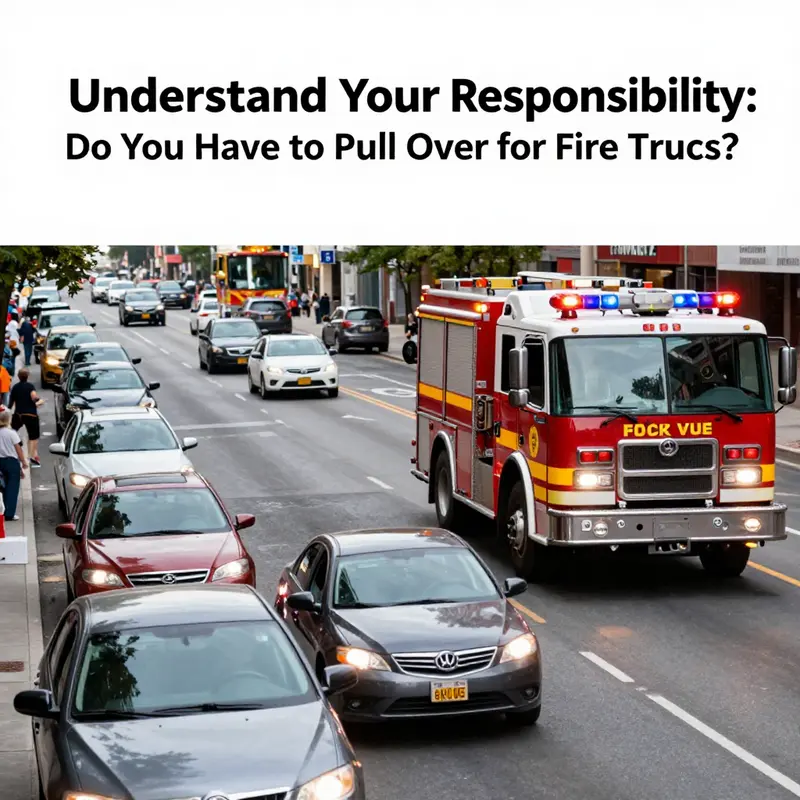
Siren wails cut through traffic and danger signals flash. In these moments, the rule is simple but essential: yield the right of way to emergency vehicles, pull to the right side of the road, and stop if necessary until responders have passed. This duty balances safety, efficiency, and public service. While the exact requirements vary by jurisdiction, the core idea is universal: do not obstruct the path of a fire truck or other authorized vehicle in active service.
The practical steps are straightforward: check mirrors and blind spots, signal your intent, and move to the right when safe. If you cannot fully move to the shoulder, slow to a stop and wait, keeping wheels straight to minimize risk. After the vehicle passes, resume driving only when the scene is clear and it is safe to do so. In some cases, fire apparatus may pause behind you for scene assessment or equipment setup; remain patient and do not assume you are free to proceed until the crew indicates it is safe.
Knowing local rules helps. In the United States and many other places, the general expectation is to yield and clear a path, but the exact distances, where you may stop, and when you can re-enter traffic vary. Check your state or country’s DMV or transportation department for specifics. The overarching aim is to reduce delay for responders and to protect you, other motorists, pedestrians, and firefighters from harm.
Ultimately, pulling over for fire trucks is a practical act of civic responsibility. It preserves lifesaving time, minimizes risk, and keeps emergency operations moving smoothly. Your role is modest but meaningful: give space, slow down, and let the professionals do their work.
Yield with Purpose: Why Every Driver Must Move Aside for Fire Trucks
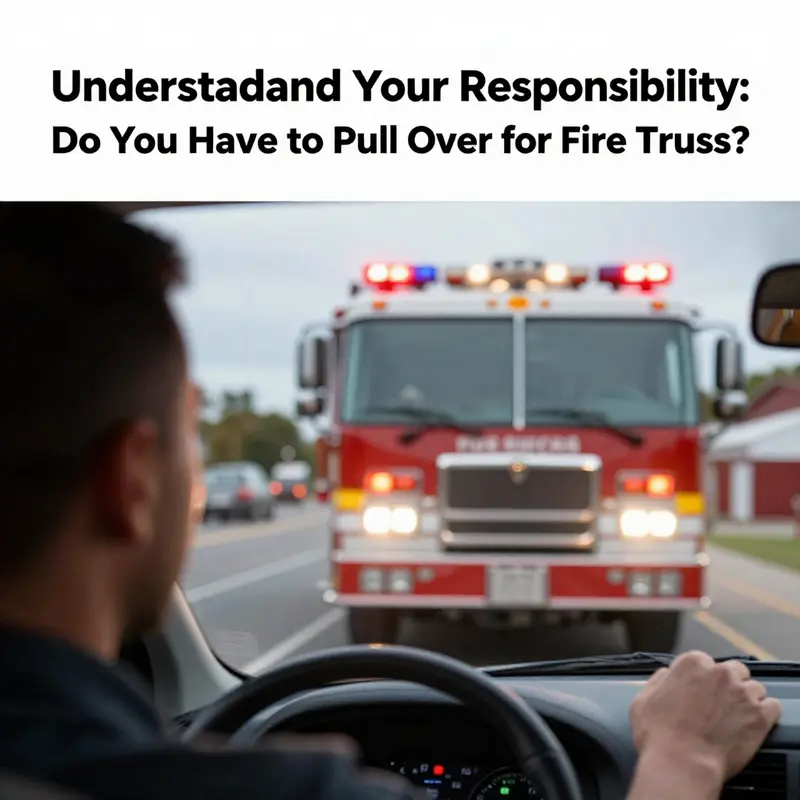
When you hear a siren or see flashing lights, the first instinct should be to create space and yield the right of way. This is not optional courtesy but a legal duty that protects lives and property. As you approach, check mirrors, signal your intent, and move to the right as safely as possible. If you are in traffic, slow gradually, avoid sudden lane changes, and stop only where you can do so without blocking the intersection. Do not attempt to outrun the emergency vehicle or cross its path; instead, let it pass and resume driving only after the way is clear. Once the engine has moved past, reenter traffic smoothly and with awareness of other drivers. The practice also includes staying calm, keeping a safe following distance, and obeying any instructions from police or fire personnel at the scene. Laws in many places require you to move over or slow down whenever emergency vehicles are present, and these rules exist to reduce the risk of harm to responders. Embracing this duty reflects responsible citizenship and helps ensure that responders can reach those in need without unnecessary delay.
The Lifeline in the Rearview: Understanding the Legal Duty to Yield to Fire Trucks
The moment a fire truck opens its air horn or erupts into a chorus of sirens, something more than a simple inconvenience happens on the road. A set of expectations locks into place in the minds of drivers, passengers, and the responders who rely on every second to reach a scene in time. This chapter does not dwell on the thrill of speed or the drama of flashing lights. It follows a quieter, sturdier thread—the obligation, the risk, and the human calculus behind pulling over for a fire truck. The law, the road experience, and the ethical impulse to help others converge at that one decision you make in a moment: do you yield, or do you cling to your lane as though the emergency were not your business? In courts and on highways, the answer is less about courtesy than about safety, speed, and the fragile balance that keeps communities from tipping toward harm when a fire is spreading, a medical crisis deepens, or a rescue team fights its way through crowded streets.
To begin with, yielding to an emergency vehicle is, in most jurisdictions, a legal requirement rather than a discretionary courtesy. When you hear a siren or see flashing lights, the expectation is not merely polite behavior but a clear directive designed to free a path for responders who themselves are racing against time. The practice is a simple, enforceable action: move to the right side of the road when safe, slow down, and stop if necessary. In many places, this also means changing lanes if traffic flow permits and there is a safe opportunity to do so. The overarching aim is straightforward—create a corridor for the emergency vehicle to pass without obstruction and without forcing it to divert, halt, or waste precious seconds negotiating around a vehicle that has not followed the rules.
Yet the rule is not merely a line on a statute book. It is a thread that runs through the everyday rhythm of driving in cities, suburbs, and rural stretches where the sounds of life and the demands of speed intersect. On a busy multi-lane road, a driver can illuminate the principle with a small action: check mirrors, signal intention, steer toward the right edge with careful control, and come to a complete stop if needed. On a narrow two-lane road, the optimal behavior remains the same in spirit—even if the implementation looks slightly different. The responder is not a private nuisance; it is a lifeline. When you pull over, you are not stepping into someone else’s narrative; you are letting a life-saving operation unfold with less friction. And when you do not yield, you cross a threshold that can turn an emergency into a tragedy or a tragedy into an even worse outcome.
If you hear a siren and do not know the exact route the fire company is taking, you still have a duty to act with care. The instinct to stay in your lane, to keep moving at a constant speed, or to push ahead because you are running late, is a reflex that costs more than it earns in this context. The safest, most responsible choice is to slow down, assess the traffic around you, and create room for the vehicle to pass. This does not require heroic maneuvering or dramatic acceleration away from the danger. It requires a calm appraisal of whether it is possible to change lanes or simply move to the right and stop. The legal framework tends to reward decisiveness, not hesitation. If you hesitate too long, or if you exercise poor judgment while attempting to yield, you can impede a critical arrival or complicate traffic that is already under stress.
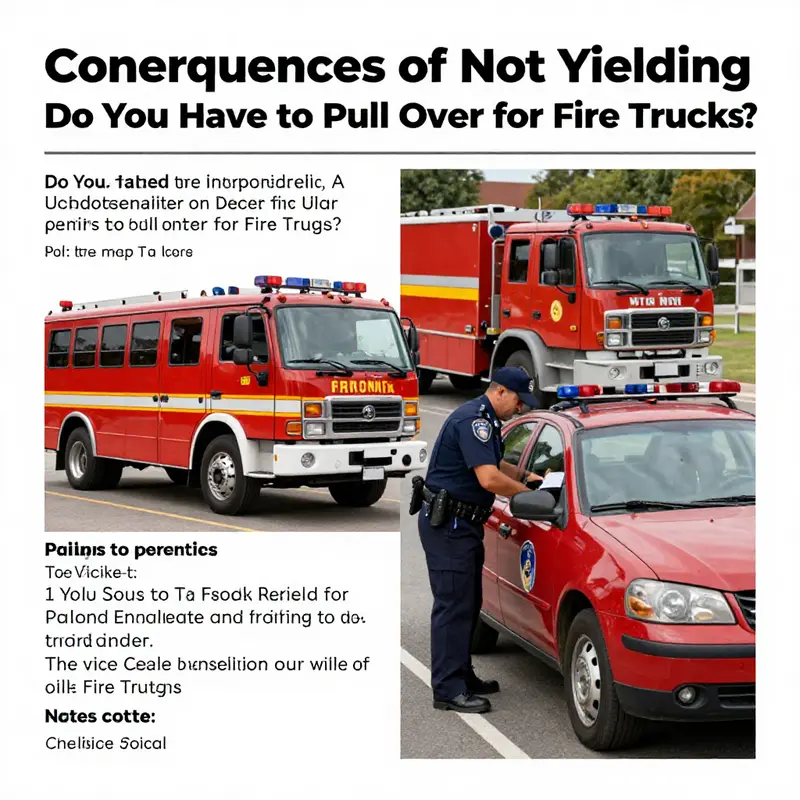
The consequences of yielding—or failing to yield—are not abstract. They translate into real-world outcomes that affect lives, property, and the ability of responders to do their work. In jurisdictions around the world, a failure to yield can bring penalties ranging from fines and points on a driver’s license to, in severe cases, criminal charges when negligence leads to harm or delays. The penalties are not random or punitive for their own sake; they reflect a calculated recognition that delaying a fast-moving response can cost lives, and that every driver bears a responsibility to maintain the flow of traffic in a way that protects those who are at risk.
Beyond the legal language, there is a broader public health perspective to consider. Emergency vehicles are tasked with incidents where seconds matter. Fire trucks, in particular, operate at the intersection of fire risk, structural integrity, and environmental threats. When every other vehicle complies with the duty to yield, responders can reach the scene faster, deploy equipment sooner, and begin the process of saving both people and property. When drivers fail to yield, the impact is not just a momentary delay; it can influence the trajectory of a whole incident—from how quickly a fire can be controlled to how fast medical care can be delivered to someone in distress. The stakes extend beyond the immediate emergency, shaping outcomes for families, neighbors, and communities that depend on reliable, predictable emergency response. The statistics are sobering and instructive. According to the National Highway Traffic Safety Administration (NHTSA), roughly one in five traffic fatalities involving emergency vehicles can be traced back, at least in part, to drivers who failed to yield or who mishandled the situation. That figure is not a badge of shame for drivers who have found themselves in difficult spots; it is a reminder of how fragile the line between safe passage and tragic consequence can be when the right-of-way is contested rather than surrendered.
The legal and the moral converge most clearly in the simple steps that define proper yielding. When you hear a siren or see lights, your first move should be to reduce speed safely and prepare to move to the right. If you are approaching on a multi-lane road and it is safe to do so, move to the next available lane away from the emergency vehicle, allowing it a clear, unobstructed path. If there is no safe lane change, your next move is to pull to the right side of the road and stop. Do not stop in an intersection or block a crosswalk. Do not follow the emergency vehicle too closely or attempt to outpace it; this only creates a more dangerous scenario for everyone involved. Once the vehicle has passed, you can slowly re-enter traffic when it is safe and only after you have a clear line of sight to the road ahead. Keeping the engine running and your hands visible can help prevent misinterpretations of your actions by officers on scene or by the crew in the fire truck who may need to communicate with you.
This is not merely about a one-time compliance. It is a learned habit—the kind of habit that can be reinforced in driver education, reinforced by driving instructors, and reinforced by public messaging that emphasizes safety and responsibility. People often ask why such a seemingly simple act can carry so much weight. The answer lies in the dynamic nature of emergencies. A fire truck is built to arrive rapidly, to cut through traffic with purpose, and to set the foundation for a coordinated response that includes firefighters, paramedics, and incident command. Each vehicle on the road is a potential obstacle or a potential ally, and the decision to yield is a unanimous choice that expresses solidarity with the responders and with the person or people awaiting help on the other end of the call. When a driver chooses to yield, the path of the emergency can be clearer, the scene can be safer for responders, and the overall response can be faster and more effective. The opposite choice can complicate every action that follows.
The role of law in this context is adaptive and pragmatic. Laws governing how drivers should respond to emergency vehicles exist not only to punish but to standardize behavior across different road environments. In urban cores, where lanes are narrow and intersections proliferate, the act of pulling over even briefly can prevent a pile-up behind a unit that must operate near a burning building, a patient in distress, or a vehicle that has become a hazard on the roadway. In rural areas, where road shoulders may be soft or non-existent, the duty to yield becomes more nuanced. It may involve slowing dramatically, using the shoulder when possible, and ensuring the reaction does not endanger pedestrians or cyclists who share the road. The variability across jurisdictions is real, but the underlying principle remains consistent: give the emergency vehicle the space it needs, and do so with attention to your own safety and the safety of others.
Public awareness about this duty is not a one-off campaign. It requires ongoing education, clear signage, and accessible information that demystifies what can feel like a chaotic moment on the highway. The idea that pulling over is a sign of respect for the responders grows out of the understanding that emergencies are unpredictable and that responders themselves operate under intense time pressure and risk. For many drivers, the moment of yielding becomes a small but meaningful act of civic participation. It is easy to underestimate how powerful such acts can be when multiplied across thousands of drivers every day. Yet when one driver chooses to yield, it sets a tone that can ripple outward—encouraging more careful driving, reducing the potential for collisions, and ultimately supporting the efficiency and safety of emergency responses.
To illustrate how this works in practice, consider a typical urban street where multiple lanes converge into a narrow artery. A fire engine moving toward a high-rise incident must pass through streets crowded with vehicles, bicycles, pedestrians, and parked cars that edge into the travel lanes. If every driver instinctively moves to the right and slows to a safe pace, the engine gains momentum quickly and safely, the incident scene receives rapid access, and the risk of a multi-vehicle clash behind the apparatus diminishes. If even a handful of drivers decide to press forward or linger in the lane, the corridor closes in, forcing the crew to navigate jammed traffic, and every second becomes a potential point of failure in the chain of response. The math here is not abstract; it is kinetic and consequential. Emergency services rely on predictable, disciplined behavior from the public, particularly when time is the most valuable resource.
The ethics of yielding also deserve attention. There is a moral economy at play in which drivers recognize that their choices extend beyond personal convenience. The person waiting for help may be in advance stages of medical distress, or a firefighter may be en route to a dwelling whose walls are already glowing with heat. In such moments, the shared road becomes a conduit for collective effort. The driver who yields does not surrender autonomy; they choose an act of civic responsibility that allows others to do their jobs more effectively and with less risk. In this sense, the act of pulling over becomes a contribution to the community’s safety, a quiet demonstration that individuals can act with speed and restraint at the same time, and that human life can, in some cases, hinge on a few decisively correct moves made within a few seconds on a crowded street.
For a deeper practical sense of how this duty is interpreted in the field, consider the need for clear and consistent signaling. When you need to merge or move aside, signaling is crucial. A quick, unambiguous signal helps reduce the likelihood of misjudgments by other drivers who may be scanning mirrors and blind spots while the emergency vehicle closes in. The aim is not to perform perfect driving under duress but to keep the roadway legible to all. It helps to remember that emergency responders themselves expect drivers to act with calm efficiency. They are trained to anticipate traffic patterns and to manage the flow through their own tactics, which can include using the shoulder or creating a wedge through traffic to secure a path. The more predictable the public behavior, the quicker and safer the response can be.
In this context, information and resources matter. The public can benefit from practical reminders embedded in everyday media, road signage, and driver education curricula. A simple message—“When you hear sirens, slow down, move to the right, and stop if necessary”—reaches millions of drivers and reinforces a standard of behavior that reduces risk. It also helps to highlight the existence of exceptions and the importance of safety in every decision. For example, when traffic conditions make it unsafe to pull over, the best course is to slow dramatically and proceed with caution, letting the emergency vehicle pass from a distance while maintaining adequate following distance and awareness of pedestrians and other road users. This nuanced approach acknowledges the complexity of real-life situations while keeping the central principle intact: the emergency vehicle must be given a clear path whenever possible.
For readers curious about the broader landscape of emergency vehicles and how different kinds of responders navigate roadways, a look at the emergency vehicle category in traffic management and public safety resources can be enlightening. It provides a sense of how systems are designed to support rapid response and how the public’s behavior fits into those systems. See the emergency rescue vehicle category for more on how specialized vehicles are deployed and how drivers interact with them in routine and extraordinary circumstances. Emergency Rescue Vehicle
Ultimately, the question of whether you have to pull over for a fire truck is answered not by a single mandate but by a bundle of legal requirements, safety considerations, and ethical commitments. The law is clear in many places: yield, slow down, and stop if necessary. The safety dimension urges you to act with caution, use signals, and avoid actions that could create hazards for your own vehicle or for others sharing the road. The ethical dimension asks you to consider the numbers behind every incident—lives saved or lost on the basis of the choices made by drivers at the moment the siren begins to wail. Taken together, these strands form a coherent expectation: when a fire truck approaches, the road must bend toward safety, not toward self-preservation. The jurisdictional differences—such as whether a lane change is mandatory or whether stopping on a roadway shoulder is permitted under certain conditions—do not alter the core duty to seek a path that reduces risk and accelerates aid.
From a policy perspective, this is a question of how best to align the realities of modern traffic with the needs of emergency services. It is a field where legibility—clear rules, consistent enforcement, and accessible education—improves outcomes. It is also a reminder that laws can only do so much; human behavior makes the difference when time is short, nerves are frayed, and the Whistle of a siren becomes the only sound anyone wants to hear in a moment of crisis. The bridge between law and life is built on simple acts repeated daily by drivers who choose to yield, and who choose to do so quickly and safely for the benefit of those who cannot help themselves without a rapid and unhindered response. This is not merely about avoiding penalties or pleasing authorities; it is about recognizing, in the heat of a traffic moment, that every driver shares responsibility for keeping the road a safe corridor for the people who rush toward danger so that others may live.
For further reading on the authoritative guidelines around emergency vehicles and driver behavior, the National Highway Traffic Safety Administration provides comprehensive guidance and research that underpins these expectations. It is worth reviewing to understand why the rules exist, how they are applied in different environments, and how public education continues to evolve in response to changing traffic patterns and emergency response tactics. See the official guideline and related materials for deeper context and evidence-based practice: https://www.nhtsa.gov/road-safety/emergency-vehicles-and-driver-behavior
Final thoughts
Being aware of your legal obligations to pull over for fire trucks is essential for every business owner. This knowledge protects not only your business but also contributes to the safety of the community. By understanding the correct safety protocols and the serious consequences of non-compliance, you can foster a culture of responsibility and care. Stay informed, and ensure that your actions facilitate rather than hinder emergency responses.

