
















Encountering a fire truck parked outside your business can provoke curiosity and concern. Many business owners may wonder about the reasons behind its presence. Understanding these scenarios is crucial not only for peace of mind but also to prepare for potential disruptions. This article will delve into four core explanations, each contributing unique insights into the operations of fire departments in your vicinity. We will cover emergency responses, preventative inspections, access issues, and false alarms, providing a comprehensive view of what it means when a fire truck is stationed near your business.
When the Red Truck Arrives: Reading the Signals Behind an Emergency Outside Your Door
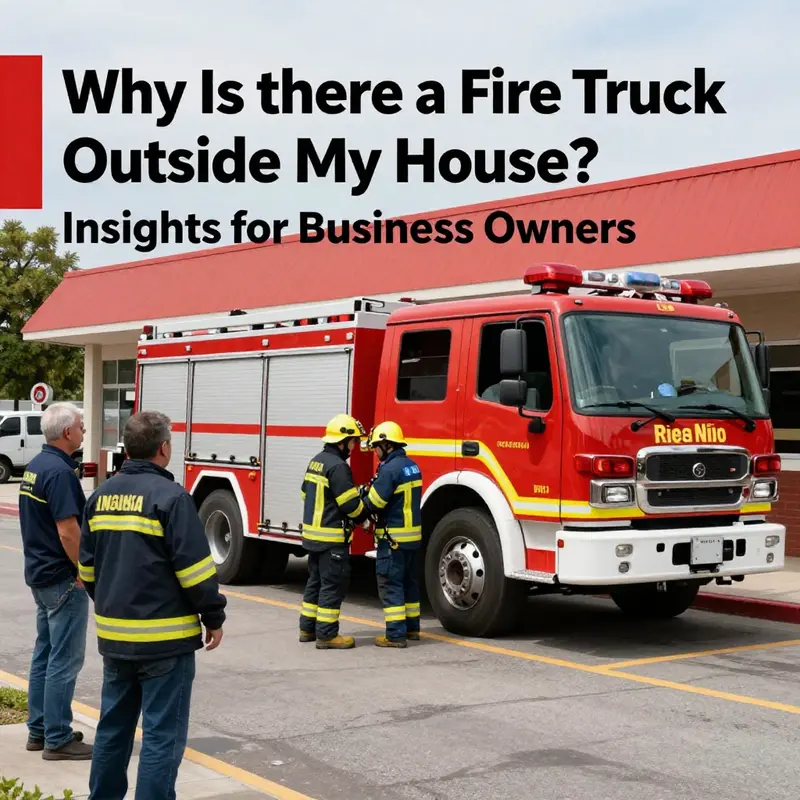
You glance out the window and see a gleaming red apparatus blocking part of the street, its lights flashing in a steady, insistent rhythm. A moment ago the world felt ordinary, and now it’s suddenly crowded with questions. A fire truck at your curb is a dramatic sight, but the moment you notice it, you’re already in a narrative about safety, uncertainty, and civic response. The sight invites more than curiosity; it presses you to act with calm judgment. Why is there a fire engine outside your house? The short answer is simple yet never complete: there are multiple possibilities, and the most likely one depends on timing, context, and the evidence you can observe in the moment. What follows is a guide to reading that moment, to understanding the kinds of emergencies that draw fire crews to a residential block, and to knowing how to respond without escalating risk for yourself, your neighbors, or the responders who have trained to manage danger with precision and care.
Emergency response is the most common and pressing explanation for a fire truck on a residential street. When you hear sirens or see the truck arrive, the crew is usually there because someone is in danger—often someone inside a building, but sometimes in an adjacent yard, garage, or even a car accident. Fires are the starkest image, but the same arrival pattern also covers a spectrum of life-threatening situations where the fire department’s role blends with medical care, rescue operations, and rapid assessment. In many communities, the trucks carry paramedics and equipment to provide immediate medical intervention, stabilize a patient, and support life-saving measures while additional units and specialized teams are en route. A fire engine can function as a mobile first response platform, arriving before other units to establish control of the scene, begin patient care, and begin identifying hazards that could worsen the crisis.
The emergency response scenario that plays out near your home often unfolds in stages. In the first moments after the truck parks, responders rapidly survey the building, the surrounding area, and any visible signs of danger. If there is smoke, fire, or intense heat, the firefighters’ task is explicit: create or secure a path for access, locate the source, and begin suppression or controlled ventilation to limit damage and protect occupants. If there is no visible flame but a reported hazard—gas smell, a skittering sound from the basement, or someone unresponsive—crews pivot to life-saving priorities, using thermal imaging cameras, gas detectors, stabilizing equipment, and communications with dispatch to determine the next steps. In such cases, the sight of red apparatus can be both a reassurance and a reminder that danger is real and evolving. Even when a call ends up being a false alarm or a non-emergency, the dispatch and arrival still reflect a system designed to verify risk, deploy equipment, and safeguard the neighborhood.
Residential fires represent a poignant example of the urgency at hand. The most striking scenario is a fire that takes hold in a home, sometimes spreading from a lower floor to the upper story as heat, smoke, and flame travel through shared walls and stairwells. The human element in these moments is unmistakable: a person inside, an elderly resident perhaps, whose vulnerability is shaped by age, mobility, and the surrounding environment. The firefighters who respond must balance speed with caution, making tactical decisions about ventilation, entry points, and the need to protect other nearby homes. The first unit on the scene becomes a command point, coordinating with arriving crews, communicating with neighbors who may be evacuated, and ensuring that water supply is established and accessible. The image of a two-story residence—like many real-world cases—helps us understand why a fire truck’s presence feels so insistent. It’s not merely a vehicle; it’s a signal that lives and property are at stake, and that trained professionals are mobilizing to manage a dynamic risk.
There are also moments when the plot thickens without flames at all. A medical emergency can draw a fire engine because of the specialized medical training on board and the fire department’s integrated response network. Paramedics ride with firefighters in many departments, ready to perform CPR, control bleeding, stabilize a person with heart trouble, or respond to poisoning or severe trauma. In those instances, the truck’s crew becomes a portable medical team, and the scene’s urgency comes from the patient’s condition rather than visible smoke. This dual role—fire suppression and medical care—means the same red vehicle can be seen at a house where a heart attack is unfolding or at a structure fire whose flames are still contained by the time responders arrive. The perception of danger shifts accordingly, but the core imperative remains: to act quickly, assess threats, and deploy the right tools for rescue and stabilization.
Beyond fires and medical calls, fire trucks respond to threats that may seem less dramatic at first glance but carry real danger. Gas leaks, chemical spills, or reports of structural instability require immediate attention to prevent a catastrophe that could extend far beyond one dwelling. In these cases, crews bring specialized equipment to test air quality, shut off supply lines if possible, and set up safe perimeters to protect bystanders. The firefighters’ approach in such scenes is methodical and safety-forward: establish a zone, keep nonessential people at a safe distance, and use communications to coordinate with utility companies, police, and medical services. Even when the situation turns out to be less dramatic—such as a detection that proves benign—the effort remains a crucial mechanism of prevention. The presence of a fire truck, in this sense, is both a reassurance that hazards are being checked and a reminder that some dangers require professional handling because they involve complex systems like gas lines or hazardous materials.
If you’re fortunate enough to observe the response from the outside without being directly involved, the moment invites a sense of civics-as-safety: a reminder that a community has a dedicated, well-practiced infrastructure designed to intervene at precisely the point where risk becomes intolerable. The firefighters’ arrival is not random or punitive; it is a disciplined sequence of actions calibrated by training, experience, and real-time information from dispatch. They bring not only equipment but a framework for making quick, accurate judgments under pressure. This is why your response, as a neighbor or resident, matters as much as their technical competence. Your cooperation—remaining calm, avoiding obstructing access, and following any instructions from responders—helps the scene unfold more safely and efficiently. When you see a truck outside your own house, your instinct to stay clear and listen to instructions becomes part of the response system, strengthening the overall effort to preserve life and property.
In the middle of an unfolding emergency, the questions you ask yourself matter. Is someone inside needing rescue or medical attention? Is there a potential hazard that could escalate if not controlled promptly? Is there a risk to nearby homes or to people in the area who might be exposed to smoke or dangerous fumes? The more you can observe without compromising safety—whether you notice a strong smell of gas, an unusual hiss of air, or a door left ajar—the better you can understand the scale and nature of the incident. Yet there is also a humility to the moment. Even with every sign on the ground, you may not have the full picture. The responders arrive with radios, cameras, and a disciplined set of protocols; the rest of us are observers who can help by staying out of the way and avoiding speculation that could distract or mislead others.
In conversations with safety-minded residents, the best practice is to view the fire truck as a prompt to check on your own household safety and to prepare yourself for possible changes in the scene. If you live in a house with a basement or a kitchen that could harbor a fire hazard, take a moment to recall simple steps you can take if you ever need to evacuate quickly: know your exits, keep paths clear, and ensure there is a plan for children, elderly family members, or pets. These steps translate a dramatic event into practical prudence, reducing fear with concrete actions. Another practical approach is to consider how you might use the pause between events—the moment when the sirens fade and the truck leaves—to reflect on your fire safety measures, such as functioning smoke detectors, accessible extinguishers, and an up-to-date home escape plan. Although the presence of a truck is a signal of active risk, it can also be a catalyst for strengthening your home’s readiness for future emergencies.
If the moment before the truck’s arrival was marked by uncertainty or a lack of information, you can still engage with the situation constructively. The most reliable path to clarity is direct communication with the responding professionals. Firefighters and medics can confirm whether a call is active, what hazards are present, and what actions are required from bystanders or residents. If you’ve observed something that feels unusual—an unusual odor, a sudden power outage in your neighborhood, or a neighbor signaling distress—describing these observations to the dispatcher or a resident liaison can help local authorities gather a complete picture without risking personal safety. In many communities, the department or the city’s emergency communication system provides a clear, official conduit for updates, including instructions about whether residents should shelter in place, evacuate, or avoid certain streets.
As we consider the broader context, it helps to remember that the presence of a fire truck is not a single event but part of a larger ecosystem of safety. Fire departments perform inspections, drills, and community safety programs that occasionally bring their apparatus to neighborhoods for demonstrations or practice scenarios. When a truck is parked with no active call, it could be the product of a routine drill, a staged training exercise, or even a preplanned safety check designed to improve accessibility and response times in local streets. These non-emergency deployments are essential for maintaining readiness and ensuring that responders can reach homes quickly when a real incident occurs. If you recently received notice of a planned drill or safety training, that context can explain why you might see a fire truck in your area on a quiet afternoon. The key is to remain observant but not alarmed, to respect the crew’s work, and to engage with authorities if you need definitive guidance about your immediate situation.
In the spirit of staying informed and prepared, you may also want to understand the kinds of equipment that often accompany these crews. Fire trucks are more than just red machines; they are platforms loaded with tools for access, stabilization, suppression, rescue, and medical support. Depending on the dispatch, you might see an aerial ladder extending toward a window, a portable ventilation fan moving air through smoke-filled spaces, or a set of breathing apparatus that keeps responders protected as they move through heat and debris. The exact configuration of a given truck can reveal the likely priorities of the call—whether extinguishing, rescuing, or medical care is the immediate focus. While you should not attempt to identify every tool you see or infer the entire scope of the incident from a distance, recognizing that these vehicles are equipped for a broad range of contingencies can help you maintain composure and respect for the responders’ professional capabilities.
Reading the scene with care also means acknowledging the emotional dimension of emergency response. Fear and adrenaline are natural reactions to witnessing a life-threatening event. It is entirely reasonable to feel unsettled or anxious as you observe flashing lights and the bustle of activity. In those moments, it can be helpful to practice a few grounding techniques: breathe slowly, focus on the rhythm of the responders’ movements, and remind yourself that you can contribute to safety by staying back, keeping doors clear, and avoiding speculation that could distract coordination efforts. If you are indoors, you can gently check on others in your household, ensuring that everyone understands where to go if evacuation becomes necessary, and confirming that pets are accounted for and secure. When you do this, you align your personal response with the collective discipline of the scene, turning a potentially chaotic moment into a coordinated, safety-first effort.
Ultimately, a fire truck outside your house conveys a message about the seriousness of a local incident and the readiness of your community to respond. It is a vivid reminder that the infrastructure designed to protect lives operates through teamwork, training, and disciplined execution. If you want to learn more about the broader equipment and vehicle categories involved in such responses, you can explore the Emergency Rescue Vehicle category to better understand the kinds of capabilities that responders bring to a scene. Emergency Rescue Vehicle. This reference is not a guarantee of what you will see on any given day, but it helps anchor your imagination in the reality that responders are equipped for a range of challenges and that the presence of a fire truck is a meaningful, purposeful act within a safety framework that spans fire, medical, and hazard response.
For anyone who wants to go beyond immediate actions and cultivate a more informed perspective, consider the sounds you hear when a siren draws near. Siren patterns, cadence, and volume can signal different types of calls or stages of response, and understanding these cues can help you respond more calmly and effectively. The reasons behind siren sounds are varied and depend on the system in your area, but you can find practical explanations that illuminate these common experiences. For more on the common causes and meanings behind sirens, see this external resource: https://www.mrt.org/why-is-that-siren-going-off-near-me-common-causes-meanings/ . In the meantime, as the truck passes and the scene evolves, you can carry with you a sense that safety is a shared responsibility. By combining observation with informed actions, you contribute to a safer neighborly environment and support the professionals who are trained to manage danger with skill and care.
null
null
Blocked Access, Fast Response: Why a Fire Truck Stands Outside Your House and What It Means for Emergency Access
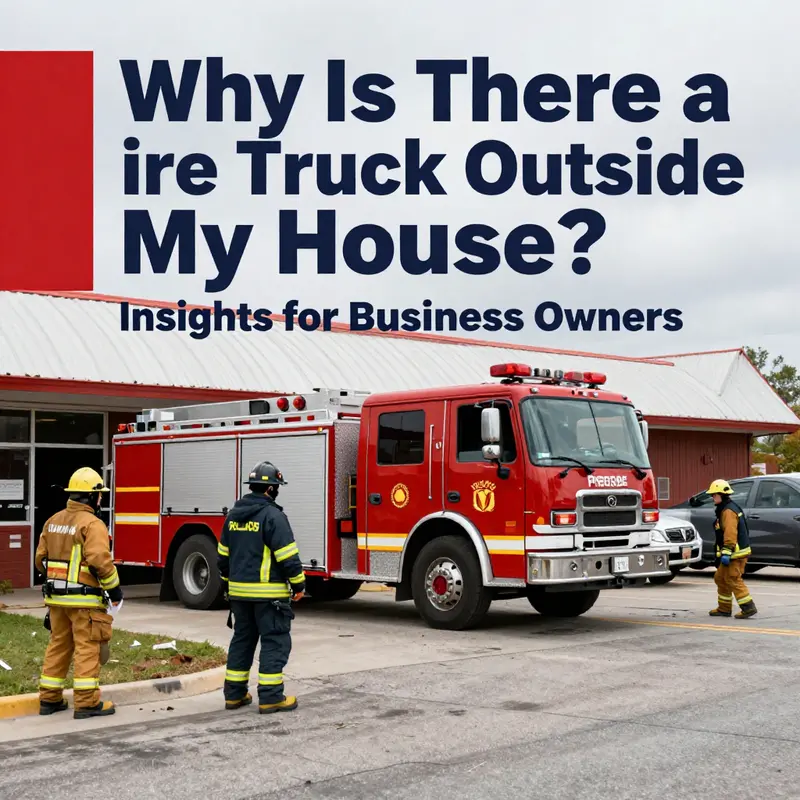
The moment you step into the quiet of your street and glimpse a fire truck parked near your home, the world seems to tilt toward two questions at once: what happened, and how did the vehicle get there so quickly? The sight is jarring, even when you know you’re safe. The crew’s presence is a sign that someone’s life or property may be in danger, or that a thorough check is underway. Yet for many residents the more pressing, practical thought happens the moment the engine’s siren yawns to a close and you notice the space around the driveway or the street is crowded with cars, cones, or simply the weight of habit and fear. In this moment, the idea of blocked access moves from a technical phrase used by responders to a tangible reality that can shape outcomes on the ground. To understand why a fire truck might be outside your house, it helps to think of blocked access not as a bureaucratic rule but as a real-time challenge that can alter arrival times, the routes firefighters choose, and the tools they bring to bear on a given scene.
Blocked access is, at its core, a straightforward problem with outsized consequences. It describes a situation where driveways, sidewalks, or streets are obstructed by parked vehicles, debris, or other barriers that prevent large emergency vehicles from moving freely or positioning themselves for the work at hand. In the vast majority of cases, the firefighters arrive prepared to act. They know that their first minutes at a scene determine whether a fire is contained before it spreads, or whether a medical emergency can be stabilized before a patient’s condition worsens. Yet even the most well-coordinated crew can meet a hurdle that slows or reroutes their efforts when access is compromised. The problem is not simply a matter of convenience. It can influence hose lays, ladder placements, and the ability to deliver water or other suppressants exactly where they are needed. It also affects the safety of both the crew and bystanders, since a blocked path increases the chance of trips, tangled hoses, or delayed evacuation routes. In this sense, blocked access is not a nuisance; it is a real factor that shapes the scope and speed of a response.
The way these obstacles manifest themselves varies by setting. In urban neighborhoods, streets are narrow and parked cars crowd the curb. Fire trucks, with their bulky profiles and long wheelbases, often require more room to maneuver than a car or a small delivery vehicle. A single parked sedan can create a choke point, forcing firefighters to choose between a longer, less direct route or a temporary halt while the street clears. In these moments, the firefighters’ best tool is not a flashy device but the disciplined choreography of a well-practiced team, along with a sense of improvisation born of experience. They may communicate over loudspeakers, ask bystanders to move vehicles, or re-route to a different access point that still allows them to reach the building. The design realities of the vehicles themselves—large turning radii, high ground clearance, and the volume of equipment they carry—mean that even minor impediments can derail an efficient approach. The result is not merely a delay; it is a shift in strategy, a pivot from a direct attack to a more careful, staged operation that preserves life and property while minimizing risk to responders.
Blocked access is not only about the physical obstacles on a street or driveway. It also intersects with how communities regulate and manage spaces around critical routes. Municipalities commonly enforce parking prohibitions near hydrants, intersections, and other designated emergency access points. The aim is to preserve as much arterial space as possible for fire apparatus and other responders, because the consequences of a delayed response can be severe. When a fire truck remains outside a home despite the absence of visible flames, it can be a sign that access needs to be evaluated. Perhaps a car has been left in a driveway that blocks the egress of the fire engine’s easier path to the front door. Maybe an obstacle has emerged in the street after a preliminary assessment, requiring the team to consider alternate routes or to request assistance from police in clearing the approach. In some cases, the crew is already managing a drill or inspection at the neighborhood scale, which can produce a temporary but understandable confusion for residents trying to determine the exact nature of the incident. Regardless of the specific scenario, the underlying theme remains constant: clear access optimizes the chance for an effective, timely response.
Another layer to consider is the evolving toolkit of fire services, which increasingly blends traditional methods with modern technology to improve situational awareness and outcomes. Thermal imaging cameras, for instance, help firefighters identify hot spots through walls or smoke, revealing danger behind closed doors or within concealed spaces. Remote monitoring and personnel tracking add a level of coordination that makes the best possible use of the space a truck can occupy on the ground. Even with these advances, the fundamental constraint remains physical access. No amount of digital precision can reverse the simple physics of a turning radius and a street too narrow for the vehicle to pivot comfortably. In this light, blocked access becomes not a footnote but a central factor that shapes how a scene unfolds, how resources are deployed, and how quickly a home can be made safe again.
It’s also worth noting that there are legitimate non-emergency explanations for a fire truck to be seen near a house. Not every visit implies a fire, and not every alert ends in a dramatic, dramatic outcome. Fire departments routinely conduct inspections, hydrant testing, and training exercises in residential areas to keep crews sharp and to ensure the infrastructure holds up under real-world demand. If you’ve noticed a notice about planned community drills or routine checkups in your neighborhood, the presence of a truck could reflect these proactive activities rather than a response to a siren-filled crisis. In such cases, the goal remains public safety, but the dynamic is different: the vehicle’s purpose may be to verify access routes, rehearse communication plans with building occupants, or validate where hoses can be deployed most efficiently in the unlikely event of an actual emergency. Even within these seemingly routine activities, blocked access can surface as a practical challenge that provides learning opportunities for residents and officials alike. Understanding this helps people distinguish a drill or inspection from a genuine emergency, while also reinforcing the importance of keeping routes unobstructed.
There are ways residents can respond that align with good safety practices, particularly when a truck is outside and the scene is still evolving. If you are near a driveway or street where a large vehicle is stationed, resist the impulse to squeeze around it or to assume you can help by moving equipment yourself. Firefighters operate within a highly trained protocol designed to protect everyone involved, including bystanders, pets, and the vehicle crew. If you need to pass by, communicate clearly with the crew, follow their directions, and give them space to work. If you’re curious about what’s happening, asking politely for an explanation can yield real-time information about whether access needs to be cleared or if a specific action is required from residents. In some cases, simply stepping back and allowing the operation to proceed can prevent accidental interference that could compromise the crew’s safety or the integrity of their work. And while the sight of a tug-of-war between a parked car and a moving truck might be dramatic, it is the quiet, professional cadence of the responders that often wins the day in the end.
From a broader perspective, recognizing blocked access as a defining factor in many on-site dynamics helps reframe the way communities think about safety around the home. It emphasizes the necessity of keeping driveways and access routes clear, of respecting posted no-parking zones, and of understanding that a fire truck’s presence is not a nuisance but a signal that every second matters. The more residents understand the logistical realities of emergency response—the way large vehicles need space to maneuver, how streets and driveways can become chokepoints, and how crews adapt when access is compromised—the better prepared communities become to support rapid responses. This awareness does not imply blame or blame-shifting; it invites practical solutions that can reduce delays and improve outcomes. It also reinforces the idea that small, everyday actions—like parking off the street, keeping a clear clearance around hydrants, and reporting hazards promptly—can contribute to a faster, safer, and more effective emergency response when it is most needed.
If you’re looking to deepen your understanding beyond everyday experience, you can think of blocked access as part of a larger system that includes vehicle design, urban planning, and municipal regulation. Fire trucks are engineered with purpose-built features for rapid deployment, but even the best design has to contend with real-world constraints. The interplay between the physical realities of streets and the scale of emergency vehicles means that every improvement in access can translate into tangible gains in response time and effectiveness. It’s a reminder that public safety is a shared responsibility, one that benefits from proactive readiness, clear communication, and a community-wide commitment to keeping routes unobstructed.
For readers who want to explore the broader context of how fire-response vehicles are designed and standardized—and what that implies for the way an access point is managed in residential settings—an external resource offers a technical perspective on design, standards, and manufacturing that underpins these practical considerations. This larger view helps connect what you observe outside your house with the machinery and protocols that make emergency work possible in the first place. External resource: https://www.fireengineering.com/fire-truck-van-types-standards-manufacturing/. In the meantime, if you want to see how a specific category of response tools is framed within the broader ecosystem of emergency equipment, you can explore related discussions about emergency rescue vehicles and their role in urgent, on-site decision-making. For a direct nudge toward related items that could appear in a response scenario, consider the emergency-rescue-vehicle category. It offers a window into the kinds of platforms that responders rely on when time is critical and space is tight, and it is linked here for convenience: emergency-rescue-vehicle.
False Alarms and Their Impact on Why There is a Fire Truck Outside My House

The sight of a fire truck parked outside your house can feel at once alarming and mundane, a paradox that speaks to the complexity of how modern emergency response works. When you notice flashing lights and the distinctive wail of sirens falling silent just beyond your kitchen window, your first impulse is often a mix of concern and curiosity. Is someone inside in danger? Has smoke crossed into your neighborhood? Or is this a drill or a routine check that somehow landed at your doorstep? The most immediate answer is usually the simplest: there is a reason the responders are there, and it may range from a genuine emergency to something far more routine. Yet the broader pattern behind that moment—the way false alarms ripple through communities, fire departments, and the sense of safety people carry—gives this scene its real texture. False alarms are not merely misfires; they are a testing ground for public trust, system design, and the everyday logistics of keeping people safe. They illuminate why a fire truck might end up outside your house even when there is no visible fire to extinguish, and they reveal how responders balance speed with judgment, caution with efficiency, and urgency with the practical realities of urban and rural life. In this chapter, we follow that thread through the practical, the procedural, and the psychological layers of the phenomenon, willfully resisting the urge to reduce the moment to a single explanation. Instead, we trace how a single visit from a fire truck can unfold into a constellation of possibilities, each with its own implications for safety, trust, and community resilience.
To begin with, the most straightforward explanation sits at the core of what most people think of when they hear a siren: an emergency on the scene that requires rapid action. Fire departments respond to calls that can range from active fires to medical emergencies, and even when the situation is not immediately visible to bystanders, the units in the vicinity are trained to treat any call as potentially dangerous until proven otherwise. The dispatch is a decision tree that emphasizes speed and caution. When a truck arrives, the crew is prepared to assess, to enter if needed, to coordinate with other units, and to provide a first line of defense while more specialized teams come into position. The outside appearance of the truck—its size, the ladder rig, the hoses coiled at the ready—signals that help is near and that the situation is being treated with seriousness. But not every arrival is a signal of danger that will escalate; sometimes it is a confirmation that a concern, perhaps voiced by a neighbor or triggered by a smoke detector, is being checked in real time. In such cases, the truck becomes a mobile assertion of safety rather than a drumbeat of alarm.
Beyond the scene itself lies a broader ecosystem that shapes when and why a fire engine detaches from its routine patrols and drives to a particular block. A sizable portion of real-world responses involve not a collapsing roof or a pluming plume of smoke, but a reported smell of smoke, a visual cue, or a detector’s intermittent chirp that suggests a problem—however small or localized—that demands professional investigation. In many neighborhoods, fire departments run ongoing surveillance as part of a public safety program. This includes routine inspections of hydrants, access routes, and building codes, all of which can require the presence of a fire vehicle in residential areas. It is not uncommon for crews to rehearse response patterns in a way that looks like a real incident to residents who happen to be outside at the moment. The purpose is not to surprise the public but to ensure that, should a genuine emergency arise, the department can move with precision and speed. When a truck is observed near your home without obvious signs of danger—no visible flames, no active rescue operation—it is tempting to interpret the scene as an anomaly. Yet the overlapping responsibilities of prevention, readiness, and rapid response mean that such appearances may be more routine than they seem, part of a system designed to limit harm even when hazards are uncertain.
This is where the concept of false alarms becomes crucial. False alarms test the reliability and resilience of the entire fire-safety ecosystem. They require dispatch, mobilization, travel, and on-scene assessment, all of which consume scarce resources—time, fuel, and personnel—at a moment when every second can matter for those in true peril. When a detector tips toward danger without a real threat, responders must treat the concern with the same seriousness as a real fire, because the risk calculus behind emergency response centers on the possibility, not the certainty, of danger. In practice, this means that a false alarm can tie up a crew for minutes, or in some cases longer, while additional units are diverted to verify the situation, or until the home is deemed safe. The effect is cumulative: more incidents, more calls, more miles logged on the engines, and more hours spent away from other communities that may be in greater need.
The operational toll of false alarms extends beyond mere time. Each dispatch has a cost associated with it: the wear and tear on vehicles, the consumption of fuel, and the fatigue that accumulates among responders who must remain alert in the face of repetitive alerts. Recurrent false alarms can contribute to a broader fatigue in the system, a phenomenon that scholars note as desensitization or responder fatigue. When crews repeatedly answer calls that turn out to be harmless, their urgency in future true emergencies can be affected, not because they become careless, but because the cognitive load of constant vigilance becomes heavier. In lay terms, the body and mind of the responder operate under a rhythm that is tempered by experience. If the majority of calls drift toward non-emergency situations, the next real emergency may be met with a momentary lag—the crucial moment when a door is opened to the fire, or when a life is in immediate danger and every second counts. This reality underscores why officials emphasize accuracy and calibration in both detection technology and public education about safety systems.
Public trust follows closely behind operational efficiency in this narrative. When a community experiences frequent false alarms, residents can become skeptical about the reliability of fire safety measures. This skepticism does not imply that alarms are useless; rather, it points to a need for better communication, education, and system design. People want to know what triggered a response, what steps they should take, and when to expect that images of the scene will be mirrored by information from officials. If residents begin to doubt the veracity of alarms, they may be tempted to silence detectors or to second-guess official guidance, a move that paradoxically increases risk. The dynamic is a reminder that technology alone does not guarantee safety; it must be paired with clear, timely communication that helps people interpret what they see and hear. In this sense, false alarms serve as a lesson in trust-building: the public needs to understand the reasons behind a response, even when the immediate danger is not visible to the naked eye. When communication is transparent and the public feels informed, the presence of a fire truck outside the home can be contextualized not as a sign of an impending disaster but as a robust precaution—an external demonstration that safety systems are active, vigilant, and designed to prevent tragedy before it unfolds.
Technology plays a pivotal role in shaping how often and how convincingly false alarms arise. Spot-type smoke detectors, in particular, have an outsized impact because they are draft-sensitive, easy to trigger by normal kitchen activity, steam, or dust, and sometimes placed in locations that invite false positives. The challenge is to balance sensitivity with specificity: detectors that are too easily triggered will generate more alarms, while overly cautious devices risk missing genuine hazards. Researchers and engineers are working toward sensors that better distinguish real threats from benign environmental signals, technologies that can suppress false triggers while preserving life-safety margins. This is where correct installation practices enter the conversation. Even the most advanced detector can fail to serve its protective purpose if it is placed in a poor location, exposed to cooking fumes, or not maintained properly. Regular testing, battery replacement, and careful placement near sleeping areas or kitchens can reduce the frequency of false alarms and help ensure that when a fire does occur, detectors will respond promptly and accurately.
The practical implications for homeowners are clear, even as the science behind the system remains complex. If you find a fire engine outside your house, the safest first step is to remain calm and assess the situation from a safe distance. If there is visible danger or an active incident, follow the directions of responders and contact emergency services only if you need to report additional concerns or seek assistance for someone who may require medical attention. If the scene appears calm and the responders confirm that there is no hazard, you should still acknowledge the human element of the encounter: you are witnessing a team trained to respond to uncertainty, to verify, and to ensure safety for everyone in the vicinity. If a false alarm is suspected, you can approach calmly and politely, asking whether the alarm was genuine or a test. Firefighters appreciate straightforward questions that respect their work while conveying public concern. In some cases, a short explanation about the source of the alarm—cooking smoke, steam, a draft, or a maintenance issue—can help quell anxiety among neighbors who are watching from their front yards or windows. When communities understand the reasons behind the response, the scene becomes less dramatic and more of a coordinated effort to keep people safe.
The chapter’s broader message circles back to the idea that the question of why there is a fire truck outside your house is rarely a single, definitive answer. It is a composite of immediate danger assessment, system design, resource management, and public education. It is also a reminder that safety is a collective project—one that requires people to maintain detectors, to keep communication channels open with responders, and to respect the work that emergency crews do in protecting the fragile line between prevention and catastrophe. As you reflect on a moment when a truck rolled up to your curb, you may notice more than the flashing lights. You may notice the careful choreography of responders as they move with purpose yet restraint, their actions speaking to a broader ethos: respond quickly, verify thoroughly, and preserve the capacity to save lives whenever danger might emerge. This ethos is not only a professional obligation but a civic trust, a mutual recognition that a community’s safety depends on both the readiness of its emergency services and the responsible behavior of its residents.
For readers who want to explore further, the topic of false alarms extends beyond the walls of one neighborhood. It connects to larger questions of how we design and maintain fire safety systems, how we educate the public to respond to alarms, and how we balance the inevitability of human error with the imperative to protect life and property. In this sense, the scene outside your house becomes a microcosm of a larger public-safety conversation. It prompts reflection on how we can reduce unnecessary responses without compromising protection, how we can improve detector technology without lowering vigilance, and how we can sustain public trust even when alarms prove less than perfect. By attending to these questions, communities can transform the disruption of a false alarm into an opportunity for learning, improvement, and collective resilience. The next time you notice a fire truck in your neighborhood, you might still feel a jolt of concern, but you can also recognize the moment as part of a broader effort to keep you safe—an effort that blends technology, training, and transparent communication into a system that aims to prevent harm before it happens.
External resource for further reading: https://www.sciencedirect.com/topics/engineering/false-alarm
Internal link for related context: emergency rescue vehicles
Final thoughts
Understanding the various reasons why a fire truck might be parked outside your business is essential for preparedness and community relations. From emergency responses that necessitate immediate action to routine inspections aimed at ensuring safety, each scenario plays a crucial role in maintaining a secure environment. Additionally, knowledge about blocked access and how false alarms can occur helps mitigate misunderstandings that might arise among business owners and staff. As a business owner, being informed about these potential situations can not only ease concerns but also enhance your readiness for any eventuality.

