
















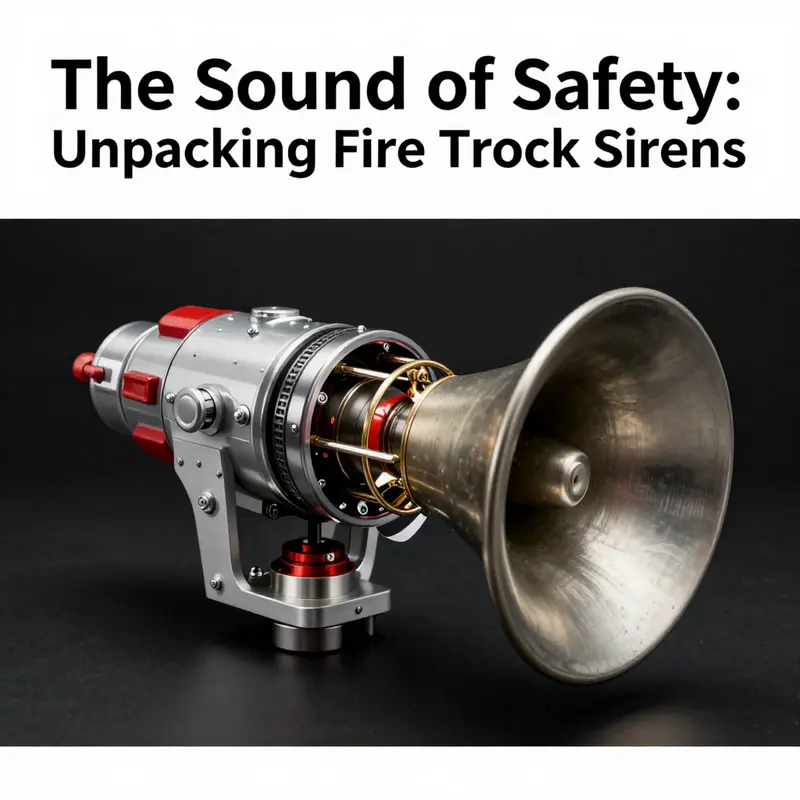
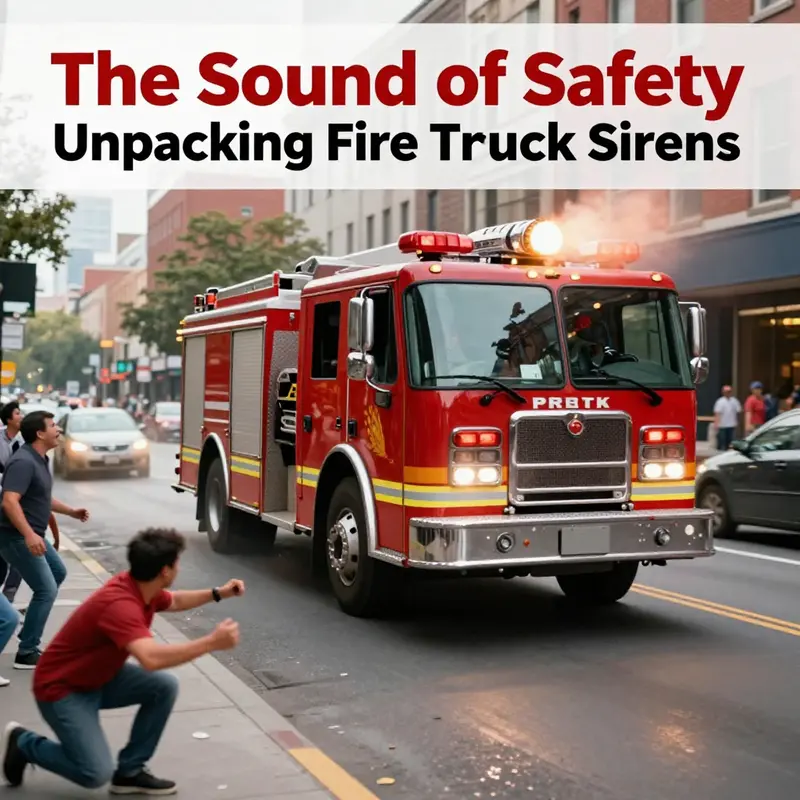
Fire truck sirens are more than just loud noises; they are vital tools that ensure public safety during emergencies. In bustling urban settings, the distinctive wail of a fire truck siren cuts through the noise, alerting both pedestrians and other drivers to the immediate need for awareness and action. Understanding the mechanics behind these sirens, their pivotal role in emergency responses, the cultural perceptions they invoke, technological advancements shaping their sound, and the legal frameworks governing their use is essential for business owners, especially those in industries intertwined with public safety and emergency services. This article delves into each of these aspects, providing a comprehensive look at how fire truck sirens function and why they matter.
null
null
null
null
The Wail as a Cultural Signal: Fire Truck Sirens, Society, and the Soundtrack of Emergency
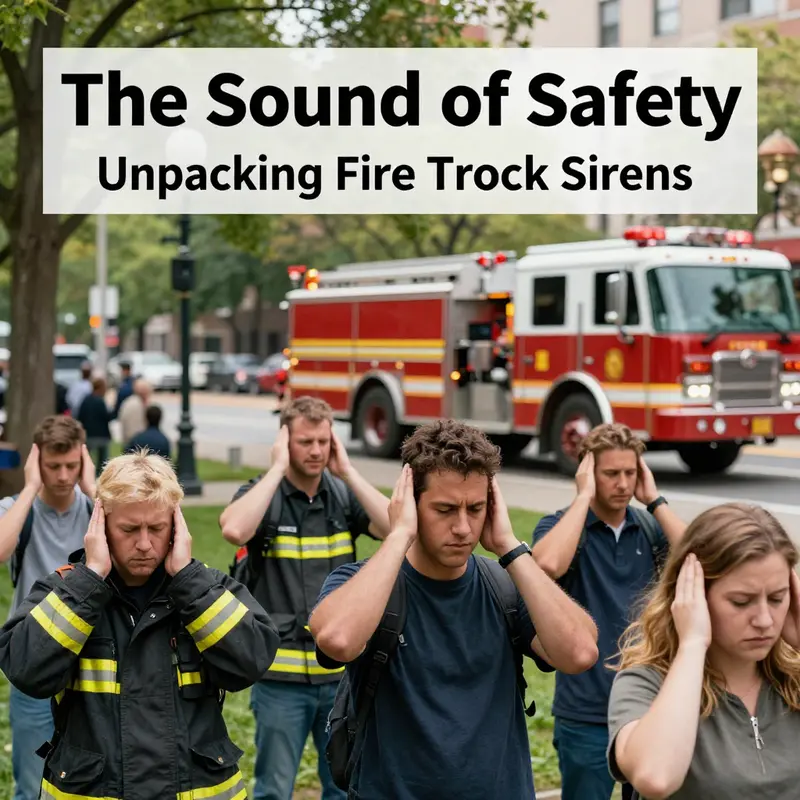
The moment a fire truck’s siren unfurls its rising, pulsing wail through a city street, it does more than announce an approaching vehicle. It enters the shared space of a community as a cultural signal, a sound that carries history, expectation, and emotion across languages and landscapes. The siren’s goal is simple in design—grab attention and compel immediate action—but the meaning it carries can vary with context, memory, and ritual. In many places, the siren becomes a kind of audible calendar marking a kind of urgent truth: life is unpredictable, and systems of safety depend on the public’s willingness to respond quickly. The wail, with its high pitch and shifting rhythm, is not just a sonic cue but a social instrument that modelers and listeners use to coordinate movement, risk, and relief. It is heard not in isolation but within a chorus of urban sound—horns, footsteps, the distant rumble of trains, the crackle of a nearby fire, the faint hiss of air brakes—and yet it manages to stand apart enough to demand a pause, a deviation from routine, and a reordering of the day.
The siren’s characteristic pattern—the rise and fall of a wail, sometimes punctuated by sharper yelps—speaks to a law of perception as old as city streets. Humans are wired to notice abrupt changes in sound, especially those that climb in pitch and then retreat. The alternating tones are engineered to be distinctive and hard to ignore, a design choice that transcends language and even culture. When people hear this pattern, they instinctively shift attention: drivers slow, pedestrians pivot, cyclists drift to the curb, and storefronts briefly dim the rhythm of their normal day to allow a path for the responder. This automatic choreography demonstrates how sound shapes behavior. The siren becomes a co-author of public space, guiding actions more reliably than many visual cues could in a crowded, visually cluttered environment. In cities where noise is a daily companion, the siren still rises above the din, a reminder that some sounds carry urgent responsibilities and social expectations that supersede the desire to return to routine.
Cultural nuances thread through how sirens are perceived and regulated. In Western democracies, the siren functions within an established etiquette of yielding and clearing roads. It is embedded in traffic codes, emergency protocols, and everyday habits that citizens acquire from early childhood through car rides, school crossings, and communal norms. The result is a durable expectation: when the wail comes, the world tilts toward safety. Yet the way this is enacted differs. In some densely populated Asian metropolises, the emphasis shifts toward directional clarity and minimizing disturbance to nearby residents. Sirens there may be designed to project more precisely toward the path of the vehicle, balancing effectiveness with longer-term quality of life in crowded neighborhoods. In more rural or less densely gridded regions, the approach can feel more dramatic, with the sound carrying farther and arriving with a sense of occasion—the arrival of help arriving on a quiet landscape can be as striking as it is reassuring. These differences reveal a cultural calculus about risk, responsibility, and noise: a negotiation between the imperative to save lives quickly and the shared tolerance for disturbance that comes with city living.
Across cultures, the siren has also woven itself into the fabric of storytelling and popular imagination. Its presence in film, television, and video media has cemented the siren as a visual-auditory shorthand for urgency, danger, and sometimes chaos. When audiences hear the pattern of rising and falling tones, they anticipate a turn in the narrative—the arrival of help, the escalation of tension, or a moment of relief once the danger passes. In this way, the siren becomes more than a sound; it becomes a cultural symbol, a memory trigger that can evoke both real-world experience and imagined scenarios. The cultural resonance of the siren is reinforced by its use in sound design across different media and genres, where editors craft the audible identity of emergency through layered textures, from the stark clarity of a single passing note to the enveloping ambience of a city street in the background. The siren’s cultural power lies in its universality and its versatility: it can signify imminent danger, swift response, or the hopeful arrival of rescue, depending on how it is framed by the surrounding soundscape and the audience’s past encounters with the sound.
What makes the siren profoundly social is not only its acoustic architecture but also how communities learn to react to it. Pedestrian behavior, for instance, is influenced by the perceived speed and direction of travel—whether the vehicle is approaching from behind, passing on the left, or turning a corner. The public’s response is shaped by local rules, but it is also a matter of collective memory. People recognize the difference between a routine test and a genuine emergency, and that recognition informs how swiftly they respond. The urban noise environment—where ambient traffic, construction, and crowd chatter compete for attention—also matters. In such environments, a siren designed to cut through the noise must remain legible, a challenge for which designers continually test and refine the sonic signature. The cultural imprint of the siren, then, is a blend of legal structure, neighborhood acoustics, and the shared experience of living near the edge of crisis and relief.
From a production and design perspective, the siren’s cultural significance shapes how creators select and shape sound. For media projects that require a realistic, emotionally resonant emergency atmosphere, there is a broad spectrum of sound options. The goal is to capture authentic perception without overwhelming the listener, to convey urgency without fatigue, and to provide a sonic cue that resonates with audiences across contexts. Sound libraries and licensing options offer a range of textures, tones, and dynamics to match the setting—whether it’s a bustling metropolis or a quiet rural road. The details matter: the length of the wail, its modulation pattern, the accompanying hum of city ambience, and the way the sound sits in the mix relative to the other street noises. The siren becomes less a single sound than a coherent sonic event that interacts with timing, space, and the emotional weather of a scene. As part of this process, designers consider how a siren’s brand of urgency aligns with the broader narrative about safety, community resilience, and the ethics of emergency response.
In conversations about culture and emergency sound, it is helpful to connect the theoretical with the practical. For readers curious about how these signals function in real-world ecosystems, there exists a wide range of resources that discuss emergency-vehicle acoustics and the supply chains that support them. For example, discussions emphasize the importance of balancing loudness, directionality, and intelligibility in different urban contexts, and they remind us that sound design is as much about policy, infrastructure, and community norms as it is about the frequency spectrum. When building or selecting a siren for a project or for training, one can consider a spectrum of options—from basic, legally compliant clips to more sophisticated, environment-tailored simulations. And for those who want to explore how such signals are integrated into emergency-response environments on a broader scale, a useful touchpoint is the category page dedicated to emergency-rescue-vehicles, which offers insights into the devices and configurations that communities deploy to meet these urgent needs. emergency-rescue-vehicle
As the sonic vocabulary of emergency response continues to evolve, the siren remains a powerful mirror of cultural priorities: it embodies speed and protection, respect for the vulnerable, and the shared discipline of moving with others through the urban maze. Designers and policymakers alike grapple with how to retain the siren’s indispensability while reducing unnecessary disturbance, all in service of a safer, more considerate public realm. The cultural story of the fire truck siren, then, is not a simple tale of a device. It is a continuous negotiation among memory, policy, technology, and daily life—a negotiation that unfolds every day whenever the wail rises and the street obliges, if only for a moment, to yield to the call for help. For those who study sound as culture, that moment is a rich field of examination, revealing how communities hear, respond, and relate to one of the most recognizable signals of emergency in the modern world. And as cities grow and soundscape expectations shift, the siren’s place in our collective consciousness will likely continue to evolve, turning the wail into a barometer of how we balance safety, sound, and shared space in an increasingly interconnected world. To look beyond the street and into the studio, into the policymaking rooms, and into the civic conversations that shape traffic, noise, and resilience, keeps the siren not only audible but meaningful in the long arc of social adaptation.
For a deeper look at how siren technology reflects emergency response priorities and their global implications, see the external resource: https://www.supplierinsights.com/fire-truck-siren-supplier-guide
Ringing Forward: The Technological Evolution of Fire Truck Sirens and What It Means for Safety
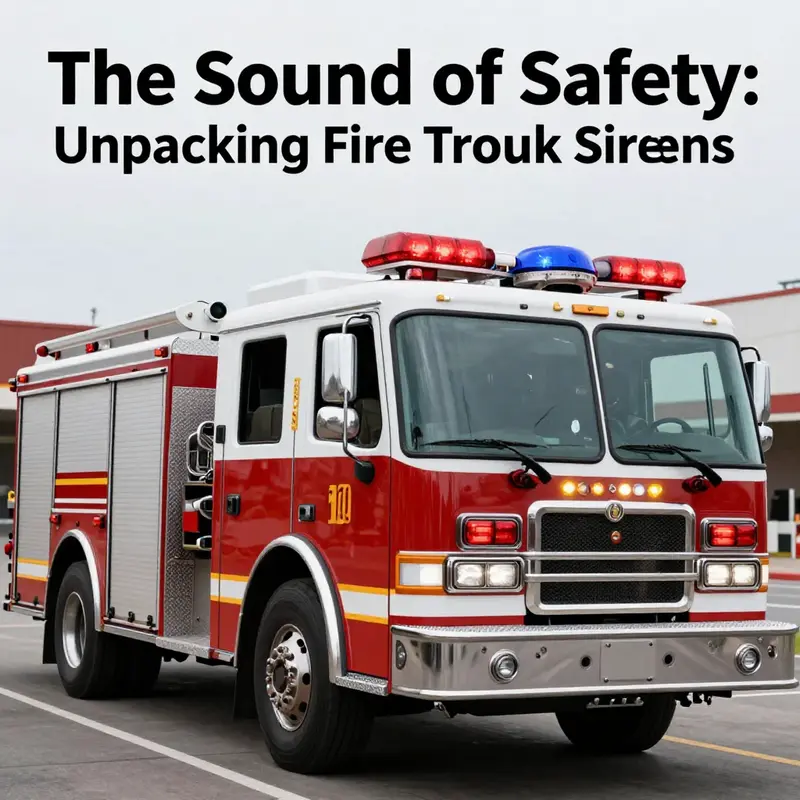
In the rhythm of an urban morning, a siren can loom as a boundary between chaos and order. It is not merely a loud noise but a carefully engineered signal designed to cut through traffic, weather, and city din while minimizing collateral disruption. The chapter of the fire truck siren we now consider moves beyond the image of a single piercing tone. It traces a trajectory from blunt auditory force to a sophisticated, data-informed system that speaks with intent. The result is a siren whose voice is more precise, more considerate, and more capable of guiding a swift and safe response through the complex choreography of a contemporary city.
At the heart of this evolution is sound projection. Modern sirens have migrated from purely mechanical origins to electronic sound generation systems that can deliver a broader palette of tones and patterns. The spectrum is no longer limited to one or two wail shapes; it now includes cadences that can be tuned to the moment, the location, and the urgency. This expanded tonal repertoire enables responders to tailor notices to different road geometries and traffic conditions. More importantly, it supports directional audio. With phased array technology, a siren can tilt and steer its acoustic energy toward critical corridors—intersections, arterial lanes, or narrow canyons—while dialing back the volume in residential blocks. The acoustic footprint becomes a strategic asset rather than a nuisance, enabling an urgent signal to be heard clearly where it matters most without saturating the surrounding neighborhoods.
The shift toward directional audio interacts with the city’s own acoustic ecology. As sound travels, it interacts with building facades, street furniture, and even the weather. Engineers calibrate phased arrays to account for reflections and ambient noise, so the message reaches its intended recipients with intelligibility intact. This is not about louder by default; it is about smarter sound. The aim is to preserve the urgency of the call while reducing the accidental spillover into schools, clinics, and quiet residential streets. In practice, this means a siren can be loud when necessary and restrained when the context calls for restraint, a balance achieved through precise engineering rather than blunt brute force.
Alongside projection, adaptive sound output represents another pillar of progress. Digital signal processing can monitor ambient noise levels and adjust the siren’s level in real time. In a bustling downtown, the siren may maintain a high level of audibility across blocks, yet in calmer neighborhoods it can modulate to preserve sleep cycles and reduce disruption. The adaptive approach also helps manage energy efficiency. By allocating power where it is most needed and reducing wasteful amplification, modern systems free up resources for other critical vehicle systems while preserving the effectiveness of the warning signal.
These advances dovetail with what urban planners and emergency managers label as situational awareness. A siren is not only a warning; it is a portable notification system with a purpose. When drivers and pedestrians hear the sound, they form a mental map of where the emergency vehicle is and where it is headed. This cognitive map hinges on the siren’s clarity, predictability, and tempo. The patterns themselves—sweeping wails, pulsed pulses, or pre-programmed sequences—are not arbitrary. They are designed to cue different actions: vehicles pull to the right, pedestrians pause and look, and intersections begin to yield in a coordinated fashion. In this way, the siren becomes part of a broader communication system rather than a single, shout-like alert.
A further layer arises with smart siren systems that connect to broader transportation networks. When a fleet’s telematics feed real-time data into traffic management platforms, siren patterns can adapt to current conditions. If a corridor is congested, the system can prioritize live route segments that offer the fastest clearance while maintaining public safety and audible visibility. The integration extends beyond mere preemption of traffic signals. It also introduces context-aware messaging. In some models, spoken announcements can accompany the siren pattern, such as concise phrases indicating an approaching emergency vehicle. While this feature must be used judiciously to prevent confusion or panic, it holds promise for public understanding and compliance in busy urban spaces.
The move toward smarter sound does not happen in isolation. It rests on robust standards and careful material design. The physical construction of the siren—from housings to transducers to cooling systems—determines reliability under heat, rain, and vibration. Resilience is essential when sirens are deployed at high speeds on rough roads or during long shifts across varied climates. Technical standards govern how devices withstand environmental stress, how they calibrate sound output, and how they interface with vehicle electronics. The goal is consistent performance across a fleet and across the city, so responders can rely on the same dependable signal whether they are in a crowded downtown or a quiet suburb.
As this technological thread tightens, the siren’s relationship with the public evolves as well. The movement toward integrated voice announcements, when used, marks a shift in how information is conveyed. A clear, concise message can reduce uncertainty for pedestrians and motorists alike, helping people make safe and timely decisions. A well-designed voice cue complements the auditory warning, offering a direct call to action while the primary siren keeps the urgency palpable. This dual modality—sound plus words—must be carefully balanced to avoid creating new kinds of confusion. When executed with care, it fosters smoother interactions between emergency responders and everyday city life, turning a moment of stress into a coordinated, understood sequence.
From a design perspective, the current trajectory emphasizes modularity and interoperability. Sirens are increasingly conceived as components of a larger digital ecosystem. They exchange data with fleet management software, traffic sensors, and, potentially, autonomous vehicles sharing the road. The idea is not to replace human judgment but to amplify it. Real-time data, predictive models, and intuitive acoustics work together to shorten response times while safeguarding public spaces. In practice this means emergency crews reach destinations sooner, with less exposure to danger, and with bystanders better prepared to respond. The city then gains a form of adaptive resilience: a system that can reconfigure its warnings as conditions shift, from a mild drizzle to a thunderous cityscape.
For professionals designing or maintaining a fleet, the implications are practical as well as philosophical. Calibration procedures, routine testing, and cross-agency coordination become part of the everyday workflow. The aim is to keep the siren faithful to its function while ensuring it remains a trusted instrument in a city’s emergency response. The result is a voice that can travel farther with less noise, a message that can be heard by those who need it most, and a system that respects the shared spaces it briefly invades. In this light, the siren embodies a responsible use of technology—a balance between alerting, informing, and protecting the public without becoming a source of needless agitation.
For readers seeking a sense of how this evolution translates into field reality, consider the broader ecosystem around emergency vehicles and their sirens. The available resources—academic work, industry research, and practical field reports—underscore a common point: progress is measured not only by louder notes but by smarter notes that travel where they should and stay quiet where they must. The practical value extends to the road users who must react in real time. When a driver sees a vehicle with a directed sound cue or hears the subtle shift in a pattern that corresponds to an approaching fleet, decision-making becomes swifter and safer. Pedestrians learn to pause, cyclists move aside, and motorists yield with less hesitation. The cumulative effect is a city that moves more harmoniously under pressure while preserving the peace of everyday life.
In closing, the trajectory of fire truck sirens is less a single invention than a convergence of acoustic science, digital signal processing, and networked mobility. Electronic generation, directional projection, adaptive outputs, and smart integration together redefine what a siren can be. They transform a stark overture into a responsive, context-aware instrument that helps emergency services arrive faster and safety endure longer. The voice of the siren is still a signal of urgency, but it now carries the weight of deliberate design and shared responsibility. As cities grow and roads become more complex, this evolution will continue to shape how communities respond to crises and how those crises are resolved with less disruption and greater care.
As a practical note for readers who want to explore related topics further, consider this path: Emergency Rescue Vehicle category. It opens a window into how broader vehicle fleets are adapting to new demands, including how siren systems fit into contemporary emergency response strategies. Emergency Rescue Vehicle category
For a deeper dive into the technical standards and material composition that underpin these advanced sirens, see the external resource on Siren City’s technical overview. It provides a rigorous framework for understanding how modern sirens are built to endure, operate, and communicate at the highest levels. https://www.sirencity.com/technical-overview
Echoes of Authority: How Law Orchestrates the Siren’s Wake
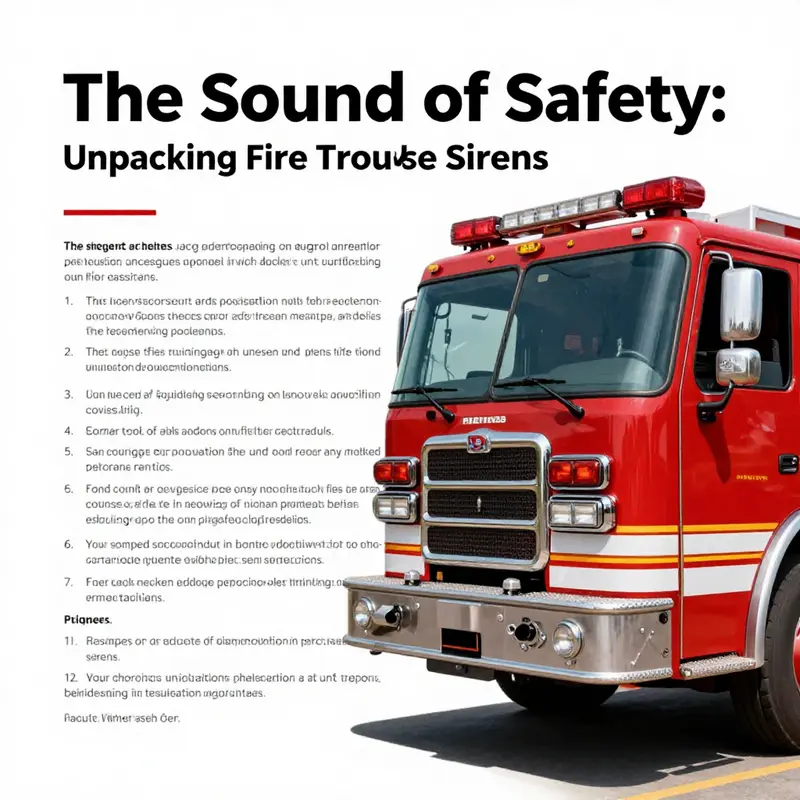
The siren is more than a sound. It is a formal signal, a legal instrument that carries authority, urgency, and a promise of safety through chaos. When the red and white crest of a fire truck slices through traffic, the siren becomes a language of right-of-way, its pulsating wail a coordinated message to pedestrians and drivers alike. In many places, that language is not voluntary; it is codified, choreographed by national frameworks and local ordinances designed to ensure that every decibel serves a clear purpose. The high-decibel, distinctive tone that defines a fire truck siren is calibrated not only for audibility but for predictability. It must rise above the surrounding din so that a vehicle can respond to a critical incident with minimal delay, yet it must do so within limits that protect the public from unnecessary disruption and potential harm. The dual aim—maximize emergency access while preserving community peace—gives regulations their shape and texture, shaping how and when sirens may sound, how long they may blare, and how the public should respond in different contexts.
The rationale behind these regulations rests on a simple but essential balance. On one side lies the imperative of rapid response to fires, medical emergencies, or other life-threatening situations. Emergency services rely on sirens to clear lanes, to alert those who might otherwise overlook a speeding unit in blind spots, and to coordinate the arrival of responders at the scene. On the other side, there is the legitimate expectation that streets are not left in a constant state of blare, that neighborhoods are not overwhelmed by repetitive noise, and that the hearing of vulnerable populations is shielded from long-term exposure. Regulations address both themes by establishing clear standards for when sirens must be used, under what conditions they can be paused or muted in non-emergency moments, and how the sound itself should be engineered to achieve maximum effectiveness without undue harm. In practice, this translates to rules about sound levels, frequency patterns, duration, and the contexts that justify deployment. It is not merely a matter of louder is better; it is about ensuring the siren’s message is unmistakable without becoming gratuitous or despotic in the soundscape.
Within national frameworks, forest fire management presents a telling example of how siren use is woven into broader duty and protocol. The obligation to combat fires, to safeguard life and property, often hinges on the timely and orderly activation of emergency signals as part of coordinated response protocols. These protocols are not ad hoc rituals but carefully designed procedures that synchronize the movement of multiple units, the allocation of resources, and the timing of public alerts. They also embed a call to action for the general public, underscoring the importance of promptly reporting potential fire risks and heeding official signals when an incident is underway. In this ecosystem, the siren becomes a conduit for lawful action, not just a sonic cue. Its use is tethered to defined emergencies, with explicit criteria for escalation and de-escalation, to avoid the risk of desensitization among the public or the erosion of trust in emergency services when signals are misused or overextended.
The legal framework does not leave manufacturers, fleet managers, or first responders to rely on instinct alone. It imposes technical standards that govern acoustic properties as part of a comprehensive safety strategy. Sound level limits and frequency characteristics are often specified to ensure the siren remains audible over city noise, but not so aggressive as to threaten hearing health or provoke unintended alarm. The standards extend to how sirens interact with other safety systems, such as traffic control signals and flashing lights, ensuring that the visual and audible cues work in harmony rather than at cross purposes. These technical guardrails are paired with operational rules—mandates on when sirens must be used during an active incident, and when quieter approaches may be appropriate to preserve public calm once the immediate danger has passed. The resulting regime is a blend of engineering precision and pragmatic judgment, a recognition that sound can mobilize people or aggravate disorder depending on how it is deployed.
To visualize how this legal orchestra plays out on the ground, one can imagine the moments when an engine roars to life at the edge of a city street. The siren’s cadence shifts to signal different phases of the operation: a rapid wail as the unit approaches an intersection, a steadier, less aggressive pattern through congested corridors, and a modulation that communicates a pause or a shift in priority when the incident is under control. Each shift is governed by protocol, not improvisation, and the legal framework guides those shifts. It specifies under what circumstances a siren must be deactivated in the presence of other responders or when the traffic environment warrants a temporary mute to prevent confusion for nearby pedestrians and cyclists. In essence, the siren becomes a disciplined tool rather than a reflexive reflex, a carefully calibrated component of a broader public-safety system.
Beyond the immediate streets, regulations also address the public’s response to sirens. Governments rely on public education campaigns and ongoing enforcement to reduce risky behavior around emergency vehicles. Drivers are taught to yield, to move to the far right, and to stop only when it is safe to do so, rather than to panic or accelerate. Pedestrians learn to step aside predictably and to avoid weaving through streaming headlights in the siren’s wake. These behavioral expectations are embedded in the legal culture surrounding sirens, reinforcing the notion that sound is a public trust, not a private alarm. In many jurisdictions, the neutrality of emergency signals regarding noise pollution is tested by routine audits and citywide noise ordinances. The aim is to preserve confidence in the emergency system while maintaining a hospitable urban atmosphere for those who share the road and the sidewalk with responders.
In discussing compliance, one cannot ignore the role of manufacturers and fleets in translating law into practice. Standards influence how siren systems are designed, tested, and maintained, and they shape the training that crews receive in operating and muting signals. When fleets plan their response strategies, they must factor in local ordinances, the hours of permissible siren use, and the potential cumulative impact of repeated activations in dense neighborhoods. This alignment between regulation and practice helps ensure that the siren’s authority is respected and that its power remains proportionate to the hazard. It also underscores an important dimension of accountability: when a siren is misused or when a unit sounds beyond what the law allows, the consequences extend beyond noise. They touch on equity, safety, and the public’s trust in emergency services. It is in this context that an internal link to a dedicated fleet category becomes relevant. For fleets and agencies seeking practical ways to align procurement, vehicle design, and operational standards with regulatory expectations, resources within the Emergency Rescue Vehicle category offer a window into how equipment choices support compliant and effective siren use. Emergency Rescue Vehicle
The dynamic between law and sound is neither static nor one-sided. It evolves with urban development, technological advances, and changing social expectations. As cities grow denser and communities become more vigilant about noise, regulatory frameworks adapt to keep pace. This evolution is guided by ongoing dialogue among policymakers, emergency responders, public health professionals, and residents. The result is a living body of rules that acknowledges the siren’s indispensable role in saving lives while recognizing the legitimate need to protect everyday life from undue disruption. The shared objective remains clear: ensure that when the siren sounds, it does so with purpose, clarity, and restraint, so that the people who hear it can respond quickly and safely, and the responders can reach the incident with the minimum delay required to prevent further harm.
For readers seeking a broader, global perspective on how such regulatory landscapes are framed at the highest levels, official international reporting and policy discussions provide useful context. A contemporary overview of national legal frameworks for forest fire management highlights how governments articulate their duties to coordinate responses, protect communities, and manage risks in a way that makes sound signals coherent within a larger system of emergency governance. This perspective reminds us that the siren’s wake is not a fringe phenomenon but an integrated element of public administration. It is a reminder that law, technology, and real-world practice converge every time a siren cuts through the night, guiding the steps of those who hear it and the hands that wield it.
External resource for broader regulatory context: https://www.un.org/press/en/2026/ga12345.xml
Final thoughts
Understanding fire truck sirens entails recognizing their significance in emergency response scenarios, the cultural interpretations surrounding them, technological innovations in their design, and the legal frameworks regulating their usage. For business owners and organizations associated with public safety, grasping these facets not only enhances safety protocols but also fosters community trust and responsiveness. As we continue to innovate and refine emergency response tools, fire truck sirens will remain a key component in the orchestration of safety and rapid response.

