
















Navigating the roads alongside emergency vehicles such as fire trucks is crucial for ensuring safety not only for yourself but also for those in need of emergency assistance. As a business owner, understanding the appropriate following distances when dealing with fire trucks can have significant implications for your operations, particularly if your business relies on local transport and logistics. This article explicitly addresses how close you can follow a fire truck during emergencies, safe practices while they’re on regular duty, and the legal repercussions of careless driving. Each chapter builds on helping you navigate the complexities of sharing road space with fire emergency vehicles responsibly.
Racing the Siren: Navigating Safe Distances When Fire Trucks Respond and Move Through Traffic
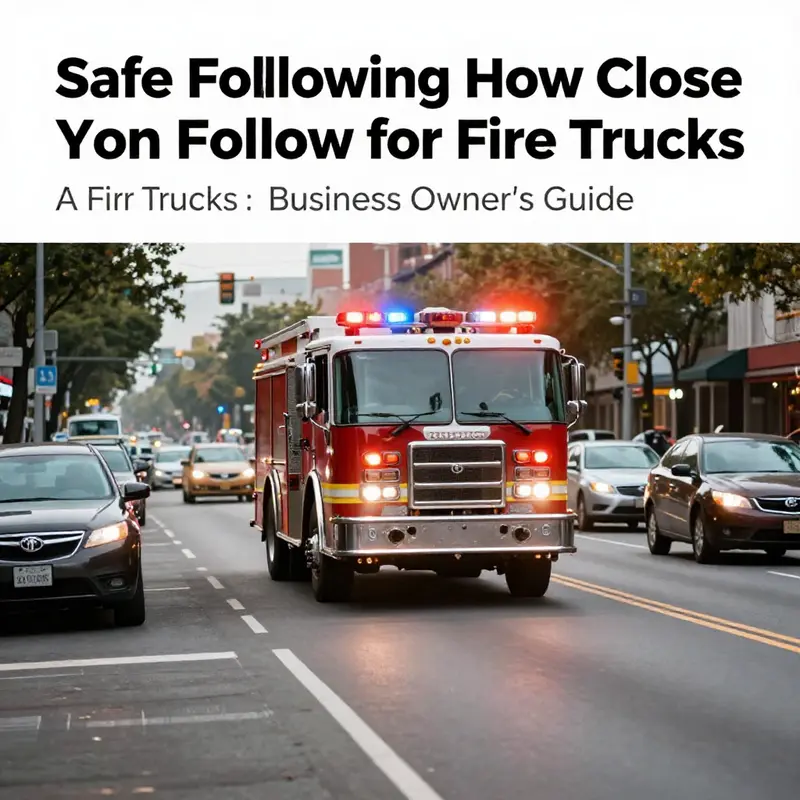
When a fire truck roars onto a roadway with lights flashing and sirens wailing, the road seems to part like a crease in a curtain. The reality for every driver is simpler and more demanding at the same time: there is no room for bravado, no space for second-guessing, and no opportunity to test human reflexes against a moving emergency. The chapter that follows is not a sermon about fear but a careful reckoning of distance, judgment, and responsibility. It is about understanding the way emergency vehicles are expected to behave and how other road users should respond in turn. The question—how close can you follow a fire truck—deserves a precise answer because the answer saves lives. The best answer blends legal obligation with plain common sense and the practical needs of a crew whose job depends on rapid, unhindered access to a scene where seconds count and danger may be imminent.
When a fire truck is responding to an emergency, the state of play changes. The vehicle gains special privileges to clear a path to a destination where a life may be at stake. This is not a license to accelerate recklessly; it is a permission to proceed with heightened caution and deliberate speed. Regulations in many jurisdictions allow fire trucks to ignore typical speed limits and to proceed through red signals when it is safe to do so. They can even move against the flow of traffic if necessary to shave moments off response times. The key implication for drivers is not to imitate the truck but to grant it its needed space. The recommended distance behind an actively responding fire truck is at least 500 feet, or about 150 meters, and sometimes more depending on conditions. This distance is not an arbitrary number; it acknowledges the truck’s weight, its compromised visibility, and the likelihood of sudden maneuvering or abrupt stops that can occur when crews navigate around obstacles, other vehicles, or pedestrians. A following vehicle that stays too close risks becoming entangled in a traffic incident that can trigger a chain reaction—collisions, blocked lanes, or the need to slow further, all of which hamper the fire crew at the exact moment they need to move quickly and decisively.
There is more to the distance than simply avoiding a rear-end collision. Fire trucks carry equipment and materials that can pose additional risks if a crash occurs. Foam, chemicals, or other hazardous materials may be present, and a collision upstream of the fire truck can create a hazardous spill or release that complicates the mission for everyone involved. The crew’s line of sight is often limited; their ability to perceive the full picture of traffic changes with every passing second, especially in heavy traffic or in poor weather. The vehicle itself is long and tall, with a high center of gravity and a wide turning radius. The test of distance, then, is not merely a threat to your own safety but a factor in the safety and effectiveness of those who are trying to prevent a disaster from becoming an even greater one.
If you see a fire truck approaching with lights and sirens, the safest and most responsible action is to pull over safely to the side of the road and let it pass. Do not attempt to race the truck or maintain speed to “keep up.” The impulse to stay with the action can be strong, especially if you feel that you are simply keeping up with an emergency, but it is precisely the opposite of what responders need. Following too closely is dangerous, illegal in many places, and can result in serious penalties for reckless driving. The correct approach is to create a clear path, as you would for any vehicle using emergency lanes or moving through congested areas. It is critical to recognize that the truck’s priority is to reach the scene without delay, and any interference from a following vehicle could obstruct that priority and potentially put others at risk.
Beyond the high-drama moments of emergency response, there is the more routine reality of fire trucks moving through city streets when they are not actively in emergency mode. In these times, the standard rule of safe following applies, even for such large and specialized vehicles. When lights and sirens are off, you should maintain a 3–4 second following distance behind any vehicle, including a fire truck. This interval is a practical buffer that accounts for typical reaction times and the truck’s longer stopping distance. In heavy traffic or when weather conditions are less than ideal—rain, snow, fog, or ice—the margin should be increased. The reason for this increased caution is straightforward: heavy vehicles with high centers of gravity and large braking systems require more space to halt safely. The same principle applies to the unexpected—road debris, sudden lane changes by other drivers, or a pedestrian stepping into the roadway. In those moments, the 3–4 second rule is the anchor that prevents a chain-reaction collision.
The logic behind these guidelines rests on more than common sense. It recognizes the physics of a large, slow-accelerating machine suddenly responding to a command to adapt to a changing environment. Fire engines are long and heavy, and their stopping distance is longer than that of passenger cars. They also suffer from limited visibility due to tall bodies and equipment that can obscure the driver’s view of pedestrians and smaller vehicles tucked into blind spots. A following vehicle that keeps too close can easily trigger a collision if the truck must brake abruptly or swerve to avoid an obstacle. Moreover, there is a safety concern beyond the vehicle itself: many crews transport hazardous materials or specialized apparatus that must be kept stable and secure while the vehicle maneuvers through traffic. A rear-end collision could scatter equipment, release fuels, or complicate a scene that is already tense with potential fire hazards or gas leaks.
Legal and policy frameworks reinforce the practical rules that drivers learn on the road. It is illegal in many jurisdictions to tailgate an emergency vehicle during an active response. The fines and penalties attached to such behavior reflect the fact that interference with emergency operations can delay life-saving work and place the public at risk. Drivers can be cited for offenses related to obstruction of emergency vehicles or speeding to avoid them. Even in non-emergency driving, the act of following another vehicle too closely is risky and often illegal when it leads to a dangerous situation. The emphasis in all these rules is not to punish but to preserve space for the crew to perform their duties with minimal risk. The broader legal landscape in the United States, for example, focuses on ensuring clear passage and avoiding obstructive behavior, with specific provisions tailored to emergency response scenarios. The normative guidance is complemented by enforcement that reinforces safe habits and discourages risky behavior.
In practice, this means that a driver’s behavior should be adaptive rather than mechanical. If a fire truck is visible in your rearview or you hear its siren and you have the opportunity to move aside safely, you should do so. If a lane change by another vehicle would require abrupt braking or a risky merge, it is often wiser to slow down and let the truck pass in a calm, orderly manner rather than trying to squeeze into a narrow opening. The goal is not to vanish into the crowd or to play a game of catch-up with a life-threatening situation, but to ensure the fire crew can work efficiently while their path remains clear of obstructions or interruptions. When you yield to an emergency vehicle, you are not merely obeying a rule; you are extending a courtesy that translates into faster, safer, and more effective emergency response.
An important nuance in the discussion of following distance is the notion of “yielding” itself. Yielding to emergency vehicles is a responsibility shared among drivers, pedestrians, and traffic management personnel. The steps are straightforward but critical: slow down, move over to the farthest lane possible (or pull over if safe), and allow the fire truck to pass without obstruction. In cases where there is a dedicated shoulder or an emergency lane, those spaces exist precisely to give emergency vehicles the room they need to operate. Traffic management personnel may also guide the flow of vehicles to facilitate a swift and safe passage, especially in complex or congested urban environments. The objective is to create a corridor through which the fire truck can move with minimal delay while other road users stay out of the way.
To align these practices with a broader safety culture, it helps to view the rules as part of a larger system designed to protect responders and the public. Organizations such as the National Fire Protection Association and national highway safety agencies emphasize emergency-vehicle safety as a cornerstone of traffic safety. Their guidance underlines the idea that keeping distance is not a mere courtesy but a critical component of effective emergency response. This understanding is more than a rule set; it is a shared commitment to ensuring that responders can reach the scene promptly and operate under conditions that maximize their safety and that of the public. The chapter thus frames the conversation around distance not as a barrier to progress but as a protective measure that makes rapid intervention possible, reducing the risk of harm to responders and bystanders alike.
In drawing these threads together, it becomes clear that the question of following distance is not a one-size-fits-all answer. It is a dynamic judgment call shaped by whether the fire truck is actively responding to an emergency, the surrounding traffic conditions, the weather, and the presence of pedestrians or other vulnerable road users. The safest and most responsible stance is to give the fire crew room to move and to follow the explicit guidelines that apply to the situation at hand. When in doubt, err on the side of caution. Slow down, signal, and yield. If you cannot move over safely because of traffic, reduce your speed and maintain a respectful distance until the truck passes, then resume normal driving only after the emergency vehicle has cleared the area. This approach honors the dual truths of road safety: the need to respond quickly to emergencies and the equally important need to keep every participant in the moving system safe.
For readers seeking practical orientation beyond general guidance, the following considerations can help translate rule into practice. In heavy traffic, where the lane changes of other drivers are frequent, the safest approach is to create extra space well before you encounter the emergency vehicle. If you are behind a line of cars and a fire truck is approaching, avoid weaving in and out of lanes to “catch up.” Instead, remain steady, reduce speed gradually, and allow the truck to come through in a deliberate, unhurried fashion. If you are driving in dense traffic where a lot of vehicles are attempting to yield, you can communicate your intent with simple, practiced signals, and anticipate where other drivers will move to create a broader path. If you are a pedestrian near a roadway, remember that the same rules apply: give space to emergency vehicles and avoid stepping out into their path. The overarching principle is straightforward: the more space you provide, the faster the truck can reach its destination and the safer the environment becomes for everyone involved.
In the end, the distance you owe to a fire truck is less about the number of feet and more about the responsibility to act prudently when time is of the essence. The numbers—500 feet behind an emergency response, 3–4 seconds behind in normal travel—serve as practical anchors. Yet more important is the mindset that prioritizes safety over haste. It is this approach that keeps roads safer for the public, enables firefighters to do their work with fewer impediments, and helps ensure that emergency responses succeed. For equipment and vehicle context as it relates to emergency operations, you can explore the broader category of vehicles and equipment used in rescue scenarios at the Emergency Rescue Vehicle category. This resource provides context for the kinds of vehicles that may be trailing or leading in different environments and the ways their design and purpose influence driving behavior in the surrounding traffic. Emergency Rescue Vehicle category
For readers who want to cross-check the broader safety guidelines and legal expectations, official sources provide corroboration of these practices. The National Highway Traffic Safety Administration offers clear guidance on safe driving around emergency vehicles, including the need to yield the right of way and to maintain a safe distance to avoid interference with responders. The emphasis on patience and careful action in the presence of responders reinforces that following too closely is not only hazardous but unnecessary given the priority of getting crews to the scene as quickly and safely as possible. You can consult the NHTSA resource for a reliable overview of these expectations and the rationale behind them: https://www.nhtsa.gov/risky-driving/emergency-vehicles
As you move through different driving environments—rural roads, city streets, highways, or school zones—the core principle remains consistent: give the fire crew the room to work. The moment you prioritize speed over space is the moment you increase the risk of harm for yourself and others, including those who are trying to save lives. The distance measured in feet or seconds is a practical corollary of the larger duty we all carry to share the road responsibly, especially when a life may depend on the speed and efficiency of a firefighting crew. The point is not to dampen alertness or slow progress but to harmonize fast response with safe, predictable behavior on the road. This harmony makes every emergency response more effective and stabilizes the environment for everyone who shares the public space.
In closing, the chapter emphasizes that following a fire truck closely is not a display of courage but a misreading of the situation. The responsible choice is to maintain ample space, comply with legal expectations, and yield when necessary to allow responders to do their job without obstruction. The public benefits when drivers adopt this disciplined approach, and the crews benefit as well, because the path they need becomes clear and unobstructed. The road, after all, is a shared space, and the safety of everyone on it—drivers, pedestrians, responders, and bystanders alike—depends on a collective commitment to patience, vigilance, and respect for the unique demands of emergency response work. The rules exist to protect that effort, not to constrain it. By understanding and applying the principles laid out in this discussion, motorists can contribute to safer, faster, and more effective emergency responses, day after day. As the siren fades and the scene becomes static, the safest takeaway is simple: keep your distance, stay alert, and let the professionals move with the space they need to do their essential work.
Keeping the Gap: Safe Following Distances Behind a Fire Truck on Regular Duty and During Emergencies
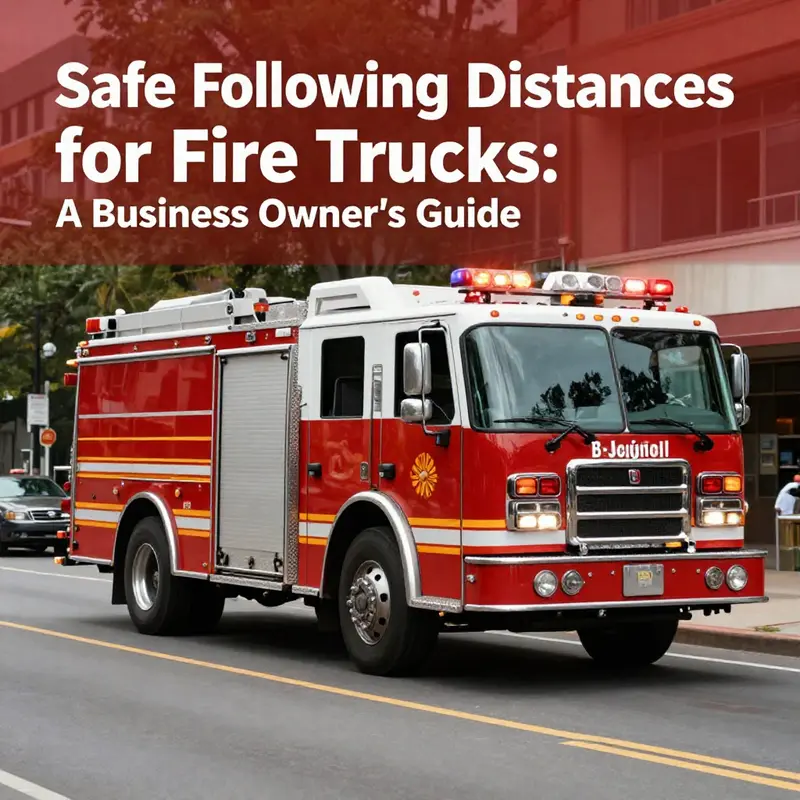
When people ask, how close can you follow a fire truck, the answer sounds simple at first glance: give it space. But the reality is more nuanced. A fire truck is not just a big vehicle; it is a mobile home for careful drivers, specialized equipment, and a team that must reach a destination quickly while staying out of harm’s way. The rules shift with the situation. On regular patrols and routine travel, standard driving practices matter. In the heat of an emergency, the margin widens dramatically. Understanding these shifts—how much space to give, why that space matters, and how to respond when you encounter an emergency vehicle on the road—can reduce risk for everyone on or near the roadway. The goal is not to slow progress but to safeguard lives, including your own, the crew’s, and the bystanders who rely on fast, safe arrival of help when danger is at its peak.
When a fire truck is responding to an emergency, the distance you should keep is not negotiable. The guidelines emphasize a generous buffer to accommodate the unique demands of an urgent mission. Fire apparatus move quickly, but they are heavy and less maneuverable than most other vehicles. They must weave through traffic, negotiate turns with limited visibility, and sometimes navigate around obstacles that appear in an instant—parked cars, medians, pedestrians, or debris. If you tail too closely, you jeopardize the crew’s ability to change course if the route suddenly changes or a pedestrian darts into the path. A safe distance of at least 500 feet, which is about 150 meters, is a practical standard in many jurisdictions. That spacing gives drivers behind the truck time to react to sudden stops or evasive maneuvers, and it gives the firefighter crew the room to maneuver safely around unpredictable hazards.
The law often reinforces this practice. In many places, following too closely during an emergency response is illegal or treated as reckless driving. A vehicle that inches forward while a fire engine accelerates, swerves, or slows abruptly can cause a chain reaction, especially in noisy conditions where the driver’s senses are split between the road, the siren, and the traffic around. The consequences go beyond a simple fender bender. When a collision involves an emergency vehicle, the risk of injuring firefighters, spreading hazardous materials, or blocking the path to a scene where lives may be at stake rises substantially. The safety calculus is clear: maintain a broad, predictable gap that allows the fire truck to reach its destination and make necessary adjustments without last-minute improvisation.
The guidance does not imply that all followers must ride in the far-right lane and wait passively to the end of the block. It is about balance—keeping enough space to allow the emergency vehicle to perform its job while staying aware of your own responsibilities as a driver. If the road remains clear, you can maintain a comfortable following distance without creating a sense of total stagnation. But when the lights and sirens begin, the time to reassess your position is immediate. The driver behind the wheel needs room to bring the truck to a controlled stop if the route changes or if a vehicle unexpectedly pulls into the truck’s path. In other words, the correct response is not to chase or chase-improvise. It is to step back, give the crew the room they need, and remain ready to adjust as the scene unfolds.
On ordinary driving days, a different rule applies—one that keeps traffic moving while still protecting everyone on the road. The general practice is a following distance measured in time rather than fixed distance. A three to four second gap behind most vehicles, including fire trucks, is widely recommended to accommodate typical speeds and reaction times. In light traffic, that might translate to a modest distance; in heavy traffic or adverse weather, the gap naturally grows. In rain or fog, or on slick surfaces, a larger cushion is prudent. The reason is simple: a fire truck, like any heavy, long vehicle, has a substantial stopping distance. It may also have to deploy ladders, hoses, or other equipment while underway, which can change its balance and its acceleration. A longer following distance reduces the likelihood that you are caught in a sudden stop, allowing you to observe the truck’s moves and react smoothly. The aim is not only to protect the truck but to protect yourself from a collision that could create an entirely new emergency.
A more formal guideline often cited for regular duty is a minimum distance of about 50 meters behind a fire truck. This figure, while framed as a rule of thumb, rests on sound safety principles. A buffer of 50 meters gives the fire crew a corridor to maneuver, deploy equipment, or adjust their path to avoid obstacles in the roadway. It also creates space for the bystander and passenger safety zone around the truck to account for hoses and other apparatus that may extend into lanes or sidewalks as the crew works. The underlying idea is consistent across jurisdictions: matter of life and safety first, with space allocated to perform critical operations, and only then the flow of traffic resumes.
This approach hinges on a careful assessment of what a following distance accomplishes. First, it keeps the path clear. A fire truck must reach its call quickly and safely, and the route is rarely a straight, empty corridor. Side streets, construction zones, and intersections introduce curves, merges, and potential impediments. A generous distance helps ensure that the truck can take a path around those obstacles without reversing direction or making sharp, awkward movements. Second, it safeguards against hazards associated with the truck’s mission. Fire trucks may carry flammable liquids, foam concentrates, or other hazardous materials; a collision can create spill hazards that endanger nearby people and complicate an already dangerous situation. Third, it protects pedestrians and motorists from the turbulent airflow and debris generated by a large, moving vehicle. That protective buffer also helps bystanders who may be watching the response from sidewalks or yards to avoid the risk of suddenly stepping into the truck’s path.
In practice, the moment you observe a fire truck approaching with lights and sirens, the safest action is to pull over to the side of the road and let it pass. The rule is universal and straightforward: do not race to keep up. Even if you think you can match its speed or catch a glimpse of the action ahead, the risk is not worth it. A single misjudgment—your car in the truck’s blind spot, a distracted decision to merge, or a sudden lane change by another vehicle—can create a crisis that prevents the crew from arriving safely at the scene. This is true not only in the city’s grid-like streets but also on rural highways where visibility is compromised and the truck’s need for space remains equally critical.
The considerations extend beyond the moment of passing. After a truck has passed, drivers must not become complacent. The roadway around an emergency scene remains hazardous long after the sirens fade. Debris may line the road, hoses may cross lanes, and other vehicles could become parked in positions that hinder the truck’s next moves. Observing a disciplined distance even after the truck has vanished from sight supports the responders who must reestablish control of the scene and continue their work without the risk of a second incident.
Understanding the practical reasons behind these distances also helps bridge the gap between law and everyday behavior. People often assume that following at a consistent, shorter distance is a way to keep up with urgent traffic. Yet the most experienced drivers know that speed is not the only currency on the road. Time to react, the space to maneuver, and the predictability of others’ actions are equally valuable. When a fire truck is in operation, the margin you grant becomes an investment in safety. It reduces the chances of a rear-end collision with a vehicle that brakes suddenly, avoids abrupt lane changes by nearby drivers who might be trying to catch a glimpse of the action, and minimizes exposure to any on-scene hazards that could spill into the lanes.
If you want to think about it from a training perspective, consider the concept of a safe operating envelope for emergency response. The crew’s priority is to reach the destination with control and speed, not to squeeze through traffic. Your obligation is to avoid becoming part of the problem’s complexity. This alignment is what keeps the overall system functioning: responders can work efficiently, the public remains protected, and roads are navigated with a predictability that reduces the potential for harm. When a driver chooses to ignore the expected distance, they disrupt that delicate balance and create ripple effects that can cascade into longer response times, more traffic congestion, and greater risk to everyone nearby.
A practical mindset for drivers, then, is to treat emergency spaces as temporary sanctuaries on the road. While it can be tempting to linger at the back of a fire truck to observe a dramatic scene or to monitor the progress of the response, that tendency often backfires. The safer approach is to maintain a steady, composed distance and, if possible, to plan your own route so that you are not caught behind the truck for an extended period. In heavy traffic, that may mean letting the truck maneuver ahead before reentering the flow of traffic, rather than attempting to tow the line and risk a collision. In poor weather, that distance takes on additional significance. Slippery roads, reduced visibility, and longer stopping distances all amplify the risk of tailing too closely. The more you respect the space around the truck, the more resilient you and the responders become as the event unfolds.
A note about the kinds of vehicles firefighters use adds depth to why spacing matters. Some trucks are designed with unique configurations, such as aerial ladders, large water tanks, or foam delivery systems. These configurations can alter the center of gravity and the dynamic behavior of the vehicle during turns or sudden stops. A following vehicle may not appreciate how quickly a ladder must be stowed or how a hose line can extend across a lane. That is another reason to hold back: space enables the crew to manage their equipment safely as they reach the scene and begin the initial actions that can save structures, protect occupants, and curtail further damage.
The broader message is one of shared responsibility. Drivers are stewards of the road, and emergency crews are stewards of public safety. By giving each other room to perform, both groups contribute to a faster, safer resolution of emergencies. This shared responsibility extends to the wider traveling public as well. Bystanders who slow down too much or stop in the street to watch can inadvertently create bottlenecks or distract the crew, hampering the response. The best practice is to yield, minimize attention to the incident, and move away from the scene once you have passed and it is safe to do so. In cities and towns alike, these actions reflect a culture of safety that recognizes the extraordinary demands of emergency work and honors the essential goal of getting help where it is needed as efficiently as possible.
If you seek a tangible reference within the broader ecosystem of fire response vehicles, you can explore related categories that illustrate how emergency fleets are organized and deployed. For instance, the Emergency Rescue Vehicle category contains a range of platforms designed to respond to diverse situations with a focus on rapid, coordinated action. This kind of context helps people understand why the space around these vehicles is nonnegotiable during operation and why the distances discussed here are not arbitrary rules but critical safeguards that align with the physics of heavy vehicles, the realities of on-scene hazards, and the duty to protect life during high-stakes emergencies. Emergency Rescue Vehicle illustrates the breadth of tool cases professionals rely on when time is of the essence and every meter counts toward a safer outcome for everyone involved.
Ultimately, the takeaway is clear. The question of how close you can follow a fire truck has a practical answer grounded in safety science, legal standards, and common sense. During emergencies, the recommended distance is generous enough to permit the crew to operate without interference. On regular duty, give a buffer that accommodates typical reaction and braking times, keeping in mind weather and traffic conditions. And in every case, remember that the moment you see lights and hear sirens, your most responsible move is to slow down, pull over if you can do so safely, and allow the emergency vehicle to pass without attempting to “keep up.” This discipline protects you, it protects others, and it protects the people who are working to keep your community safe. If you need to revisit the practicalities in one place, the guidance is well aligned with official safety resources that emphasize space and clear passage for emergency vehicles. For more detailed, agency-level guidelines, you can consult the National Highway Traffic Safety Administration’s overview on Safe Driving Around Emergency Vehicles, which brings together the core principles of distance, visibility, and responsibility on the road. https://www.nhtsa.gov/risky-driving/emergency-vehicles
Beyond the Siren: Legal and Safety Boundaries When Following a Fire Truck
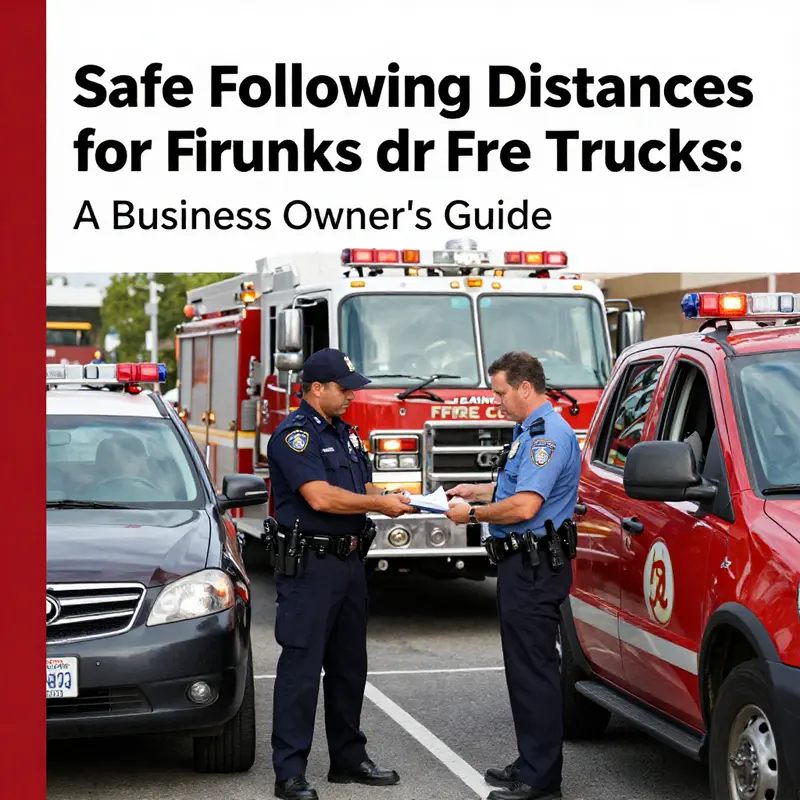
When a fire truck speeds past with lights flashing and the siren wailing, your first impulse may be to chase or match its pace. Yet safety and the law set a different course. During an active emergency the guidance is to give the vehicle ample space. A commonly cited safe distance is at least 500 feet, about 150 meters. This buffer helps the truck navigate around hazards, absorb sudden stops, and avoid debris from the road that a heavy apparatus can throw when braking. The vehicle is large, heavy, and less forgiving than a typical car, so the margin matters for everyone on the road. Tailgating in an emergency can be illegal and can carry fines or criminal charges if harm results. The goal is to keep paths open for responders and to preserve control for all drivers on the roadway. Once the truck passes and is out of the lane, you can resume normal driving while remaining alert for signs of more traffic or responders turning onto side streets. On many days the rules return to the usual safe distance of several seconds behind the vehicle in front; increase that gap in rain, snow, or heavy traffic. Regardless of lights or sirens, the underlying principle is the same: give emergency vehicles the room they need to operate safely. A practical habit is to yield promptly, move to the right if possible, and stop until the apparatus passes. When the road is clear, reenter traffic with caution. The legal framework around emergency vehicles reinforces this behavior. In many jurisdictions, tailgating or obstructing an emergency vehicle can result in fines, license suspensions, or worse if harm occurs. Hazardous materials on a response heighten the need for distance and caution. For readers seeking authoritative guidance, the National Highway Traffic Safety Administration provides practical tips and legal context on emergency vehicles. A concise reference is the NHTSA page on emergency vehicles at https://www.nhtsa.gov/risky-driving/emergency-vehicles. In our shared road space, the siren is a warning to slow down and yield, not a challenge to outrun. Following the rules protects lives and helps responders reach the scene safely.
Final thoughts
Being aware of the safe distances while following fire trucks, whether they are responding to emergencies or performing regular duties, is an essential responsibility for business owners and all drivers. Prioritizing safety not only protects lives but also ensures compliance with traffic laws, avoiding legal penalties. By adhering to the guidelines discussed in this article, you play a vital role in preserving the integrity of road safety and facilitating emergency responses effectively.

