
















Fire trucks are the backbone of emergency response, engineered for speed, safety, and reliability. Understanding how these specialized vehicles are built helps business owners in emergency services, municipal management, and first responder organizations make informed decisions. This article outlines the multi-step manufacturing process, highlighting structural design, firefighting systems, chassis performance, technology integration, and rigorous testing to demonstrate the craftsmanship and engineering behind these essential machines.
Under the Skin: The Structural Architecture That Powers Fire Trucks
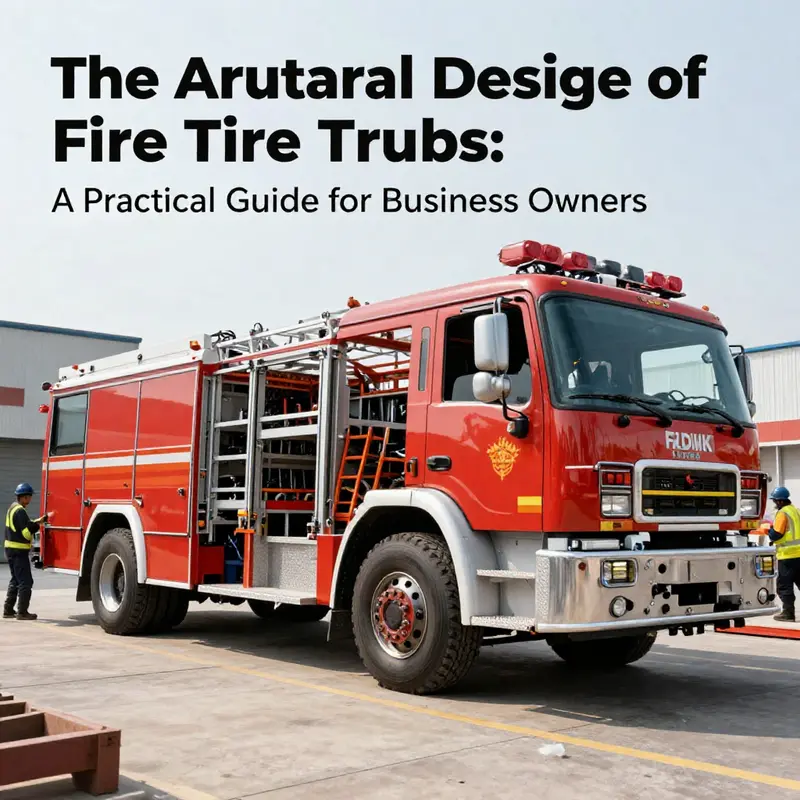
Every fire truck arises from a deliberate balance of strength, agility, and reliability, a machine designed not only to carry equipment but to support decisive, life-saving action under pressure. Its architecture rests on two interlocking systems: the automotive chassis that supplies mobility and the upper-body structure that hosts pumping, gear, and the firefighting apparatus. This is not a cosmetic conversion of a commercial vehicle; it is a carefully engineered platform where every weld, reinforcement, and routing of hose and cable reduces failure risk when seconds count. In practice, the chassis is the foundation, a high-strength skeleton that bears the immense weight of water tanks, pumps, ladders, and crew. The upper body, in turn, is the heart and hands of the truck, holding the water and foam tanks, the pump room, the nozzle systems, and the ready-to-use tools that firefighters rely on in seconds rather than minutes. The choreography between these two systems determines how quickly a vehicle can reach a scene, how stable it remains while under load, and how effectively it can deliver water, foam, or other extinguishing agents in a dynamic, potentially hostile environment.\n\nThe chassis is more than a frame. It is a platform engineered to endure the rigors of rapid response across a spectrum of environments, from congested urban streets to treacherous rural routes. The powertrain, which includes the engine, transmission, and driveline, is the primary conduit of energy. It translates raw power into forward motion with a precision that matters as soon as the sirens begin to wail. The transmission and drivetrain are selected to deliver robust torque at low speed for off-road or steep-grade access while maintaining reliable highway performance for long-distance responses. The running gear and chassis frame form the backbone of the truck, typically constructed from high-strength steel or advanced alloys. They must resist bending moments and fatigue as water tanks settle and surge during acceleration, braking, or sharp turns. A well-designed suspension system moderates road irregularities so the crew can stay balanced and oriented even when the vehicle is carrying its maximum payload. In urban operations, where turning radii must be tight and maneuverability is essential, steering systems employ refined geometry and sometimes hydraulic assist to provide crisp, predictable handling. Braking systems are engineered for immediate, controlled deceleration under heavy load, with modern anti-lock features that prevent wheel lock-up and preserve directional stability during emergency stops.\n\nMaterial choice matters as much as geometry. The frame and chassis rely on high-strength steel or specialized alloys chosen for their combination of weight, stiffness, and resistance to fatigue. This is essential because the vehicle must maintain a precise alignment between the wheels, the pump, and the upper body across countless cycles of acceleration and braking. The result is a baseline reliability that remains constant whether the truck is cruising to a call or pressed hard during a multi-payload incident. The chassis also includes channels and mounts for electrical, hydraulic, and pneumatic systems, ensuring clean, organized routing that reduces failure points and simplifies maintenance. Engineers integrate redundancy into critical subsystems so a single component failure does not cripple the rig at the scene.\n\nAs the chassis provides mobility and endurance, the upper body converts this mobility into firefighting capability. The upper body houses the water and foam storage, the pumps, and the array of equipment that firefighters rely on in seconds. The tanks, typically hollowed from high-strength steel or reinforced composites, are designed with internal baffles that break up liquid slosh. This practice stabilizes the vehicle during transit and under high intake pressures when the pump is developing output, helping to keep the vehicle steady as hoses feed high-volume streams. The tank capacity varies with the truck type, but a common range spans from several thousand liters up to ten thousand liters, a scale that underscores the need for careful weight distribution and structural reinforcement around the pump room.\n\nThe pump room is the beating heart of the upper body. Here, the main fire pump pressurizes water and foam to deliver the expected stream to hoses and nozzles. Modern systems are multi-stage and capable of operating across a range of pressures to suit different fire scenarios, from a narrow window of high-velocity streams on structural fires to steady, broad sprays for cooling exposures. The pump draws water from onboard tanks or hydrants, then uses a carefully engineered path of valves and manifolds to maintain flow even in the face of sudden demand. The organization of the pump room reflects a blend of compact design and ergonomic layout, with controls positioned for rapid manipulation by firefighters wearing gloves and breathing apparatus. The pump is complemented by a foam proportioning system in shelters designed to handle Class B fires, where dedicated foam concentrate must be mixed with water in precise ratios to optimize extinguishment and reduce runoff. A vacuum pump may also be mounted to draw water from external sources such as ponds or ditches, expanding operational flexibility when hydrants are sparse or unavailable.\n\nBeyond the immediate pumping and storage functions, the upper body is a compact universe of tactical equipment. The tool chest, or equipment compartments, are organized with the same attention to speed and accessibility that governs the rest of the truck’s design. Firefighters depend on quick, predictable access to axes, halligan tools, pike poles, chainsaws, breathing apparatus, ladders, medical kits, and other rescue gear. Proper spatial planning keeps these items within reach without obstructing critical lines of sight or moving parts. Power Take-Off (PTO) systems form the mechanical bridge between the chassis and the upper body, enabling the engine’s energy to drive the pump and other hydraulic devices while the vehicle remains stationary or in motion. The PTO’s connection must be robust and precisely calibrated so it can deliver full power without risking driveline wear or sudden disengagement during a crucial moment of operation.\n\nIn practice, the fusion of chassis and upper body results in a vehicle that behaves more like a mobile command center than a simple machine. When the truck enters a scene, the chassis must deliver stability under heavy, uneven loads while the upper body provides the immediate arsenal of water, foam, and tools. Aerial rescue configurations add another layer of complexity. Telescopic or articulating booms, sometimes extending over a hundred feet, are mounted to the chassis to enable elevated water delivery and access to rooftops or windows. These booms are equipped with remote-controlled nozzles and a suite of rescue tools, including roof ventilation devices and forcible-entry equipment. The integration of such apparatus into the structure demands careful load-path engineering, dynamic testing, and attention to the distribution of weight along the vehicle’s length and width to ensure safe operation at height and under gusty conditions.\n\nTechnology augments the core mechanical system in meaningful ways. Thermal imaging cameras, personnel monitoring systems, and high-intensity lighting amplify situational awareness and safety, especially when visibility is compromised by smoke or night conditions. The electrical architecture supporting these devices is planned in concert with the hydraulics and pump systems, with redundancy and clean separation of power and signal lines to reduce interference and downtime. The interplay among these elements—hydraulics, electrical systems, and the structure that carries them—defines the resilience firefighters rely on when seconds count and the environment is unpredictable.\n\nAll of this is validated through rigorous testing and certification processes. Performance checks simulate emergency conditions to verify pump reliability, water flow, and pressure stability under load. Structural assessments confirm the integrity of welds, joints, and load paths when the truck is fully loaded with water, equipment, and personnel. International safety standards, including enclosure, vehicle standards, and equipment-specific norms, guide design and manufacturing, ensuring the truck meets or exceeds baseline expectations wherever it operates. The manufacturing ecosystem also emphasizes after-sales support, spare parts availability, and robust technical assistance, acknowledging that a vehicle of this complexity requires ongoing care to stay mission-ready.\n\nThe architectural philosophy of modern fire trucks is not merely about building something large; it is about engineering a system where chassis and upper body cooperate as a single, predictable instrument. When designers select a chassis, they anticipate how it will bear the load of the upper body and how it will respond under the most demanding conditions. When they shape the upper body, they consider how every tank, valve, and compartment affects ride quality, center of gravity, and ease of use. The result is a vehicle that can be trusted to reach a scene swiftly, stay steady in chaotic environments, and deliver water and foam with the precision firefighters need to contain and control a fire efficiently.\n\nIn this landscape, industry leaders in China and elsewhere demonstrate a shared commitment to structural integrity. They apply high-strength materials, stringent quality control, and advanced manufacturing techniques to meet the extreme demands of emergency response. The synergy of robust chassis design with a purpose-built upper body creates a family of fire-fighting vehicles that function as true mobile command centers, capable of adapting to urban landscapes, rural terrains, and specialized operations with the same core principles: strength under load, reliability under pressure, and clarity of purpose at every moment of the mission. For readers seeking a deeper dive into the structural philosophies behind these machines, a prominent Chinese engineering-focused manufacturer illustrates how high-strength alloys and integrated manufacturing techniques translate into durable, mission-ready platforms. This approach reflects the broader trajectory of fire truck design—where form serves function, and function is in service of saving lives and protecting property. For more context on the design ethos and manufacturing processes in this space, see the industry resource at the external site: https://www.chenglix.com
Engineered for the Inferno: The Integrated Craft of How Fire Trucks Are Made
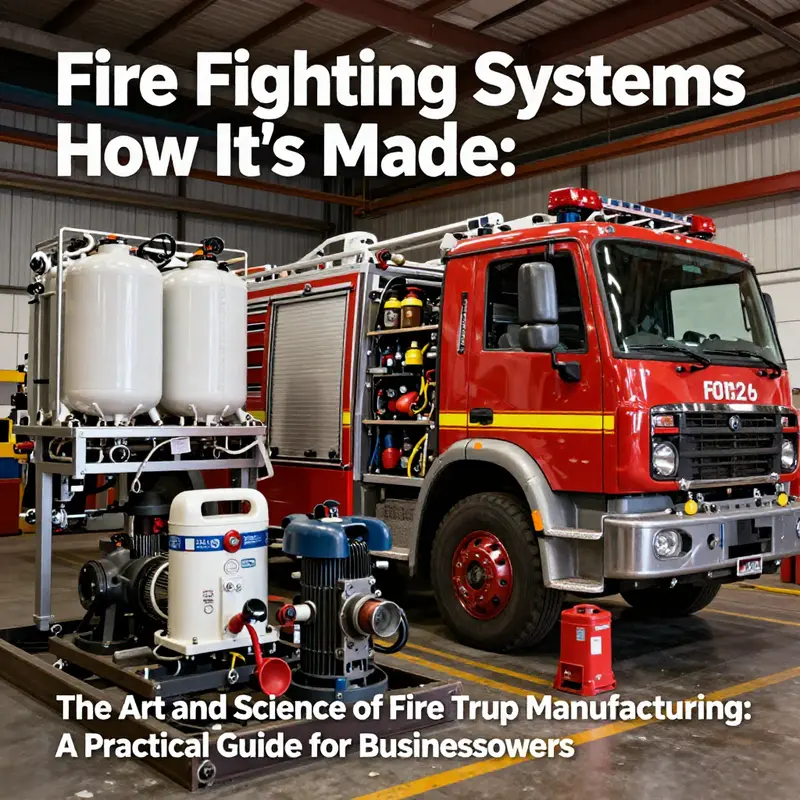
Fire trucks stand as the most prevalent expression of a city’s emergency readiness, but their power comes from a patient, integrated craft rather than a single big component. They are mobile command centers built to surge into danger, deliver life-saving water and foam where it matters, and coordinate a response in chaos. The manufacturing story begins long before the first weld and ends only after rigorous testing, safety certification, and the assurance that every system will perform under pressure. At the heart of this story is a deliberate choreography: a heavy-duty chassis chosen for durability, a body forged from high-strength steel and corrosion-resistant materials, and an internal ecosystem of pumps, tanks, ladders, platforms, and electronics all tuned to work as one. This synergy is essential because the best firefighting system is not a collection of parts but a reliable, responsive platform that firefighters can trust when they arrive at the scene with seconds to spare and flames to extinguish.
From the outset, the chassis sets the course for the vehicle’s capability and its ability to endure extreme conditions. A modern fire truck relies on a robust platform designed for rapid acceleration yet able to carry hundreds of liters of water, heavy pumps, and a suite of aerial components. The chassis often features four-wheel or all-wheel drive to reach remote or challenging locations, and it is engineered to absorb the dynamic loads of high-pressure water, ladders in motion, and the booms that extend toward upper floors. The choice of chassis is a balance between weight, torsional rigidity, and the powertrain’s capacity to deliver reliable performance under demanding duty cycles. Engineers evaluate factors such as frame stiffness, suspension rebound, and braking efficiency because a misstep here can echo across every subsequent subsystem.
Once the frame is selected, the body is built with a focus on strength, protection, and longevity. The outer shell must withstand heat, impact, and rough handling while resisting corrosion from water and chemical residues encountered in firefighting environments. Inside, space is allocated for the core firefighting systems: large water and foam tanks, high-capacity pumps, and the hydraulic assemblies that power ladders, platforms, and other maneuverable implements. The tanks themselves are not generic fuel-like containers; they are engineered with precise hydrostatic limits, drainage pathways, and routing that minimizes vibration and thermal stress. The choice of materials—steels and composites resistant to heat and corrosion—ensures that the tank’s integrity remains intact even after exposure to harsh elements and high-velocity water jets. The task of fitting these systems is meticulous. Pipes and hoses are routed to minimize kinks and friction losses, while control panels and electrical harnesses are positioned for rapid access and minimal interference with crew movement.
The water delivery mechanism sits at the core of the vehicle’s purpose. High-capacity tanks, typically holding several thousand liters, feed hydraulic or electric pumps that must deliver pressurized water in the hundreds of pounds per square inch. The pump package is designed with redundancy in mind: a primary pump backed by a secondary unit or a portable pump as a contingency. This arrangement is not simply about raw power; it is about reliability under load. The network of hoses and nozzles is gracefully arranged so that a crew member can step from the cab to the apparatus floor, grab a line, and initiate a water attack within seconds of arrival. Yet the design also anticipates large-scale operations, where multiple lines, monitors, and foam injections must function harmoniously. Foam systems, for example, require dedicated concentrate tanks and proportioning equipment that blends foam concentrate with water to create a film capable of cooling and separating flames from the surface of a structure.
Aerial operations elevate the complexity of the build. In urban settings, ladders and booms extend beyond the reach of ground-based attacks, granting access to upper floors and providing a stable platform for rescues. Telescoping or articulating ladders can exceed one hundred feet in reach, and their hydraulic systems must translate operator input into smooth, controlled movement while the vehicle remains stable on uneven ground or at an incline. The booms themselves carry more than just a ladder; they embed a suite of tools that support the mission: remote-controlled nozzles that can target a fire from a safe distance, roof ventilation tools to release heat from above, and forcible entry equipment for rapid access to interior spaces. Each component is integrated with the vehicle’s control architecture—electronic menus, touch screens, and sometimes remote monitoring that keeps a watchful eye on pressure, ladder angle, and the operator’s position relative to hazards.
Alongside the physical subsystems, the modern fire truck embraces a frontier of sensing and imaging technology. Thermal imaging cameras help firefighters locate hot spots through smoke, while high-intensity lighting illuminates scenes at night, and variable lighting can be directed to different zones of the operation. Personal monitoring systems work to track the status and safety of crew members as they move through a structure, and communications gear ensures that the command team can orchestrate actions from the ground and from elevated platforms. A mobile incident command setup, evolving from a simple radio liaison to a compact, integrated command post, is increasingly part of the fleet’s capability. These technologies extend the craft beyond brute force into strategic management of an incident, enabling precise decisions when seconds count and conditions shift rapidly.
The manufacturing discipline extends to the electrical and control layers as well. A fire truck’s electronics are not an afterthought but a core design criterion. Wiring harnesses are routed to minimize exposure to water spray and heat while allowing intuitive access for maintenance. Pressure sensors monitor pump performance, valve positions confirm line status, and interlocks ensure that incompatible functions cannot operate simultaneously. In the best assemblies, engineers account for electromagnetic compatibility, ensuring that critical systems do not interfere with one another and that diagnostic data can be retrieved efficiently during service checks. The result is a vehicle where the operator’s sense of control is heightened by feedback loops from every lever, gauge, and display. The human-machine interface is designed to keep responders focused on the emergency rather than wrestling with the machinery, a critical distinction when the scene is chaotic and the clock is ticking.
The road from concept to on-scene readiness passes through a rigorous gauntlet of testing and certification. Each fire truck must demonstrate performance under simulated emergency conditions, showing that pumps deliver specified pressures even when the water flow is at maximum and the engine is operating under heavy load. Structural integrity is verified through load and fatigue testing to guarantee that the chassis and body can withstand the rigors of high-speed transit, rapid braking, and the dynamic forces of ladders extending and retracting. Safety standards govern every weld, every seal, and every joint, with international frameworks ensuring consistency and mutual recognition across markets. The certifications mirror a philosophy of precaution: the vehicle must excel not just in a workshop but as a dependable tool in real-world crises, where a miscalculation could cost lives.
Even after delivery, the lifecycle of a fire truck centers on service and sustainment. Spare parts availability, trained technicians, and a responsive supply chain ensure that downtime is minimized. The relationship between manufacturer, fleet operator, and service network resembles a long-term partnership, designed to keep the apparatus ready for long years of duty. Operators rely on regular maintenance windows, diagnostic software, and remote support to anticipate failures before they hinder performance. In practice, this means a vehicle that stays in service through multiple deployment cycles, its systems aging gracefully while continuing to deliver the precise balance of power, agility, and reliability demanded by modern firefighting. The result is not merely a vehicle but a portable engine of safety, capable of bringing order to the inferno and restoring calm to communities in distress.
For readers seeking a deeper dive into the intricacies of construction, testing, and the philosophies that guide modern fire apparatus design, there are comprehensive technical guides that illuminate the steps from frame to frontline deployment. External resources detail how the integrated systems are engineered to perform in concert, offering case studies, schematics, and performance data that reveal the discipline behind the flames. External resource: How Fire Trucks Are Built – A Comprehensive Guide.
The Steel Skeleton: How Heavy-Duty Chassis Forge Speed, Strength, and Safe Rescue in Fire Trucks
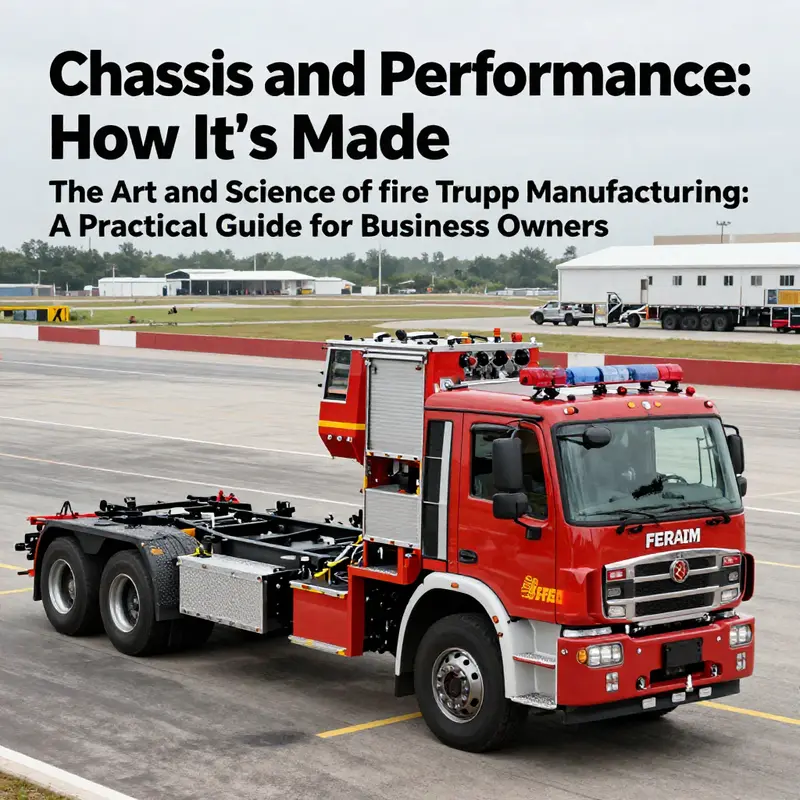
At the heart of every fire truck lies more than metal and paint; there is a deliberate and intricate choice of backbone that determines how quickly a team can respond, how much they can carry, and how safely they can operate in the most demanding conditions. The chassis, a heavy-duty platform designed to endure extreme forces, is the structural sinew of the vehicle. It is chosen not merely for its stiffness or its ability to bear weight, but for a precise balance of rigidity, durability, and dynamic performance. In these machines, every kilogram of payload—water, foam, hoses, tools, and personnel—exerts a conceptual pressure that reshapes how the truck accelerates, turns, climbs, and stops. When loaded for a real incident, the mass can easily exceed ten tons, and the chassis must hold steady under that load while maintaining tire contact, steering control, and wheel articulation. This is the first, most consequential contract between engineering and mission: a platform that can carry immense reserves of life-saving capability without sacrificing maneuverability or safety.
To transform a chassis into a firefighting instrument, manufacturers lean on heavy-duty commercial foundations that are engineered to withstand harsh environments. The frame is typically constructed from high-strength steel alloys, chosen for their combination of tensile strength, toughness, and resistance to fatigue. The geometry of the frame—its length, cross-section, and reinforcement points—determines not only load distribution but also how well the vehicle can traverse uneven ground, an essential capability in urban alleys, hillside districts, or rural outposts. A reinforced backbone supports deliberate, predictable handling even when the road surface becomes a variable in the operation. This isn’t a generic commercial vehicle with a few hoses bolted on; it is a purpose-built platform where the chassis sets the boundary conditions for every subsequent system, from pumps to ladders to optics.
Performance, however, is not a static attribute. It is a function of powertrains, suspension, and driveline geometry that work in concert to deliver rapid response and stable operation under load. The engine in a modern firefighting chassis is tuned for a balance of high torque and dependable reliability. When a truck accelerates with hundreds of gallons of water on board, it must deliver brisk, controlled speed without excessive fuel consumption or overheating. The transmission complements this with gear ratios and shift logic designed for urgency as well as safety—especially in stop-and-go urban emergencies or when climbing steep grades while maintaining control of a long, heavy apparatus. In many configurations, the drivetrain is Euro 2 compliant, a standard that guides the transmission’s behavior to optimize drivability across a range of operating conditions and fuel profiles. This standard does not merely constrain a label; it shapes how shifts are timed, how torque is managed during acceleration, and how the vehicle responds to abrupt load changes that occur when pumps draw water or when outriggers deploy.
Suspension systems round out the chassis’s capability by managing the dynamic demands of firefighting missions. A robust suspension does more than cushion potholes; it preserves steering feel, tire contact, and ride stability when the vehicle is carrying a tall, sometimes unwieldy payload. Air or heavy-duty leaf configurations, tuned dampers, and adaptive geometry help keep the front and rear axles aligned as the truck negotiates an obstacle course of city streets and construction zones. All-wheel-drive or advanced axle assemblies provide traction on slick roads, off-road trails, or unpaved surfaces often encountered during emergency operations. The chassis, so engineered, becomes more than a frame with wheels; it becomes a smart platform that maintains control under the most strenuous conditions, ensuring that every pump prime or ladder raise begins with predictable performance.
Yet the chassis is not a passive carrier. It is an intelligent, integrated platform that accommodates the core firefighting systems with an eye toward weight distribution, center of gravity, and accessibility. The design process accounts for the way tanks, pumps, and hydraulic lines are placed to minimize oscillation and to preserve stability as the vehicle accelerates or decelerates under load. Large water and foam tanks—often stretching from five to ten thousand liters—must be accommodated without compromising handling or braking. Pumps are sized and routed so that their intake and discharge do not induce undue stress on the frame or the driveline, and the associated piping and manifolds are laid out to balance weight while keeping critical service points reachable for maintenance. This integration is not an afterthought; it is a foundational design discipline that impacts every measure of the vehicle’s capability, from hydraulic lift speeds to the distribution of ballast when ladders extend skyward.
When it comes to aerial operations, the chassis must support more than static weight; it must cradle a complex apparatus that unfolds into space and height. Telescopic or articulating booms, commonly exceeding 30 meters in some configurations, demand robust mounting points and precise load paths. The boom system, along with its hoses, valves, and nozzles, is installed so that the operator’s commands translate into smooth, controlled motion. Remote-controlled nozzles and integrated roof equipment require electrical and hydraulic feeds that run cleanly from the chassis to the platform. The result is a coordinated system in which the ladder, platform, water, and rescue tools can function in harmony under the pressure of an unfolding incident. A well-executed design ensures that reaching a top-floor window or a collapsing eave does not come at the expense of the vehicle’s kerb-to-kerb maneuverability or stability.
Beyond the mechanical, the chassis area is a stage for advanced sensing and operator-support systems that extend situational awareness into the cockpit and back into the field. Thermal imaging cameras, installed alongside the line-of-sight view, help crews locate hidden flames and identify hot spots through smoke and darkness. Personnel monitoring systems track the positions and safety of crew members as they maneuver through hazardous zones, a feature that becomes increasingly vital in searches and rescues where visibility is poor and timing is critical. High-intensity lighting mounted on the chassis and boom improves visibility at night and in low-light environments, illuminating stairwells, windows, and rooftop access points while minimizing the risk of missteps or misjudgments. These capabilities do not merely support firefighter safety; they amplify the vehicle’s effectiveness, enabling faster decisions and more precise actions in the toughest scenes.
As the vehicle nears completion, the chassis and its systems enter a rigorous testing and certification phase that mirrors the high-stakes conditions of actual emergencies. Production benches simulate a wide range of scenarios—rapid acceleration with full payload, steep grades, and sudden water draw that tests pump priming and cooling. Structural integrity checks verify that the frame maintains stiffness under dynamic loads and that the attachment points for the aerial apparatus remain robust through repeated cycles of deployment. Safety standards from international bodies guide these evaluations, ensuring that the chassis can withstand the magnitude of forces encountered during intense operational use. The testing regime also validates the synergy between chassis, powertrain, hydraulic systems, and electrical networks—an orchestra where any discordance can compromise performance, reliability, or safety. Only after meeting stringent criteria do these platforms move forward into production line continuity, ready to be married to the body and the firefighting systems that complete the vehicle’s mission profile.
This careful choreography—from material selection and structural geometry to drivetrain tuning and payload integration—transforms a heavy steel skeleton into a responsive, life-saving instrument. The chassis becomes a living framework that supports rapid response and sustained operation, a platform designed not just to carry equipment but to empower crews to act decisively when seconds count. It is here, in the steel skeleton and its meticulously engineered surroundings, that the true essence of a fire truck takes shape: a mobile command center built to survive the heat of the moment and to return firefighters safely to their teams and communities. For a deeper dive into the technical specifications that underpin these capabilities, see the official chassis documentation linked here: https://www.sinotruk.com/en/products/fire-fighting-trucks/howo-fire-fighting-truck/.
Engineered for Extreme Duty: The Tech-Driven Making of Modern Fire Apparatus
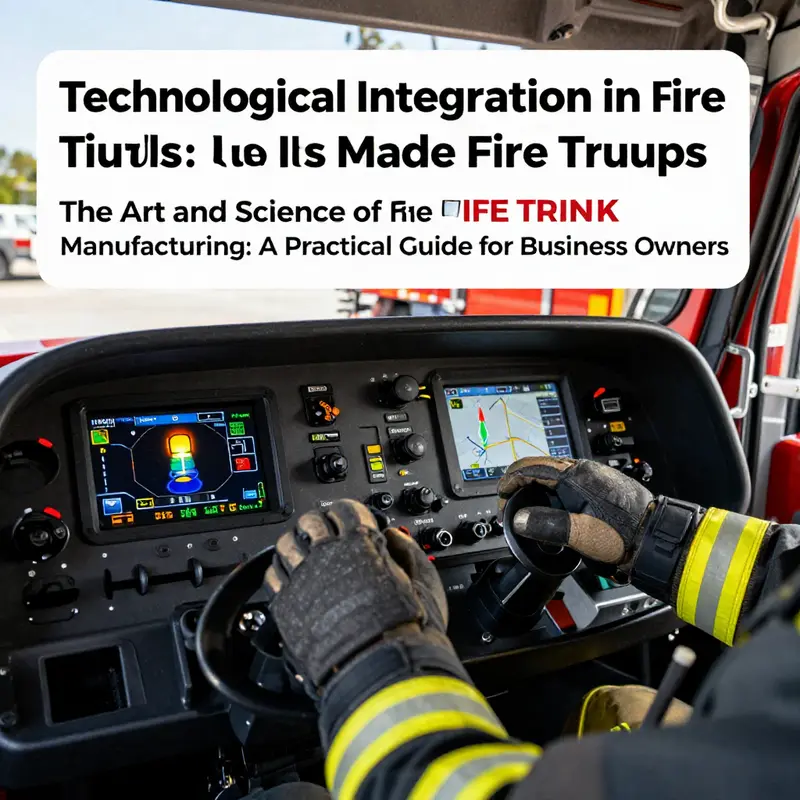
Fire apparatus are not merely large vehicles; they are intricate mobile systems designed to meet the unpredictable demands of emergency response. Each unit blends rugged, mission-critical mechanics with layered digital intelligence, creating a tool that can perform under heat, pressure, and fatigue while keeping crews safe. The journey from raw components to a responsive firefighting platform begins with a deliberate choice of core architecture and extends through an integrated web of hydraulics, tanks, ladders, sensors, and software. What emerges is a machine that acts as a mobile command center on wheels, capable of delivering water, foam, and force with precision, even in the most challenging environments.
At the heart of every fire apparatus lies a heavy-duty chassis, selected not only for raw strength but for stability, weight distribution, and the ability to ride and maneuver under load. The chassis sets the foundation for the vehicle’s entire performance envelope: traction for off-road access in rural terrains, height and clearance for urban streets, and the chassis stiffness required to support high-pressure equipment and a suspended crew compartment. From the outset, engineers consider the intended mission profile—urban high-rise response, rural wildfire support, or swift urban rescue—and tailor the frame, axles, and driveline to meet those needs. The body then rises from this frame, crafted from high-strength steel and corrosion-resistant alloys. The material choice must stand up to prolonged exposure to heat, road salt, and the incessant vibration of high-speed responses. The finish often includes protective coatings designed to resist chemical exposure and weathering, preserving structural integrity across decades of service.
If the chassis is the backbone, the firefighting core is the heart. Tanks for water and foam, typically sized to hold several thousand liters, are carefully integrated into the vehicle’s rear or central area. The capacity must balance the space requirements for crew, equipment, and medical supplies with the need to deliver sustained fire suppression. Pumps are selected to meet the high-pressure demands of modern urban fire scenes, capable of delivering water at hundreds of psi and maintaining steady pressures as demands shift with hose length, elevation, and nozzle selection. The pumps are tied into a hydraulic system that powers aerial ladders, platforms, and stabilizing mechanisms. The hydraulic architecture is designed to offer rapid response while maintaining precise control, so a firefighter can extend a ladder or rotate a platform in tight quarters without sacrificing safety or accuracy. Every fluid line, seal, and valve is calibrated to prevent cavitation, overheating, or pressure drop during a critical stretch of operations.
Aerial operations introduce another layer of complexity. Telescopic or articulating booms, sometimes extending well beyond the reach of a typical street, require a combination of structural rigidity and fine-tuned hydraulics. These booms carry remote-controlled nozzles, roof ventilation tools, and forcible entry equipment. The boom systems must respond with exactitude under load and be controllable from multiple interfaces: a dedicated aerial operator, the driver, or integrated vehicle controls. In night operations, the system’s reliability is amplified by sophisticated lighting, thermal imaging, and monitoring displays that keep the operator aware of every movement and potential hazard. The relationship between the booms, water delivery, and the vehicle’s onboard diagnostics becomes a tight feedback loop; any deviation in spray pattern, pressure, or angle is quickly detected and corrected to maintain effectiveness and safety.
The story of modern fire trucks is deeply a story of electronics and networks. At the core of this evolution are electronic control units that manage engine performance, braking, transmission, and countless auxiliary systems. A robust digital backbone, frequently implemented as a Controller Area Network (CAN) or similar bus architecture, weaves together the diverse components and allows them to communicate in near real time. Electronic throttle control replaces mechanical linkages, providing smoother acceleration and greater finesse when engines must respond to rapidly changing demands. Automated transmissions shift with precise timing, optimizing power delivery while reducing driver fatigue during long or high-stress shifts. The result is a vehicle whose performance feels almost instinctive to the operator—even under the tense conditions of an emergency. Software calibration becomes the unseen conductor, orchestrating combustion, torque delivery, hydraulic pressures, and braking response so that all systems work in concert rather than at cross purposes.
Beyond propulsion and driveline control, automation and electrification have ushered in a new set of capabilities. Electric powertrains and associated systems promise lower noise, reduced emissions, and a quieter footprint in urban deployments where stealth matters. In some designs, electrification is expanding to auxiliary systems as well, running certain pumps or actuators from electric power where feasible. More importantly, automation extends to the firefighting workflow itself. Intelligent monitoring software tracks water pressure and foam delivery, ensuring correct ratios and alerting crews if pressures fall outside safe ranges. Automated fire suppression features, integrated with the vehicle’s central control, can initiate preliminary mitigation steps under certain conditions, assisting crews until they are on scene. In parallel, sophisticated foam delivery systems—designed to optimize foam-to-water ratios across varying incident dynamics—demonstrate how partnership with technology providers can translate complex science into reliable field performance. The aim is not to replace human judgment but to extend it, providing data-driven support that keeps eyes on the fire and hands on the nozzle.
Training is another cornerstone of this technological transformation. Modern fire departments increasingly rely on virtual reality (VR) and augmented reality (AR) to simulate realistic emergencies and equipment interactions without exposing personnel to risk or wearing down physical gear. These immersive systems are often integrated with the firefighting platform itself in training simulators, allowing crews to practice navigating smoke-filled rooms, selecting the right water or foam application, and coordinating with aerial operations in a safe, repeatable setting. The ability to rehearse complex sequences—entry, search, attack, ventilation, and overhaul—before confronting a real fire translates to faster, more coordinated responses. The payoff is measured not only in saved lives and property but also in reduced wear on equipment and lower training costs over time. When VR and AR are linked to the vehicle’s ECU and telemetry subsystems, the line between training and real operation blurs in a productive way: crews can rehearse on a digital replica of the actual apparatus they will drive, practicing control layouts, handle positions, and emergency procedures with a level of fidelity once reserved for full-scale drills.
Lighting has evolved as well. The illumination that guides responders through smoke and darkness has moved from standard incandescent sources to high-efficiency LED arrays. LEDs provide brighter, more uniform light, consume less power, and last far longer, dramatically reducing maintenance downtime. The improved visibility is not only a matter of comfort for the crew; it directly influences safety and success in critical scenes where every glint of reflected water or telltale heat signature can determine outcomes. This attention to visibility extends into the cab and operator compartments, where displays are legible in bright daylight and low-light conditions alike, with glare control and color-coding designed to minimize fatigue during extended operations.
Even the smallest components receive careful engineering. Hand throttle controls, for instance, have moved away from purely mechanical systems to electronic interfaces that communicate with sensors and actuators managed by the vehicle’s ECU. This shift enables smoother adjustments and more precise behavior under varying loads and temperatures. It also simplifies maintenance and calibration because software-level tuning can refine performance without wholesale hardware changes. The convergence of these micro-level choices—sensor placement, cable routing, shielded connectors, and robust seals—culminates in a vehicle that remains dependable under the most trying conditions, with diagnostics that alert crews and maintenance teams to issues long before a failure becomes critical.
From there, the manufacturing choreography unfolds. The chassis arrives as a blank slate, and the body, tanks, pumps, and booms are integrated through a disciplined, multi-disciplinary workflow. Mechanical assembly, hydraulic routing, electrical harnessing, and software loading proceed in tightly timed sequences to maintain quality and traceability. Quality control is not a last act; it is woven into every step. Each unit undergoes simulated emergency drills, structural integrity tests, and performance checks under load to validate the interplay of weight distribution, hydraulic reach, pump pressure, and steering stability. The goal is to confirm that the vehicle can perform the full spectrum of tasks expected in real incidents: rapid acceleration to reach the scene, stable operation while delivering water and foam, and safe, precise control of aerial devices in confined spaces. International safety standards and local regulatory requirements guide the certification path, ensuring that each apparatus meets a common threshold for reliability and safety no matter where it operates.
Once the vehicle clears these tests, a robust after-sales ecosystem becomes essential. Spare parts availability, service networks, and technical assistance ensure that a fire department can keep its fleet ready across years of service. The most resilient procurement strategies align with long-term maintenance planning, digital telemetry, and remote diagnostics that help fleets anticipate wear, schedule replacements, and optimize uptime. In an era when accessibility to parts and expertise can define the difference between a delayed response and a timely one, the value of a dependable supply chain is a quiet but decisive part of the overall design philosophy. This approach to sustainment mirrors the forward-looking nature of the equipment itself: thoughtful, proactive, and focused on keeping front-line responders ready to act in the moments that matter most.
The product that emerges from this careful orchestration is more than a vehicle with water on board. It is a fully integrated platform that marries robust mechanical engineering with intelligent electronics, automated systems, and advanced training technology. Fire apparatus today function as mobile command centers, with real-time telemetry feeding into dashboards that help crews manage water flow, foam ratios, ladder angles, and pump performance. The vehicle’s connectivity supports remote monitoring of status across spare parts inventories, diagnostic alerts, and, in some cases, live safety checks that can inform on-scene decision-making. The result is a tool that not only delivers suppression capability but also enhances situational awareness, crew safety, and the likelihood of successful outcomes when time is scarce and stakes are high.
In this sense, the modern fire truck embodies a philosophy of integrated resilience. The chassis and body provide a dynamic, rugged platform; the tanks, pumps, and hydraulics deliver suppression power; the aerials extend reach and capability; and the electronics, automation, and training technology fuse these elements into a responsive, adaptive system. Every component, from the largest tank to the smallest sensor, is optimized to perform under pressure, communicate clearly, and endure the rigors of daily deployment. The chapter of manufacture that begins with steel and hydraulics ends in a vehicle that feels almost like a cooperative partner to the crew—an extension of human intention engineered to save lives and protect property when every second counts. External resources exploring automation and safety innovations in firefighting underscore the trajectory toward smarter, more capable machines while reminding us that the core mission remains relentlessly human: to serve communities with courage, precision, and unwavering reliability.
External resource: https://www.abb.com/campaigns/fire-safety-innovation
Rigorous Testing and Certification: The Quiet Backbone of Fire Truck Readiness
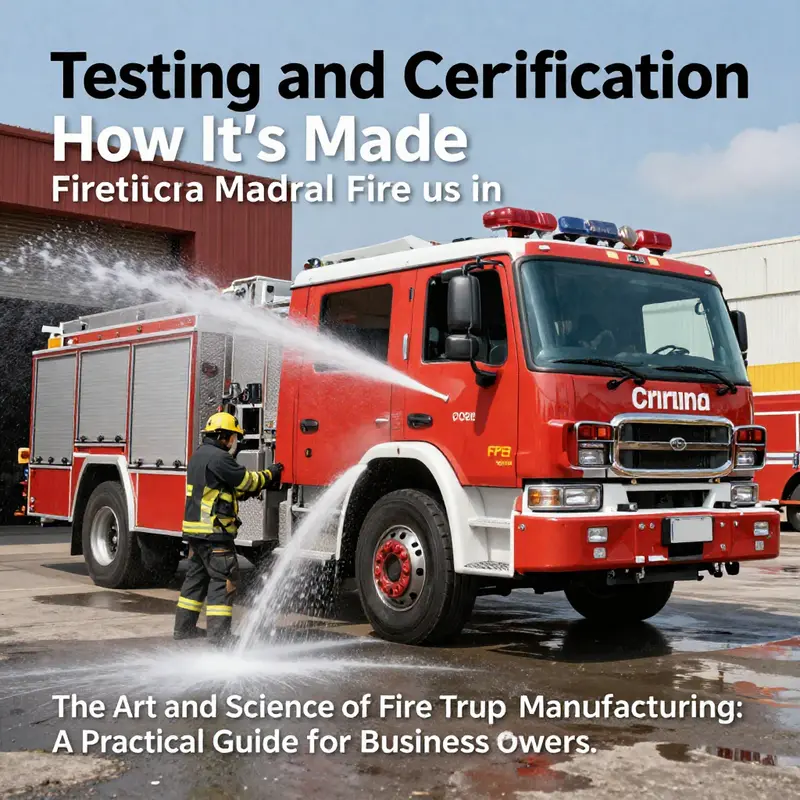
Testing is the crucible in which a fire truck’s many systems prove their worth. It isn’t an afterthought stamped on a page of compliance; it is the long sequence of checks that translates heavy metal, complex hydraulics, and sensitive electronics into a single, reliable tool for firefighters. Before the first siren ever wails, the vehicle passes through stages that stress every joint, valve, seal, and sensor under conditions that imitate the most demanding emergencies. The goal is not merely to confirm that components work, but to prove that they work together under pressure when minutes count and lives hang in the balance.
Organizations such as UL define a framework that covers automotive subsystems, devices, ground ladders, and accessories. Their tests examine how a pump behaves as it swallows thousands of liters of water, how a ladder behaves when extended hundreds of feet above a street, and how electrical systems tolerate the heat of a pump room combined with the cold of night operations. Each assessment looks for reliability as well as safety margins. Certification marks are not badges of convenience; they reflect a vendor’s ability to predict performance, detect flaws, and prevent failures in real-world service.
Quality management and automotive-grade process controls underpin every stage of manufacture and testing. International standards such as ISO 9000 set the language for consistent quality across suppliers and factories. Automotive industry standards like TS16949 sharpen that focus on process capability and continuous improvement. A multi-national program may also carry CCC or CE marks to ensure that the vehicle meets local and regional expectations for safety and environmental responsibility. The environmental footprint matters too; vehicles and their components must minimize emissions in the tests and respect RoHS requirements that restrict hazardous materials in electrical gear. These standards do not exist in isolation; they create a map that engineering teams follow from design reviews through final acceptance.
The journey through certification does not stop at the factory gate. The American Test Center is cited as a pivotal site for rigorous evaluation of aerial devices—extendable ladders and platform systems—that are crucial in visibility, access, and rescue work. Inspectors probe from the top of the boom to the chassis frame, ensuring that every moving part remains predictable when the apparatus is extended and retracted, when the ladder bears its maximum outreach, and when it faces dynamic loads induced by wind resistance, rough pavement, or rapid braking. The goal is not only to confirm that components meet spec sheets but to verify that workmanship remains safe under fatigue and that maintenance activities will not inadvertently compromise safety.
Some of the newest testing frontiers blend traditional mechanical assessment with advanced simulation and human factors research. A 2025 study introduced a Curve Speed Warning System designed for fire trucks and tested in a driving simulator with twenty-four firefighters. The study examined how warnings when curving at unsafe speeds influenced driver behavior. The results showed reduced speeding, fewer severe braking events, and maintained response times. The implication for manufacturers is clear: as real-world operations become more data-driven, testing must capture not just straight-line performance but the complex dynamics of emergency driving, including rapid lane changes, water recoil, and the need to stabilize heavy loads on uneven surfaces.
Beyond the lab and the simulator, field tests and controlled live-fire exercises stretch the definition of certification. Hydraulics laboratories test high-pressure pumps under continuous operation, simulate water hammer, and verify that piping, valves, and fittings endure thousands of cycles without leaks. Structural tests push frames and cabs to their torque and bending limits, validating that the chassis retains integrity during high-speed 90-degree turns, ladder extension under load, and roof operations during a search in a smoky environment. Electronic systems—diagnostics, thermal imaging, lighting, and control interfaces—must survive heat cycling, vibration, and humidity without degradation in signals or user prompts. The objective is to eliminate surprises when a truck is deployed into a firefight where conditions evolve in seconds.
The layer of compliance extends into environmental and air-management considerations. EPA requirements, European EEC norms, and RoHS constraints shape how powertrains, electrical harnesses, and sensor suites are designed and tested. Even water tanks and other critical vessels may be built to ASME standards, which govern structural integrity and safety under pressure. In every case, certification is not a one-time moment but a continuous discipline. Factories maintain traceability of components, log test data, and run perpetual quality checks to ensure that a new batch of vehicles does not drift from established safety margins. This is the cornerstone of reliability, especially when maintenance cycles, spare parts supply, and service networks must respond to a fleet in active duty.
For responders, certification translates into tangible confidence. They rely on the knowledge that the pump will reach the required pressure, that the ladder will extend smoothly to the necessary height, and that the electrical system will not fail under the heat of a long deployment. For procurement teams, the standards offer a language that bridges engineering ambition with field performance. They know that a certified truck is backed by a framework that anticipates failure modes, defines acceptable risk, and commits manufacturers to transparent testing records and service accountability. The broader public, too, benefits from the assurance that emergency equipment adheres to recognized safety paradigms, with independent verification that the gear performs when it matters most.
The story of testing and certification also highlights the relationship between design intent and practical operation. Engineers sketch a vehicle around a set of scenarios: pumping from a hydrant with a particular flow rate, reaching a window on a high-rise with a telescoping platform, or entering an exposed environment where visibility is poor and intake dynamics change with wind and heat. Tests push those scenarios into extreme corners of the envelope, revealing strengths to be exploited and weaknesses to be mitigated. The result is a fire truck that preserves its operability across shifts, seasons, and continents, ready for maintenance cycles and spare parts supply that keep fleets rolling instead of languishing in service bays. In this ecosystem, safety and reliability are not separate goals but two faces of the same system.
As the industry continues to evolve, so too does the testing toolkit. Digital twins, advanced sensors, and real-time data capture feed back into design and certification programs. The aim is to shorten the loop between prototype and production while preserving the confidence that comes from rigorous validation. In the end, the credibility of a fire apparatus rests on a chorus of checks—from the bench tests in a controlled lab to the exhaustive road and field trials that mimic the most punishing emergencies. When a truck earns its certification, it is not merely a badge but an assurance that every bolt and valve contributes to saving lives and protecting property under conditions that demand peak performance, unwavering reliability, and immediate readiness to respond.
For those who design, build, and specify fire trucks, the certified standard serves as a compass. It clarifies what is non-negotiable, what margins are acceptable, and how to communicate performance history across fleets, departments, and regions. For the communities that rely on these machines, certification is the language of trust—the quiet assurance that the apparatus entering a fire station has already faced the most stringent tests the industry can muster. And for the manufacturers, it is a formal partnership with laboratories and accreditation bodies that insist on accountability, data integrity, and continuous improvement. The chapter of testing and certification thus becomes a living thread in the broader narrative of how it’s made fire trucks: not a single phase, but a continuous chain of validation that begins long before assembly and extends into the truck’s operational life.
External resources expand and deepen this conversation. To understand the breadth of testing and the authority behind certification, one can consult the standards bodies and testing centers that define the expectations for performance, safety, and environmental stewardship. For more context, see UL’s documentation on fire and emergency apparatus testing certification.
Final thoughts
Understanding how fire trucks are manufactured provides invaluable insights for business owners involved in emergency services. Each aspect—from structural design to testing—demonstrates the commitment to safety and efficacy inherent in these vehicles. As the demand for advanced firefighting solutions continues to grow, staying informed about the manufacturing processes can enhance operational strategies and improve service delivery. By valuing these engineering feats, businesses can better advocate for the necessary investments and innovations in emergency management.

