
















Understanding the weight of a ladder fire truck is vital for business owners involved in firefighting equipment or municipal planning. The weight of these trucks can vary widely due to their design and intended use, impacting not only operational costs but also safety and efficiency in emergency responses. This article delves into various aspects of ladder fire truck weights, including the factors influencing their weight, a comparative analysis of different models, the role of modern materials and technology, economic implications, and how weight influences maneuverability and operational efficacy.
The Heavy Reach: Decoding the Weight of Ladder Fire Trucks and Its Impact on Firefighting
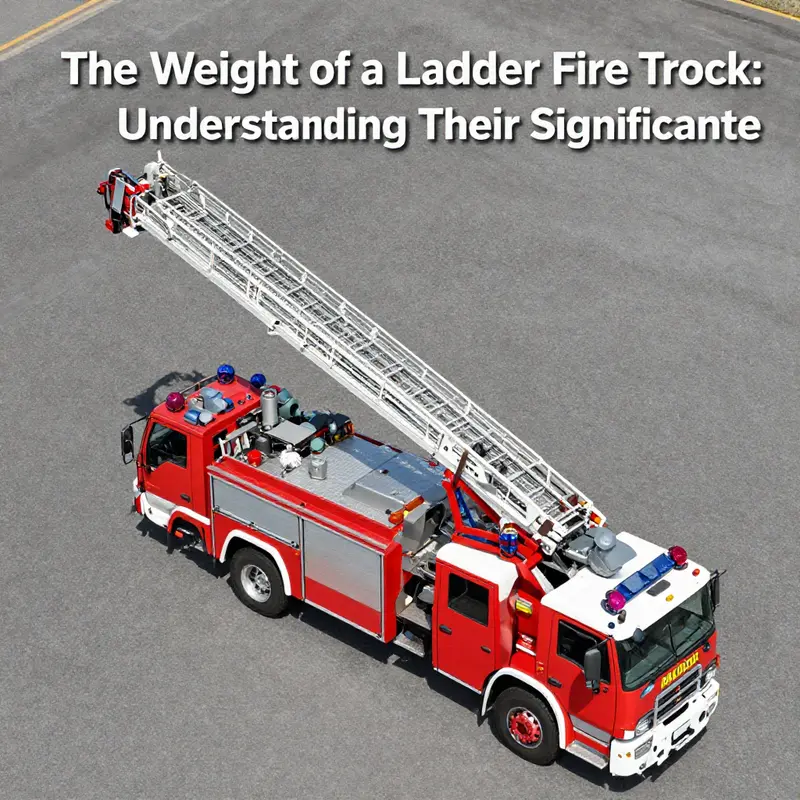
When a ladder fire truck arrives at the scene of a high-rise rescue or a spreading blaze, the sight is as much about mass as it is about reach. The device that towers above the street—an extendable ladder or aerial platform—carries a hydraulic heartbeat, protected inside a chassis that weighs substantial in its own right. Weight, in this sense, is not merely a statistic to be written on a spec sheet. It is a fundamental constraint and a governing force that shapes how quickly a crew can respond, how safely it can deploy the ladder, and what routes and hydrants are practical on the way to the incident. To understand how heavy a ladder fire truck is, one must look at the common range that defines the category, acknowledge the extremes that exist in specialized configurations, and then tie those numbers back to performance, safety, and cost. In practical terms, the mass of these machines is a function of their purpose: to deliver a capable, stable platform that can reach distant elevations while carrying essential equipment, water, hoses, and rescue tools. The dispersal of weight across a rigid frame, the stability granted by outriggers, and the mass of the ladder itself all interact to determine how a truck behaves on the road, at the hydrant, and during the crucial moments of a lift and rescue operation.
On average, the heavy-duty ladder trucks that populate modern fleets sit in the neighborhood of fifty-five tons, or roughly 110,000 pounds. That figure captures a balance between robust lifting ability and the need to remain maneuverable enough to navigate crowded urban streets. It reflects the common design philosophy of traditional aerial apparatus: a tall, strong ladder or platform paired with a powerful pump, a sizable water tank, and a toolkit of specialized equipment. The weight is distributed across a front cab, a robust chassis, and the long structural members that must not only hoist a platform but also deliver stability so that the crew can work safely while the ladder is extended and loaded with operators and rescue gear. This mass is a key determinant of the truck’s acceleration, braking, and fuel consumption, especially when responding to a call with full water load and active pumping systems. The heavier the vehicle, the more it will demand from the fuel system, the suspension, and the tires—an integrated cost that departments must weigh against the tactical benefits of higher lift capacity and longer reach.
Yet the spectrum does not end with the typical fifty-five-ton figure. The most specialized, largest ladder configurations—designed for extreme reach, extreme environments, or unique firefighting needs—step beyond the conventional ceiling. In the most extreme class, these ultra-large models can approach a maximum operating weight around 120 tons, or roughly 240,000 pounds. Such figures belong to a subset of apparatus built to conquer unusually tall structures or to carry exceptionally large water supplies and firefighting systems; they are not the day-to-day choice for every department, but they illustrate the upper bound of what ladder trucks can be tasked to do in the most demanding scenarios. This upper tier underscores a fundamental truth: as lift capability and platform capacity increase, so too does the total mass, and with that mass comes amplified requirements for road access, civil infrastructure compatibility, and maintenance discipline. In practice, these giants are rarely deployed in the same urban fabric where lighter rigs operate daily; instead, they serve specialized urban cores or industrial landscapes where the demand for height and reach justifies the added weight and the environmental, logistical, and financial costs that accompany it.
To ground these mass figures in the operating reality of firefighting, it helps to consider the weight classifications that guide design and safety standards. Industry guidelines and bridge-and-road standards frame ladder fire trucks within load classifications that set upper limits for structural and operational safety. A commonly cited reference is the AASHTO framework, which outlines load considerations that go beyond the vehicle’s static mass. In the context of ladder trucks, the relevant notation often appears as a Type 3-3 classification with a maximum load capacity around forty tons. This may seem modest when juxtaposed with the overall vehicle mass, but it reflects the combined reality: the equipment, dynamic forces when the ladder is extended, and the distribution of weight across the vehicle during operation are all evaluated against this threshold. A notional load, sometimes aligned with a similar forty-ton benchmark, reinforces the principle that the unit must stay within a safe zone for roadway interactions, dynamic maneuvers, and the stability envelope required when the aerial section is in motion or fully deployed.
What does this mean in the field? It means that the truck’s mass cannot be viewed in isolation from how the truck is used. Heavier trucks demand greater ballast management, more sophisticated suspension systems, and a careful approach to routes that can accommodate their mass. On narrow streets, weight becomes a limiting factor, influencing where a unit can turn, the types of bridges it can traverse, and whether it can reach an incident with the ladder extended safely. Stability is not simply about being able to stop on a dime; it is about preventing undue sway when the ladder extends. The risk of instability grows when a tall platform is elevated on a vehicle with a heavy rear or imbalanced load; outriggers, ballast distribution, and precise weight management become essential. Operators train to read the mass in motion—how the weight shifts as the ladder reaches out, how the pivot points respond to dynamic loads, and how the ground conditions under the outriggers affect footprint and friction. A miscalculation can translate into increased risk to personnel or even a compromised elevation at a critical moment.
The mass of the ladder assembly and the vehicle’s drivetrain also cascade into maintenance and lifecycle costs. A heavier machine imposes greater wear on axles, tires, and brakes, and it places higher demands on the suspension system to maintain a smooth ride and precise control. Regular maintenance must scrutinize components that support the heavier load: extended pump life, hydraulic lines, and seals must withstand repeated high-stress cycles as the ladder tilts, rotates, and telescopes. In practical terms, the upkeep costs rise with weight, and departments must budget accordingly for more frequent inspections, longer service intervals for critical systems, and the potential for more costly parts. This is not merely about keeping the truck operational; it is about guaranteeing that the apparatus remains responsive and safe at the precise moment when the ladder is deployed and fire suppression or rescue operations are underway.
From a procurement perspective, weight informs a department’s strategic decisions about fleet composition. Urban departments with broad boulevards and modern high-rise districts may justify heavier, more capable units because they face frequent needs for tall reach and high-volume water delivery. Conversely, rural or mountainous regions may prioritize lighter, more agile units that can access winding routes and older structural corridors while still delivering essential lift and rescue functions. The rationale is not simply about raw power; it is about the optimal blend of reach, load capacity, road compatibility, and lifecycle costs. By weighing these factors against anticipated incident profiles, a department crafts a diverse arsenal of aerial apparatus that can respond effectively while avoiding the practical burdens that come with extreme mass in everyday operations.
In sum, the weight of a ladder fire truck is a central thread woven into every facet of its design, operation, and deployment. The typical heavy-duty model hovers around fifty-five tons, a robust mass capable of lifting and carrying a substantial payload of water, hoses, and rescue gear. Yet the upper limits—where specialized, extraordinarily large platforms push toward 120 tons—remind us that the firefighting toolkit can be extended to extreme forms of reach and capacity when the situation demands. Between these endpoints lies a landscape shaped by load classifications, dynamic forces, and the relentless practicalities of city streets and rural byways. The balance is delicate: too little heft and the platform may fail to reach or stabilize; too much weight and the route to the incident becomes obstructed, raising questions about anticipation, planning, and infrastructure compatibility. The weight figures are not abstract numbers; they translate directly into stability on the ground, speed of response, and the safety of the crew as they perform the highly coordinated tasks of vertical ascent, rescue, and suppression. For those navigating the confluence of engineering, urban planning, and firefighting, weight remains a defining constraint and a guiding parameter—a quiet but constant force behind every lift, every deployment, and every moment when a ladder reaches toward the sky to save lives.
External resource: For authoritative standards and design specifications related to load classifications and structural guidelines, see the official guidelines from the American Association of State Highway and Transportation Officials (AASHTO): https://www.aashto.org/
Weight on the Reach: Understanding How Heavy Ladder Fire Trucks Really Are—and Why It Matters
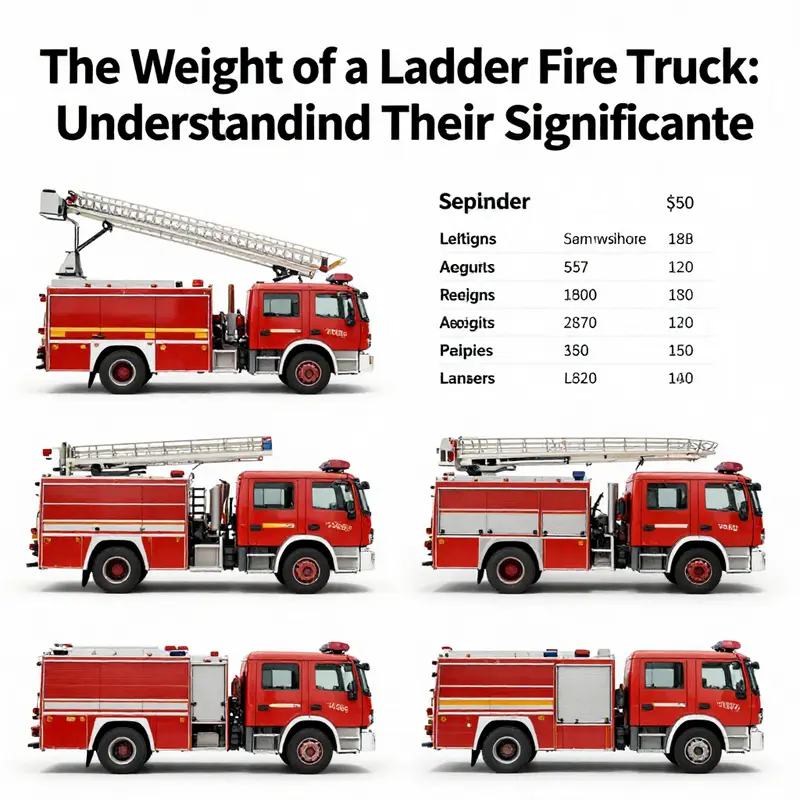
Mass is not a mere statistic in the world of firefighting equipment. It is a defining constraint and a decisive lever all at once. The ladder fire truck, or aerial ladder, is designed to combine reach with force, to extend a platform above a burning façade while carrying water, foam, and the machinery that powers the lift. But that combination comes with a price tag in weight. The simplest way to frame the conversation is to start with the range: the heaviest, purpose-built aerial platforms destined for high-rise districts often weigh in around 55 tons, roughly 110,000 pounds. Yet the outer edge exists. In the realm of extreme engineering, there are exceptionally large models with lengths approaching a hundred meters and weights that can climb to about 120 tons, or 240,000 pounds, when they are fully equipped and in operational balance. It is a spectrum that reflects purpose, not whim; it maps the demands of vertical access, payload, and the roads and bridges that these machines must traverse to get to the fire scene. Understanding where a given ladder truck sits on that spectrum helps explain why a city’s fleet can look so varied, and why a single unit can feel like a different machine depending on where and how it is deployed.
To grasp the practical implications, it helps to anchor the discussion in how weight is generated and why it matters. The mass of an aerial ladder truck is not only about the ladder itself. It includes the chassis, the powertrain, outriggers and stabilization systems, the hydraulic boom and platform, and the ancillary equipment that makes a ladder functional on the street and safe when elevated. A longer ladder tends to demand a sturdier, heavier chassis and more robust stabilizers. A larger water tank or integrated foam system adds tens of thousands of pounds. Even the operator’s basket and the control systems that steer a massive hydraulic arm contribute to the total. In short, the weight is the sum of reach, resilience, and readiness—the three axes that firefighters rely on during a high-pressure emergency.
Across the spectrum, the weight spreads widely. A compact, urban-friendly aerial ladder with a shorter reach and lighter payload might exceed 25 tons, while a full-size, high-capacity unit with extended reach and substantial onboard reserves climbs far higher. A practical takeaway from comparisons across models is that, on the road, the same vehicle can behave very differently depending on whether it is burdened with water, foam, tools, and safety gear or whether it is configured with lighter emergency equipment for rapid response. For the heavy end of the range, the scale is driven by the need to deliver long-range access and to stage complex rescues in dense city environments. For the lighter end, the emphasis shifts toward agility, swift deployment through tight streets, and lower road strain in smaller municipalities.
Delving into the variation, one encounters a set of representative configurations that highlights the divergence in mass even among similar mission profiles. A 6×4, heavy aerial ladder unit powered by a substantial engine—designed for high-rise firefighting in tight urban corridors—usually tips the scales at well over 25 tons. This class emphasizes reach and robustness, with a chassis that can bear the dynamic loads of a long, hydraulic boom while carrying a sizable water reserve and a foam system. It is a vehicle built to perform where space is a premium and time is a critical factor, often stationed in major metropolitan districts where towering structures require a dependable, powerful lift.
By contrast, a four-by-two pumper that lacks an extended aerial platform sits at a much lighter end of the spectrum. These agile units, typically used for rapid urban response, deliver strong on-road performance and nimble handling but do not offer the elevated reach of a true aerial ladder. They illustrate how the fleet can prioritize speed and maneuverability over height and payload when circumstances call for it. Then there are mid-range options that represent a blend: adequate reach and lifting capability, sufficient onboard pumps and water reserves for certain scenarios, and a chassis designed for steady performance in a variety of environments. In rural or regional settings, a seven-ton class is sometimes sufficient for competent response, rescue, and containment, illustrating how mission scope directly informs mass.
Even within this landscape, the most dramatic example of scale comes from a category that few departments ever need to employ, but which illustrates the outer limits of engineering ambition. There exists an extreme, ultra-long aerial platform developed for specialized operations, where a vehicle can be assembled with a length approaching 100 meters and a maximum operating weight near 120 tons. Such a machine is engineered for unique scenarios—specific structural challenges or extraordinary reach requirements—and it stands as a reminder that the upper bounds of ladder mass can be extraordinarily high when the mission truly demands it. In ordinary city firefighting, however, these giants are not the rule; they are a reminder of what is technically feasible when the objective is unimpeded vertical access.
The weight conversation does not end with raw numbers. It branches into how these machines interact with roads, bridges, and urban infrastructure. Heavier units require careful planning around axle loads, stabilizer deployment, and braking performance. They demand roads that support their total gross vehicle weight and bridges that can withstand dynamic loading as the ladder translates skyward. The geometry is delicate: extend a heavy ladder, and the center of gravity shifts; outstretch the outriggers, and the vehicle must remain stable on imperfect pavement. In practice, this translates into a decision framework for fire departments and incident commanders. When selecting a unit, agencies weigh the benefit of greater reach or payload against the realities of travel corridors, maintenance costs, and the logistics of deploying a large apparatus through the most confined urban streets. A heavier truck may offer superior rescue capabilities, but it might also face longer setup times and more intricate route planning to avoid bottlenecks on the way to a scene.
The comparative view brings into sharper relief the diversity of real-world choices. A compact yet capable urban aerial platform, with a reach tuned to high-rise rescues but designed for tight streets, sits on the lighter end of the spectrum. It excels in flexibility and rapid deployment, which is crucial when every second counts during a building fire. A mid-sized unit adds a cushion of reach and stability without tipping the scales into the heaviest category. It is a practical compromise for many departments that face both high-rise risks and the need to navigate mixed urban-rural landscapes. On the far end, the heaviest aerial platforms carrying generous water and foam reserves are built for sustained, multi-scene operations, where the ability to fight fire from height and to support rescue missions is paramount. These are the giants of the fleet, deployed when the priority is the most demanding access and the most robust logistical capacity.
For readers navigating procurement or policy discussions, the weight story is not merely about physical mass. It frames life-cycle costs, maintenance planning, and the resilience of firefighting fleets. Heavier units inherently demand more robust tires and suspensions, specialized maintenance personnel, and higher fuel and standby costs. They may impose stricter vehicle licensing or heavier permit requirements on transport to the fire ground, and their training needs expand to cover dynamic load management, ladder operation under varying wind conditions, and safe crane-like handling of long, heavy booms. Conversely, lighter aerial platforms translate into lower operating costs, easier movement through urban cores, and shorter setup times. They can be invaluable for departments with frequent street-level responses and a need for swift, versatile response while maintaining essential lifting and rescue capabilities.
In closing, the weight of a ladder fire truck is not an abstract figure. It is a direct measure of the mission profile it is designed to support: reach that makes the difference between a successful rescue and a missed opportunity, or a sustained fire attack that buys precious time for occupants and crews. The spectrum—from compact urban units at the lower end to the ultra-heavy giants at the upper end—maps onto the varied landscapes that firefighters contend with every day. What a department chooses depends on the typical incident profile, the urban fabric it serves, and the logistical realities of moving a massive apparatus through that fabric. As the evolution of firefighting technology continues, weight will remain a central variable, balancing the aspiration for greater reach and deeper capability with the practical demands of road, bridge, and station readiness.
External resources for broader context can be found in industry procurement guides and marketplace listings, which discuss the practicalities of sourcing and maintaining heavy aerial platforms. For further information on procurement options, see GoldSupplier Wholesale Marketplace. GoldSupplier Wholesale Marketplace
Weight at the Reach: How Technology and Materials Define the Mass of a Ladder Fire Truck
When people ask how heavy a ladder fire truck is, they expect a single figure. The truth is more nuanced. A ladder truck’s weight is the consequence of choices made in design, materials, and the role the vehicle is expected to play on the fireground. It is a living sum, not a fixed stat. At its core, a ladder fire truck is a hybrid between a heavy-duty chassis, a high-reach aerial system, and the safety systems that keep crews stable when something must be reached at height while hot, water-filled, or smoky environments swirl around them. The resulting mass is the chosen balance between reach, payload, water capability, and maneuverability. In practical terms, the weight varies widely across configurations, with typical heavy-duty models sitting around fifty-five tons and the very heaviest specialized models pushing toward or beyond one hundred twenty tons. Those numbers translate to roughly 110,000 pounds for a typical heavy-duty setup, up to about 240,000 pounds for the largest, purpose-built extremes. Understanding why there is such a span requires unpacking the parts that go into a ladder truck and the material choices that either add heft or save weight without sacrificing reliability.
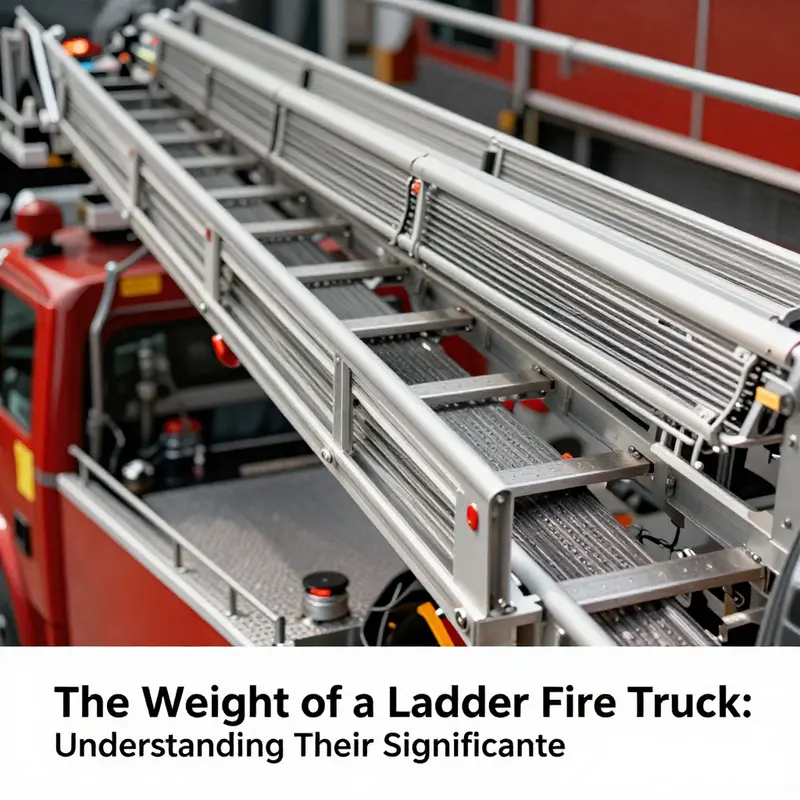
First, consider the components that physically add weight and how they interact. The chassis is the platform’s backbone, engineered to bear the extraordinary forces of water pressure, ladder extension, and personnel transfer while remaining road-ready. Then comes the hydraulic aerial ladder system itself—the mechanism that stretches and lifts the ladder while rotating at height. This system is indispensable for reaching upper floors and rooflines but is also one of the principal sources of weight. The ladder sections, its stabilizing joints, and the hydraulic budget that powers them all contribute substantial mass. Up on the apparatus, the platform or bucket, if present, adds additional load, along with hoses, tools, and safety gear that crews carry. The water tank is another critical variable; a truck configured to deliver water on site will carry tens of thousands of liters, and the weight of that water swings the overall mass dramatically. Pumps, foam systems, and their associated plumbing also contribute heft, especially when designed for rapid application and extended operations. Stabilization outriggers, sometimes paired with ballast, are essential for maintaining a safe stance when the ladder is elevated and the truck must remain stationary. All told, the sum of these elements—chassis rigidity, hydraulic reach, water capacity, pumping capability, stabilization, and crew equipment—defines the vehicle’s weight profile.
The role of materials in shaping this weight cannot be overstated. Engineers deliberately choose materials that balance strength, durability, and weight. High-strength steel alloys are common for the main structural framework because they offer excellent load-bearing capacity and resilience against the repeated cycle of duty cycles, vibrations, and heat. Yet, where longevity and corrosion resistance are paramount, stainless steel, particularly a robust grade like stainless steel 304, has gained traction in critical areas. The ladder itself, and some ancillary components exposed to harsh firefighting environments, benefit from the corrosion resistance and wear resistance stainless steel provides. The tradeoff is weight: stainless steel is heavier than many alternatives, but its durability and reduced maintenance can shorten lifecycle costs and downtime, especially in saltwater or damp deployments. In this balance of weight versus longevity, manufacturers frequently design key sections to withstand extreme conditions while using lighter materials where feasible for noncritical or secondary structures.
Technology and electronics further influence the effective weight of the system, not just its functional capacities. Modern ladder trucks rely on advanced hydraulic systems to deliver precise control of extension, recoil, rotation, and elevation. These systems have to be robust enough to handle the peak forces that occur when a ladder is fully deployed in wind or atop uneven terrain, yet refined enough to operate smoothly under load. The hydraulics themselves add weight, but they also enable the operator to achieve the desired reach with precision and safety. Computerized controls and sensors monitor load distribution and stabilize the machine, preventing overextension and helping manage the dynamics created by a moving platform over a loaded chassis. The more sophisticated the control system, the more it can optimize safe operation, which, in turn, can justify greater investment in stronger materials and heavier structural elements because the system’s safety margins are better managed.
It is impossible to discuss weight without mentioning how water capacity drives mass. Water is both the mission and a large portion of the mass in many ladder configurations. A truck with a substantial water tank will weigh more, all else being equal, than one designed for dry operation or with a smaller tank. In modern urban firefighting, where high-volume water delivery to high-rise structures is often critical, large tanks are common. The weight implications ripple through performance: more mass requires more robust suspension and wheel assemblies, stronger tires, and more substantial braking configurations. At the same time, greater water capacity means more water on scene, which can reduce the time needed to begin suppressing a fire from above but requires careful planning of weight distribution during movement and maneuvering. In some cases, trucks are designed to be “wet” or “dry” depending on the anticipated mission profile. Wet configurations lean into water capability as a primary function, while dry configurations emphasize reach and payload for tools and personnel when water must be drawn from external sources at the scene. Either approach is a calculated trade-off between weight, reach, and the agility needed to navigate tight city streets.
Beyond the physics of mass, the practical consequences of weight shape how ladder trucks are designed, tested, and deployed. The center of gravity must be managed carefully, especially when the ladder is extended. A heavier lift can shift balance, raising the risk of instability if the outriggers are not deployed or if the truck is on uneven ground. For this reason, stability control systems, precise hydraulic actuation, and situational awareness—both from the operator and the vehicle’s electronics—are essential. Engineers must ensure the vehicle can respond to gusts, road slope, and sudden load changes as the ladder moves. The weight distribution also informs the choice of tires, brakes, and the suspension system, all of which affect road handling, acceleration, and braking distances. The heaviest configurations demand even more careful design to maintain safe cornering and stopping power, since the mass acts as a barrier to rapid maneuvers.
From a broader engineering perspective, the weight envelope also reflects the intended duty cycle and response environment. A municipal ladder truck designed to serve dense urban cores and high-rise districts often prioritizes reach and water delivery while maintaining enough mobility to respond quickly through traffic. This means material choices and hydraulic sizing that maximize reliability under repeated use, rather than chasing minimal weight. In other contexts, specialized heavy-lift models push toward higher mass to carry larger water tanks, more powerful hydraulics, and longer booms, sometimes at the cost of speed or fuel efficiency. The upshot is that there is no universal “correct” weight for a ladder fire truck; the weight is a negotiated outcome of mission requirements, safety standards, and the realities of the materials and technologies chosen by the manufacturer.
For readers evaluating the weight of a ladder truck, the most reliable guidance comes from the technical specifications provided by the manufacturer. Those specs reflect the configuration, option packages, tank size, and the exact materials used. The same model line can present a range of weights depending on whether it is built for maximum water capacity, for a lighter dry configuration, or for specialized high-bridge reach. In practice, understanding the weight means looking at the whole system: chassis strength, the mass of the aerial mechanism, water or foam capacity, pump power, outriggers, ballast, and the electronics that ensure lift safety and stability. Only by considering all these elements together can one grasp why a ladder fire truck weighs what it weighs and how engineers keep that weight within operable and safe limits without compromising on reach, readiness, or durability.
External resource: https://www.made-in-china.com/products-detail/829789245272/156778292.html
Weight, Worth, and the Firefront: The Economic Footprint of Aerial Ladder Apparatus
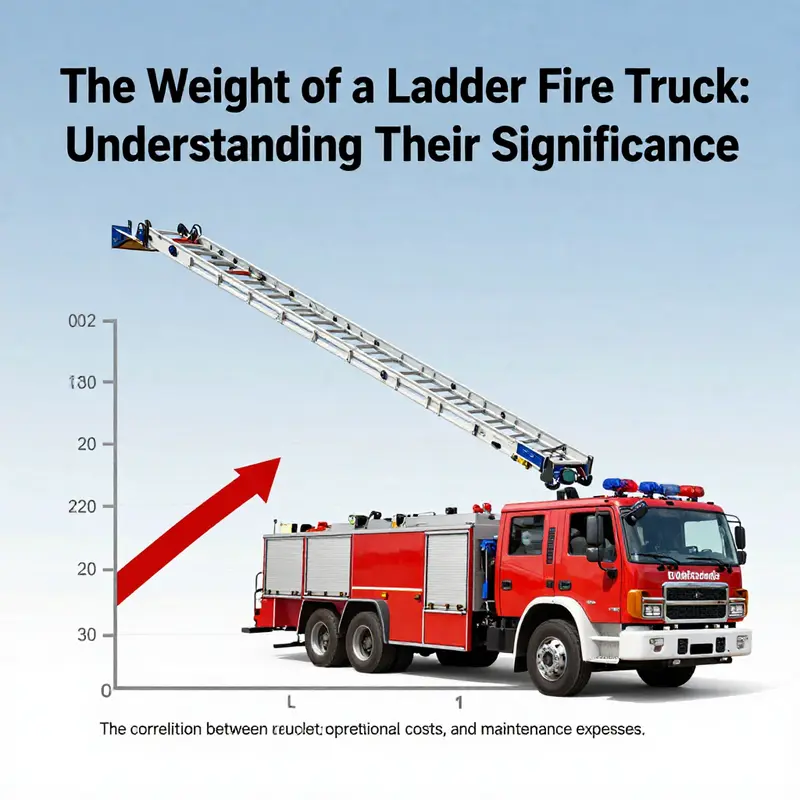
The weight of an aerial ladder apparatus is not just a measurement on a spec sheet; it is a decisive force shaping how a fire department plans its fleet, maneuvers through cities, and sustains its readiness over decades. When the nation’s urban centers continue to rise, the need for high reach and substantial water delivery often drives a ladder truck into the heaviest end of the spectrum. Yet weight alone does not determine value. The true economic footprint of these machines emerges from a spectrum of interlocking costs and operational implications that begin before the purchase and stretch far into routine use, maintenance, and the wider infrastructure that supports city response.
In practical terms, the weight of ladder trucks spans a broad range. Conventional heavy-duty aerials typically sit around fifty-five tons, equivalent to roughly 110,000 pounds. That mass reflects a balance of reach, stability, water capacity, and the robust suspension, chassis, and outriggers needed to function safely at height and against wind loads. At the outer edges of the spectrum lie specialized models designed for exceptional reach or payload, with operating weights approaching one hundred twenty tons. This upper tier represents engineering choices that favor extraordinary vertical access and capabilities, but come with proportionally steeper price tags and more demanding maintenance regimes. In other words, the doughnut hole between a standard aerial and the most extreme configurations is not a line drawn in a catalog—it is a tight seam where procurement, performance, and cost converge.
To understand the economic implications, one must first look at procurement. Heavier trucks demand sturdier, more expensive chassis and a reinforced suspension system. The decision to invest in a higher mass unit often reflects a strategic assessment: the values of broader aerial reach, greater stability at extended heights, and the ability to carry sizable water or specialty systems may outweigh the higher upfront purchase price. Departments weigh these expectations against anticipated usage patterns, building codes, and the geographic layout of their response districts. Aerial capabilities that reduce time to reach upper floors or to create long elevation lines can translate into saved lives and property, which, in turn, informs the cost-benefit calculus that guides funding and budgeting.
Operational costs flow directly from mass as well. Heavier apparatus tend to burn more fuel per mile, a factor that accumulates over a career spanning many thousands of miles logged in service. The fuel premium compounds with mission profiles that require frequent positioning, lengthy repositioning during incidents, and extended idling in standby modes. Over the life of a vehicle, this incremental consumption represents a persistent operating expense that departments must budget for, in addition to routine maintenance and tires, which wear faster under the heavier load. Brakes, driveline components, and hydraulic systems also face added stress as mass climbs, accelerating the pace of wear and the frequency of service cycles. While modern technologies mitigate some of these effects, the fundamental physics of a heavier machine contribute to a steeper total cost of ownership.
Yet fuel and maintenance costs are only part of the larger economic picture. Weight restrictions on public roads, bridges, and certain corridors introduce a practical dimension that can shape deployment strategies and response times. Even the most agile aerial platform can be tethered by the legal and logistical realities of heavy vehicle travel. In practice, this means that during active incidents, crews may need to improvise routes, deploy lighter assets for certain tasks, or wait for specialized escort and clearance. Each of these contingencies carries its own economic impact: the opportunity cost of slower response, the potential escalation of fire damage, and the administrative resources required to navigate access limitations. In congested urban environments, the tension between reach and access becomes a tangible cost driver, influencing both strategic planning and daily operations.
The aerodynamic and mechanical realities of a heavier ladder truck also echo in maintenance and infrastructure considerations beyond the vehicle itself. Heavier loads impart greater stress on tires and brakes, as noted, but they also interact with road surfaces and municipal systems. The propensity for accelerated wear on pavements and the need for more frequent inspections of bridges and connecting routes can entail downstream costs for municipalities. While a single unit’s wear may seem modest in isolation, the aggregate effect across a fleet—and across a city’s entire emergency-response network—can be substantial. This is especially relevant when one contemplates lifecycle planning, where the initial capital outlay must be weighed against long-term liabilities, replacement cycles, and the evolving standards for safety and performance.
From a human resources perspective, weight intersects with the training and competence required to operate these machines safely and effectively. Heavier aerial platforms demand precise handling, careful coördination of crew roles, and rigorous adherence to stability and wind-limit protocols. The investment in training translates into indirect costs but also into a more resilient, capable response capability. When crews can deploy the ladder quickly and safely, incidents that might otherwise escalate into mass damage or casualty events may be contained more effectively. The broader economic implication here is the value derived from improved outcomes and reduced downstream emergency costs, which must be considered alongside the direct price tag of acquisition and maintenance.
An important nuance in weighing the economic implications is the context-dependent nature of need. In dense, high-rise environments with substantial fire-loads and complex access challenges, the advantages of a heavier, longer-reaching aerial platform can be decisive. In communities with more modest building profiles or tighter road networks, a lighter, more maneuverable hire- or purchase may deliver a more favorable balance of cost to capability. This deliberation is rarely a simple arithmetic problem; it is a strategic exercise in aligning a department’s mission with the material realities of procurement, operation, and the city’s infrastructure. The very weight that empowers a unit to reach higher, to deploy water more effectively, and to conduct rescues in challenging spaces also curtails certain movements and raises the threshold for capital and operating expenditures.
The lifecycle equation—how the weight of a ladder truck influences its long-term cost and value—rests on several interdependent factors. The initial investment is just the first line in a long ledger. The ongoing fuel, parts, and maintenance costs accumulate alongside the need for specialized facilities to accommodate the vehicle’s size, including drainage considerations for hydraulic systems and the structural demands on parking and storage spaces. Municipal budgets must accommodate not only the vehicle itself but also the infrastructure that supports it—clearance for maintenance access, safe staging areas for high-reach operations, and the readiness to mobilize effectively across a city’s varied terrain.
This dynamic underscores a broader principle in emergency-equipment economics: weight is a defining asset and a defining constraint. The most valuable aerial apparatus are those that deliver high performance without compromising reliability or response time. Yet performance that hinges on mass inevitably drives up upfront and ongoing costs. The optimal balance is achieved not by chasing the heaviest possible machine, but by selecting configurations that meet the community’s specific risk profile, response requirements, and financial capacity while maintaining compatibility with the city’s road network and infrastructure.
For readers seeking a deeper technical and economic lens on how such decisional factors shape the service life and deployment of fire trucks, the scholarly analysis on decisional factors for the service life of fire trucks offers a rigorous foundation. It argues that decisions about equipment life, replacement, and upgrade must contend with the reality that heavier trucks introduce complex maintenance, infrastructure, and utilization dynamics that influence a department’s long-term sustainability and resilience. This body of work reinforces the point that weight is not merely a physical measure but a central driver of cost, risk, and strategic planning in modern firefighting.
In sum, the weight of ladder fire trucks is a critical determinant of both capability and cost. The range—from roughly fifty-five to around one hundred twenty tons—encapsulates a spectrum of decision points about reach, water capacity, stability, and the practical realities of road use. The economic footprint extends beyond the sticker price to include fuel, maintenance, infrastructure, training, and lifecycle management. Communities must weigh these interconnected costs against the imperative to safeguard lives and property, recognizing that the most effective choice balances weight with a thoughtful alignment of mission, geography, and fiscal stewardship. The lesson is not simply that heavier is stronger; it is that weight, when understood and managed, can be a decisive factor in delivering rapid, reliable, and safe responses when every second counts. For professionals and policymakers, the path forward lies in integrating engineering insight with urban planning, budgeting discipline, and operational experience to ensure that aerial ladder capability serves the public good without compromising financial sustainability. https://doi.org/10.7731/kifse.ff831185
Bearing the Burden: The Weight of Ladder Fire Trucks and Its Consequences for Reach, Stability, and Rapid Fireground Response
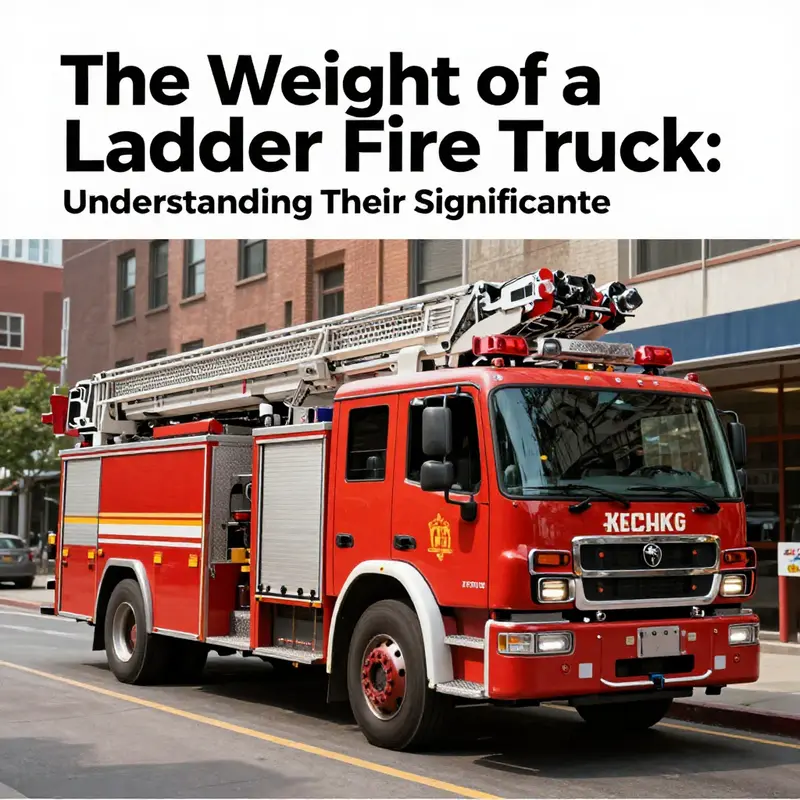
Weight is not merely a specification on a brochure; it is a governing force that determines what a ladder fire truck can do, how it behaves on the street, and how effectively it can support crews at the edge of the fire. When we ask how heavy a ladder truck is, we are really asking how that mass translates into balance, speed, and reach. The weight of these specialized vehicles varies widely, reflecting divergent missions, configurations, and design philosophies. In broad terms, the most capable ladder trucks designed for major cities and high-rise responses carry substantial mass, while more compact urban models trade some of that mass for nimbleness and quicker deployment. The middle ground—where many departments operate—strikes a careful balance between stability, payload, and maneuverability. Across this spectrum, the central idea remains consistent: heavier ladders offer greater potential stability and larger functional payloads, but they challenge drivers and fleets with tighter turning radii, steeper approach and departure angles, and the demand for more robust roads and staging areas.
To understand the practical implications, it helps to anchor the discussion in concrete numbers, while keeping in mind that real-world configurations can diverge from any single benchmark. Typical heavy-duty ladder trucks sit around 55 tons, which translates to roughly 110,000 pounds. This ballpark reflects the combination of a substantial aerial apparatus, a sizable water reservoir for firefighting operations, and the heavy chassis required to support dynamic loads at height. Yet the upper end of the spectrum contains machines that push the envelope far beyond this figure. The heaviest documented ladder platforms—these are not everyday apparatus but specialized, elevated systems designed for extraordinary reach or payloads—can approach 120 tons, or about 240,000 pounds. Such giants are built for extreme high-rise scenarios, where the ability to sustain load and maintain stability during extended operations becomes a mission-critical requirement.
Beyond the broad tonnage categories, the very architecture of a ladder truck shapes how weight translates into on-street performance. For example, a high-capacity 50-meter aerial ladder, with a gross vehicle weight around 31,000 kilograms, exemplifies how mass is concentrated and managed in a way that favors height and standby capacity over ultimate nimbleness. This weight level affords enhanced stability when the ladder is deployed and when equipment is operated at elevation. It also supports substantial ancillary systems—water cannons, foam delivery, and rescue tools—that must be kept within reach during a high-rise incident. But that same mass can complicate travel through tight urban corridors, especially when roads narrow or parking is limited. The relationship is not linear; more weight does not simply equal more capability across the board. It creates a nuanced set of trade-offs where maneuverability, ground pressure, and situational accessibility are constantly negotiated in real time during a response.
In the other direction, lighter aerial platforms—such as a 25-meter model weighing around 15,260 kilograms—demonstrate the practical elegance of balance. These trucks embody mobility and speed, allowing rapid repositioning in dense city centers where every second counts. They are particularly well suited for technical rescues, urban catastrophe-response drills, and neighborhoods where streets are narrow or cluttered with parked vehicles. The lighter configurations still deliver meaningful reach and can be equipped with essential firefighting tools, but their reduced mass tends to limit the maximum water capacity and the reserve of hydraulic power available for long-duration operations at height. This is not a flaw; it is a design choice that aligns the truck with a distinct operational philosophy—prioritizing speed, access, and agility over the raw mass that benefits extended high-elevation work.
Several structural and engineering realities underpin these weight-driven differences. At the macro level, the chassis and frame must carry not only the weight of the ladder apparatus itself, but also the dynamic loads that arise from ladder movement, rigging, stabilizing outriggers, and the use of heavy water outlets. The choice of frame material, axle configuration, suspension tuning, and wheelbase all respond to a single objective: maintaining a predictable center of gravity as the truck transitions between parked, traversing uneven pavement, and extending the ladder into position. The heavier the machine, the more critical the get-ready and stabilization phases become. Outriggers must deploy firmly, and the ground they rest upon must bear the cumulative loading without compromise. The ladder’s cantilevered mass adds another dimension; when extended outward and upward, the distribution of mass shifts, demanding precise control from the hydraulic system and a well-tuned counterbalance to prevent sway or tipping on uneven surfaces.
This is where motorized performance intersects with mission planning. Heavier ladders are inherently advantageous for high-rise operations due to their reach, rigidity, and the ability to carry larger onboard systems. A truck with substantial weight is better equipped to counteract wind loads, operator-induced forces, and the weight of water and foam once they are deployed through a hose or nozzle at height. In contrast, lighter models excel in environments where rapid team deployment, quick repositioning between bays, and frequent access to constrained neighborhoods are paramount. The urban fire ground is a dynamic theatre, and fleets must anticipate a spectrum of contingencies. The department’s decision-making process typically weighs the predicted incidents—high-rise fires, complex rescues, water supply issues, and the need to haul heavy equipment—against the realities of street geometry, garage space, and the availability of supporting apparatus like pumpers and aerial ladders.
An essential, often-underappreciated dimension of weight is its impact on ground clearance, approach angles, and departure angles. The angular thresholds through which a ladder truck can safely approach obstacles or depart from tilted zones are not mere trivia; they govern where the vehicle can position, which doorways may be opened by the apparatus, and how crews can maneuver their lines and equipment without compromising stability. For a representative mid-sized aerial ladder, an approach angle of around 18 degrees and a departure angle nearer to 12 degrees can be observed in certain configurations. Such figures illustrate the trade-off between the need to traverse uneven terrain and the risk of ground clearance issues when the vehicle is loaded to its maximum capacity. In practice, this means responders must sometimes select a model whose geometry aligns with the typical terrain of their service area—whether urban cores, waterfront districts, or sprawling suburbs—because a slight tilt or miscalculation during a turn can complicate rescue or firefighting operations.
The design conversation, in essence, is about optimizing a ladder truck for the intended theater of operations. Engineers emphasize robustness, modularity, and reliability in the chassis and hydraulic systems so that the truck remains stable, predictable, and controllable when fully loaded. At the same time, fleets consider weight distribution alongside water and equipment management. Heavier trucks can house larger tanks and more sophisticated prevention systems, but this gains is offset by the need for stronger roads, wider streets, and more deliberate maintenance regimens. The mathematics of fleet composition thus becomes an act of balancing load-bearing realities with the practicalities of urban geography, incident types, and response times. It is a constant negotiation: weight confers reach and resilience, but it can erode agility, which is a critical advantage on tight ladder climbs and rapid repositioning during active operations.
In the end, the question of how heavy a ladder fire truck is answered not by a single figure but by a spectrum of configurations aligned to function. Departments that face high-rise density and frequent elevated rescues often lean toward heavier platforms that can deliver consistent performance at height while supporting substantial firefighting and rescue payloads. Departments operating in more constrained urban environments or in areas where street width and parking patterns limit maneuverability may favor lighter or mid-weight ladders, enabling faster access and more agile repositioning. The optimal choice depends on a careful synthesis of operational doctrine, city layout, and resource availability. And as urban landscapes evolve—with taller buildings, changing traffic patterns, and shifting demand for rapid ground support—the weight question will continue to shape how fire services acquire, deploy, and operate their ladder platforms.
External references can provide deeper technical context for the weight-performance trade-offs discussed here. For instance, detailed specifications of a 50-meter aerial ladder truck illustrate how weight relates to stability, enablement of high-elevation operations, and certification standards. For a precise look at one such platform’s weight and capabilities, see the technical data and certification notes at https://www.firefightingequipment.com/products/50m-aerial-fire-ladder-truck-en-1807-certified
Final thoughts
The significance of understanding the weight of ladder fire trucks cannot be understated. From influencing the design and technology employed to shaping economic considerations and emergency response strategies, truck weight plays a pivotal role across the firefighting landscape. For business owners, recognizing these elements can aid in informed decision-making regarding vehicle purchases, maintenance, and operational planning. By remaining mindful of the essential interplay between weight, technology, and maneuverability, stakeholders can improve both efficiency and safety in their firefighting operations.

