
















Fire truck ladders play a crucial role in emergency response, allowing firefighters to reach high-rise buildings and rescue individuals in perilous situations. Understanding the height capabilities of these essential tools is important for business owners, especially those in urban areas or industries involving high-rise structures. Not only does it help in planning safety protocols, but it also sheds light on the evolution of firefighting technology. This guide will break down the reach of fire truck ladders, explain the technological advancements behind their design, and highlight global leaders in aerial ladder technology. Each chapter will contribute to a comprehensive understanding of how high these ladders can reach and what that means for emergency response in your locale.
Ladders to the Sky: Understanding How High Fire Trucks Reach and What It Means for Life-Saving Missions
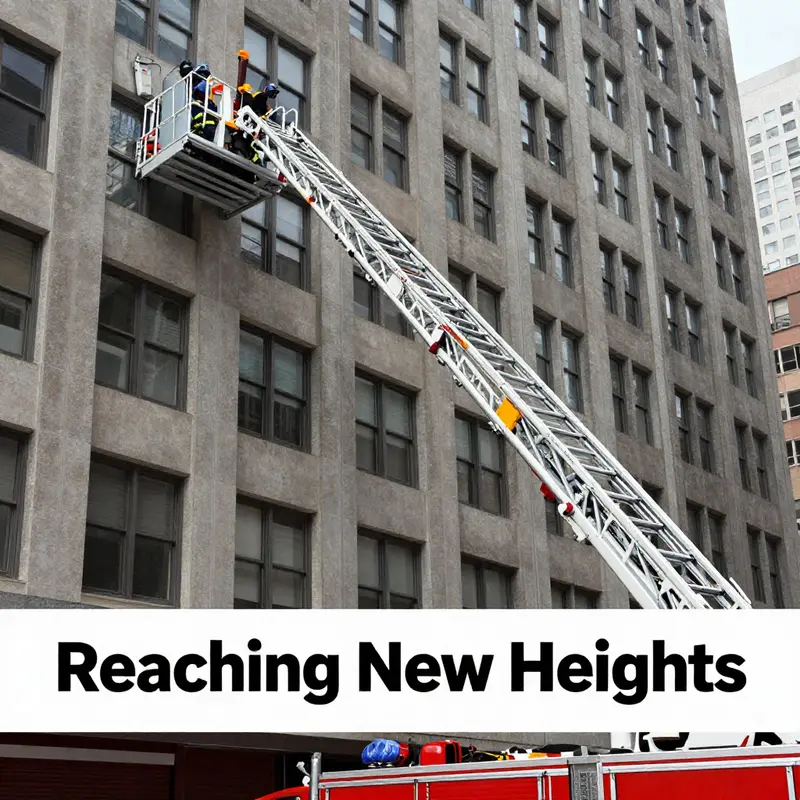
The sight of a fire engine positioned in a street, its ladder extending toward a faceted sky, can feel almost mythic. Yet every ascent is the result of careful science, engineering, and training. Aerial ladders are not simply long poles. They are purpose-built systems that combine reach, stability, water delivery, and payload management into a coordinated tool for rescue, access, and suppression. The question, how high does a fire truck ladder reach, invites more than a measurement. It invites a reflection on design philosophy, the physics of height, and the realities of urban geometry where every inch of vertical extension interacts with wind, weight, and ground conditions. By tracing the typical range of heights, the kinds of ladders that populate modern fleets, and the standards that govern them, we can understand why a ladder’s stated height rarely tells the whole rescue story. Height is a starting point, not the sole determinant of a ladder’s usefulness in an emergency.
In practical terms, standard aerial ladders begin their life with a broad range. Contemporary configurations commonly span roughly 65 to 135 feet, which translates to about 20 to 41 meters. Within that band, the ladders most frequently encountered in many urban and suburban fire departments tend to fall between 75 and 100 feet, or about 23 to 30 meters. This middle portion of the spectrum tends to match the height distribution of many multi-story buildings where a rapid entry, a secure point of egress for occupants, and a disciplined water stream intercept a blaze at upper floors. The height bracket is not arbitrary. It reflects a balancing act: longer ladders require longer booms, sturdier bases, and more sophisticated stabilization. They demand more frequent handling, maintenance, and training, all of which must be justified by the tasks a department expects to face.
If a department needs loftier reach, the ladder fleet can extend into the upper reaches of the range. Some configurations, particularly specialized or heavy-duty platforms, push the ladder height toward 135 feet or more, which is roughly 41 meters. This upper tier is not merely a taller version of a standard ladder. It represents a different class of apparatus with its own design compromises, wind considerations, and operational complexities. The practical value of such height emerges in dense urban cores or facilities where car-choked streets and tall façades demand distance from a window, roof, or balcony that sits well above the street. Yet even when a ladder can physically reach a high point, the operator’s goal is not just to touch the building. It is to position the tip with controllable precision, provide a stable platform for rescue or spraying, and do so while maintaining the safety of both the crew and any civilians nearby.
Beyond the basic ladder height, there is a growing presence of even longer, sometimes trailer-mounted aerials. Known in some regions as tractor-drawn or towed aerials, these vehicles can achieve extraordinary vertical extents. In the hands of experienced teams, they can extend to roughly 135 feet or more, with some configurations reported to exceed 150 feet. The difference is not merely the length of the ladder; it is a different kind of stability system, a broader base, and often a separate chassis or trailer that anchors the apparatus during operation. These high-reaching rigs expand the reach of firefighting and rescue operations in cities where the urban canyon architecture is vast or where the command needs to fight from a distance while still getting water or access to an elevated point. The tradeoff, as with any high-rise extension, is increased wind exposure, greater dynamic loads, and the need for meticulous planning and execution by seasoned operators.
The topic of reach also travels across international boundaries. In some regions, records or demonstrations highlight ladders that extend even further. A few jurisdictions have introduced platforms that reach well over 100 meters. It is important to recognize that these heights are rarely a daily operational reality. They represent capability envelopes rather than the default expectation in routine incident response. A ladder that can ascend to the hundreds of feet is a specialized tool for particular scenarios. In other words, the height is a signal of capability, not a promise that every fire response will involve a skyward climb to the topmost window. In practice, the height you see on a spec sheet often sits alongside other critical numbers: working height, maximum horizontal outreach, and the operational envelope that defines stability, water delivery capability, and crew safety.
The geometry of height matters. A ladder’s vertical reach is not the same as its working height. When a ladder is extended, the tip’s altitude depends on both how much of the ladder is extended and the angle at which it is inclined. A fully extended ladder can only reach a given vertical height if it is near vertical; as the angle flattens, the vertical component of the tip’s reach diminishes even as the ladder grows longer. Operators manage this by adjusting the base position, the angle of the ladder, and the outriggers that anchor the rig to the ground. The result is a practical reality: the highest vertical measurement is not always the height at which a firefighter can effectively operate. The operator must consider the distance from the building, the reach needed to launch a hose stream or guide a person to safety, and the limits imposed by the equipment and the environment. In the real world, rescue and firefighting are less about raw height and more about the optimal combination of height, reach, stability, and maneuverability.
If we zoom into the ladder types themselves, a clearer picture emerges. Standard aerial ladders, the backbone of most urban fleets, present a predictable profile. They are designed to span a range roughly from 65 to 100 feet, with many units settled in the mid-teens to low hundreds of feet. These ladders are favored for their balance: adequate height for multiple-story buildings, agile handling, and compatibility with a broad set of support equipment. They enable crews to ascend to windows and balconies, access rooftops, and deliver water streams from elevated positions when needed. The design philosophy behind these ladders is grounded in versatility, aiming to cover a wide spectrum of typical emergencies—residing between efficiency for everyday incidents and enough reserve for extraordinary cases.
Beyond the standard ladders lie the specialized, higher-reaching solutions. Tractor-drawn aerials, which are towed behind a conventional fire engine, push the envelope by incorporating a longer ladder and sometimes a more robust stabilization system. Their length can exceed the 135-foot mark, and in some configurations, they reach beyond 150 feet. These systems are deployed in actions that require distance from the base and the ability to position the tip in ways inaccessible to shorter ladders, such as over long streets, near tall facades, or around obstacles that would obstruct a traditional ladder. They carry integrated firefighting capabilities, including water monitors and lighting, enabling teams to perform suppression tasks even from a vantage point that is far removed from the base. The extended reach offers strategic flexibility, but it comes with heightened demands in crew coordination, line-of-sight planning, and wind management. The operator must judge how best to deploy the equipment so that it remains a tool rather than a liability under gusting conditions or uneven ground.
Cultural and regulatory contexts also shape how high ladders are integrated into emergency response. In some countries, the highest ladders are celebrated as feats of engineering, showcasing ambitious capabilities and the potential to save lives in challenging urban landscapes. In others, ladder height is balanced with a larger emphasis on rapid-fire response, water delivery efficiency, ladder maneuverability, and the speed of setup. Regardless of regional differences, the core objective remains consistent: to create a stable, reliable surface from which responders can operate at height while maintaining control over the risks inherent to elevated work. This emphasis on safety, reliability, and training drives the design of every aerial ladder and the wheeled platform that carries it.
As height rises on the spectrum, so too does the complexity of safety protocols. The more a ladder can reach, the more a department must commit to wind assessment, load management, and fall protection planning. Wind conditions at height can dramatically affect a ladder’s behavior. Even a small gust can sway the tip and alter the line of sight for a firefighter working aloft. The weight that a ladder must bear—both in terms of the crew and any equipment at the tip—also increases with reach. Outriggers must be deployed with precision, and the ground surface must be able to absorb the vertical reaction without slipping or shifting. These factors are why ongoing training, regular inspections, and strict adherence to testing standards are not optional. They are prerequisites for making the most of a ladder’s reach.
The standards that govern these devices provide the language and the framework for safe operation. A cornerstone reference is NFPA 1917, the standard that codifies the design, performance, and testing requirements for automotive fire apparatus including aerial apparatus. This standard anchors the expectations for how high a ladder can be raised, how it must be tested under static and dynamic conditions, and how components must be maintained to preserve safety and reliability. The standard is not a tour of every possible configuration; rather, it outlines the performance envelope that manufacturers and departments must respect. It also emphasizes the importance of documentation, operator training, and the interoperability of equipment with other rescue tools. The net effect of such standards is a shared language that ensures a ladder’s height is not just a number, but a responsibly managed capability that teams can count on when the stakes are highest.
In the theater of an actual emergency, height, complexity, and timing converge. A Fire Rescue operation is rarely a single, vertical ascent. It requires synchronizing the ladder’s reach with the tempo of the incident: locating the active fire window, assessing structural integrity, stabilizing the stance of the apparatus, and coordinating with the interior crew. The height the ladder reaches may determine whether a victim can be evacuated directly from a window or balcony, or whether a window of opportunity exists for a rescue tray or other apparatus to bring people to safety. It may also determine how the firefighting team positions itself for an elevated water application. A higher ladder can offer a longer sightline to the interior, providing visibility for interior crews; however, it can also complicate line-of-sight and communications if the operator’s attention is divided between the tip’s location, the base’s position, and a moving environment around the incident. The optimal scenario often rests on a balance: a ladder that can reach the necessary height, while still enabling rapid deployment, precise control, and safe work at height.
When one considers the diversity of building heights encountered in cities across the globe, the value of a broad, adaptable ladder range becomes evident. The typical 65 to 135-foot spectrum covers the majority of scenarios faced in crowded urban environments. A ladder near the 75 to 100-foot range is versatile enough to access most floors in many commercial and residential structures while maintaining manageable handling characteristics. In communities with taller skylines or unique architectural forms, the availability of higher-reaching platforms provides a crucial capability, even as it requires more rigorous operational discipline and planning. It is this combination—the breadth of reach, the robustness of stabilization, and the preparedness of the crew—that converts height into life-saving capability rather than mere spectacle.
Beyond the immediate incident response, the way height is integrated into training is telling. Firefighters train not only to ascend and operate at height but to interpret the geometry of their tools in relation to the building and to the environment. They learn how to estimate the ladder’s possible vertical reach given the extension, angle, and base conditions. They practice wind monitoring and contingency planning for missed targets or adverse conditions. They simulate high-rise rescues, where occupants may be located on multiple floors, and they rehearse how to coordinate with interior teams to shepherd civilians through safer egress routes. In every training scenario, the emphasis remains on predictable performance under pressure. Height becomes trustworthy only when the crew has rehearsed its use repeatedly, when the equipment has been maintained, and when the safety protocols are second nature.
The global landscape of aerial ladders continues to evolve as technology advances and urban needs shift. Countries with dense master-planned cities may push the envelope with higher-reaching platforms, while others emphasize the speed and reliability of shorter, more agile ladders. The aspirational edge—machines capable of vertical exploration beyond 100 meters—translates into a broader response philosophy. It invites questions about terrain, weather, and the logistics of deploying long, heavy equipment in tight street canyons. However, even as the feats of engineering push higher limits, the essence of the work remains tethered to universal principles: assess the scene, know your equipment, stabilize the apparatus, and execute with a coordinated, patient precision. The height achieved by a fire truck ladder is not an end in itself; it is a means to deliver people and water to safety, to illuminate the path with light, and to provide the situational awareness required to control a rapidly evolving incident.
In sum, the height of aerial ladders is a multi-dimensional question. The standard range—roughly 65 to 135 feet—serves the majority of daily emergencies, while a subset of specialized configurations extends well beyond that band to address extraordinary scenarios. A ladder’s vertical reach interacts with its extension geometry, its angle, and the stability provided by outriggers and the base. The practical limitations that accompany height—wind, ground conditions, weight, and the need for precise positioning—underscore why height alone cannot define effectiveness. Instead, effectiveness arises from the choreography of reach, control, and safety, performed by trained crews equipped with a deep understanding of their tools and the environments in which they operate. The conversation about how high a fire truck ladder can reach therefore remains not just a technical question but a reflection of how communities prepare, equip, and empower rescuers to meet the built world on its terms.
For those seeking a deeper, standards-based understanding of how aerial apparatus are designed, tested, and maintained, NFPA 1917 offers a comprehensive framework that shapes the expectations across manufacturers and fire departments. It codifies the performance and testing criteria that ensure a ladder can be raised, stabilized, and operated under defined conditions, delivering a credible measure of reliability that communities rely on when a life is at stake. The chapter of height is, at its core, a chapter about trust: trust in the engineering that makes a ladder reach, trust in the training that makes it usable, and trust in the safety culture that keeps responders and civilians out of harm’s way when height becomes the stage for rescue. For those who want to explore this further, the standard provides the technical backbone behind the numbers that appear on every fire apparatus spec sheet.
External reference for further reading: https://www.nfpa.org/codes-and-standards/document-information?code=1917
How High Does a Fire Truck Ladder Reach: The Technology Behind High-Reach Ladders
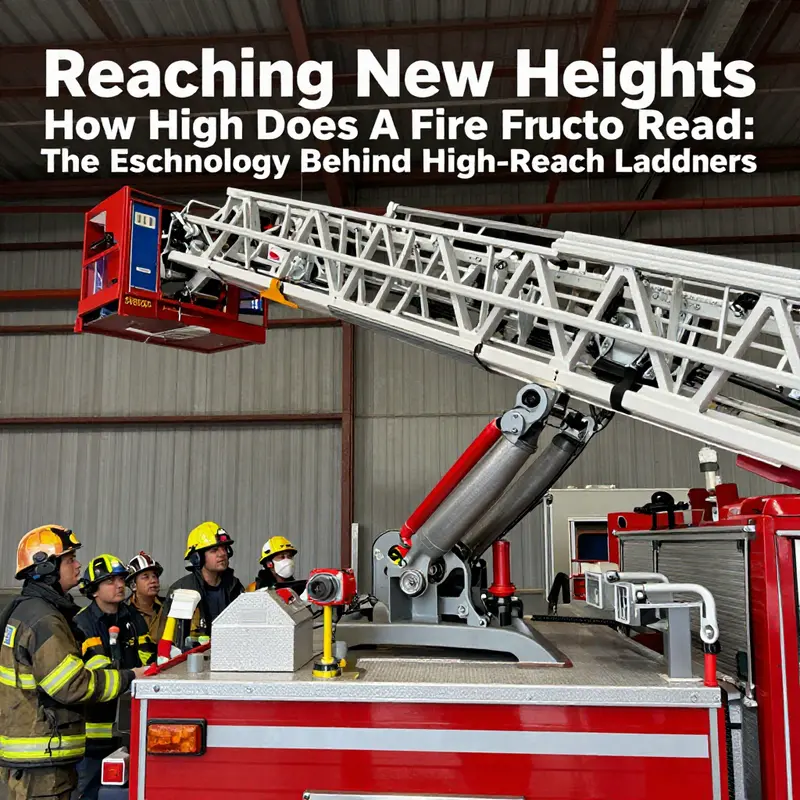
When we picture a fire in a multi-story building, the image that rises from the street is a long, gleaming ladder arcing toward a window. That image represents more than drama; it encapsulates a field of engineering where reach, stability, and speed are not luxuries but lifelines. Fire truck ladders, especially aerial ladder platforms, are built to extend high enough to rescue people and deliver water and other suppressants where ground access simply does not exist. Yet the height a ladder can reach is not a single number etched on a placard; it is a composite outcome of ladder type, the design philosophy of the apparatus, and the specific operational needs of the department. In practice, the question “how high can a ladder reach?” yields a spectrum rather than a single dimension, a spectrum that stretches from practical urban reach into the outer edge of what today’s technology can achieve. To understand why the answer varies, it helps to trace the evolution from the standard aerial ladder to the high-reach platforms and to examine the physics that make these machines both tall and stable, even in challenging conditions.
At the core of the discussion is the distinction between the typical aerial ladders that most communities rely on and the specialized configurations that push the envelope of height. The majority of modern aerial ladders extend from roughly seven to ten stories in many urban centers, and this translates to about 70 to 100 feet, or around 21 to 30 meters. This range embodies the balance of reach, speed, and maneuverability that fire departments have come to depend on for routine high-rise calls. In the city streets where space is a premium and traffic lanes narrow, those numbers often define the practical ceiling of what a standard apparatus can cover in a timely, controlled fashion. Yet the story does not end there. Aerial ladders are not monolithic; they come in a family of designs that expands the possible heights and the contexts in which they can operate.
One important family within the broader category is the tractor-drawn aerial, or what some departments refer to as a TDAs. These are specialized trailers, towed behind a standard fire engine or pumper, and they are engineered specifically to extend the ladder away from the constraints of a fixed chassis. Because a TDAs is not bound by the chassis length of a traditional rig, it can present a longer, more flexible reach—an important capability when the street geometry is constricted, or when the target building is notably tall. The trade-off, however, is that TDAs require careful handling and precise positioning, since their stability depends on separate stabilizing systems and the dynamics of the trailer being aligned with the operator’s vantage and the fire scene geography. The advantages of increased reach and wind resistance at height become especially valuable as the ladder climbs beyond the upper floors, where gusts and turbulence can complicate a rescue or a water application. In many agencies, the TDAs offer an enhanced range of motion and a steadier profile under load, making them a critical tool for high-rise operations where ground access is obstructed or limited by urban corridors.
The reach itself is a function of several intertwined factors. The height a ladder can extend is first influenced by the ladder’s type and design. Aerial ladders, often with a telescoping section architecture, can be extended and articulated to reach windows, balconies, or roof lines. The extension is not simply a matter of letting out more length; it involves a carefully engineered balance of the ladder’s sections, each with its own geometry, hydraulic actuation, and counterbalance to maintain a safe center of gravity. The materials involved—typically high-strength alloys designed to withstand repeated extension cycles and high wind loads—contribute to a ladder that remains stiff and predictable at full extension. The mechanisms must handle not only vertical reach but also the angular range necessary to align with a vertical facade, sometimes at awkward offsets due to the building’s setback or the geometry of a street canyon.
Beyond the structural aspects, the technology inside these ladders is what makes the difference between a tall ladder that flounders and a tall ladder that delivers. Hydraulic systems drive the extension and articulation of the ladder segments with precision. These systems offer smooth, controllable movements, which are essential when firefighters operate in environments where every fraction of a degree matters for safety and effectiveness. Counterbalancing mechanisms are equally vital. As the ladder extends, the operator and the structure must maintain a stable balance; otherwise, the ladder can pitch or sway, compromising the operator’s control and potentially endangering those being rescued. Counterweights and carefully tuned spring or hydraulic counterbalances offset the weight of the ladder and the hose lines or water streams that may be attached during a rescue. The result is a platform that remains stable, even when the wind picks up or the ladder is loaded with personnel and equipment.
Modern high-reach ladders also rely on computer-aided stabilization controls to position the ladder accurately and safely on uneven ground or in windy conditions. A few generations of refinements have made digital systems capable of assisting with real-time adjustments, alerting the operator to deviations in tilt or rotation, and compensating for dynamic loads as fire crews move at the tip of the ladder. This integration of hydraulics, mechanics, and computer controls represents a holistic approach to safety: the ladder becomes not only longer but also smarter, with feedback loops that help the operator manage the risk of overextension, structural vibration, or inadvertent loss of balance.
The top end of the spectrum—the outer limits of how high ladders can reach today—is driven by the needs of the largest, tallest structures and the most demanding rescue scenarios. The current technology allows maximum operating heights that can exceed 100 meters, and the upper boundary is widely acknowledged to be around 112 meters in leading-edge configurations. This frontier is not just about novelty; it reflects a concerted effort to extend life-saving capabilities into high-rise districts previously inaccessible from ground-level approaches. When a building includes 40 or more stories, a ladder that can reach into the upper floors becomes a strategic asset, enabling vertical access for occupants and for firefighters to apply suppressants at levels where smoke and heat are otherwise concentrated. In practice, this capability translates into faster rescues, improved smoke control, and more effective water application from above, which can dramatically alter the outcomes of high-rise emergencies.
It’s also worth noting a regional variation that often captures the imagination: in some regions, ladder configurations have achieved heights approaching or surpassing the 100-meter mark, with certain operational ladders measuring just inside the 101-meter range for specialized missions. These deployments illustrate how different jurisdictions tailor their equipment to local architecture, climate, and urban form. In many densely built cities, the tallest approaches are reserved for the rare but critical incidents that demand a higher-reaching option, while more routine calls are served by the standard aerial ladders that consistently cover a broad middle ground of height, reach, and maneuverability. Conversely, other regions have pushed the lower end of the spectrum toward more compact models designed for fast response and tight streets, ensuring that ladder operations remain practical in the everyday rhythm of urban life.
The wheelhouse of these high-reach systems is not only the ladder itself but also the support structures that keep the whole operation safe and practical. Stabilizers extend outward from the chassis or trailer to create a broad base outside the vehicle’s footprint. In extended configurations, outriggers unfold to contact firm ground, distributing the weight and reducing the risk of ground subsidence or lateral movement. This is not a mere afterthought; it is a fundamental design principle. The base must be capable of handling dynamic loads without exceeding the tolerances defined for vehicle stability. If the wind increases or if the operator shifts weight during a rescue, the system must respond predictably, keeping the ladder aligned with the target window without tipping or flexing excessively. The interplay among base stability, hydraulic reach, and ladder stiffness is what allows operators to pursue aggressive vertical positioning without compromising safety.
The engineering story of high-reach ladders also intersects with a closely observed safety philosophy that is central to firefighting practice. Standards and testing regimes emphasize not only the ladder’s physical capacity but also how it is erected, operated, and maintained under a wide range of conditions. The National Fire Protection Association (NFPA) plays a pivotal role here, providing guidelines that define how ladder construction should be tested, how the equipment should be used, and how crews should be trained to operate it. These standards address critical factors such as ladder integrity after repeated cycles of extension and retraction, the resilience of the support devices under lateral loads, and the safe occupancy limits of the ladder’s platform. They also define operating practices to minimize risk to both firefighters and the public, from ensuring stable stances on uneven ground to managing the distribution of hose lines and other equipment that may add weight or wind-catching surfaces at height. In short, the safety framework surrounding high-reach ladders integrates hardware quality with human factors, recognizing that a ladder is only as capable as the team that uses it.
The practical implications of reach are most evident in the dynamic environment of a real fire. A ladder that can reach a distant window supports direct rescue operations, but it also enables firefighter teams to perform high-risk tasks with greater control. Vertical access is essential not just for extraction but for illumination, ventilation, and the application of extinguishing agents from above. When a building is engulfed in smoke, light is limited and access is constrained; a high-reach ladder can improve visibility, allowing crews to place ground grids of light or to direct water streams with greater precision. And when occupants are trapped on higher floors, the ladder becomes a lifeline that reduces the time to reach them, enabling safer egress and facilitating coordinated egress strategies.
The conversation about reach would be incomplete without acknowledging the practical constraints that define what can be achieved. Height, in this context, is inseparable from other factors such as stability, wind resistance, and the weight carried by the ladder. A longer ladder is not inherently better if it cannot be stabilized or if its extension compromises the operator’s ability to manipulate it safely. Wind, in particular, is a formidable variable at height. Even a modest gust can cause a ladder to sway, moving the tip and altering the trajectory of a rescue. That is why modern systems incorporate wind sensors, feedback loops, and conservative operating envelopes that guide crews toward safe, repeatable actions. The operator’s skill, the ladder’s mechanical health, and the conditions at the scene all converge to determine what is feasible in any given moment.
As designers and departments push outward toward greater heights, they must also consider maintenance and reliability. A ladder that sits idle for long periods across seasons may suffer from forgotten lubrication, stiff joints, or corroded connectors. Regular inspections ensure that hydraulic lines remain sealed, that counterweights operate smoothly, and that the platform’s safety rails and locking mechanisms are secure. The maintenance culture around high-reach ladders is as important as the engineering that allows them to extend. A ladder that is meticulously maintained is both more reliable and safer to operate, particularly when the stakes are highest. In that sense, the reach of a ladder is not a standalone attribute; it is part of a broader ecosystem that includes training, inspection, and ongoing adaptation to the evolving demands of urban firefighting.
The reach frontier is not static. It is shaped by the way cities evolve, by the changing architectural landscape, and by the ongoing research into materials, actuation, and control systems. Engineers continually ask: How can we extend a ladder’s effective reach without compromising safety? How can we simplify the operator’s task when the environment becomes more complex or when conditions worsen? The answers lie in an integrated approach that blends mechanical design with intelligent control, advanced materials, and a safety-first operating culture. The result is a family of ladders that can be tuned to the needs of a given city while preserving the core virtues of reliability, speed, and safety.
If you step back from the specifics of each design, a broader narrative emerges: high-reach ladders are less about conquering height and more about delivering capability where it matters most. The height is a means to an essential end—the ability to reach people who are unable to reach safety on their own, to illuminate, to ventilate, to apply water, and to coordinate a race against time. The most advanced machines available today have pushed beyond 100 meters, and even beyond into the 110s and low 120s in certain configurations, but they do so within a framework that prioritizes structural integrity, stability, and crew safety. The global landscape of ladder reach, then, is not a simple ladder leaning toward the sky; it is a carefully engineered system where reach, control, stability, and safety are fused into a single mission-driven tool.
In honoring the range of capabilities—from the everyday to the extraordinary—fire departments continue to adapt, test, and refine their ladder fleets. The driving force remains simple and compelling: the ability to save lives by giving responders access to otherwise unreachable spaces. This is why the discussion of high-reach ladders inevitably returns to the same core elements—design that respects physics, systems that support safe operation, and standards that ensure every deployment is conducted with the highest possible level of professional discipline. The ladder’s reach, therefore, is more than a measurement; it is a signal about a department’s readiness to meet the demands of its community, with tools that can extend the reach of its courage when every second counts.
For readers who want to explore the standards and testing frameworks that govern these remarkable machines, primary guidance comes from national and international safety organizations. The NFPA, in particular, provides comprehensive guidelines that shape how ladders are built, tested, and operated. These standards help ensure that a ladder not only can extend to great heights but that it does so in a controlled, predictable way that protects both firefighters and the public. Understanding these standards helps explain why a ladder’s real-world performance is measured not only by its height but by its stability, its control systems, and the confidence that a crew can place in the equipment during a critical moment. For readers seeking more detailed technical specifications and official guidance, the NFPA website offers a wealth of information and updates to standards as technology and practice evolve. External resources can be found at https://www.nfpa.org/.
Reaching for the Sky: How Fire Truck Ladders Push the Boundaries of Urban Rescue
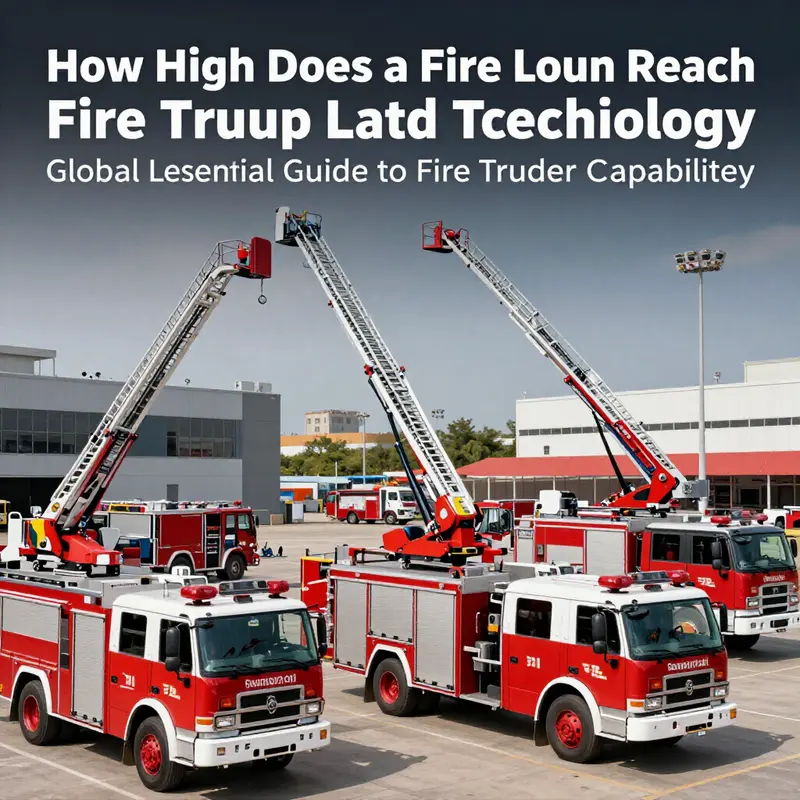
The question of how high a fire truck ladder can reach is more than a measurement of metal and hydraulics. It is a reflection of how cities grow, how risks migrate upward as buildings rise, and how firefighting technology must evolve to keep pace with architecture. In modern urban environments, the ladder on a firefighting apparatus is not merely a tool for climbing; it is a carefully engineered instrument designed to extend human reach into spaces that would otherwise be inaccessible in an emergency. The core challenge is simple in its intuition yet complex in practice: height must be balanced with stability, reach with control, speed with precision, and water delivery with endurance. When the topic is framed this way, the discussion moves beyond mere numbers and into the realm where engineering, training, and urban planning intersect to save lives.
Across the globe, the spectrum of aerial ladders begins with modest heights and expands into feats that were once thought improbable. Most standard aerial platforms can reach heights in the neighborhood of thirty meters, roughly the equivalent of ten stories. This range is practical for many mid-rise responses, allowing firefighters to access upper floors, ventilate roofs, and create a safe pass for occupants to evacuate while interior crews coordinate situational awareness from protected positions. Yet as cities push higher and fire scenarios demand more critical intervention points, the ladder becomes a strategic asset that must extend well beyond the reach of the average floor. Cities with towering residential blocks, commercial megastructures, and densely packed skylines require equipment that can surge upward with controlled confidence. In this context, the upper limit of current production ladders stretches outward toward the century mark in height—a ceiling that marks more than engineering prowess; it marks the practical ceiling of what can be safely deployed in the most demanding urban theaters.
Aerial platforms designed for this upper tier of performance are a testament to what happens when safety, physics, and purpose converge. The most advanced configurations on the world stage can reach a working height of about 112 meters. That figure—112 meters—symbolizes a height at which the skyline itself becomes the backdrop for rescue and firefighting operations. It represents the apex of current technology, a threshold that only a small number of units have crossed in the real world. The capabilities that enable such altitude are not just about a single tall component. Instead, they emerge from a symphony of systems designed to work in concert: a five-section telescoping main arm that extends smoothly through a sequence of controlled increments; a three-section articulated boom that manages the geometry of reach as the ladder tilts and angles toward the building; and a two-section fly arm that stabilizes the apparatus and sharpens the aim of the water delivery system from above the roofline. Each segment adds a layer of flexibility, allowing responders to position the ladder with surgical precision, even as winds howl and the weight of water-filled hoses strains the vehicle on the ground.
The practical implications of such height are profound. A 112-meter ladder does more than touch the upper floors; it enables operations that were previously unattainable from the ground. With a maximum outreach of roughly 28 meters, the platform can bridge the distance from street level to the face of a tall structure and deliver a stream of water with remarkable accuracy. Water, when deployed at those heights, becomes an essential lifeline. A fire monitor mounted on the end of the aerial can deliver as much as 6,000 liters per minute, a flow capable of cooling, penetrating, and suppressing fires that otherwise would require hours of ground-based attack. In urban theaters where time is measured in heartbeats, the ability to project water from above can dramatically shorten the window of risk for occupants trapped on high floors and reduce the duration of exposure for interior crews.
What makes such a system feasible is not only the raw reach but the speed and stability with which it can be deployed. A six-axle, sixteen-wheel-drive configuration provides the base strength to mobilize quickly and to adapt to varied terrains. In a complex urban setting—where pavements may be uneven, bridges may restrict access, and street layouts constrain maneuvering—the ability to level and stabilize the rig within thirty seconds can be the difference between a controlled operation and a compromised one. The stability systems behind this capability are intricate, blending hydraulics, electronics, and advanced sensing to maintain a firm stance as the platform tilts skyward and the load shifts with every inch of extension. Operators are trained to monitor a matrix of indicators: wind speed and direction, load on the ladder, the dynamic sway of the arm, and the distribution of ballast that keeps the chassis from creeping or tilting under the combined stresses of height, outreach, and water weight. All of these considerations converge on a single outcome: the safe, precise introduction of life-saving resources into a high-rise scenario without compromising the safety of the crew at ground level.
The human element remains central in this architecture of height. A ladder that can reach beyond thirty stories demands a culture of training that is as elevated as the equipment itself. Operators learn to read the geometry of a building from a distance and to translate that reading into a three-dimensional plan of action as the ladder moves through its prescribed arc. They practice placing the tip of the ladder in windows or along facades with an eye for subtle shifts in wind and thermal currents that can alter the effective siting of the nozzle. The artistry in operating such platforms lies in translating a vertical reach into a controlled line of sight and a stable platform for rescue or suppression. The burden of safety falls not only on the operator but on the entire chain of command that evaluates wind conditions, building geometry, occupancy risk, and the availability of alternative ingress routes. It is a choreography of risk assessment, where height amplifies every variable, and disciplined procedure becomes the buffer that converts capability into protection.
Within this landscape of extreme reach, there are intermediate exemplars that complement the full-height systems. In many cities, 55-meter platforms are recognized as a critical category—long enough to span mid-to-high-rise cores, yet compact enough to maneuver in tighter urban canyons. These “high-altitude guardians,” as some departments describe them in practice, are often tasked with occasional rescue missions on taller buildings or specialized operations that require a rapid, elevated vantage point for inspection, ventilation, or water application at moderate heights. Beyond these, there are models in the mid-to-upper tens of meters—60 meters, 72 meters, and similar increments—that offer scalable solutions for different cityscapes and emergency profiles. Each height class is chosen not only for its maximum reach but for its balance of weight, stability, deployment speed, and overall cost. A ladder’s worth is measured by how well it serves the typical urban footprint for a department, while still preserving a reserve of capability for extraordinary events that test the outer limits of what height can achieve safely.
Even as these height thresholds push upward, the story of the ladder’s reach is not simply about one device breaking a barrier. It also reflects a broader trend in firefighting technology that intertwines engineering with city design. Skyscrapers, with their modular floor plates and varied facades, pose unique challenges for external access. The ladder must align with dozens of possible anchor points, nest within traffic patterns, and operate within the constraints of ground space that may be narrow, irregular, or obstructed by parked vehicles and urban furniture. The geometry of a tall building is rarely friendly to a single, fixed approach. Instead, a high-reach ladder must function as a flexible instrument—capable of reaching across balconies, into windows, or along the crown of a parapet—while maintaining stability and control. This is where the three-section articulated boom and the two-section fly arm prove their worth. The articulated segments introduce a degree of adaptability, letting technicians adjust the line of action in response to the structure’s massing, setbacks, and architectural ornaments. The fly arm, meanwhile, serves as a counterbalance, a stabilizing extension that can reduce wobble when the platform is loaded with a patient, a firefighter, or a stream of water.
Among the most compelling insights in this realm is the recognition that height, in itself, does not guarantee efficacy. A ladder that can reach far into the upper floors is only as useful as the crew’s ability to position it with accuracy and speed. A strong, highly reachable ladder that arrives late or cannot be steadied remains a strategic liability. Conversely, a well-positioned ladder that reaches a critical floor early can unlock a cascade of protective actions: rescuing people from danger, providing a conduit for direct water application, and enabling interior teams to work with improved visibility and ventilation control. The most effective deployments are those where reach, timing, and water delivery converge in a compact operational window. In that sense, the height is a means to an end—not the end itself.
The urban practice of deploying these extreme-height platforms also carries a global dimension. While the tallest ladders are produced in specialized environments and intended for major metropolitan centers, the decisions about where and how to use them are deeply local. City planners, fire chiefs, and field commanders collaborate to map risk profiles that reflect building stock, emergency response times, and the distribution of high-risk occupancies. The decision to invest in a ladder of a given height hinges on cost-benefit analyses that weigh the probability of a high-rise incident against the capital and operating costs required to sustain such a fleet. In places where high-rise fires occur with enough regularity, departments justify the deployment of advanced aerial platforms by citing the potential to save lives in upper-floor stairwells, to protect stair enclosures during fire development, and to reduce the exposure of interior crews to extreme heat and smoke. In other cities, the calculus may favor robust interior access, rapid water shuttling through standpipes, or specialized rescue capabilities that complement, rather than solely mirror, high-altitude performance. Yet even in varying contexts, the underlying physics remains constant: height enables access, but stability, control, and water delivery define whether access can be translated into effective rescue.
While the pinnacle height—about 112 meters—stands as a record of engineering ambition, it is crucial to acknowledge the reality of production and deployment. Such high-reaching platforms are produced in limited numbers, often only a handful in the global market, reflecting a specialized niche that serves cities facing unique urban densities and structural heights. The scarcity of these units does not diminish their significance; rather, it underscores the idea that extreme reach is a strategic asset reserved for scenarios where ordinary tools would fail. In many major metropolitan hubs, the question is not simply what the ladder can achieve, but how it complements a broader system of access and evacuation. The interplay between exterior fighting capabilities and interior egress planning is where the concept of maximum height gains its practical meaning. A tall ladder can illuminate the path to safety, but building codes, stairwell design, and occupant mobility must align to sustain those gains as a real-world capability.
The narrative of height also carries a descriptive history. In the late twentieth and early twenty-first centuries, the transformation from basic aerial ladders to advanced aerial platforms coincided with a global surge in skyscraper construction. High-rise development demanded new firefighting paradigms, and engineers responded with multi-segmented arms, precision hydraulics, and sophisticated stabilization. The result is a family of machines that can be deployed in crowded streets, stabilized on uneven pavements, and operated with a level of finesse that matches the complexity of contemporary architecture. Yet even as we celebrate the engineering milestone embodied by the record 112-meter system, the broader takeaway is that reach expands not in isolation but in dialogue with the urban fabric. Each city’s skyline, wind patterns, and street geometry shape how high is usable in practice. And in that sense, height is not a single, universal number; it is a spectrum shaped by context, safety, and the inexorable pull of time toward taller and more intricate cityscapes.
It is also worth noting the ongoing international development in this field. In parallel with the tallest systems, other nations have advanced their own high-altitude capabilities, creating a ladder ecosystem that includes mid-height and specialized platforms. Some regions have pursued configurations tailored to their climate, road networks, and emergency response philosophies. In practice, this results in a diverse catalog of options—each height class designed to fit particular urban geometries and response doctrines. Even as specifications vary, the common thread remains: the ladder is an extension of human reach, but its value is measured by how effectively it restores safety and stabilizes a dangerous situation.
When we consider the life-saving potential of these machines, the comparison to everyday tools falls away. A ladder on a fire truck is not a vanity metric; it is a critical, time-sensitive lifeline. The ability to place a monitor at the upper floors, to project water through a narrow window opening, or to deliver air and visibility to occupants struggling to breathe in thick smoke—all of these rely on a disciplined integration of height, speed, and control. The realities of the job demand that these systems perform reliably under stress. That reliability is baked into every design choice, from the strength of the base chassis to the stability controls, from the smoothness of the telescoping sections to the responsiveness of the pump systems. Every component matters, because even a small loss of coordination at extreme height can cascade into a dangerous scenario for both occupants and responders.
In the final accounting, the 112-meter platform-ladder stands as a symbol of what is possible when engineering answers the call of architectural ambition. It embodies the idea that height, when coupled with precision and safety, can redefine the thresholds of urban firefighting. It does not erase the foundational truths of rescue work—timeliness, situational awareness, and careful risk management remain the core competencies. Instead, it expands those competencies into new horizons: the ability to reach the very top floors where people may be trapped, to deploy life-sustaining resources from above, and to shape the choreography of a response in spaces that are both vertical and perilous. The modern high-rise fire scenario demands nothing less than a full harmonization of ladder height with the artistry of deployment, the science of hydraulics, and the discipline of trained crews. In that harmonization, height performs not as a solitary statistic but as a reliable instrument of safety, a means to buy time, and a way to affirm that even in the most vertical urban environments, the line of rescue remains open.
For those curious about the current state of high-reach firefighting equipment and the ongoing pursuit of greater heights, a closer look at the most ambitious platforms provides context for why engineers, responders, and city planners continue to push the envelope. The dialogue between height, stability, and water delivery remains alive in the workshops, test facilities, and incident reports that underpin modern practice. While not every city will deploy a 112-meter unit, the principles guiding its design—modularity, rapid deployment, and controlled operation—inform every ladder in the fleet. The aim is universal: to ensure that when a building rises above the ordinary, the tools to meet it rise with it, and the people inside are given the best possible chance of escape and survival.
External reference for further technical context on high-reach firefighting platforms can be explored here, offering detailed engineering perspectives and case studies that illuminate how such systems are designed, tested, and employed in real-world operations: https://www.bronto.fi
Final thoughts
The heights that fire truck ladders can reach are not merely numbers; they represent the capacity to save lives and protect property in emergencies. Understanding the different capabilities of aerial ladders not only informs businesses about safety protocols but also highlights the critical nature of advanced technology in firefighting. Equipped with this knowledge, business owners can make informed decisions regarding safety measures and emergency preparedness in high-rise buildings and urban landscapes. As technology continues to evolve, it’s vital to stay updated on these advancements to ensure the effectiveness of emergency response efforts in your area.

