
















Understanding whether fire truck drivers need a Commercial Driver’s License (CDL) is essential for business owners involved in emergency services or fire safety. Fire trucks, classified as emergency vehicles, generally fall under different regulatory standards compared to standard commercial vehicles. This article delves into federal regulations, state-specific requirements, safety training, and the implications of CDL regulations on firefighting services. Each chapter builds on these themes to provide clarity on the necessary qualifications for driving fire trucks and how businesses can align with these requirements.
Riding the Line: Federal Rules, Emergency Exemptions, and State Variations in CDL Needs for Fire Truck Drivers
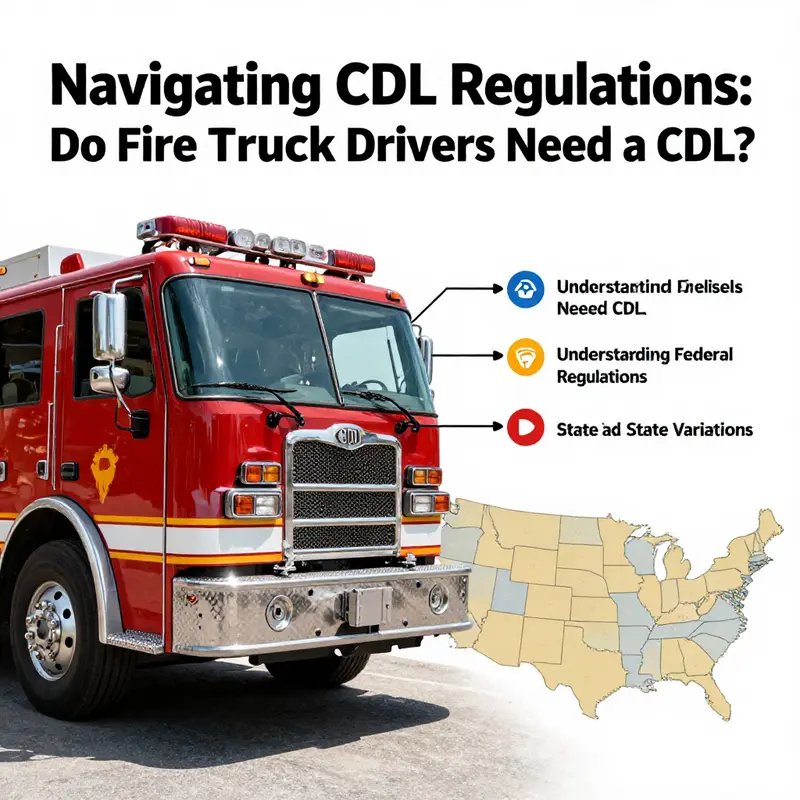
The question of whether fire truck drivers need a Commercial Driver’s License (CDL) is deceptively simple, yet it sits at the crossroads of federal policy, state law, and the daily realities of emergency response. For many readers, the image of a fire engine hurtling toward a blaze conjures a straightforward rule: bigger vehicles require bigger credentials. The answer, however, is nuanced. Most fire apparatus are heavy, complex, and designed for rapid, high-stakes operation. Under federal rules, that combination often points toward a CDL. Yet a carved-out safety net exists—the emergency vehicle exemption—that can remove the CDL requirement in the heat of an actual emergency or when driving directly to or from a scene. Add in state-level variations that can tilt the balance toward more stringent, less forgiving standards, and you have a layered landscape that demands careful navigation by departments and individual drivers alike.
At the heart of the federal framework is the standard that a CDL becomes necessary when a vehicle meets or exceeds certain weight or passenger thresholds. In practical terms, fire apparatus commonly cross the 26,001-pound gross vehicle weight rating (GVWR) line. They also frequently carry more than 15 passengers when counting crew and equipment personnel, or operate with heavy pumping gear and aerial devices that challenge the definition of a “standard” vehicle. This is not an abstract concern. A pumper, an aerial ladder, a heavy rescue, or a combined incident command unit—these are all vehicles that can trigger CDL requirements in a non-emergency context. In ordinary, non-emergency driving—such as maintenance runs or equipment transports—a CDL can be mandatory if the vehicle falls within the regulated thresholds and is used for commercial transportation, even if it’s a fire apparatus.
Yet the premise of a straightforward CDL mandate is complicated by the FMCSA’s emergency vehicle exemption. This carve-out recognizes that the mission of fire departments is time-critical and inherently dangerous. When a firefighter is operating an emergency vehicle while responding to a call, or traveling to or from an emergency scene as part of official duties, the exemption allows operation without a CDL under federal rules. The practical upshot is that a firefighter may drive a heavy fire engine without a CDL during active emergency responses. The exemption is not a blanket license to skip training or oversight, though. It hinges on the emergency context and the vehicle’s use in direct connection with that mission. If the driver is operating the vehicle for non-emergency purposes—routine maintenance, training exercises, or transporting equipment for non-emergency tasks—the exemption does not apply and the CDL or its state-specific equivalents come back into play.
If the emergency exemption sounds straightforward, it is not universal in its reach. The federal exemption is structured to cover actual emergencies and trips to or from scenes, but it does not automatically immunize every operation. For example, a driver who regularly uses a fire apparatus to shuttle gear between stations, or to move personnel during training drills, may be stepping outside the exemption’s protective envelope. In those situations, the vehicle’s GVWR and passenger load matter again, and a CDL may be required. The logic is anchored in safety and accountability: when the activity resembles commercial operation or routine transport, the credentialing and training standards that accompany a CDL help ensure predictable, standardized operation.
State variations further color the picture. Some states—recognizing the importance of consistent capabilities across incident types—mandate a CDL for all fire apparatus operators regardless of emergency status. Others embrace a more permissive federal posture and rely on internal fire department policies to determine who may drive certain vehicles. Still others require additional endorsements or certificates beyond the standard CDL. The presence of a passenger load can trigger endorsements such as a “P” endorsement in some jurisdictions if a vehicle’s configuration carries more than a specific number of occupants. And there are places that impose their own unique requirements for specialized or high-hazard configurations, such as multi-operator emergency command vehicles or heavy rescue units, where the risk profile justifies stricter credentialing.
The practical consequences of these regulations extend beyond licensure. Fire departments often maintain internal training programs that go well beyond the minimum licensing requirements. Even when a driver technically qualifies to operate a large vehicle under the emergency exemption, departments may require rigorous in-house instruction on vehicle handling, high-visibility driving in dense urban environments, and the precise maneuvers needed to operate aerial apparatus or pump systems safely. This internal training acts as a bridge between the legal framework and everyday operational realities. It also supports accountability, rider safety, and interdepartmental compatibility when crews rotate through different apparatus or respond to mutual-aid calls across jurisdictions.
For individual firefighters, the CDL decision interacts with career path, department expectations, and the realities of shift work. The question becomes not only whether to pursue a CDL, but which class of license, and whether to seek endorsements that anticipate future assignments or evolving apparatus fleets. In practice, a department that operates heavy apparatus, or that consistently deploys to multi-vehicle incidents, often benefits from a workforce holding CDL credentials. The certainty of a formal license can simplify cross-training, ensure uniform driving standards, and reduce the risk of regulatory or liability complications during investigations after an incident. Yet this path must be navigated with an understanding that the emergency exemption can relieve the CDL burden at critical moments, without eliminating the need for comprehensive safety training, ongoing assessment, and disciplined driving practices.
This nuanced landscape also frames how departments select and deploy vehicles. The design, construction, and maintenance of fire apparatus contribute to a driver’s skill set. A vehicle with a long wheelbase, high center of gravity, or specialized hydraulics requires deliberate handling, precise braking, and situational awareness that goes beyond ordinary roadcraft. Even when a CDL is not legally required for certain operations, the safety imperative remains: the fire service cannot compromise on training or responsiveness because of a license status. The most effective departments integrate licensing, endorsements, and internal training into a coherent standard. They recognize that the public’s safety hinges on predictable, repeatable driving performance, especially under emergency conditions when every second counts.
The cross-border dimension adds another layer of complexity. In a country with a patchwork of state laws, firefighters who operate beyond their home jurisdiction may encounter differing CDL requirements for the same apparatus. Mutual-aid responses can blur the lines between emergency and non-emergency use, challenging even the most well-crafted department policies. This reality reinforces the importance of proactive compliance: departments must regularly consult both the FMCSA federal guidance and their own state motor vehicle departments to ensure that crews are prepared for interjurisdictional work and that licenses, endorsements, and exemptions align with evolving vehicle fleets and response patterns.
For readers seeking practical anchors, the current guidance points to two parallel tracks. First, acknowledge the general rule: many fire trucks exceed standard CDL thresholds, which typically would call for a CDL in non-emergency contexts. Second, recognize the emergency vehicle exemption as a critical exception with clear boundaries: the exemption applies primarily during actual emergency operations or direct travel to and from a scene. When operations depart from that specific mission, CDL-related requirements regain prominence. Departments differ in how they apply this in practice, and states differ in how they translate federal rules into enforceable policy. The most reliable path to clarity lies in triangulating federal guidance from FMCSA, state DMV regulations, and the department’s own credentialing standards.
To situate this discussion within the broader ecosystem of fire apparatus and their use in diverse contexts, consider how a department’s fleet composition influences policy. A city with a sizeable aerial ladder fleet, a region prone to multi-vehicle incidents, or a department that regularly stages in complex, high-traffic environments will look for greater credentialing certainty. That certainty translates into safer operations, smoother mutual aid, and clearer lines of accountability when incidents are investigated. It also informs recruitment and retention, as potential recruits weigh the requirements they must meet to drive the department’s primary response vehicles. When a candidate asks, Do I need a CDL to drive that big engine? the answer will be colored by whether the drive is framed as emergency response, maintenance or training, and by the state’s particular interpretation of federal rules.
For readers who want to pursue definitive, jurisdiction-specific guidance, the safest path is to consult the local motor vehicle department and the fire department’s own policy framework in parallel with the FMCSA’s published rules. A concise way to anchor your understanding is to explore how emergency vehicles are categorized and governed in your state, then compare that with the nationwide emergency vehicle exemption. This approach helps ensure that drivers are compliant where it matters most—on the road and at the scene—while maintaining the flexibility necessary for rapid, decisive fire suppression and rescue operations. If you’re looking to see how these issues translate into the equipment that makes up today’s fire service, you can explore the broader category of emergency vehicles and related apparatus online for a view of the kinds of machines that shape these regulatory conversations. Emergency Rescue Vehicle for context on how fleets are composed and deployed, which underscores why credentialing decisions matter so deeply on the front line.
In sum, the CDL question for fire truck drivers sits at a nuanced intersection of federal law, state implementation, and the practical, life-or-death demands of emergency response. While the base rule often points toward CDL necessity for heavy, multi-seat fire apparatus, the FMCSA emergency vehicle exemption creates a crucial exception during emergencies. State laws then add another layer of specificity, sometimes tightening the rule and sometimes granting broader latitude. The reality for most departments is a policy that blends federal guidance with internal standards, ensuring that every driver is both legally compliant and thoroughly prepared to operate under pressure. This blend of licensing, endorsements where appropriate, and rigorous in-house training is essential to sustaining swift, safe responses when seconds count—and it is the backbone of a fire department’s commitment to public safety. For readers who want to dive deeper, the federal framework is clearly outlined by the FMCSA, which provides authoritative guidance on how emergency vehicle regulations are applied in practice and where exceptions apply. External reference: https://www.fmcsa.dot.gov/regulations/vehicle-requirements/emergency-vehicles
Do Fire Truck Drivers Really Need a CDL? Navigating Emergency Exceptions and State Nuances
Fire departments operate under a mix of federal exemptions and state rules designed to keep emergency responses fast while maintaining safety. In many cases, firefighters driving fire apparatus on official emergency missions do not need a Commercial Driver’s License (CDL), because exemptions prioritize the mission over vehicle-specific licensing. When operations shift to non-emergency tasks or when a vehicle exceeds weight thresholds or carries hazardous materials, CDL requirements can apply depending on state law and departmental policy. Departments often rely on internal driver training and certifications tailored to heavy vehicles, ladders, and specialized equipment to ensure safety and readiness. The overarching takeaway is that the CDL question is context-sensitive: the mission and the regulatory framework around emergency exemptions guide whether a CDL is required, not a one-size-fits-all rule.
Ignition, Endorsements, and Exemptions: A State-by-State Guide to CDL Requirements for Fire Truck Drivers
When people ask whether fire truck drivers need a commercial driver’s license, they are really asking how far federal rules reach into the daily realities of emergency response. The answer hinges on a nuanced interplay between national classifications and state-by-state practice. In the eyes of the federal government, fire apparatus often sits at the boundary where emergency service designation can alter the usual rules about who may drive what, and under what conditions. The heart of the matter lies in classification: is a fire engine a commercial vehicle by virtue of its size, weight, or the purpose for which it is used? And if it is, what kind of license, endorsements, or exemptions apply? The truth is that there is no single nationwide template. Most departments confront a complex landscape that blends federal guidance with state licensing standards, local ordinances, and the practical realities of supervision, training, and day-to-day operations. The resulting mosaic is why some drivers must obtain a CDL, while others are governed by a different set of qualifications that reflect their emergency mission rather than their wheelbase alone.
At the federal level, the Department of Transportation’s rules are anchored by weight and use. Fire apparatus often weighs well over twenty-six thousand pounds when fully loaded, and it frequently carries passengers or uses specialized configurations for water, foam, or rescue gear. Under typical circumstances, that weight threshold pushes a vehicle toward CDL consideration. Yet the emergency-use designation complicates the picture. When a vehicle is operated solely for emergency responses—such as firefighting, rescue, or medical response—and is not used for commercial transport or revenue-generating activity, some states carve out exemptions from the standard CDL mandate. The logic behind these exemptions is safety and responsiveness: firefighters are trained to handle large vehicles, and the operational realities of responding to an incident can demand immediate, on-scene authority and reduced downtime for licensing processes. In practice, this means that a department may staff a fire engine operator with someone who has extensive internal training and certification, but the operator might not hold a full CDL if the vehicle’s use remains strictly within emergency services and the state recognizes an exemption for non-commercial emergency operations. The result, in many jurisdictions, is a mixed model where a driver’s credentials are determined as much by the job’s function as by the vehicle’s physical characteristics.
Within this framework, the type of CDL and any endorsements needed become central questions. The most common federal endorsement in this context is the passenger endorsement, often denoted as a “P” endorsement, which allows the operator to transport personnel in the vehicle. Depending on the vehicle’s configuration and fuel system, some states also require or permit endorsements related to specialized equipment, such as “S” for certain types of mobile equipment or “N” for tank vehicles. The exact endorsement repertoire is not universal, and it is entirely possible that two neighboring states will diverge on whether a given fire apparatus driver must carry a P endorsement or can rely on an emergency-exemption framework. The important takeaway is that the driving of a fire truck is not automatically exempt from CDL rules simply because the vehicle serves a public safety function. Rather, it is the combination of vehicle weight, passenger requirements, and the purpose of operation that determines the licensing path.
Despite this complexity, most fire departments recognize the practical demand for clear, weaponized training that goes beyond what any ordinary commercial driver might receive. Even in states with liberal exemptions, departments frequently establish internal standards that function as de facto licensing for operators. These internal standards cover a spectrum of competencies—from vehicle-handling and braking techniques tailored to large, weighty apparatus to incident-specific protocols such as aerial operations, drafting, and pumping procedures. The aim is uniform safety: to ensure that every driver can maneuver through tight urban corridors, negotiate roundabouts, and execute safe lane changes with a vehicle that can easily eclipse ordinary passenger cars in length, height, and stopping distance. Many departments formalize this through a combination of on-the-job training, followed by a department-specific certification process that awards a diploma of competence rather than a state-issued credential. This internal credentialing often sits alongside, but does not fully replace, state licensing where exemptions do not apply. For the individual driver, this means a potential dual path: obtain standard CDL with the appropriate endorsements where required, and complete department-specific certifications that verify readiness for the unique demands of the job.
The practical implications of these rules ripple across recruitment, retention, and career development. For municipalities, the decision to pursue CDL-based licensing versus relying on exemptions influences training budgets, recruitment criteria, and risk management. For individual drivers, the choice between pursuing a CDL and building a robust internal certification can affect transferability, salary scales, and long-term career mobility. It is not unusual to see a fire department require a firefighter to obtain a CDL with a passenger endorsement if the vehicle routinely carries personnel and travels beyond the department’s jurisdiction. In other contexts, especially smaller departments with limited administrative capacity, the standard practice may lean toward relying on an exemptions framework, supplemented by rigorous in-house training to ensure competency during emergencies. This divergence does not reflect a contradiction; it reflects a pragmatic approach to balancing legal compliance with the realities of serving a community and preserving rapid response capabilities.
Importantly, the landscape can shift with changes in policy, funding, or state regulatory updates. A department that previously operated under an exemption might later adopt a more formal CDL requirement if the vehicle fleet changes, or if a highway safety directive redefines what constitutes emergency use versus routine transportation. Conversely, a state may broaden exemptions to cover more emergency configurations or adjust the prerequisites for internal certification to align with regional workforce needs. The best way to interpret your own situation is to consult the official licensing authority in your state—the department that administers driver licensing and vehicle classifications. The state’s Department of Motor Vehicles or its equivalent is the authoritative source for whether a given fire apparatus requires a CDL, which class of license is appropriate, and which endorsements or exemptions apply. That conversation should accompany a careful review of the vehicle’s weight, passenger count, and equipment configuration, since these elements often determine the licensing pathway more than any single factor.
The chapter of questions that follows is rarely about a binary yes or no. It is about how a department translates law into practice while ensuring safety, reliability, and accountability on every run. For a driver who operates a fire engine, the path may involve a combination of state-mert CDL rules and department-specific standards. The process often begins with formal coursework that covers comprehensive vehicle control, safe braking techniques for heavy rigs, and awareness of weather and road conditions that can complicate handling of a long, tall vehicle. It continues with tests that assess practical driving skills in conditions resembling real-world challenges: avoiding wheel-lifts, managing center-of-gravity shifts during brisk maneuvers, and performing precise braking without compromising stability. In many places, this is followed by ongoing, in-service evaluation rather than a single certification moment. The training culture within fire departments tends to emphasize continuous improvement, scenario-based drills, and a disciplined approach to risk management. These elements complement the regulatory framework, producing operators who are not merely licensed to drive but prepared to operate under pressure with a clear understanding of their responsibilities to fellow crew members and the public.
For readers seeking a concrete sense of how these issues play out in the real world, a practical lens emerges when considering the fleet and its mission. A department may keep a fleet of large apparatus, including aerial trucks and heavy-duty platforms, and then decide how best to staff them. If the vehicles are used largely for emergency response within municipal boundaries, exemptions may be highly appropriate, provided trained firefighters meet safety and performance benchmarks. If, however, the fleet includes units that transport personnel or materials across regions or require specialized equipment, CDL requirements with appropriate endorsements become more compelling. In either scenario, the department’s policy should be clear, consistent, and documented, so that new hires know what licensing path to follow and what internal certifications will be recognized on the fire floor and at the station door.
To connect theory with a tangible point of reference, consider the resources that describe the range of vehicle configurations and training expectations. For readers who want a practical catalog of vehicle types and their potential licensing implications, the fleet landscape often includes categories such as heavy-duty fire trucks, aerial units, water tenders, and specialized rescue platforms. For more context on the market offerings and the kinds of apparatus that inform licensing decisions, explore the catalog of commercial fire trucks in the industry space. This resource provides a sense of typical configurations that departments encounter and helps frame the technical questions that drive licensing discussions. While not a substitute for state guidelines, it offers a grounded picture of what operators are learning to manipulate on the road and on the fireground. commercial fire trucks catalog.
The path forward, then, is neither uniform nor purely theoretical. It is an exercise in aligning legal requirements with operational realities, while ensuring that every driver who slides behind the wheel of a fire apparatus does so with the highest standard of training and accountability. States will differ, but the core concerns remain remarkably consistent: weight and configuration, the purpose of operation, and the presence or absence of an exemption that honors the emergency mission. Departments must communicate these expectations clearly to their personnel, provide robust training that goes beyond the minimal licensing hurdle, and maintain records that demonstrate ongoing competence. Individual drivers should pursue the licensing pathway that matches their department’s needs, and if they encounter ambiguity, they should seek guidance from the state licensing authority. In this way, the question of whether fire truck drivers need a CDL becomes less a simple checkbox and more a careful, context-aware negotiation among law, practice, and public safety.
For those who want to dig deeper into the regulatory landscape, a reliable external reference compiling state-by-state CDL training requirements can offer a broader view of how tests, endorsements, and instructor qualifications differ across the country. This resource helps frame the variations and illuminates why a single rule rarely suffices. As licensing standards continue to evolve, staying informed through official state channels remains essential. The interplay of federal guidance with state-specific practice means that the answer you seek will always have a local flavor, even as it is anchored by universal commitments to safety and readiness on every emergency response. External reference: CDL PowerSuite’s state-by-state training requirements provide a useful, up-to-date overview of CDL testing and instructor qualifications across all states. https://www.cdlpowersuite.com/state-cdl-training-requirements/
Do Fire Truck Drivers Need CDL? Navigating Training, Certification, and Emergency-Vehicle Rules
Do fire truck drivers need a CDL? The short answer is nuanced and depends on the vehicle and the mission. In the U.S., the Federal Motor Carrier Safety Administration (FMCSA) sets the framework, and most large fire apparatus exceed the 26,001 pound GVWR threshold used to trigger CDL rules. Vehicles like front-line pumpers, aerial ladders, and some heavy rescue units often require at least a Class B CDL because of their weight and configuration. In some setups, a trailer or a combination of units can push the classification toward Class A. These are general guidelines and the exact requirement depends on how the vehicle is built and used.
Beyond the letter of the law, many departments require additional internal training and certification. Even where a CDL is legally mandated, agencies layer in defensive driving, incident response driving, and equipment-specific operation to address the realities of emergency response. The result is a dual expectation: hold the appropriate license and complete a department-approved training program.
Regulatory guidance centers on safety. The FMCSA documents cover licensure prerequisites, medical qualification, written tests, vehicle-specific skills tests, and the road test. They also explain exemptions in certain contexts. For readers, the FMCSA site remains the authoritative source for classifications, endorsements, and the rules governing commercial vehicle operation.
States and localities add their own flavor. Some jurisdictions differentiate between emergency-use operations and non-emergency transport. Departments may require internal certifications even when the legal threshold is met. Certification is often tied to ongoing recertification and scenario-based drills to keep skills sharp as new equipment arrives and road conditions evolve.
Training ecosystems emphasize more than driving. Defensive driving, vehicle dynamics, load management, and coordination with incident command are integral. Practicing with grade changes, curves, and constrained street networks helps drivers manage braking distance and steering under load while integrating firefighting tasks at the incident scene.
Ultimately, licensing is part of a broader safety culture. A CDL is a baseline, not a substitute for regular drills, pre-incident planning, post-incident reviews, or ongoing evaluation. Departments that require CDL experience also invest in continuous training to ensure that heavy apparatus operations meet safety standards and protect the public.
Because apparatus vary—from light rescue vehicles to heavy pumpers and aerials—the licensure expectations can differ by department and jurisdiction. If you want a concrete answer for your locale, check with the local fire department and the state DMV or transportation agency. The FMCSA remains the official reference for federal classifications and exemptions.
CDL Realities for Fire Truck Operators: Regulations, Exemptions, and the Duty of Readiness
When people ask whether fire truck drivers need a Commercial Driver’s License, the answer is not always straightforward. The law sets a weight threshold: vehicles over 26,000 pounds generally require a CDL to operate on public roads. In the fire service, however, that threshold interacts with emergency exemptions, state interpretations, and department policy, shaping how drivers are trained and deployed. The result is often a culture that values formal licensing alongside robust in-house training to preserve legal compliance and operational readiness. Federal guidance from the FMCSA emphasizes GVWR and the emergency exemption that allows temporary relief during active responses, though this exemption is not a blanket pardon and does not always apply to nonemergency moves. Many departments require CDL credentials for heavy apparatus to ensure standardized handling, braking, weight transfer, and safe maneuvering. Nonemergency movements such as repositioning, maintenance, or training may fall outside the exemption, reinforcing the case for CDL use in everyday operations. State and local rules vary, with some jurisdictions mandating CDL for all operators and others relying on a combination of licensing and internal certification. The result is a patchwork landscape, with some departments adopting CDL as the default while others reserve it for specific roles or vehicle types, supported by training and ongoing assessments. Beyond compliance, a CDL signals competency and provides a framework for ongoing training, testing, and accountability that helps ensure consistent performance during mutual aid, incident response, and complex operations. CDL considerations influence recruitment, budgeting, and culture, shaping training programs, certification costs, and the pace of fleet modernization. The broader trend is toward standardization and professionalization, where CDL status is part of a layered approach to safety and readiness rather than a mere checkbox. For current guidance, readers can consult FMCSA resources and state regulations for thresholds and exemptions, alongside department-specific policies that define licensing expectations.
Final thoughts
Navigating the complexities of CDL regulations for fire truck drivers is crucial for ensuring compliance and safety. While federal regulations generally exempt fire truck operators from requiring a CDL, state-specific laws can vary significantly. It is paramount for business owners in the fire service to be well-informed about these rules and invest in the necessary training and certification programs for their drivers. This commitment enhances not only regulatory compliance but also the overall effectiveness and safety of emergency response operations.

