
















When emergencies arise, the sound that signals them can vary significantly depending on the response team. The sirens of fire trucks and police cars not only differ in their musical composition but also in their purpose and functionality. For business owners, understanding these differences can illuminate how emergency vehicles operate in urban environments and contribute to overall public safety. This article delves into the distinct characteristics of fire truck and police car sirens, their roles in emergency scenarios, and the technological advancements reshaping sound alerts in public safety. Through this exploration, entrepreneurs can better grasp the importance of these systems in their communities.
Sound Signatures in Transit: How Fire Truck Sirens Differ and Why They Matter
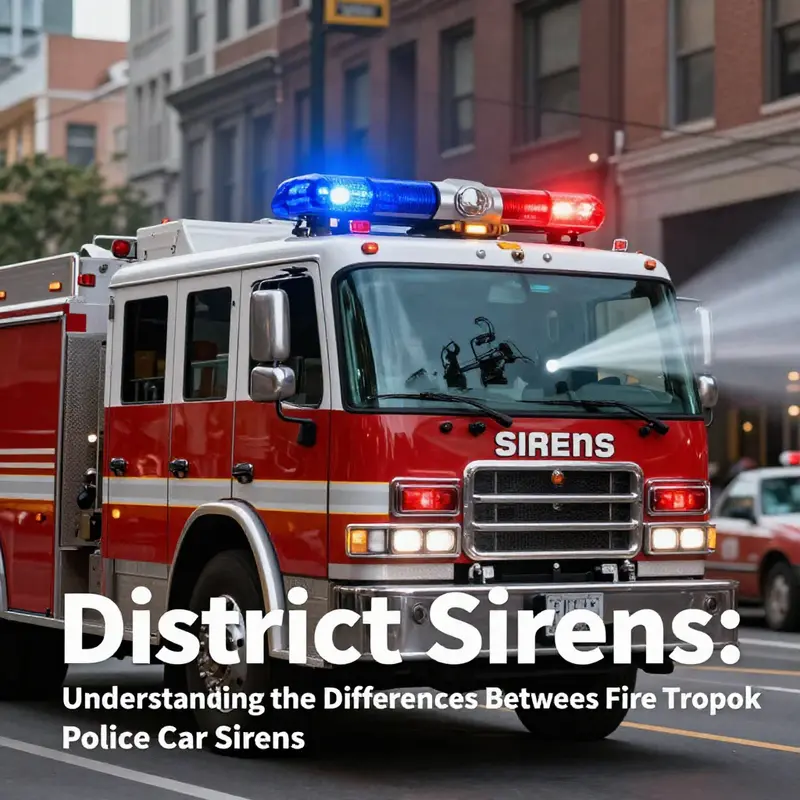
Sirens are not just loud noises but deliberate signals that act as a portable public address system for the road. They carry meaning to drivers, pedestrians, and bystanders, guiding behavior in high-stakes moments when every second counts. The differences between fire truck sirens and police car sirens are more than a matter of taste or local tradition. They reflect distinct goals, acoustic environments, and strategies for alerting the public while keeping responders safe as they move through traffic. In many places, you can hear fire apparatus and law enforcement moving through a city with a recognizable voice—the siren—yet the cadence, tone, and sequence tell a story about what kind of emergency is unfolding and how other road users should react. Understanding these differences helps turn a noisy street into a streamlined scene of cooperative motion, where people yield appropriately, restrain impulsive maneuvers, and clear the way for responders who must reach a destination under pressure. The language of the siren is, in effect, a map drawn in sound, and the map changes slightly from region to region, from vehicle to vehicle, and from one type of emergency to the next.
Regional variations in siren design show how context shapes sound. In many European cities, sirens are engineered to cut through dense urban noise and to offer pronounced directional cues. A rising and falling wail or a quick, sharp yelp pattern helps drivers locate the source of the sound and anticipate its movement as the vehicle approaches from a junction or a lane change. This directional clarity matters when traffic flows in narrow streets and around crowded crossings, where a steady, clear sense of where the siren is coming from can prevent last‑second lane shifts that endanger pedestrians or the responders themselves. In contrast, American approaches to fire truck sirens have historically leaned toward higher overall volume and extended, continuous tones. The emphasis on sheer audibility over long distances reflects an older philosophy: if you can hear a fire truck coming from far away, you have time to react. But this raw volume can sometimes blur the origin in a symphony of city noise, making it harder for drivers to pinpoint the source in the moment. Regions thus diverge not just in sound but in the very logic behind alerting—the balance between penetrating power and directional precision.
Within the fleet, fire trucks commonly carry three main categories of auditory signals that work together to maximize alertness in varied contexts. An electric siren, driven by a tone generator, provides configurable patterns such as wail, yelp, and pulse. These electronic tones can be adjusted depending on traffic density, speed, and the ambient noise level, offering crews a flexible tool to adapt to the moment. A mechanical siren, powered by the engine via a vacuum pump, creates a high-pitched, fluctuating sound that can be particularly effective in close quarters or in areas where low-frequency noise is common. Finally, an air horn delivers a deep, explosive blast that carries well over open spaces and can be decisive in heavy traffic or on highways where a more dramatic cue is necessary to cut through the din. This layered approach is not arbitrary; it is a practical response to the dynamic theater of the street. Each component has its own strengths and weaknesses, and together they form a composite signal designed to maximize the chance that everyone on the road hears and interprets the vehicle’s intent correctly.
A crucial aspect of siren design is the variability that modern systems offer. In many jurisdictions, fire trucks are equipped with electronic sirens that can cycle through pre‑set modes. These modes may include subtle patterns for daytime use and more aggressive cadences when speed is essential. The ability to switch quickly between patterns—such as a rising wail to attract attention, a yelp for rapid overtaking, and a pulse when visibility is limited by rain or fog—lets responders tailor the siren to the immediate environment. Similarly, a mechanical siren provides a recognizable, almost tangible timbre. The fluctuating pitch can be felt in the chest as much as heard in the ears, an effect that seems to intensify in crowded urban canyons where echoes multiply the signal. The air horn, when deployed alongside the siren, acts as a blunt instrument of alertness, a blunt, authoritative call that pierces through multiple layers of noise. Together, these tools create a multi‑layered sonic presence. The public hears more than a single tone and learns to associate the different elements with different sorts of urgency or proximity. In practice, the blend is designed to ensure that even in the hardest-to-hear conditions—near a busy intersection, behind a wall of traffic, or across an open plaza—the message remains legible.
The functional purpose behind the siren’s design is as important as its sound. Fire trucks are often responding to fires, medical calls, or other life‑safety incidents where nearby drivers and pedestrians need to yield promptly. A strong, long‑range signal helps people notice the vehicle well before it arrives, allowing more time to move aside safely. Yet speed cannot come at the cost of clarity. A siren that blasts without directionality can create confusion, leading drivers to freeze in place or swerve unpredictably. Hence, many European systems emphasize patterns that provide directional cues. A driver who can detect not just the volume but the trajectory of the siren can anticipate where to move. In the United States and some other regions, the emphasis on enduring volume is matched with a robust pattern that remains audible as the vehicle closes in, reducing the risk that the siren is masked by ambient sounds like horns, engines, or crowd noise.
Police sirens, by contrast, perform a different balancing act. The standard police siren repertoire often hinges on a broader array of tone sequences designed to command attention quickly and to reflect the urgency of a pursuit or a tactical response. A typical modern police setup might include a loud yelp, a hi‑lo pattern, and a wail, with the option to switch among them in seconds depending on whether the vehicle is pursuing, maneuvering through heavy traffic, or attempting to disperse a crowd. The hi‑lo pattern, with its rapid alternating high and low tones, is particularly effective at grabbing the attention of drivers who may have become accustomed to a consistent siren and may otherwise filter it out. In high‑speed pursuits, the siren cadence can be adjusted to maximize the likelihood that motorists react with caution yet maintain lane discipline. Some jurisdictions also equip police vehicles with electronic sirens that offer presets such as air horn simulations or stinger tones for extreme noise environments. The result is a siren language that conveys both urgency and intent, with the added flexibility to adjust on the fly to the changing mood of the road.
The public’s interpretation of these soundscapes is not merely an auditory habit but a learned behavior born from training, law, and common sense. People are taught to recognize the broad categories of emergency vehicles by their tone and tempo. A long, continuous tone might signal a distant fire engine approaching from behind, while a rapid, varied pattern could indicate an imminent police motion through a busy corridor. But sound is not the only cue. Visual signals—lights, positioning of the vehicle, and even the presence of accompanying personnel—augment the siren’s message. The siren’s purpose, then, is not to confuse but to reduce uncertainty in moments of stress. It should tell a driver to slow down, move to the right, and yield the way with predictable, smooth action rather than abrupt, risky movements. In this sense, sirens function as a social technology, shaping behavior to minimize danger for everyone involved—emergency responders, drivers, passengers, and pedestrians alike.
The design choices behind fire truck and police sirens also reflect safety considerations for responders. A modern fire truck may rely on a broad acoustic strategy that remains effective even when the vehicle is operating near construction zones, on multi‑lane arterials, or through urban canyons where echoes can complicate interpretation. The presence of an air horn, in particular, serves as a blunt instrument that can pierce through congested noise with a decisive, authoritative cut. In practice, responders balance the risk of startling pedestrians with the need to alert them. The siren’s patterns are therefore tested against real‑world noise profiles and contextualized by training across shifts and seasons. Police sirens carry a parallel calculus: the cadence must stand out among the visual complexity of a pursuit, the sounds of engines and roadways, and the unpredictability of pedestrian behavior. The aim is swift recognition and prompt, lawful reaction—an equilibrium between audibility and predictability that keeps the mission moving forward while upholding road safety.
Regional and vehicle‑level differences matter, but so do the limits of any single system. No siren is perfect in every situation, and as urban environments evolve, so too do the conventions surrounding alert signals. Some communities are updating their siren fleets to incorporate more advanced electronic systems that can simulate different tones for different scenarios while maintaining a core, unmistakable voice that is recognizable even when the vehicle is partially obscured by noise or rain. Others preserve the enduring reliability of mechanical and air horn components, valuing the immediate, visceral impact of a familiar sound that drivers instinctively respond to after years of exposure. The result is a living tradition of emergency signaling that remains practical, adaptable, and—above all—committed to safety on crowded streets and quiet neighborhoods alike.
For readers who want to explore how these distinctions manifest in a real‑world sense, the broader context of emergency vehicle categories can be informative. In many fleets, emergency response equipment is organized into broader vehicle families, including categories like emergency rescue vehicles and other specialized fire service platforms. You can explore the dedicated Emergency Rescue Vehicle product category to see how different types of responding machines share a common signaling language while maintaining their own sonic identities. This approach mirrors how sirens operate on the street: a shared framework that accommodates variety while preserving recognizable cues that help the public react correctly as vehicles approach.
The nuanced differences between fire truck and police sirens thus emerge from a blend of regional philosophy, vehicle capability, and the realities of the streets. The goal is not to standardize every sound into a single template but to ensure that each vehicle can project its presence effectively in its environment. In practice, this means harmonizing the urgency of the call with the need for safety, clarity, and respect for other road users. It also means recognizing that the siren is one element in a broader system of signals—lights, driver training, and public awareness—that together shape how we share space with responders at critical moments. As traffic patterns shift and cityscapes change, the siren remains a flexible instrument, capable of evolving its patterns while retaining a core function: to guide people toward safety and to help emergency teams reach those in need without unnecessary delay.
When you next hear a fire engine or a police cruiser, listen for the differences in their voices, but also listen for what they share. Both aim to reduce harm, to speed help, and to invite cooperation at a moment when strangers become part of a living, responsive system. The siren is the door you hear before you see the vehicle—an acoustic invitation to yield, slow down, and let the scene unfold safely. The more we understand that invitation, the more effectively we can participate in that essential choreography of safety on the street. For those curious to see how these signals translate into a broader category of emergency vehicles, consider exploring the Emergency Rescue Vehicle category for related vehicle types and signaling approaches.
External resource: For a visual and descriptive overview of siren sounds and types, see this guide: Understanding Fire Truck Sirens: Sounds and Types – TikTok.
The Sound of Authority: How Police Sirens Differ, Communicate Urgency, and Shape Enforcement on City Streets
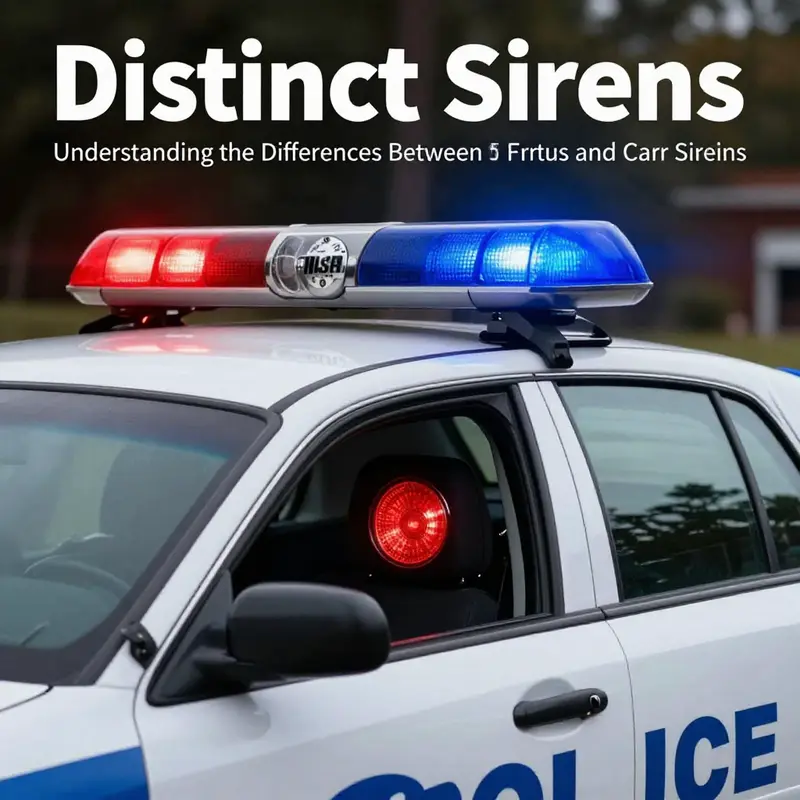
When the city settles into the quiet between horn and engine, the first clue that something urgent is unfolding often arrives as sound. Sirens do more than announce the arrival of a vehicle; they cue behavior, set tempo for the road, and carry messages that pedestrians, drivers, and bystanders instinctively decode. This chapter dives into the distinctive world of police car sirens, clarifying how they differ from other emergency sirens and why those differences matter for enforcement and safety. In doing so, it threads a line back to the chapter that compared fire and police sirens, underscoring how purpose, pattern, and regulation shape not just sound, but human response on the street. The discussion here is not a catalog of tones but a study of how sound becomes a tool of speed, order, and authority in the urban landscape.
At the core, police sirens exist in two broad families, each with its own history and strengths. Mechanical sirens, the classic rotors that turn and howl, produced a raw, high-volume wail that could punch through clutter—wind noise, engine roar, or the metallic rasp of a dense street. These devices, once common across many departments, were prized for their long-range audibility. They worked by spinning a rotor inside a stator to create a rising and falling pitch that carried far beyond the immediate surroundings. The sound was unmistakable, a sonic beacon that implied, with a single note, urgency and a directive for space. Yet as maintenance costs mounted and the options for tone variety broadened, many departments began to transition away from purely mechanical systems toward electronic solutions that offered more flexibility with less mechanical wear.
Electronic sirens, in contrast, opened a wider door to programmable sound. They can generate a spectrum of tones—yelp, wail, hi-lo, and even simulated airhorn—often within a single siren head. This versatility matters in the nuanced choreography of enforcement. In a rural highway, a continuous, high-volume wail can cut through miles of fog and traffic noise, signaling a need for immediate clearance and indicating a high-speed response. In a crowded urban corridor, a sharp pulsing pattern—the yelp or hi-lo—can slice through the hum of buses, trucks, and pedestrians, delivering a sense of urgency without overwhelming nearby bystanders or triggering unnecessary panic. The electronic platform also allows departments to tailor their alerting strategy to the moment—rapid, shorter bursts for a pursuit through traffic, longer, smoother tones for a broad area warning, or a calm, steady warning when a security incident requires pedestrians to move aside calmly rather than scatter in fear.
Alongside tone selection, the public-facing message embedded in siren patterns functions as a coded language. The wail often signals ongoing movement through traffic with high urgency, a pattern that expects drivers to yield and give wide space as quickly as possible. The pulsing patterns—the yelp or hi-lo—can convey a different cadence: a need to create a gap, coordinate with other responders, or navigate a dense urban environment where traffic light timing and vehicle density limit speed. Some situations benefit from a more restrained approach, where a steady publishable alert lets nearby drivers anticipate the path of an approaching unit without provoking abrupt, dangerous maneuvers. In other moments, a sharp, single-sourced alert—akin to an exclamation point—alerts a crowd to the presence of officers and the seriousness of the incident without devolving into chaos. This capacity to modulate tone is not mere flair; it is a deliberate attempt to optimize safety for responders and the public alike.
With technological flexibility comes an important caveat: the requirement that siren use remains governed. Across jurisdictions, sirens are restricted to authorized personnel, and misuse is illegal. The public’s trust in sirens rests partly on predictability—on knowing that when a siren wails, it signals legitimate emergency response, not a diversion or a prank. That trust is reinforced by standards and procedures that ensure consistency in when and how certain tones are deployed. The variability that makes electronic sirens so adaptable also imposes a duty to calibrate patterns to the situation, weather, and ambient noise. A storm, a tunnel, or a snow-covered interstate can each demand different acoustic strategies to maintain legibility and safety for every traveler who hears them.
Beyond the tonal palette lies the critical distinction between the roles sirens play in enforcement versus those in public safety education. Sirens are not only signals to move out of the way; they are messages about how to respond. In many high-stakes scenarios, sound patterns help de-escalate tension. A well-placed yelp, for instance, can clear a lane of vehicles without triggering a frantic crosswind of panic, guiding drivers to a deliberate and safe clearance path. In a pursuit, a sustained wail or a rapid hi-lo sequence communicates escalating urgency, signaling other officers and units to adjust their speed and strategy. On a medical call, a steady but less aggressive tone may be deployed to avoid alarming a neighborhood while still securing a clear route for arrival. The nuanced application—choosing tone, tempo, and duration in relation to road geometry, time of day, weather, and incident type—embeds sirens within a broader enforcement framework that blends traffic control, incident management, and the protection of civilian lives.
The audible distinction between police sirens and fire-truck sirens also reinforces the social choreography of the streets. When drivers hear a wailing tone with a rising and falling pitch, the instinct may be to move aside with a certain expectation of what is happening—emergency traffic, a fast-moving response, perhaps a building incident on the other side of town. The fire truck siren, with its own distinctive cadence and purpose, signals a different kind of urgency—often a call to clear an intersection for a vehicle that carries a crew and equipment capable of affecting a hazardous scene. The public absorbs these sonic cues and responds with practiced reflexes: brake gently, steer to the right, let the line of march pass through. This learned behavior helps reduce the likelihood of collisions and increases the probability that responders reach the scene quickly and safely. It is a dance of sound and motion where each step is guided by the tonal grammar of the vehicle in motion.
The evolution of siren technology—mechanical to electronic—also mirrors changes in policy and training. Departments increasingly emphasize standardized tone sets and audible patterns that teams train to recognize and respond to without confusion. The professionalization of siren use includes not only the selection of tones but also the integration of siren play with lights, radio communications, and traffic management tactics. Police units coordinate with dispatch and on-scene commanders to determine when the siren should pierce a city block or be softened to avoid startling witnesses or bystanders unnecessarily. This level of coordination acknowledges that a siren is a tool of enforcement and control as much as it is a signal of danger. Proper use can reduce risk for officers and the public, while improper use can create unnecessary fatigue or stress, particularly in areas with high motor-vehicle volumes or dense foot traffic.
One consequence of the emphasis on programmable, situation-aware sirens is ongoing attention to regulation and public-safety policy. The line between effective alerting and nuisance noise is delicate. Jurisdictions may impose restrictions on siren duration, permissible tones, and permissible hours of operation, especially in residential neighborhoods or near schools. The overarching aim remains clear: ensure that sirens fulfill their protective function without becoming a persistent source of disruption. In practice, that balance relies on clear protocols, disciplined training, and an informed public that understands the intentional differences between emergency vehicle sounds. The more listeners learn about what different siren patterns signify, the more harmonized the response becomes—drivers yielding, pedestrians stepping aside, and bystanders recognizing that the streets are managed by trained professionals who are continually calibrating sound to the demands of the moment.
In this light, the public often benefits from a broader, more nuanced literacy about sirens. Rather than simply reacting to a loud noise, people can learn to interpret tone, tempo, and duration as indicators of urgency and type of incident. This literacy reduces impulsive reactions that might put responders at risk. It also supports smoother traffic flow, because drivers who know what to expect can make safer, more confident decisions about how to move through an approaching emergency vehicle corridor. The siren, then, becomes not only a beacon but a shared cue—a common language that helps coordinate action with minimal verbal communication. The more coherent this language is across neighborhoods and roadways, the more efficient and safer the enforcement process becomes.
To round out this examination, it’s worth returning to the practical specifics that shape how departments implement sirens on the street. Electronic sirens can be configured with multiple presets to cover wide urban areas or more intimate, congested streets. The choice of tone and its programming reflect both the geography of the response area and the typical patterns of traffic. In rural counties, a high-volume wail might still play a critical role in guaranteeing coverage over longer distances. In metropolitan cores, a crisp hi-lo or yelp could prove more effective at slicing through the urban soundscape. In all cases, the siren is paired with other tools—lights, radio channels, and traffic control measures—to create a coordinated approach to incident response that prioritizes safety and speed.
Within the broader family of emergency vehicles, the nuances of police sirens also connect to a wider ecosystem of vehicle categories that share practical considerations. For readers curious about adjacent areas of emergency response and the kinds of vehicles these sirens accompany, one can explore related vehicle classifications such as emergency rescue vehicles. Emergency rescue vehicle category offers a lens into how siren systems are deployed across a spectrum of missions, illustrating that sound design serves distinct operational goals even when the underlying technology overlaps. This cross-pollination helps explain why a siren on a police car may differ from a siren on a fire engine, yet both are rooted in a common aim: to maximize safety, visibility, and order during moments of crisis.
As technology advances, the future of police sirens may bring further refinements in intelligibility and adaptability. Advances could include more granular environmental analytics that tailor tone patterns to road noise, weather conditions, and traffic density in real time. The objective remains constant: deliver a clear, rapid signal that aligns with the officer’s intent—whether to secure a scene, facilitate a pursuit under controlled risk, or guide the public toward a safe corridor. Yet with this forward movement comes a continued emphasis on regulation and public accountability. The siren will always be a tool of enforcement, but it must also be a trusted instrument whose use is predictable and understood by the communities it serves.
For readers seeking an authoritative overview of the technical and regulatory landscape that shapes siren use, the National Highway Traffic Safety Administration maintains a comprehensive resource on sirens and lights. This external reference provides the framework for understanding how different tones, patterns, and equipment choices are harmonized with traffic laws and safety guidelines across jurisdictions. It is a useful companion to the more behaviorally oriented discussion above and helps connect sound design with formal policy and practice. See the NHTSA Sirens and Lights page for a deeper dive into the standards and recommendations that govern emergency vehicle acoustics.
In sum, police sirens are more than loud alarms; they are a carefully choreographed set of signals designed to facilitate swift, safe, and lawful responses. The shift from mechanical to electronic sirens reflects a broader move toward adaptability and precision in law enforcement operations, while still honoring the timeless goal of making the presence of an emergency vehicle unmistakable. The patterns—whether a rising wail, a sharp yelp, or a stern hi-lo—are not arbitrary sounds but deliberate communications that guide behavior, determine the pace of traffic, and influence the tempo of enforcement on the street. Understanding these nuances reveals how a simple siren can shape a city’s response to danger, stress, and responsibility, linking sound to safety in a way that is both technical and human at its core. Finally, the comparison with fire-siren patterns underscores a shared purpose across public safety: to teach the street the rules of engagement in moments when those rules matter most.
External reference: https://www.nhtsa.gov/emergency-vehicles/sirens-and-lights
Sirens in Motion: How Fire Trucks and Police Vehicles Signal, Perceive, and Protect
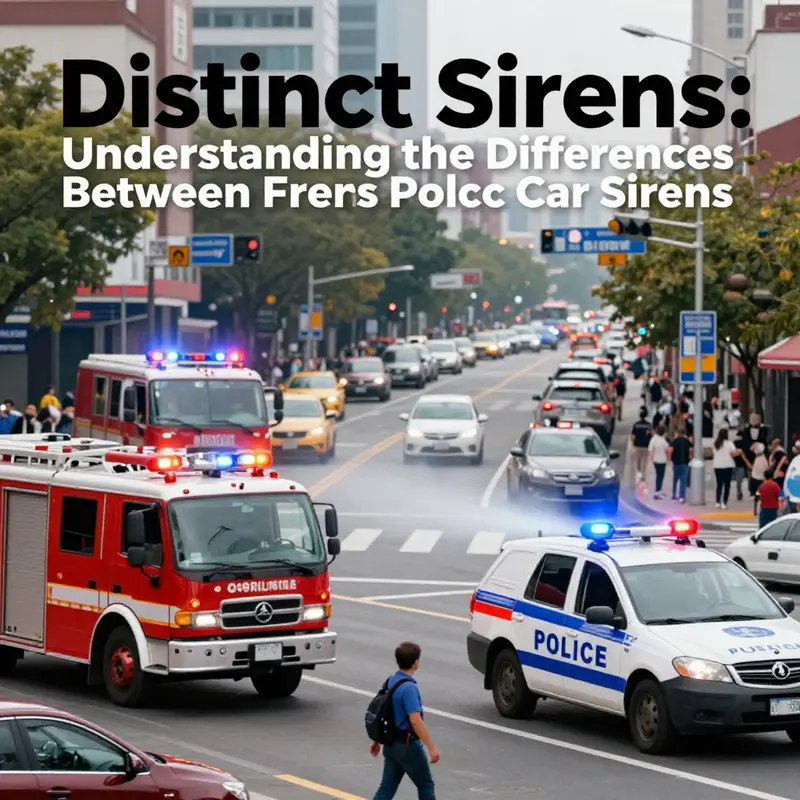
The soundscape of emergency response is more than loudness. Sirens encode information that helps people judge urgency and decide how to react. Fire trucks tend to use howling, sustained tones designed to cut through long sightlines and heavy traffic, reflecting the need to move large apparatus through complex urban topographies. Police sirens often employ rapid patterns—pulses, hi-lo bursts, and brief staccatos—that grab attention quickly in unpredictable environments. The two families share a goal: clear passage through traffic. But their acoustic identities serve different missions and listener expectations, shaping behavior in ways that can save seconds and lives. The modern practice also embraces multiple presets, better integration with vehicle lighting, and public education about what different patterns mean. In crowded cities, the interaction of sound, visibility, and the built environment matters as much as the tone itself. Pedestrians and drivers learn to respond not only to what they hear but to how the siren signals the roadway, how public messaging reinforces safe actions, and how officers and drivers communicate intentions through coordinated signaling. The ongoing research in acoustics and urban planning continues to tune these signals for detectability, clarity, and safety. For readers curious about the hardware behind these sounds, see resources on fire-truck-parts and related equipment. External resources underscore that siren design sits within broader safety standards, such as NFPA guidelines. https://www.nfpa.org/Code-Development/Committees-and-Subcommittees/Committee-on-Fire-Alarm-Systems
Ringing Distinctions: How Modern Siren Technology Delineates Fire Trucks from Police Cars and Shapes Urban Motion
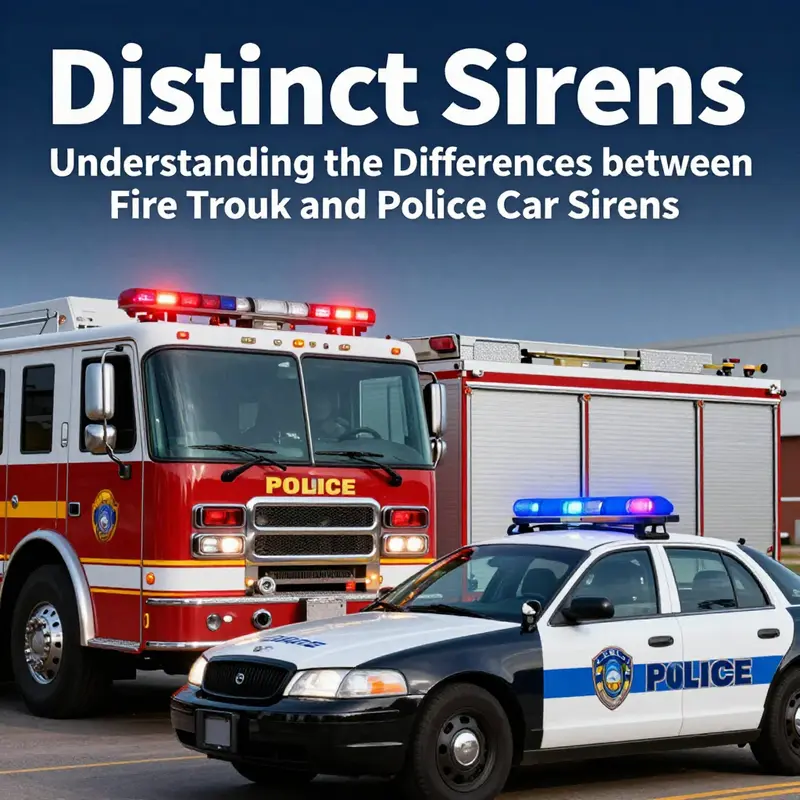
In the cacophony of a city, sirens do more than announce trouble; they create a language that blends psychology, physics, and policy into a single, audible signal that tells people how to respond. The question of whether fire trucks and police cars have different sirens is not simply about preference or tradition. It is about purpose, environment, and the evolving technology that makes these signals more efficient, more precise, and, ideally, less disruptive to everyday life. When a fire engine rushes toward a blaze, the priority is persistence and clarity across distances and through urban clutter. The traditional fire siren—a high-pitched, wailing tone that climbs and descends in a steady, recognizable pattern—has long been optimized for long-range audibility. Its goal is to rise above the din of traffic, construction, and accumulated city noise so that pedestrians, cyclists, and drivers begin to yield in a timely fashion. In contrast, police sirens operate in a more elastic space. Their patterns must adapt quickly to dynamic situations—when a pursuit narrows through traffic, when a cruiser must tunnel through a dense street canyon, or when the vehicle must blend into a neighborhood cadence without escalating fear or panic. The result is a spectrum of sounds, a toolbox of tones, and a framework for signaling that a very particular response is required in a moment of danger or urgency.
Behind these auditory differences lies a suite of technological advances that have transformed not just what people hear, but how emergency services plan and execute their movements through city streets. Digital signal processing, or DSP, has expanded the palette of tones and sequences available for both fire trucks and police cars. Instead of relying on a single, unvarying siren, DSP enables a wider range of options—classic wail and Yelp patterns, but also newer, programmable sequences such as air horn simulations and phasers. These options can be tuned in real time to the surrounding environment. In a residential corridor where the ambient noise rises with the hum of air conditioning and generators, the system can prioritize a tone that remains discernible without becoming a source of constant nuisance. In a commercial district, the siren can be adjusted to ensure that it punches through the clamor of traffic while maintaining respect for nearby offices and shopping centers. The practical upshot is that the same base sound, when manipulated by DSP, becomes a flexible signal that communicates not only presence but also a robust awareness of context and consequence.
Another key development is the shift toward directional or focused sound technology. Notable systems and research in this area describe loudspeakers arranged in arrays that project sound toward a vehicle’s path while minimizing spillover into adjacent lanes or onto nearby residences. This directional capability is more than a comfort measure; it is a safety feature. By concentrating the acoustic energy where pedestrians and drivers are most likely to be located, these systems improve the chances that the intended audience will hear the siren quickly and clearly, even in environments with complex acoustics. The intention is to reduce hearing fatigue and potential harm to bystanders while preserving the siren’s urgency. The concept—sound shaped and steered rather than simply blasted—represents a fundamental rethinking of how emergency signals interact with the urban soundscape. In practice, this protection of bystander hearing is as important as the call to yield or clear a path, because it reduces the risk of delayed reactions due to masked or misunderstood signals. A directional approach thus serves dual purposes: it preserves the clarity of the alert and mitigates noise pollution in areas where residents and workers would otherwise bear the brunt of a siren’s intrusion. In the broader context of vehicle engineering, the hardware that carries these signals—from the power supplies to the speaker arrays—falls under the umbrella of fire truck parts, a category that connects the high-level acoustics to the practical, mechanical realities of emergency response. For readers curious about the hardware side of the equation, the fire truck parts section provides a concrete sense of how these components are categorized and maintained within modern fleets. fire truck parts.
The convergence of siren technology with the vehicle’s own navigation systems marks another turning point in how these signals are deployed. Modern sirens do not operate in isolation. They are increasingly integrated with vehicle telematics and GPS data, a synthesis that allows the siren to respond to real-time traffic conditions, road topology, and proximity to intersections. This integration enables automatic adjustments to siren patterns to optimize flow through complex corridors. For example, when a vehicle approaches a congested intersection, the system may switch to a mode that prioritizes audibility and reach in a way that minimizes abrupt changes in speed or direction that could create new hazards. AI-driven algorithms are being developed to predict optimal activation times and patterns, a development that promises to reduce false alarms and improve overall response efficiency. These intelligent patterns can even respect sensitive zones such as schools and hospitals, shifting to less intrusive modes until there is a clear path to the destination. This kind of adaptability is not merely a matter of comfort; it’s about the reliability of the warning signal in a city that never sleeps and never stops moving.
Such adaptive sensing and signal modulation have profound implications for how the public perceives and reacts to emergencies. Researchers emphasize that certain frequencies remain the most effective at capturing attention in noisy urban settings. The contemporary siren design tends to emphasize the mid-to-upper frequency range—roughly between 1,500 Hz and 3,000 Hz—where human ears are most responsive. Lower frequencies, though often robust in open air, lose transmission through walls and glass and can be masked by engine noise. By focusing power in the most effective band, modern sirens maximize perceptual salience without requiring unsustainably loud volumes. This frequency targeting supports quicker recognition and a more intuitive understanding of the situation. In turn, better perceptual clarity reduces the need for extreme decibel levels and progresses toward a more balanced public acoustic footprint. The public health and safety benefits are clear: improved recognition translates into faster, safer yielding and fewer incidents of startled drivers who react unpredictably in the presence of sirens.
The practical consequences of these advances extend beyond the curbside. Fire and police operators alike benefit from systems that are smarter about when and how to engage the siren. In scenarios where a rapid response is essential, the DSP-driven, directional, and context-aware capabilities can coordinate with traffic signal preemption and route optimization to move the vehicle through busy streets with fewer interruptions. This kind of integration reduces travel time for emergencies while limiting collateral disruption for the general public. Yet, even as technology makes sirens more capable, it also places new demands on training and comprehension. Drivers must understand not only the difference in sonic patterns but also how those patterns interact with their own driving behavior and local regulations. Pedestrians and bystanders must learn to interpret a wider set of cues, including the nuanced shifts in tone and directionality that accompany modern siren configurations. The educational aspect of safe listening is becoming part of driver education, school outreach programs, and public awareness campaigns. It’s a reminder that technology is most effective when paired with informed, considerate behavior in the streets.
The sonic language of emergency response also speaks to a broader design philosophy for urban safety. It is not enough to possess the most powerful siren if its signal cannot be understood quickly by the broadest audience. The modern approach recognizes that clarity depends on more than loudness; it depends on intelligibility across contexts, the measurable impact of directional projection, and the alignment of signal characteristics with human auditory perception. Additionally, the evolution of siren systems intersects with concerns about environmental noise and community well-being. Cities are increasingly mindful of the acoustic footprint of emergency traffic, balancing the necessity of timely alerts with citizens’ right to a quieter urban life in residential hours. The result is a more nuanced set of standards for siren design—standards that emphasize intelligibility, regional customization, and respectful scheduling when appropriate. In this sense, the difference between fire and police sirens encodes not just a practiced routine but a philosophy of communication that respects both urgency and restraint.
These developments do not exist in a vacuum. They are the product of ongoing collaboration among acoustical researchers, automotive engineers, urban planners, and frontline responders. The aim is not simply to create louder signals but to create signals that are more trustworthy, less disruptive, and more adaptable to the real world. The distinction in siren patterns—fire trucks leaning toward sustained, rising and falling wails, police cars employing more varied, rapid sequences—remains a foundational cue that helps people instantly categorize the nature of an approaching emergency. Yet the sophistication behind those cues has grown. DSP enables a broader, more legible set of sounds; directional sound reduces unintended spread of noise; GPS-driven adaptation harmonizes with traffic management and city planning. And at the level of the pedestrian, driver, cyclist, or bus rider, the modern siren becomes a learning signal—one that teaches a city how to move in concert with the need for rapid, safe, and predictable emergency response.
In sum, the question of whether fire trucks and police cars have different sirens unfolds into a richer narrative about technology, perception, and public life. The differences are not merely stylistic; they reflect a deliberate engineering philosophy that prioritizes situational awareness, audible clarity, and social responsibility. By leveraging digital signal processing, focused sound projection, and intelligent integration with vehicle data, modern sirens maintain their role as critical safety tools while becoming better suited to the complex, noisy, and densely populated environments they must navigate. As cities continue to evolve and as noise management becomes an ongoing policy concern, the siren’s design will likely keep advancing in ways that preserve the urgency of the alert while safeguarding everyday listening experiences for everyone who shares the road or the sidewalk. The sonic signature of emergency response, in short, remains a living language—one that adapts, clarifies, and, above all, serves the community with both speed and care.
External resource for further reading: SoundShaper, a directional siren system that exemplifies how focused sound can improve audibility while reducing noise spillover. See https://www.sirentechnologies.com/soundshaper for details on the technology and its applications across emergency-vehicle platforms.
Final thoughts
The variations in sirens between fire trucks and police cars are not just matters of sound but are essential tools for public safety. Fire trucks utilize high-pitched, wailing tones designed to alert people over long distances, while police cars employ more varied patterns to command attention quickly. This differentiation enables the public to react appropriately in emergency situations, ensuring a coordinated response. As technology advances, these siren systems evolve, integrating new features that enhance their functionality. For business owners, understanding these nuances can lead to improved safety protocols and greater community engagement in emergency preparedness.

