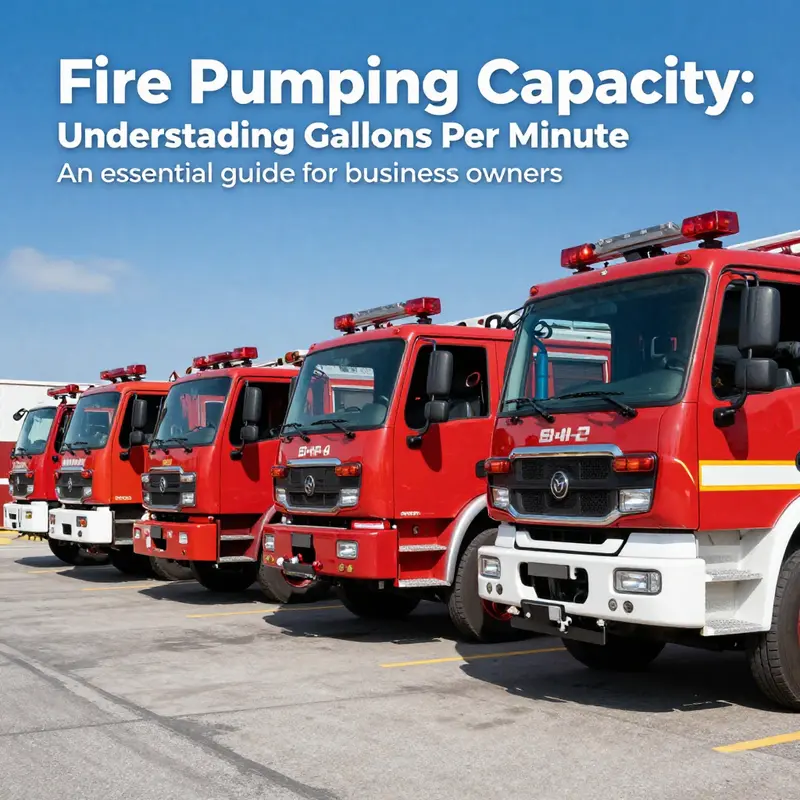
On the secondary market, the asking price of a used fire engine tells you very little about risk. Three technical variables matter more: gaps in NFPA 1901 compliance, the cost of a pump rebuild, and the condition of the tank liner. A low sticker can just as easily hide a non-compliant apparatus, a pump due for a full rebuild, or a liner that is already failing.
What follows covers how to inspect pre-owned fire apparatus for NFPA 1901 compliance, how to estimate pump rebuild cost from service history and fire truck pump capacity, and how to assess tank liner condition before you buy.
Fire chiefs, fleet managers, procurement officers, and apparatus dealers can use the framework to judge a used fire engine truck on its total cost of ownership rather than its sticker price. The aim is inspection-grade guidance: no marketing claims, just the technical and financial criteria that separate a sound used fire engine from an expensive liability.
NFPA 1901 Compliance Gaps in Used Fire Apparatus
Buyers on the secondary market tend to assume that a truck legal to sell is a truck adequate to operate. It is not. A used fire engine can be advertised, titled, and delivered lawfully while still falling short of current NFPA 1901 requirements in ways that erode crew safety and add liability. NFPA 1901 is revised on a rolling cycle, and each edition tightens the performance and safety thresholds. A truck built to the letter of the 1991 or 2003 edition was compliant when it left the factory and may still be legal to sell, but it does not automatically meet the expectations applied to rigs in service now. That distance between legal and adequate is what a rigorous pre-purchase inspection is meant to measure.
Shortfalls cluster in predictable places. Warning lights and reflective striping are the most visible offenders: older apparatus often predate current minimum photometric output, flash cadence, and conspicuity-striping coverage, so a truck that once passed is under-lit for traffic-incident scenes today. No-load governing and pressure-control provisions are less obvious but just as consequential. Current standards expect a pump to hold governed engine speed and discharge pressure automatically across a range of flows; many pre-owned rigs still rely on manual throttling, which can mask instability during critical pumping operations.
Seat and restraint systems are another fault line. The SCBA seat, with its integrated bracket and occupant-restraint geometry, only hardened into a firm expectation in later editions, so apparatus with older bench or non-SCBA seating can expose crews to restraint failures during emergency response. Hosebed and ground-ladder securing requirements form a related cluster, governing how hose loads and portable ladders must be retained against sudden deceleration. Pump rating certification deserves scrutiny too: on used units the documented, tested pump rating that validates rated flow is often missing, expired, or unverifiable.
This is where disciplined buyers separate value from risk. Price each deficiency as its own cost and exposure line rather than a cosmetic detail, then compare the remediation total against a genuine new-truck cost baseline. If upgrades, recertification, and liability exposure approach a meaningful fraction of that benchmark, the rig is a project, not a bargain.
Pre-purchase NFPA 1901 verification points
Run these checks and you have a documented pass/fail record. It gives fire chiefs, fleet managers, and apparatus brokers evidence to defend a buy-or-walk decision instead of relying on the seller’s assurances.
- Confirm the pump rating plate and certification sheet agree with the NFPA 1901 pump capacity rating proven at 150 psi during a witnessed test.
- Verify the pressure-control governor and relief valve hold discharge pressure within NFPA 1901 stability tolerances during flow and no-flow conditions.
- Inspect warning lights, siren, and reflective striping for NFPA 1901 conspicuity and chevron compliance.
- Check seating positions, seat-belt anchorages, and occupant restraints against NFPA 1901 seating and restraint standards.
- Examine ladder, hose, and equipment-securing hardware for NFPA 1901 mounting and retention requirements.
- Read tire DOT date codes and confirm braking components satisfy NFPA 1901 stopping-distance criteria.
- Review documentation of prior modifications, including engineering change records and third-party rebuild sign-offs.
- Confirm the booster tank and liner show no corrosion, delamination, or patch work that would reduce rated capacity.
- Verify apparatus data plates, unit identification, and required warning markings remain intact and legible per NFPA 1901 labeling rules.
| Component / System | Common Gap Found in Used Apparatus | Potential Operational or Liability Impact | Typical Remediation Approach |
|---|---|---|---|
| Pump certification | No current annual service test; nameplate rating unverified since original delivery | Unverified flow and pressure performance; failed ISO rating; potential pump failure on the fireground | Run an acceptance/service test to NFPA 1911; repair and re-certify; budget a rebuild if fire truck pump capacity has degraded |
| Pressure-control / relief valves | Stuck or out-of-adjustment relief valve; uncalibrated pressure governor | Hose burst and crew injury from pressure spikes; cavitation and pump damage | Bench-test and rebuild the relief valve; recalibrate the governor; verify set points under load |
| Warning lights and striping | Faded or non-compliant emergency lighting; missing retroreflective striping | Reduced visibility on scene; marking non-compliance and increased liability exposure | Upgrade to a current LED warning package; apply retroreflective striping per NFPA 1901 marking criteria |
| Seating and restraint systems | Uncertified SCBA seats; worn or missing seat belts; no seatbelt warning system | Occupant ejection risk; serious-injury liability; non-compliant crew transport | Retrofit compliant seats and restraints; add seatbelt monitoring; replace damaged or missing hardware |
| Ladder and hose securing | Missing or broken ladder brackets; unsecured hose beds and hard suction | Ladder or hose ejected in transit; roadway hazards and third-party liability | Replace mounting brackets and straps; install compliant securing devices; verify load ratings |
| Braking systems | Worn air-brake components; active ABS faults; past-due brake inspection | Longer stopping distances; crash risk; failed state/DOT safety inspection | Complete air-brake service; ABS diagnostics and repair; documented brake performance test |
| Modification documentation | Undocumented aftermarket changes (electrical, body, pump, or aerial) | Unknown weight distribution; voided warranties; insurance and compliance disputes | Obtain as-built records; engineer and document retrofits; re-weigh and re-certify the apparatus |
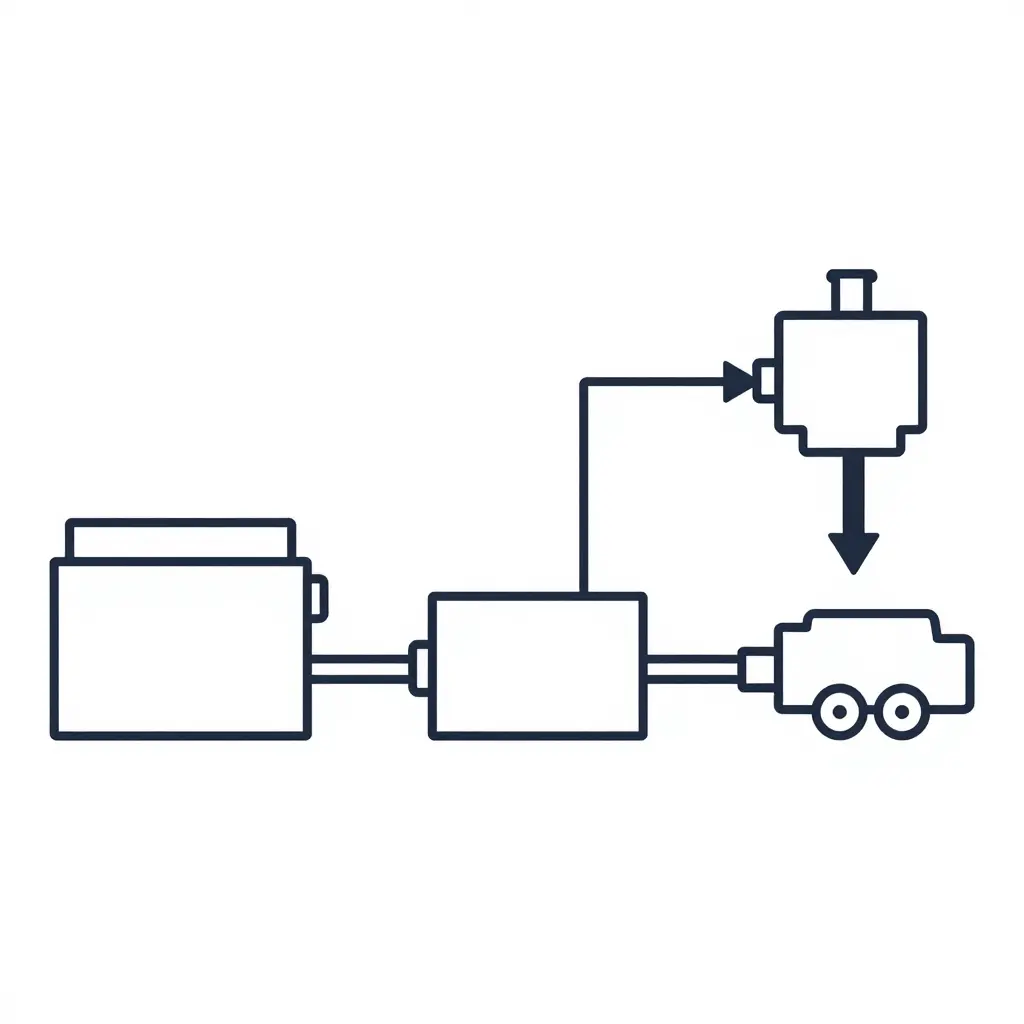
Schematic reference: the engine-to-transfer-case-to-pump power path (bold arrows) and the intake-to-discharge water flow (separate line weight) on a typical midship-mounted fire pump drivetrain.
Fire Pump Rebuild Cost and Economics
A fire pump rebuild cost is not a flat, catalog-style number. On a used fire engine the figure only means something alongside three variables: the pump’s remaining service life, the downtime required to restore it, and the delivered economics of replacing the apparatus instead. A “cheap” rebuild on a pump with five years left is often the worst dollar-per-year decision on the table.
What a Rebuild Actually Covers
A legitimate mid-life pump rebuild is a defined scope of work, not a fluid change. Typical line items include:
- Impeller and wear-ring wear assessment and replacement
- Mechanical seal replacement (and seal-seat/shaft-sleeve inspection)
- Bearing replacement and shaft runout measurement
- Casing inspection for erosion, pitting, and corrosion
- Pump-shift controls, relief valves, and governor recalibration
Skipping casing inspection or the pump-shift controls produces a pump that passes a shop test but fails on the fireground.
Factors That Drive Cost Variance
| Cost Driver | Low-End Signature | High-End Signature |
|---|---|---|
| Capacity (gpm) | 750-1000 gpm single-stage | 1500-2000 gpm two-stage |
| Pump design | Single-stage, common parts | Two-stage, discontinued castings |
| Parts availability | OEM stock, current SKU | Obsolete impeller, custom machining |
| Labor rates | In-house or small shop | OEM-certified dealer labor |
Capacity is the first multiplier. Higher-flow impellers require heavier castings and larger seals, and a two-stage design doubles the tolerance-sensitive components. Parts availability is the wild card: a pump whose capacity rating is still supported by the OEM can be rebuilt economically, while a discontinued two-stage unit can see parts alone exceed the rebuild labor.
The Hidden Costs: Downtime and Lost Response Capability
The invoice line item is not the true cost. A pump out of service for six to ten weeks takes that engine off the primary response roster, forcing mutual aid dependency or pulling a front-line unit out of rotation. Quantify it: lost response capability, overtime to cover shifts, the risk of running short during the rebuild window. These soft costs frequently rival the hard rebuild number, which is why a rebuild that looks 30% cheaper can lose to replacement once downtime is priced in.
Decision Rule: Rebuild, Replace, or Walk Away
Apply a simple three-way test:
- Rebuild when the chassis, tank, and body have verified remaining life, the pump family is parts-supported, and downtime can be absorbed.
- Replace when rebuild cost plus downtime approaches the net cost of a newer apparatus with a supported pump.
- Walk away when casing erosion is structural, the pump family is obsolete, or the seller cannot document prior rebuild scope.
Treat fire pump rebuild cost as a capital decision tied to lifecycle, not a repair bill. The pump is one system on a machine whose value depends on everything else staying serviceable.
Estimated Pump Rebuild Cost vs. Replacement by Pump Capacity Class
On a used fire engine, the pump is usually the most consequential line item on the inspection sheet. A pump that no longer meets its rated performance – or that fails an NFPA 1901 annual service test – forces a binary financial decision: rebuild the existing pump end, or replace the pump outright. The chart below compares indicative cost bands across the most common fire truck pump capacity classes, so buyers and fleet managers can frame the rebuild-versus-replace economics before making an offer.
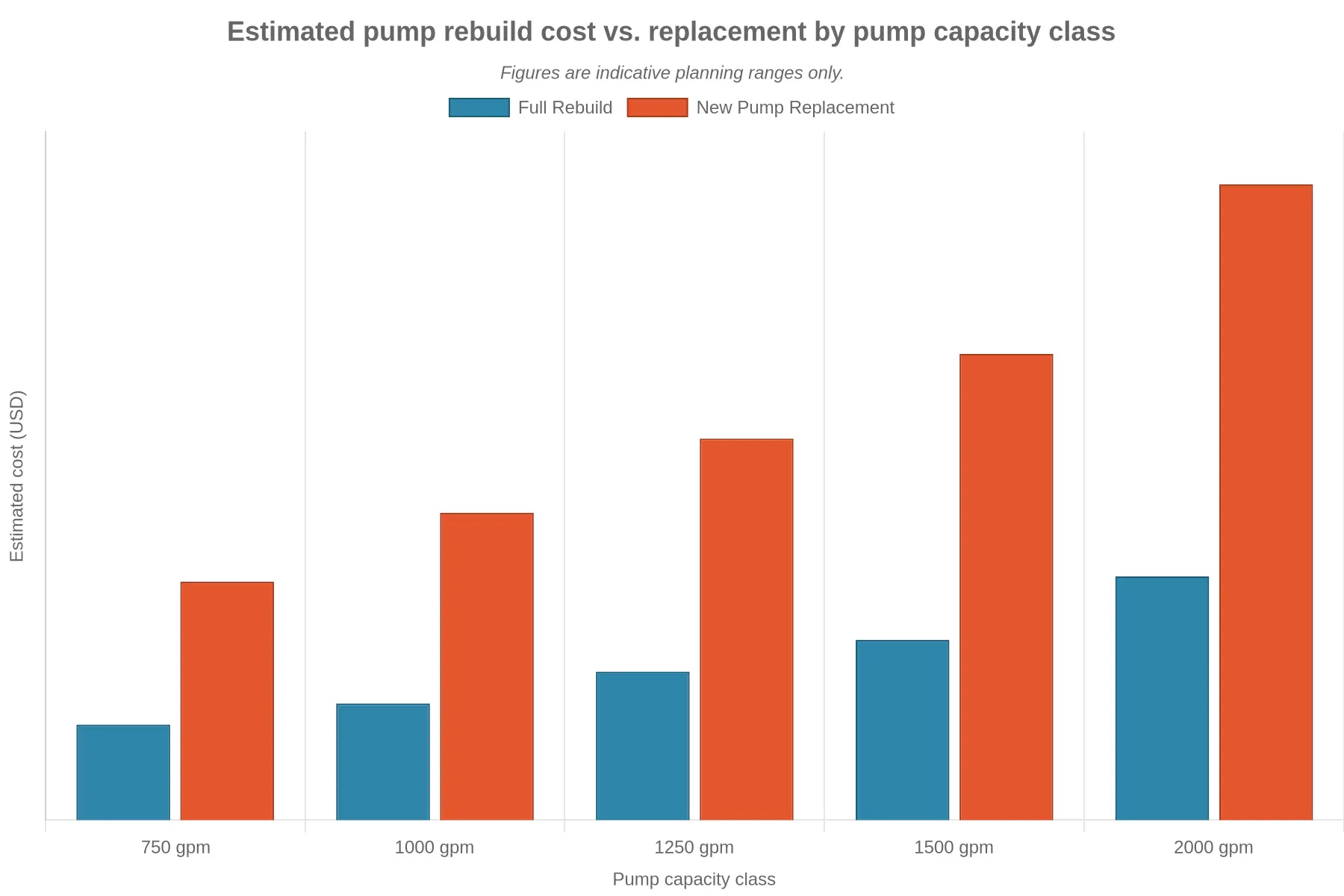
Caption: Figures are indicative planning ranges only, based on generalized industry estimates for mid-life apparatus. Actual costs vary widely by manufacturer, pump model, impeller condition, drivetrain configuration, labor rates, and whether the pump is a single- or two-stage design.
| Pump Capacity Class | Full Rebuild (USD) | New Pump Replacement (USD) | Rebuild as % of Replacement |
|---|---|---|---|
| 750 gpm | $18,000 | $45,000 | 40% |
| 1000 gpm | $22,000 | $58,000 | 38% |
| 1250 gpm | $28,000 | $72,000 | 39% |
| 1500 gpm | $34,000 | $88,000 | 39% |
| 2000 gpm | $46,000 | $120,000 | 38% |
Reading the Numbers
The spread is consistent across every capacity class: a full rebuild typically lands at roughly 38 to 40 percent of the cost of a new pump. That gap is the core of the rebuild-versus-replace case, and it widens in absolute dollars as capacity climbs. On a 2000 gpm pump, the difference between rebuild and replacement can exceed $70,000 – money a budget-constrained department can redirect toward tank liner repairs, hose replacement, or NFPA 1901 compliance work elsewhere on the apparatus.
Where the Cost Lines Actually Go
A “full rebuild” is not a cosmetic refresh. In a proper rebuild the pump end is removed, the impeller and wear rings are inspected or replaced, the mechanical seal and packing are renewed, bearings are pressed in, and the casing is machined if erosion or corrosion has opened tolerances. The rebuilt pump then has to pass a service test that confirms it still delivers rated flow at the required pressure. Budgeting a rebuild as a simple parts swap is a common and expensive mistake; realistic planning ranges must include the test and documentation that restores NFPA 1901 compliance evidence.
A new pump replacement, by contrast, bundles a fresh pump end with a documented performance curve, a clean compliance paper trail, and a manufacturer warranty – but it carries a capital cost that can rival a meaningful percentage of the truck’s acquisition price. Some departments consider that premium worth the certainty. For others, rebuilding is the only way to keep a serviceable chassis in front-line or backup service.
Using the Chart as a Negotiation Tool
Smart buyers walk into a used-apparatus deal already knowing where the pump sits in its service life. Bring these ranges to the table: if a seller’s “recently serviced” pump has no test records, discount the asking price by a realistic rebuild allowance instead of taking the claim at face value. The chart is a planning compass, not a quote, but it anchors the conversation in the right order of magnitude.
Tank Liner Condition Inspection in Used Fire Apparatus
The tank liner condition of a used fire engine is one of the most expensive hidden failures on the secondary market, precisely because it hides behind steel, aluminum, or composite skins. Unseen polypropylene or stainless-steel liner damage compromises three things at once: structural integrity, as baffles and bulkheads flex under the dynamic loads of a 500-to-1,000-gallon water column; water quality, as rust and bacteria colonize exposed substrate; and cross-contamination control, when residual foam concentrate seeps into fresh or potable tank sections. A buyer who never drains, opens, and crawls through the tank is buying a mystery.
The Evidence You Can Actually See
Inspection is physical and literal. Bring a bright light, a mirror, a moisture meter, and gloves.
- Baffle-seam delamination – flex the liner edges where baffles meet the tank floor and walls; lifting, curling, or a hollow sound signals separation and trapped water.
- Cracks at baffle and bulkhead seams – look for hairline fractures radiating from weld or adhesive joints, the classic stress collectors.
- Bulkhead weld integrity – on stainless tanks, pitting, stress-corrosion cracking, and “sugared” or undercut weld beads indicate degraded bulkhead weld integrity that no surface polish can mask.
- Coating blistering – bubbles or peeling inside a lined tank reveal moisture migration between coating and substrate.
- Corrosion under booster-tank mounting – pull the mounting brackets; hidden crevice corrosion here is a frequent and costly discovery.
For a deeper walkthrough of corrosion forensics on pre-owned apparatus, see this companion foam tank corrosion inspection reference.
How Tank Type Changes the Failure Profile
| Tank Type | Primary Failure Mode | Inspection Method |
|---|---|---|
| Polypropylene | Liner delamination, seam separation, UV embrittlement | Flex seams by hand, tap-test for hollow delamination |
| Stainless steel | Weld degradation, stress-corrosion cracking, pitting | Dye-penetrant and visual weld inspection |
| Carbon / mild steel | Internal rust-through, coating blistering | Moisture meter, ultrasonic thickness testing |
Each material fails differently, so match the inspection method to the tank, not the spec sheet.
Minimum Acceptance Criteria
A tank passes only when no baffle-seam delamination is detectable by hand or tap-test; all bulkhead weld integrity holds under visual and penetrant checks; coating shows zero active blistering; and mounting-point corrosion is cosmetic rather than structural. If any liner breach exposes substrate, walk away or budget a full tank replacement – never a patch.
Key takeaway: treat the tank as a pressure vessel, not a container. Drain it, crawl it, and test it before you sign.
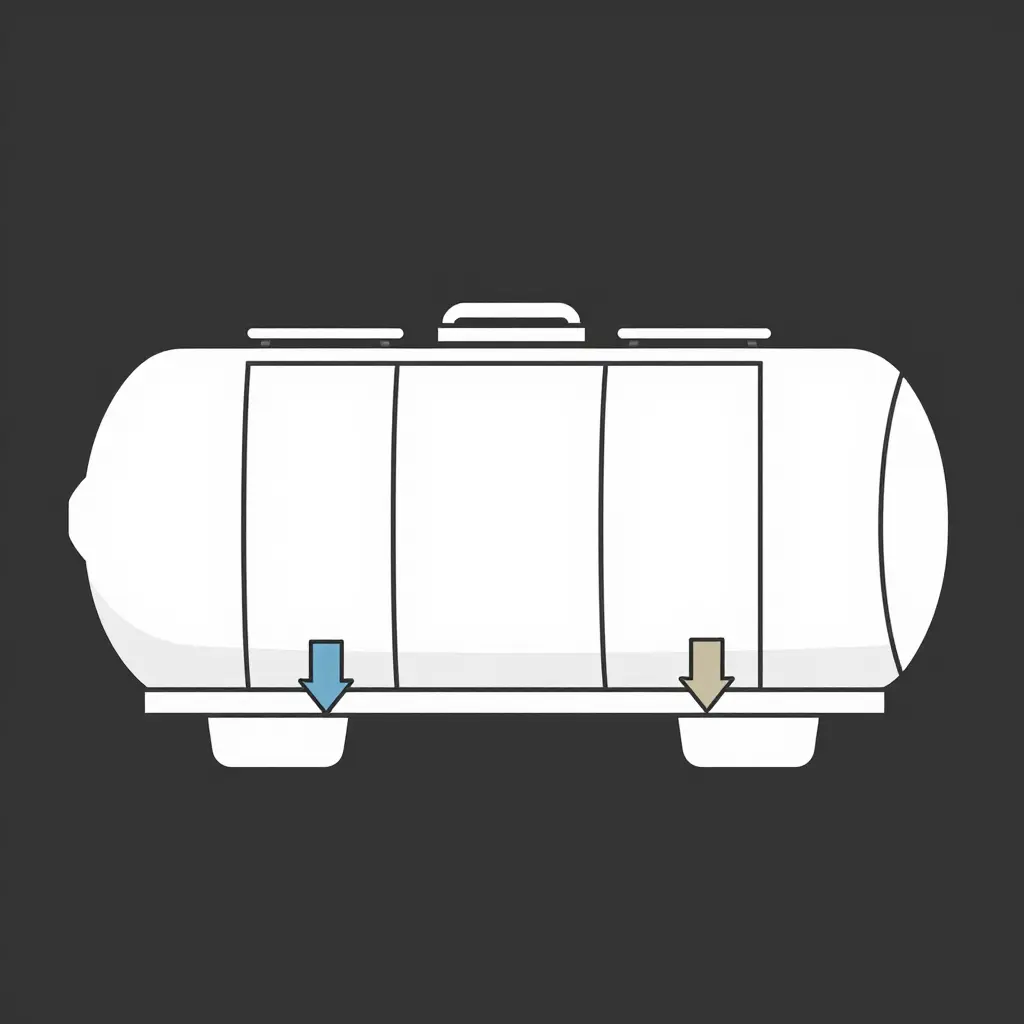
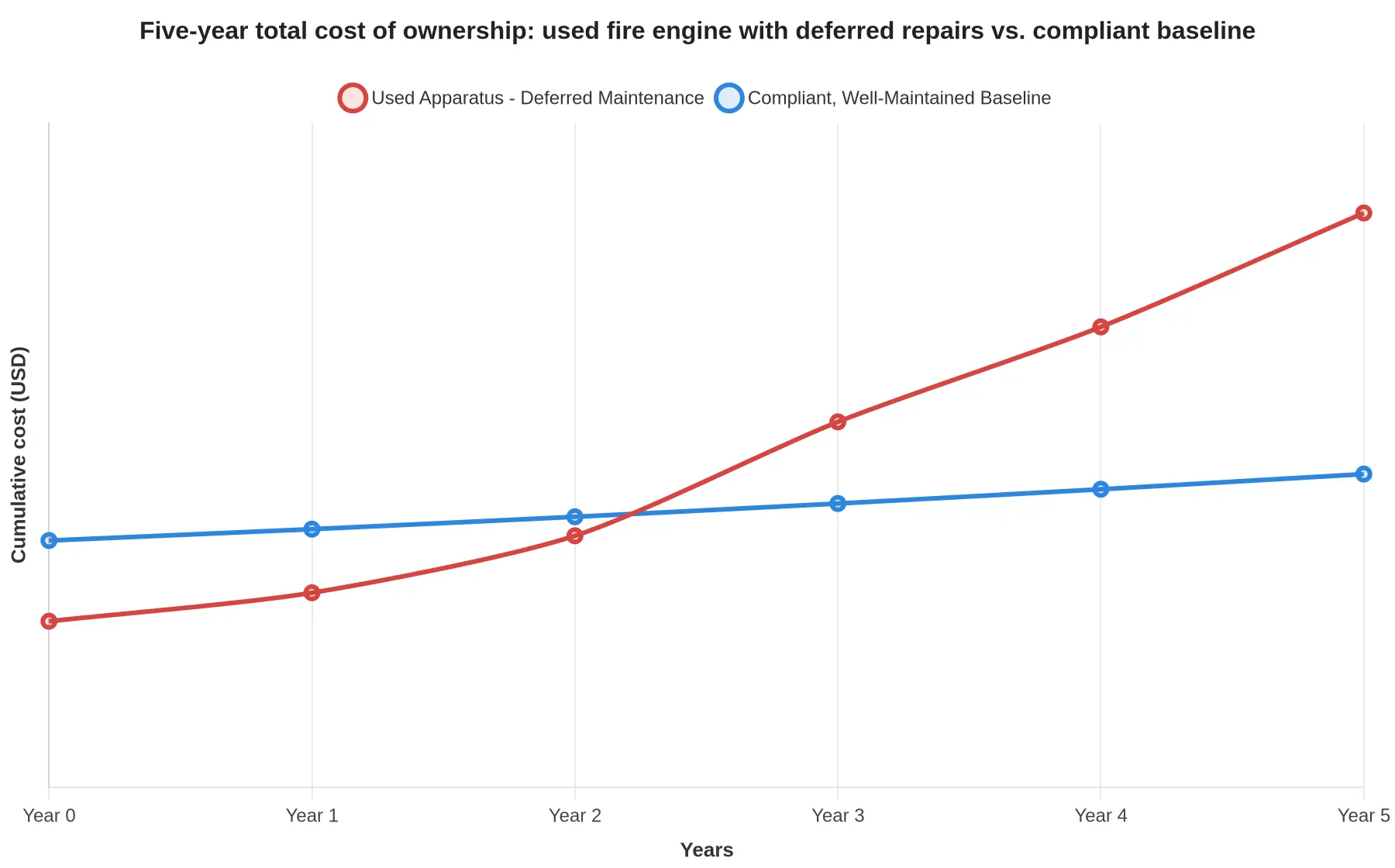
Figure 1. Five-year total cost of ownership: used fire engine with deferred repairs vs. compliant baseline. Illustrative planning estimates for budgeting purposes only; actual costs vary by apparatus condition, region, and vendor pricing.
Making a Risk-Aware Decision on a Used Fire Engine Truck for Sale
Buying a used fire engine truck for sale is ultimately about quantifying risk, not chasing the lowest sticker price. Three variables separate a sound acquisition from a costly liability: NFPA 1901 compliance gaps, pump rebuild cost, and tank liner condition. Chassis hours, radio interoperability, and parts availability shape the deal, but these three drive the ownership economics.
Use the framework to move from analysis to action:
- Buy when documented NFPA 1901 gaps are cosmetic or already remediated, the pump holds rated capacity with service life remaining before its rebuild interval, and the tank liner shows no delamination, blistering, or shell corrosion.
- Negotiate when one variable is soft but bounded. Price the pump rebuild, liner relining, or compliance retrofit at full dealer rates, deduct it from your offer, and reserve contingency for discovery items.
- Walk away when two or more variables fail, or when a single failure carries unbounded cost: an unverifiable compliance history, a pump at end-of-life with obsolete parts, or a liner that has compromised the tank shell.
Verify with documentation, price the worst case, and let the numbers make the call, not the sales floor. For deeper buyer guidance, review our analysis of used fire chief vehicles and their real refurbishment economics, along with our reference on how fire apparatus dealers handle spare parts and warranty claims.