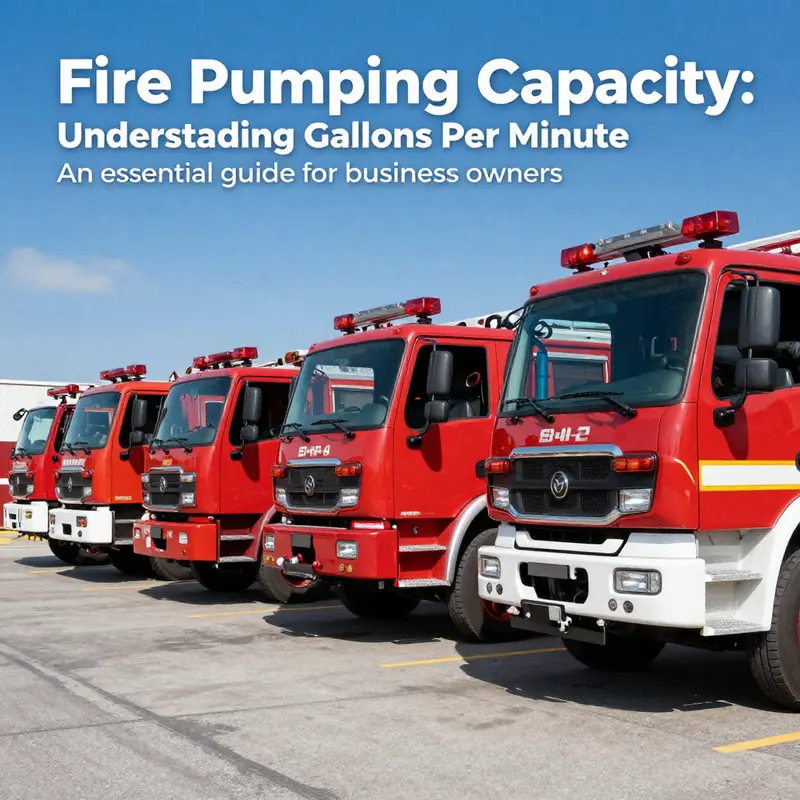
Can You Buy Fire Trucks for Dual Airport and Municipal Response?
Yes, dual-purpose trucks are commercially available, but only when the buying agency specifies them deliberately. You will not find one sold as a factory package, because a dual airport and municipal response fire truck is a set of tank, pump and payload decisions that have to be settled during procurement, before the chassis and body are built.
In procurement terms, dual airport and municipal response means one apparatus meeting both aircraft rescue and fire fighting (ARFF) standards and structural municipal duties. In practice that covers foam delivery and rapid acceleration for airfield work, plus the pump capacity, hose beds and municipal fire truck layout a street response needs.
Two things make it possible, and only one of them is on the spec sheet. Foam systems, pumps, tanks and chassis ratings can serve both roles when they are sized correctly. Crews, meanwhile, have to be competent in ARFF tactics and in structural operations, and no purchase order delivers that.
Buyers weighing a fire fighting truck for a single station should treat both as core planning questions rather than items to sort out after the order goes in.
Where Specifications Actually Overlap
Most spec lines look shareable until someone prices them. Each item below is sorted by whether it genuinely carries both missions or only appears to.
-
Chassis and axle ratings: real overlap. A commercial or custom chassis rated around 44,000-66,000 lb GVW with 4×4 or 6×6 drive will carry either an aircraft-rescue body or a structural pumper body. Both missions are heavy, high-CG loads, so both reward a long wheelbase and stiff frame rails. Spring rates and brake sizing change; the architecture does not.
-
Pump output and pressure: real overlap. A midship pump rated 1,500-2,000 gpm at 150 psi will supply structural attack lines and can still feed a monitor at high flow. One pump, two duty points. What the airfield mission adds is a faster engagement sequence, not a second pump.
-
Water and foam tank capacity: partial. A 1,000-1,500 gal water tank (3,800-5,700 L) with 100-200 gal (380-760 L) of foam concentrate serves both roles, which is the dual-response row in the table further down. Beyond that, tank volume starts taking length and payload away from the hose bed, particularly on a single rear axle.
-
Foam proportioning: real overlap, with a condition. Around-the-pump and balanced-pressure proportioners meter concentrate at whatever ratio the product is listed for: usually 3% AFFF on hydrocarbon fuel and 3% AR-AFFF on polar-solvent fuels such as alcohols, with 1% and 6% products still in service. Municipal garage fires and runway fuel spills use the same plumbing. The correct foam fire truck configurations add a larger concentrate tank and a remote-controlled proportioning valve at the panel. Settle one thing early: with PFAS restrictions tightening, fluorine-free foam is now the direction of travel at certificated airports, so confirm the proportioner and tank trim are listed for the concentrate you will actually be able to buy.
-
Dry chemical or combined-agent systems: looks shared, is not. A dry chemical skid adds several thousand pounds, its own plumbing, nitrogen bottles and a second operator station. Most structural incidents never call for it, so on municipal calls that payload is dead weight. Buy it only where the airport certificate actually requires a combined-agent discharge.
-
Pump-and-roll: real overlap. A driveline-driven pump with interlocks and a front or rear discharge is as useful on a moving runway sweep as on a fast-moving grass or vehicle fire. It is also among the cheaper overlaps on this list.
-
Bumper turret versus roof monitor: looks shared, is not. On most ARFF vehicles the bumper turret is the nozzle aimed from the cab while rolling, and the roof turret does the heavy discharge. A roof monitor is the structural workhorse. Fitting both means duplicated plumbing, extra weight and two control stations, so name one primary and one secondary instead of buying two equals.
-
Hose bed layout: looks shared, is not. Long hose beds, cross-lays and LDH supply capacity are structural requirements. A rescue-style body trades hose bed volume for lockers and agent tanks. Where hose reach matters, buy that volume back on purpose.
Trucks built as aircraft rescue fire fighting platforms are engineered around acceleration, off-road mobility and a high agent discharge rate, because the field requirement is timed: under US rules one vehicle must reach the midpoint of the farthest runway and begin applying agent within three minutes of the alarm, with the remaining vehicles there inside four minutes. Structural work is a different problem, with sustained water supply, hose reach and a pump that holds pressure for an hour. A dual-role spec works when the shared items are bought at full strength and the divergent ones are treated as add-ons with a named mission.
Specification Overlap: Pure ARFF vs Pure Municipal vs Dual-Response
Put the three builds on paper before the budget is committed. A dedicated airport fire truck build sits next to a municipal baseline and a dual-response compromise below, using figures typical of mid-size tenders and commercial-chassis pumpers rather than maxima.
| Specification area | Pure ARFF configuration | Pure Municipal configuration (municipal fire truck baseline) | Dual-Response configuration |
|---|---|---|---|
| Chassis and drivetrain | 6×6 all-wheel drive, automatic transmission, 450-500 hp, off-road suspension | 4×2 or 6×4 commercial chassis, 330-380 hp, highway gearing | 6×4 or 6×6, 400-450 hp, two-speed transfer case |
| Water tank capacity | 3,000-4,000 L (800-1,050 gal) | 3,800-9,500 L (1,000-2,500 gal) | 3,800-5,700 L (1,000-1,500 gal) |
| Foam tank capacity | 400-600 L (105-160 gal) AFFF or AR-AFFF | 0-150 L (0-40 gal), Class B often optional | 380-760 L (100-200 gal) |
| Dry chemical capacity | 200-450 kg skid or fixed system | Not standard; 0-50 kg optional | 100-250 kg fixed system |
| Pump flow rate | 3,000-4,500 L/min (800-1,200 gpm) at 10 bar | 4,700-6,000 L/min (1,250-1,600 gpm) at 10 bar | 4,000-5,000 L/min (1,050-1,300 gpm) at 10 bar |
| Monitor or turret type | Front bumper turret plus roof turret, 1,000-2,500 gpm, joystick or remote control | Single deck gun, 750-1,250 gpm, manual or electric | Roof turret 1,000-1,500 gpm plus front bumper monitor |
| Pump-and-roll capability | Yes, discharge on the move to about 30 km/h (19 mph) | Rare; limited to about 10 km/h where fitted | Yes, typically 20-25 km/h (12-16 mph) |
| Crew seating | 3-4, integral cab, SCBA seats | 4-6, commercial cab, four-door or crew cab | 4-6, cab-over or commercial crew cab with SCBA brackets |
| Typical response focus | Aircraft incidents, fuel spills, runway standby | Structure fires, EMS, hydrant and shuttle operations | Medical and structural calls plus airfield standby from one station |
The widest overlap sits in chassis class, crew seating and pump flow rate. Tankage, dry chemical capacity and monitor configuration are where ARFF and municipal duty cycles pull furthest apart.
The Trade-Offs Buyers Must Accept
A dual-role apparatus is a compressed package rather than a discounted pair of trucks, and the compromises are the specification. Score each one against your own operation instead of arguing it away in the meeting.
- Capital and specification cost. Unit price usually exceeds a single-mission truck, because the chassis, pump, foam proportioning and bodywork all have to satisfy both duty cycles at once. Budget the premium against the cost of a second chassis, a second insurance line and a second bay, not against a like-for-like single-role build.
- Weight and payload penalty. Structural reinforcement, dual-purpose tankage and combined pump and agent systems all add mass. That mass comes straight out of water capacity or payload, so usable working load is smaller than the nameplate suggests. Confirm axle ratings and tank volumes early, not after the body drawings are frozen.
- Lifecycle complexity. Specification review and build lead time run longer because two requirement sets have to be reconciled. Maintenance is broader, agent replenishment covers more consumables and parts inventories grow. A well-specified heavy duty fire truck offsets some of that with common components and supplier support; it does not remove the planning burden.
One more consideration belongs in the same list. A dual-role vehicle can end up adequate at both missions and optimal at neither. Airport response rewards acceleration, discharge rate and chassis agility; municipal response rewards water volume, hose capacity and crew ergonomics. Where those pull hard in opposite directions, the compromise shows up in measured response rather than in opinion.
When One Dual-Role Truck Is the Better Purchase
| Condition | Why the compromise pays |
|---|---|
| Low annual call volume | Fixed costs of two chassis are not recovered |
| Limited bay or apron space | One bay and one circulation envelope instead of two |
| Shared staffing and cross-trained crew | One familiar, well-drilled apparatus instead of split familiarity |
| Overlapping agent types | Foam, water, and dry chemical serve both missions |
When Two Dedicated Vehicles Win
Where call volume in either role is high, where required response times are tight, or where water capacity is the binding constraint on municipal coverage, dedicated units return better availability and simpler maintenance planning. Two trucks also keep one line in service while the other is down, which a single chassis cannot do. Cross-training pays off only when the apparatus itself stops forcing a compromise on every call.
The test is simple. If the dual-role specification meets the tighter of your two response requirements without giving up payload or availability, the shared chassis is sound economics. If it cannot, the second vehicle is the cheaper decision across the service life.
Concept diagram: a single specification platform branching into two response missions – aircraft response (horizontal spray arc) and municipal structural response (vertical nozzle).
Production Notes
- Recommended aspect ratio: 16:9 (render at 1600 x 900 px for web, export as WebP under 120 KB).
- Alt text: “Minimal flat vector diagram of a dual airport and municipal response fire truck platform branching into aircraft response and structural response missions.”
- Colour discipline: two accent colours only – deep red for the aircraft-response branch, cool teal for the municipal branch – on a pure white background, with light grey outlines for the central silhouette.
- Line weight: uniform thin strokes throughout (2 px at 1600 px width) so both branches read as equal partners, not primary and secondary.
- Safe area: keep 12% padding around all elements; the diagram should breathe rather than fill the frame.
- Do not add: text labels, screens, people, buildings, cab details, or photographic textures – the diagram carries meaning through shape and symmetry alone.
- Usage: lead image for the section explaining specification overlap, or as a social/OG preview card.
Crew Cross-Training: The Half of the Problem Specifications Cannot Solve
A dual-role truck is only as capable as the crew riding in it. You can spec an emergency rescue vehicle with the pump capacity, foam proportioning and body layout to cover an airport perimeter and a municipal district, and still have paid for capability nobody on shift is qualified to deploy. That gap does not respond to a purchase order, which is why cross-training belongs in the same planning document as the specification.
The training programme has to cover every domain the vehicle touches, not just the municipal side most crews already know:
- Aircraft familiarisation and aircraft skin penetration – airframe construction, access points, cut-in technique and the hazards of composite materials.
- ARFF tactics and turret operation – approach angles, wind-driven fire behaviour and precise joystick control of roof and bumper turrets.
- Structural fire attack and hose management – interior attack lines, handline deployment and the discipline of keeping egress routes clear.
- Foam and combined-agent application techniques – proportioning rates, application angles and the difference between a foam blanket and a cooling stream.
- Apparatus driving and pump operation under both configurations – response routes, weight and braking behaviour loaded, plus pump-in-gear and foam-system drills in each mode.
- Joint command procedures – one unified incident management structure, so a municipal officer and an airport duty officer never run competing commands at the same scene.
The Recurring-Currency Problem
This is where many dual-role programmes fail, and they fail quietly. Certification in one mission does not maintain competency in the other. A crew that drills structure fires for six months and then faces an aircraft incident has currency on paper and rust in practice, and the reverse is equally true. ARFF skills in particular degrade fast without repetition, because turret work and skin penetration are physical, timing-sensitive tasks.
The fix is scheduling discipline. Training hours and drills run on a fixed cycle that deliberately alternates the two mission sets, with defined refresh intervals for each domain and a written record of who has completed what. Build that calendar before the truck specification is written, and carry it as a permanent operating cost rather than a launch project. Owners who plan the training cycle first usually discover that a genuinely dual-role purchase only pays when the annual drill hours are budgeted alongside the vehicle.
Comparing Agent Loads Across the Three Builds
Agent capacity shows most quickly whether one chassis really covers both jobs. The chart below compares typical water, foam and dry chemical loads across the three configurations most buyers consider.
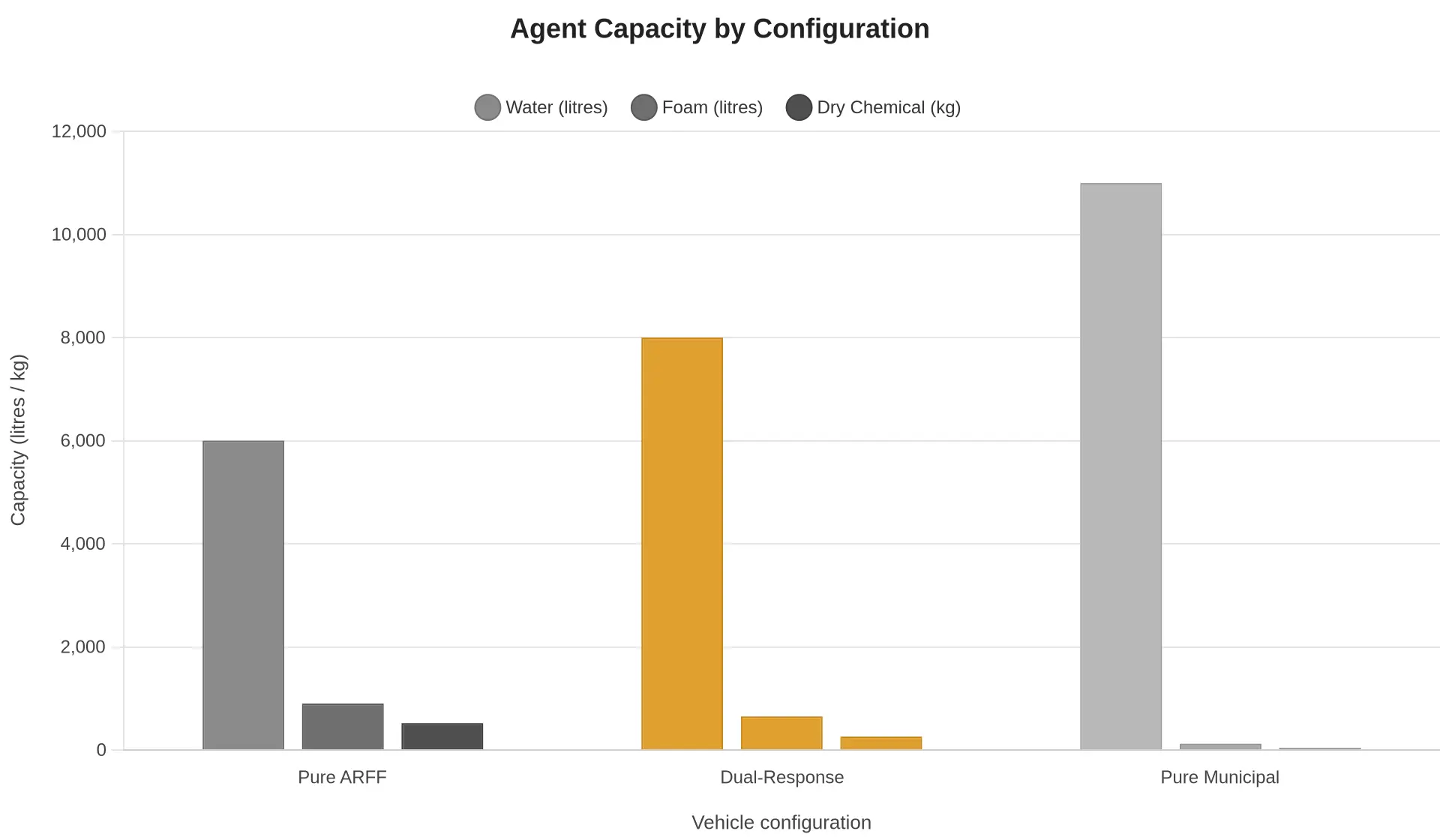
How to read this chart: the outer bars are the extremes. The pure ARFF unit carries the deepest dry chemical shot but modest water; the pure municipal pumper holds the most water with almost no powder. The middle (amber) bars mark the overlap zone, where a dual-response configuration keeps enough foam and dry chemical to knock down a fuel fire while still hauling municipal-grade water. That is the balance point to aim for on a single rig, since the right foam fire truck can be built around exactly that compromise.
Assessing Total Cost of Ownership Before You Commit
Sticker price answers the wrong question. A dual-response apparatus is priced against two separate platforms, so the useful comparison is a five-year cost sheet against a five-year cost sheet. Build it line by line before you sign.
Start with engineering, not hardware. Dual-response specification requires a build package that satisfies both airfield and municipal standards, and that engineering work carries a real invoice. Budget design hours, custom bodywork drawings and the certification documentation set as separate line items. Do not absorb them into general contingency.
Then model the weight. Agent, foam systems and structural equipment add mass and raise the centre of gravity. Heavier axle loads accelerate tyre and brake wear, shorten spring and suspension life and increase fuel burn. Enter tyre replacement cycles and brake service intervals at the rate you see on the loaded vehicle, not the unladen one.
Track agent consumption honestly. Foam concentrate is a recurring operating cost, and a dual-response truck typically carries more of it than a municipal pumper. Estimate annual replenishment from training discharges plus a realistic call volume. Then add the same for compatible agents, and add test-foam disposal fees if your jurisdiction charges them.
Price the certification calendar. Dual-certified apparatus often requires two servicing streams, one for airfield compliance and one for structural response readiness. Map inspection intervals, pump testing, foam proportioner calibration and third-party certification onto a single annual calendar, then cost the labour hours and downtime each one consumes.
Count the crew hours. Cross-training is not free. Multiply training hours per crew member per year by crew size, add instructor time, and convert the total into payroll cost. A dual-response crew needs airfield familiarisation plus structural tactics, so expect that number to sit well above a single-mission crew.
Finish with residual value. Specialised apparatus holds value within a narrow buyer pool; general-purpose apparatus sells to a broader market. Model disposal value at year five for both scenarios and treat the difference as a real cost or credit.
Putting the Numbers Side by Side
Lay that five-year sheet next to the alternative: two dedicated vehicles, one airfield unit and one municipal pumper. Compare total cost per response-ready day, not total cost alone. Then weigh the single dual-response platform against the two-vehicle fleet on acquisition, operating, training and disposal costs combined. Where command and coordination overhead recurs across a fleet, account for it explicitly, including the fire command vehicles and the staffing they imply.
| Five-Year Cost Line | Dual-Response Unit | Two-Vehicle Dedicated Fleet |
|---|---|---|
| Acquisition and spec engineering | Single build package | Two build packages |
| Tyre and brake wear | Higher load per axle | Spread across two lighter units |
| Foam concentrate and agent | Larger onboard reserve | Split by mission |
| Dual-certification servicing | Two compliance streams | One stream per vehicle |
| Cross-training hours per crew member per year | Higher, dual syllabus | Lower, single syllabus |
| Residual value at year five | Narrow buyer pool | Broader buyer pool |
Operators who run this model against commercial fire trucks configured for combined airport and municipal duty usually find that chassis choice drives most of the wear and resale variance. Model all six lines, discount them at your cost of capital, and let the five-year total decide. The cheapest sticker is rarely the cheapest fleet.
Dual-Response Readiness Checklist
Before you sign anything for a dual-role rig, run this list with your chief, your mechanic and your finance lead in the same room:
- Confirm the primary mission. State whether aircraft rescue or municipal structure response leads, so the spec stops drifting.
- Verify chassis and axle payload headroom. Check GAWR and weight distribution with full water, foam and dry chemical aboard.
- Check whether one pump curve satisfies both hose and turret demands, holding rated pressure at the outlets while feeding the roof monitor.
- Confirm foam proportioning accuracy at low and high flow. Test the agent ratio at idle and at full output, not just mid-range.
- Verify dry chemical or combined-agent availability. Decide early whether twin-agent capability is required for fuel-spill scenarios.
- Confirm crew seating and equipment stowage for both roles. Seats, SCBA brackets and tool bays must serve turret operators and hose teams alike.
- Lock training hours into the annual schedule, and book joint drills that put the airport fire trucks and municipal crews on the same schedule before delivery day.
- Confirm the builder supports dual-standard certification documentation. Ask for compliance paperwork up front, not after the build.
The list is written so it can be dropped straight into your tender document as a working annex, with every bidder answering the same questions in the same order. Comparing replies line by line takes an afternoon; decoding eight different proposal formats can take a month.
On the paperwork itself, note that NFPA 414 and NFPA 1901 have both been folded into the consolidated NFPA 1900, which now carries the aircraft rescue, automotive apparatus, wildland and ambulance requirements in one document. At a US airport, the FAA’s vehicle specification (AC 150/5220-10) and Part 139 set what the certificate holder must actually field. Ask each bidder which document it is certifying to, and ask for that in writing.
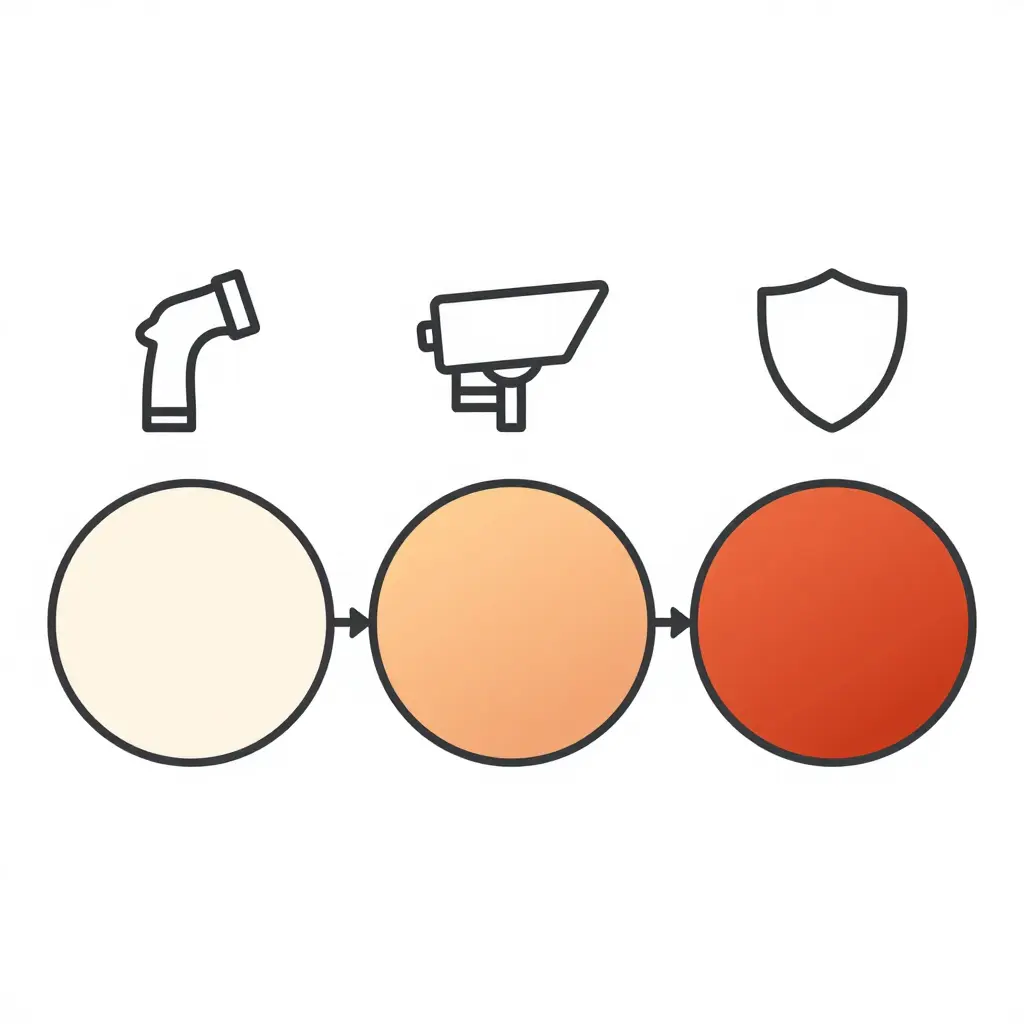
Three-Stage Crew Cross-Training Progression
Dual-role apparatus pays off only when the crew can use both halves of it. This diagram maps the usual ramp-up. Stage 1 is single-mission competence, where a hose crew drills structural fundamentals and learns the pump panel cold. Stage 2 adds turret work and high-volume water delivery, without which an aircraft rescue configuration is expensive decoration. Stage 3 is combined-mission readiness, where the same team moves between structural and airfield scenarios without skipping steps, under one shared set of procedures.
For buyers evaluating airport rescue fire fighting trucks alongside a municipal fleet, the practical point is that specification overlap is the easy half. The progression above is what turns overlapping hardware into a crew that is genuinely safe and fast in both environments, and it usually takes a written training calendar rather than a single demo day.
Production notes
- Recommended aspect ratio: 16:9 (export at 1920 x 1080 px minimum, vector source preferred for print and slide reuse).
- Alt text: “Flat 2D three-stage progression diagram showing crew cross-training for dual airport and municipal response fire truck, moving from single-mission competence to combined-mission readiness.”
- Colour and stroke guidance: one accent colour only, applied as a light-to-solid gradient across the three circles; thin uniform strokes (2 px at 1080p); white background with generous margins for cropping.
- Caption placement: keep all labels and captions outside the image canvas so the artwork stays text-free and localisable.
What to Ask a Fire Truck Manufacturer
Before you commit capital to a dual-role apparatus, treat the supplier conversation as technical due diligence rather than a sales meeting. The questions below are deliberately blunt; a manufacturer that has genuinely built for both airport and municipal duty will answer them without hesitating.
- Do you have dual-standard certification experience? Ask which airport rescue and municipal standards the builder has actually certified to, and request certificates or test reports rather than verbal assurances.
- How do you handle engineering changes when specifications conflict? A credible answer describes a documented change order process, who signs off, and how the customer is notified before the build deviates from the approved specification.
- Can you guarantee spare parts availability across 75 countries? Parts logistics determine uptime, so ask where the regional depots are, what typical delivery lead times look like, and which components are stocked locally rather than shipped from the factory.
- Will you run factory acceptance testing under both mission profiles? Insist on witnessing pump performance, foam proportioning, and acceleration or braking tests configured for airport response as well as structural fire fighting before shipment.
- What training support and documentation do you provide? Clarify whether operator and maintenance training happens on site or at the factory, in what language, and whether manuals, wiring diagrams and parts catalogues are handed over in usable digital form.
- How far does your after-sales service reach? Ask about service engineers within your region, response commitments, warranty terms for bodywork versus chassis, and access to diagnostic support after the warranty period ends.
A manufacturer that maintains both an airport portfolio and an industrial fire fighting line is generally better positioned to balance conflicting requirements, because it has already resolved the tension between rapid intervention and sustained water or foam delivery on real projects. Instead of offering a compromise chassis, it can point to a purpose-built industrial fire truck range and a separate special fire truck line as evidence.
For reference, CIMC Tianda reports more than 20 years of fire truck manufacturing experience and a product and service presence in over 75 countries. Treat the list above as a scorecard: the strongest proposal is usually the one that answers each question with a document, a date and a named contact.
Where the Money Actually Goes Over Five Years
Most buyers fixate on the purchase order and then get surprised by everything that follows. Spreading the spend across a realistic five-year window tells a more honest story, and the running cost of a dual-role fleet has a shape of its own.
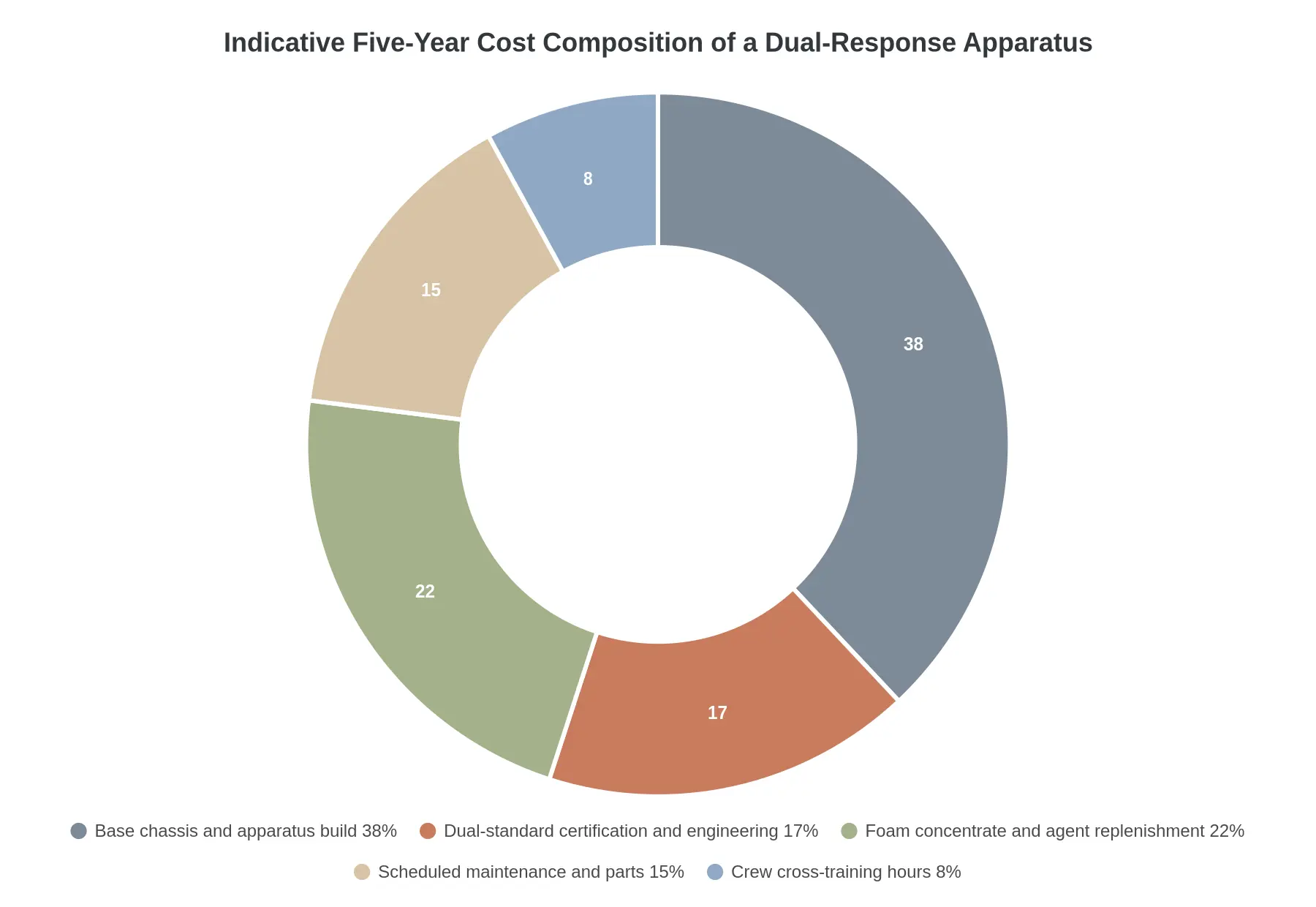
Reading note: the crew cross-training hours segment (8%) is the slice buyers most often underestimate. A dual airport and municipal response operation needs recurring refresher sessions, joint drills and record-keeping against two frameworks, and those hours keep accumulating long after the handover photos are taken.
Frequently Asked Questions
Can one fire truck be certified for both airport and municipal response?
Yes. A dual airport and municipal response fire truck can meet both sets of requirements, provided the chassis, pump and agent systems are engineered to satisfy the stricter requirement in each area at the same time. Since NFPA 414 and NFPA 1901 were consolidated into NFPA 1900, the aircraft rescue and automotive apparatus requirements now sit in the same document, which makes a dual build easier to document than it was a few years ago.
What specification overlap matters most in a dual-purpose build?
Pump capacity and water tank size matter most. A municipal fire truck typically needs 1,000-1,500 gpm while airport response demands rapid agent delivery, so the shared chassis has to carry both a high-output pump and adequate foam tank without exceeding axle ratings.
How much crew cross-training is required to keep dual-response readiness current?
Plan on quarterly joint drills plus annual recertification in both disciplines, which matches the 12-month recurrent training cycle US airport operators are held to. Airport firefighters need structural tactics; municipal crews need runway familiarisation and ARFF vehicle operation. Budget 16 to 24 hours of combined training per responder per year, and more where ARFF skills go unused for long stretches.
Is a dual-response truck more expensive than two dedicated trucks?
No, not usually, though the gap narrows over the service life. One dual airport and municipal response fire truck costs less than a dedicated ARFF unit plus a separate municipal fire truck once you count purchase price, insurance, staffing and one maintenance schedule instead of two. It stops being the cheaper option when call volume in either role is high enough to justify two.
Which manufacturers build both aircraft rescue and municipal fire fighting vehicles?
Several OEMs offer both lines, including CIMC, Oshkosh, Rosenbauer and E-ONE. Buyers should confirm that one factory builds chassis and body, since a true dual airport and municipal response fire truck depends on integrated engineering. Review dedicated aircraft rescue fire fighting models before comparing proposals.
Key Conclusions for Buyers
Dual-purpose apparatus is genuinely buyable. Nothing in the market prevents a single vehicle from covering airport crash response and municipal calls, and the overlap between those two missions is real, if partial. Foam delivery, pump capacity, chassis weight and agent loadouts overlap enough to justify serious consideration. Structural rescue access, hose bed configuration and sustained water supply rarely do. The remaining gap gets closed by people, since crew cross-training decides whether the truck performs as intended or as a compromise neither mission can rely on.
Three conditions justify the purchase:
- The airport’s predicted crash firefighting category and the municipality’s structural call volume both sit in the light-to-mid range, so neither mission is starved of capacity.
- A single crew roster serves both responses, with recurring joint drills covering both mission sets rather than one primary mission and one afterthought.
- Water logistics are solved, typically through a water tanker fire truck sustaining water supply for municipal coverage instead of assuming hydrant networks an airfield perimeter may not provide.
The purchase is not justified when the two missions demand mutually exclusive performance. In that case one truck is simply two half-trucks sharing a single budget line, and both responses suffer.
Fleet planning is shifting toward mission mix rather than vehicle labels. Buyers who map call types, response times and crewing against measured demand, then brief a fire truck manufacturer on that data, end up with vehicles that fit the work, however those vehicles happen to be named in the catalogue.