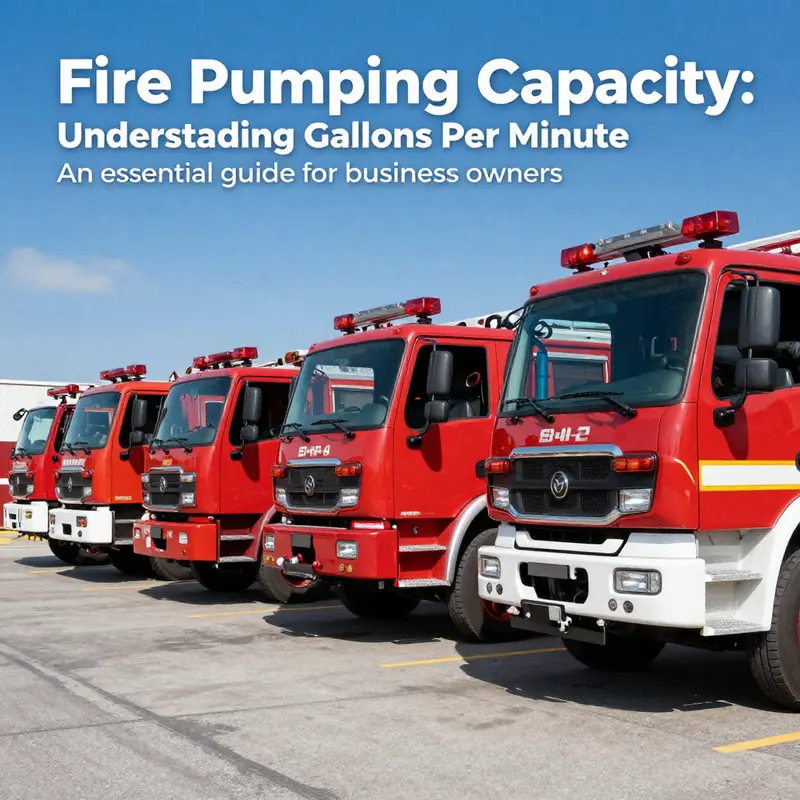
Two ways to buy an ARFF truck, and two contract terms that decide whether the batch saving survives delivery.
An ARFF truck wholesale purchase is a batch order: several aircraft rescue and fire fighting vehicles built to one shared specification and delivered together. A single unit purchase covers one truck, specified for one site and built in its own slot.
The batch has two mechanics worth understanding before you sign. A batch spec freeze is the point where the design and component list stop moving, so every later change applies to every truck in the run. Inspection sampling applies the builder’s quality checks in full to a sample of units and releases the rest on documents.
Both terms read as paperwork at signature and turn expensive at delivery. A freeze signed over an incomplete requirement review copies the omission across the whole run; a sampling plan written loosely lets a fault leave the factory on trucks nobody opened. Neither is hard to fix before production starts.
The table runs the two routes side by side from price to resale; model options sit in the airport fire truck range.
Wholesale Batch Order vs Single Unit ARFF Truck Purchase
| Comparison Dimension | Wholesale Batch Order | Single Unit Purchase |
|---|---|---|
| Unit price and volume discount | Tiered pricing applies from three units upward; discount scales with volume. | List price per truck with no volume discount. |
| Specification flexibility after signing | Changes restricted to minor deviations once tooling and jigs are committed. | Changes accepted until the chassis build start date. |
| Batch spec freeze requirement | One frozen specification and sign-off covers every unit in the order. | Specification frozen for that single unit only. |
| Inspection sampling method | Sample units inspected in full; remaining units released on document review. | 100 percent inspection of the one unit, including road test. |
| Production lead time | Longer lead time for the first unit; following units move through in sequence. | Fixed lead time tied to one build slot. |
| Spare parts commonality | Interchangeable components across the fleet with lower stock holding. | Parts specific to one vehicle, creating unique stock lines. |
| Driver and crew training | One programme delivered to all crews, often bundled into the contract. | Training scoped to one vehicle and its assigned crew. |
| Residual value / resale | Uniform fleet attracts fleet buyers and resale values track together. | Resale depends on the condition and specification of that individual unit. |
A wholesale batch order suits operators building or renewing a multi-station fleet around a stable, pre-approved specification. A single unit purchase suits a department replacing one truck on a short timeline, or trialling a configuration before committing a fleet to it.
What a Batch Spec Freeze Actually Locks In
The freeze is a contractual line. Before it, the chassis, pump, foam system, water tank capacity, monitor, cab layout and electronics package are still negotiable. After it, any of them moves only through a change order. The order of work is fixed: consolidate requirements, clarify the technical points, sign the freeze, release to manufacturing. One order covering several identical units makes that line bite harder, because a single signature binds the whole run.
One frozen configuration buys identical parts, a predictable line rhythm, a single training package and a lower price per unit. It also copies any missed requirement across every chassis. A foam-system change made after the freeze reopens tooling, drawings and inspection paperwork for the entire order rather than one build station.
After the signature. The frozen document becomes the reference at every station on the line. Verbal adjustments stop and change orders begin.
What the batch shares. Common parts, one training package and a steady line rhythm carry across the run, whether the fleet is standard aircraft rescue fire fighting trucks or heavier configurations.
What the batch repeats. A missed requirement ships unit for unit. The freeze protects schedule and cost only to the extent that the review behind it was honest and complete.
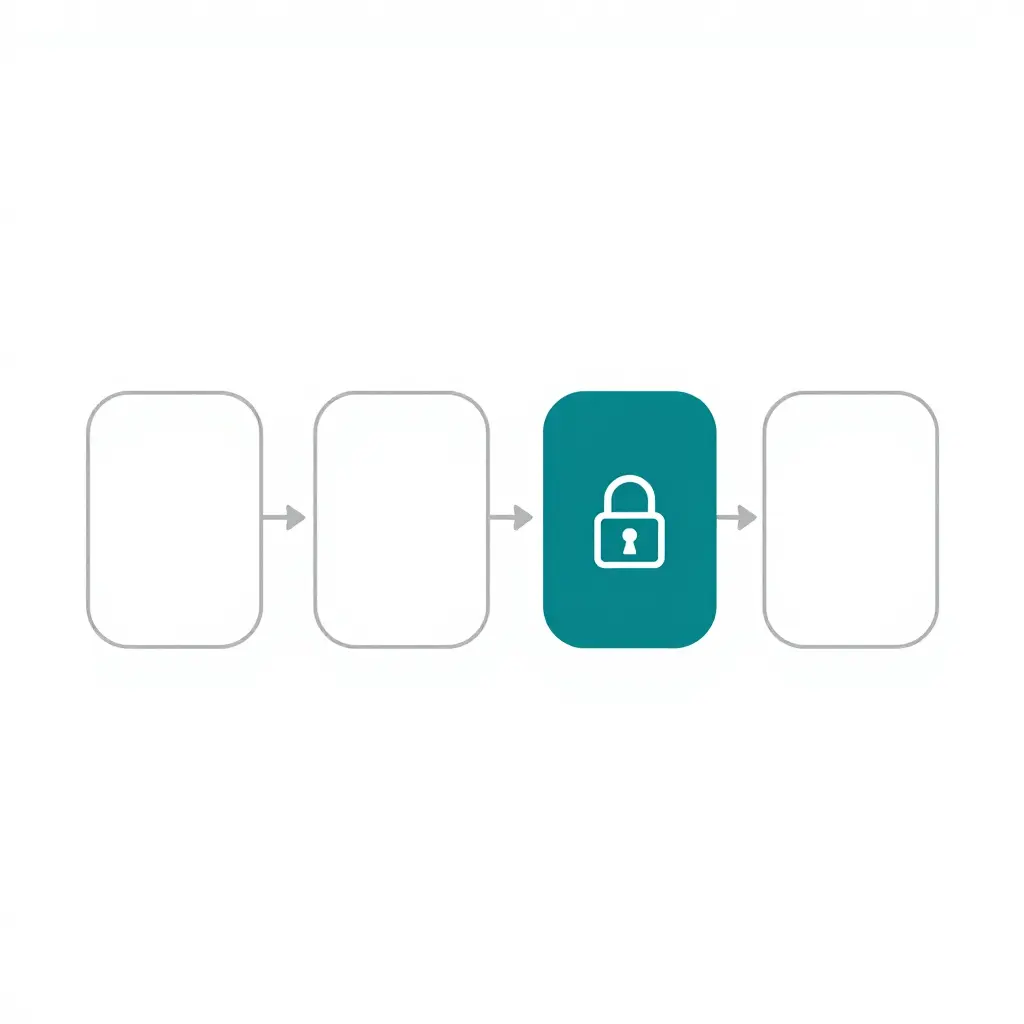
The third block is the freeze point: after the signature, any further change must be processed through a change order.
Inspection Sampling: How Much of a Batch Do You Actually Check?
On a single ARFF truck the buyer can look at the whole unit before payment: pumps, wiring, road test. A batch makes that uneconomic, so airport fire truck fleets built in series buy evidence instead of eyes. You define the lot first, usually one production run on a frozen specification. Then you fix the acceptance quality limit and inspection level in the contract; ISO 2859-1, for example, returns the sample size and acceptance number from those two inputs. Inspectors judge the lot from the resulting sample and the plan says whether that means accept, rework or reject. Small batches can justify a fixed sample of two or three units, which costs less than checking every chassis and still holds up in a contract.
Three inspection layers carry the risk. In-process inspection verifies welds and tank integrity while the body is still open, which is the cheapest moment to catch a problem. The factory acceptance test proves pump and foam proportioning performance and measures monitor reach and flow against the frozen batch specification. Pre-shipment inspection confirms electrical and control logic before dispatch. Letting any of those layers run below the plan moves the cost to your maintenance budget.
Inspection Sampling Steps for a Batch ARFF Truck Order
- Define the lot and batch size. State how many units form the deliverable lot, and whether large orders for airport fire trucks are split into production sub-lots.
- Agree the sampling standard and acceptance quality limit in the purchase contract. Name the standard (ISO 2859-1, for instance) and the AQL before production starts.
- Confirm random sample selection by the buyer or third-party inspector. Samples must be drawn without supplier influence and recorded.
- Run the factory acceptance test on sampled units. Test pumps, foam proportioning, roof monitors and driveline on the selected trucks.
- Record non-conformities and define rework or replacement. Give every defect a disposition and a re-test date.
- Close with pre-shipment inspection and documentation release. Verify certificates and hand over the inspection dossier.
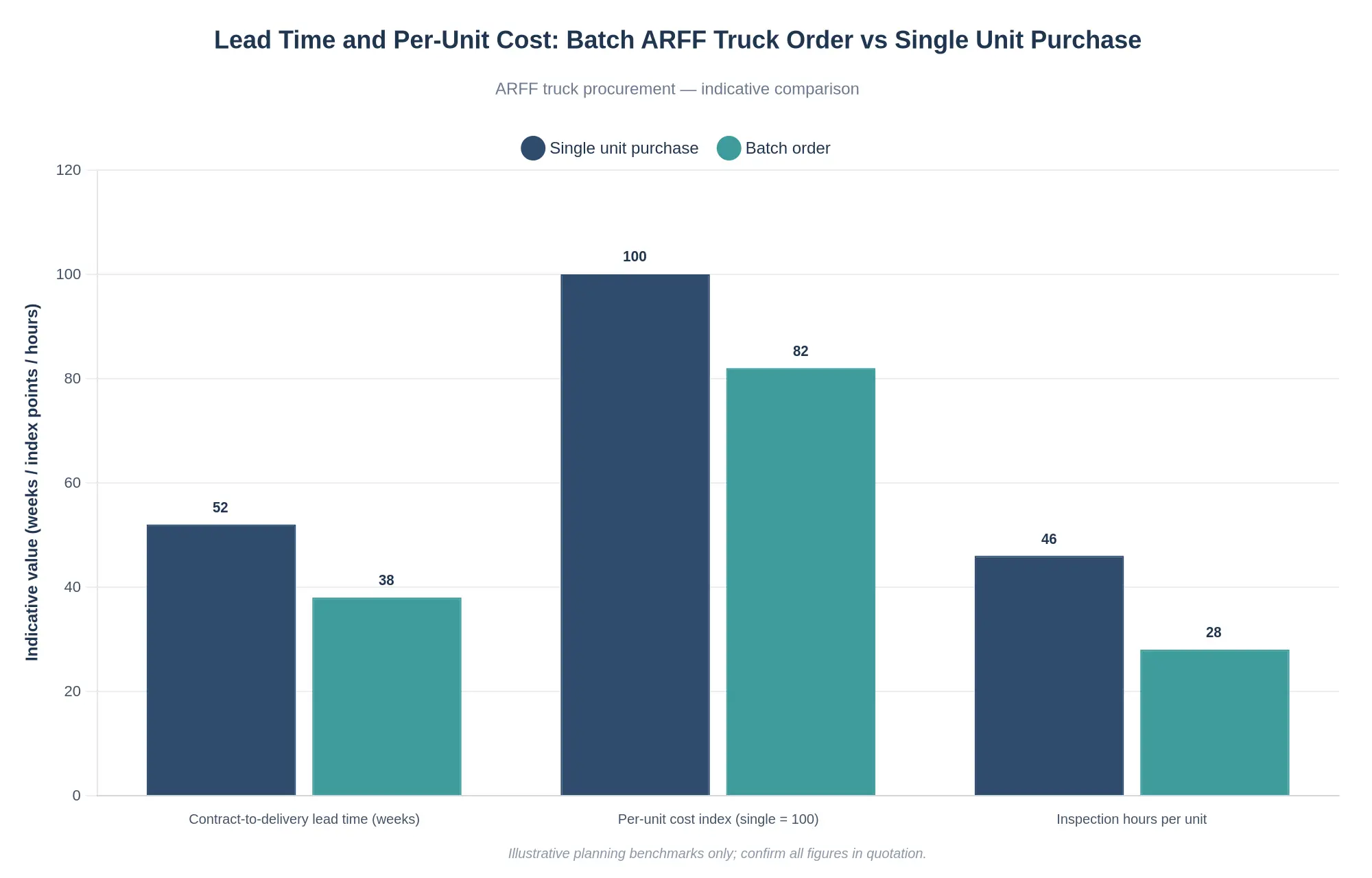
Illustrative planning benchmarks only; confirm all figures in quotation.
In the indicative figures behind the chart, inspection hours per unit fall from 46 on a single-unit purchase to 28 on the batch build.
Where Each Route Exposes You to Risk
A batch order buys price discipline and charges for it in commitment. Once the batch spec freeze is signed, a different pump rating, a larger foam tank or a revised bumper height becomes a change order with its own price and schedule penalty, and the production line waits behind it.
Standardising hard has a second cost that surfaces later: a truck built to the fleet’s common denominator can fit no site well, whether the mismatch is ramp slope, gate width or water supply. Batch deliveries also rely on inspection sampling rather than a full inspection of every truck, so a defect outside the sample can still ship. You also carry the financing and storage of several units arriving at once.
The single-unit route, such as an order placed through our aircraft rescue fire fighting trucks range, runs those pressures in reverse. You pay a higher unit price, take a queue position behind fleet orders and hold less leverage when negotiating inspection terms or acceptance criteria. What you gain is room to specify exactly what your site needs.
Which Purchasing Route Fits Which Buyer
Before you compare quotes, settle one question: are you buying a fleet or a single truck? The diagram below splits that choice along two forces: cost efficiency through commonality on one side, specification freedom for a single site on the other.

Figure 1: The branch is driven by whether fleet-level commonality outweighs site-level specification flexibility.
Most multi-station renewals of aircraft rescue fire fighting trucks end up on the batch path: identical builds mean one spec freeze, one training package and one sampling plan that covers the lot. If you are replacing a single airfield asset with an unusual mission profile, look at airport fire truck models built around that duty cycle instead of accepting a batch compromise.
Choosing Between Wholesale and Single Unit ARFF Truck Supply
The decision follows how the fleet is used, not the unit price alone. Take the wholesale batch route when you are replacing three or more units that share a duty cycle: one specification freeze keeps spare parts commonality high and crew training consistent across every station. It also pays off when you can agree a defensible inspection sampling plan in writing before production, so lot checks give you documented evidence for the entire batch of aircraft rescue fire fighting trucks. Mixed fleets can go this way too, since heavy duty fire trucks and foam fire trucks can sit on one contract schedule.
Choose the single unit route when duty cycles differ sharply across sites, or when an urgent replacement cannot wait for a batch freeze cycle. A single-slot order lets airport fire trucks enter service without holding back the whole programme.
Three quick checks
- Three or more units on one duty cycle: go batch.
- A written, defensible sampling plan is agreed: go batch.
- An urgent gap, or site conditions that do not match the fleet: go single unit.
CIMC Tianda’s own product pages list distribution in more than 60 countries, with service to more than 2,000 fire departments.
Frequently Asked Questions
How many units make an ARFF truck order a wholesale batch?
An ARFF truck order becomes a wholesale batch when one contract covers multiple identical or spec-matched units built on a shared production line, typically three or more. That contract defines the batch for pricing, spec freeze and inspection purposes.
What happens if a requirement is missed after the batch spec freeze?
The missed requirement goes through a formal change order that restates price, delivery schedule and inspection criteria. Units already in production are not reworked automatically; the change order specifies which units in the ARFF truck batch the revision applies to.
What sample size is typical for inspection sampling on a batch order?
Final assembly is usually checked on every unit, with a random sample of two or three units pulled for full performance testing of pump, foam and driveline. The sampling plan, not the whole batch, decides which ARFF truck units get the extended tests.
Can inspection sampling replace a full factory acceptance test?
No. Sampling shows that the run is consistent; it does not by itself prove that the truck you will operate meets its contracted performance figures. The contract should state which units get a full factory acceptance test before shipment and which are released on sampling plus documents.
Is a single unit purchase ever cheaper in total cost of ownership?
A single unit purchase carries a lower upfront price than an ARFF truck wholesale batch, but total cost of ownership also includes parts inventory, crew training and downtime. A batch order spreads those costs across more units, which lowers cost per unit over the fleet’s service life.
A Practical Takeaway for Business Owners
Wholesale batch buying trades specification flexibility for unit price, lead time and fleet commonality, and inspection sampling is the control that makes the trade safe. What settles it is documentation rather than negotiation skill: terms and tolerances on paper before the first chassis is welded. Three things to settle before you commit:
- Freeze the specification against a written requirement review.
- Write the sampling plan and acceptance quality limit into the contract.
- Confirm change-order pricing and delivery impact in advance.
CIMC Tianda builds aircraft rescue fire fighting vehicles and rescue equipment for fleet-level programmes.