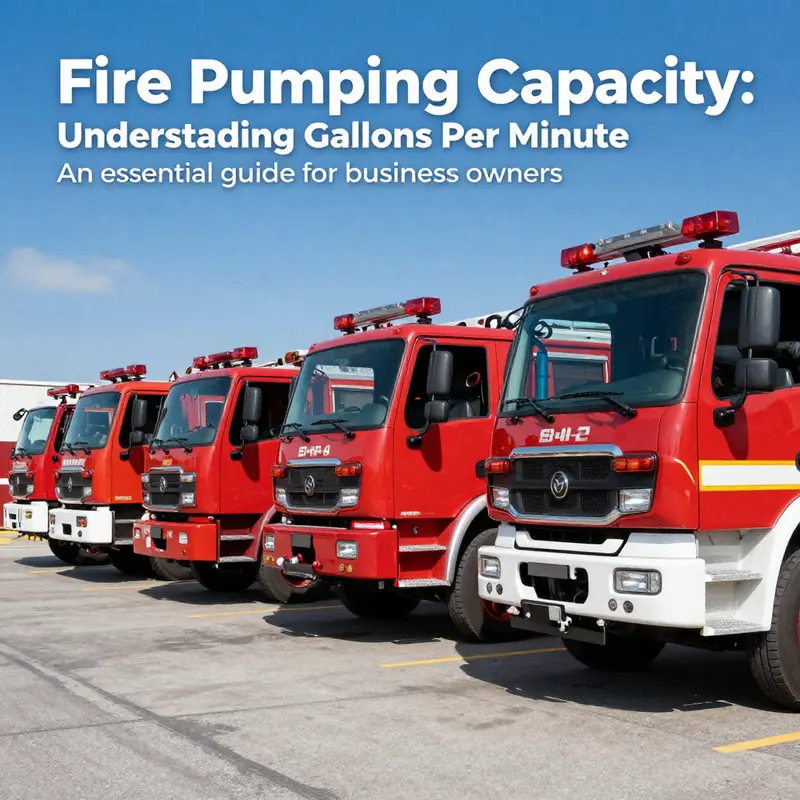
Where to Buy a Fire Truck: Three Acquisition Routes
Before you write a single specification, one decision shapes the rest of the project: where to buy the fire truck. Procurement teams generally have three routes to choose from, and each comes with its own lead time, room for configuration changes, and total cost of ownership. Sorting out those trade-offs at the start is what keeps a budget from surprising you halfway through and keeps delivery dates realistic.
OEM direct order puts your department on the manufacturer’s production line for a truck built to your specification. You control the chassis, pump, body, and equipment layout more than with any other route, but you also wait the longest, because the factory builds on its own schedule, not yours.
Dealer stock means buying a truck that already exists. Delivery is measured in weeks rather than quarters, which fits a department with a gap in coverage or a funding deadline bearing down. The catch is the configuration: it is already fixed, and it may not match everything on your list.
Build slot reservation falls between those two. Reserving a production position ahead of time locks in a future delivery window and still lets you finalize details later, so it works best for departments that plan early.
The three options suit different departments: some need speed, some need a truck engineered around a specific mission, and many need both. The sections below take each route in turn.
OEM direct order and dealer stock are the two routes most departments weigh first. The table below compares them on lead time, flexibility, and availability.
| Purchase Route | Typical Lead Time | Configuration Flexibility | Pricing Structure | Immediate Availability | Best Suited For |
|---|---|---|---|---|---|
| OEM Direct Order | 12 to 24+ months, driven by chassis allocation and scheduled build slot | High – custom chassis, body, pump, tank, and compartment specs built to department requirements | Quoted per unit; final price reflects custom spec and may include escalation clauses | Low – no apparatus until the build is complete and inspected | Departments with unique specifications, long-range planning horizons, and dedicated capital funding |
| Dealer Stock | Days to a few weeks, covering delivery and dealer prep only | Limited – options are those already specified on the in-stock or demo unit | Fixed, often posted or negotiated on the unit as configured | High – ready for inspection, acceptance, and immediate delivery | Departments needing apparatus fast, replacing a unit after a loss, or wanting proven in-stock specs |
Which route is preferable? Dealer stock wins when speed is the priority: replacing a truck after a loss, covering an interim gap, or any department that simply cannot wait. an OEM direct order from our fire fighting truck lineup is the better choice when the department can accept a longer lead time and needs a rig built around its own operations and community.
Dealer Stock: Ready-to-Deploy Apparatus
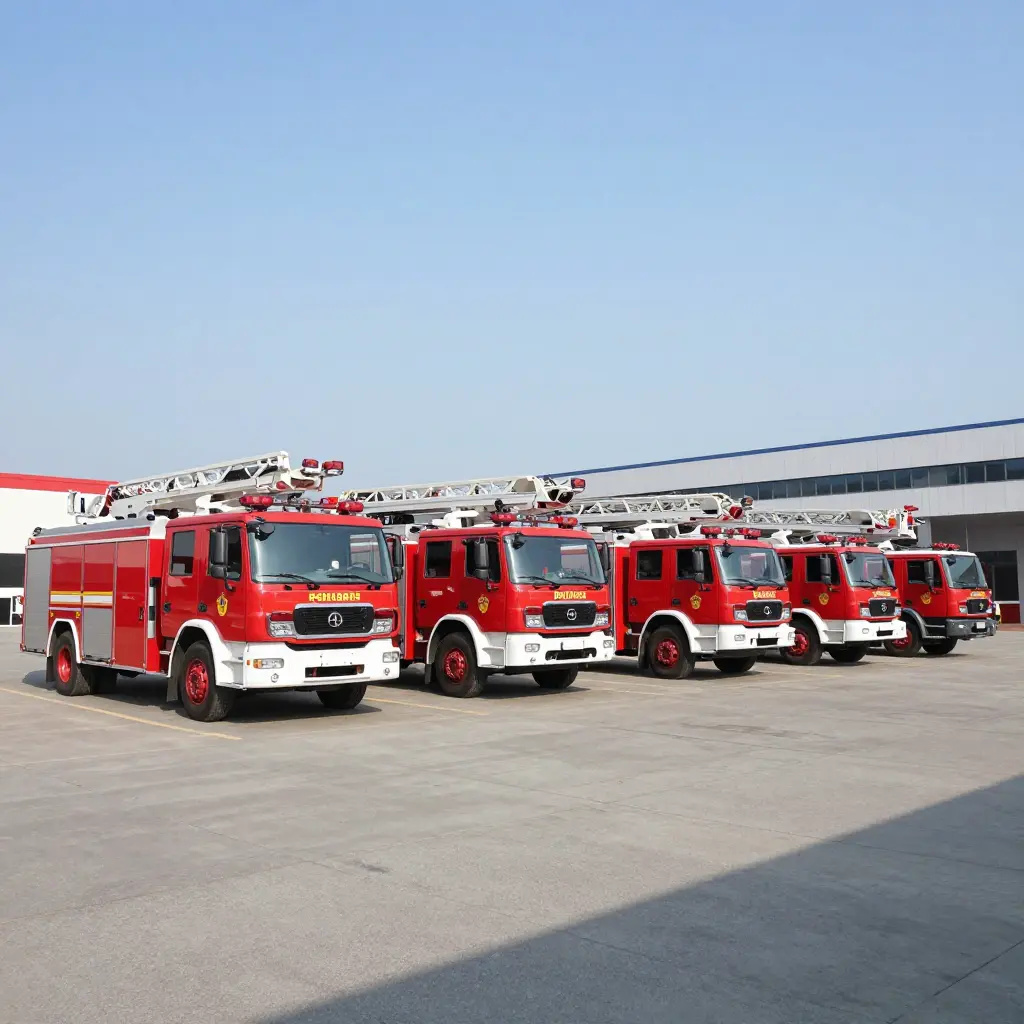
When a department cannot wait out a full manufacturing cycle, a dealer stock fire truck is the fastest route into service. Dealer inventory consists of units manufacturers and dealers have already built and are holding on the lot, ready to be titled, equipped, and delivered.
The Benefits of Buying From Dealer Inventory
- Shorter delivery windows: a fire truck for immediate delivery can often be in service within weeks rather than the many months a custom build requires.
- Pre-built configurations: units usually arrive as pumpers, tankers, aerials, or rescue vehicles already assembled to common specifications.
- Known specifications: buyers can review documented pump ratings, tank capacities, chassis details, and axle ratings before committing.
- Inspection before purchase: departments can physically examine, start, and even pump-test the exact unit they intend to buy.
Limitations to Weigh
Dealer stock trades flexibility for speed. Because the apparatus is already built, customization is limited: adding a specific foam system, reworking compartment layouts, or matching a precise color scheme may not be possible. A stock unit may also miss a department’s operational needs, water capacity target, or equipment mounting requirements.
Departments weighing speed against fit should also compare build slots and OEM direct orders. For many agencies, the answer is a hybrid: buy from inventory now and customize later, or order exactly what is needed when the timeline allows. Reviewing the full range of fire fighting truck options helps buyers match stock availability to real-world response demands.
Build Slot Lead Time: Planning for Production Capacity
A build slot is a reserved position on an OEM’s manufacturing calendar, a defined window in which your specific fire apparatus moves through the assembly line. Because a fire truck is built to order rather than pulled from stock, the build slot lead time fire truck buyers encounter is really a queue: the factory can only complete as many units as its bays, technicians, and component suppliers allow. Reserving a slot is what converts a general interest in a new rig into a firm production date.
Why OEMs Schedule Fire Truck Builds Months in Advance
A fire truck production schedule is finite, and it is shared across every department in a region. Each apparatus blends a commercial or custom chassis, a pump, a water tank, a body, and often an aerial device, and each of those parts arrives from a different supply chain. Scheduling months ahead allows the manufacturer to sequence chassis deliveries, lock in certified pumps and foam systems, and protect against bottlenecks. Without that advance planning, one back-ordered component can stall an entire line. This is why reputable OEMs assign slots well before steel is ever cut.
How a Reserved Slot Affects Your Delivery Date
When you reserve a slot, your delivery date is tied to that window. Every downstream delay, a late specification sign-off, a slow appropriation, or a back-ordered pump, does not push the whole line back; it compresses whatever time remains before your slot. In practice, departments that hold a slot early gain buffer, while those that wait often watch their fire apparatus delivery timeline slip by weeks or months as they chase the next available opening.
Breaking Down Build Slot Lead Time
The phases below represent a typical custom fire apparatus build. Actual duration varies with complexity, so treat these figures as illustrative planning ranges.
| Build Phase | Typical Duration |
|---|---|
| Specification approval | 2-4 weeks |
| Chassis and component sourcing | 8-16 weeks |
| Chassis fabrication | 4-8 weeks |
| Body installation | 6-10 weeks |
| Pump and aerial integration | 4-8 weeks |
| Testing and quality control | 2-3 weeks |
| Delivery and acceptance | 2-4 weeks |
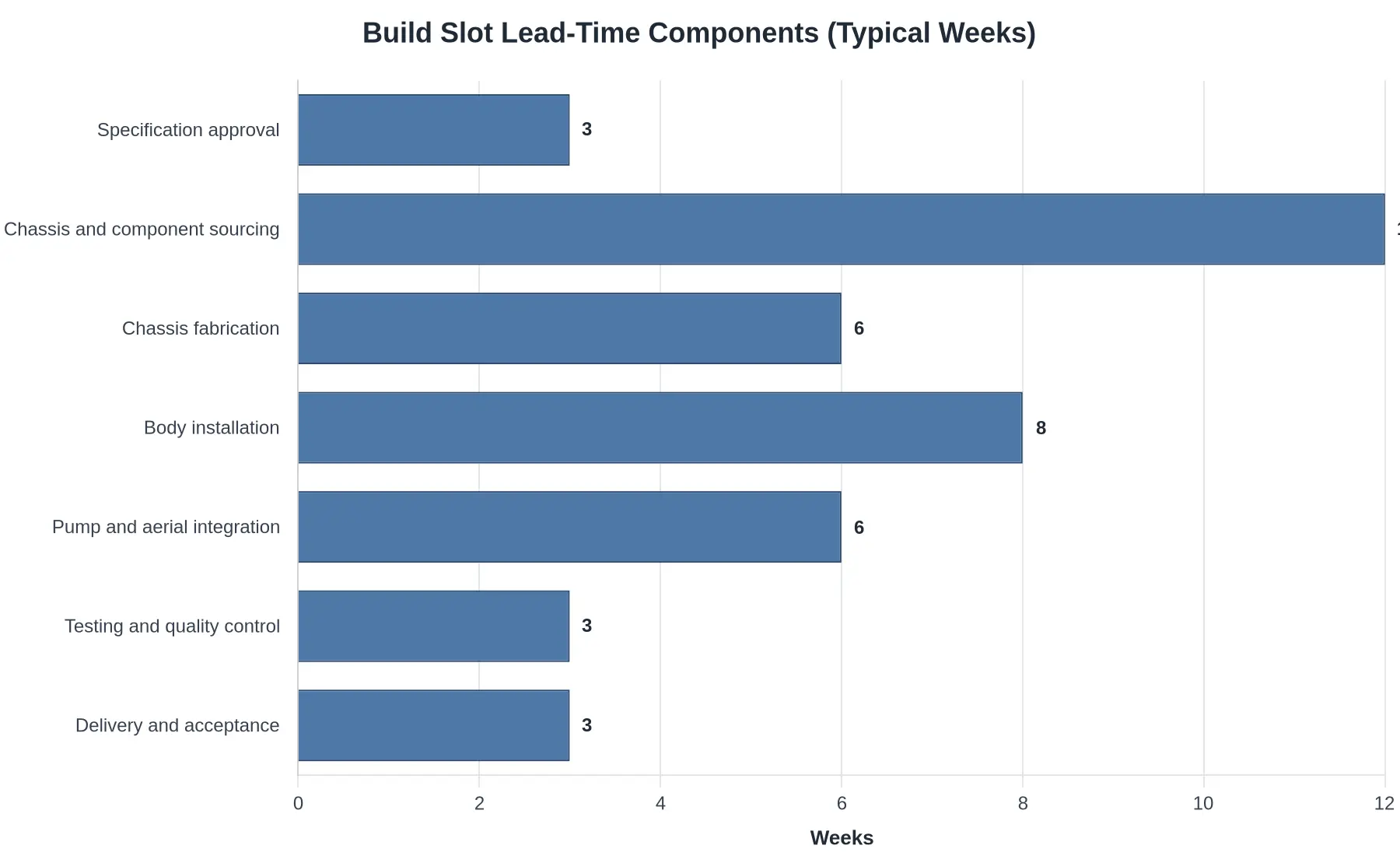
Because sourcing alone can consume several months, the practical lesson is clear: specification work and slot reservation must happen long before you expect keys in hand.
Practical Guidance for Procurement Officials
- Reserve early, finalize later: a slot can usually be secured once budget direction is firm, before every detail is locked. Use that head start to refine specs while the calendar clock runs in your favor.
- Align with your budget cycle: if your fiscal year funds the purchase, reserve the slot in the current cycle so production overlaps with the appropriation rather than waiting on the next one.
- Map grant timelines deliberately: for grant-funded units, work backward from the award’s obligation deadline. A reservation made at award approval protects the delivery window instead of racing the deadline.
- Build in contingency: add several weeks of buffer between scheduled delivery and your in-service target to absorb testing, inspections, and operator training.
Matching your reservation timing to funding and grant milestones keeps the process predictable. To explore configurations that fit your slot and budget, review our fire truck lineup.
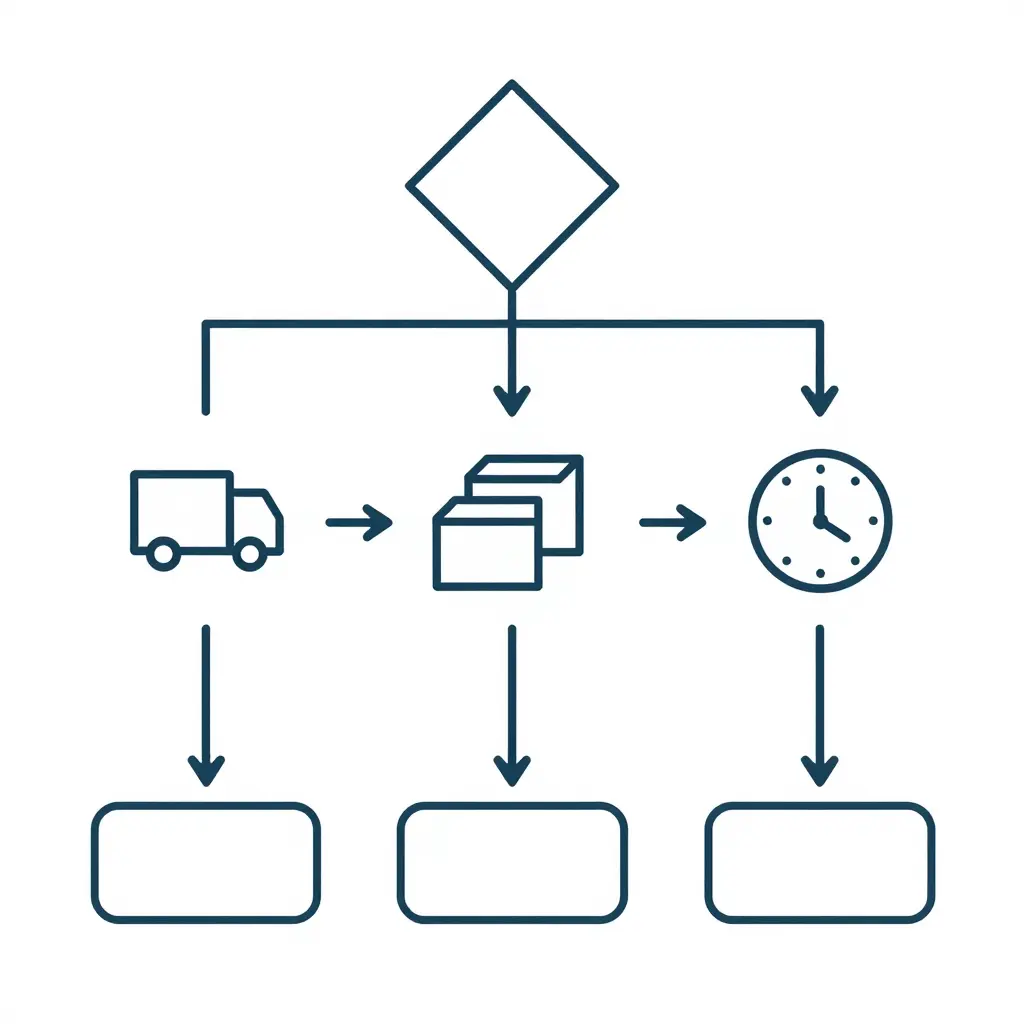
The schematic above maps the three primary fire truck purchasing pathways as a single branching flow. A starting decision node at the top splits into three parallel routes, each ending at a distinct outcome node:
- OEM direct order – represented by the truck silhouette node, where the apparatus is built to your department’s exact specification.
- Dealer stock – represented by the stacked-boxes inventory node, where a ready-to-deliver unit is already available.
- Build slot reservation – represented by the clock node, where a reserved production slot determines the delivery timeline.
Each pathway also includes a checklist node, symbolizing the verification and approval steps a procurement team runs through before committing to a route. The diagram is intentionally label-free so it works as a quick decision framework – compare your timeline, budget, and customization needs against each branch to identify the right route for your fleet.
How to Choose Your Fire Truck Purchasing Route
The factors below are the ones that drive cost, timing, and long-term value. Work through them before you commit to a source:
- Urgency of deployment – Determine how quickly the apparatus must enter service and whether immediate availability outweighs waiting for a factory build.
- Required customizations – Assess whether standard specifications are sufficient or whether the mission demands a bespoke chassis, pump, aerial, or body configuration.
- Total budget and funding deadlines – Confirm the all-in cost, including delivery, and align the purchase with grant cycles or fiscal-year spending windows.
- Long-term maintenance and parts availability – Evaluate access to service networks, warranty coverage, and dependable supply of replacement components such as fire truck parts.
- Desired inspection access – Consider whether pre-delivery inspections, factory visits, or third-party acceptance testing are required.
- Grant or bid regulations – Verify whether cooperative purchasing, sealed bids, or grant-specific rules dictate the permissible procurement method.
- Department growth projections – Factor in call volume, staffing, and coverage-area changes that influence the size, capability, and lifespan of the apparatus.
The answers usually point to a route: urgent needs and little customization favor dealer stock, heavy customization and a long horizon favor an OEM direct order, and a middle position favors reserving a build slot.
Fire Truck Lead Times by Purchasing Route
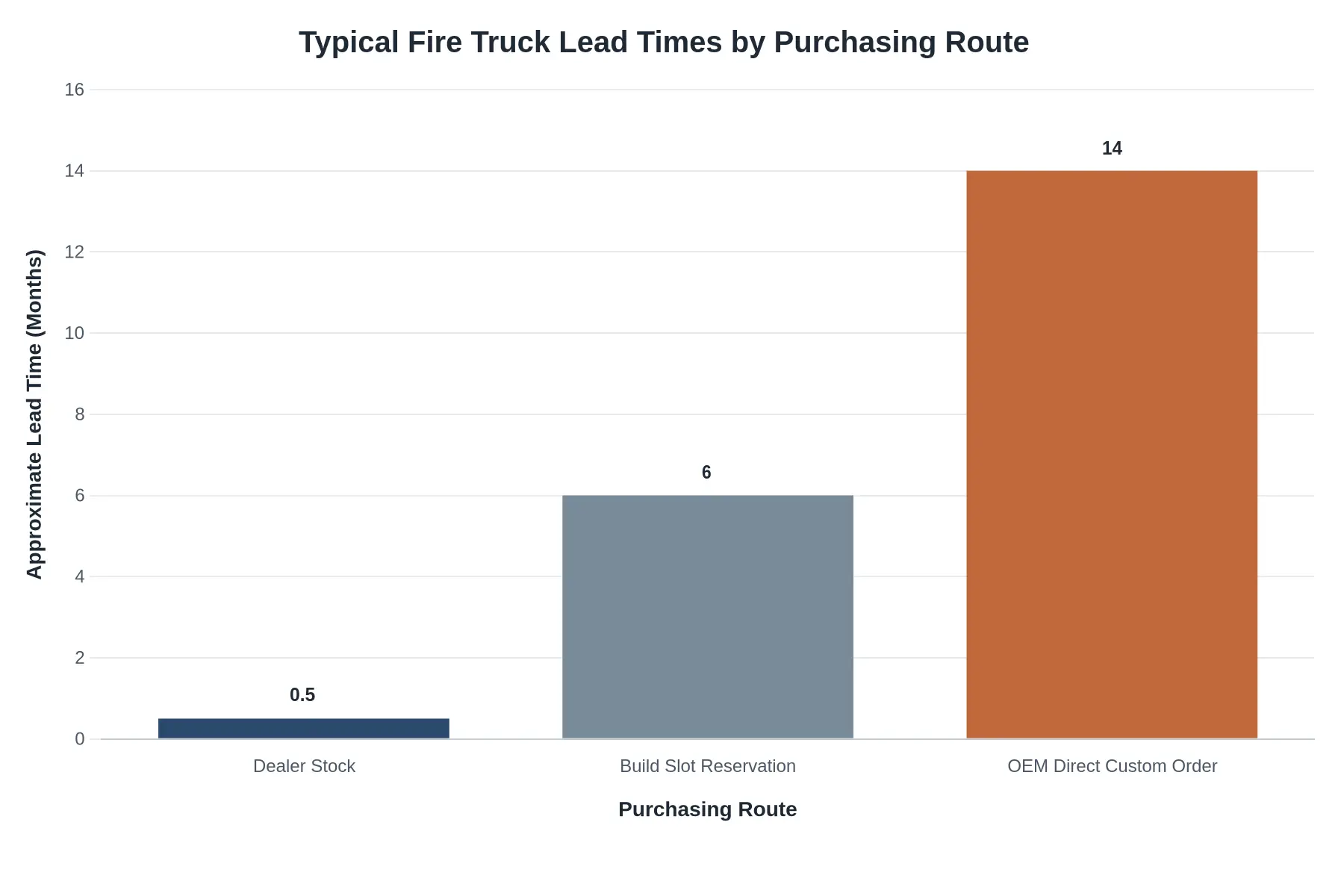
The variable that matters most before a department commits budget dollars is lead time, and it depends heavily on how you buy. The chart below compares the three routes open to municipal and agency buyers: dealer stock, a reserved build slot, and an OEM direct custom order.
Reading the Chart
- Dealer Stock (immediate to a few weeks) – The fastest path. The units are already built and sitting on a dealer’s lot, so delivery can happen in days rather than months. The trade-off is limited configuration choice: you take what is available rather than what is ideal.
- Build Slot Reservation (roughly 6 months) – The middle route. You take a place in a manufacturer’s existing production queue and customize within that slot, trading a moderate wait for real customization.
- OEM Direct Custom Order (longest window) – A fully bespoke, factory-built apparatus engineered to your exact specifications. Expect the longest production window because every component is built to order and the unit moves through the full manufacturing line. The chart plots 14 months as a representative figure; actual ranges commonly run 12 to 24 months or more.
The gap in the chart shows the trade-off plainly: dealer stock and a full custom order are separated by more than a year of waiting. For a department with an aging fleet or an upcoming coverage requirement, that difference decides whether the timeline is achievable at all.
Matching the Route to Your Timeline
| Purchasing Route | Approximate Lead Time | Best For |
|---|---|---|
| Dealer Stock | Immediate to a few weeks | Emergency gaps, budget-year deadlines, unplanned fleet loss |
| Build Slot Reservation | About 6 months | Planned replacements needing moderate customization |
| OEM Direct Custom Order | About 12-24 months | Long-range planning, highly specialized apparatus |
When you evaluate these routes, weigh lead time against how closely the unit must match your operational needs. A department that can accept a standard configuration often gains months of readiness by exploring light fire truck options, while agencies requiring a fully tailored build should plan their procurement cycle a full year or more ahead.
Data source note: Lead times shown are representative industry ranges for new fire apparatus acquisition and can shift based on chassis availability, component supply, and manufacturer backlog. Always confirm current delivery windows directly with the manufacturer or dealer.
Budget, Total Cost of Ownership, and Procurement Rules
A fire apparatus cannot be judged on the invoice price alone. The real fire truck cost of ownership combines acquisition price, financing or lease terms, grant eligibility, resale value, and two decades of maintenance into one lifecycle figure. Build that figure early and your fire apparatus procurement budget will hold up in public review and audit.
Up-front price versus lifecycle cost
The up-front purchase price is the most visible line, but it rarely tells the whole story. A dealer stock unit is priced against the configuration already on the lot, with inventory, transport, and readiness costs built in. An OEM direct order is quoted per unit from your specification, so the price tracks the chassis, pump, and options your call volume and terrain actually require. Explore the full range of fire fighting truck configurations to align specification scope with your operating reality.
Financing, leasing, and grant compatibility
- Financing: Municipal bonds and installment agreements spread cost across budget cycles but add interest expense over the term.
- Leasing: Leases preserve capital but usually restrict customization and can carry mileage or wear penalties.
- Grants: Federal and state grant programs often favor documented need, competitive bidding, and cost-per-capability metrics, which tends to reward a truck specified to the mission over a stock unit carrying options the department did not request.
The table at the end of this section contrasts the two routes across the major cost categories.
Resale value and lifetime maintenance
Apparatus with standardized, serviceable components and complete documentation holds resale value better. Dealer stock shortens delivery when a unit is ready to deploy, but that speed can carry a premium and often limits what can be specified. An OEM direct order trades a longer build slot for a tailored build, standardized parts, and aligned warranty coverage, which lowers lifetime cost.
Procurement rules to apply
- Require a lifecycle cost worksheet, not just a bid price.
- Verify grant compliance and competitive bidding thresholds before committing.
- Weight delivery lead time against specification fit.
- Document residual value assumptions for future replacement planning.
The table summarizes the trade-offs officials should weigh.
| Consideration | Dealer stock | OEM direct order |
|---|---|---|
| Up-front price | Reflects dealer inventory and readiness costs | Quoted per unit against your specification |
| Delivery time | Shorter, ready to deploy | Longer build slot lead time |
| Financing/lease | Standard terms | Flexible, grant-friendly |
| Resale value | Moderate | Often higher (standardized specs) |
| Lifetime maintenance | Standard | Often lower (tailored, serviceable) |
Treat the purchasing route as a financial decision, not only a logistics one, and match it to the funding, deployment, and replacement strategy your jurisdiction can sustain.
Explore Fire Truck Configurations by Category
Start with the platform, not the paperwork. Reviewing product categories first lets a procurement team line up a mission with the right acquisition route: an OEM direct order, a reserved build slot, or a dealer stock inquiry. The breakdown below maps each product line to the need it serves, so a department can settle on a platform before requesting pricing or lead times.
Structural and support platforms
- Fire fighting truck – the general-purpose pumper that anchors most municipal, county, and volunteer fleets. It is the standard starting point for OEM orders and the most common class held as dealer stock. See the fire fighting trucks line.
- Water tanker fire truck – bulk water transport for rural, non-hydrant, and supply-line operations; usually built to order around tank and pump sizing.
- Foam fire truck – Class B and flammable-liquid suppression for fuel, chemical, and industrial risks.
- Aerial ladder fire truck – elevated access and reach for high-rise, commercial, and rescue work; a typical build-slot item given chassis complexity.
Specialized and high-hazard platforms
- ARFF aircraft rescue fire fighting – airfield response sized to airport index requirements, ordered through a dedicated ARFF aircraft rescue fire fighting build.
- Industrial fire truck – refinery, plant, and high-hazard facility protection.
- Fire command vehicles – incident command, coordination, and communications support.
Compact, remote, and technology platforms
- Fire fighting ATV – wildland, off-road, and rapid first-response access.
- Fire fighting drone – aerial reconnaissance and situational awareness.
- Fire extinguishing robot – remote interior attack for high-risk environments.
| Category | Best-fit acquisition need | Typical route |
|---|---|---|
| Fire fighting truck | Structural / municipal response | OEM order or dealer stock |
| ARFF | Airport / airfield | OEM order |
| Industrial | High-hazard facilities | OEM order |
| Aerial ladder | Elevated access | OEM order or build slot |
| Water tanker | Bulk water supply | OEM order or dealer stock |
| Foam | Flammable liquids | OEM order |
| Fire fighting ATV | Off-road / wildland | Dealer stock |
| Fire command vehicle | Incident command | OEM order |
| Fire fighting drone | Aerial reconnaissance | Dealer stock |
| Fire extinguishing robot | Remote interior attack | OEM order |
Once a category is shortlisted, buyers can buy fire apparatus online by submitting a configuration request, checking available build slots, or confirming dealer inventory for faster delivery. Settling the platform now keeps the later steps, from specification to quoting to scheduling, pointed at the right truck.
Choosing the Right Fire Truck Purchasing Route for Your Department
Any successful acquisition comes down to one of three routes, each matched to a different set of priorities. Dealer stock fits when speed dominates and a nearby unit already meets your core requirements. A build slot serves a department that plans ahead and needs meaningful customization but can work within the manufacturer’s calendar. An OEM direct order delivers a fully tailored truck for an agency whose specifications, budget cycle, and fleet strategy call for one built from the ground up.
| Purchasing Route | Best When | Typical Lead-Time Profile | Customization Level |
|---|---|---|---|
| Dealer stock | Immediate need, proven configuration | Fastest – units ready now | Low to moderate |
| Build slot | Planned acquisition, moderate tailoring | Moderate – queued production | Moderate to high |
| OEM direct order | Fully tailored, strategic fleet build | Longest – full design and build | Highest |
There is no single right answer to “where to buy a fire truck”. It comes down to urgency, budget, and configuration needs together. A department facing an imminent coverage gap weighs dealer availability differently than one working through a multi-year replacement plan. A tight budget may point to factory-direct pricing, while unique mission requirements may justify the wait for a custom order.
Your Next Steps
From here the process is straightforward:
- Document your specifications – capture pump capacity, tank size, chassis, aerial or rescue needs, and any special equipment that reflects your response environment.
- Confirm your timeline and budget against the three routing options above.
- Contact a manufacturer or dealer directly to review available fire fighting truck configurations and match your requirements to the right delivery path.
Fire chiefs and procurement officials who define their needs clearly and engage suppliers early are the ones who get apparatus on schedule and within budget. Establish your priorities first, then start the conversation.