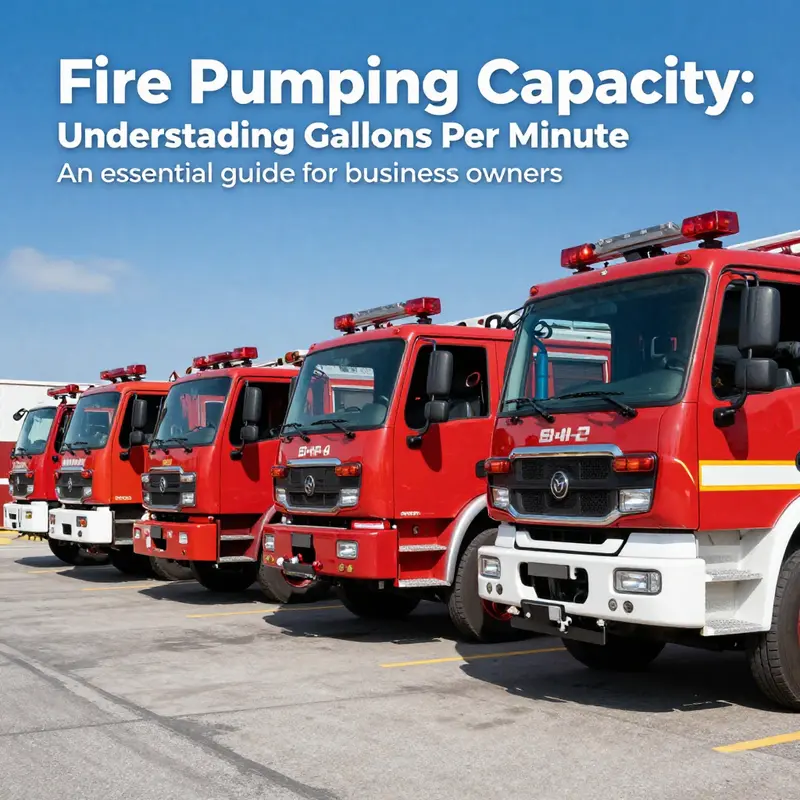
Pump Engagement Failure on Airport Fire Trucks: PTO Spline Wear and Control Air Leaks
An airport fire truck (ARFF) carries a large volume of water and foam, but none of it reaches an aircraft fire until the pump is turning. That happens at pump engagement, the moment engine torque leaves the chassis transmission through the power take-off (PTO) and reaches the fire pump. If the PTO does not fully engage, the truck can sit on the apron fully loaded with agent and discharge nothing. A few seconds of delay puts the first water on the fire later; a complete failure to engage leaves the crew with no suppression at all.
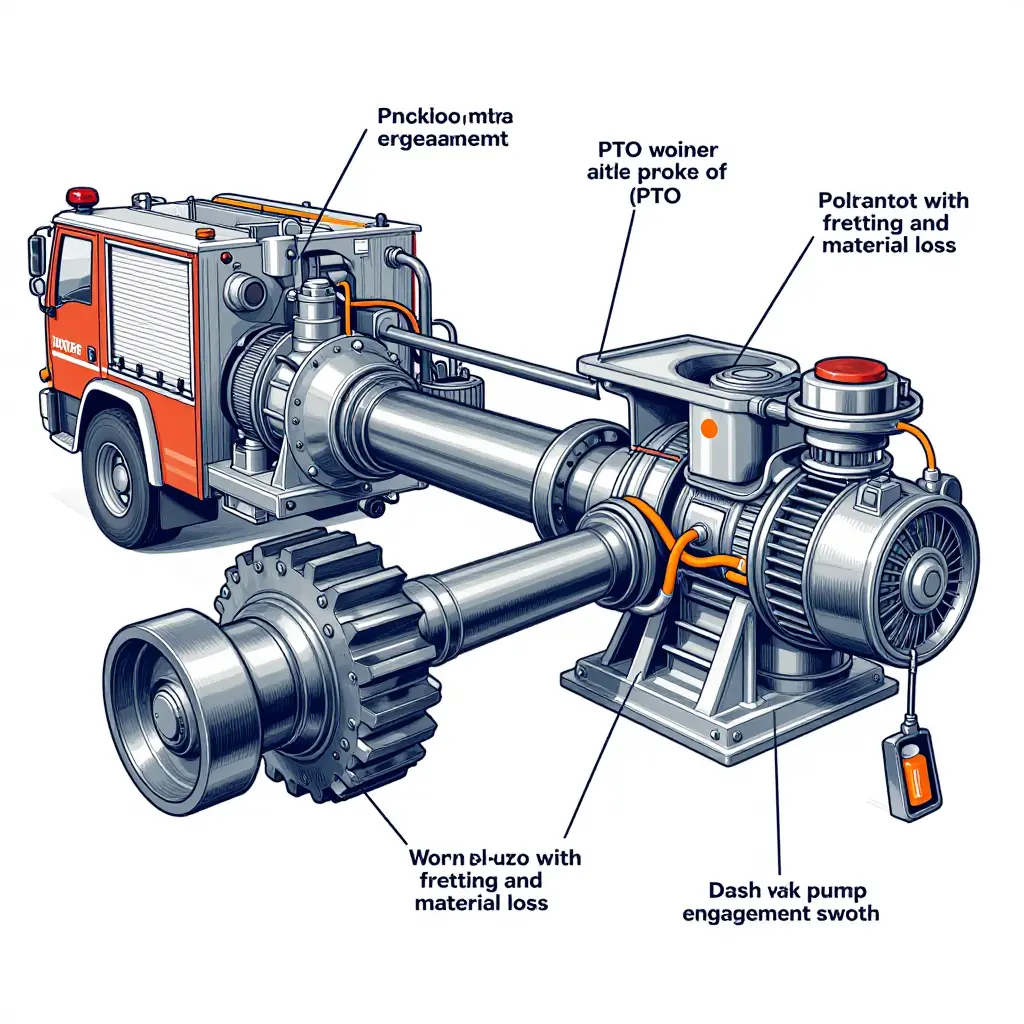
On trucks from many China airport fire truck manufacturers, two linked failures account for a large share of reported engagement faults. The first is PTO spline wear: repeated engagement cycles, thin lubrication, and driveline misalignment let the spline teeth fret and shed material. Backlash grows, metallic debris shows up in the housing, and eventually the PTO slips or will not seat under load. The second is control air leaks in the pneumatic circuit that strokes the PTO and the pump shift mechanism. A leaking line, fitting, or valve actuator cuts the air pressure and volume reaching the shift fork, so the PTO engages slowly, partway, or not at all – and the partial mesh it does reach wears the splines faster.
The rest of this article follows the problem the way a technician does, from what a crew notices to what gets measured and replaced:
- Symptoms crews report: slow or no pump engagement, grinding or rattling on engagement, pump pressure that decays under load, and repeated PTO dropout during pumping operations
- Root causes: spline tooth wear and backlash, thin lubrication, misaligned PTO-to-pump driveline geometry, and air leaks in the control circuit, hoses, fittings, and shift actuators
- Inspection and diagnosis: air pressure and leak-down testing, spline wear measurement, backlash checks, and pump performance verification under rated load
- Repair and replacement: spline and PTO overhaul options, seal and pneumatic component replacement, alignment correction, and changes to the lubrication schedule
- Prevention and procurement: specification and inspection criteria for buyers evaluating airport fire truck manufacturers and their after-sales parts support
The two faults feed each other: a leaking control circuit causes partial engagement, and partial engagement destroys splines. Treat a no-engage complaint as one driveline-and-control problem, not a pump problem.
How the PTO Delivers Engine Torque to the Fire Pump
On an ARFF fire truck, the fire pump has no engine of its own. A power take-off (PTO) taps the main driveline and sends engine torque to the pump, but only when the truck is stationary and pumping mode is selected.
The Driveline Path
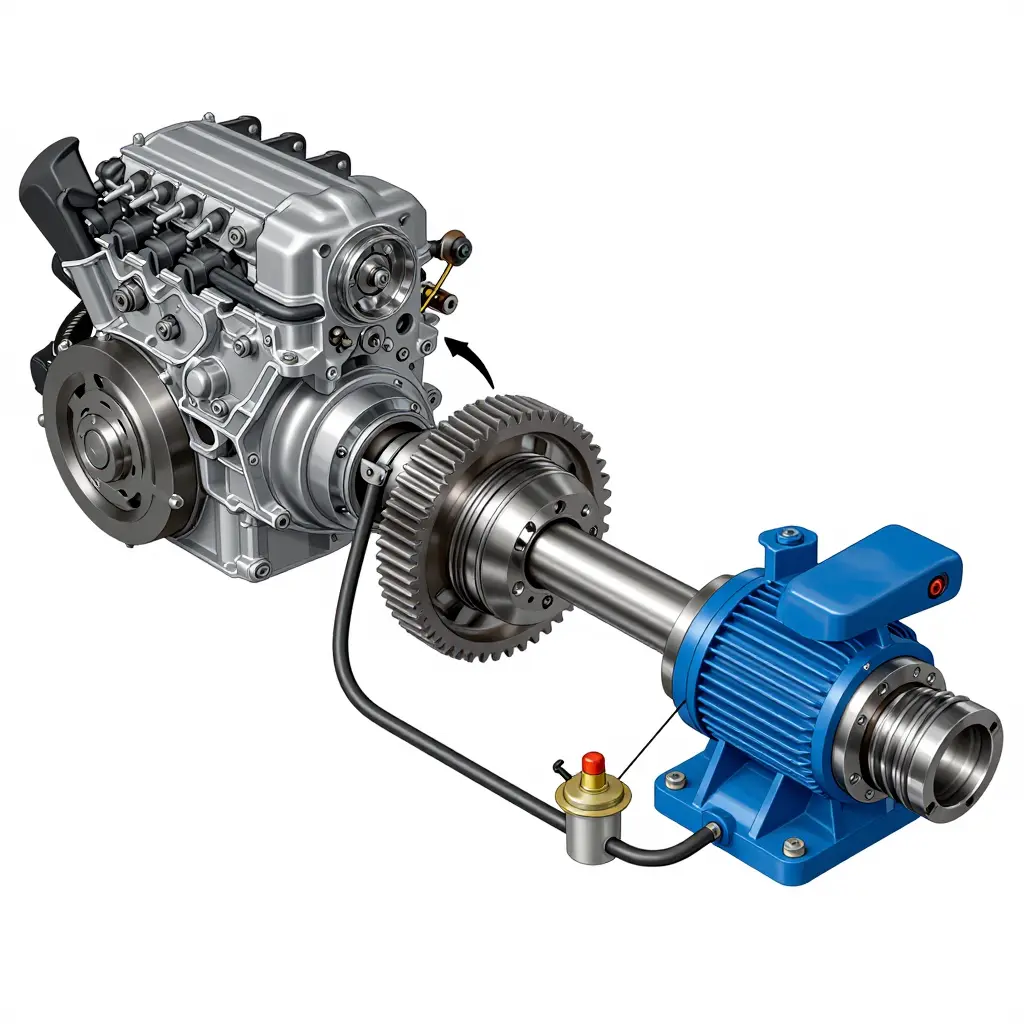
Torque starts at the crankshaft and flywheel and passes into the PTO housing, which bolts to the flywheel or transmission housing. Inside, an idler and gear set steps speed up or down to match the pump’s rated rpm, then hands torque to the PTO output shaft. That shaft couples to the pump input shaft, which spins the impeller. Pump output depends on input speed, so losses anywhere in the chain show up as lower flow and pressure than the nameplate rating – the same ratings covered in our guide to fire truck pump capacity.
The Spline Coupling
The spline coupling links the PTO output to the pump input shaft. Its internal and external teeth let the two shafts sit slightly out of line, radially and axially, while still carrying full torque. As the teeth wear, backlash grows, the coupling can slip or strip, and pump engagement turns unreliable. It is a frequent failure point on trucks from some Chinese manufacturers.
Air-Actuated Engagement
The driver controls engagement from the cab. A dash switch energizes a solenoid air valve, which sends the truck’s air supply to a cylinder that moves a shift fork. The fork slides a dog clutch or gear into mesh with the PTO geartrain, completing the mechanical link. Most systems run at 60-120 psi, and an interlock blocks engagement unless the transmission is in neutral and the parking brake is set. A leaking air line or a weak cylinder leaves the PTO partway into mesh, and the splines and gears wear early.
Quick Inspection Points
- Spline wear, fretting, and backlash at the coupling
- Air pressure at the cylinder and shift-fork travel
- Grinding or no-mesh symptoms during pump engagement
- Interlock switch and solenoid-valve function
PTO-to-Pump Driveline Schematic: The Torque Transfer Path
The schematic follows mechanical power from the truck’s engine to the fire pump. Left to right, torque leaves the engine, enters the PTO housing, crosses the splined coupling, runs along the rotating drive shaft, and turns the fire pump impeller. The dashed arrow entering the PTO housing is the air-actuated control signal that engages and disengages the driveline.
The layout shows why the two failure points sit where they do. The splined coupling takes the load and wears with every engagement; the air line carries the signal that decides whether the driveline connects at all. Worn splines increase backlash and make torque transfer uneven; a leaking control line can keep the PTO from seating. Before blaming the pump, check spline condition and the air circuit. For how pump output is rated once engagement is good, see fire truck pump capacity.
The table below maps spline condition to symptoms a crew can see, so severity can be judged before a failure leaves the truck parked on the apron. Backlash is measured at the PTO coupling and should be checked against the OEM tolerance for that pump drive, since pump capacity ratings and driveline torque loads differ across ARFF chassis classes.
| Wear Stage | Spline Condition | Observable Engagement Symptom | Backlash Level | Recommended Action |
|---|---|---|---|---|
| Normal | Full tooth profile, uniform contact pattern, intact grease film | Clean engagement, no audible rattle, instant pump spin-up | < 0.5 deg (within OEM spec) | Maintain lubrication schedule; inspect annually |
| Early Wear | Polished flanks, minor fretting, light discoloration on drive side | Slight engagement delay, faint intermittent rattle under load | 0.5 – 1.0 deg | Re-grease with high-pressure EP compound; monitor every 500 engine hours |
| Advanced Wear | Flank pitting, step wear, visible backlash gap, grease starvation | Delayed or partial engagement, audible clatter, pump cavitation spikes | 1.0 – 2.0 deg | Schedule shaft and sleeve replacement; limit heavy pump-load operation |
| Severe / Failure Risk | Tooth thinning, cracking, spline stripping, fretting corrosion | Total loss of engagement, pump fails to spin, metal debris in housing | > 2.0 deg | Remove truck from service; replace spline coupling and PTO shaft |
Use the symptoms column to trigger a field diagnosis, then the backlash column to confirm severity with a dial indicator or feeler gauge before committing to a repair scope.
Root Causes of PTO Spline Wear on Airport Fire Trucks
Every litre of foam solution an ARFF truck throws passes through the PTO spline teeth. When PTO spline wear goes unchecked, pump engagement gives out exactly when the crew needs full output. The common reasons the teeth wear early are below.
The Spline Interface Under Load
The PTO output shaft engages the pump drive gear through a male-female spline coupling. It is made to slide a few microns while carrying torque that can exceed 1,500 Nm at full flow. Sliding plus heavy load makes the joint sensitive to any loss of lubrication.
Poor Lubrication
Splines need a high-pressure, water-resistant grease film; without it, the small movements of normal operation turn into metal-on-metal abrasion. A dry or under-greased joint loses that film within weeks, and the loaded flanks start wearing almost at once.
Misalignment
If the PTO output and the pump input sit out of line – angularly or radially – the teeth carry load on only part of their designed face. The concentrated stress leaves the scalloped, one-sided wear pattern seen on couplings that come out of service failed.
Torque Overload During Rapid ARFF Deployment
Emergency response is hard on drivelines. When a crew engages the pump at high engine rpm with the system already turning, shock torque spikes can briefly exceed the spline’s design yield and deform the tooth geometry for good.
Inadequate Hardening and Materials
Some low-cost production skips proper induction hardening or case-depth control, leaving the tooth flanks too soft to resist fretting fatigue. How manufacturing quality shapes ARFF fleet safety explains why an airport fire truck manufacturer with real metallurgical control builds splines that last thousands of engagements, while cheaper units fail early.
Contamination
Foam concentrate, de-icing fluid, runway grit, and wash-down water get past worn seals and mix with grease, forming an abrasive paste that grinds the flanks with every rotation.
From Micro-Fretting to Full Spline Stripping
The damage follows a fixed order:
- Micro-fretting – tiny amplitude slip generates reddish oxide debris as the protective film breaks down.
- Fretting corrosion – pitting and tooth thinning remove load-bearing material.
- Tooth deformation – overload spikes flatten and round the flanks, widening backlash.
- Full stripping – enough material is lost that teeth shear away, and pump engagement collapses under load.
Correct grease, alignment checks, and properly hardened components interrupt the cycle before it reaches stripping.
Where Pump Engagement Actually Fails: A Field-Report Breakdown
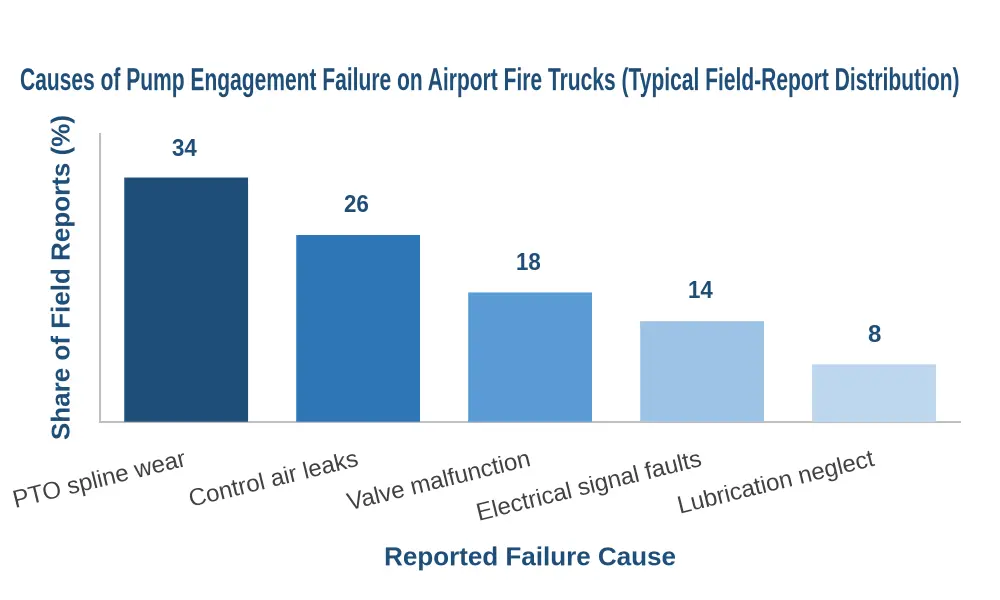
An airport fire truck that will not build pressure looks the same on the gauge no matter what is wrong. In a typical sample of field reports from ARFF crews and maintenance technicians, five mechanisms account for nearly every pump-engagement complaint. The split is below.
Typical Field-Report Distribution
| Reported Failure Cause | Share of Field Reports (%) |
|---|---|
| PTO spline wear | 34 |
| Control air leaks | 26 |
| Valve malfunction | 18 |
| Electrical signal faults | 14 |
| Lubrication neglect | 8 |
Reading the Chart
Mechanical wear and pneumatic control problems dominate the list. PTO spline wear alone is about a third of reported engagement failures, which makes the spline interface the first place to look. Splines that carry engine torque into the pump transfer case fret, dull, and develop backlash, and the pump either spins weakly or will not engage under load.
Control air leaks are close behind. Most ARFF pump engagement is air-actuated, so a small leak – a tired fitting, a cracked line, a sticking shuttle valve – can drop pilot pressure below what the actuator needs to stroke fully. The result is a partial engagement, like a clutch that never quite grabs.
Valve malfunction and electrical signal faults cover cases where the command is issued but never carried through. Lubrication neglect ranks last, and that is misleading: poor lubrication is usually what accelerates the spline wear at the top of the chart.
Why the Chart Matters for Buyers
For fleet managers comparing Chinese airport fire truck manufacturers, the numbers make a short due-diligence list. Ask how the PTO splines are heat-treated, how the air-control circuit is sealed and tested, and what lubrication interval is specified for the pump transfer case. A vendor who answers all three is covering the causes behind roughly 78 percent of reported engagement problems. A crew tracing a no-engage fault can work the same order: splines first, then pneumatic leaks, then the control valve, then the electrical command. If the pump spins but will not prime once engaged, diagnosing fire pump priming failures is the next step; a worn or leaking engagement system often hides a deeper priming fault.
Control Air Leaks in the PTO Engagement Circuit
On an airport fire truck, the pump moves water only after the PTO locks in. That shift is usually pneumatic, and it needs a pneumatic circuit that holds steady pressure. Small control air leaks are easy to pass over in the shop, but they are a common reason PTO engagement stalls, slips, or grinds.
How the Pneumatic Circuit Works
The circuit runs in a fixed order: air reservoir, engagement control valve, airline fittings, seals, then the PTO actuator. The reservoir stores compressed air; the control valve admits it on command; the actuator turns that pressure into a linear shift that slides the PTO gear into mesh with the pump drive. Every joint along the way can leak.
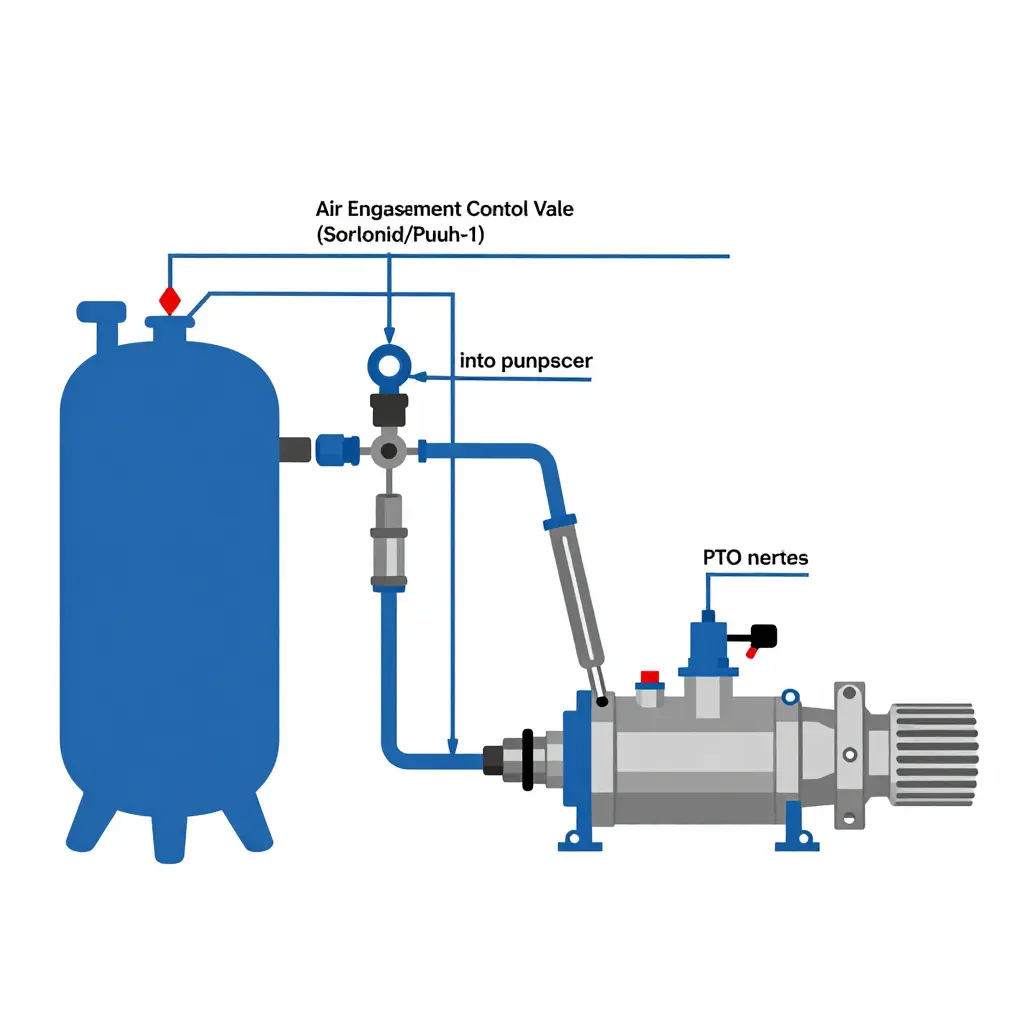
Where Control Air Leaks Hide
- Fittings and push-to-connect elbows that loosen with constant vibration.
- O-rings and actuator seals that harden in cold or contaminated air.
- Valve spool seals that weep only under load, not at idle.
Why a Slow Leak Kills PTO Engagement
A slow leak rarely produces a clean failure. It bleeds pressure while the actuator is still moving, and once line pressure drops below the minimum engagement threshold, the actuator cannot push the PTO fully into mesh. Engagement turns partial or delayed, and the spline teeth carry load at the tip, where they heat and wear quickly.
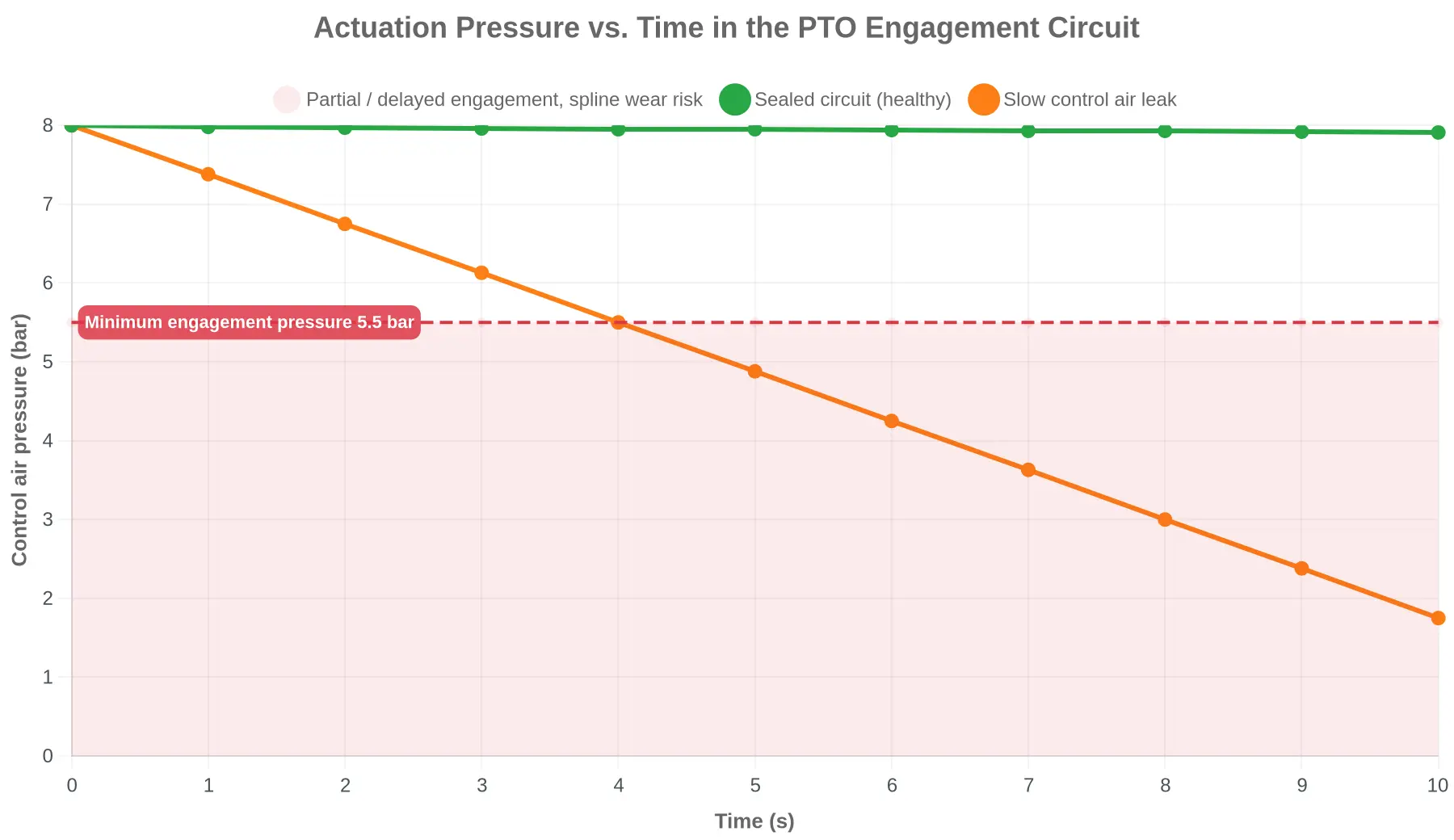
When Leaks and Worn Splines Fail Together
Leaks and worn splines make each other worse. A leak gives weak, sliding engagement; worn splines need precise, firm engagement to mesh cleanly. Partial engagement then accelerates the wear, and worn splines tolerate less pressure, so even a minor leak is enough to block a clean lock-in.
What Crews Should Do
Pressure-test the circuit while it is hot, replace the cheap fitting or seal before blaming the actuator, and check splines at every PTO service. Buyers should compare how airport fire truck manufacturers document pneumatic test points and PTO service intervals.
Where Control Air Escapes
Before chasing a pump-engagement fault through relays, interlocks, and harnesses, look at the whole air path. The schematic traces the control air that commands PTO engagement: reservoir, control valve, airline fittings, each seal junction, and the PTO actuator. The starburst markers show where control air most often bleeds away – usually where “no engage” or “partial engage” complaints start.
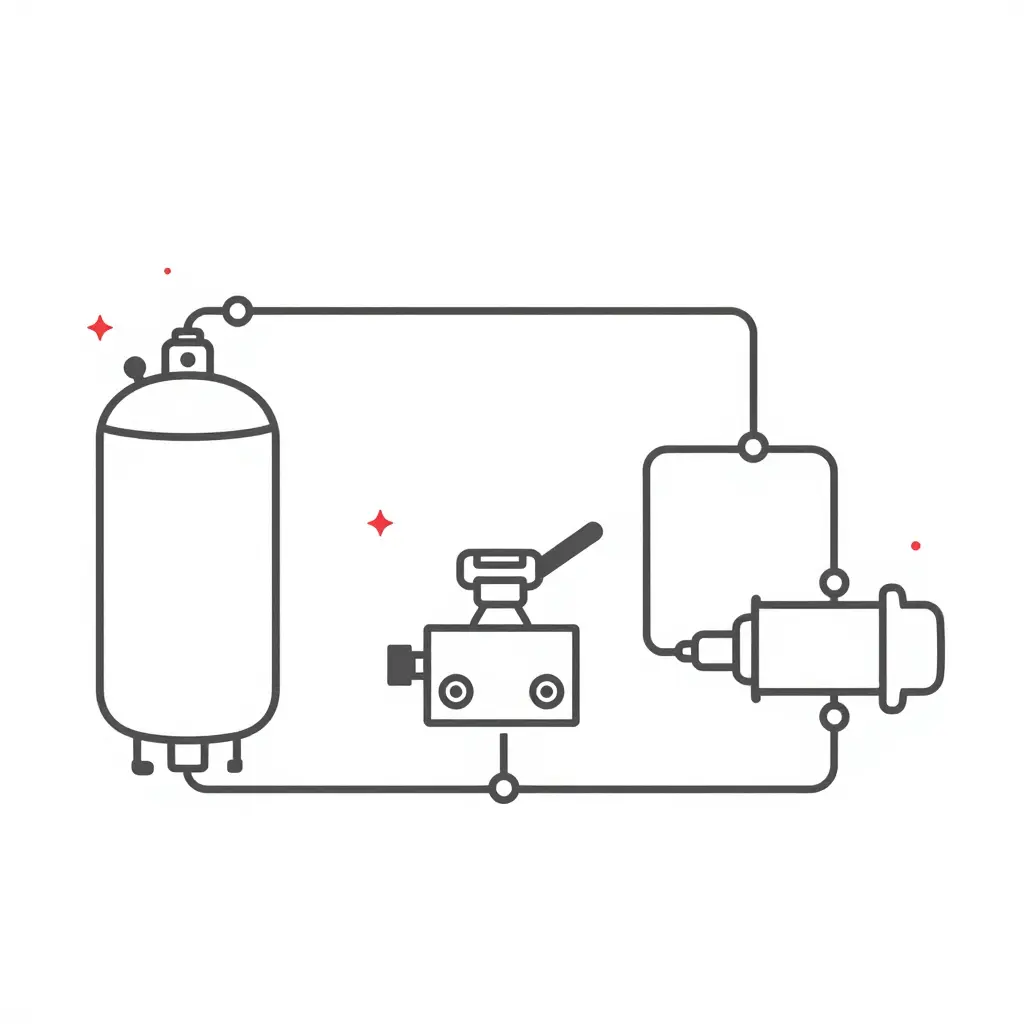
How to Read the Diagram
- Air reservoir (left): the stored pressure source. If it holds pressure but the circuit still will not shift, the loss is downstream.
- Control valve (center): the command point. A worn spool or a leaking port seal here starves the actuator even when the lever moves fully.
- Airline fittings and seal junctions (along the lines): the most frequent leak points – each fitting and each paired-seal junction can weep slowly, and the leak often shows up only under demand.
- PTO actuator (right): the end effector. An actuator that strokes weakly points back to pressure loss upstream, not to the actuator itself.
- Leak-point markers: treat each symbol as an inspection stop. Torque checks, soap-bubble tests, and seal replacement at these nodes resolve most engagement failures.
When this circuit leaks, the PTO cannot lock fully, the splines take the load the air command should have removed, and engagement slips. Before buying, compare how different builders route and seal this path – see ARFF capacity and design differences across manufacturers.
Step-by-Step Diagnostic Procedure for Pump Engagement Failure
Work this sequence to isolate why an ARFF pump will not engage, cheap checks before expensive ones, simple before complex.
- Confirm the symptom under load. Engage the pump per the operator manual and record whether it fails to spin, spins without pressure, or drops out after a few seconds. A consistent symptom profile separates mechanical faults from pneumatic ones before you remove a panel.
- Verify the PTO switch and interlock logic. Check that the parking brake, transmission-neutral, and pump-shift interlocks are satisfied and that the dash indicator lights correctly. A failed interlock mimics engagement failure and takes minutes to rule out.
- Inspect the PTO engagement linkage. Look for bent rods, seized pivots, or loose fasteners that keep the shift fork from throwing fully. Partial engagement is often mechanical, before splines are involved.
- Inspect the PTO spline wear. Drain, remove the inspection cover, and measure backlash and visible spline step-off on both shaft and coupling. Advanced PTO spline wear produces the classic spin-without-drive symptom.
- Test pneumatic control pressure. Tee a gauge into the PTO control line and compare static and dynamic readings against spec during actuation. Low control pressure keeps the shift piston from fully engaging the clutch.
- Perform a leak-down (leak detection) test. Soap-test all fittings, hoses, and the actuator seal while charged, and watch the gauge for drop over 60 seconds. Control air leaks bleed pressure away exactly when the system demands it.
- Check actuator function. Command the engagement solenoid and confirm the cylinder strokes fully and holds against load. A weak or sticking actuator fails intermittently and hides from static tests.
- Re-test engagement and log results. Reassemble, engage under load, and document pressures, backlash, and outcomes. A repeatable baseline confirms the fix and supports warranty claims.
Interpreting the Results
Read the findings together, not one at a time. Excessive backlash or visible step-off means the fault is wear-driven and needs PTO or coupling replacement, not adjustment. Backlash within spec, with control pressure falling during actuation or bleeding off on the leak-down test, means the failure is air-driven: rebuild the control circuit, replace perished seals and chafed lines, and re-test. One useful split: wear-driven failure is load-dependent and gets worse over time, while air-leak-driven failure is temperature-sensitive and often intermittent. When both appear, fix the air circuit first, since full engagement pressure usually reveals how much spline wear was hidden behind the leak. For comparable patterns, see these fire pump priming failure insights.
Failure Risk vs. Service Hours: Why PTO Pump Engagement Degrades Over Time
Pump engagement failure on an airport fire truck rarely happens overnight. It accumulates through two wear paths: PTO (power take-off) spline wear and control air leaks. As the spline teeth lose their profile and the air circuit bleeds pressure, the pump engages more slowly, more noisily, and finally not at all. The chart models that acceleration.
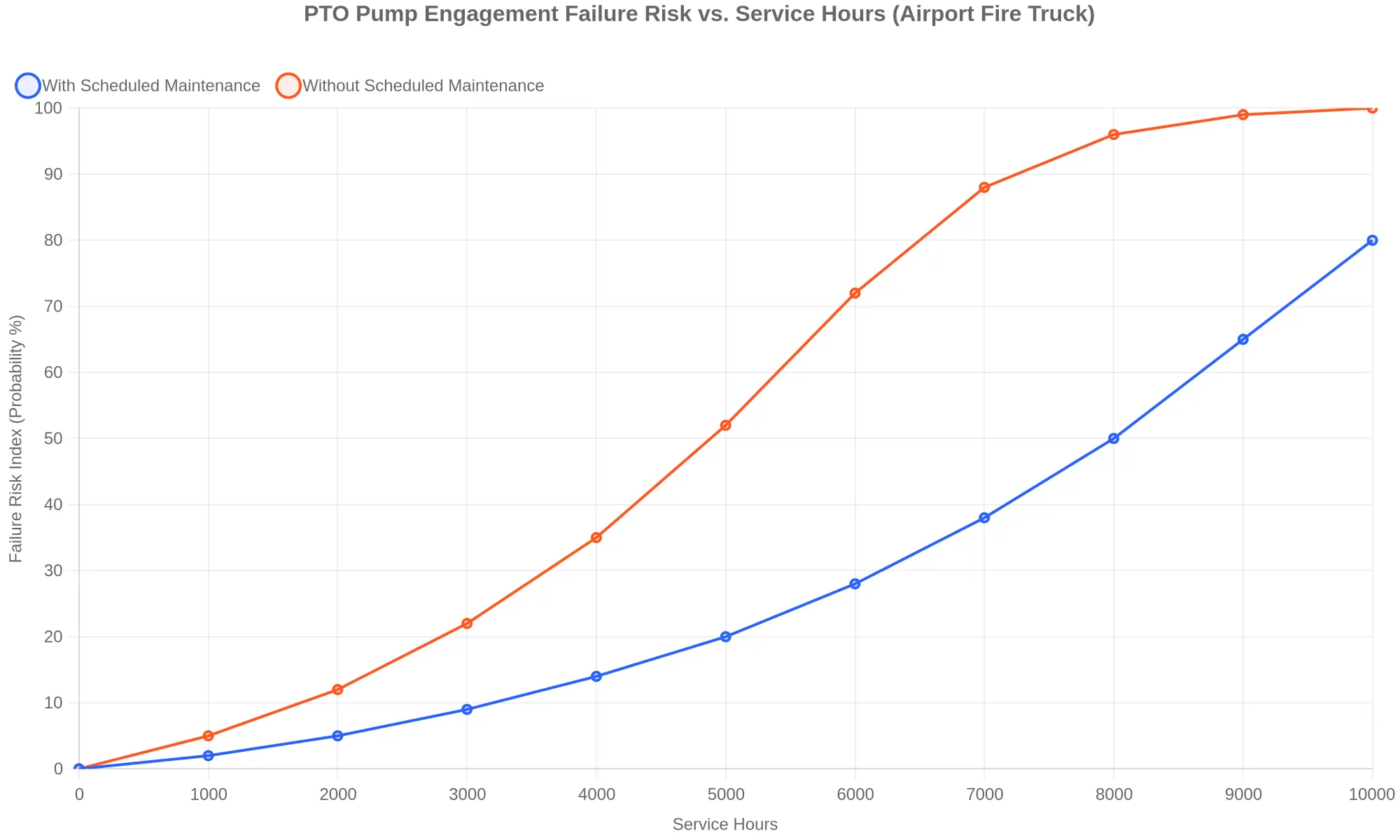
The Failure Risk Index is a rough probability estimate, not a guarantee. Read it as a diagnostic trend line: it shows where a truck sits on the curve and how long before an engagement fault interrupts a response.
What the Two Curves Are Telling You
- Without Scheduled Maintenance: risk stays modest through the first 2,000 hours, then climbs steeply. By 5,000 hours the truck has a 52% chance of a pump-engagement problem; by 7,000 hours it approaches 88%. This is the classic hockey-stick curve of a neglected drivetrain.
- With Scheduled Maintenance: the curve stays flat far longer. At 5,000 hours, risk is 20%. Even at 10,000 hours, well-maintained trucks stay around 80% – and in practice, inspection-driven spline lubrication and air-leak correction keep many units below that line entirely.
Approximate Data Behind the Chart
| Service Hours | With Scheduled Maintenance (Risk %) | Without Scheduled Maintenance (Risk %) |
|---|---|---|
| 0 | 0 | 0 |
| 1,000 | 2 | 5 |
| 2,000 | 5 | 12 |
| 3,000 | 9 | 22 |
| 4,000 | 14 | 35 |
| 5,000 | 20 | 52 |
| 6,000 | 28 | 72 |
| 7,000 | 38 | 88 |
| 8,000 | 50 | 96 |
| 9,000 | 65 | 99 |
| 10,000 | 80 | 100 |
Why the Curve Bends Upward
The point where risk starts accelerating is the warning signal for crews and fleet engineers. Two things drive it:
- Spline wear accelerates non-linearly. Once backlash exceeds specification, each engagement cycle shocks the splines harder, so wear feeds on itself. A worn PTO shaft can pass a static check yet fail under load.
- Control air leaks compound. Small leaks extend engagement time, forcing the operator to hold the switch longer and cycle the controls more often. That extra cycling wears the very splines the air system is trying to engage.
That is why the two curves separate so sharply after 4,000 hours, and why a fixed inspection interval beats waiting for a grind or a hard no-engage fault.
Reading the Chart for Your Fleet
- A unit past 5,000 hours with no record of PTO spline inspection is at elevated risk; schedule a check before the next major drill.
- If control-air hold times are creeping past a few seconds, the truck is already on the steep part of the curve.
- Comparing the trend with your own maintenance logs helps you choose between overhaul, replacement, and re-greasing – and shows how pump performance fits the broader fire truck pump capacity picture when repairs are budgeted.
Repair, Prevention, and Sourcing: Keeping Pump Engagement Reliable
Once PTO spline wear reaches the point of engagement failure, the repair is straightforward – provided the parts are correct. A generic, off-the-shelf spline will fail again within a few hundred engine hours.
Repair: Splines, Couplings, and Alignment
- Replace, don’t re-weld. Worn splines should be swapped for a properly hardened replacement – ideally through-hardened or induction-hardened 4140/4340 steel with a documented surface hardness (typically 45-55 HRC). Re-machining or welding up worn splines rarely restores the flank geometry needed to transmit full torque.
- Respect the fit. A new spline mated to a worn mating hub fails fast, so replace both halves of the coupling together.
- Align the coupling. Angular and parallel misalignment above a few thousandths of an inch accelerates wear dramatically. Re-shim and re-check alignment after any driveline work.
- Lubricate on schedule. Splined shafts and slider joints need the grease specified by the OEM – usually a high-pressure, moly-fortified lithium complex. Using the wrong base oil on a sealed joint is as damaging as skipping the service.
Prevention: Air Circuits and PTO Valves
Most pump-engagement failures blamed on a “weak” PTO trace back to control air leaks. A slow leak drops pilot pressure below what the engagement cylinder needs to stroke fully, so the PTO grinds into gear instead of snapping in cleanly.
- Leak-test intervals. Pressure-test the control air circuit every 90 days (or 250 operating hours), and anytime a truck sits unused for extended periods. A 10-minute hold test at operating pressure with less than a 2 psi drop is a reasonable field benchmark.
- Seal quality matters. Replace cheap nitrile O-rings with viton or polyurethane where heat and hydrocarbon exposure are high, and route air lines away from exhaust and turbo heat.
- Valve maintenance. Service the PTO control valve (clean or replace spool seals, check pilot solenoids, drain water traps) at the same interval. A sticking spool mimics an electrical fault and can strand a truck on the apron.
A simple preventive maintenance calendar keeps all of this ahead of a failure:
| Interval | Task | Target |
|---|---|---|
| Weekly | Visual air-line and fitting check | No chafing, no oil mist |
| 90 days / 250 hrs | Control air leak test | < 2 psi drop over 10 min |
| 90 days | Drain air/water separators, inspect PTO valve | Clean spool, dry circuit |
| 500 hrs | Grease splines, slider joints | Correct OEM grease |
| Annual | Coupling alignment check, hardness spot-check on new splines | Within OEM spec |
Guidance for Procurement and Fleet Managers
When evaluating a China airport fire truck manufacturer, ask for documentation, not assurances:
- Spline material specs. Request the steel grade, heat-treatment method, and target hardness. “Hardened” without numbers is a red flag.
- Air circuit quality. Ask which fittings, hose ratings, and seal compounds are standard, and how the circuit is tested before delivery.
- Spare-parts availability. Confirm that PTO splines, control valves, and air fittings are stocked or quickly shippable. Nobody wants an ARFF truck grounded for weeks over a $40 seal.
Sourcing decisions start before the truck is built. Compare real-world capacity and configuration data across platforms before you commit, and know how warranty and parts claims actually get resolved after delivery. Nail down the hardware spec and the support channel up front, and this chronic failure becomes a line item in the maintenance budget.
FAQ: Pump Engagement Failures on Airport Fire Trucks
What actually causes PTO spline wear?
PTO spline wear comes from torsional shock, misalignment, and poor lubrication acting together. Every time pump engagement slams under load, the splines absorb a torque spike that frets the teeth and strips the protective coating. On an airport fire truck, repeated ARFF drills and rapid starts accelerate the wear far beyond what road use would cause.
How can I tell if control air leaks are the problem?
Leaks usually show up as slow, lazy shifts rather than a total loss of pump engagement. Watch for a delay between pressing the engage switch and the PTO locking in, a pump that drops out under vibration, or an air-pressure gauge that bleeds down while the truck sits idle. A soap-bubble test on the shift cylinder and solenoid fittings confirms it in minutes.
Do worn splines and control air leaks usually happen together?
Yes, and diagnosing only one is a common mistake. A leaking control circuit engages the PTO partway, so the splines grind under a partial mesh, and that damage makes the next engagement worse. Treat them as one linked failure chain, not two separate faults.
How often should I inspect PTO components?
Inspect splines, the shift cylinder, and air lines at every major service interval, and at least quarterly on high-hour ARFF units. Pull the PTO for a spline and backlash check annually, or after any event where the pump hesitated to engage.
How do I evaluate a China airport fire truck manufacturer for these risks?
Ask for the PTO spline material spec, its lubrication schedule, and the control-air component brands before you buy. A credible supplier will put inspection intervals and spare-parts availability in writing, so compare vendors on documented maintenance data; see ARFF truck manufacturers for airport safety. Trucks that come with clear spline and air-system specs are far less likely to strand a crew on the apron.