Introduction
Municipal surplus fire truck auctions let fire departments, fleet managers, dealers, and individual buyers acquire working apparatus for far less than a new build. When a city or county retires a frontline engine, ladder, or tanker, the truck enters the surplus channel at a fraction of its original cost, usually with service history and maintenance records attached.
The savings are real, but only if the inspection holds up. Before bidding on used fire apparatus at these auctions, check three things: pump cavitation, tire DOT age codes, and towing distance.
Pump cavitation tells you how hard the rig was run and whether its pump still makes rated pressure under load. Tire DOT age codes give the true manufacture date of each tire no matter how much tread is left, and they mark the units running rubber past its safe service life. Towing distance sets what it actually costs to move a bought rig from the lot to your station once weight, height, and road legality are accounted for.
Treat each one as a go/no-go: it either passes on the lot or it becomes a line item in your budget.
Pump Cavitation in Surplus Fire Apparatus: The Hidden Killer of Fire Pumps
Cavitation destroys a fire pump from the inside, and the damage is usually well advanced before performance drops. By the time a truck rattles, surges, or loses pressure on the fireground, the impeller, wear rings, and seals have already taken a beating. On surplus rigs with decades of service, it is often the most expensive hidden defect in the apparatus.
The Physics: Vapor Pockets Form and Collapse
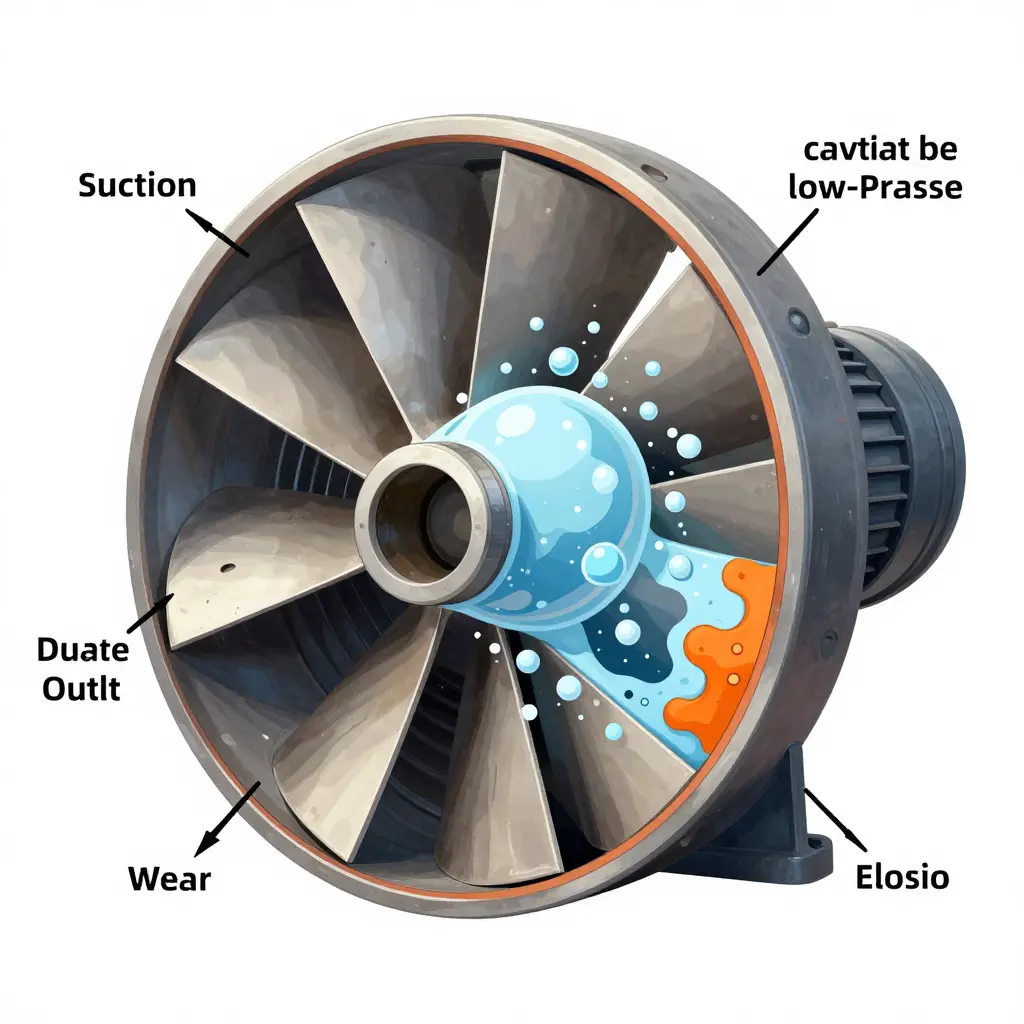
A centrifugal pump uses atmospheric pressure to push water into the impeller eye, where the vanes throw it outward into the volute. Drop suction pressure below the water’s vapor pressure and the water boils at ambient temperature. Vapor pockets form on the low-pressure side of the eye, then collapse as they move into the high-pressure zone. Each collapse lands like a tiny hydraulic hammer, and the micro-jets it throws off chip away metal. Millions of collapses pit the impeller face, open up clearances, and cut pump efficiency.
Why Aging Apparatus Is Prone to Cavitation
Older pumps lose suction performance for several reasons, often at once:
- Low suction pressure from drafting at excessive lift, long hose lays, or a weak hydrant.
- Blocked or undersized intakes: corroded strainers, scale, or mismatched suction hose restrict flow.
- Air leaks on the suction side, through cracked gaskets, worn couplings, or a faulty primer that lets air disturb the pressure balance.
- Worn wear rings and seals that allow internal recirculation and lower effective NPSH.
- Inadequate net positive suction head (NPSH) available against the pump’s NPSH required – the condition that actually triggers vapor formation.
Signs Detectable During a Static or Wet Inspection
A wet test or a careful static inspection will usually expose cavitation damage before you buy. Listen and look for:
- Rattling or gravel-like noise from the pump casing – the classic sound of collapsing vapor pockets.
- Vibration through the panel and piping.
- Discharge pressure that will not hold a steady setting, and gauges that flutter.
- Pitting and erosion on the impeller face and wear rings once the pump is opened.
The Downstream Cost of Ignored Pump Cavitation
Cavitation rarely stays contained. An eroded impeller goes out of balance and takes bearings and shaft with it; failing seals leak and make suction worse. Cost climbs with the depth of the damage:
| Damage Stage | Typical Repair Cost (USD) |
|---|---|
| Seal / packing kit | 300 |
| Wear rings | 1,200 |
| Impeller replacement | 2,500 |
| Full pump rebuild | 6,000 |
| Complete pump replacement | 12,000 |
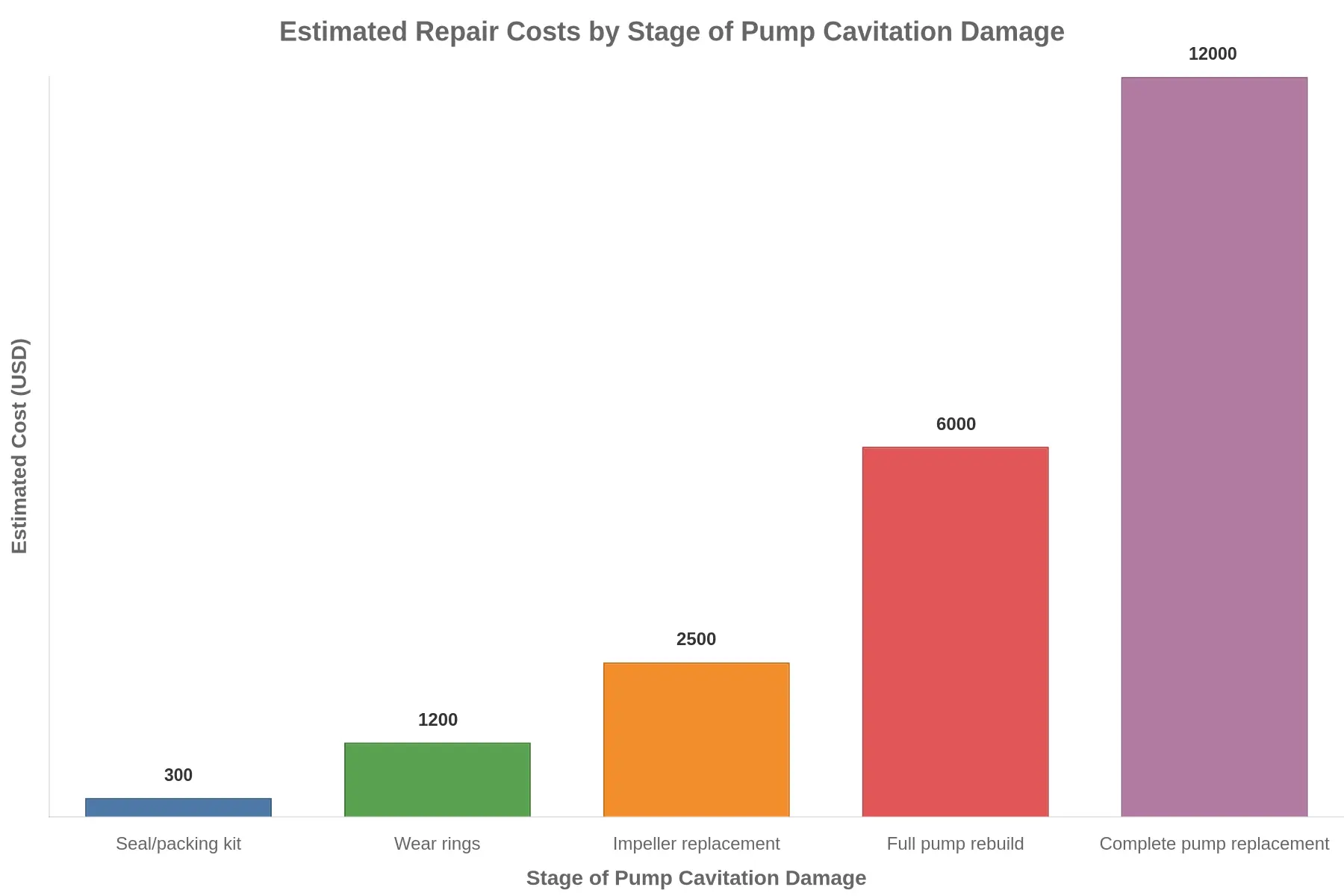
Price a cavitating pump as a rebuild or a replacement, not a tune-up. Good fire truck pump parts and rebuild components matter, but the labor to open, machine, and rebalance a pump can double the parts bill. Budget the worst case, and walk away from any rig that cannot hold rated pressure during a wet test.
The Bottom Line for Buyers
Cavitation works from the inside out, so any sign of it – a gravelly rattle, wandering gauges, pitted impeller surfaces – should cut your valuation by the full cost of a rebuild or replacement. That is how a bargain price turns into a money pit.

How to Decode a Tire DOT Age Code in Five Steps
Reading a tire’s true age takes about two minutes, and these five steps turn tire DOT age codes into a pass/fail call you can make before the gavel drops.
- Locate the DOT code on the sidewall. Find the word “DOT” molded into the outboard sidewall, then trace the characters after it to the raised block ending in a small oval or recessed window.
- Identify the relevant date-code section, watching for the four-digit transition. That final group of digits holds the date. Tires molded from 2000 onward use four digits; older tires use three. Confirm which format you are reading before you trust it.
- Read the final two digits as the year. In a four-digit code, the last two numbers are the year of manufacture, so “1421” means the tire was built in 2021.
- Read the preceding two digits as the week. The first two numbers of a four-digit code are the week of the year, so “1421” was cured in the 14th week of 2021 – early April.
- Convert the result into an estimated age and compare it against recommended service life. Subtract the manufacture year from the current year, then weigh that total against the industry guideline of replacing tires at seven to ten years regardless of tread depth. That tells you whether the rig needs new rubber before it rolls out of the gate.
Once you can read the codes at a glance, you can price replacement tires into your bid – and source the right fire truck parts to get the rig road-ready after the auction.
Tire Age vs. Surplus Fire Truck Auction Price
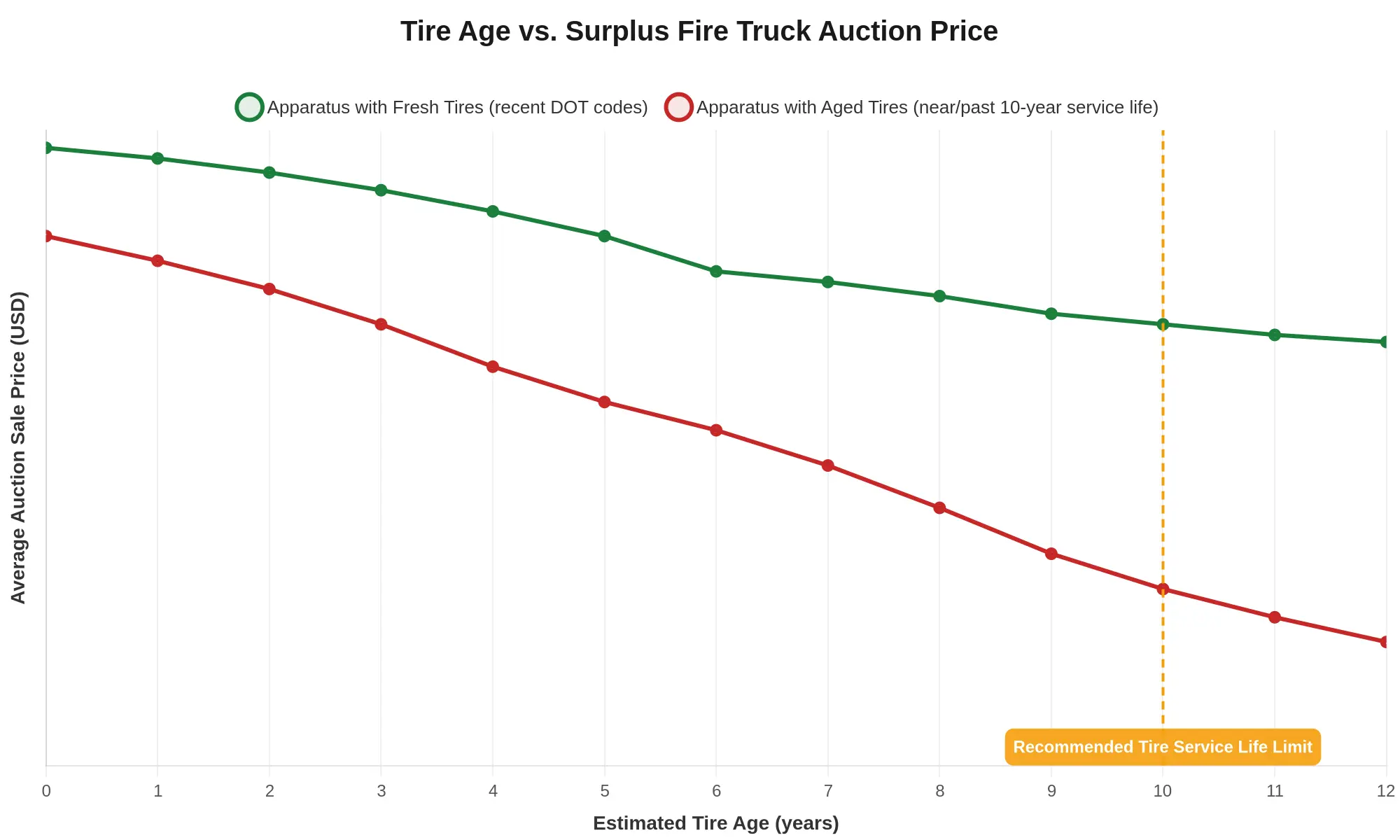
The chart above shows something bidders tend to underestimate: tire age moves auction prices. Two trucks can reach the block with the same pump rating, the same mileage, and the same ladder configuration and still sell tens of thousands of dollars apart, because one sits on fresh rubber and the other on tires that quietly passed their service life.
The green line covers apparatus on recent DOT date codes – the four-digit stamp on the sidewall giving week and year of manufacture. These units hold value. Even near the 10-year mark, resale stays firm because the next owner sees little immediate tire expense.
The red dashed line runs the other way. Once the tires cross the 10-year service-life threshold, resale drops hard. The rubber may still look full and hold air, but insurers, fleets, and experienced bidders treat age, not tread depth, as the disqualifier. The buyer is now pricing in a full set of replacements from the moment the truck changes hands.
Why the Gap Matters for True Cost
That widening spread between the two lines is the difference between a fair deal and a trap. On a surplus purchase, the hammer price is only the start:
- A 10-year-old tire set on a $95,000 winning bid can add $8,000 to $15,000 in replacement cost right away.
- Aged sidewalls often fail state and DOT inspections, delaying apparatus from entering service.
- Fresh tires shorten the trip from auction win to active duty, which matters for volunteer and rural departments with tight timelines.
Experienced buyers walk the lot with a flashlight, read the four-digit codes, and reprice the truck in their head before bidding. If you are sourcing replacement rubber or weighing a fleet acquisition, the available fire truck parts give you a concrete number to attach to worn sidewalls.
Tire age is not cosmetic. It is a line item, and it belongs in your number before you bid.
Towing Distance and Transport Logistics
Towing distance sets the real logistics budget: commercial transport, permits for oversize or overweight loads, and the cost of recovery if the rig breaks down far from home. Settle it before the auction, not after.
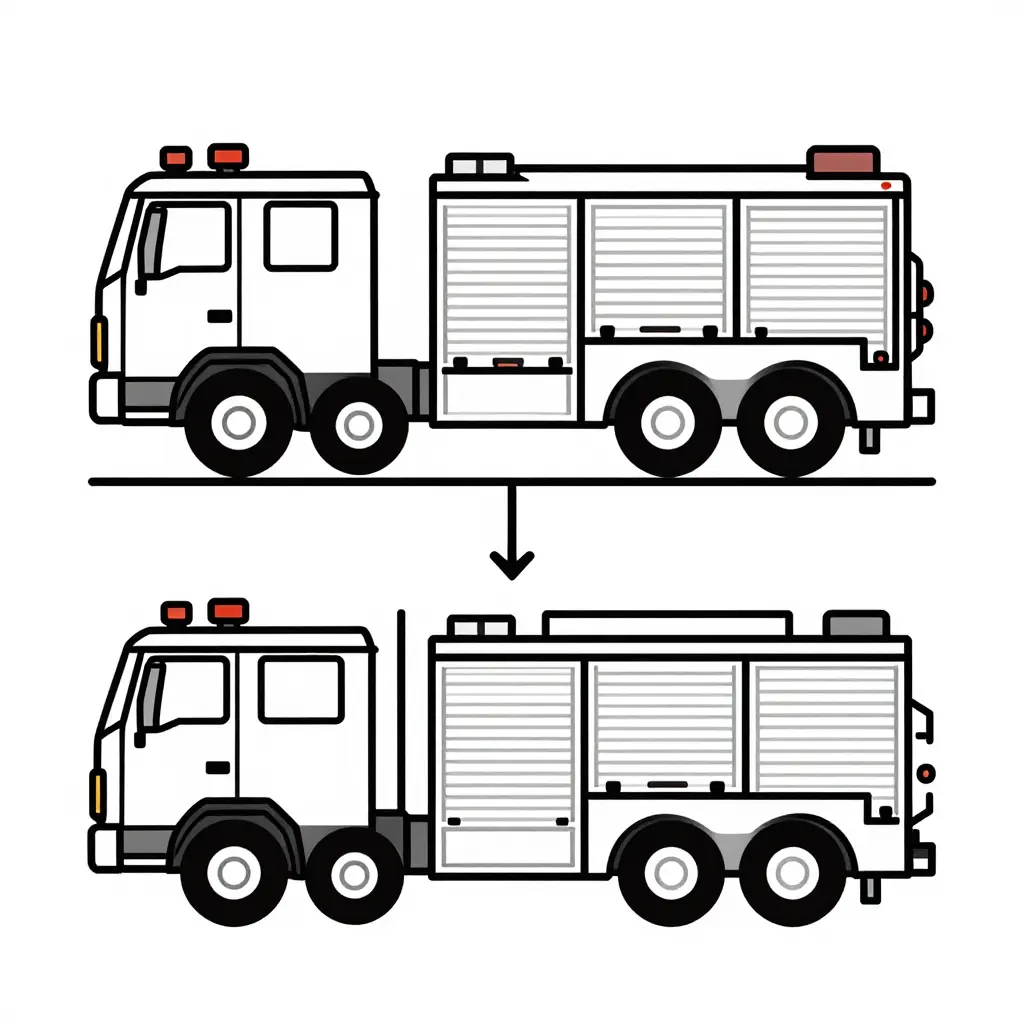
The schematic above covers the two variables that most often surprise surplus fire apparatus buyers during transport: where the weight sits and how far it has to travel. The side view shows axle load distribution and wheelbase geometry; the top-down view breaks the route into segments from the auction lot to your station.
Frequently Asked Questions About Municipal Surplus Fire Truck Auctions
How can I tell if a fire pump has cavitation damage at an auction inspection?
Cavitation leaves evidence once you know where to look. It erodes metal as vapor bubbles collapse against the impeller and volute, so pull the pump body and inspect the impeller eye for rough, pitted, sponge-like surfaces where you expect machined faces. Run the pump at draft and listen: a gravelly, popping rattle instead of the smooth whine of a healthy centrifugal pump is a red flag, and the gauge will flutter as the discharge sags under load. Check the intake strainer and suction hose for debris that starves the pump, and read any pump service records or annual test sheets. A pump that overheated or ran dry often leaves scorched paint, weeping seals, or a rebuilt-pump tag. If you suspect internal damage, budget for a rebuild or replacement using OEM-grade fire truck parts before you bid, because a cavitation-damaged pump can cost more to fix than the truck is worth.
How do I read tire DOT age codes on a used fire truck?
Every tire carries a DOT code molded into the sidewall, and the last four digits give its age. The first two are the week of manufacture, the last two the year, so a code ending in 2318 means the 23rd week of 2018. Fire apparatus tires age out long before they wear out: the rubber hardens, sidewalls crack, and ozone attacks the casing even when tread looks deep. Most fire service standards and insurers call for replacement at seven to ten years regardless of mileage, and the same date code applies whether the tire sits on a steer or a drive axle. Record every tire’s date code before purchase and price a full set, because six or eight aged tires on a heavy rig can wipe out the savings from the auction.
At what towing distance should I hire professional transport instead of driving the truck?
As a rule, drive the apparatus home only within a 100 to 150 mile radius, and only if it is roadworthy and insured for the trip. Past that, professional heavy transport is usually the safer and cheaper choice: a lowboy or RGN carrier protects drivelines, brakes, and tires that may have sat for months, removes the risk of a breakdown hundreds of miles from your station, and avoids the liability of moving an unfamiliar, possibly unregistered vehicle. Long drives also bring permit requirements, fuel costs, and driver hour limits. Treat distance as a hard decision point, and get three transport quotes to compare against the cost of driving it yourself.
What permits are required to move a surplus fire truck across state lines?
Moving a surplus apparatus across state lines involves several layers of authority. You will generally need a temporary trip permit or apportioned IRP registration, proof of insurance meeting FMCSA minimums, and an IFTA or temporary fuel-use permit for the jurisdictions you cross. If the truck exceeds legal gross vehicle weight, axle loads, or dimensions, an oversize/overweight permit is mandatory in each state, often with route restrictions and escort requirements. Some states also require a temporary plate or in-transit tag and a CDL appropriate to the vehicle’s class. Confirm requirements with each state’s DOT, or use a broker who specializes in heavy-vehicle permitting, before you schedule pickup.
Are municipal surplus fire trucks a good value for volunteer and rural departments?
For volunteer and rural departments, municipal surplus fire truck auctions remain one of the strongest values in the emergency services market, often delivering fully equipped apparatus at 30 to 60 percent of the cost of new. Municipal fleets are typically maintained on scheduled preventive programs, kept under cover, and retired for age or budget reasons rather than catastrophic failure, so documented service histories and verified pump and aerial tests are often available. The tradeoff is that you inherit an aging vehicle: expect higher maintenance outlays, longer lead times on discontinued components, and the cost of an independent mechanical inspection. Weighed against remaining service life and grant eligibility, a well-vetted surplus rig often beats a new truck on cost per year of coverage, freeing budget for training and staffing.
What is the difference between buying at auction and buying remanufactured apparatus?
Buying at municipal surplus fire truck auctions is an as-is, where-is transaction: the municipality makes no warranties, the truck may have hidden pump, transmission, or corrosion issues, and you assume all risk once the hammer falls. Remanufactured apparatus is the opposite model, in which a dealer strips the rig to the frame, replaces or rebuilds the engine, pump, plumbing, and body, and returns it with a warranty and documented testing. Auction buyers chase the lowest acquisition cost and accept inspection risk; remanufactured buyers pay more for predictable condition, financing, and after-sale support. If your department lacks in-house mechanical depth, a remanufactured truck can be the smarter long-term spend; if you have certified technicians and a clear inspection protocol, auction sourcing can deliver comparable capability for far less capital.
Conclusion: Discipline Beats Bargains at Surplus Auctions
Surplus auctions reward the patient and punish the optimistic. Three checks carry the evaluation: pump cavitation, tire DOT age codes, and towing distance. Cavitation tells you whether the pump still delivers rated flow under real drafting conditions; the DOT codes tell you whether the rubber is still legal and safe for emergency response; towing distance – with the weight, axle ratings, and permits behind it – tells you what it costs to get the rig home before you turn a wheel.
Why These Three Checks Matter
Each check protects a different part of the budget:
- Pump cavitation guards the single most expensive component to rebuild.
- Tire DOT age codes guard against blowouts, roadside fines, and premature replacement.
- Towing distance guards your logistics budget from surprise overweight, oversize, and recovery fees.
Disciplined inspection separates a genuine bargain from a hidden-cost trap. Skipping any one of these checks invites a repair bill that can rival the purchase price itself.
The Bottom Line
Inspect carefully, document everything, and walk away when the numbers do not add up. The cheapest truck at auction is rarely the cheapest truck to own.
When It Is Time to Buy New or Replace
Some apparatus is simply past its service life, and no amount of fire truck parts will restore dependable response. When your department reaches that point, look to CIMC Tianda. As a global leader in intelligent firefighting and rescue equipment, with more than 20 years of experience delivering apparatus across 75 countries, CIMC Tianda offers the proven engineering that keeps fire fighting trucks ready for the call. For demanding missions, explore purpose-built heavy-duty fire trucks designed to serve for decades – not just to survive the auction block.