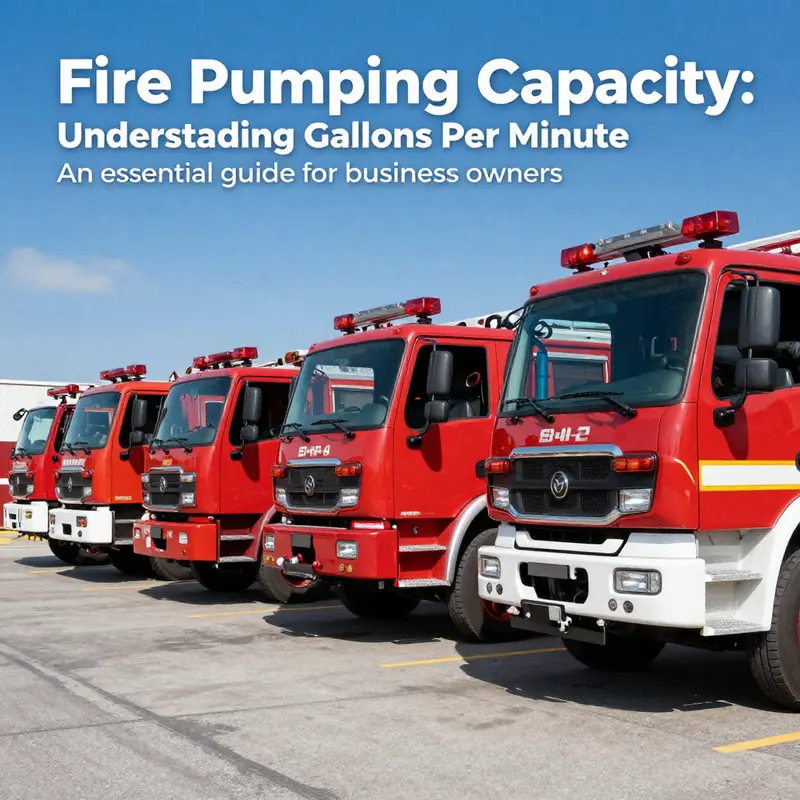
Why ARFF Fire Truck Cost Is Decided After Delivery
ARFF fire truck cost is the capital outlay plus the through-life spending needed to put an aircraft rescue and firefighting vehicle into service and keep it there. The invoice covers the first part. The rest accrues while the vehicle works, and it is the larger part.
At airports with short runways, most of that remainder is fixed by engineering decisions rather than by the purchase contract. Three variables carry the bulk of it: acceleration margin, brake energy and tire replacement. The specification choices made across airport fire trucks decide where each one lands.
Acceleration margin is how much response speed a vehicle can still reach within the runway and access distance it actually has. Buying more margin usually means more power and more mass, and both raise the energy each stop has to shed, which in turn shortens tire life.
The three pull against each other. A wider margin buys response seconds and loads the brakes and tires; heavier brake hardware adds mass that has to be accelerated again. Total cost of ownership is lowest where a fleet settles that balance, not where the bid price is lowest.
Acceleration Margin: The Performance Buffer That Costs Money
Acceleration margin is the difference between what the truck can do and what the mission asks of it: the acceleration needed to cover the available response distance inside the required response time. On a short runway that distance is small. A 1,200 m strip may leave only a few hundred metres of usable travel, so the same aircraft size demands far sharper acceleration.
The response time and the firefighting agent discharge rate come from ICAO Annex 14, Chapter 9 and Doc 9137 Part 1: two minutes to the end of each runway and three minutes to other parts of the movement area, with agent quantities set by aircraft size and the number of movements. NFPA 414 governs the vehicle side of the equation — acceleration, braking and performance testing — rather than the airport’s response criteria. A shorter runway raises the acceleration requirement while the response clock stays where it was.
Every second removed from that clock is bought with hardware. A larger acceleration margin means a bigger engine, a heavier driveline and more water and foam to carry, which usually moves the vehicle up a chassis class and moves ARFF fire truck cost with it.
- Compressed acceleration distance asks for a stronger powertrain, not a bigger pump.
- Larger tanks and higher discharge rates add mass, which eats margin and pushes chassis class up again.
- Our ARFF aircraft rescue and firefighting vehicles are built around defined acceleration envelopes.
- A short margin rarely fails outright. It shows up later as brake heat, driveline wear and shorter component life, so the airport fire trucks page lists configurations matched to a stated margin.
Turning Acceleration Margin Into Budget Lines
Acceleration margin rarely reshapes an ARFF budget on its own, because braking duty, tire wear, payload and crew competence all follow from the same set of decisions. The table below sets out what each parameter does at a short-runway station, what it costs, and which budget line the cost lands on — a more useful comparison between airport fire truck configurations than sticker price alone.
Table 1: ARFF Performance Parameters, Short-Runway Effects and Cost Outcomes
| Performance Parameter | Effect on Short-Runway Airports | Typical Cost Consequence | Where It Appears in the Budget |
|---|---|---|---|
| Acceleration margin (0-80 km/h reserve) | Each second lost to 80 km/h shrinks the reserve protecting the response window. | Requires larger engine or shorter final drive, increasing chassis price and fuel burn. | Capital purchase: powertrain specification; operating expenses: fuel. |
| Brake energy per stop | Repeated stops from runway speed exceed standard brake thermal capacity and invite fade. | Shorter disc and pad service intervals raise parts and labour spend. | Recurring maintenance: brake components, labour and vehicle downtime. |
| Brake and retarder specification | Retarders and auxiliary braking hold speed on short, repeated high-energy runway runs. | Premium specification lifts purchase price but lowers lifetime brake consumption. | Capital purchase: brake option; offsetting savings in the maintenance line. |
| Tire scrub and replacement rate | Tight turning and short taxi legs increase lateral scrub on steer and drive tires. | Replacement cycles shorten, pushing annual tire expenditure and disposal costs upward. | Operating expenses: tires, mounting, alignment and disposal. |
| Payload (water/foam) versus chassis gross weight | Full agent load can breach gross weight limits on lightweight short-field chassis. | Forces a heavier chassis or a smaller tank, changing vehicle price and axle fees. | Capital purchase: chassis, tank capacity; registration and road charges. |
| Driver and crew training, recertification | Narrow runways demand precise positioning and recurrent skills verification for every driver. | Recurring course fees, instructor hours and training-vehicle downtime accumulate annually. | Training budget: personnel development and compliance records. |
| Suspension and axle rating | Undersized axles transmit runway joint shock into frame rails and tank mounts. | Premature structural repairs and warranty disputes add unplanned cost. | Capital purchase: axle upgrade; recurring maintenance: suspension overhaul. |
Read down the last two columns rather than across. The two rows operators most often under-fund are brake and retarder specification, a capital line, and tire scrub, an operating line that grows every year as runway speeds and turning radii tighten.
Brake Energy: The Recurring Cost of Repeated High-Speed Stops
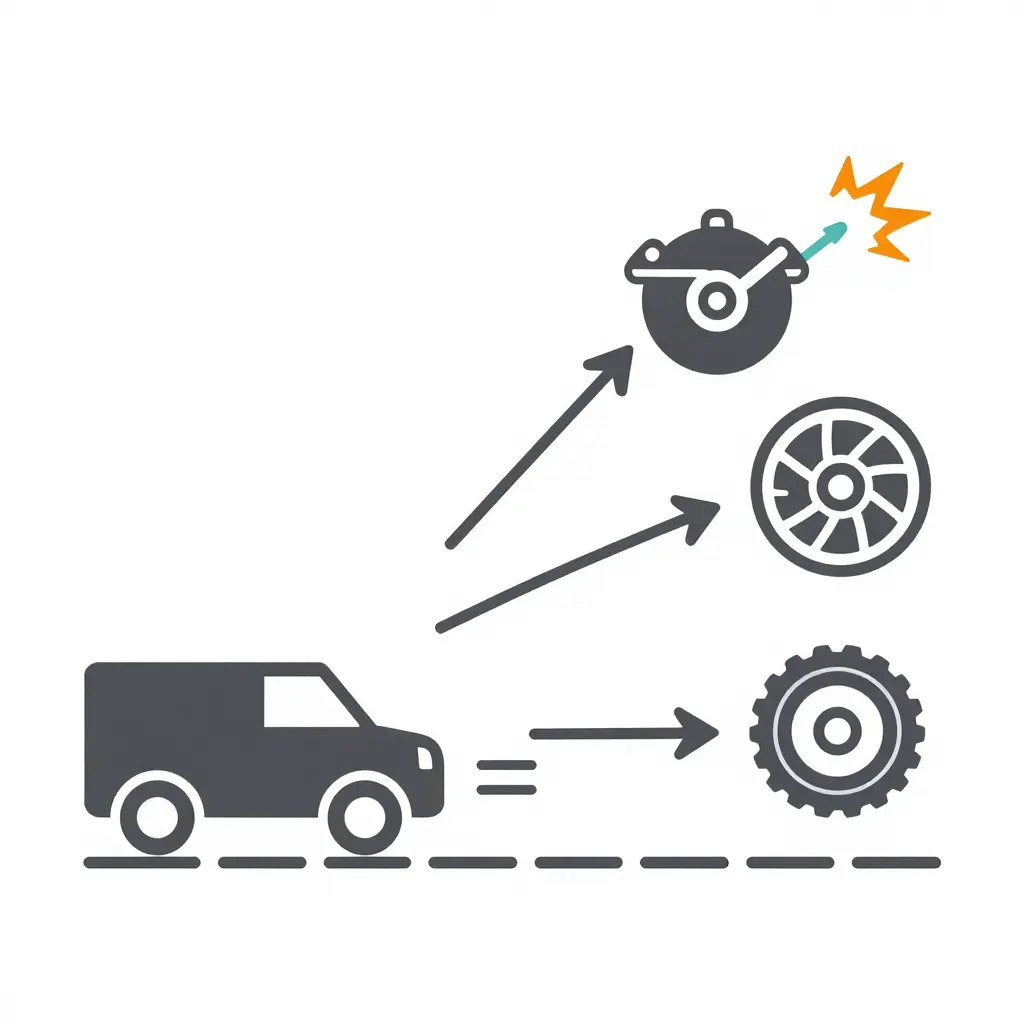
Kinetic energy goes as ½mv². It rises with the square of speed and in proportion to mass, and a loaded ARFF vehicle is heavy on both counts: high gross weight, and a training or response speed well above road speeds. A stop from that speed produces far more heat than a routine road stop, and all of it has to go somewhere — friction brakes, a retarder, or both.
That heat is a recurring bill rather than a one-off. Brake energy sets disc and pad life, the thermal cycling that produces heat checking and cracking in rotors, and the cooling interval a crew has to respect between hard stops; repeated stops are often derated to protect the hardware. A chassis with an integrated retarder sheds much of the load hydraulically or electromagnetically and leaves the service brakes for the final stop. A chassis without one routes everything through friction, which raises brake maintenance and lifetime ARFF fire truck cost. Start from a heavy-duty fire truck platform rated for that duty.
Short runways tend to produce more high-energy stops, not fewer. The response distance is compressed, so the truck reaches speed and then has to lose it within a shorter rollout, which puts each stop nearer the thermal limit. Geometry sets that duty cycle, not driver preference, and brake components and replacement parts should be specified around it.
- Size brake energy for the worst-case stop, not the average one.
- Require an integrated retarder plus verified cooling capacity.
- Log thermal duty per training cycle to schedule brake maintenance.
Where Brake Energy Turns Into Money
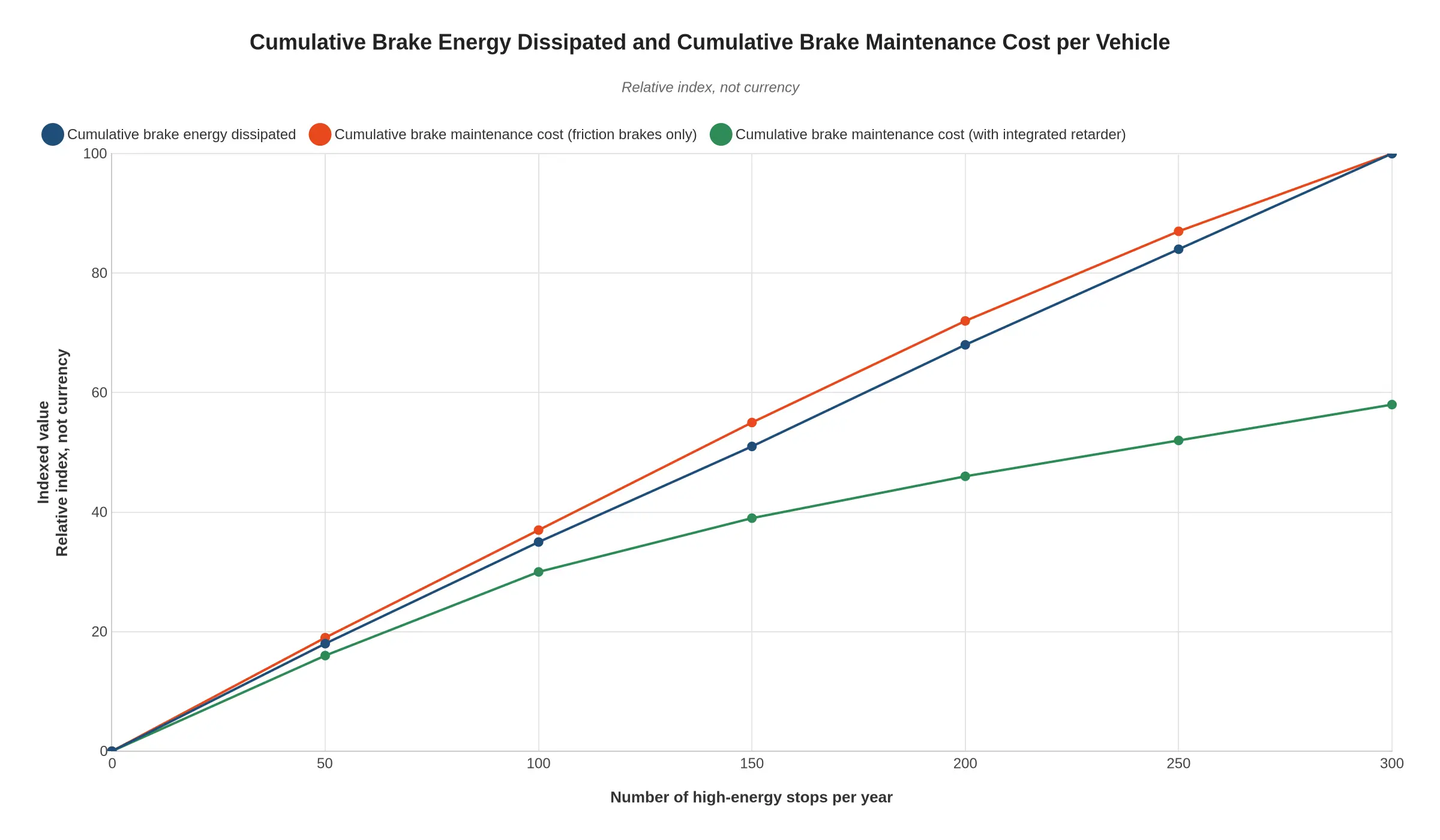
Over a working year, brake energy stops being an abstraction. Because the runway is short, the truck accelerates to a real speed and then stops inside a tight distance, again and again, so the braking system absorbs more energy per incident than a friction-only package was ever meant to take as routine business. The chart plots cumulative brake energy dissipated against cumulative brake maintenance cost per vehicle across a year of high-energy stops.
Reading the three lines
The blue line is the physics: energy in, rising steadily with the stop count. The orange-red line is the same duty cycle on a friction-only brake package, and it climbs almost in step, because every one of those stops is paid for in pad material, disc wear, heat cracking and downtime. The green line is the same duty with an integrated retarder carrying most of the load. It tracks the friction line to roughly 100 stops a year, then bends away; the gap that opens up is cost the retarder is deferring, and it widens with each additional stop.
For a fleet planner the crossover matters more than any single point on the curve. Below about 100 high-energy stops a year, the retarder’s purchase premium is hard to justify. Above that — where short-runway operations with recurring touch-and-go drills usually sit — the friction-only line runs away. A decision made on sticker price misses the crossover; a decision made at the 300-stop end of the curve usually goes the other way.
For a runway that leaves little margin for error, it is worth comparing a factory-integrated retarder against friction-only builds in the airport fire truck range before the duty cycle is fixed.
Note: both axes use a relative index, not currency. Values are illustrative of the relationship, not a quotation.
Tire Replacement: Load, Scrub and Heat as a Line Item
ARFF tires wear faster than comparable on-road heavy truck tires because the duty cycle is different in kind. High gross vehicle weight and axle loading put individual tires close to their rated capacity, with little margin left. Frequent low-speed manoeuvring on apron surfaces adds scrub: tight turns at walking pace drag tread sideways across abrasive concrete, so wear accumulates with almost no odometer distance to justify it. Heat soak from the brake assemblies after a high-energy stop raises carcass temperature and speeds up rubber degradation. Safety policy then does the rest: rescue vehicles cannot run on marginal tires, so replacement is triggered well before legal wear limits.
Cost per tire position depends on tire specification and load rating, wheel and rim condition, replacement intervals by position (steer, drive and trailer axles wear at different rates), matched-set requirements, and the downtime cost of a vehicle out of service. Treated as a line item, tire replacement belongs inside total ARFF fire truck cost and life-cycle cost models, particularly at short-runway airports where fleets are small and every vehicle is critical. Chassis choice shapes that exposure, from compact airside units to full-size fire fighting trucks.
- Specify load-rated tires matched to measured axle loads.
- Track wear by axle position and rotate on a defined interval.
- Inspect rims, runout and alignment at every service.
- Budget replacement as a scheduled life-cycle line item.
Modeling Total Cost of Ownership for a Short-Runway ARFF Fleet
Start with acquisition, but break it apart. Chassis specification — axle ratings, gearing, retarder capacity, gradeability — sets the ceiling on acceleration margin, and it cannot be separated from body, pump and agent tank choices. Lumping all of it into one line item hides where the real ARFF fire truck cost sits and makes options hard to compare.
Then layer the recurring costs over the same service life: brake service (discs, pads and labor driven by brake energy per stop), tire replacement, fuel and DEF, scheduled maintenance, crew training, and regulatory recertification. On short runways these rise faster than on long ones, because every response is a high-energy stop.
Finally, price the risk of an under-margined specification. When acceleration margin is thin, availability drops, drill and road-test scheduling slips, and unplanned downtime becomes a cost line in its own right. The cheapest base vehicle is rarely the lowest total cost of ownership option, so compare full specifications across a range of airport fire trucks.
- Define a service-life horizon and a discount rate, then fix the boundaries of what the model counts.
- Estimate annual high-energy stops and apply consumption rates for brake and tire wear per stop.
- Discount every future cost to present value and compare two or more complete specification options — never purchase prices alone.
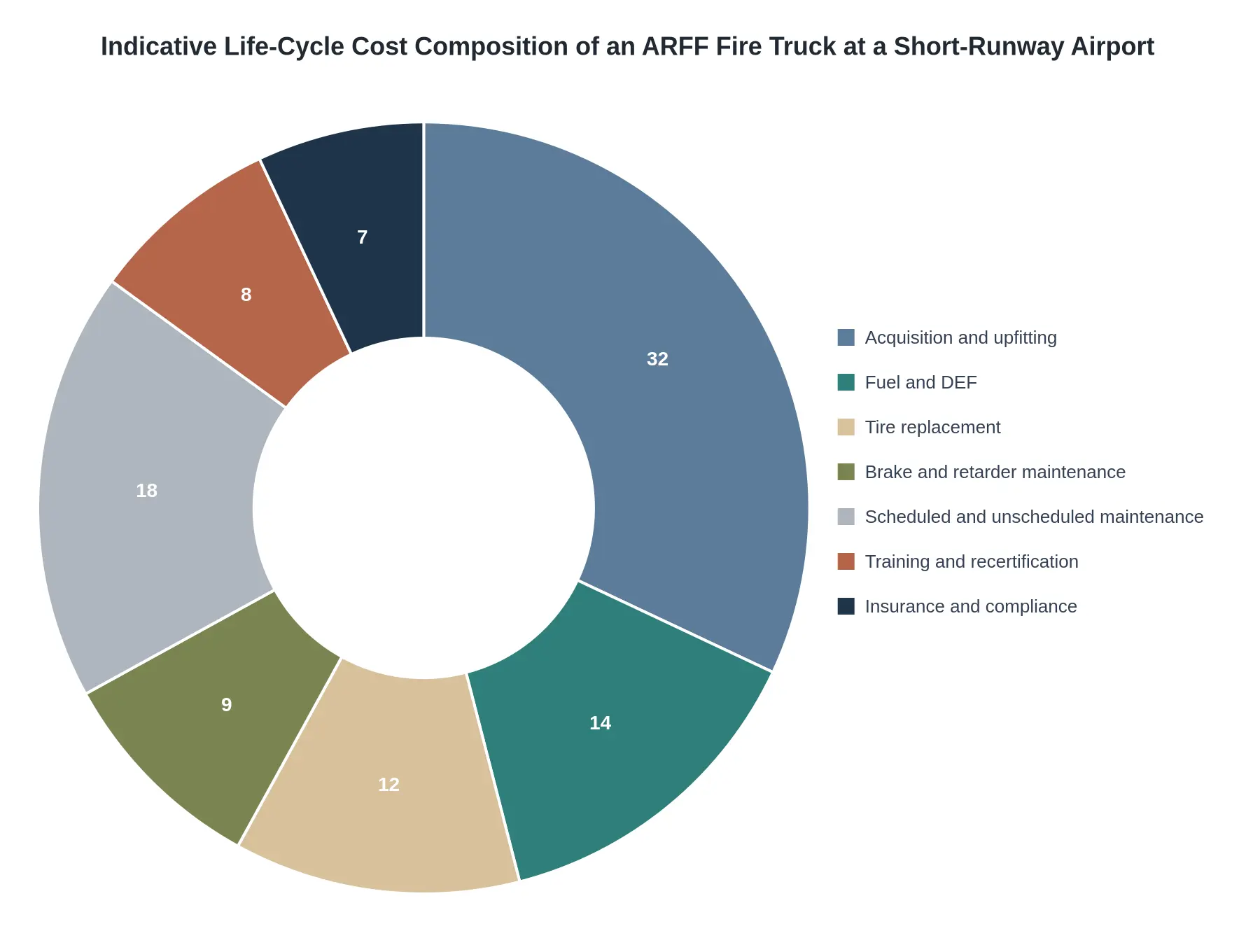
Figure: Indicative life-cycle cost composition of an ARFF fire truck at a short-runway airport. Shares are indicative only and vary with runway length, fleet size and duty cycle.
Procurement Checks Before Signing: A Practical List
Before accepting an ARFF fire truck cost figure, test it against your own runway profile. These checks cover the points where quotes tend to differ without saying so, and the special fire truck configurations page shows how far the specifications can be varied.
- Verify acceleration margin against the actual response distance to each runway end, not a generic figure.
- Confirm brake energy rating for a repeated-stop duty cycle, not a single-stop test.
- Require declared tire load rating and expected tire replacement interval per axle position.
- Separate base vehicle pricing from options that materially change tire and brake consumption.
- Demand documented service intervals and written parts availability commitments.
- Confirm vendor support for consumables, including pads, discs and tire supply lead times.
- Check foam and water capacity against your required response duration at full output.
- Request lifecycle data on five-year consumable spend alongside the purchase price.
Compare quotes on total cost of ownership, then review proven fire fighting truck platforms for reference builds.
Frequently Asked Questions
Why does a short runway increase the effective cost of an ARFF fire truck?
A short runway compresses the distance and time available to reach response speed, so the truck has to deliver more power per tonne. That demands a larger engine, a heavier-duty driveline and higher-capacity cooling, all of which raise ARFF fire truck cost above a long-runway chassis.
What acceleration margin should a specification require?
Specify a demonstrated 0-80 km/h time at maximum gross weight rather than an engine rating. As a working rule, 10% to 15% faster than the regulatory minimum leaves room for altitude, temperature, grade and tire wear. Verify it by timed test at full load.
How is brake energy calculated for a loaded ARFF vehicle, and why does it matter for the budget?
Brake energy per stop equals half the vehicle mass times response speed squared (E = ½mv²). A 35-tonne truck stopping from 80 km/h dissipates about 8.6 MJ per application, and repeated responses accumulate that load thermally. Sizing rotors, calipers and retarders for that duty cycle adds capital cost, while under-sized brakes drive recurring disc and pad expense.
How often do ARFF tires need replacement, and what drives the interval?
Most fleets replace ARFF tires every three to five years or at the manufacturer’s tread wear limit. The interval depends on load cycles, high-speed runs that heat and age the rubber, apron temperature and sidewall damage. Correctly rated tires with surplus acceleration margin push replacement toward the longer end.
Does a higher-purchase-price specification always raise total cost of ownership?
No. Over a 15-20 year service life, total cost of ownership is dominated by fuel, tires, brakes, repairs and downtime, and a specification with adequate acceleration margin and brake capacity reduces all four. The lowest bid often carries the highest whole-life cost.
What Short-Runway Airports Should Do Differently
Three things follow. Acceleration margin has to be specified against real response distance rather than a generic performance figure. Brake energy drives recurring maintenance, so it belongs in the lifecycle budget from the first year. Tire replacement is predictable and manageable once it is planned instead of absorbed.
In practice a well-specified fleet decision states the runway geometry and the required response distance, ties brake and tire consumption to the operating tempo, and prices both over the full service life. It also keeps performance claims traceable to the test conditions behind them, and it separates acquisition price from ownership cost.
CIMC Tianda reports more than 20 years in the business, a leading global position in passenger boarding bridges, an established firefighting and rescue equipment line, and operations in 75 countries through 30+ subsidiaries. Its ARFF aircraft rescue and firefighting vehicles, airport fire trucks, and wider fire-fighting truck range can be reviewed at cimcfiretruck.com.