Two numbers decide most used fire apparatus purchases: pump hours and model year. They measure different kinds of wear and they accumulate at different rates. Most mispriced deals come from adding them into a single score for “condition”, because a recent build date and a low hour meter are not the same kind of good news.
Pump hours: work done by the pump, not the road
Pump hours count the time the pump has been engaged, which means the impeller turning and, usually, water moving. Structure fires, draft sites, relay work and training drills all land on that meter. Driving goes on the odometer instead. Two trucks built in the same year can sit far apart here: one ran three shifts a week, the other sat as the backup unit. When a mechanic quotes a pump rebuild, the hours figure is what he asks for first, because impellers, seals, packing, valves and the pump transmission wear with running time rather than with kilometres.
Model year: a calendar date and a rulebook
Model year is the year on the build plate, and it fixes the rulebook the truck was built against: emissions tier, the NFPA 1901 edition in force at the time, brake and stability requirements, pump rating conventions, electronics architecture. Manufacturers assign it, so it can trail the actual build date by a few months. A 2008 truck and a 2016 truck can show identical hours and still differ sharply in parts availability, diagnostic tooling and compliance expectations. Model year tells you what the truck was built to. It does not tell you how hard it has worked.
Why model year gets more attention than it deserves
Business owners comparing used trucks start with the listing year, because it is the easiest field to sort and the easiest to defend to a board or a lender. Age is visible, comparable, and it drives financing and insurance schedules. Pump hours sit inside a specification sheet, need a site visit to check against the meter, and mean little without service records. The result is a habitual discount on older trucks whatever their pump condition, and full price on newer trucks with worn pumps. Sorting firefighting truck listings by year alone bakes that bias in before anyone opens a hood.
| Measure | What it counts | What it leaves out |
|---|---|---|
| Pump hours | Time the pump was engaged and moving water | Road wear, chassis fatigue, unloaded engine idle time |
| Model year | Year of manufacture and its rule and technology generation | Duty cycle, maintenance quality, rebuild history |
Pump Hours vs Model Year: Two Numbers, One Decision
Stand in front of a used rig with a clipboard and both numbers are within reach: one on the hour meter at the pump panel, the other on the build plate or the title. They read like the same kind of fact, and they aren’t.
Pump hours describe the water side of the machine. Model year describes everything around it, including the years spent parked, corroding and drifting out of step with parts catalogues and regulations. A 2005 pumper with 900 pump hours and a 2015 pumper with 6,000 are not comparable just because the asking prices are close. If you want to see how the market splits before you start comparing, the fire fighting truck range is laid out by category.
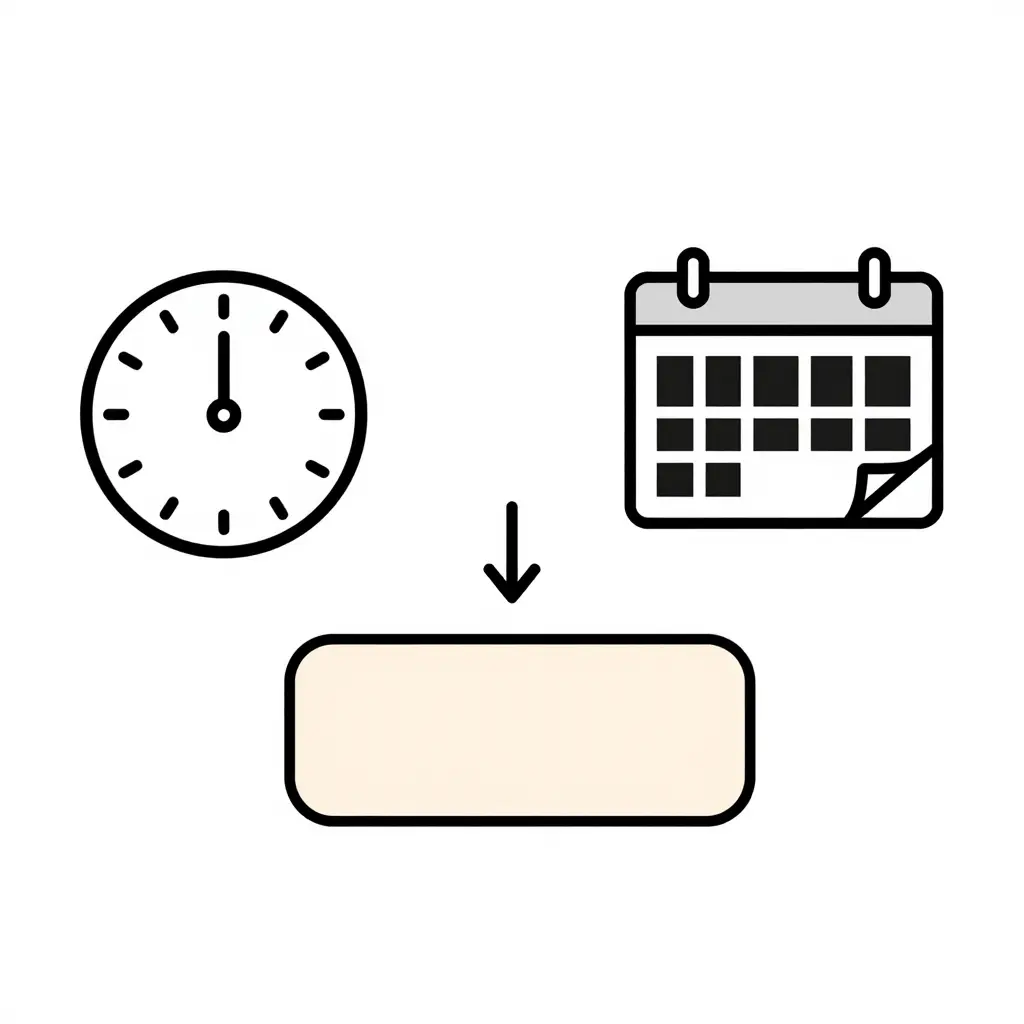
What the Illustration Is Really Saying
Two independent measurements, one conclusion. The dial has nothing to say about rust. The calendar has nothing to say about erosion inside a pump casing. Neither one settles a price by itself.
Sellers lead with whichever number flatters the truck. A low meter becomes the headline on a machine that has been parked for a decade; a recent model year becomes the headline on a rig that ran structure fires weekly and never got a rebuild. Four habits keep the comparison honest:
- Ask how the hours were logged. Some departments record only fireground pumping; others record every minute the pump turns during drills, draft practice and tanker fills. Same meter, very different meaning.
- Treat a rebuild as a reset, not an eraser. A new impeller, seals and packing change what high hours mean for the pump. The chassis still carries every year since it was built.
- Price the calendar’s own repair list. Wiring harnesses, brake lines, tank coatings and parts availability age on their own schedule, well before pump performance drops.
- Compare like with like. A municipal pumper and a heavy duty fire truck working a refinery gate don’t accumulate the same kind of clock.
| Metric | What it actually measures | Wear it hints at | Easy to misread when |
|---|---|---|---|
| Pump hours | Time the pump has run with the impeller turning | Impeller erosion, seal and packing wear, bearing fatigue, cavitation damage | The meter was replaced or reset, or training time went unrecorded |
| Model year | Calendar age of chassis, body and drivetrain as built | Corrosion, brittle wiring and hose, tank lining age, emissions rules, parts scarcity | A garage-kept rig shows low mileage but still has dry seals and hardened rubber |
| Both together | How water-side use relates to vehicle age | Whether the truck was worked hard while young or idled while old | Averages hide spikes, so ask for test sheets and service records |
When the Two Metrics Disagree
Disagreement is normal, and it is usually where the negotiation happens.
High hours, recent year. A 2019 rig with 5,000 pump hours has been earning its keep. A hard-worked, well-serviced pump can outlast a neglected low-hour one. Ask for annual test results, oil analysis and the rebuild schedule. Thin records mean you price the risk in.
Low hours, older year. The garage queen. Inside, the pump may be close to new. Around it you are buying twenty years of gaskets, hoses, seals and electrical connectors that age whether or not the pump ran. Budget for a mechanical inspection plus a rehab allowance.
Low hours, recent year. The most comfortable combination, and priced like it. Verify the number is genuine rather than an unlogged or replaced meter, and confirm the truck was exercised. Seals that never move fail about as fast as seals that move too much.
High hours, older year. You are buying a working tool, not a long-term asset. For a volunteer department that needs a spare pumper this season it can still be the right buy, provided the price already reflects the exit cost.
Turning Two Numbers into One Verdict
Put the two figures together and the question becomes what the truck will cost over the next five years of the work you actually do. Pump hours feed the repair and rebuild column. Model year feeds the compliance, parts and corrosion column. Both columns inside your budget, it is a candidate. Either one blowing past, walk away, however attractive the other figure looks.
Keep a written tally as you shop: meter reading, build year, rebuild history and last pump test date for every rig. The pattern shows up after three or four trucks. If you would rather start from categories that already match your duty cycle, the commercial fire trucks lineup lets you compare hour and year figures side by side before you call anyone.
Why Pump Hours Tell the Real Story About a Firefighting Truck
On a used listing the odometer is the number buyers notice first, because it feels familiar and comparable. On a firefighting truck it mostly records the trip between the station and the scene, often a few kilometres of gentle driving. The load sits in the pump, and it is logged somewhere else.
Impeller and packing wear
The impeller spins at high speed through water that is never perfectly clean. Grit, mineral sediment and the occasional bit of debris erode the vane tips and widen the clearance between impeller and wear rings, a little with every hour. The shaft packing or mechanical seal rubs continuously, runs hot and gradually loses its ability to hold pressure. A truck with 3,000 pump hours can have impellers that no longer reach rated pressure while the paint still looks new.
Valve and piping fatigue
Relief valves, discharge valves and gate valves open and close thousands of times over a service life, and each cycle works the seats, stems and gaskets. Pipework takes water hammer, thermal movement and vibration from the pump. Weeping flanges and pinholes near bends are the usual first symptoms, cheap to fix at that stage and expensive once corrosion has spread under the paint.
Gearbox and driveline loading
The pump transfer case and driveline carry load that has nothing to do with road distance. Running a pump at pressure while stationary puts continuous torque through gears, bearings and the PTO with limited airflow to cool them. That is why these parts tend to fail on time in service rather than on distance.
Idle hours are not pumping hours
A meter that runs whenever the PTO is engaged records idle pumping and pressure work as the same unit, though the two age the machine differently. Idling adds exhaust hours and heat cycles with almost no load on the pump. Pumping at pressure loads the impeller, seals, valves and driveline at once. Where the meter cannot separate them, service records and test sheets can: 1,200 hours of real pumping is a much more worn machine than 1,200 hours of staging at incidents.
Three wear indicators to read before you buy
- Pump test results where discharge pressure falls short of rated flow, which points to impeller and wear-ring erosion.
- Seal and packing condition: drips at the stuffing box, overheating, or repeated gland adjustments on the maintenance log.
- Valve and piping integrity: pressure-holding tests, corrosion at flanges, any history of water hammer repairs.
| Signal | What it tells you |
|---|---|
| Low mileage, high pump hours | Long stationary service life; pump, valves, and PTO are the likely near-term costs |
| High mileage, low pump hours | Chassis, brakes, and suspension dominate the maintenance budget |
| Balanced hours and mileage | Wear is spread across the whole vehicle, easier to forecast |
Why a low-mileage, high-hour truck carries more near-term repair exposure
A truck that spent a decade as a static water supply unit may show 40,000 kilometres, yet its pump could be close to a full rebuild, its relief valve seats worn and its packing past adjustment. Those are not gradual, discretionary expenses. They arrive as one bill, often in the first year of ownership, and buyers who negotiate on the odometer alone routinely misprice it.
A higher-mileage truck that pumped lightly may need tyres and brakes instead, which are predictable and easy to budget. So price the pump, not the dashboard. Request hour-meter records, ask for pump performance tests, and factor a rebuild allowance into your offer. If the numbers point to a rebuild, price out replacement pump components and service parts before you sign, so the offer reflects the truck you are actually buying.
The chart: where duty cycle pulls the cost curve apart
The chart below holds age roughly constant and plots indexed annual maintenance and downtime cost across five pump-hour bands, split by duty profile. Index 100 is the baseline for a low-hour truck in each group, so the bars show relative cost rather than dollars.
If your operation moves a lot of water, the teal bars are the shape worth remembering before you shortlist a heavy-duty fire truck.
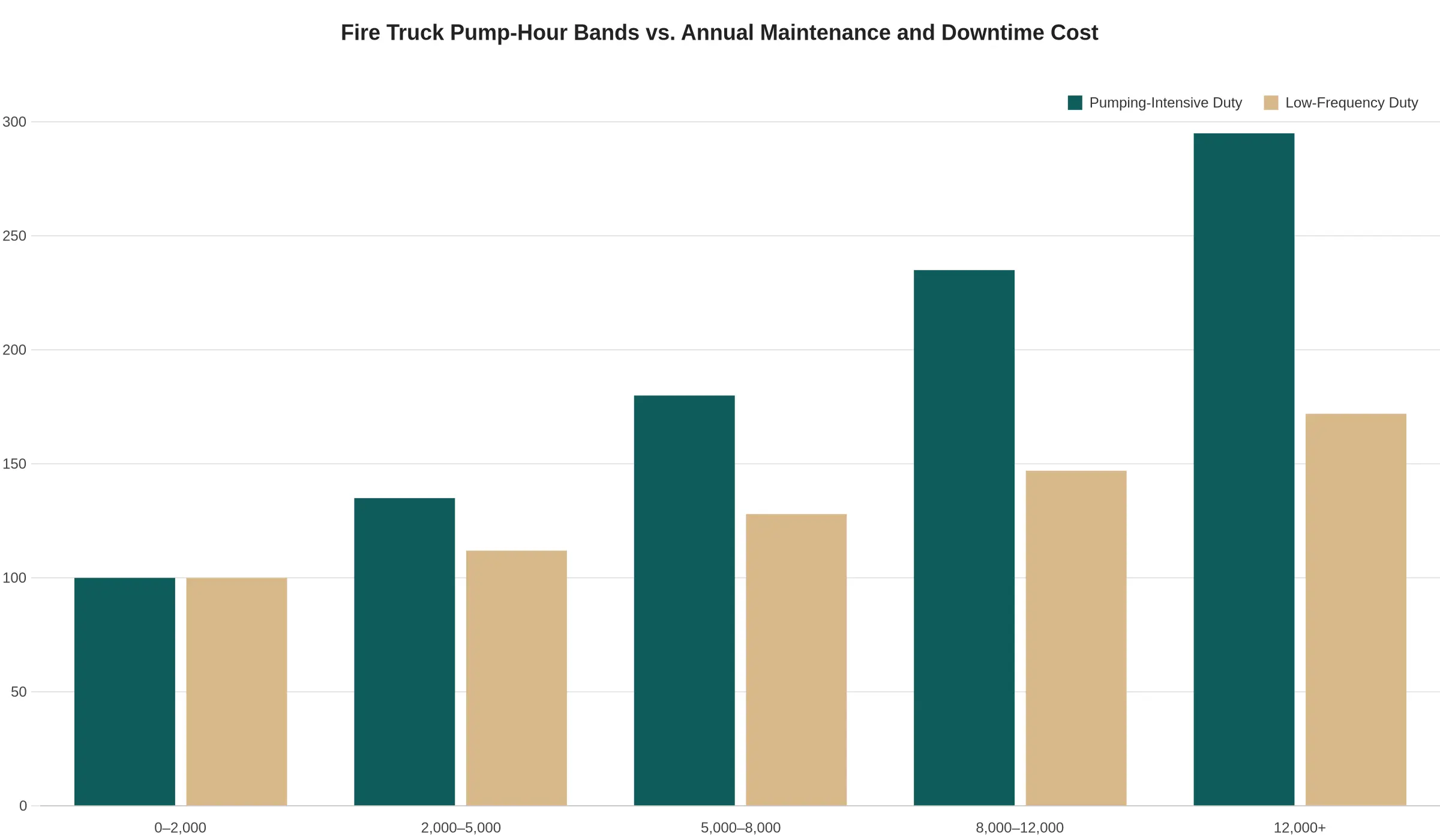
Chart: Fire truck pump-hour bands vs. indexed annual maintenance and downtime cost
Takeaway: pumping-intensive trucks track low-frequency trucks on cost until roughly 5,000 pump hours, then diverge sharply. A recent model year can hide that gap.
Before you commit to any firetruck for sale, work through this sequence in order, because each step feeds the next.
- Obtain the pump-hour log. Ask for the complete hour-meter history, not just the current reading, and compare it against call volume and engine run hours. Gaps or sudden resets usually mean the record is incomplete.
- Verify pump test records. Request the annual performance sheets, including the 100%, 70% and 50% rated-capacity runs with dates, pressures and flow figures. Missing test years are an unknown repair bill.
- Inspect the pump and valve assembly. Look at the pump body, impeller clearance, seals, relief valve and every intake and discharge valve with the system under pressure. Corrosion, cavitation pitting and stiff valve stems matter more than fresh paint.
- Confirm the driveline configuration. Establish whether the pump is driven by a transmission PTO, a split-shaft or its own engine, then check the chassis interface, driveshaft condition and safety interlocks. Configuration drives both repair cost and operator training.
- Check model-year-driven regulatory status. Emissions tier, apparatus standards and local codes can restrict registration, resale or grant eligibility on a mechanically sound truck. Confirm the compliance path before you negotiate.
- Verify parts availability for the model. Check lead times and pricing for pump kits, valve bodies, cab panels and gauge clusters with the OEM and aftermarket suppliers. A discontinued chassis turns a routine repair into a months-long outage.
- Quantify remaining service life against your duty cycle. Convert pump hours into realistic years of service using your call volume, load hours and staffing pattern, then add projected maintenance and downtime to the purchase price.
Done in order, that sequence produces a replacement decision that holds up to auditors, lenders and internal argument. It is also how a review of a firetruck for sale becomes documented reasoning instead of an expensive hunch.
When Model Year Still Governs the Decision
Emissions and safety cut-offs are hard dates. In many jurisdictions, fire apparatus compliance is measured against the standards in force on the date of manufacture. A truck built before a given emissions tier, or before updated braking, stability and occupant-protection rules, may be permanently outside the line no matter how well it runs. Retrofitting a low-hour used truck to a later standard is often technically impossible or economically absurd. Structural and cab requirements tightened the same way: crew seating, rollover protection and cab integrity cannot be brought up to a newer specification on an older chassis.
Electronics and control architecture change in generations. Cab and body wiring, pump controllers, telematics and diagnostic protocols move in platform jumps. A 2006-era multiplexed chassis can be mechanically excellent and still refuse to talk to current pump-control modules, modern scene-lighting logic or the diagnostic tools your technicians already own. Once a fleet standardises on a newer architecture, the savings from older iron vanish into adapter harnesses, custom programming and downtime. Buyers weighing platform generations can compare heavy-duty fire truck platforms against legacy builds to see how far the control layouts have moved.
Insurers, tenders and parts pipelines all reference year of manufacture. Underwriters price or decline coverage by age band, public tenders may state a maximum age at delivery, and certified spare parts availability disappears quietly once a series is discontinued, which is when fire truck parts become a sourcing problem rather than a phone call. So model year should override pump hours only when a real compliance or parts barrier exists. Absent that barrier, hours, service records and drivetrain condition remain the sharper measure of what you are buying.
| Decision factor | Does it override pump hours? |
|---|---|
| Emission or safety cut-off | Yes – hard barrier |
| Cab and structural standard | Yes – hard barrier |
| Certified parts availability | Yes – hard barrier |
| Insurer age band or tender clause | Yes – contractual barrier |
| Cosmetic age, styling, features | No – hours and condition lead |

Matching Truck Categories to Duty Cycles
Which meter actually spins depends on what the truck does all day. A 2015 pumper with 1,200 pump hours and a 2015 pumper with 5,400 pump hours are not the same asset, even though the calendar says otherwise. The categories below show where the accumulation happens, so you know which number to read first.
ARFF and Aircraft Rescue Units
Aircraft rescue units sit at the ready, then run flat out for a handful of minutes during a drill or an incident. Pump hours creep up slowly, often a few hundred across a full decade, while idle engine hours, tyre time under load and drivetrain wear climb much faster. On ARFF and aircraft rescue fire fighting apparatus, model year, engine and transmission condition and foam system integrity usually outweigh the pump-hour reading.
Industrial Fire Trucks
Industrial apparatus live a different life. A refinery, terminal or mill may run monitors and deluge systems for hours during turnarounds, hot work permits or continuous process protection, so pump-hour meters climb week after week and impeller, seal and valve wear becomes a recurring cost line. On these rigs pump hours genuinely rule: read the hour meter first and the build date second on an industrial fire truck.
Aerial Ladder and Aerial Fire Trucks
Aerials sit in the middle. The pump often runs at lower pressures for shorter periods, so hours accumulate moderately, but the boom, turntable and outriggers collect wear that no hour meter captures. On an aerial ladder fire truck, inspection and certification history usually matters more than the meter, and a low-hour aerial with a rusty boom will cost you more than a well-maintained high-hour unit.
Water Tanker and Water Tower Fire Trucks
Shuttle tankers accumulate hours oddly: rapid fill-and-dump cycles, long road runs and heavy PTO engagement rather than sustained pumping. Chassis mileage and tank condition then rival the pump meter. Water towers lean harder on the pump but in short high-pressure bursts, so seal and relief valve history is the tell. For either, check water tanker fire truck listings with the odometer and the hour meter both in hand.
Small and Light Fire Trucks
Brush trucks and light attack units rarely accumulate meaningful pump hours; a busy season might add 100. Their limits are chassis mileage, structural fatigue from off-road work and age-related electrical decay. In a fire truck fleet replacement plan, these are the rigs where model year should carry the most weight and pump hours the least.
Foam Fire Trucks
Foam apparatus pair moderate pump hours with a separate wear cycle in the proportioner, foam tank and flush system. A low-hour foam truck with a corroded proportioner and a neglected post-use flush routine can be the more expensive purchase, so ask for foam system service records alongside the meter reading.
CAFS Fire Trucks
Compressed air foam systems stack two meters on one chassis: pump hours and compressor hours. A CAFS fire truck worked hard in wildland service can run up compressor wear far out of proportion to its pump reading, and compressor rebuilds are not cheap. Treat the higher of the two numbers, with the service log beside it, as the wear indicator that matters.
So pump hours are a strong signal on industrial and CAFS rigs, a moderate one on aerials, tankers and foam units, and a weak one on ARFF and light trucks. Match the metric to the duty cycle and the shortlist stops being a list of the youngest trucks.
The Cost-of-Ownership Case: Why Pump Hours Drive Value More Than the Build Year
Two trucks can leave the factory in the same year and be worth very different amounts a decade later. Model year sets the shape of the depreciation curve. Pump hours decide where on that curve you sit. The comparison that holds up is total cost of ownership per remaining service hour, not sticker price against sticker price.
Capital cost spread over remaining pump hours
Divide what you paid by the pump hours a unit can realistically still deliver and the ranking of two same-priced trucks flips fast. A $250,000 unit with 8,000 usable hours left works out to roughly $31 per available hour. The same money on a truck with 2,500 hours left is closer to $100. The low-hour asset looks expensive until you price the hours it actually sells you.
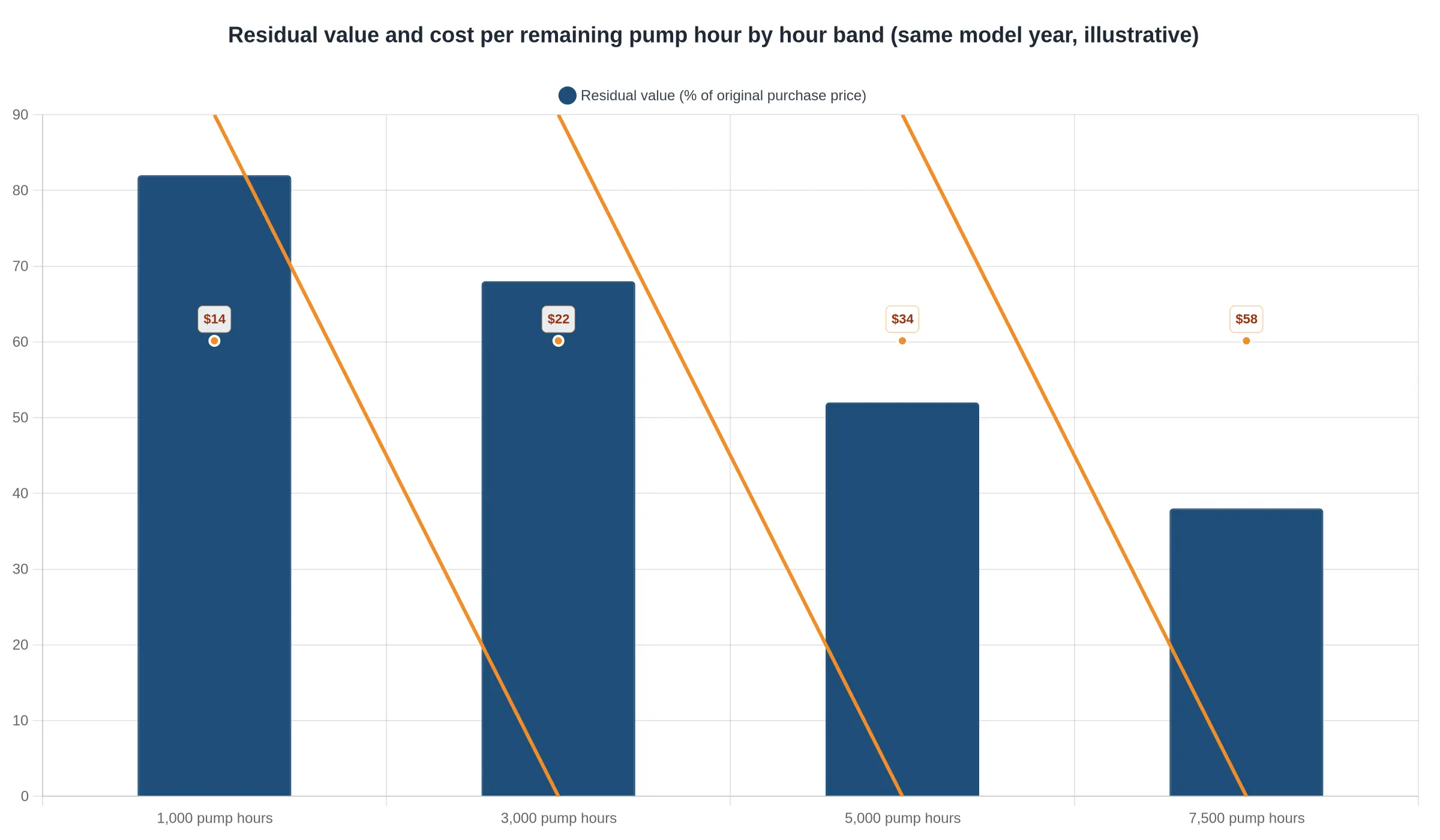
Illustrative figures: residual value falls and cost per remaining hour climbs steeply as pump hours accumulate.
Maintenance and downtime exposure
Pump hours come closest to being an odometer for the water side of the machine: impeller wear, seal and packing failures, valve seating, driveline stress from PTO engagement. Past a certain point, repairs stop being scheduled and start being surprises, and downtime usually costs more than the parts. A pump out of service can mean a mutual-aid call, a missed industrial standby contract, or a substitute unit rented at short notice.
Residual value: same model year, different hours
Sale prices confirm what the maintenance ledger already suggests. Buyers pay for hours first and age second. A 2016 unit with 1,800 pump hours tends to bring more at auction than a 2013 unit with 6,500, so the newer truck is not automatically the more valuable one. That single assumption accounts for a lot of overpriced replacement decisions.
Opportunity cost of holding a high-hour unit
Every extra year a high-hour truck stays on the roster compounds three costs at once: unscheduled repair spend rising, resale proceeds falling, and capital locked in an asset whose buyer pool is shrinking. Selling while hours are still moderate almost always nets more than running the unit to failure and scrapping it.
Side-by-side: same model year, different hours
| Metric (illustrative example) | 1,800 pump hours | 7,200 pump hours |
|---|---|---|
| Purchase price paid | $260,000 | $260,000 |
| Remaining service hours | 8,200 | 2,800 |
| Capital cost per remaining hour | ~$32 | ~$93 |
| Annual unscheduled repair spend | $4,000 – $6,000 | $15,000 – $22,000 |
| Estimated resale as % of original price | ~70% | ~40% |
| Days out of service per year | 5 – 10 | 25 – 40 |
The decision rule
- Compare candidates on cost per remaining pump hour, not on model year alone.
- Load maintenance and downtime risk into the comparison, not just purchase price.
- Assume a buyer looking at a firetruck for sale will discount high pump hours harder than an older model year.
- Use hours to decide when to sell, and model year to decide what to buy next.
If you are building a replacement shortlist, filter the fire-fighting truck inventory on published pump hours before anything else.
Common Questions
Do pump hours or model year matter more when buying a firetruck for sale?
Pump hours say more about mechanical wear, because they measure work the pump, plumbing and cooling system have actually done. Model year still decides emissions rules, parts availability and safety standards. For most buyers, a slightly older truck with low pump hours is the better machine, provided it clears the compliance check.
What pump-hour threshold signals it is time to replace the pump?
There is no standard threshold. A common planning benchmark is 10,000 pump hours for review and 15,000 for replacement, but those are rules of thumb and performance decides. A pump that struggles to hold pressure, drips constantly at the packing, or keeps losing capacity on annual tests is worn out at whatever hours it shows.
How many pump hours are typical per year for a municipal or industrial truck?
A municipal pumper in a busy district might log 150 to 400 pump hours a year; a quiet volunteer department often sees fewer than 100. Industrial apparatus on standby, transfer and relay duty can run 500 to 1,000. Aircraft rescue rigs go the other way: they pump in short bursts during drills and daily checks, so the pump meter stays low while engine hours and driveline time climb.
Is a low-hour older fire truck a sound purchase?
It can be good value for a business that needs dependable equipment without a new-unit price. Low pump hours on an older chassis usually means the pump and drivetrain still have life in them. Verify the hours are genuine, inspect the tank for corrosion, and budget for hoses, gauges and seals.
What records should a buyer request on a firetruck for sale?
The complete pump test records, including annual flow tests for the past several years. Add maintenance and repair logs, oil analysis if it exists, apparatus data plate details, tank and plumbing inspection reports, and any certification paperwork. Sellers who keep tidy records usually look after the truck, so missing paperwork is a warning in itself.
How can I confirm the hour meter actually reflects real pump time?
Ask for a live pump test instead of trusting the meter. Run at rated pressure for at least twenty minutes, watch for pressure loss, overheating or leaks, and compare the meter reading against the maintenance log.
Applying the Framework
Whatever you decide, record both figures in the same place: pump hours off the meter, model year off the chassis plate, with the date of each reading, the last pump test and any major repair. Annual budget reviews and scheduled maintenance cycles are the natural points to refresh them, and the pairs stay comparable across the roster once the dates line up.
That record is also what makes a decision legible years later, when a new manager asks why a unit was retired or kept. It follows the truck when ownership changes, whether the apparatus is new or previously in service. Chassis classes and body configurations are set out in the fire fighting truck category.