Quints for Sale: Choosing Between a Quint and a Pumper
A quint carries a pump, a water tank, a hose bed, an aerial device and a set of ground ladders on a single chassis; the name comes from quintus, the Latin word for fifth. The aerial is the piece that rearranges everything else on the sheet. A quint is not a pumper with a ladder bolted on: mounting a boom and turntable redistributes weight, wheelbase, plumbing room and tank volume across the whole chassis, and that redistribution turns the purchase into a three-way trade between pump-and-water capacity, aerial reach and the bay length your station can physically house.
For a fleet, facility or municipal manager comparing quints for sale against conventional pumpers, the quint vs pumper decision comes down to arithmetic: how much flow and water you give up as the aerial grows, how vertical reach and horizontal setback interact on a real response, and whether the finished length and stabilizer footprint fit the bay you already own. The sections below work through capacity, reach and building constraints in that order, then pull the three into one specification checklist.
Quint vs Pumper: The Five Functions That Share One Weight Allowance
Gross vehicle weight rating is the one figure on an apparatus spec sheet that nobody renegotiates later. Everything you pump, fill or bolt on has to fit inside it, and a quint asks that single allowance to cover five jobs at once. That is the core of the quint vs pumper question, and it explains why no quint is equally good at all five.
- Pump – your achievable flow rate. Extra gallons per minute compete directly with tank size and body space.
- Water tank – your first few minutes of independence. A 500-gallon tank alone is more than two tons of payload.
- Hose bed – attack and supply lines. Large-diameter hose is one of the heaviest single loads on the truck.
- Aerial device – reach and an elevated master stream, paid for in boom structure, torque box and outriggers.
- Ground ladders – portable access to roofs and windows, stored in space the hose bed and shelving also want.
Structure Eats Payload
In weight terms the aerial is the most expensive item on that list. A boom needs a torque box built into the chassis to resist twisting loads, and the box adds steel along the frame before a single tool goes aboard. Stabilizers and outrigger pads then add mass low and wide, which is exactly what keeps the truck from tipping, but it is weight the tank, hose and compartments cannot use.
Volume Is the Quieter Constraint
Water is heavy, and it needs a baffled tank occupying a fixed block of body volume. Every gallon you add pushes compartment space outward or pushes equipment off the vehicle altogether. Crews who insist on a big tank often find their cribbing, fans and extrication tools riding on someone else’s apparatus.
Hose, Ladders, and Shelving All Want the Same Real Estate
The hose bed, the ground-ladder rack and the equipment shelving all draw on the same space behind the cab. A deeper hose bed for long supply lays leaves less room for a 35-foot extension ladder and the shelves holding your hand tools. Builders stack and rearrange, but the tradeoff does not disappear; it moves to a less obvious corner of the body.
Why a Pumper Feels So Roomy
A pumper truck carries no aerial device, so it skips the boom, the torque box and most of the outrigger mass. Nearly all of its payload goes straight into pump capacity, water and hose, which is why a comparably sized pumper can out-pump and out-carry a quint. Where hydrants are reliable and access roads are good, that efficiency is worth more than an aerial ladder your crew rarely raises.
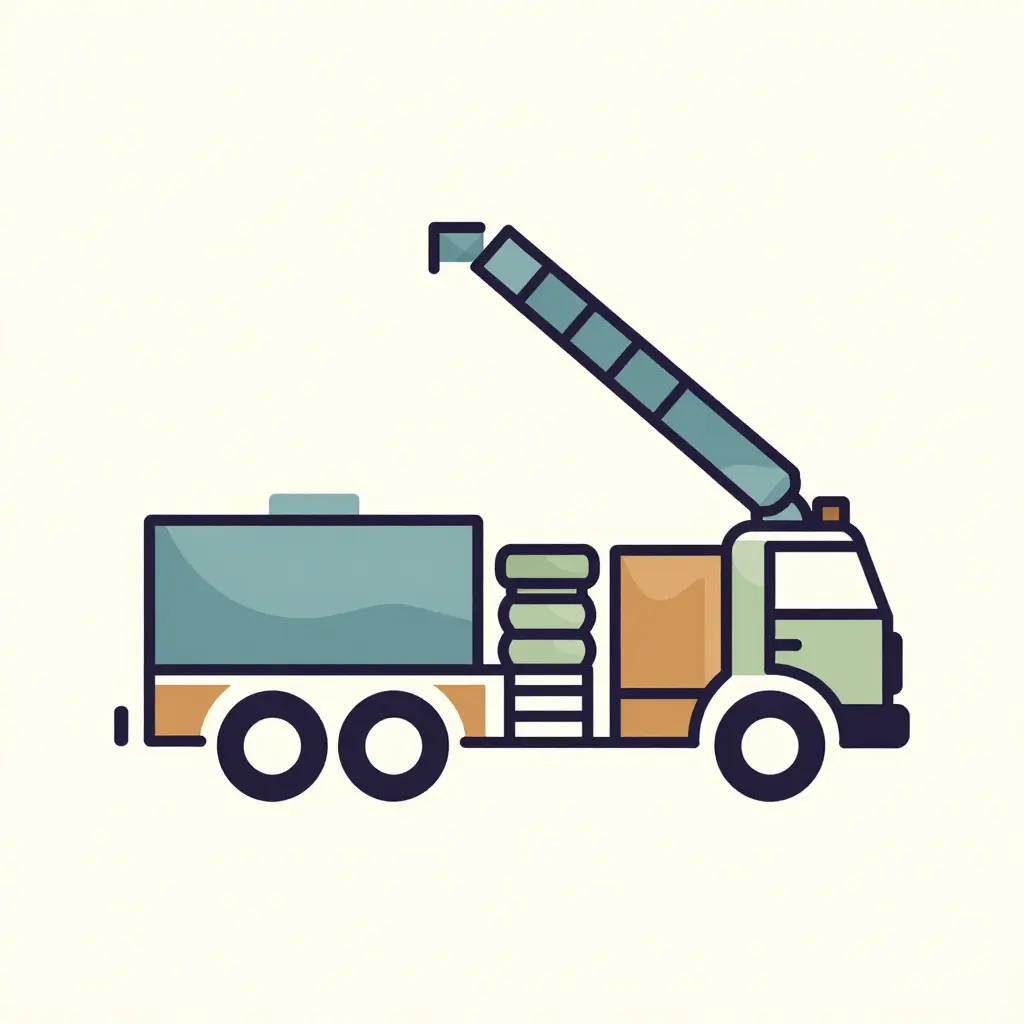
One chassis, five jobs: tank, pump, hose, boom and ground ladders, each zone color-coded so the space budget is visible at a glance. The boom and the ladder rack compete for the same real estate along the body. If reach is your deciding factor, explore the aerial fire truck lineup and compare configurations before we get to capacity.
Aerial Reach: What Vertical Height Actually Costs
Reach is a system output, not a number you can order off a list. The height a nozzle actually delivers depends on boom length, and just as much on stabilization footprint, outrigger spread, chassis stiffness and axle load limits. Move one of those and the others move with it, which is why two trucks quoting the same working height can weigh, measure and cost very differently once they are parked on your apron.
The escalation runs in one direction, and it runs fast. More reach means a longer or heavier boom, which needs a torsion-resistant body and wider stabilizer geometry to hold the tip steady against flow reaction. That steel and geometry raise gross vehicle weight, which pushes the chassis into a heavier class, which drags tire capacity, braking performance and road-legal dimensions along with it. Every foot of height is paid for at the axle, at the pump and at the permit office.
Measure the job, not the demo unit. Start with your tallest building and anything you must protect from above, add the plumbing allowance between the boom tip and the actual discharge point, and specify to that figure. An aerial ladder fire truck sized to your real working height will outperform an oversized show truck on most call-outs. Where the risk is water volume rather than ladder work, a water tower fire truck delivers useful height without the ladder premium.
Nor does every response justify maximum reach. A shorter boom on a lighter chassis sets up faster, needs fewer stabilizer pads and less cribbing space, and costs less to maintain across its service life. For many owners the right aerial is the one level and flowing in minutes, not the one with the biggest number on the decal.
The Payload Trade, in a Single Picture
A quint buys you an aerial device and charges you in payload. Its gross vehicle weight has to cover a ladder, turntable, outriggers, a torque box and a pump on one chassis, and the line item that gives way is almost always water, hose and compartment depth. A pumper carries no aerial load, so it arrives with a bigger tank, a longer hose bed and deeper storage.
Numbers settle that argument with a budget committee faster than adjectives do.
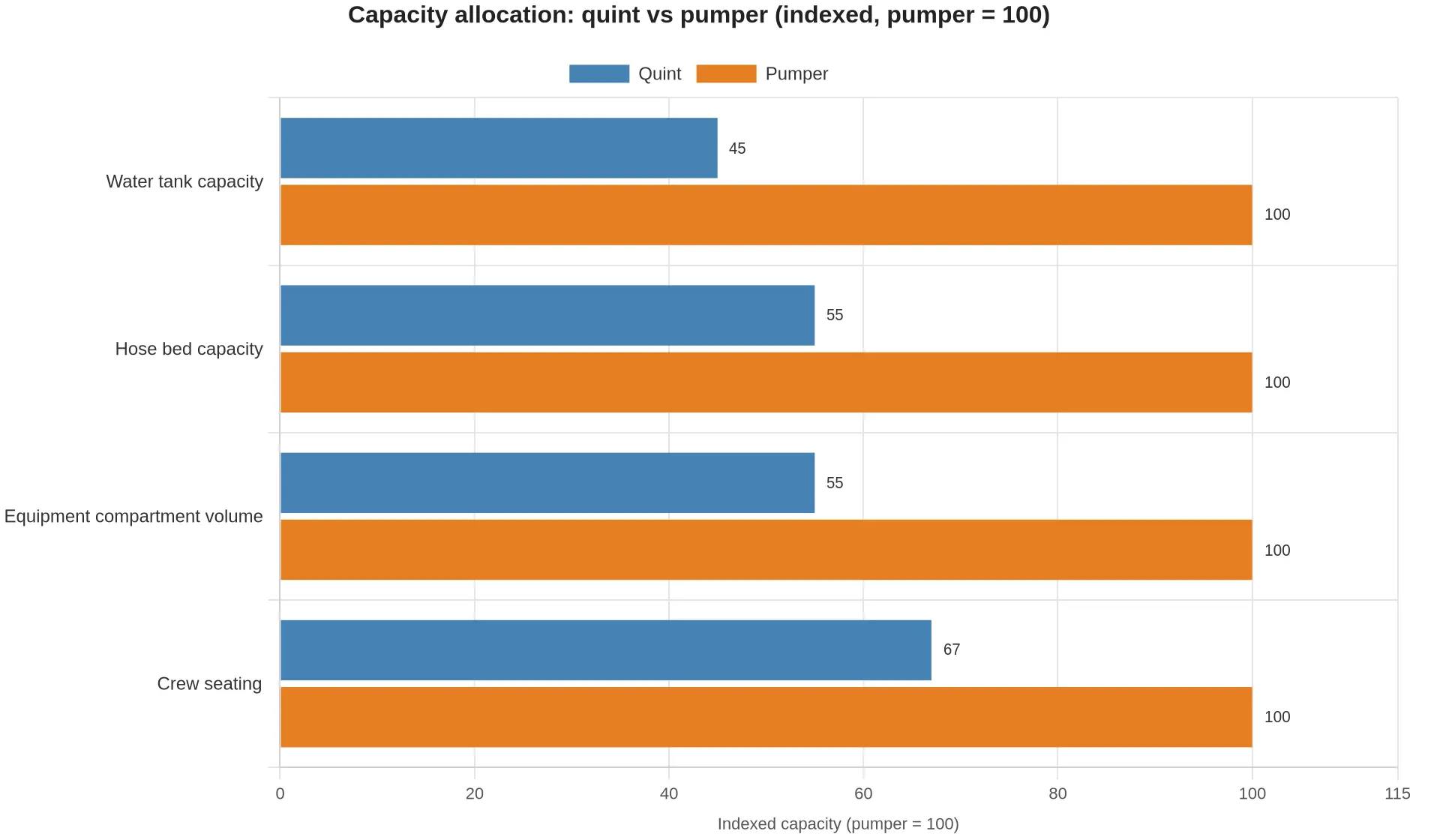
Figure 1. Bars show how much water, hose, compartment space and seating a quint and a pumper typically bring to the same call, with the pumper set at an index of 100 so four different parameters can share one axis. Absolute figures appear in the specification table further down.
These are illustrative ranges drawn from common configurations, not quoted specifications for any truck we sell; tank sizing, body style and axle ratings can move them considerably.
Water is the widest gap. A quint generally carries 300 to 500 gal against 500 to 1,000 gal on a pumper, which is the difference between a working knockdown and a call for tankers. Hose bed and compartment volume sit in the middle: roughly 800 ft of hose and 100 cu ft of compartment space on a quint, against about 1,500 ft and 180 cu ft on the pumper. Seating is the narrowest spread of the four and the least predictable, because the same body can be ordered with anything from four to six seats and the count follows staffing and cab choice as much as the aerial.
None of that makes a quint the wrong buy; it makes it a different buy, and the expectations should be sized to match. If your first-due response rests on a fixed water supply and a short stretch, the payload hit barely shows. If your district is rural or your hydrants are thin, walk the lot and count compartments before you commit, and read through the aerial fire truck models to see how tank and body options stack up on real chassis.
Bay Length: Fitting the Apparatus Your Station Can House
Reach numbers are worthless if the building refuses to accept the truck that carries them. Start with internal clear bay length, measured from the rear wall to the face of the door opening, not from the edge of the apron and not from a decade-old floor plan. Most buyers quote the room they believe they have, and the usable figure is shorter, because hose racks, heaters and door tracks take part of it.
Next, compare that clear length against stowed overall length, meaning the bumper-to-tail dimension of a fully loaded vehicle with the aerial nested. Then check wheelbase and the turning envelope on approach, because a long wheelbase needs a wide, deep apron to line up before the truck crosses the threshold. A unit that only fits when reversed in at one particular angle does not really fit.
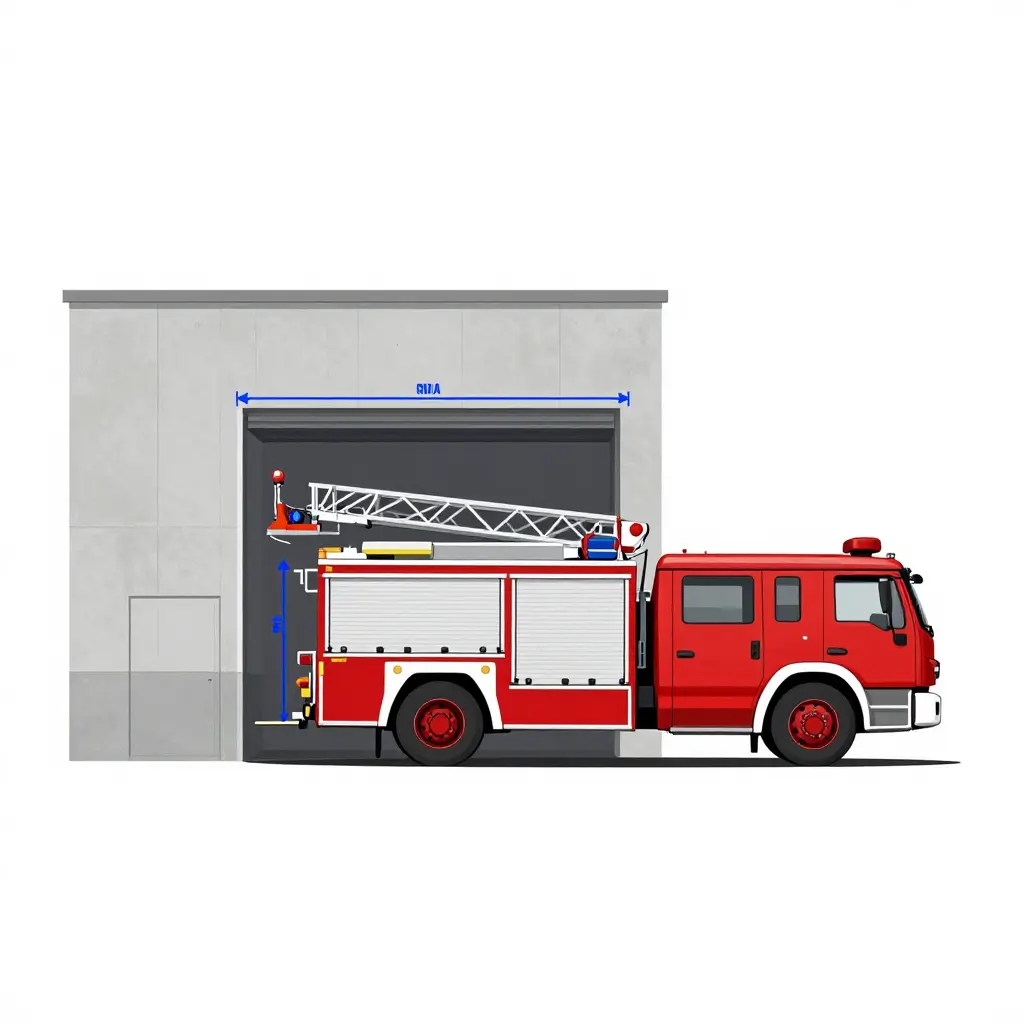
Door clear height is the measurement buyers miss most often, and it has to clear both the stowed aerial and the light bar. A boom sitting low in its cradle can still be high enough to foul a rolled door frame or a low header. Ask for the stowed height profile, not the travel height.
Outrigger deployment is the constraint that stays hidden longest, because plenty of older stations were built with very little side clearance. If the truck has to set up straight out of the bay, the full outrigger spread must deploy with the vehicle still inside the door line. Otherwise the crew either repositions the rig or deploys partially and gives up the stability the aerial was bought for.
Stowed length is really an aerial decision: boom length and cradle position drive tail overhang, and tail overhang drives overall vehicle length. More reach commonly means a longer vehicle, which is why a rear-mount can be outright incompatible with a short bay while a mid-mount or a lower-profile aerial slips in. If clear length is your tight number, look at heavy-duty fire truck chassis and apparatus built around tighter footprints before you settle on a reach figure.
| What to measure | Why it decides the purchase |
|---|---|
| Internal clear bay length, rear wall to door face | Must exceed stowed bumper-to-tail length with margin |
| Door clear height | Must clear stowed aerial device plus light bar |
| Wheelbase and turning radius | Governs the approach swing and apron depth needed |
| Apron depth and slope | Room to straighten the rig before entering |
| Outrigger spread and side clearance | Allows full setup without leaving the bay |
A poor fit costs response time and money, not appearance. Restricted deployment and extra repositioning burn seconds on every call, while structural or door modifications bring in engineering reviews and permitting lead times that can outlast the truck build itself. Measure the building first, write the numbers down, and only then shortlist any unit being offered as a quint for sale.
Three body styles, one table. Scan the rows that describe your response area, then check the survey specifications on the aerial fire truck lineup.
| Specification | Pumper | Quint | Aerial Ladder Truck |
|---|---|---|---|
| Primary operating role | Engine company attack, water supply, hose deployment | Combined engine and truck company work | Aerial rescue, elevated master stream, ventilation |
| Water tank capacity | 500-1,000 gal typical | 300-500 gal typical | 0-500 gal, many run dry |
| Pump rating | 1,250-2,000 gpm | 1,250-1,750 gpm | 1,000-1,500 gpm, often optional |
| Hose bed capacity | Large, 1,000-1,500 ft | Reduced, 600-1,000 ft | Minimal, 400-800 ft |
| Ground ladder complement | Full set, typically a 35 ft extension plus roof and attic ladders | Full set, 100+ ft total | Full truck company ladder set |
| Aerial device | Absent | Present, 75-110 ft | Present, 75-150 ft or more |
| Typical crew seating | 4-6 | 5-6 | 4-6 |
| Chassis and gross weight class | Commercial or custom, 30,000-45,000 lb | Custom, 45,000-62,000 lb | Custom, 55,000-80,000 lb |
| Approximate station bay length | 30-35 ft | 38-45 ft | 40-55 ft, tillers longer |
| Best-fit use case | High-call-volume suppression districts | Departments needing both functions on tight staffing | Tall buildings, dense downtown, heavy truck work |
Note: all figures above are indicative ranges intended for planning discussion only. Final specifications vary by manufacturer, chassis selection, axle ratings and configuration – confirm tank size, pump rating, ladder complement and overall length against the builder’s drawings before you commit a bay or a budget.
A Six-Step Quint Evaluation Sequence
Work these six steps in order. Each answer narrows the options for the next one, and the expensive steps come last.
- Set the required aerial reach from your asset heights. Measure the tallest roofline, tank battery or racking you must defend, then add standoff, slope and operator margin. This figure is where an industrial fire truck and a standard unit often part ways.
- Measure bay length, clear height and approach geometry. Door width, apron turning radius and overhead clearance decide more purchases than horsepower does, so compare real dimensions against the fire fighting truck lineup before you shortlist.
- Size the water tank and hose bed against hydrant or water-supply conditions. Weak mains and long shuttle distances justify a larger tank, while strong hydrants reward hose capacity instead.
- Confirm chassis weight class and road-legal axle loads. A full tank plus an aerial device easily pushes past axle or bridge limits on the routes you drive daily.
- Model crew staffing and training against the combined functions. One crew has to pump, ladder and rescue, so count seats and certification hours honestly rather than optimistically.
- Request a written specification covering warranty, service network and delivery schedule. Get lead times, parts support and inspection intervals documented before anyone signs.
Steps one and two pull in opposite directions: every extra foot of reach adds boom weight and often length that your bay has to swallow. Settle that pair before you price anything: the remaining four steps stay cheap to answer, and you avoid specifying a quint that fits the brochure but not the building.
Reach vs. Bay Length: The Central Tradeoff
The chart below reads left to right along the horizontal axis, which shows vertical aerial reach in feet, and bottom to top along the vertical axis, which shows the bay length in feet required to house that aerial. Two configurations are plotted side by side: a rear-mount aerial and a mid-mount aerial.
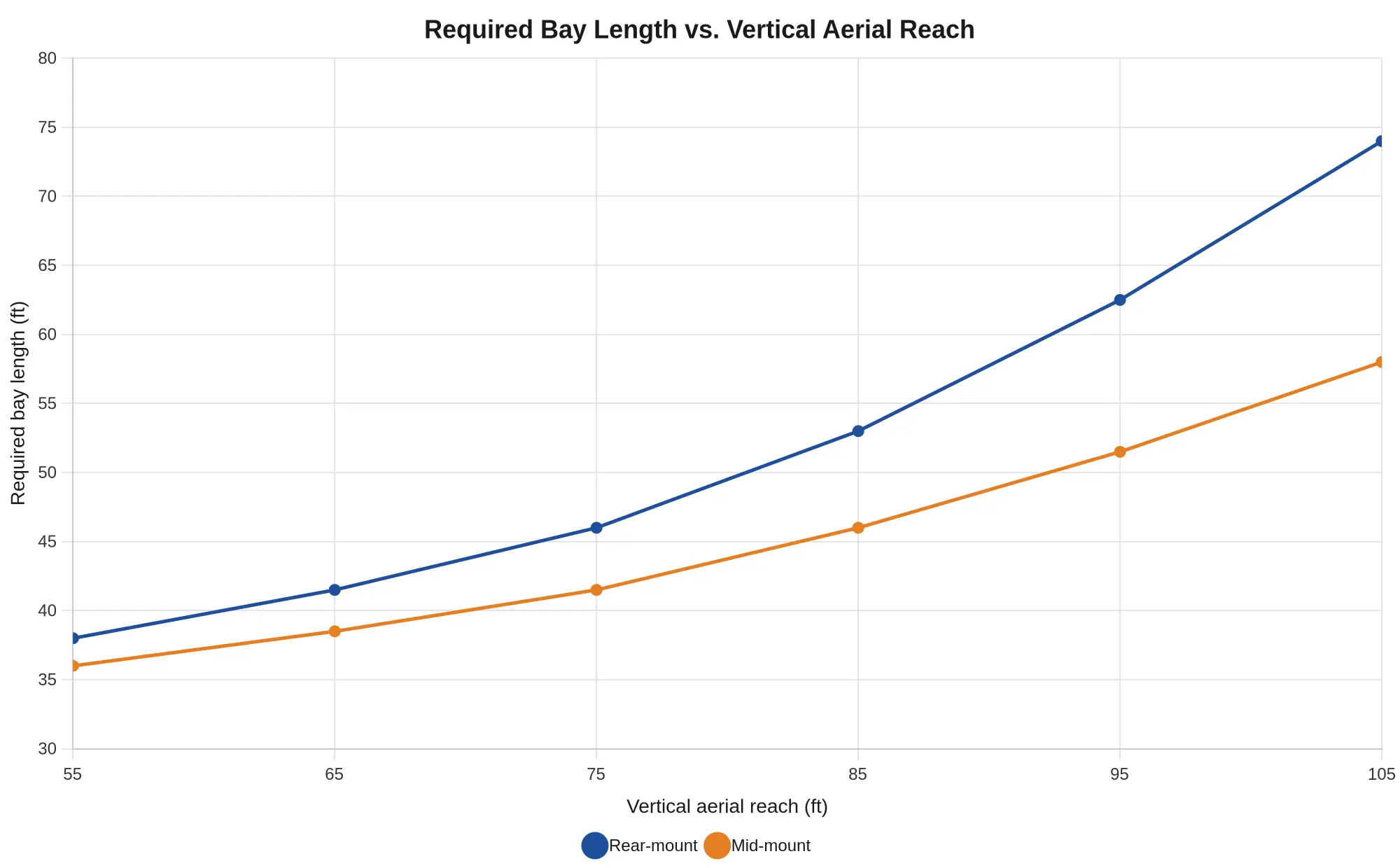
Up to roughly 75 ft of vertical reach, the two configurations stay within a few feet of each other, so the choice between them looks almost free. Past that point the rear-mount line turns upward sharply, adding bay length far faster than the mid-mount line, and every extra foot of reach starts costing real building. That is why station measurement has to happen before specification, not after the paperwork is signed.
What the Divergence Means for Your Building
Site planners run into this pattern on almost every job: reach is not a free upgrade, because it is paid for in building length. A rear-mounted turntable sits behind the rear axle and throws boom length into tail overhang, so a deeper aerial needs a deeper bay. A mid-mount carries its turntable and boom base over the middle of the chassis, which lets a longer aerial fit into a noticeably shorter building, at the cost of body and compartment space between the axles. Neither layout wins everywhere, which is why these lines should be laid over your own bay dimensions, door clearances and turning radius before anyone talks about price. Where the station is the constraint, browsing an aerial fire truck lineup is a faster way to shortlist configurations than starting from a spec sheet.
| Vertical aerial reach | Rear-mount bay length | Mid-mount bay length |
|---|---|---|
| 55 ft | 38 ft | 36 ft |
| 75 ft | 46 ft | 41.5 ft |
| 95 ft | 62.5 ft | 51.5 ft |
| 105 ft | 74 ft | 58 ft |
Matching Capacity to Duty Cycle, Not to the Brochure
A quint earns its purchase price only when the aerial goes up on a regular basis. Where call volume is dominated by brush fires, dumpster fires and medical assists, you are paying to carry a boom, outriggers and a ladder that spend most of their life folded and untouched. The pump does the work; the aerial inherits the cost.
The Operating Cost of an Unused Boom
Every pound of aerial structure is weight the chassis moves on every response. A heavier rig burns more fuel, wears steer and drive tires faster and loads the brakes on every descent. The building is the cost owners forget: a quint wants longer bays, taller doors and more turning room, so the truck purchase can turn into a station project.
Then there are the people. Running pump and aerial together takes crews who can set outriggers, check ground stability and manage a pump at the same time, or enough qualified aerial operators to cover every shift. Boom certification and inspection cycles cost money on a calendar regardless of how often the boom deploys.
Weigh any refit or new build against the three variables already assessed here – capacity, aerial reach and bay length – and force the specification back onto your actual call mix. Departments that rarely need reach get more for their money from a commercial pumper built for the real workload, and a range of commercial fire trucks makes that comparison concrete. Where genuine aerial work exists, size the boom to it instead of buying the tallest option on the sheet, and compare special-purpose configurations before you commit.
The Bay Is the Real Spec Sheet
Reach figures are easy to compare. Clear bay length is the number nobody prints in bold. The diagram below reduces a quint to three shapes – chassis box, wheels, folded boom – and drops them into an empty station bay, so the fit constraint reads at a glance instead of hiding in a spec table.
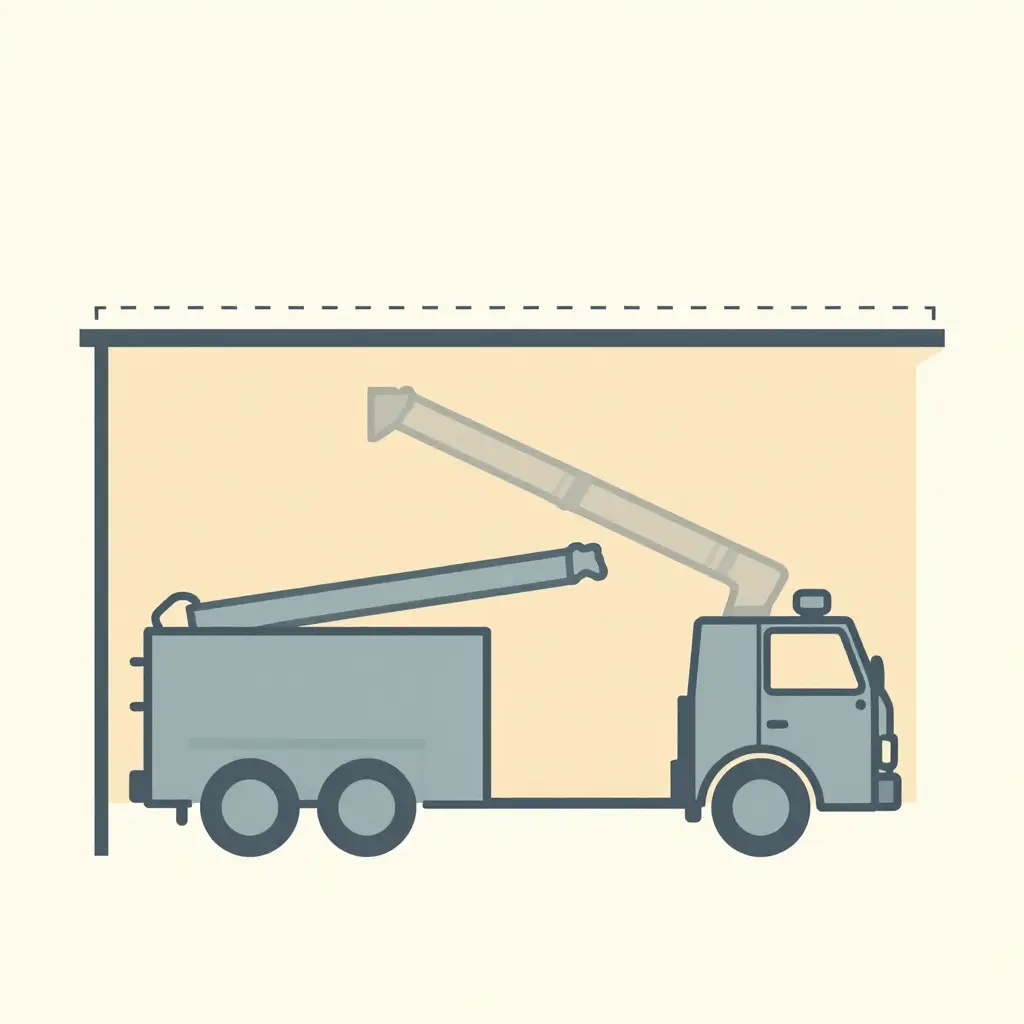
Two things matter in that drawing. The dashed lines are the only dimensions that count operationally: clear length wall to wall, clear door height under the header, and the thin bumper gap nobody can actually use. Then compare the solid boom profile against the lighter variant – same chassis, same wheels, a boom simply stacked a little further forward. That is how a truck that “should fit” becomes a truck that fits with six inches to spare, which is no spare at all once you allow for door tracks, drip edges and a driver in a hurry. If boom architecture is still open, look at aerial fire truck configurations side by side before you commit bay dimensions to paper.
Frequently Asked Questions for Quint Buyers
Four questions come up in almost every capital budget review. Configuration data for the wider lineup sits in the fire equipment truck range while you read.
Is a quint a better purchase than a pumper?
Only where elevated operations appear regularly in your call mix; otherwise a pumper delivers more usable payload per dollar. In the quint vs pumper comparison, the ladder, outriggers and torque box typically add 6,000 to 9,000 lb to the chassis, and that weight comes out of water and equipment capacity. Exact figures depend on how the truck is configured.
How much aerial reach should a buyer specify?
Enough to cover the tallest occupiable roofline in your response district plus a working margin, commonly 75 to 100 ft for mid-rise commercial property. Measure the buildings rather than averaging the district, because a 20 ft shortfall cannot be recovered on scene. Reach, chassis weight and outrigger spread grow together, so this figure drives much of the rest of the specification.
How much bay length does a quint require compared with a pumper?
Roughly 40 to 45 ft of clear bay length, against 30 to 35 ft for a comparable pumper, which in most pairings works out to about 10 ft more building. Measure wall to wall at floor level, from the rear wall to the face of the door opening, excluding the apron and door tracks. Wheelbase and rear overhang grow as well, and the ranges shift with body style and aerial size.
Can an existing station be modified instead of choosing a shorter apparatus?
Often yes. Raising door headers, extending a bay or relocating apparatus usually costs less than accepting reduced aerial reach from a shorter chassis. Confirm floor slab loading before ordering, since a loaded quint can exceed the rating of an older slab. Structural work also takes time, so the station schedule and the truck build schedule need to line up.
Deciding the Three-Way Tradeoff
Capacity, aerial reach and bay length are linked: squeeze one and the other two shift in response. The right apparatus is the one whose weakest point costs your operation least.
Measure the bay before you fall for a spec sheet. Let your tallest realistic asset height set the reach you actually fund. Compare lifetime cost, not the invoice that lands on delivery day.
CIMC Tianda supplies aerial, industrial, small and commercial fire apparatus for buyers comparing configurations, including aerial fire apparatus.