Cheap Price ARFF Truck: Cab Egress and Crew Response
An aircraft rescue fire fighting truck (ARFF) is built for one job: get to a wrecked aircraft within minutes and put extinguishing agent, water and rescue tools where survivors are. It carries foam, water and dry chemical, a high-output pump, and a roof or bumper monitor sized for aviation fuel fires. Most buyers comparing a cheap price ARFF truck work from a specification sheet, and on that sheet tonnage, pump capacity and tank volume get all the attention.
Two things the sheet rarely captures decide whether a low-cost vehicle performs once the alarm sounds: how a fully equipped crew gets out of the cab, and how the vehicle is laid out for the minutes between the truck stopping and the first agent on the fire. Those are the subjects here, along with the places where a low price is usually found.
Why Cab Egress and Crew Response Decide the Real Cost
Cab egress is the route from a crew seat to the ground. On an ARFF truck that route is drawn by the builder, not set by the trim level. Door placement, step height, handrail position, exit width and seat layout decide how many seconds pass before the crew is standing outside with tools in hand, and a cramped or badly sequenced cab can eat the first minute of an incident.
Crew response covers the rest of the run: how quickly the driver gets the pump engaged, how easily the operator reaches the monitor controls, how the team talks to each other on the way down the runway. The purchase price neither guarantees nor rules out good performance here; the cab layout does. A cost-controlled platform with a well-planned cab leaves the fleet budget intact. The same money spent on a compromised layout shows up later as injuries, delay and retrofit work.
CIMC Tianda has been building firefighting and rescue equipment for more than 30 years, and cab layout, crew stations and control placement are planned at the same time as the rest of the vehicle. Business owners can review the aircraft rescue fire fighting truck range to compare cab configurations and crew workflows before committing capital.
Cab Egress Fundamentals: The First Ten Feet of Your Response Time
Response time on an ARFF truck is usually discussed in horsepower, acceleration curves and pump capacity. The clock that matters starts earlier, before a wheel turns. Getting a full crew out of the cab and onto their fighting positions is the first measurable block of crew response time, and it is one of the least examined variables in ARFF truck cab design.
Door count and placement relative to the seats
Door count follows seating layout, and seating layout follows the mission. In a typical ARFF cab the driver sits forward on the left with the crew officer alongside, and two to four more seats fill the rear compartment. With two doors, every crew member leaves through the same opening and a queue forms behind the driver. Four-door layouts put dedicated crew doors in the rear compartment, so front and rear occupants can step out at the same time on opposite sides of the truck.
Step height and grab-handle geometry
The cab floor sits above the chassis, so the descent is a controlled fall unless somebody engineered it as a stair. Look for a low first step, evenly spaced risers, slip-resistant tread, and a grab handle at every transition so a firefighter in full turnout gear and SCBA can keep three points of contact. Handles set too high, too low, or inboard of the door frame push the body away from the truck instead of guiding it down.
Obstruction risk from interior equipment
Seats, radio stacks, monitor controls, thermal imagers and hose reels all compete for the space around the door swing. An item that intrudes on the egress path costs a hesitation, a turn or a snag, and snags multiply when the crew is moving fast in bulky gloves. Good layouts keep the arc of each door clear and push stowage away from the exit corridor.
Emergency egress alternatives
A jammed door, a blocked door, or a cab resting on its side leaves the crew needing a second and third way out. Roof hatches, rear-wall escape windows, kick-out panels and externally reachable release handles are the usual answers, and an illuminated exit marking or an internal release that opens without tools matters as much as the opening itself.
Crew size and exit sequencing
Exit order is a design output, not an accident. With three aboard, the officer usually clears first to take command while the driver and operator follow. With four or five, rear-seat occupants may have to wait for the front row, and the gap between a 2.5-second cab clear and a 6-second one can be the difference between a charged turret and a turret still in travel mode when the crew is fully deployed. Large crews benefit from generous aisle space and independent doorways, which is why the layouts of a heavy-duty fire truck built for sustained airport operations are worth studying.
| Egress element | What to check on a spec sheet |
|---|---|
| Door count and placement | One door per seating row, with rear crew doors opening on both sides |
| Step height | Low first step, even risers, slip-resistant tread |
| Grab handles | Fixed at every step and door frame for three-point contact |
| Interior stowage | Nothing intruding into the door swing or aisle |
| Backup exits | Roof hatch, rear escape window, external release handles |
The arithmetic is unforgiving: a second spent clearing the cab is a second not spent putting agent on the fire. Foam, water or dry chemical on the seat of the fire is the only thing that suppresses an aviation fuel fire, and the cab is pure overhead until the crew is out. When you compare airport fire trucks, give exit geometry the same scrutiny as pump flow. A modest improvement in cab egress pays off on every call the truck will ever run. Browse airport fire trucks with crew-first layouts, then work out how much of your response window is going to the first ten feet.
Cab egress factors to verify on any cheap price ARFF truck
Walk the truck in person with the supplier’s spec sheet in hand and check each item yourself before you sign. If you are comparing chassis listings from different builders, start with the range of airport fire trucks and use the list below as a common baseline for every unit you inspect.
- Number and location of crew doors – count the doors the cab actually has and confirm each one opens on the side the crew needs to exit toward.
- First-step height from ground – measure the drop from the lowest step to the ground. A step well above knee-to-hip range slows a firefighter in full turnout gear.
- Anti-slip step and grab-handle provision – every step needs a textured tread, and a full-length handle should sit within reach of the door opening.
- Interior layout clearance – look for an unobstructed path from each seat to the nearest door, with no hose, tool or console narrowing the aisle.
- Emergency exit accessibility – check that secondary exits, escape hatches and window release handles can be reached and operated from inside without tools.
- Seat harness release type – find out whether belts use a single central buckle or a multi-point latch, and how easily each releases with a gloved hand.
- Visibility of the exit path from the crew seat – sit in every seat and confirm the door, handle and step are visible without leaning or twisting.
- Lighting of the egress zone – test the interior dome lights and step lights, and ask how long they stay lit after the engine shuts down.
Bring the list into the supplier conversation and ask for a written answer on each line. A builder who can answer all eight without checking usually designed for crew response, not just for the sticker price.
Where a Low-Price ARFF Truck Actually Saves Money
Most of what an ARFF truck costs sits in parts buyers never see on a spec sheet: the chassis, the cab shell, the door and step hardware, the interior fit-out, and the certification paperwork. That is good news for a tight budget, because those are the areas where cutting cost does not automatically cut crew response. The trouble starts when a saving quietly changes how fast a firefighter gets from the seat to the ground.
The test for any discount is simple. If it comes out of comfort or cosmetics, take it. If it comes out of cab egress, step geometry or a protective system, price it against the seconds and the injuries it may buy.
Chassis and cab sourcing choices
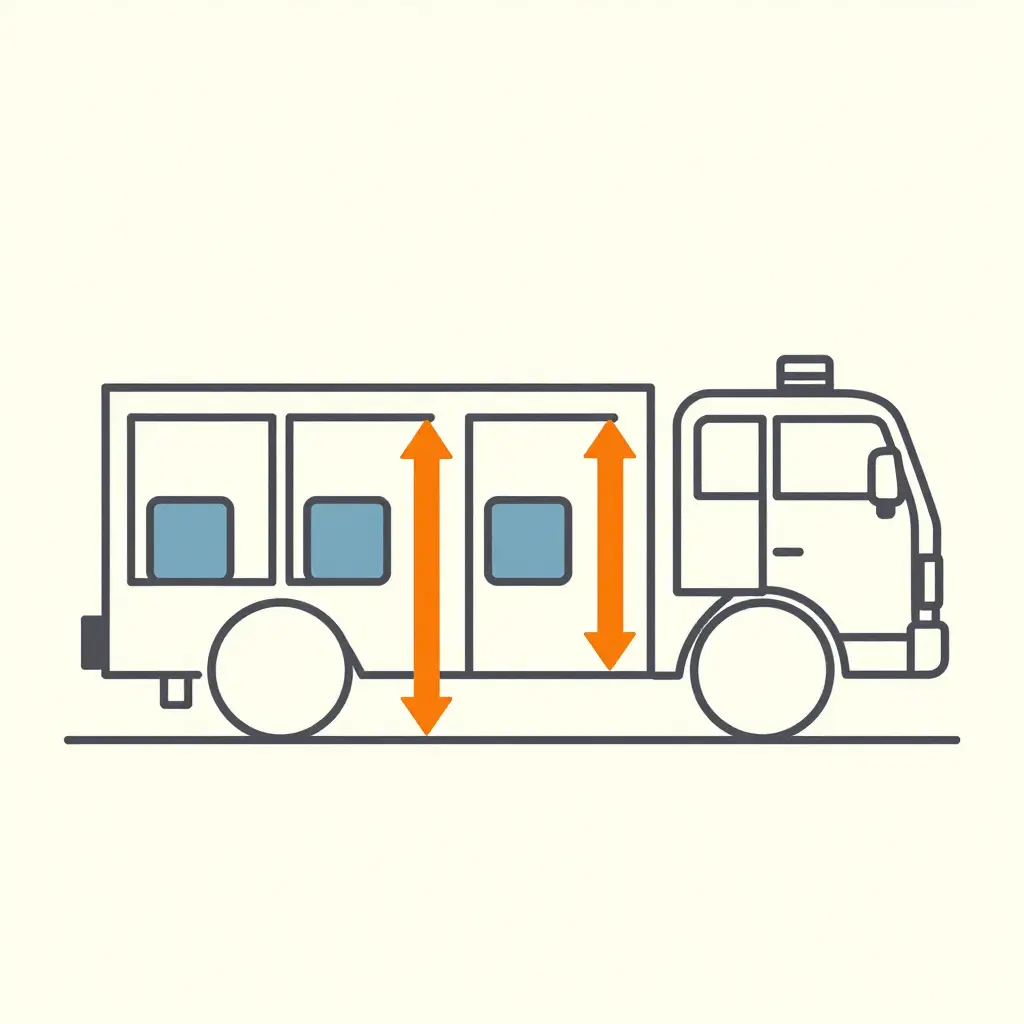
Sourcing a series-production chassis instead of a purpose-built ARFF platform is usually the single biggest lever on price. It also changes cab width, seat count, door aperture height and step height. The saving is neutral only if the finished truck still gives you a full-height opening and a confident two- or three-step climb with handrails. A narrower cab with one tall entry riser saves money at the factory and costs seconds at every turnout. Buyers comparing commercial fire truck platforms should measure door aperture and first-step height before they compare price.
Simplified door and step assemblies
Manual latches, fixed hinges, fewer grab handles and a slimmer step box all cut fabrication cost. Some of that is harmless. A door that opens only to sixty degrees, or a step box that collapses into a single high riser when the crew is in foul-weather gear, is a safety margin removed and relabelled as hardware simplification.
Reduced interior fit-out
Dropping decorative trim, swapping carpet for wipe-down surfaces and simplifying cabinetry lower cost with no effect on egress. Removing the bracket that holds a helmet and coat within reach of a seated, already-masked crew member is a different decision, because that storage exists for response speed rather than appearance.
Manual versus assisted systems
Hand-operated foam valves, manual hose reels and unassisted steps and doors are common on cheaper builds, and most are reasonable trades. Assisted steps are the exception. A manual step has to be deployed by someone before anyone can climb it, which adds a task and a delay at the exact moment the crew is trying to leave.
Differences in certification scope
A narrower certification scope, meaning simpler approval paths and lighter documentation, legitimately lowers price, provided the scope still covers what your airport authority and your insurer require of you.
Comfort savings versus safety-margin savings
| Cost lever | Type of saving | Effect on cab egress and crew response |
|---|---|---|
| Production chassis instead of custom cab | Partly comfort, partly geometry | Neutral only if door aperture and step height are preserved |
| Fixed-hinge doors with reduced opening angle | Safety margin | Slower exit in full PPE; avoid |
| Fewer cabinets and simpler trim | Comfort | No effect on egress |
| Relocated PPE storage | Safety margin | Delays donning and exit; avoid |
| Manual foam and reel controls | Workload | Adds operator steps, not an egress issue |
| Manual folding steps | Safety margin | Requires pre-deployment before crew can climb |
| Narrower certification scope | Documentation | Acceptable if it matches local requirements |
Four specifications should never be traded away: the size and swing of the crew door opening; step height, tread depth and handrail placement; the ability to exit with self-contained breathing apparatus already on; and any system that protects the crew during a response.
A cheap ARFF truck is a good buy when the discounts land on upholstery and cabinets. It is a bad buy when they land on the doorway your crew has to get through.
The chart below turns those cost drivers into two measures a buyer can feel on the apron: how fast a full crew gets out of the cab, and how many ways out they have. Use it to weigh price against response capability before you shortlist a chassis.
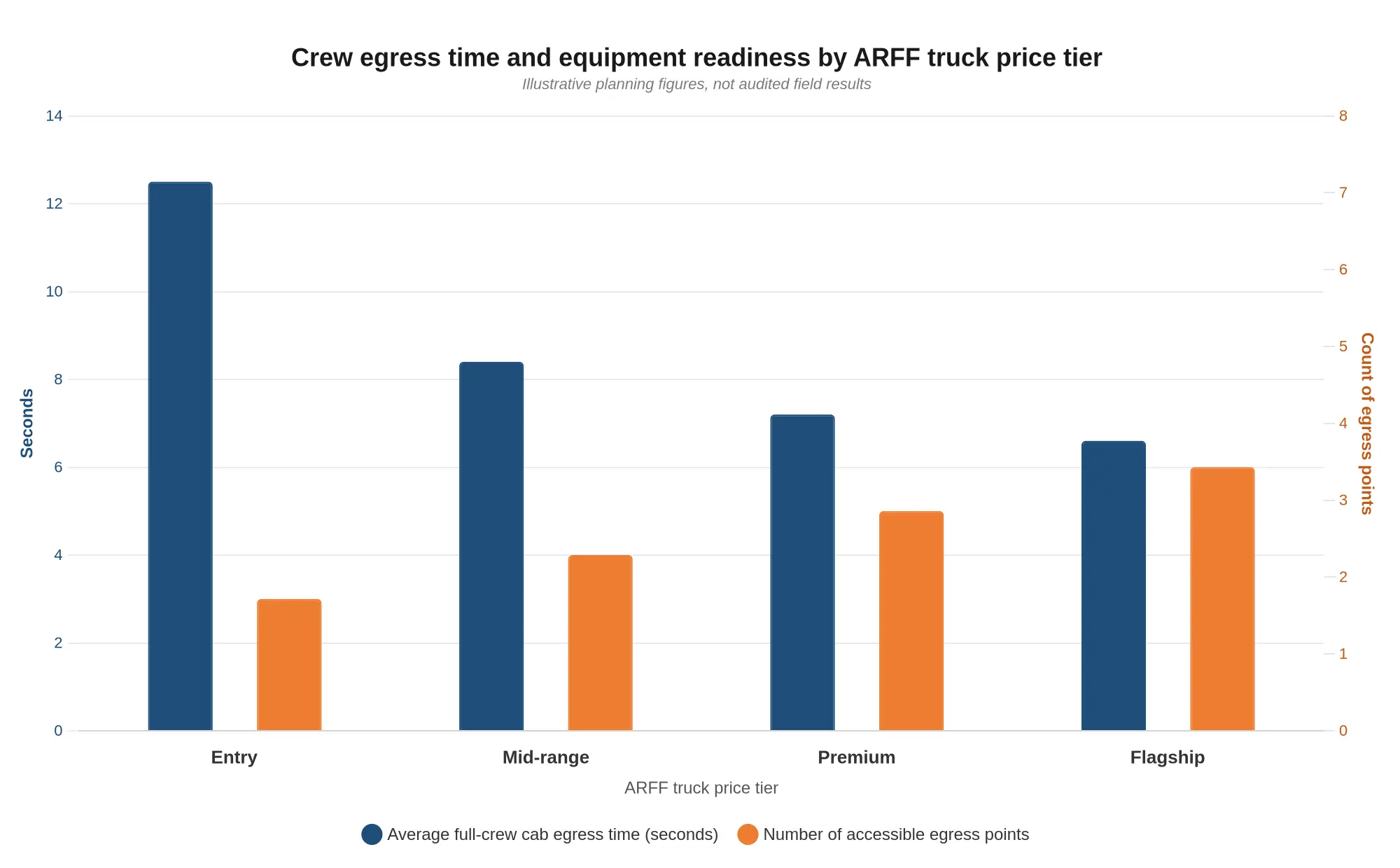
Figure 1. Crew egress time and equipment readiness by ARFF truck price tier (illustrative planning figures, not audited field results).
How to read this chart. Start with the dark blue bars against the left-hand seconds axis, then check the orange bars against the right-hand count axis. Average full-crew cab egress time falls as specification level rises, from roughly 12.5 seconds at the entry tier to about 8.4 seconds at mid-range, 7.2 seconds at premium and 6.6 seconds at flagship. Accessible egress points move the other way, from three to six over the same span. What matters for a business owner is where the curve bends. The entry-to-mid-range step accounts for about 4.1 seconds of the total 5.9-second improvement, so roughly two-thirds of the crew-safety benefit arrives with the smallest price jump. Mid-range to premium buys about 1.2 seconds and one more exit; flagship adds another 0.6 seconds and one more door. A mid-range ARFF aircraft rescue fire fighting truck therefore captures most of the egress advantage, and premium or flagship money is better justified by water capacity, foam performance or chassis durability than by door count. Treat the numbers as planning benchmarks to talk through with your crew, not as certified test data from your own apparatus.
Crew Response Workflow: From Arrival to Agent Application
Most buyers shopping for an economical ARFF unit focus on pump capacity and foam tank size, but the clock starts the moment the truck stops. Before a litre of agent reaches the fire, four or five people have to unclip, stand, exit, gather tools and open a valve. Put a queue at one door and the response chain stalls before the real work begins. No drivetrain upgrade buys those seconds back.
Positioning comes first, and it is a crew decision made from the driver’s seat. The operator sets the truck at the angle and distance that lets the turret cover the hazard while keeping hoses short. Because this happens with everyone still harnessed, the cab layout decides how far the driver must reach or how many screens they must check, and whether the officer beside them can confirm the placement without leaning across.
Parking brake and pump engagement gate everything else. The brake interlock must engage before a safe exit is possible, and the pump shift or PTO switch should sit where the operator can reach it while still belted. In a well-planned cab that switch falls inside the natural reach arc; in a poor one it is a stretch that turns a two-second action into a five-second fumble.
Then comes the harness. A release handle set low and outboard forces a shoulder roll toward the door. An inboard release lets the occupant unclip and rotate outward in one motion, straight toward the assigned exit. Small geometry, repeated on every call.
The exit sequence should follow crew role rather than door proximity. The operator leaves on the pump panel side, the officer moves to command and communications, nozzle operators go rear, and the turret operator heads for the roof hatch or the rear access. Layouts built around that logic give each seat a dedicated, unobstructed path.
Equipment retrieval picks up where the cab leaves off. Hand lines, nozzles and tools need to be within a step of the crew that will use them. Cross-traffic between exiting crew and the equipment lockers is a layout failure rather than a discipline failure.
The chain closes with nozzle or turret readiness, whether that means a pre-connected line charged at the bumper or a monitor swung into position and freed for travel mode.
| Step | Cab-controlled? | Effect on crew response |
|---|---|---|
| Vehicle positioning | Yes, partly | Placement accuracy and turret coverage |
| Brake and pump engagement | Yes | Exit safety and water on demand |
| Harness release | Yes | Seconds lost or saved before anyone moves |
| Exit by role | Yes, by aisle design | Prevents door queuing |
| Equipment retrieval | Partly | Eliminates locker cross-traffic |
| Nozzle or turret readiness | No | Depends on pre-arrival setup |
Seating position should mirror task assignment, one for one. When the person who pulls the bumper line sits next to that locker, and the operator sits next to the pump controls, the workflow stops needing verbal coordination. That is the argument for reviewing airport fire trucks with role-based cab layouts before comparing price sheets at all.
Role assignment rehearsed in advance turns the sequence into a reflex. Every step above is a hand-off, and every hand-off costs time. When the cab design encodes who does what and which door they use, the ARFF truck crew moves on parallel tracks instead of a staggered line, and the saving shows up as agent on the fire sooner.
Cab layout is one of the quiet cost drivers on a cheap price ARFF truck: fewer doors and higher steps save money at the factory and slow every response. Compare the common configurations below, then check the wider airport fire truck range before you shortlist suppliers.
| Configuration | Typical cab crew capacity | Number of egress points | First-step height | Harness type | Equipment stowage access | Recommended deployment |
|---|---|---|---|---|---|---|
| Compact 2-crew fast attack | 2 (driver and operator) | 2-3 (two side doors, optional roof hatch) | Approx. 500-700 mm | 3-point lap-shoulder, seat integrated | Rear and curbside lockers, low walk-in steps | Small airfields, rapid foam knockdown |
| Standard 4-crew | 4 (driver, officer, two firefighters) | 3-4 (two side doors, curbside door, roof hatch) | Approx. 700-900 mm | 4-point harness with SCBA bracket | Side roll-up doors plus top trays | Regional airports, routine standby duty |
| Extended 6-crew | 6 (full shift crew) | 4-5 (dual side doors, rear door, roof hatch) | Approx. 900-1,100 mm | 4-point harness, integrated SCBA seats | Side and rear bays, wide roll-up openings | Large hubs, long-duration coverage |
| Custom export specification | 3-5, buyer defined | 3-4, layout dependent | Approx. 750-1,000 mm | 3-point or 4-point to customer standard | Mixed lockers, transverse tray, roof nozzle access | Mixed fleets, tender-specific builds |
If you compare only one column across suppliers, compare number of egress points. It is the clearest and hardest-to-fake indicator of how fast a full crew can clear the cab after a rollover, fire, or hard landing.
A procurement checklist for business owners
Price comparison feels objective because it produces a single number you can defend to a board. An ARFF truck procurement is really a twenty-year operating decision, and the line items that decide whether your crew gets out of the cab in seconds never appear on the quote. Process discipline forces them into the open: the same steps, in the same order, for every bidder, so a low sticker price cannot quietly hide a high first step or a harness release that jams under a glove. Run this sequence with the buyers, the maintenance lead and two working crew members in the room, and compare candidates against the same evidence instead of the same price column. Shortlist credible airport fire trucks first, not the cheapest brochure you were handed.
- Trial a full-crew cab egress with the actual crew size. Load the cab with the real number of seated firefighters in full turnout gear and time the exit. A demo with two occupants tells you nothing about a four-person scramble.
- Measure first-step height on the real vehicle. Take the tape to the delivered chassis, loaded and on its tires. Spec sheets and display units are routinely lighter than the truck you will receive.
- Confirm harness release operation with gloves on. Have a crew member in structural gloves release every seat harness and belt, unassisted, and watch for buckles that need bare fingers or a second hand.
- Verify equipment stowage does not block a door. Open every compartment fully and check that hoses, tools and stowed kit stay clear of the exit path and door swing.
- Check spare-parts availability. Ask for lead times on wear items and confirm the parts are stocked or serviceable locally through a reliable fire truck parts supply route rather than a six-week import.
- Confirm certification and documentation scope. Match the certificate, test reports and manuals against your regulator’s requirements, and note exactly what is covered and what is excluded.
- Request a maintenance schedule. Get the written service intervals, lubrication points and pump test requirements so you can cost technician hours before you sign.
- Validate total cost of ownership rather than sticker price. Add fuel, tires, service, downtime and resale across the full service life. A cheap price ARFF truck that spends weeks waiting for parts is the expensive option.
Every one of these checks maps to a crew response outcome, so treat a failed step as a response-time risk rather than a negotiating detail.
How Seating and Stowage Shape Your Egress Routes
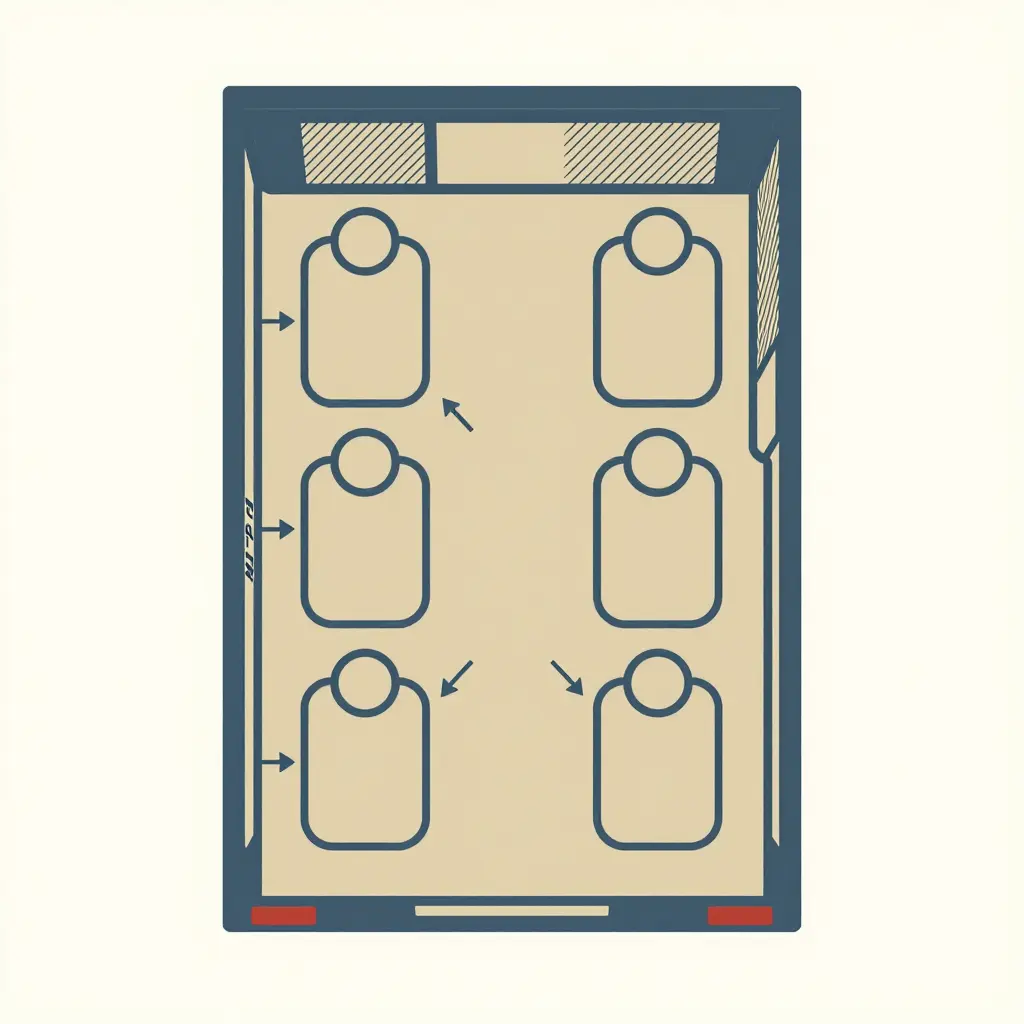
Reading a cab layout on paper is the fastest way to find a bottleneck before it costs you time on the apron. In the plan below, every crew seat traces a straight, unobstructed line to its nearest door, while the hatched stowage zones sit clear of those paths. Keeping gear out of the escape corridor is what separates a working spec from a crowded one. When you compare options in our ARFF aircraft rescue fire fighting lineup, check where the hose trays and tool lockers land relative to the doors.
Total Cost of Ownership: The Sticker Price Is Only the Down Payment
When buyers compare cheap ARFF trucks, the conversation usually starts and ends with the purchase price, which is the least reliable indicator of what the vehicle will cost to run. A low bid can hide a decade of expensive habits, and a slightly higher bid can save money every month it stays in service. ARFF truck cost of ownership means counting six cost lines, not one.
What Actually Adds Up
| Cost component | What it covers | How a budget build inflates it |
|---|---|---|
| Purchase price | Chassis, body, pump, foam system, delivery, duty | Seems low, but is usually a minority of ten-year spend |
| Crew training and familiarization | Transition training, recurrent drills, egress rehearsal | Awkward cab layout and cramped doors stretch training hours |
| Consumables and agent refill | Foam concentrate, dry chemical, water, fuel, tires | Smaller tanks and thirsty pumps mean more refill runs |
| Scheduled maintenance and parts | Service intervals, brakes, driveline, body hardware | Non-standard parts and thin parts support mean long waits |
| Downtime cost | Lost response capability, mutual aid, standby rentals | Each unplanned shop day is paid-for capacity you do not have |
| Resale and service life | Residual value, expected years in service | Off-brand builds depreciate fast and retire early |
Why a Weak Cab Raises Your Effective Operating Cost
Start with training. Crews learn a truck through repetition, and repetition depends on a cab that lets people move naturally. Narrow steps, poor handholds and doors that open against the wheels force trainers to slow down, repeat and re-teach. That cost recurs in every drill for the life of the vehicle, and it shows in the crew’s confidence on the night it matters. Purpose-built emergency rescue vehicles designed for fast, unobstructed crew egress do part of that teaching through the layout itself.
Then add time out of service. A cab that flexes, doors that do not seal and hardware that rattles loose generate a steady drip of warranty claims and workshop visits. Every visit removes a response asset from your roster, and at an airport or industrial site that gap has to be covered by mutual aid or a hired standby unit. Availability, not horsepower, is what you are really buying.
Finally, consider the systems bolted to the truck. Agents, nozzles and discharge plumbing that are hard to service or hard to source turn routine upkeep into a procurement project. Fleets that think in fire truck lifecycle cost terms look closely at fire equipment trucks and their onboard agent systems before signing, because refill frequency and parts lead time are decided there.
Where the Savings End Up
A low sticker price with a weak cab and slow crew egress does not deliver savings. It moves them downstream into training hours, refill cycles and lost availability. Compare cab dimensions and door geometry, egress time, agent capacity, parts availability and service support before you compare price tags. The cheapest truck to buy is rarely the cheapest truck to own.
Where the Money Really Goes Over Ten Years
Sticker price is the loudest number on the page, not the biggest one. The doughnut chart below splits the ten-year cost of ownership for a mid-range ARFF truck into five buckets, so you can see how a truck that looks cheap on the quote sheet turns expensive in service. If you are still comparing models side by side, review the full range of aircraft rescue fire fighting trucks with this cost mix open next to the specs.
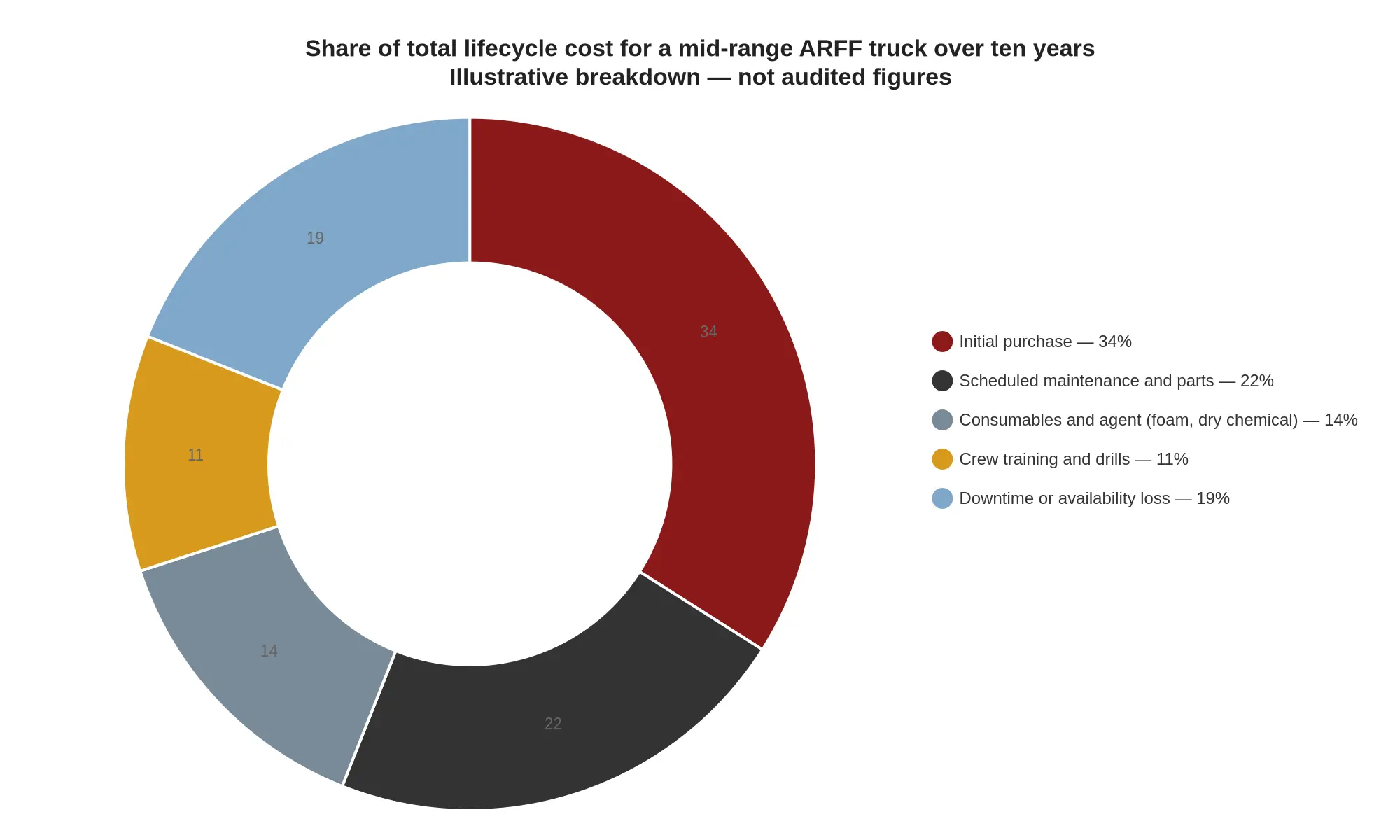
Figure 2. Share of total lifecycle cost for a mid-range ARFF truck over ten years. Values are an illustrative breakdown for planning purposes, not audited figures.
Business owners most often underestimate downtime and availability loss, because a truck sitting in the shop still burns insurance, staffing and standby costs while generating zero response capability. That hidden line item is why spec-level choices matter more than the price you negotiate on day one: cab egress layout, parts commonality, service access and agent system design all decide how many days the truck spends available.
Frequently asked questions about cheap price ARFF trucks
What does ‘cheap price ARFF truck’ actually refer to in specification terms?
It refers to an aircraft rescue and fire fighting vehicle built to a reduced but defined specification set: smaller foam and water tank capacity, a single engine-driven pump instead of a split pump-and-roll system, standard commercial chassis components, and fewer electronic monitoring options. The term describes a configuration envelope, not a lower safety standard. Cab egress dimensions and crew response targets should still appear as measurable values in the purchase contract, and buyers should request a line-item comparison against a mid-range unit so every trade-off is visible.
How many cab doors should an ARFF truck have for a given crew size?
Plan one dedicated exit per two seated crew members, with a minimum of two doors per side on a four- to six-person cab. NFPA 414 and EN 1846 both address crew cab access and egress, though the exit count either standard implies depends on the edition and on your seating plan. Ask the builder for the clause numbers and check them against the version your airport authority enforces. A six-seat cab with two doors is a layout compromise, not a standard arrangement.
Does a lower-priced ARFF truck always mean slower crew response?
No. Crew response is governed mainly by cab egress geometry, seat-to-door distance, step height, and how quickly the pump and foam system reach operating pressure. A cheap price ARFF truck with wide doors, a low first step and pre-connected hoselines can beat a heavier, costlier unit whose cab layout slows dismounting. Price tracks equipment density, not response speed.
Which cab egress measurements should be verified during a factory inspection?
Measure the door clear opening width and height, the first step height from ground level, the rise and depth of each intermediate step, and the horizontal distance from every seat reference point to the nearest exit. Confirm handles open from inside with one motion and that the exit path stays clear with all seats occupied. Record each figure against the contract sheet, and compare the readings with the special fire truck range you are evaluating.
How does cab layout affect crew training time?
Crews memorize an exit sequence, so an unconventional layout lengthens training. Symmetrical door placement, consistent handle positions and a clear aisle shorten the time needed to reach a competent dismount drill. Layouts with staggered steps or a single rear exit usually demand more repetitions before the exit sequence holds up under stress.
Conclusion: Verify Cab Egress and Crew Response, Then Talk About Price
A cheap price ARFF truck only performs when two specifications hold up in the field: how quickly a fully geared crew can clear the cab, and how quickly they can put agent on the fire after arrival. Cab egress depends on door count, step geometry, handrail placement and crew seating. Crew response depends on pump engagement, pre-connected lines and the sequence from arrival to first discharge. When a low sticker price compromises either one, the saving is transferred to the runway, where it is measured in minutes nobody recovers.
That is why price belongs at the end of the evaluation, after egress and response have been verified against your own site conditions. A look through the fire fighting truck range is a practical way to see how builds differ on exactly these details.
Fleet planning holds up better on a specification baseline than on a single low bid: a mixed lineup pairing a rapid-response unit with heavier foam capacity, checked against the same egress and response criteria every time a quotation arrives. CIMC Tianda equipment is distributed in nearly 130 countries and regions, and those markets have put these design decisions through very different operating conditions.