What a pre-delivery inspection means for firetrucks for sale
A pre-delivery inspection (PDI) is the buyer’s last contractual control point before accepting a fire truck. Most of it is plain work: look, measure, write the number down. Brake stroke is the check that gets pushed past handover more often than any other, which is a good reason to keep it inside the inspection rather than in the first week of service.
Six systems carry most of the weight. On the chassis you are looking at frame integrity, steering play, tire condition, fluid levels and brake adjustment, including pushrod stroke against the manufacturer’s limit. The pump gets a flow test at rated pressure and capacity, plus confirmation that the relief valve and primer behave. The tank is checked for baffle security, mounting and water-tightness. Electrical work covers warning lights, siren, scene lighting and alternator output under load. Aerial or boom units need a structural inspection, hydraulic leak checks and operation through the full range of motion. Documentation finishes the job: build sheets, test certificates, weight records, warranty terms, training handover.
Inspection depth should scale with truck class and duty cycle. A light commercial unit on low-hour municipal backup duty gets through a compact checklist. A heavy-duty fire truck running continuous industrial shifts needs longer pump testing, a driveline review and brake stroke verified at each wheel. Aerial appliances add structural and hydraulic protocols that small chassis work does not cover. Matching inspection effort to the intended workload protects both the purchase price and the truck’s resale position.
The scope of a fire truck PDI: what buyers should verify
A pre-delivery inspection is the last controlled moment to catch defects before a truck enters service, so its scope should touch every system that affects response time, safety or water delivery. Start with the chassis and driveline, where frame condition, suspension, steering play, brake adjustment and driveline vibration are checked under load rather than at idle. Move to the fire pump and water/foam system: pump engagement, priming, pressure holding, relief valve behavior and foam proportioning across the flow range the truck will actually work in. Tank and plumbing follow, with baffles, seams, vents, drains, valves and pipe routing confirmed tight under static head and under pump pressure. Electrical and lighting checks cover battery draw, alternator output, warning light circuits, siren function, scene lighting and the charging system that keeps radios and pumps alive on scene. Aerial or boom structures need their own sequence of operational and structural checks, including hydraulic integrity, interlocks and load-holding behavior. Cab and crew safety equipment comes last: seat belts, SCBA brackets, handrails, step lighting and egress paths. Every item on the fire apparatus inspection checklist should end in a documented pass, a documented fail or a documented correction. A verbal reassurance is not a result.
- Chassis and driveline: Measure brake stroke against the manufacturer’s adjustment limit, check for air leaks with the engine off, and confirm steering free play and tire pressures are in spec. Pass: every measurement inside tolerance, no leaks, no vibration, no stored warning faults.
- Fire pump and water/foam system: Run the pump at rated pressure and capacity, verify priming time from a dry lift, and confirm foam proportioning matches the set percentage. Pass: pressure holds steady, the relief valve opens at its set point, and no cavitation or seal weep appears during the run.
- Tank and plumbing: Inspect baffles, welds, seams, vents and drain valves, then pressure-test lines and connections. Pass: zero leaks at static head and at pump pressure, and every valve moves smoothly through a full open-close cycle.
- Electrical and lighting: Review battery load test results and alternator output under accessory load, then work through every warning, marker and scene light circuit. Pass: all circuits illuminate, the siren and air horn work, and voltage stays stable with lights and pump engaged.
- Aerial or boom structures: Operate the device through its full range, verifying interlocks, outrigger deployment, hydraulic holding and structural welds. Pass: no drift under load, no hydraulic seepage, and interlocks that prevent operation outside the permitted envelope.
- Cab and crew safety equipment: Check seat belt retraction and anchorage, SCBA bracket retention, handrail and step integrity, and interior lighting. Pass: every restraint holds firmly, every step surface is secure, and all egress paths open without obstruction.
Buyers should expect the PDI scope to change with truck class. A commercial chassis pumper carries a shorter driveline and pump checklist than a tandem-axle unit, which adds heavier brake and suspension verification. Aerial units add structural and load-holding tests that have no equivalent anywhere else on the list. If you are comparing heavy-duty fire trucks for sale, ask for the pump and brake test sheets by name. If the shortlist includes a ladder or platform, review the aerial fire truck range and confirm the PDI includes operational and structural verification.
Pre-delivery inspection scope by system
The table turns the checklist into a record a business buyer can sign, file, and hand to an insurer, a fleet auditor or whoever buys the truck next.
| System | Typical Inspection Items | Verification Method | Pass Criteria | Record Retained By |
|---|---|---|---|---|
| Chassis / driveline | Frame cracks, mounts, driveline play, fluid leaks | Visual and torque check, road test | No cracks, no leaks, torque to spec | Shop foreman |
| Fire pump performance | Flow, pressure, primer, relief valve | Flow test at rated RPM | Rated GPM and PSI held 5 min | Pump technician |
| Tank and plumbing integrity | Tank baffles, welds, valves, hose runs | Hydrostatic and vacuum test | No leaks or weeping at test pressure | QA inspector |
| Electrical and lighting | Battery, alternator, warning lights, siren | Load test, light circuit check | All lights work, voltage in range | Electrical lead |
| Aerial or boom structure | Structural welds, hydraulics, pins, overload cutout | NDT, dry and load test | No defects, holds rated load | Aerial certifier |
| Braking system (incl. brake stroke) | Linings, drums, slack adjusters, stroke | Stroke gauge, air leak, brake test | Stroke at or under the stamped limit, read to 1/8 in | Service manager |
| Documentation and warranty handover | Manuals, pump cert, weight sheet, warranty cards | Document audit vs. build list | Complete, signed and filed | Sales admin |
Tip: scan each completed sheet into your fleet file the day the truck is accepted, so a warranty claim three years out never depends on finding a paper copy.
Brake stroke checks: the measurement that cannot be skipped
A brake stroke check is the act of measuring how far the pushrod travels out of the brake chamber when the brake is fully applied. On a used fire truck it is the quickest read on whether the air brake system is adjusted and healthy, because one number reflects the condition of several parts at once.
How air pressure becomes pushrod travel
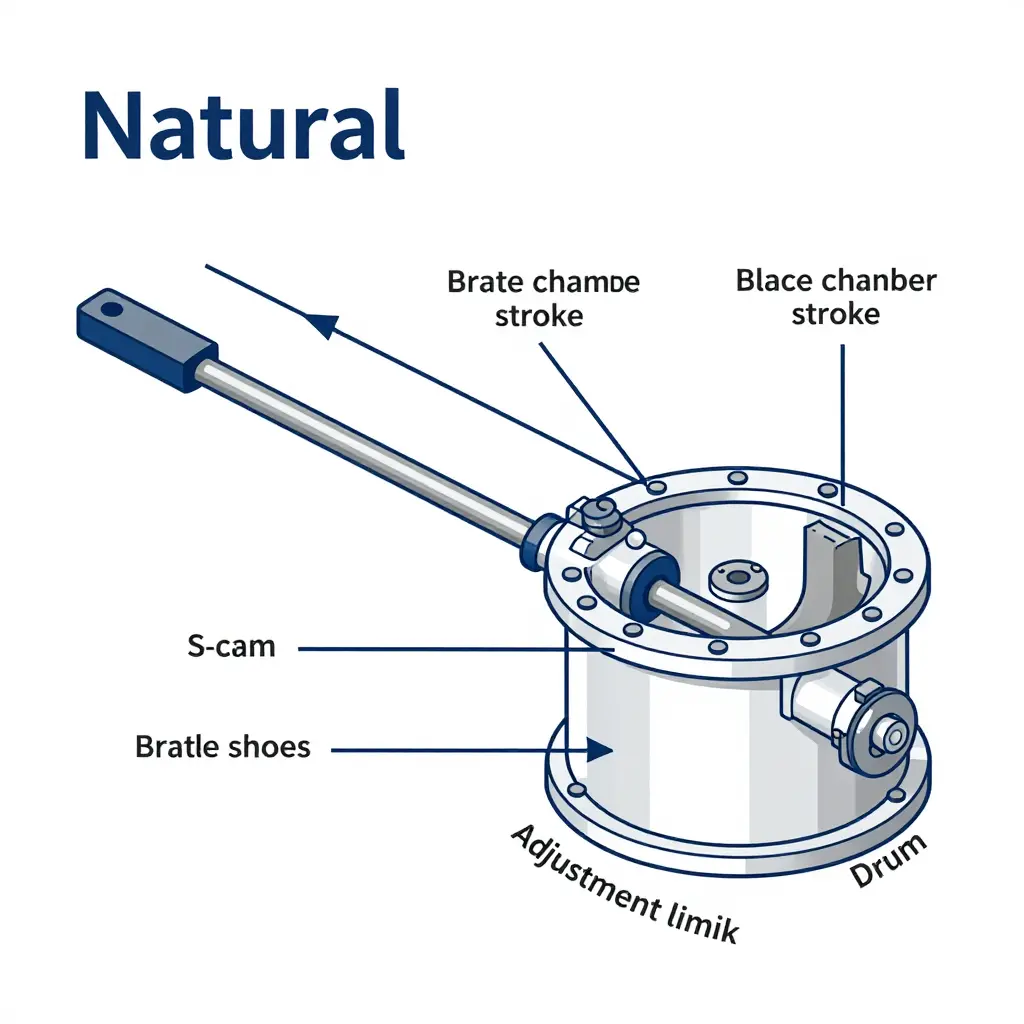
The brake chamber is a sealed canister divided by a diaphragm. Apply the brake and air pressure enters one side, pushes the diaphragm forward and drives the pushrod out of the chamber. That linear movement is the brake chamber stroke, the distance the rod extends from its released position. The force comes from air pressure acting on the diaphragm; the chamber’s job is to convert it into a straight push.
How the slack adjuster turns push into rotation
The slack adjuster is the lever arm between the chamber and the camshaft: the pushrod clevis pins to one end, the other end is splined to the S-cam shaft. As the pushrod extends, it swings the slack adjuster, which rotates the S-cam, and the cam lobes spread the brake shoes outward against the drum. Where the adjuster sits at rest also sets the running clearance between shoe and drum, so it decides how much pushrod travel is used up before the shoes make contact.
Standard-stroke and long-stroke chambers
Chambers come in two families. A standard-stroke chamber is designed to apply the brake within a shorter pushrod travel range, while a long-stroke chamber uses a longer internal stroke to hold more lining wear in reserve before adjustment is required. The two are not interchangeable in specification: each has its own adjustment limit. Read one against the other and the mistake runs both ways. A standard-stroke chamber judged against a long-stroke limit can look acceptable while it is already out of adjustment, and a long-stroke chamber judged against a standard limit can be rejected when nothing is wrong with it. Always compare the reading with the limit stamped on the chamber or published in the manufacturer’s data, never with a figure carried over from another truck. The same published limits turn up in the roadside inspection criteria.
Measure only at full pressure
The measurement is valid only with the air system at full governed pressure and the brake fully applied, normally a full service-brake application with the wheels chocked and the engine off. A partial application, or a system still building pressure, produces a short reading that falsely reassures. Have the reading taken at each chamber and recorded, so the inspection is a set of numbers rather than an opinion. Replacement chambers, diaphragms and fire truck brake and air system parts should match the original specification when a chamber is renewed.
Why an over-limit reading is a system signal
Stroke beyond the adjustment limit is rarely one isolated defect. Usually the shoes have travelled further because the linings are worn thin, the drum surface is worn oversize, or the slack adjuster is out of adjustment or has slipped, and often two or three of those conditions sit on the same wheel end. That is why the stroke reading works as a diagnostic starting point: it says the foundation brake has used up its reserve travel, and the follow-up inspection decides which combination of lining wear, drum wear, adjuster setting and air delivery is responsible.
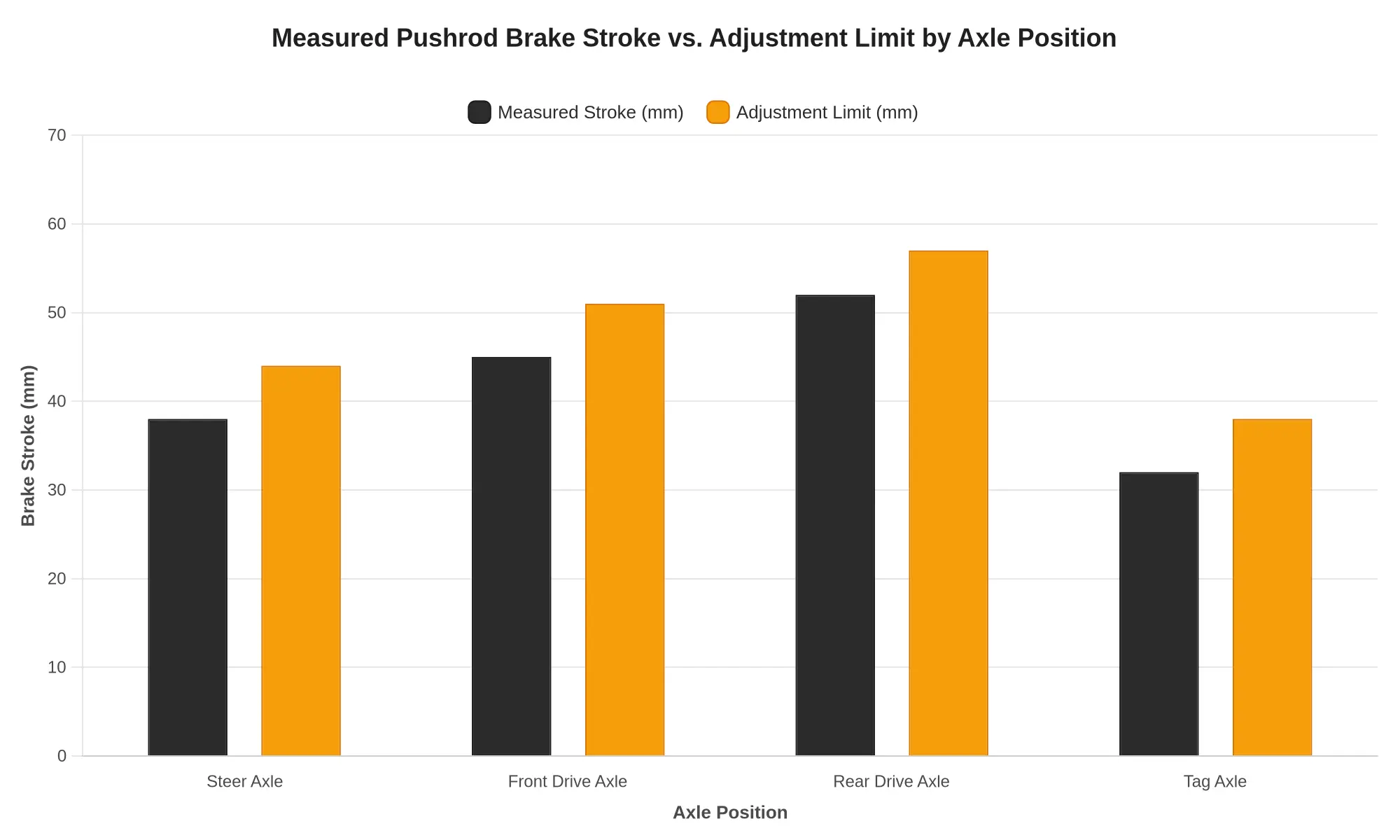
Figure 1. Measured pushrod brake stroke compared with the adjustment limit at each axle position on a representative heavy-duty fire truck. These figures are illustrative benchmarks, not a specification, so verify against the manufacturer’s published stroke limits for the specific chassis and brake chamber.
Reading brake stroke results: pass, adjust or reject
A brake stroke reading is just a number until someone decides what it means. During a fire truck pre-delivery inspection that decision has to be defensible, and there is no “close enough” column on an acceptance list. Every pushrod stroke reading falls into one of three outcomes, and each one triggers a specific next step.
Outcome 1: within limit, accepted
When the measured stroke sits inside the manufacturer’s published limit for that chamber size and type, the reading is recorded as a pass. Note the value itself rather than a tick mark, along with the chamber position, the date and the inspector’s initials. A recorded number is what lets a second party verify the check later without re-inspecting the truck.
Outcome 2: beyond limit, adjust and re-measure
A stroke that exceeds the limit means the brake is out of adjustment. Adjustment alone does not close the item out: the inspector re-measures the same chamber afterward and records the new value next to the original, and only the post-adjustment reading counts as passing. Where the slack adjuster is an automatic type, cranking it back into range treats the symptom; the reason it drifted out, whether a sticking chamber, a worn clevis or a bent pushrod, still has to be found. The line on the acceptance list stays open until that second number exists.
Outcome 3: beyond limit after adjustment, reject and repair
Sometimes the stroke will not come back into range however the adjuster is set. That points to a component fault: a worn slack adjuster, a sticking chamber, a damaged pushrod, or air pressure that never reaches the chamber properly. At that point the item is rejected, not deferred. The affected parts are repaired or replaced, often sourced from a fire truck brake and air system parts supplier, and the measurement is taken again before the truck is considered for delivery.
| Result | Meaning | Required Action | List Status |
|---|---|---|---|
| At or under limit | Brake adjustment is sound | Record value and move on | Closed – pass |
| Over limit | Adjustment is due | Adjust, then re-measure and record new value | Open until re-measured |
| Over limit after adjustment | Component fault exists | Repair or replace, then re-measure | Rejected until repaired |
Why re-measurement is mandatory
An adjustment is an intervention, and interventions go wrong: an over-tightened adjuster drags the brake, a loose one leaves the stroke long. Skip the second reading and the inspection rests on an assumption rather than evidence. Re-measuring takes a minute and turns a hopeful fix into a documented fact.
How this feeds the release decision
Brake results do not sit in isolation. They feed the same release decision as tires, lights, pump performance and structural checks. If any brake measurement is still unresolved, adjusted but not re-measured, or rejected and waiting on parts, the truck should not be signed for. A conditional release on brakes is a promise that a fault will be handled later, and later means the new owner’s first month. Hold the signature until every stroke reading on the acceptance list shows a final, passing number.
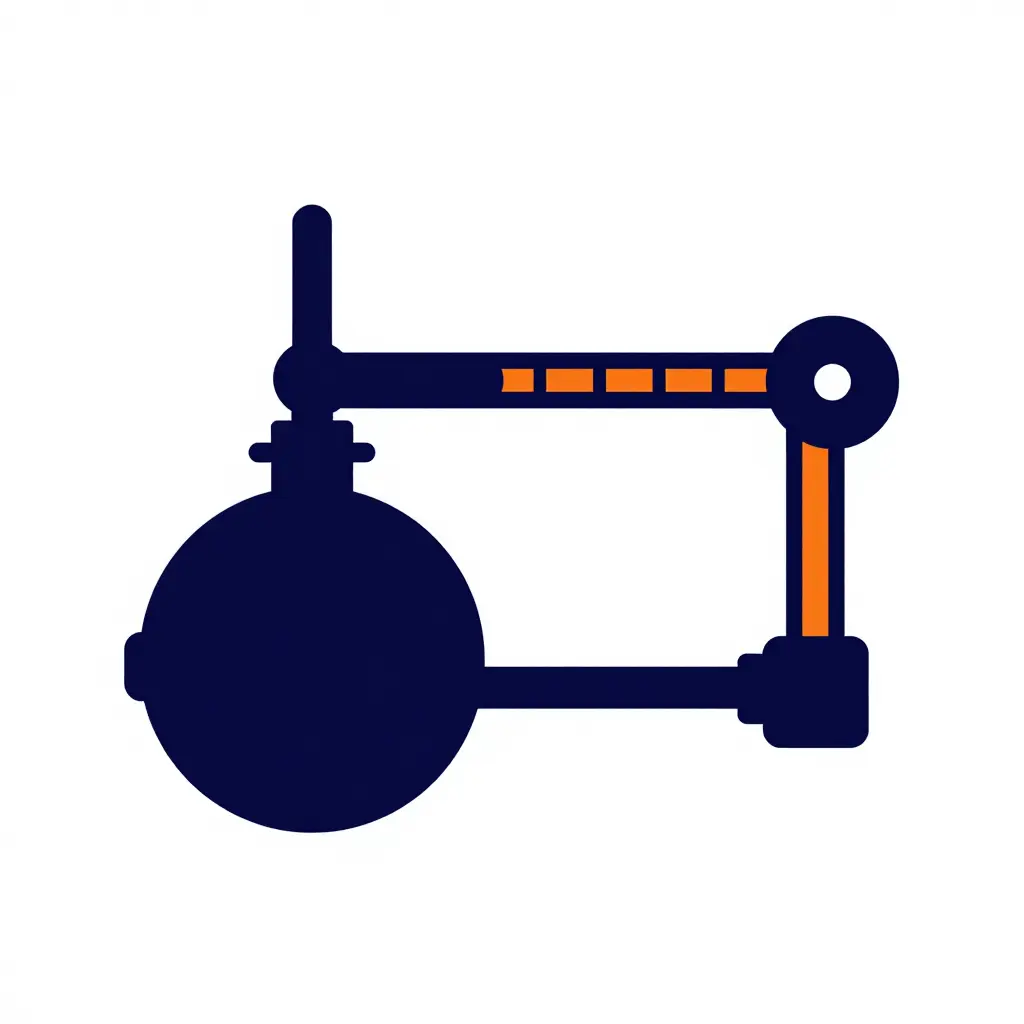
Schematic showing how the pushrod, clevis and slack adjuster connect, with the measurement span on the pushrod marking where the stroke reading is taken during a pre-delivery inspection.
The measurement is read along that pushrod span, from the fully released position to the point where the brakes are fully applied. Inspectors compare the number against the chamber’s stamped limit instead of judging the linkage by eye, which is what keeps the pass or fail decision consistent across every unit in the fleet. Worn chambers, bent pushrods and slipping automatic slack adjusters all show up here first, well before a driver notices a soft pedal or a long stopping distance. If the stroke is already out of spec on delivery, have the brake and chassis components re-checked before the rig goes into service.
Acceptance documentation and handover
A pre-delivery inspection only protects you if its results survive the handover meeting. Delivery acceptance is where a truck stops being a promise and becomes an asset on your books, and the paperwork you sign that day becomes the evidence base for every warranty conversation and service visit that follows. Insist on the complete document pack before the final signature.
The document pack every buyer should collect
| Document | What to verify before signing |
|---|---|
| Completed PDI checklist | Every line signed and dated, with brake stroke values recorded per axle (not a single average), compared against the manufacturer’s adjustment limit |
| Pump performance test data | Flow and pressure at rated and maximum engine speed, priming time, vacuum retention, and gauge calibration date |
| Warranty terms by component | Separate coverage periods for chassis, pump, gearbox, body, foam system, and electronics, plus what voids each one |
| Spare parts list with part numbers | OEM numbers for filters, seals, brake chambers, valves, nozzles, and wear items, matched to your exact build |
| Operator and maintenance training records | Names, dates, hours, topics covered, and trainer signature for both driving and pump operation |
| Statutory inspection certificate | Valid certification for the pressure vessel, lifting equipment, or aerial device as applicable, with the expiry date noted |
Why these records pay for themselves in the first service interval
Well-kept fire truck inspection records turn a warranty claim from an argument into a formality. If a brake chamber fails at month eight, a PDI sheet showing a compliant stroke value at delivery proves the fault developed in service rather than sitting on the lot. Pump test data does the same job: a documented flow curve lets you demonstrate performance loss over time instead of debating it. During the first service interval, the same documents set your baseline, telling the workshop exactly which clearances, pressures and fluid specs to return the truck to.
Confirm part numbers at handover, not later
Builds change quietly. A pump model is revised, a valve body supersedes an older number, a hose assembly is replaced with a different length. Confirm the parts list while the truck, the build sheet and the supplier are all in one place, and the numbers on paper match the metal in front of you. Confirm it months later and you are reverse-engineering a serial number over email, usually while the truck is off the run. This is also the moment to check availability and lead times on consumables through the fire truck spare parts range, so nothing in your first service kit turns into a surprise order.
Handover is the last easy conversation
Treat the handover meeting as your final chance to ask questions with leverage. Walk the truck against the checklist, photograph serial plates and part labels, and sign the delivery acceptance only when the pack is complete. If you are still narrowing down which chassis and body configuration suits your station, review the fire fighting truck models before the build is locked, because documentation quality starts with a specification you can actually verify.
Where pre-delivery inspections most often raise findings
Buyer-side inspection reports read remarkably alike from one transaction to the next. The same handful of categories keeps surfacing, and they are not evenly weighted: some appear in nearly every walkaround yet cost little to resolve, while others appear less often but carry real consequences for the buyer’s first year of service.
- Brake adjustment and air system leakage – the most frequent finding and the heaviest consequence, covering slack adjuster stroke beyond limit, chamber and line leaks, slow pressure build-up, and a compressor governor that cuts out early.
- Electrical harness and lighting faults – close behind on frequency, usually chafed looms, corroded grounds, dead warning indicators, and beacons or scene lights that work intermittently in damp conditions.
- Pump or plumbing leaks and performance shortfalls – common on used apparatus: packing drips, valve seepage, and pump test figures that fall short at draft or at rated pressure.
- Body and aerial hardware issues – less frequent but costly, spanning compartment latches and hinge wear, turntable backlash, ladder section alignment, and sluggish outrigger travel; on aerial fire trucks these items deserve a dedicated inspection pass.
- Incomplete documentation – the least visible category yet consistently present, from missing pump test records and axle weight ratings to gaps in service history that complicate later certification and resale.
Brake and air-system items belong at the top of any buyer’s sequence, because they degrade quietly between inspections and because they decide whether the apparatus can be driven and stopped safely at all. Settling that first also frames everything downstream: a truck with marginal braking and air delivery rarely justifies deeper investment in pump, body or hardware remediation.
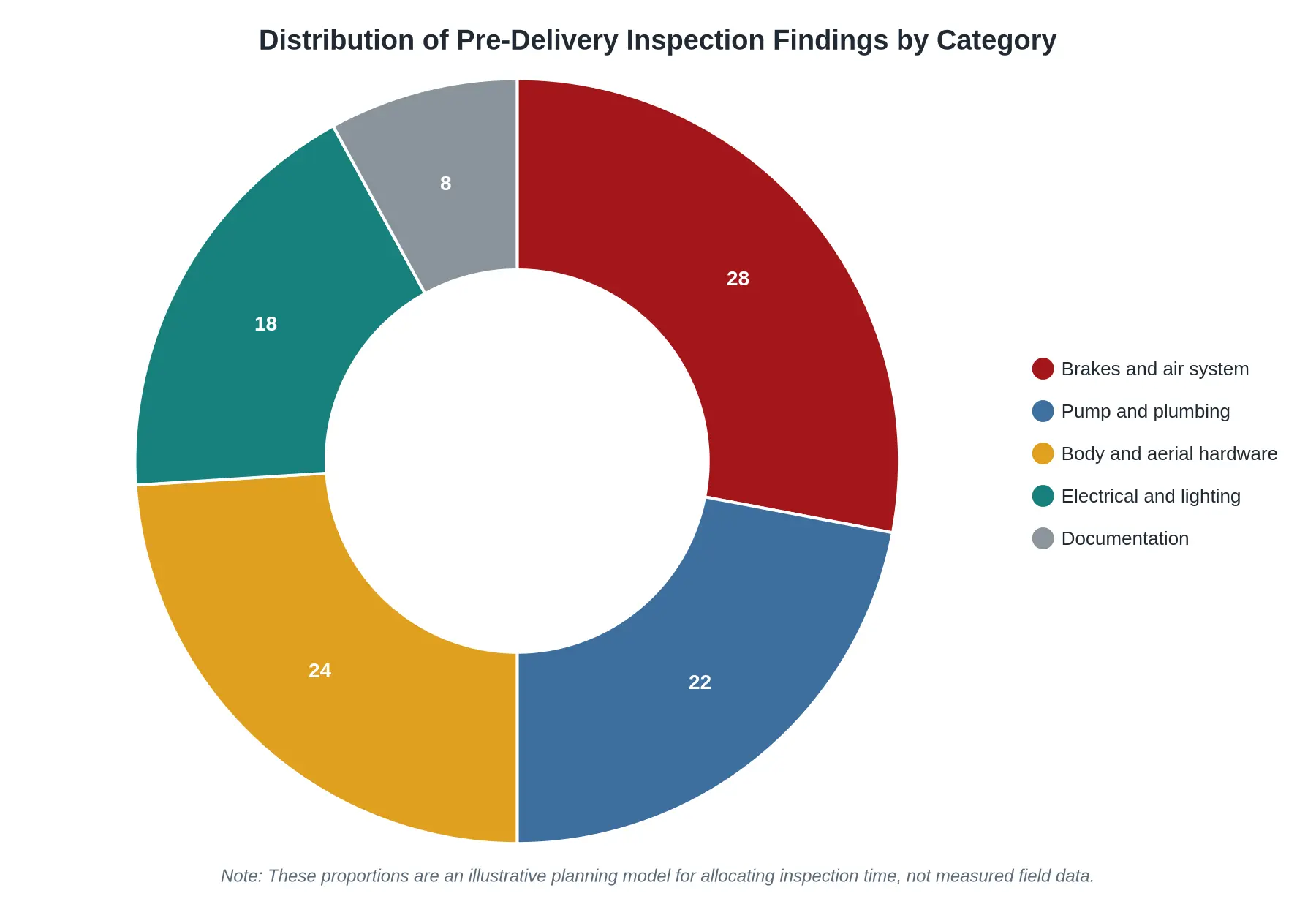
Figure: Distribution of Pre-Delivery Inspection Findings by Category. Note: these proportions are an illustrative planning model for allocating inspection time, not measured field data.
Frequently asked questions about pre-delivery inspection and brake stroke checks
Is a pre-delivery inspection legally mandatory, or purely contractual?
For most commercial apparatus purchases, a pre-delivery inspection is not imposed by statute. It is created by the purchase agreement you sign. Delivery inspection and acceptance testing do appear in standards such as NFPA 1901, which covers new automotive fire apparatus, and reputable sellers write that step into the contract. Your leverage as a buyer lives in the paperwork, so insist the scope, checkpoints and pass/fail criteria are documented before final payment.
How long does a full PDI take on a heavy-duty unit?
Plan on four to eight hours of shop time for a typical heavy-duty pumper or tanker, stretching to two days when an aerial device, pump performance test or extended road trial is included. That covers far more than a walkaround: fluid sampling, pump and foam system flow tests, electrical load checks and a brake stroke check at every wheel end all have to be measured and recorded. If you are comparing heavy-duty fire truck models with complex, integrated systems, allow extra time for the manufacturer’s functional demonstration.
Can the buyer’s own technician attend the inspection?
Usually yes, and most sellers encourage it. Request the inspection date well in advance so your mechanic, or an independent third-party inspector, can stand on the floor for the pump test, road trial and brake measurements. Someone representing your business should initial the inspection sheet, photograph any deficiencies, and confirm that corrective work was signed off before the unit leaves the yard.
Does a PDI replace the statutory vehicle inspection?
No. The two serve different purposes and are performed by different parties. A pre-delivery inspection is a seller-side quality and condition verification completed before handover, while a statutory inspection is a government-authorized safety examination tied to registration or annual compliance. A clean PDI report will not satisfy a national or state inspection certificate, and a valid inspection sticker does not prove the apparatus was prepared properly. Treat them as two separate checkpoints in one handover.
How soon should brake stroke be re-checked after delivery?
Re-measure stroke after the first 500 to 1,000 miles of service, or within the first month, whichever comes first, because automatic slack adjusters and fresh linings need a bedding-in period. After that, fold the brake stroke check into documented pre-trip and monthly inspections. Any reline, chamber replacement or hard emergency stop warrants an immediate re-check, whichever vehicle you shortlist from the firetrucks for sale listings you are assessing.
Using inspection findings to reach a purchase decision
A pre-delivery inspection is only useful when its scope is written down before anyone touches the vehicle. Once the checklist defines which systems are tested, which tools are used and which values are recorded, the inspection stops being a courtesy walkaround and becomes a record you can review, compare against the specification sheet, and archive with the unit’s paperwork.
Within that record, brake stroke measurement carries the most weight. It is a direct, repeatable number pulled from the chamber pushrod, and it says more about the true condition of the chassis brake system than any visual assessment of drums, linings or air lines. A stroke reading inside the adjustment limit confirms the foundation brakes are working as designed. A reading beyond it signals slack adjuster wear, misadjustment or deeper pneumatic trouble that deserves attention before the unit enters service.
Documented results are what convert an inspection into a decision. With values on paper, a buyer can accept the unit as presented, negotiate an adjustment for items that fall outside tolerance, or reject it outright, and each of those choices is defensible to a board, a lender or an insurer. The sequence stays the same every time: confirm the inspection scope in writing, witness the measurement or commission it from an independent technician, record brake stroke values per axle rather than as a single average, and confirm the completed documentation is physically in hand at handover.
That discipline matters when you are assembling a fleet, whether the requirement points toward a standard unit in the fire-fighting truck range or toward specialized chassis for a specific site hazard.
CIMC Tianda’s firefighting equipment business builds and supplies fire trucks and related firefighting equipment, and provides the product specifications and delivery documentation that let buyers verify what they are receiving.