Airport fire departments and ARFF units now buy used airport fire truck for sale units as a normal way to field capable aircraft rescue and firefighting platforms without paying new-apparatus prices. A second-hand airport fire truck still needs a real technical inspection. ARFF duty cycles wear trucks in ways that highway mileage hides: repeated full-throttle runs to the runway, pump and foam discharges at full rate, and long idle stretches between calls that age seals and hydraulic systems.
Three checks decide whether a specific ARFF vehicle will hold up. Chassis inspection covers structural integrity, frame corrosion, suspension loading, and axle ratings; a bent or rusted frame weakens braking and raises rollover risk during a response. Foam tank corrosion decides whether the foam concentrate stays usable, which sets suppression performance on the airfield. Parts availability sets downtime and long-term cost, because one obsolete component can park a truck for months. Skip any of the three and the buyer carries the risk.
Chassis Inspection Checklist for Used ARFF Trucks
Run this sequence before any money changes hands. Buyers who understand chassis hours and refurbishment costs have something concrete to negotiate with.
- Verify frame straightness against OEM tolerance specs and check for twist or sag.
- Inspect all weld seams at frame rails and crossmembers for cracks or corrosion.
- Confirm axle rating plates match the vehicle’s rated gross weight.
- Confirm body-to-frame mounting bolts are torqued and free of elongation.
- Review drivetrain service records for differential and transmission overhauls.
- Check suspension airbags, springs, and shocks for leaks or fatigue.
- Measure tire tread depth, sidewall condition, and DOT date codes.
- Pressure-test the air brake system and listen for leaks.
- Examine steering linkage and kingpins for excessive play.
- Look for rust-through on frame rails, especially on coastal or de-iced fleets.
Table 1. Chassis Inspection Grading Matrix for Used ARFF Trucks
| Component | What to Inspect | Acceptable Condition | Red Flag | Repair Impact |
|---|---|---|---|---|
| Frame rails | Straightness, flange/web integrity, rust scale, prior weld patches, OEM rivet condition | Uniform paint, no cracks, pitting under 3 mm, all OEM rivets present and tight | Kinks or heat-warped sections, unauthorized weld repairs, cracked flange, severe section loss | High – rail replacement is a body-off job requiring frame alignment; often exceeds vehicle value |
| Crossmembers and welds | Weld bead quality, corrosion at joints, mounting bracket integrity, fastener torque | Continuous OEM welds, no undercut or cracking, tight grade-8 fasteners, minimal surface rust | Cracked weld beads, stress fractures at brackets, bolt-on patches over failed welds | Moderate to high – re-welding demands a certified fabricator and verified driveline alignment |
| Suspension and air bags | Leaf/parabolic springs, air bag bladders, shocks, bushings, U-bolts, ride height | No air leaks, sag under 10 percent, intact bladders, torqued U-bolts, matched spring packs | Cracked leaves, chafed or leaking air springs, worn bushings, mismatched or overloaded springs | Moderate – air bag or spring swaps are manageable; bushing press work adds labor hours |
| Axles and differentials | Axle housing, gear oil clarity, seal leaks, backlash, hub end-play, bearing noise | No seepage, clean oil, minimal backlash, zero detectable hub play | Metal debris in oil, whine under load, cracked housing, leaking pinion seal | High – rebuild or replacement is costly and ARFF-spec parts may have long lead times |
| Braking system | Air dryer, lines, ABS, slack adjusters, drums/rotors, friction, chambers | Over 50 percent friction remaining, leak-free lines, fault-free ABS, drums within spec | Cracked drums, glazed pads, active air leaks, inactive ABS, oil-contaminated linings | Moderate – friction parts are affordable, but ABS and air dryer faults escalate quickly |
| Drivetrain | Engine mounts, transmission, driveshaft, U-joints, transfer case, PTO | No U-joint play, smooth shifts, dry seals, secure mounts, functional PTO | Vibrations, clunking, leaking seals, PTO failure, slipping or delayed gears | High – transmission or transfer case overhaul is expensive with extended downtime |
If long-term cost matters, see how chassis hours, interoperability, and refurb budgets affect resale value before you commit to a unit.
Foam Tank Corrosion in Used ARFF Vehicles
Foam tank corrosion is easy to miss and expensive to find late. ARFF tanks are usually 316L stainless steel, mild (carbon) steel, or composite/GRP, and each material fails differently in contact with AFFF and other aqueous film-forming foam concentrates.
Stainless steel resists general attack but is vulnerable to pitting and crevice corrosion, especially along weld heat-affected zones and where diluted concentrate sits stagnant. Mild steel, even when epoxy-lined, corrodes rapidly once its coating blisters, producing pitting that penetrates from the inside out. Composite and GRP tanks sidestep galvanic corrosion yet can suffer osmotic blistering, delamination, and cracking at fittings.
Stress corrosion cracking (SCC) gives the least warning. Tensile stress plus chloride- or fluoride-bearing foam chemistry opens hairline cracks that can fail suddenly. Contaminants in the concentrate or the dilution water speed up all three mechanisms.
A structured foam tank inspection combines a visual survey for staining, weeping welds, and coating failure with ultrasonic thickness measurement to map wall loss, dye penetrant testing at welds and nozzles, and hydrostatic pressure testing for structural integrity. Tank faults often appear alongside proportioning problems, so review the tell-tale signs of foam system faults during the same assessment.
A missed tank defect costs containment. Pinhole leaks drain concentrate, corroded fittings starve the proportioner, and a breach during an aircraft incident can take the extinguishing capacity with it. Finding it before purchase is cheaper than finding it mid-incident.
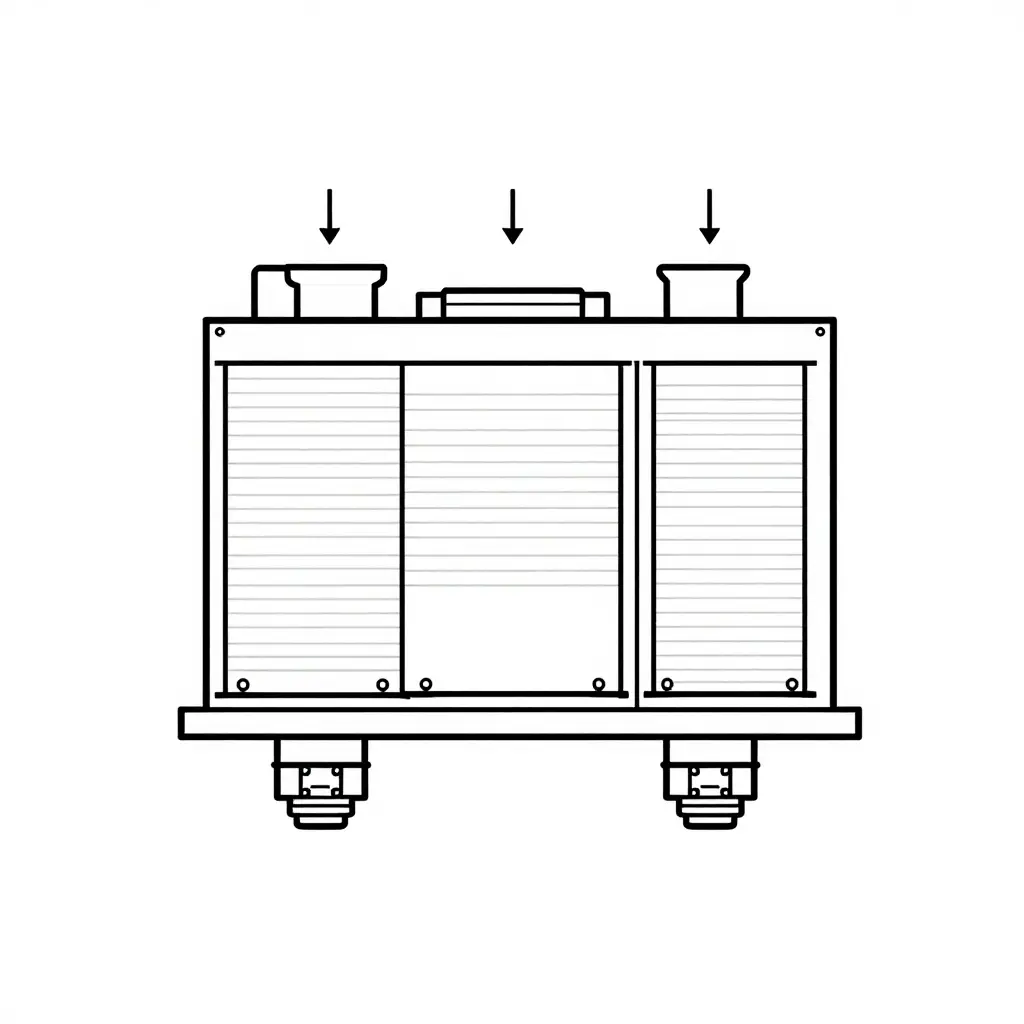
Use this schematic as a field reference when evaluating a used ARFF foam tank. The callout arrows mark the five zones where corrosion and structural fatigue most often begin: the shell seams running along the tank walls, the weld joints at corner intersections, the vertical internal baffles that divide the tank, the base plate where it contacts the mounting cradle, and the outlet and pump connection flanges. Inspect each marked area for pitting, crevice corrosion, weld cracking, and seal degradation before committing to a purchase.
Parts Availability: The Hidden Driver of Total Cost of Ownership
Parts availability decides whether a used airport fire truck keeps answering calls or sits in the hangar. ARFF apparatus has to meet response-readiness standards, so how fast and how cheaply a department can source components shapes total cost of ownership (TCO).
Start with the OEM support window. Many chassis and body builders guarantee used airport fire truck parts for a set period after a model is discontinued, often 10 to 15 years. After that, parts that used to be routine get scarce and expensive.
Platform commonality counts too. Trucks built on commercial chassis with standardized body-builder interfaces draw on more ARFF spare parts, because several suppliers stock interchangeable components. Low-volume or bespoke platforms are likelier to carry obsolete parts and to force buyers into custom fabrication.
Third-party and refurbished sources can fill gaps, though quality and traceability vary. A dealer network with good regional coverage shortens lead times; thin coverage can turn a simple repair into weeks of downtime.
Lead time is where this reaches operations. A pump seal or foam-proportioner valve that arrives three weeks late can pull a truck off the response roster. When parts show up unpredictably, preventive service slips and turns into unplanned failures.
Before purchase, verify dealer spare-parts and warranty support and weigh refurbishment cost against remaining chassis hours as part of a long-term parts plan. Parts availability belongs in the lifecycle budget, not in a footnote.
Parts Availability: How Long Will You Wait for Replacement Components?
On a used airport fire truck, the sticker price is only part of the cost. The rest sits in the supply chain: how long does it take to get a failed proportioning valve, a cracked foam tank fitting, or a discontinued control module? For an ARFF unit, every week of downtime puts the airfield’s response readiness category at risk.
The chart below compares procurement lead times across the five component categories behind most ARFF parts orders. The figures are indicative benchmarks from dealer and aftermarket experience, not guarantees for a specific make or model. The actual wait depends on the manufacturer, how interchangeable the part is with commercial truck platforms, and whether the OEM still supports the vintage.
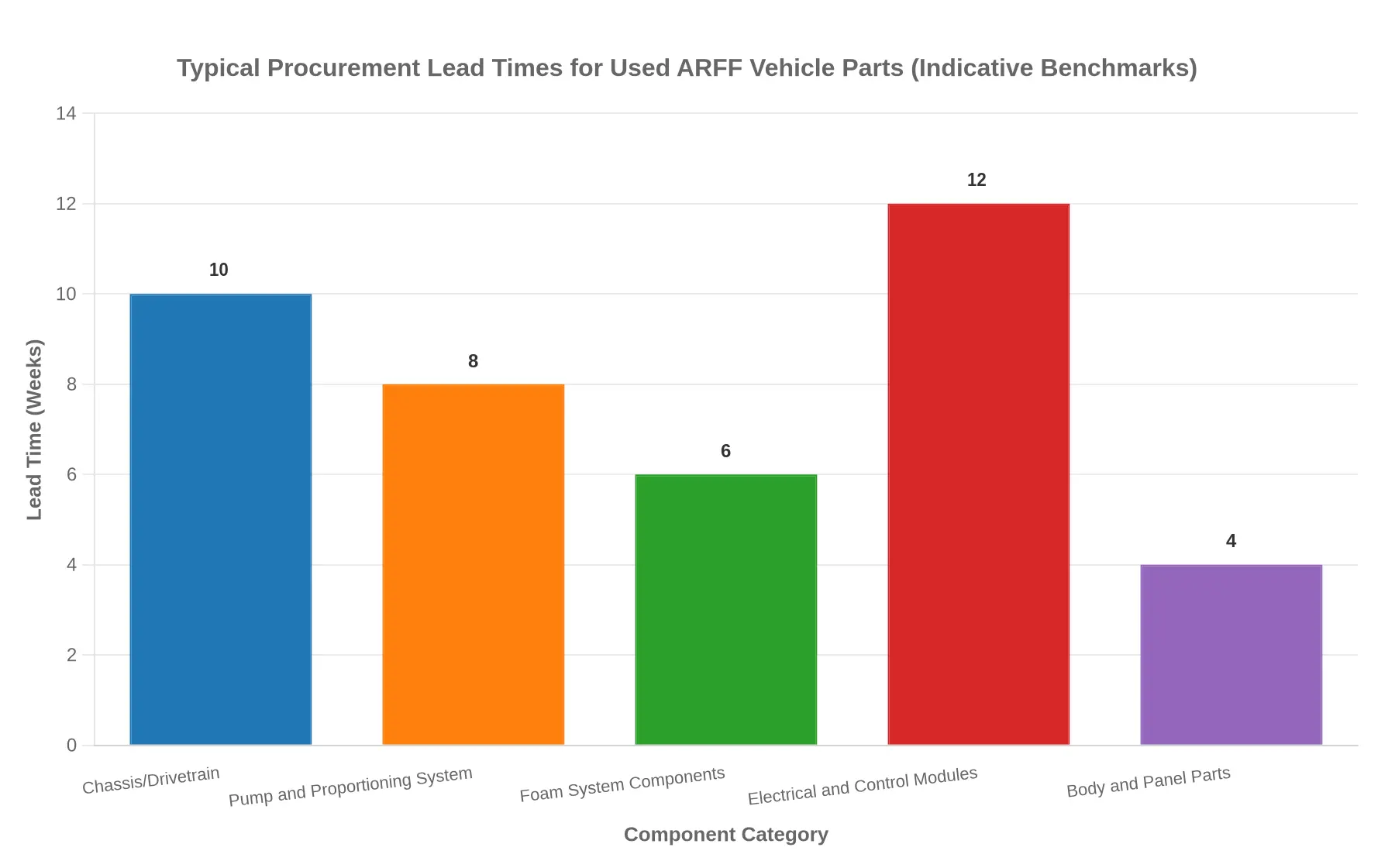
Figure 1: Indicative procurement lead times for major used ARFF vehicle component categories. Values are illustrative benchmarks and vary by OEM support, part condition, and stock availability.
What the Numbers Tell You
- Electrical and Control Modules (highest risk): Proprietary engine, transmission, and pump-control electronics are the hardest to replace. Once a manufacturer discontinues a board or drops support for a control set, sourcing means hunting through dismantlers.
- Chassis and Drivetrain: Because most ARFF chassis share architecture with commercial or military truck platforms, driveline parts are usually easier to find, though specialized all-wheel-drive components can add weeks.
- Pump and Proportioning Systems: Aging pump bodies and metering valves may require custom machining or rebuilt cores, pushing wait times upward.
- Foam System Components: Tanks, bladder assemblies, and injectors usually have shorter lead times, but corrosion replacements are common. Knowing the usual proportioning-drift and refill-time problems before purchase avoids surprise orders.
- Body and Panel Parts: Sheet metal, brackets, and cosmetic panels are the easiest to source or fabricate locally.
How to Use This Before You Buy
During the pre-purchase inspection, ask the seller for a full parts history and whether the OEM still supplies consumables for that model year. A truck with a 12-week electrical tail risk can sit idle for an entire fire season. If you can, negotiate a spares package into the deal or confirm an aftermarket support channel before signing.
Lead time is a line item on every used ARFF quote, whether or not it is written down. Budget for it the same way you check chassis hours and tank condition.
Parts Availability Verification Checklist
Before committing capital, confirm supply-line viability with these steps:
- Confirm OEM support status by submitting the chassis and body serial numbers directly to the manufacturer.
- Request a complete bill of materials (BOM) for critical assemblies: pump, foam proportioning system, and drivetrain.
- Survey dealer and distributor coverage in your region, including emergency-order lead times.
- Check obsolescence notices and last-time-buy bulletins for discontinued components.
- Identify interchangeable cross-references between OEM and aftermarket suppliers.
- Verify foam system seal, valve, and proportioner part numbers remain in active production.
- Audit tire, wheel, and brake compatibility with current commercial chassis lines.
- Review warranty transfer eligibility and historical claims records.
- Validate that depot-level rebuild kits for the pump and boom are still stocked.
Table: Parts Availability Matrix for Used ARFF Vehicles
This matrix maps each major ARFF subsystem to its usual supply source, lead time, obsolescence risk, and a practical mitigation step. Lead times match the chart above.
| Component Category | Typical Source | Typical Lead Time | Obsolescence Risk | Mitigation Strategy |
|---|---|---|---|---|
| Chassis and drivetrain | OEM truck chassis dealer (e.g., commercial heavy-truck network) | 2-6 weeks (stock) / 12-20 weeks (special order) | Low to moderate | Standardize on high-volume commercial chassis; cross-reference common part numbers before purchase |
| Fire pump | Pump OEM or authorized service center | 4-10 weeks | Moderate | Verify pump model and serial; pre-order wear parts such as seals, impellers, and bearing kits |
| Proportioning system | System OEM or specialist ARFF rebuilder | 6-16 weeks | High | Prioritize vehicles with actively supported electronic proportioning; stock diaphragms and flow sensors |
| Foam concentrate handling hardware | Foam system OEM and valve/actuator suppliers | 3-12 weeks | Moderate to high | Inspect tank, valves, and piping for corrosion; source alternate industrial valve equivalents |
| Electrical and control modules | OEM, control-system integrator, or aftermarket ECU suppliers | 8-24 weeks | High | Audit firmware and harness condition; build a spare module kit and document wiring schematics |
| Body panels and structural steel | OEM, fabricator, or custom sheet-metal shop | 4-12 weeks | Low (fabricable) | Use local fabrication for non-critical skins; retain dimensional drawings and gauge specs |
| Tires and wheels | Tire distributor and wheel supplier | 1-4 weeks (stock) / 6-10 weeks (special) | Low | Confirm axle load ratings and rim offsets; maintain a matched spare tire set |
| Foam tank and plumbing | Tank fabricator or OEM | 8-20 weeks | Moderate to high | Pressure-test and borescope for corrosion; budget for relining or replacement on older units |
Reading the matrix: The high-obsolescence categories – proportioning systems and electrical/control modules – cause most of the extended downtime on second-hand airport fire trucks. Pair the matrix with a hands-on inspection of the pump, foam tank, and control architecture. For how dealer-supported spares and warranty structures cut these lead times, see this guide to fire apparatus dealers, spare parts, and warranty claims.
Frequently Asked Questions About Buying a Used Airport Fire Truck
The questions below come up most often from airport fire departments evaluating a used ARFF vehicle.
What is an acceptable chassis-hour range versus mileage?
ARFF trucks idle for long periods, so engine hours matter more than mileage. Chassis hours between 8,000 and 15,000 are generally acceptable if maintenance records are complete and current compression and oil-analysis results are provided.
How do I detect foam tank corrosion without full disassembly?
Inspect tank access hatches, weld seams, and the roof for bubbling or staining. Use an ultrasonic thickness gauge through reachable panels, sample the foam concentrate for sediment, and check drain valves for rust-colored discharge.
Can out-of-production parts still be sourced?
Usually yes. Many ARFF builders stock legacy components or supply rebuilt assemblies, and specialty dealers carry chassis and pump parts. Confirm availability in writing before purchase, and budget for longer lead times on bespoke parts.
What documentation should I request?
Ask for the title, maintenance and service logs, pump and foam-system test records, accident history, and recall or retrofit paperwork. NFPA 1901 and 414 compliance reports help verify current inspection and certification status.
Is refurbishment worth the investment?
Often yes, if the chassis and foam system are structurally sound. Refurbishment typically costs 40 to 60 percent of a new unit and can extend service life by ten years. Avoid units with frame cracks or severe tank corrosion.
What determines fair market value?
Value depends on age, chassis hours, pump and foam capacity, certification status, and remaining service life. Comparable recent sales, tire and drivetrain condition, and documented maintenance all influence pricing, so obtain an independent inspection before negotiating.
For more detail on chassis-hour thresholds and refurbishment economics, review this guide to used ARFF and fire chief vehicles.
A Procurement Decision Framework for Used ARFF Vehicles
Buying a used airport fire truck for sale should follow a sequence, not a one-pass walkthrough. Start with the chassis: frame integrity, suspension, brakes, and powertrain hours. What you find there feeds the repair and refurbishment forecast, tells you whether the apparatus can carry emergency response loads, and gives you documented mechanical risk to negotiate against. Choosing reputable ARFF truck manufacturers with proven safety records makes this step easier.
Second, assess foam tank corrosion. Foam concentrate attacks tank linings, so check coatings, welds, and seams from the inside. A corroded tank raises lifecycle cost through replacement, hurts readiness when proportioning drifts, and gives you leverage on price.
Third, verify parts availability. Confirm that pumps, valves, and proprietary electronics are still supported. Sourcing risk adds lifecycle cost and idle time, hurts readiness, and weakens your negotiating position. Benchmarking ARFF capacity comparison data sets realistic performance expectations before you buy.