Wildfire Truck Sales: Pump-and-Roll Flow, Water Tank Size and Refill Turnaround
A wildfire or brush truck is bought on paper long before it ever sees a fire. Fire departments, municipal and volunteer agencies, procurement officers, fleet managers, and equipment dealers are all making the same bet: that the specification they write will still make sense on the fireground through the truck’s 15- to 20-year service life. Spec it well and the truck protects both the operating budget and the crew. Spec it badly and the agency is stuck with an apparatus that struggles on exactly the fires it was bought to fight.
Three variables drive that performance, and they are not independent: pump-and-roll flow rate, water tank size, and refill turnaround time.
- Pump-and-roll flow rate is the volume of water, in gallons per minute (GPM), a truck can keep putting out while it is moving. It sets how fast a crew can knock down a running grass, brush, or interface fire without stopping.
- Water tank size determines how long the truck can keep flowing before it has to break off and refill. Chassis payload, gross vehicle weight rating (GVWR), and terrain all cap it.
- Refill turnaround time is how fast that tank can be refilled from a hydrant, tender shuttle, or remote water supply. It is the real limit on the truck’s working endurance.
Treating the three as separate line items is the most common specification error. A bigger tank adds weight, which can cost off-road speed and pump-and-roll stability. A higher flow rate drains the tank faster and shortens time on water. A slow refill erases the benefit of any tank size. What works is a balance among all three, matched to the agency’s terrain, water availability, and response model.
The rest of this guide works through each variable, how they interact, and how to compare wildfire and brush truck configurations against the demands of an actual district.
Pump-and-Roll Flow: The Core Spec of Mobile Attack
Pump-and-roll means discharging water from a truck that is still moving, rather than stopping to set up. For a rig chasing a fast grass or brush fire, it is often the difference between catching a flank and losing it. The pump-and-roll flow rate is the volume the truck can deliver continuously while rolling, and it is one of the first numbers a serious buyer should ask to see verified.
How Pump-and-Roll Flow Rate Is Measured
Flow is rated in gallons per minute (GPM) or liters per minute (LPM) at a stated discharge pressure, commonly 100-150 psi (7-10 bar) for wildland attack lines. A truck rated at 60 GPM holds 60 GPM at that pressure while driving; it is not a peak that collapses under load. The figure comes from the pump’s performance curve, and on that curve flow falls as pressure rises. A claim with no pressure reference therefore means very little. Ask for GPM at a defined pressure and a defined discharge configuration.
Why Sustained Flow Matters During Mobile Attack
During a mobile attack, the pump has to feed the nozzle without hesitation at walking-to-driving pace. Steady flow keeps the fire’s edge cool and stops re-ignition behind the truck. If flow sags, the operator slows or stops, which exposes the rig to radiant heat and lets the fire outrun the line. Sustained flow, not peak output, is what protects the crew.
Flow, Nozzle, Pressure, and Ground Speed
These four are locked together. Nozzle selection sets the flow demand: a fixed-gallonage or low-volume fog nozzle suits a light fire truck built for mobile attack, while an adjustable nozzle lets the crew trade flow for reach. Pressure drives atomization and stream reach. Ground speed sets how much water covers how much ground – at higher speed the same flow wets a thinner strip. Crews balance the four by slowing the truck, raising pressure, or choosing a higher-flow nozzle to keep coverage adequate.
Typical Spec Thresholds by Class
| Class | Typical tank size | Typical pump-and-roll flow |
|---|---|---|
| Brush truck (initial attack) | 150-400 gal | 20-60 GPM (75-225 LPM) |
| Light wildfire truck | 100-300 gal | 20-50 GPM (75-190 LPM) |
| Medium wildland engine | 400-1,000 gal | 60-150 GPM (225-570 LPM) |
Match rated flow to the tactics you actually run. A department doing quick-knockdown initial attack needs a brush truck whose pump-and-roll flow rate holds up at realistic ground speed, not a marketing peak. Specify GPM at a defined pressure, confirm the nozzle matches, and buy for the tactics your crews use.
Water Tank Size: Matching Capacity to the Mission in Wildland Firefighting
Water tank size is one of the hardest specs to change later, because it governs how long a truck can keep up a mobile attack before it runs dry. In pump-and-roll work the crew is usually flowing 20 to 50 GPM while advancing. A large tank buys time; a small one demands a fast hand-off to a water source.
Capacity Drives Duration and Knockdown
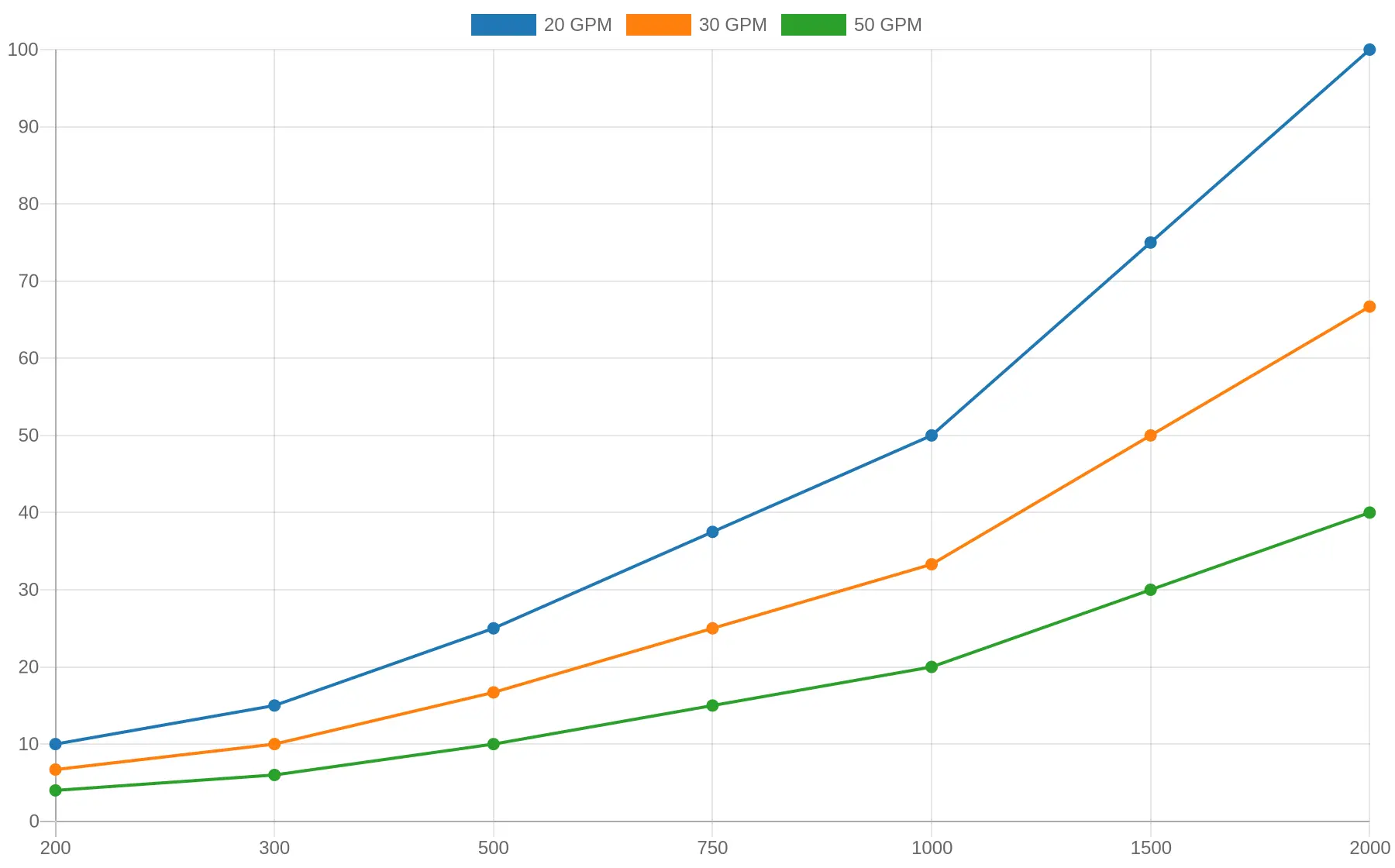
Nominal capacity translates into minutes of suppression, not just gallons. The relationship is linear as long as the flow rate holds steady:
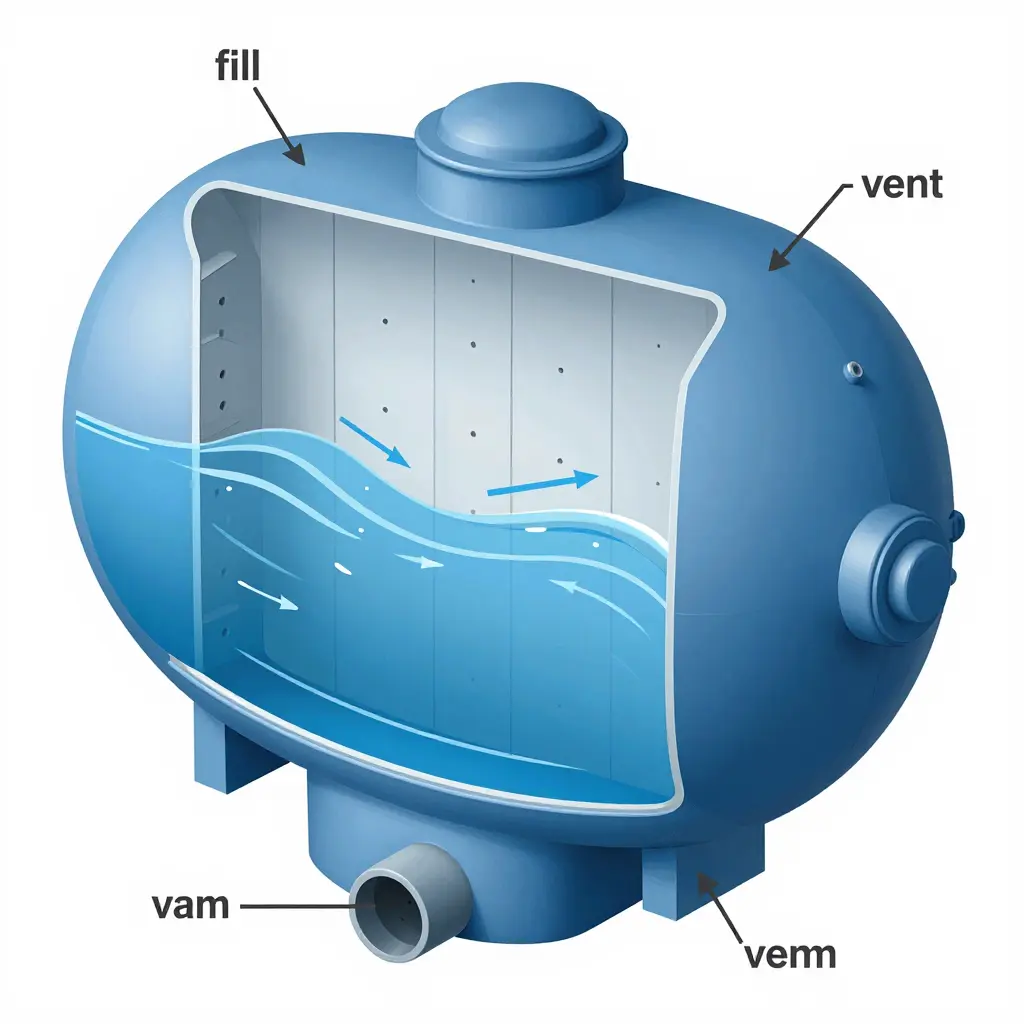
- 300 gallons (1,135 L) yields roughly 10 minutes at 30 GPM – enough for a fast initial knockdown on a single flank.
- 1,000 gallons (3,785 L) stretches that to about 33 minutes, enough for sustained mobile attack.
- 2,000 gallons (7,570 L) can hold a line for over an hour, but only if the chassis can carry it legally and safely.
More water also means a bigger first punch on a structure or fuel bed before the fire escalates. Once the volume stops helping you reach the fire, though, it is just dead weight.
Usable vs. Nominal Tank Volume
A tank’s nominal rating is not what you can fight with. Usable volume is what sits above the sump and outlet, after the fill dome, air space, and sloped floor needed for complete drainage are accounted for. Assume usable capacity runs 5-15% below nominal, and confirm the baffled tank design will prevent slosh-induced loss of prime and vehicle instability on grades. Knowing when to switch from attack to refill matters as much as the raw number.
The Payload and Maneuverability Trade-Off
Every gallon adds roughly 8.34 lb (3.8 kg), and that weight hits three hard limits:
| Constraint | Effect of a Larger Tank |
|---|---|
| Chassis payload | Reduced allowance for pump, hose, tools, and crew |
| GVWR | Risk of exceeding legal axle ratings; requires a heavier chassis |
| Off-road maneuverability | Higher center of gravity, worse soft-ground and slope performance |
Brush Trucks vs. Water Tanker Fire Trucks
A single-rear-axle brush truck usually carries 200-500 gallons and trades volume for agility, tight turning, and rough-terrain access. A dedicated water tanker fire truck may hold 1,500-3,000+ gallons for bulk supply and tendering, at the cost of the nimbleness that wins on a narrow ridgeline. Neither is universally better. Match tank size to the terrain, the typical travel distance, and the refill infrastructure in your district, not to the biggest number on the sheet.
Refill Turnaround Time: The Metric That Keeps Water on the Fire
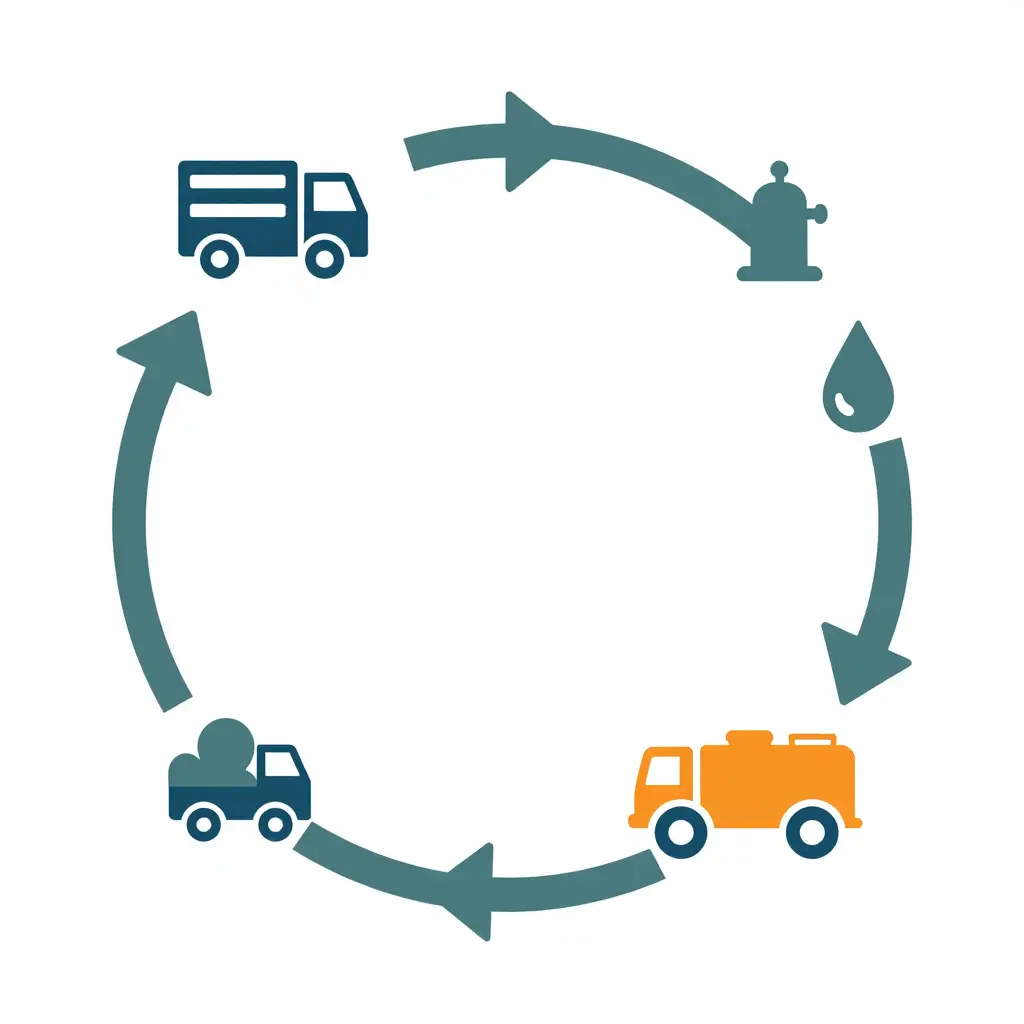
Refill turnaround is the total time a wildfire engine spends away from suppression: leaving the fire line, traveling to a water source, drafting or connecting, filling the tank to capacity, reconnecting the attack line, and returning to active suppression. Over a long operation it is this recycle time, not raw tank capacity, that decides whether water reaches the nozzle in a steady stream or in disruptive bursts.
Each trip is a chain of five steps, and the slowest step sets the pace:
- Travel time – the outbound drive from the fire line to the hydrant or draft source.
- Drafting time – establishing suction, priming the pump, or making a hydrant connection.
- Fill rate – the GPM the source actually delivers into the tank.
- Reconnect time – repositioning and re-establishing the discharge once back on the line.
- Return – the inbound drive to the fire front.
| Component | What It Covers | Primary Lever |
|---|---|---|
| Travel time | Outbound run to the source | Staging distance, access roads |
| Drafting time | Suction, priming, hydrant hookup | Pre-rigged hard suction, source type |
| Fill rate | GPM delivered into the tank | Source pressure, portable pumps |
| Reconnect time | Re-establishing the attack line | Positioning, crew drill |
| Return | Inbound run to active suppression | Terrain, traffic, driver skill |
A simple model makes the trade-offs obvious: total refill time equals travel, plus drafting, plus tank gallons divided by fill GPM, plus return, plus reconnect. That fill term is where the arithmetic bites. A 1,000-gallon tank drafting at 500 GPM needs two minutes to fill; a 2,000-gallon tank at the same fill rate needs four, doubling the fill leg and stretching the whole cycle.
Staging distance compounds the penalty. Move the source twice as far out and both the travel and return legs grow, so fill rate only wins if it is high enough to compensate. This is where pump-and-roll flow rate changes the calculus: an engine that keeps applying water while moving can be resupplied by shuttle instead of idling at the source.
Portable water supply systems – folding tanks, nurse tenders, and dedicated remote water supply trucks – push the refill point closer to the fire, collapsing travel and return times at once.
The point for specifiers is direct: a faster refill turnaround can offset a smaller tank. An engine that cycles in four minutes sustains a near-continuous stream from a modest tank, while a slower giant that disappears for fifteen minutes leaves the line dry no matter how much it carries. Evaluate the whole loop, not just the gallons. Purpose-built remote water supply system fire truck configurations can shorten every leg of the cycle.
From Spec Sheet to Buying Decision: A Procurement Framework
Buyers scanning wildfire truck sales often fixate on a single number, but no spec stands alone. Pump-and-roll flow rate, water tank size, and refill turnaround form an interdependent triangle, and the right balance depends on three hard constraints: chassis payload, budget ceiling, and mission profile. Change one leg and the other two shift.
Start with tactics. Crews that fight fast-moving grass and structure-adjacent fuels need high pump-and-roll flow at low pressure, so the nozzles stay charged while the truck keeps advancing. A compact, agile platform such as a small fire truck delivers that mobility without demanding a heavy chassis or a large budget.
Match the tank to attack duration. Size it to the minutes you realistically fight before resupply. For extended attack on a single load, a water tanker fire truck trades agility for volume and stretches each refill further.
Match turnaround to water logistics. Where hydrants are distant or nonexistent, refill turnaround drives the whole specification. If tenders are scarce, a remote water supply system fire truck with shuttle and storage capability beats a bigger tank on a truck that cannot refill.
Then match the platform to exposure. Structural or industrial fuel loads call for foam-capable flow, which a foam fire truck covers. Where payload and budget allow a fully balanced build, a heavy-duty fire truck can carry generous tankage, solid pump-and-roll output, and chassis headroom for later growth.
Use the table below as a starting point, then pressure-test each line against your payload sticker and capital plan.
| Priority | Lead Variable | Secondary | Typical Platform |
|---|---|---|---|
| Fast attack, mobile | High pump-and-roll flow | Moderate tank | small fire truck |
| Extended attack | Large water tank | Refill turnaround | water tanker fire truck |
| Structural / industrial exposure | Foam-capable flow | Tank + turnaround | foam fire truck |
| Remote, water-scarce terrain | Refill logistics | Shuttle + storage | remote water supply system fire truck |
| High payload budget | Balanced all three | Chassis GVWR | heavy-duty fire truck |
Write your three mission priorities in order before you talk to a dealer. A spec sheet cannot tell you what matters most; your tactics, terrain, and water sources can. Balance flow to tactics, tank to attack duration, and turnaround to water logistics, and the procurement decision largely makes itself.
Frequently Asked Questions
What pump-and-roll flow rate do I need for a brush truck?
The number follows the tactics you plan to run, not a single code figure. Most light Type 6 and Type 7 units are built to deliver roughly 20 to 50 gpm at low pressure while rolling, enough for one nozzle operator to knock down grass and light fuels without stopping. Larger Type 3 apparatus, with a heavier chassis and a higher-rated pump, can typically sustain 60 to 150 gpm while rolling. Specifying above your actual nozzle demand adds pump weight and parasitic horsepower loss without a measurable fireground benefit.
How do I choose the right water tank size?
Size the tank against three things: your chassis gross vehicle weight rating (GVWR), your department’s standard attack duration, and how far you operate from a fill site. A Type 6 brush truck usually runs a 150 to 300 gallon tank, while a Type 3 often carries 500 to 750 gallons, because the larger chassis can absorb that weight while keeping pump-and-roll flow rate stable. Go too small and you cut the initial attack time; go too large and you trade away pump capacity, equipment storage, or legal payload margin.
What is a good refill turnaround time for wildland firefighting?
A practical target is three to five minutes from arrival at a fill site to departure, including tank filling and repositioning. Meeting it depends on a large-diameter fill port, typically 2.5 to 3 inches, plus either a gravity-fed hydrant connection or a high-volume pressure fill station. Because slow refill eats directly into productive time on the line, fill infrastructure often matters as much as tank capacity.
Does a larger tank always improve firefighting performance?
No. Extra water adds gross weight, which can reduce off-road mobility, lengthen braking distances, and lower the sustainable pump-and-roll flow rate if the chassis is already near its GVWR. Beyond the volume that matches your attack duration and refill turnaround, additional capacity yields diminishing returns and can push the truck out of its intended type class. The goal is balance, not maximum volume.
How does foam or CAFS affect tank size and flow?
Foam concentrate and compressed air foam systems (CAFS) stretch each gallon because the finished solution expands with air, so a smaller on-board water tank can wet the same area as a larger plain-water load. CAFS often lets a crew cut flow to 15 to 30 gpm per line and still get deep knockdown, which means fewer refills and a shorter refill turnaround. You still have to carry a dedicated concentrate tank and size the pump to inject foam accurately. Buyers comparing these platforms can review CAFS fire trucks to match expansion ratio and tank configuration to their fuel and terrain.
Conclusion: Match the Spec to the Mission
Effective wildfire truck sales come down to one discipline: match the specification to the mission. No single figure tells the whole story, and the three variables only work as a system. Pump-and-roll flow rate decides whether an apparatus can advance on a moving fire line and still suppress. Water tank size sets how many minutes of initial attack a crew has before the first resupply. Refill turnaround sets how quickly the truck gets back in service between fills, and it shapes the rhythm of the whole operation. Balanced against one another, they produce a truck that holds up on real incidents rather than only on a spec sheet.
Keep these four criteria in front of you as you finalize procurement:
- Pump-and-roll flow rate – sustained pressure and volume delivered while the truck is in motion.
- Water tank size – practical engagement time before the first refill is required.
- Refill turnaround – how quickly and easily the truck returns to the line, including compatibility with remote water supply systems.
- Integration – how the three variables reinforce one another under actual operating conditions.
Agencies that weigh the three together, rather than optimizing for any one number, consistently field more capable apparatus. CIMC Tianda works with departments to align chassis, pump, and tank configurations with the demands of their terrain and response model.
The strongest purchasing decisions judge total operational capability, not a single headline specification. Wildfire threats keep changing, and the departments that stay ready will be the ones that treat pump-and-roll, tank capacity, and refill turnaround as one system, and choose partners who understand that balance.